



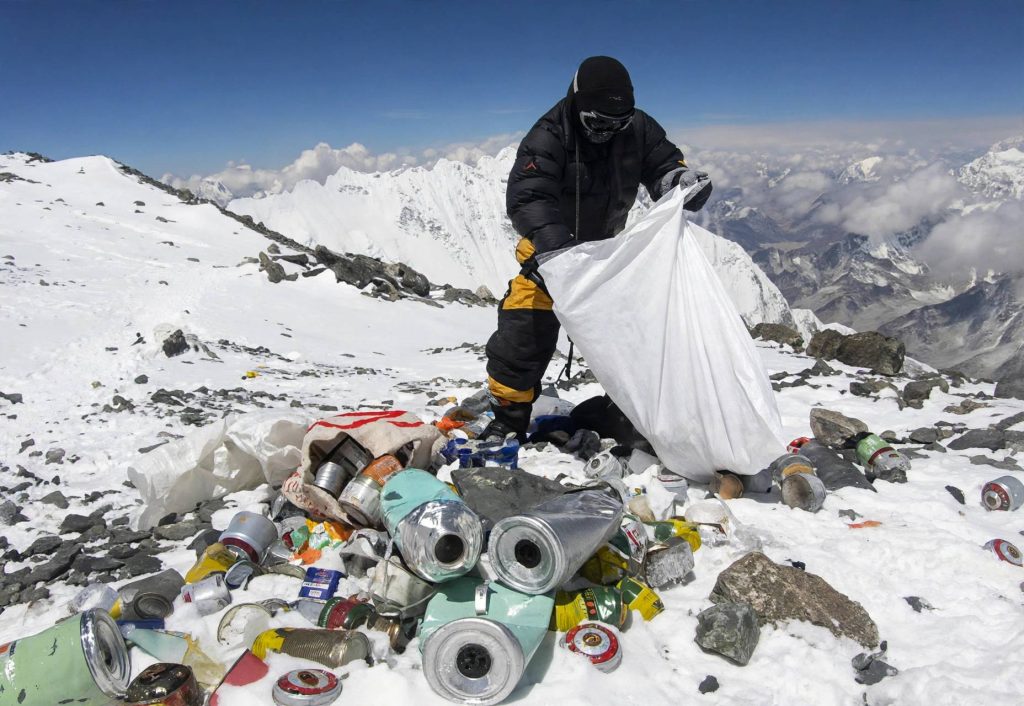
Every climber going above Everest Base Camp in the spring 2026 season must bring down at least 8 kg of garbage, and anyone traveling above Camp II must hand over 2 kg that Sagarmatha Pollution Control Committee staff physically weigh and verify. Rules that strict exist because the mountain generated a waste problem that voluntary goodwill never solved.
Trekkers are not climbers, but they outnumber them by a wide margin, and the arithmetic of plastic bottles on a two-week trail adds up fast. Zero waste trekking in Nepal is mostly about decisions made before you leave Kathmandu.
Where the Waste Actually Comes From
Popular assumptions about Himalayan trash tend to focus on abandoned expedition gear at high camps. That waste is real, and it is a small fraction of the total by volume. Most of what accumulates along trekking corridors is ordinary consumer packaging: water bottles, snack wrappers, beer cans, instant noodle packets, batteries, and single-use toiletries.


Two factors make it worse in Nepal than in a comparable trail system elsewhere. First, there is no road out of most of the Khumbu, so anything that goes up must be carried down by a porter, a yak, or a helicopter, and all three cost money nobody has budgeted. Second, burning is the default disposal method in many villages, which converts plastic into air pollution at altitudes where people already have limited respiratory margin.
Waste management also varies sharply by region. Khumbu has an organized system through the Sagarmatha Pollution Control Committee. Annapurna has conservation area committees and a long-standing bottled water restriction on parts of the circuit. Less-visited regions such as Manaslu, Tsum, and the far east have far thinner infrastructure, which means your personal practices matter more there, not less.
The Rules That Already Apply to You
Khumbu Pasang Lhamu Rural Municipality banned single-use plastics in the Everest region from January 1, 2020. The ban covers plastics under 30 microns, including bags, straws, and soft drink and water bottles. Cans were left permitted. Enforcement has been uneven over the years, and some shops still sell bottled water, but the legal position is clear and local officials periodically tighten checks at Lukla.
On parts of the Annapurna trail, notably the route toward Annapurna Base Camp, sellers simply do not stock mineral water. Trekkers buy boiled or filtered water instead. Plan for that rather than arriving and improvising.
Expedition-grade rules are stricter still. For the spring 2026 season, SPCC requires a USD 600 per person Khumbu Icefall fee, mandatory use of SPCC-issued human waste bags above base camp, barrels at base camp, and segregation of waste into plastics, paper, cans, glass, kitchen waste, hazardous materials, and human waste. Expeditions that fail to comply do not receive the Garbage Clearance Letter they need to close out.
Water: The Single Biggest Decision
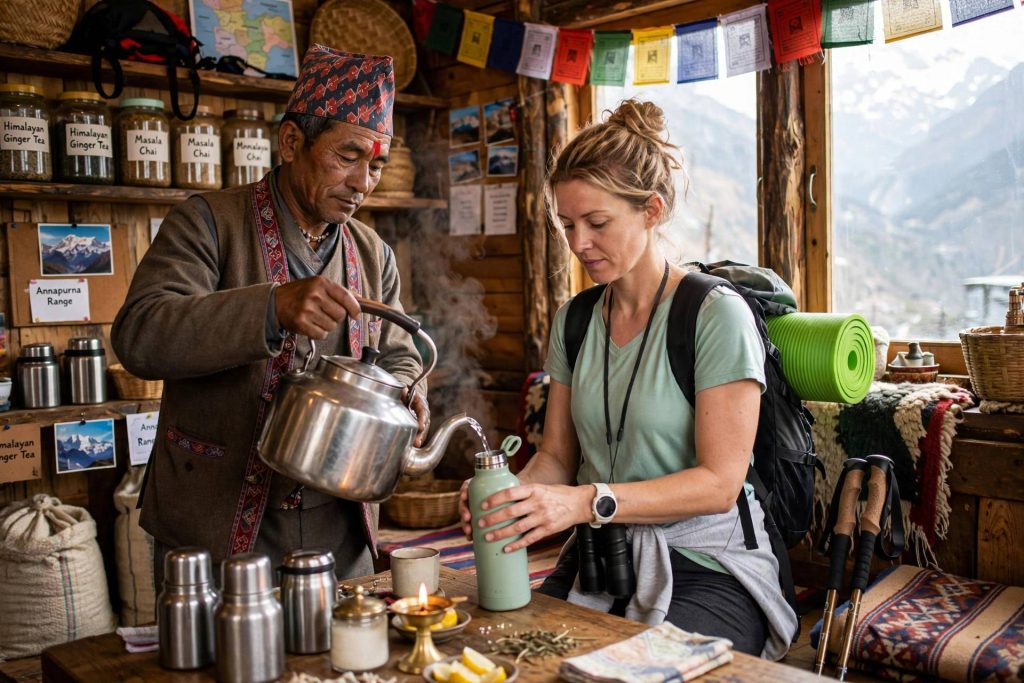
A trekker drinking three to four liters a day for twelve days will get through roughly 40 liters. Buy that in one-liter bottles and you have personally added about 40 pieces of plastic to a valley with no landfill.
Buying boiled water instead is not automatically better. Boiling consumes kerosene, gas, or firewood, and firewood collection is its own pressure on high-altitude forests. Carrying your own purification is usually the lowest-impact and cheapest option over a full trek.
| Method | Approximate cost | Pros | Cautions |
|---|---|---|---|
| Bottled mineral water | Rising steeply with altitude, and restricted or unavailable in places | Convenient | Most plastic, most expensive, banned or unstocked in parts of Khumbu and Annapurna |
| Boiled water from teahouses | Reported at roughly NPR 100 to 150 per liter lower down and NPR 200 to 300 higher up on Annapurna routes, with similar upward scaling in Khumbu | Reliable, warms your bottle at night | Uses fuel or firewood, costs add up across a long trek |
| Chlorine dioxide tablets or drops | Low, bought before the trek | Light, no batteries, kills most pathogens | Wait time, taste, buy in Kathmandu or at home because resupply on trail is unreliable |
| Filter bottle or squeeze filter | Moderate one-time cost | Immediate, no chemical taste | Filters can freeze and crack, sleep with it in your bag at altitude |
| UV purifier | Higher one-time cost | Fast, effective in clear water | Battery performance drops in cold, needs pre-filtering of silty water |
Practical combination for most people: a one-liter hard bottle plus a soft flask, a filter, and tablets as backup. Carry spare filter cartridges and enough tablets for the whole route. Shops along the trail rarely stock either reliably.
Packing to Produce Nothing
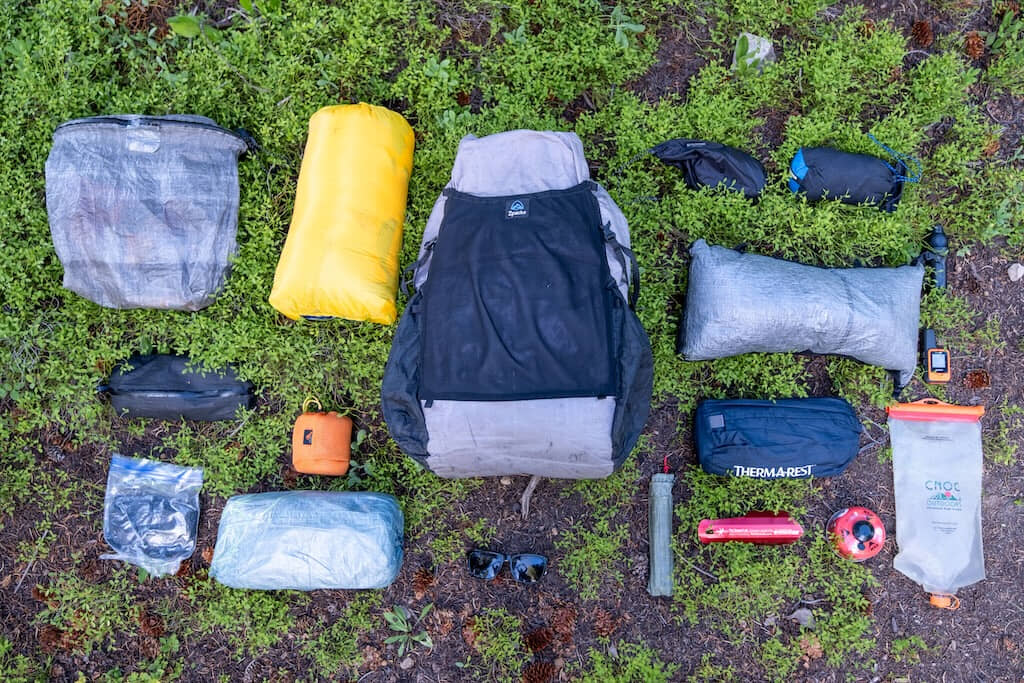
Waste reduction on a trek is decided at the packing stage in Kathmandu, not on the trail.
- Repackage snacks, electrolytes, and toiletries into reusable containers before you go. Individual sachets are the single largest source of wrapper litter.
- Choose bar soap and solid shampoo over bottles, and skip wet wipes entirely. Wipes do not decompose and are frequently found buried a few centimeters off the trail.
- Carry a small dry bag as your personal trash sack. Assume you will carry every wrapper back to Lukla, Besisahar, or Pokhara.
- Bring rechargeable batteries. Loose alkaline batteries dumped at altitude leach into water sources.
- Take a lightweight cloth bag for shopping in Namche or Manang, where thin plastic bags are restricted.
- Rent or buy quality gear in Kathmandu rather than cheap items you will abandon. Thamel has a functioning rental market for down jackets and sleeping bags.
On the Trail: Habits That Compound
Ask your lodge where trash goes before you hand anything over. In many villages, the honest answer is a burn pit. Carrying your own waste down is more useful than transferring it to someone with fewer options.
Human waste deserves more attention than it usually gets. Use lodge toilets where they exist. Where they do not, go at least 50 meters from any water source, dig a small hole where soil allows, and pack out toilet paper in a sealed bag. Above the treeline there is no meaningful decomposition, so burial is not disposal, it is storage.
Buy local and buy loose. A dal bhat cooked in the village produces almost no packaging. An imported energy bar produces a wrapper that will be flown out or burned. Eating what the lodge cooks is both the lower-waste and the better-value choice, and it keeps money in the household that hosts you.
Decline what you do not need. Straws, plastic cutlery, and extra bags are still offered in some places. A polite refusal in advance works better than an apology afterward.
Programs Worth Knowing About
Sagarmatha Next, an initiative based near Namche Bazaar, runs a crowdsourced scheme called Carry Me Back. Trekkers heading down collect a pre-packed bag of roughly one kilogram of shredded waste and carry it to Lukla, from where it is flown to Kathmandu for recycling or upcycling. During the pilot in late 2019, the program prepared 5,400 bags, and the first thousand were taken within four days.
One kilogram is trivial to carry on a descent and the aggregate matters. If you trek in the Khumbu, ask your guide to route you past the collection point.
The Sagarmatha Pollution Control Committee, established locally in 1991, manages waste collection, trail bins, and expedition compliance across the national park. Supporting their work is largely a matter of using their systems properly: sorting, not littering, and paying the fees without argument. Background on where trekking money goes is covered in our guide to where Nepal’s trekking permit fees go.
For broader context on Nepal’s environmental campaigns, see the Nepal Tourism Board and our coverage of World Environment Day 2026 in Nepal.
Choosing an Operator That Actually Does This
Agencies advertise eco-credentials freely. Four questions separate practice from marketing.
- What happens to the group’s waste, specifically, and who carries it out?
- Do you provide filtered water for clients, or expect them to buy bottles?
- What fuel do camping trips use, and is firewood ever used above the treeline?
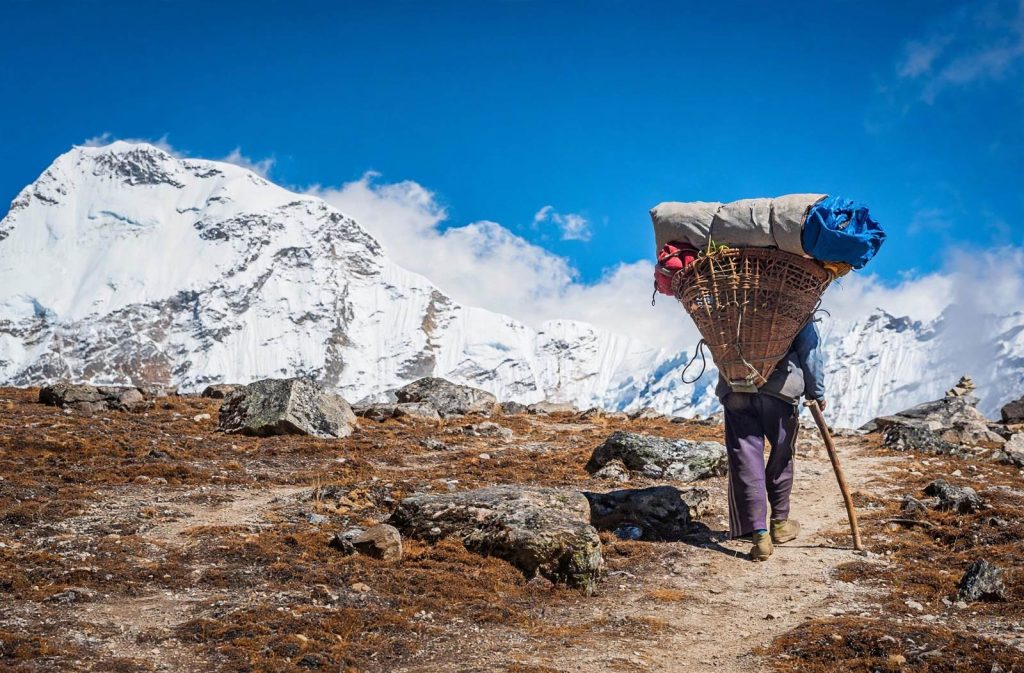
- Are porter loads weighed, and what insurance and clothing do porters get?
Waste practice and labor practice usually travel together. An operator who cuts costs on porter insurance is not investing in fuel discipline either. Our guides to hiring a trekking guide and teahouse versus camping treks go deeper on both.
Frequently Asked Questions
Can I still buy bottled water on the Everest trek?
Officially, single-use plastic bottles fall under the Khumbu ban that took effect in January 2020. In practice enforcement has varied and some shops still sell them. Plan to purify your own water regardless, because availability and price are both unpredictable at altitude.
Is tap water safe to drink in the mountains?
Treat all of it. Spring and tap water in trekking villages can carry bacteria, protozoa such as giardia, and contamination from livestock upstream. Filtration or chemical treatment is the minimum, and silty water should be pre-filtered.
How much waste does a trekker actually generate?
There is no reliable published per-trekker figure, so treat any confident number with suspicion. What is measurable is your bottle count: skipping bottled water alone removes roughly 30 to 50 plastic bottles from a typical two-week trek.
Do trekkers have to carry down garbage like climbers do?
No. The 8 kg and 2 kg mandates apply to climbers above Everest Base Camp in the 2026 spring season, not to trekkers. Voluntary schemes such as Carry Me Back exist for trekkers who want to help.
What should I do with used batteries and old gear?
Carry batteries back to Kathmandu, where limited recycling exists. Usable gear can be donated to porter welfare organizations or resold in Thamel. Do not leave either at a lodge, because it becomes their disposal problem.
Is a water filter or purification tablets better for Nepal?
Carry both. Filters handle sediment and protozoa well but can freeze, and tablets are a reliable backup with no moving parts. Combined weight is under 200 grams for most setups.
Are conditions the same on Annapurna and Everest?
No. Khumbu has denser waste infrastructure and stricter local rules, while Annapurna routes rely on conservation area committees and have long discouraged bottled water sales in places. Remote regions such as Manaslu and Tsum have the least infrastructure of all.
Does trekking with a guide reduce my waste footprint?
It can, if the guide is briefed and the operator has real policies. Rules on trekking independently have also changed in recent years, which our guide to Nepal’s solo trekking rules explains.
The Bottom Line
Nothing on this list is difficult. A filter, a repacked snack bag, a refusal to buy bottled water, and a willingness to carry your own wrappers down cover most of the impact a single trekker can control. Regulations are tightening at the expedition end, and trail-level behavior is still largely voluntary, which is exactly why individual choices carry weight here.
NepalVue covers trekking logistics, costs, and responsible travel across Nepal. Explore more of our trekking guides, save this one for your packing list, and share it with the people you are traveling with.


