



Every autumn, millions of Nepalis celebrate Dashain with great joy. Families sow barley seeds on Ghatasthapana. Relatives receive red tika and yellow jamara from elders.
However, one historic Newar village in Lalitpur stands completely silent. The traditional town of Khokana does not observe Dashain at all.
Instead of celebrating Dashain, the local Newar community observes Sikali Jatra. This multi-day festival honors their divine patron, Goddess Rudrayani.


Why does Khokana skip Dashain? How did a village choose its local forest deity over a national holiday?
This complete cultural guide explores the history, myths, secret rituals, and festival calendar of Sikali Jatra.
Why Khokana Skips Dashain
When you walk into Khokana during autumn, you will notice something surprising. You will not see swing sets or family tika gatherings.
Instead, the streets buzz with secret tantric preparations and sacred energy. The locals intentionally skip Dashain for clear historical and financial reasons.
The Sikali Jatra Priority
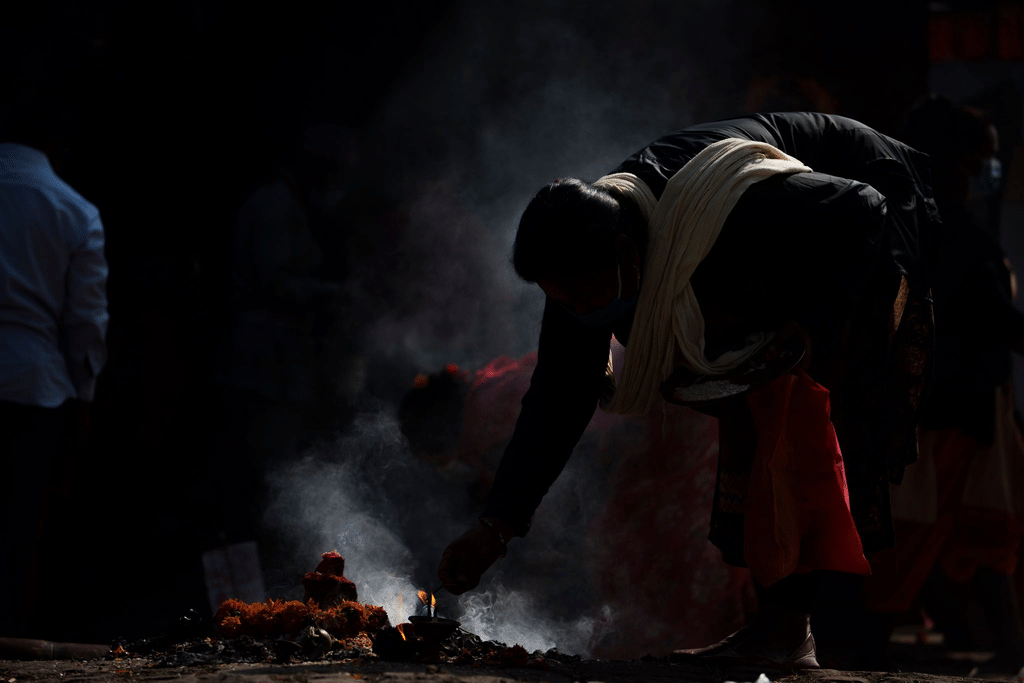
The villagers dedicate their full attention and financial resources to Sikali Jatra. Sowing jamara or applying red tika would conflict directly with their sacred Guthi obligations.
The entire town aligns its energy around the ancient forest temple of Sikali. This intense spiritual focus unites every single household in the community.
The Historical Date Shift
Legend says the village relocated centuries ago due to natural disasters. During this transition, community leaders shifted their traditional festival calendar.
The new festival dates directly coincided with Dashain. Hosting two massive multi-day festivals at once proved far too costly for local farmers.
Celebrating both events would split community labor and drain financial savings. Therefore, the village made a deliberate choice.
They decided to honor their immediate guardian deity rather than the national royal festival.
An Ancient Tradition
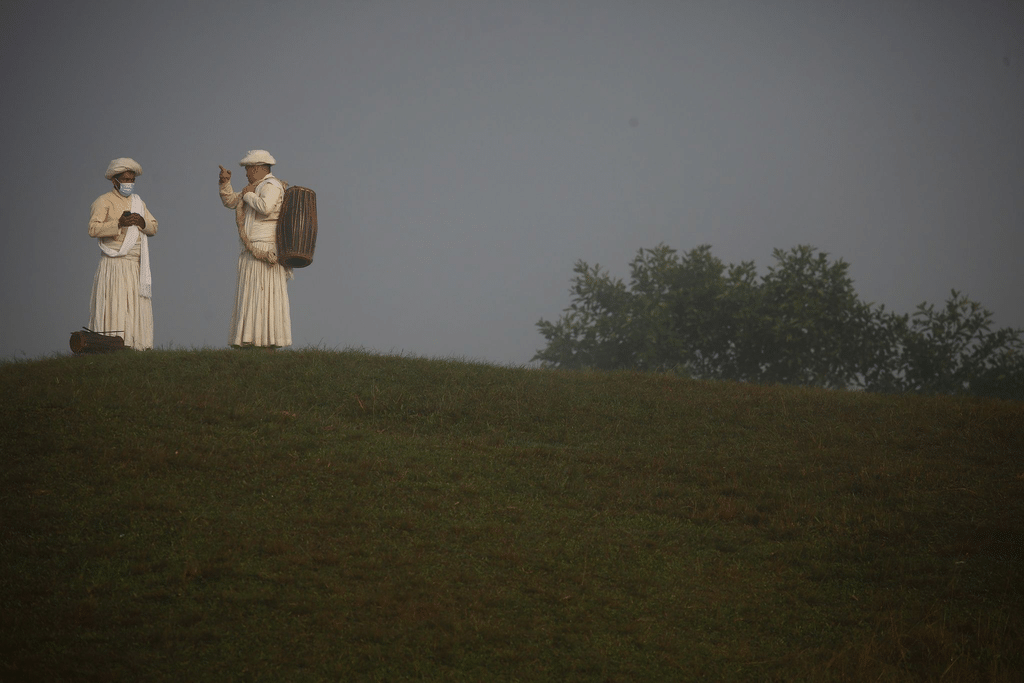
This unique custom dates back over eight centuries. Historical records trace the tradition to the reign of King Amar Malla around 1217 CE (Nepal Sambat 336).
What started as an economic necessity became a proud cultural identity. Today, Khokana defines itself by its firm adherence to its ancestral heritage.
History and Legends of Goddess Rudrayani
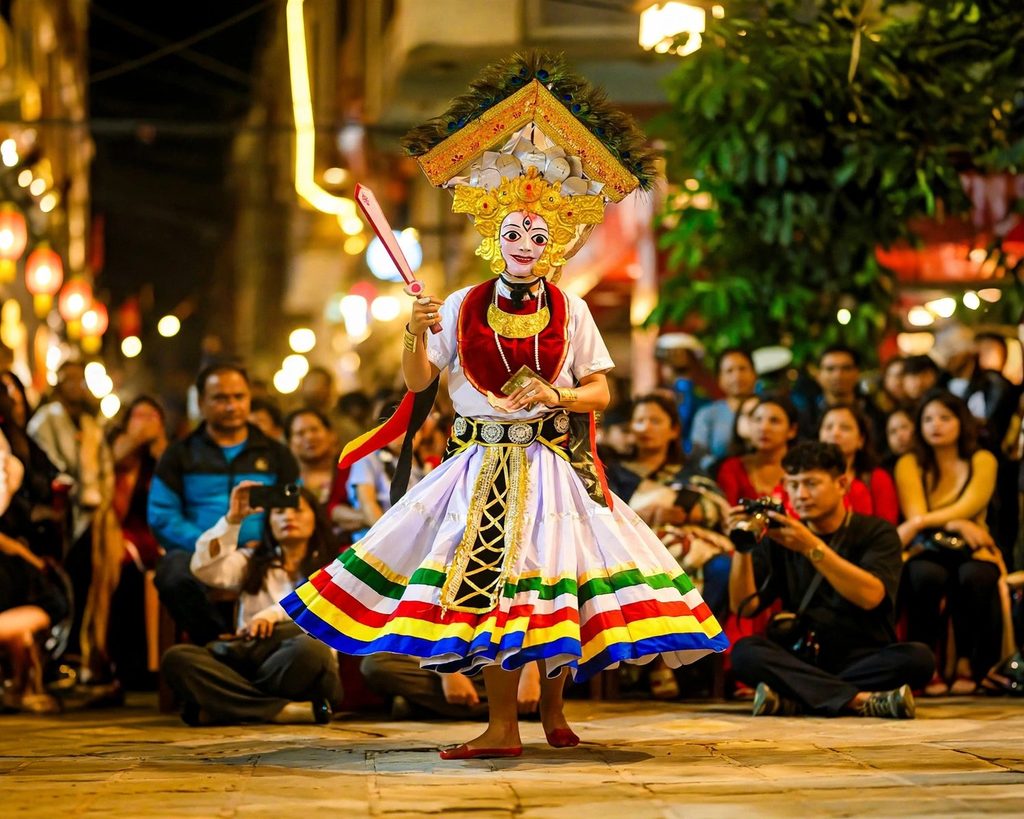
Goddess Rudrayani is the divine mother and spiritual guardian of Khokana. She is worshipped as a powerful incarnation of Durga and a protective Matrika deity.
Local mythology features two powerful origin stories about her divine grace.
The Resurrected Priest and the Village Name
According to local lore, a beloved village priest once fell unconscious. Thinking he had passed away, villagers carried him to the Bagmati River.
As they prepared his funeral pyre, the priest suddenly sat up. He wept uncontrollably and shared his miraculous experience in the afterlife.
Goddess Rudrayani had sent him back to protect the living community. The town became known as Kho-kana, which means “weeping and telling” in Newari.
The Cured Leper and the Founding of Jitapur
Another legend tells of a man suffering from severe leprosy. Expelled from the main valley, he sought refuge in the dense forest.
Goddess Rudrayani appeared and completely cured his painful affliction. Grateful for her grace, the man founded the settlement of Jitapur.
This settlement grew into modern Khokana centered around the sacred Sikali shrine. To this day, villagers view Rudrayani as their primary protector against illness and catastrophe.
Key Traditions and Secret Rituals During Sikali Jatra
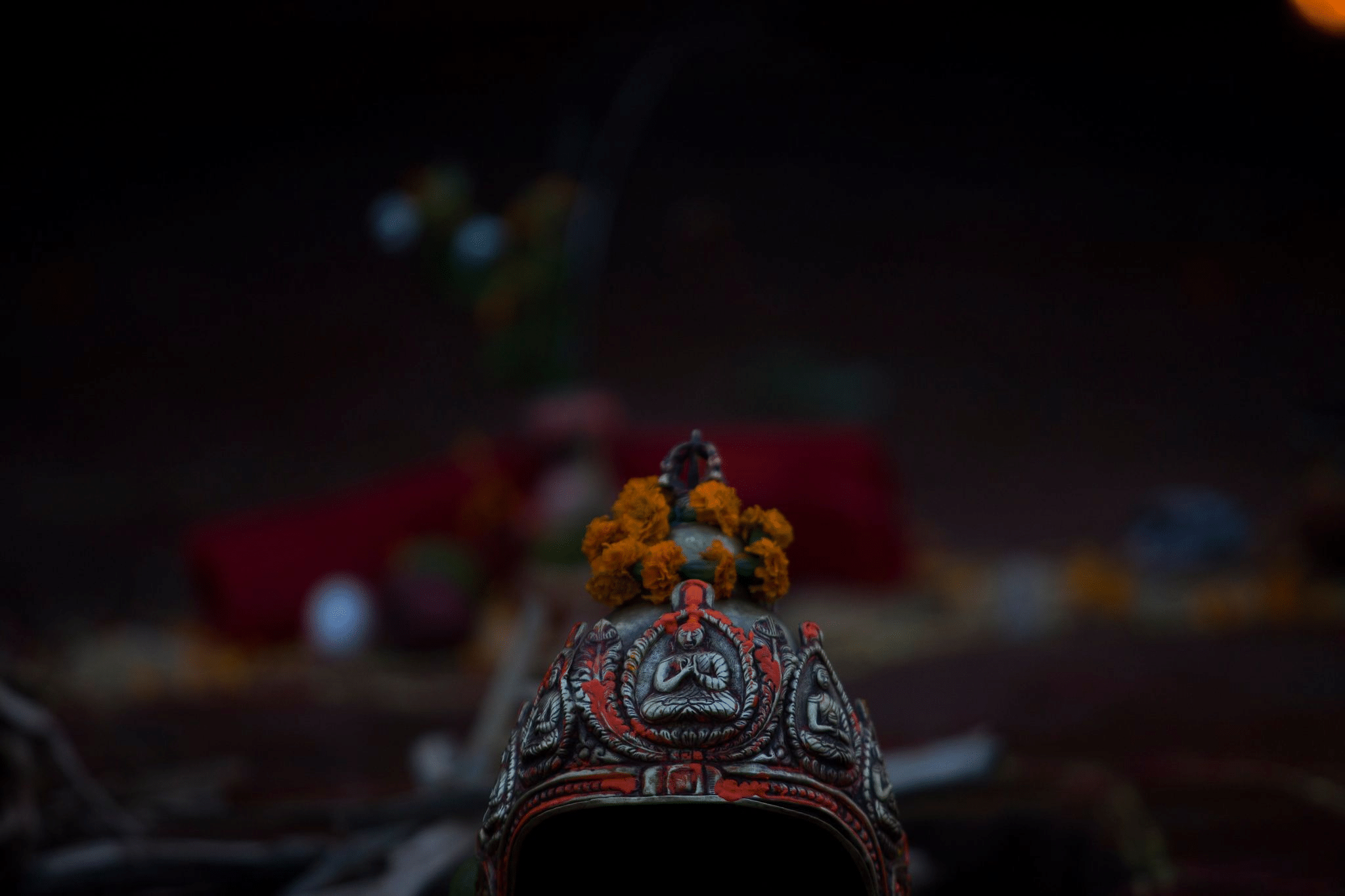
Sikali Jatra is not a passive spectacle. It is an intense, sacred experience filled with ancient tantric energy.
Ghatasthapana Start
While other communities sow barley seeds, Khokana opens its festival doors. The Rudrayani Guthi initiates private preparations on Ghatasthapana morning.
Priests clean the sacred instruments and awaken the ancestral shrines.
The Fourteen Devgan Masked Dancers
Fourteen selected male villagers become living incarnations of Hindu deities. They wear hand-carved painted masks representing:
- Goddess Rudrayani (Sikali)
- Bhairava
- Kumari
- Ganesha
- Brahma, Vishnu, and Mahadeva
- Key Matrika goddesses
These men do not merely act or dance on stage. The community firmly believes the gods possess their bodies during the performance.
On the sixth day, specific Devgans walk barefoot through burning coals. They emerge completely unharmed thanks to divine protection.
Chariot Procession of Goddess Rudrayani
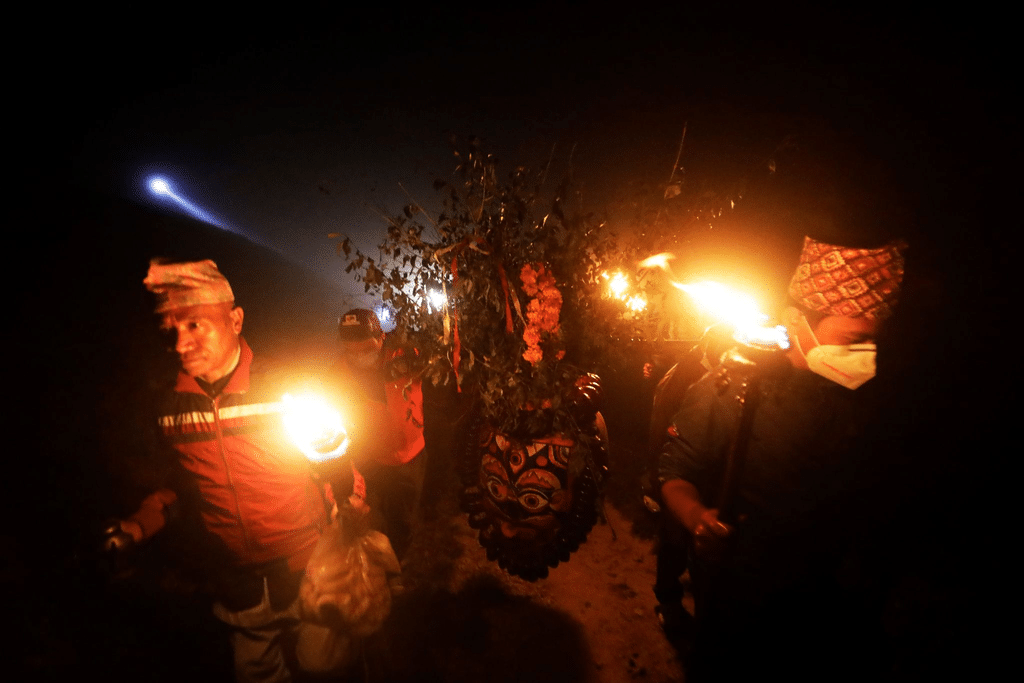
A wooden chariot carrying the idol of Goddess Rudrayani moves through the narrow streets. Devotees carry the heavy chariot on their shoulders toward the Sikali Temple.
The temple stands in an open grassy meadow surrounded by nature. This outdoor shrine highlights the ancient forest roots of the deity.
Secret Tantric Rituals and Virgin Boy Selections
Eight young virgin boys participate in private purification rituals. Four boys are chosen from the Tagu community and four from Salagu.
These boys remain isolated inside the temple for four full days. They assist priests with sacred tantric offerings hidden from public view.
During the festival, animal sacrifices are performed to appease the fierce forms of the goddess.
Blessed Rice and Curing Ailments
During the public ceremonies, the Guthi leader walks around the temple carrying cooked rice. He distributes this sacred prasad to gathering devotees.
Local faith holds that eating this blessed rice cures stomach pain and digestive ailments.
When Sikali Jatra Takes Place in 2026
The festival dates move every year according to the lunar Bikram Sambat calendar. In 2026, Sikali Jatra coincides directly with the national Dashain holiday window.
| Event Day | Ritual Name | 2026 Gregorian Date | Nepali Calendar (2083 BS) | Key Activity in Khokana |
|---|---|---|---|---|
| Day 1 | Ghatasthapana | Sunday, October 11, 2026 | Ashwin 25, 2083 | Secret temple rituals begin; virgin boys enter isolation. |
| Day 2 | Nitya Puja | Monday, October 12, 2026 | Ashwin 26, 2083 | Continuous tantric offerings inside the Rudrayani temple. |
| Day 3 | Devgan Preparation | Tuesday, October 13, 2026 | Ashwin 27, 2083 | Masked dancers prepare their minds and bodies for possession. |
| Day 4 | Chariot Procession | Saturday, October 17, 2026 | Ashwin 31, 2083 | Goddess Rudrayani moves by chariot to the Sikali meadow. |
| Day 5 | Sacred Masked Dance | Sunday, October 18, 2026 | Kartik 1, 2083 | 14 Devgans perform dances; fire-walking ritual takes place. |
Frequently Asked Questions (FAQ)
Why does Khokana not celebrate Dashain?
Khokana skips Dashain because the community celebrates Sikali Jatra instead. Centuries ago, celebrating both events proved financially impossible. The villagers chose to honor their local guardian, Goddess Rudrayani.
Who is Goddess Rudrayani?
Goddess Rudrayani is the patron mother goddess of Khokana. She is worshipped as a powerful form of Durga who protects the town from disease, natural disasters, and spiritual danger.
When does Sikali Jatra take place in 2026?
Sikali Jatra begins on Ghatasthapana (Sunday, October 11, 2026) and runs through mid-October 2026. The main chariot procession and public masked dances occur between October 17 and October 18, 2026.
Can tourists watch the Sikali Jatra festival?
Yes, respectful travelers can visit Khokana to watch the public chariot procession and masked dances. However, visitors must respect secret tantric rituals and avoid entering restricted temple spaces.
Conclusion: A Proud Cultural Identity
Khokana’s refusal to celebrate Dashain is not a rejection of tradition. It is an extraordinary celebration of local identity.
While the rest of Nepal applies tika and sows jamara, Khokana honors Goddess Rudrayani. Through sacred masked dances, virgin boy rituals, and chariot processions, the village keeps its ancient heritage alive.
Understanding Sikali Jatra offers a deeper look into the rich cultural tapestry of Nepal. It proves that local faith can overcome modern conformity.
Planning a trip to observe this festival? Save this guide to navigate Khokana’s historic Sikali Jatra with respect and wonder!


