



A foreign trekker walking the Annapurna Circuit pays NPR 3,000 for entry and NPR 2,000 for a TIMS card before taking a single step. Multiply that by the hundreds of thousands of people who trek in Nepal each year and it becomes a serious flow of money. Yet almost no trekker can say where it lands. The short answer is that a nepal conservation area fee and a national park fee travel down completely different pipes, run by different institutions, with different rules about how much reaches the villages you walk through. This guide follows the money, names the institutions, and flags where the system works and where it does not.
The Four Fees You Are Likely to Pay
Nepal does not have one trekking permit. It has a stack of separate charges, each collected by a different body for a different stated purpose.
| Fee | Typical cost, foreign national | Collected by |
|---|---|---|
| Conservation area entry (ACAP, Manaslu) | NPR 3,000 | National Trust for Nature Conservation |
| National park entry (Sagarmatha, Langtang, Shey Phoksundo) | NPR 3,000 | Department of National Parks and Wildlife Conservation |
| TIMS card | NPR 1,000 group, NPR 2,000 independent | Nepal Tourism Board with TAAN |
| Local municipality fee, Everest region | NPR 2,000 to 3,000 | Khumbu Pasang Lhamu Rural Municipality |
| Restricted area permit, for example Upper Mustang or Upper Dolpo | US$500 for 10 days, then US$50 per day | Department of Immigration |
SAARC nationals and Nepali citizens pay substantially less across all categories. Rates change, so confirm current figures before you travel.


Conservation Area Fees: The NTNC Model
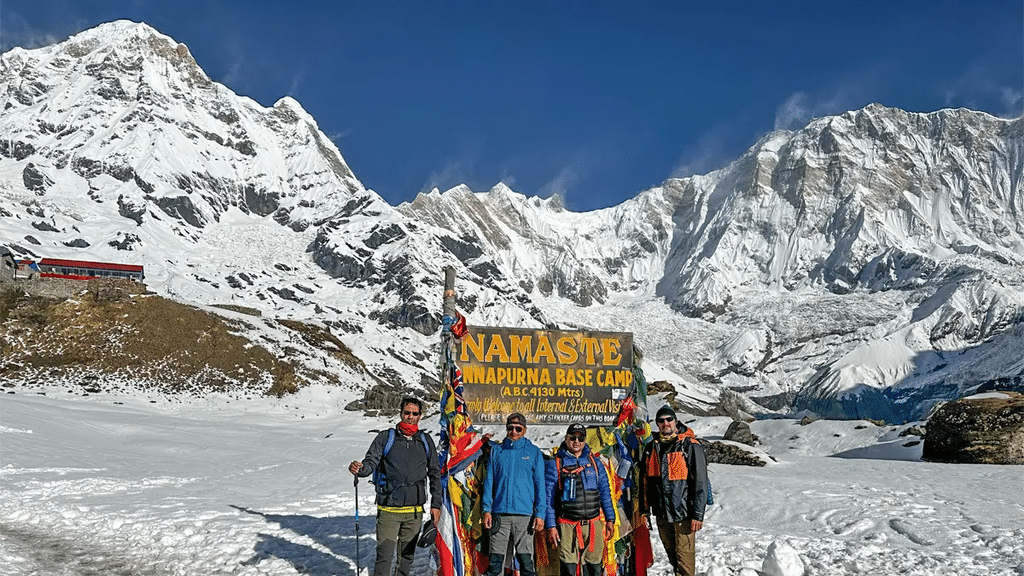
Annapurna is the unusual case, and the most interesting one. The Annapurna Conservation Area is not run by a government department. It is managed by the National Trust for Nature Conservation, a non-government body that was granted the right to collect entry fees from trekkers.
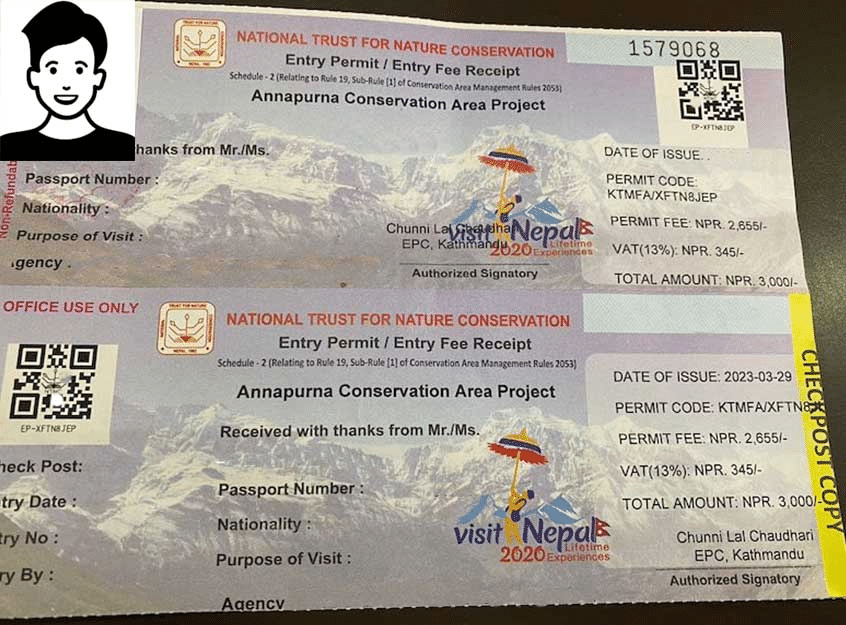
That arrangement has one consequence worth understanding: ACAP receives no regular government funding. Your NPR 3,000 is not a tax that disappears into a central treasury. It is the operating budget. NTNC describes the money as invested back into the region, its resources, and its communities, supplemented by national and international donor funding.
What That Money Pays For
- Community-based conservation work across an area of 7,629 square kilometers.
- Seven unit conservation offices spread through trans-Himalayan and southern parts of the region.
- Integrated tourism management in busy destinations such as Jomsom and Ghandruk.
- Poverty alleviation programs in villages including Bhujung, Sikles, and Lwang.
- Agro-forestry and alternative energy work aimed at reducing pressure on forests.
The model is genuinely unusual in South Asia. A conservation area that funds itself from visitor fees, while allowing residents to keep living inside its boundaries and retain traditional resource rights, is not how most protected areas operate. You can read NTNC’s own description of the project on the National Trust for Nature Conservation site.
Benefit sharing remains contested. Local governments in the region have argued for a larger and more direct share of the revenue generated on their territory. That debate is ongoing and worth watching if you care where your money sits.
National Park Fees: The Buffer Zone Rule
Sagarmatha, Langtang, Shey Phoksundo, and Makalu Barun work differently. These are state protected areas under the Department of National Parks and Wildlife Conservation, so entry fees are government revenue.
Here the key mechanism is buffer zone revenue sharing. Under the Buffer Zone Management Regulations, 30 to 50 percent of a national park’s revenue is meant to be returned to buffer zone committees representing communities living at the park’s edge. Those committees fund conservation work, community development, education, and skills training.
On paper this is one of the better-designed systems anywhere. In practice, delivery has been inconsistent. Buffer zone communities have reported not receiving their legally mandated share, and department officials have publicly acknowledged that regulations dating from the 1990s need amending. Reform discussions covering resource rights between parks and local governments are active.
What this means for a traveler is straightforward. Your park fee is legally committed to local benefit. Whether it arrives is a governance question, not a question about your ticket.
The TIMS Card: You Are Paying for a Database
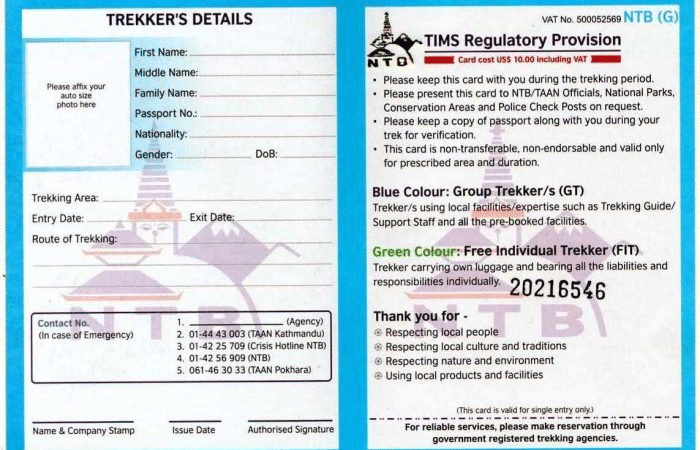
TIMS is the Trekkers’ Information Management System, run jointly by the Nepal Tourism Board and the Trekking Agencies’ Association of Nepal since January 2008. It exists because rescue and search operations used to struggle badly without any record of who was on which trail.
Your fee buys registration. Passport details, nationality, contact information, and itinerary go into a visitor database that authorities can access during accidents or natural disasters. After the 2015 earthquake and after major storm events, that record is what allows agencies to work out who is unaccounted for and where to look.
It is the least glamorous fee on the list and the easiest to resent when you are queuing for it. It is also the one that becomes valuable precisely when something has gone wrong. Neither NTB nor TAAN publishes a detailed public breakdown of how TIMS revenue is divided, which is a fair criticism to make of the system.
Local Municipality Fees: The Newest Layer
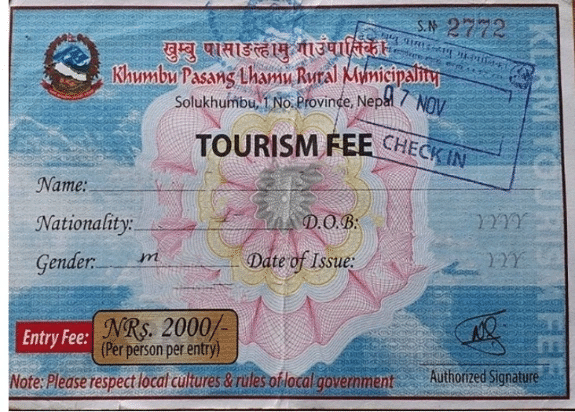
The Khumbu Pasang Lhamu Rural Municipality fee, between NPR 2,000 and NPR 3,000, is collected by the local government rather than by a park or a national body. It replaced TIMS for the Everest region.
This reflects a broader shift in Nepal since federalization. Local governments increasingly want revenue collected on their land to stay there, funding trail maintenance, waste management, and local services directly rather than passing through Kathmandu. Expect more municipalities to follow. It also means that a route may add a fee between one trekking season and the next, so confirm the current stack before you fly. Our guide to flying into Lukla covers the practicalities at the Everest gateway.
Restricted Area Permits: A Different Category Entirely
Upper Mustang and Upper Dolpo cost US$500 per person for ten days, then US$50 per day after that. Nar Phu, Kanchenjunga, and Lower Dolpo have their own scales. These permits are issued by the Department of Immigration, only through registered trekking agencies, and only to groups.
The purpose here is different. Restricted area fees are partly revenue and partly a deliberate limit on visitor numbers in culturally sensitive and ecologically fragile districts near the northern border. High price is the control mechanism.
Whether the money reaches those districts is a reasonable question, and one where public reporting is thin. Trekkers heading to Lower Dolpo and Shey Phoksundo or the Kanchenjunga region pay into this system.
What Your Permit Does Not Buy
A common misreading is that permit fees cover rescue. They do not. Helicopter evacuation in Nepal is a commercial service billed to you or your insurer, and costs run into thousands of US dollars. Your TIMS registration helps responders find you. It does not pay for the aircraft.
Permits also do not cover trail insurance for your crew, medical treatment, or lodge costs. Guides and porters should be insured by the agency that employs them, which is one reason a cut-price agency quote deserves scrutiny rather than gratitude.
Nor do fees guarantee trail maintenance on every path. Maintenance depends on which body controls that stretch and whether its budget arrived. Trekkers on popular routes see well-kept steps and bridges. Trekkers on secondary trails in the same district often do not, and the difference usually traces back to where revenue was allocated rather than to how many people walk there.
Checking Current Rates Before You Travel
Fees in Nepal change more often than published guides suggest. Municipal charges have been introduced mid-season. Conservation area rates have been revised. TIMS issuance has been suspended and restored in the past.
Three habits keep you current. Confirm rates with your agency in writing when you book. Cross-check against the Department of National Parks and Wildlife Conservation or the relevant conservation office. Carry enough Nepali rupees in cash for on-site fees, because checkpoints in remote districts rarely accept cards.
Bring passport photos and a passport copy. Several permits still require them, and getting photos taken in a trailhead town costs time you would rather spend walking.
How to Make Your Money Count More
Permit fees are fixed. What you spend afterward is not, and that is where trekkers have real leverage.
- Sleep and eat in locally owned teahouses rather than carrying packaged food in. Lodge income stays in the village.
- Hire guides and porters from the district you are walking through, not only from Kathmandu.
- Buy boiled or treated water instead of bottled. Plastic disposal is a direct cost to the communities collecting your fee.
- Spend a night in smaller villages off the main sequence. Fee revenue is regional, but spending concentrates in a handful of stops.
- Tip properly. Our tipping guide covers what is customary.
Is the System Fair?
Partly. The design is sound: fees fund conservation, communities get a legally defined share, and a safety database exists. Execution varies. Buffer zone transfers have fallen short of what regulations require. Revenue sharing in Annapurna is under active dispute. Public reporting on where TIMS and restricted-area money goes is weaker than it should be.
None of that is an argument for avoiding fees or for seeking workarounds. The underlying model works better than the alternative, which is protected areas with no funding at all. It is an argument for asking better questions, and for spending the discretionary part of your budget deliberately once you are on the trail.
Frequently Asked Questions
How much are Nepal trekking permits in total?
For a standard route like Annapurna or Everest, budget roughly NPR 5,000 to 6,000 for entry plus TIMS or the local municipality fee. Restricted areas start at US$500 per person. Confirm current rates before traveling.
Does my conservation area fee go to the government?
Not in Annapurna. The National Trust for Nature Conservation, a non-government body, collects and spends it, and receives no regular government funding for the project.
What share of national park fees reaches local communities?
Buffer zone regulations set the share at 30 to 50 percent of park revenue. Communities have reported that transfers do not always arrive as required, and reform of those regulations is under discussion.
Is the TIMS card actually useful?
It registers your identity and itinerary in a database used during rescue and disaster response. That was the reason it was introduced in 2008, after search operations struggled without trekker records.
Why does the Everest region charge a separate municipal fee?
Khumbu Pasang Lhamu Rural Municipality collects it in place of TIMS so that revenue generated locally is managed locally. It reflects Nepal’s shift of authority to local governments.
Can I get a permit refund if I abandon my trek?
Generally no. Entry permits and TIMS cards are non-refundable and non-transferable. Restricted area permits are also non-refundable.
Are permit fees the same for Nepali and SAARC trekkers?
No. Nepali citizens and SAARC nationals pay significantly reduced rates across national parks, conservation areas, and TIMS.
Do I need a permit for short hikes near Kathmandu?
It depends on whether the trail enters a protected area. Many day hikes around the Valley rim need no permit, while routes crossing into Langtang or Shivapuri Nagarjun National Park do.
Plan Your Responsible Trek
Knowing where your fees go does not make them cheaper, but it changes how you spend the rest of your budget. For more on planning a responsible trip through Nepal’s protected areas, explore our trekking and green travel guides at NepalVue, save this one for your pre-departure checklist, and pass it to anyone heading up the same trail.


