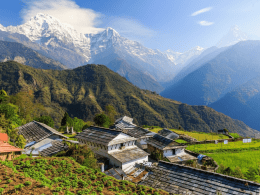



Most first-time trekkers assume camping is the tougher, purer, more expensive way to see the Himalaya. In practice it is the opposite on almost every count that matters to a traveler. A teahouse trek nepal visitors book today is cheaper, lighter, warmer at night, and available on roughly nine out of ten popular routes. Camping survives mostly where lodges never got built, not where trekkers chose tents. Knowing which model a route forces on you changes your budget, your packing list, your permit paperwork, and whether you can walk in with two days’ notice or need three months of planning. This guide sorts the two systems out with real numbers and names the routes that leave you no choice.
What a Teahouse Trek Actually Is
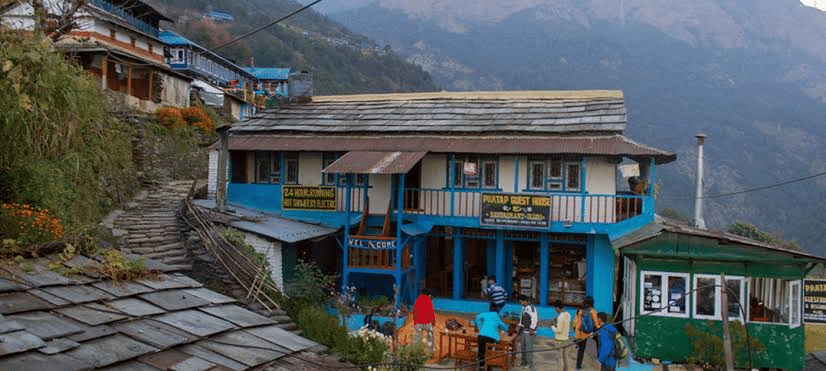
A teahouse is a family-run lodge on a trekking trail. You walk from village to village, eat in the dining room, sleep in a simple room, and carry only clothes and personal gear. Nobody sets up a tent. Nobody cooks for your group.
These lodges grew out of local homes. Many are still run by the same families who opened a spare room to Sherpa, Gurung, Magar, Thakali, and Manangi traders decades ago. Standards vary enormously by region and altitude. A lodge in Ghandruk may have a private bathroom and a tiled shower. A lodge above 4,000 meters may offer a plywood room, a foam mattress, and a stove in the dining hall that lights at six in the evening.


The commercial logic is consistent across almost every trail. Rooms are priced low, sometimes at nothing, on the understanding that you eat dinner and breakfast in the same lodge. Walk in, take a bed, then eat elsewhere, and you can expect a room charge of roughly NPR 500 to 1,500 instead.
What You Get Inside
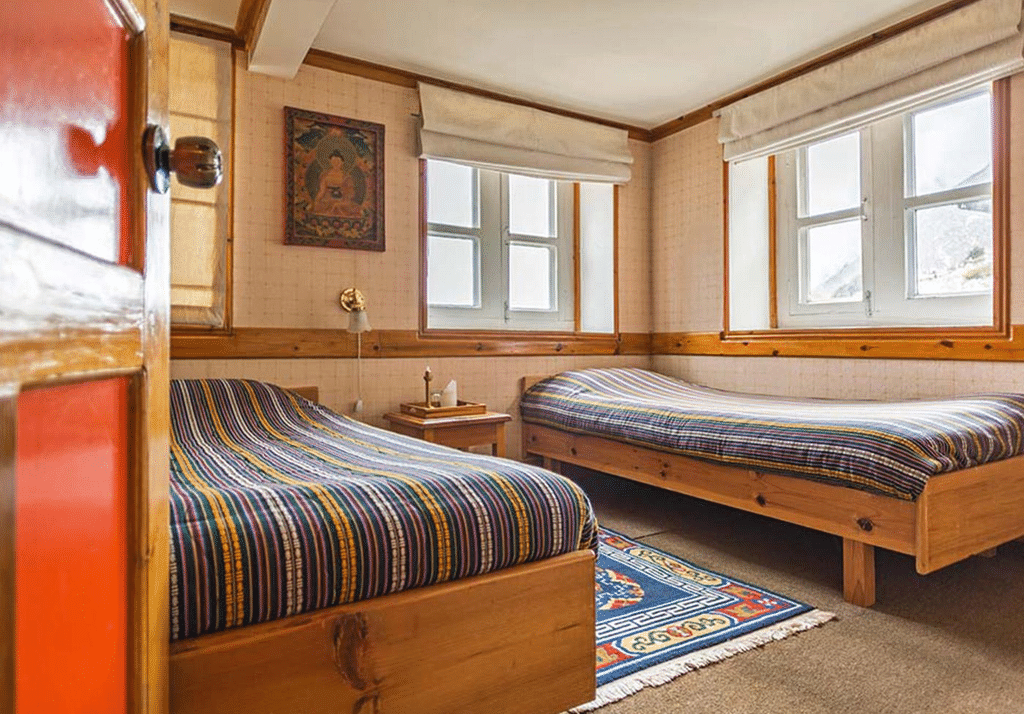
- A twin room with foam mattresses, pillows, and a blanket. Bring a sleeping bag anyway above 3,000 meters.
- A heated dining room, usually the only warm space in the building.
- Menus that look identical trail to trail: dal bhat, fried rice, noodles, soups, eggs, pancakes, tea.
- Shared toilets at higher elevations. Private bathrooms are common lower down and rare near the passes.
- Paid extras: hot showers, phone charging, WiFi, boiled drinking water.
What a Camping Trek Actually Is
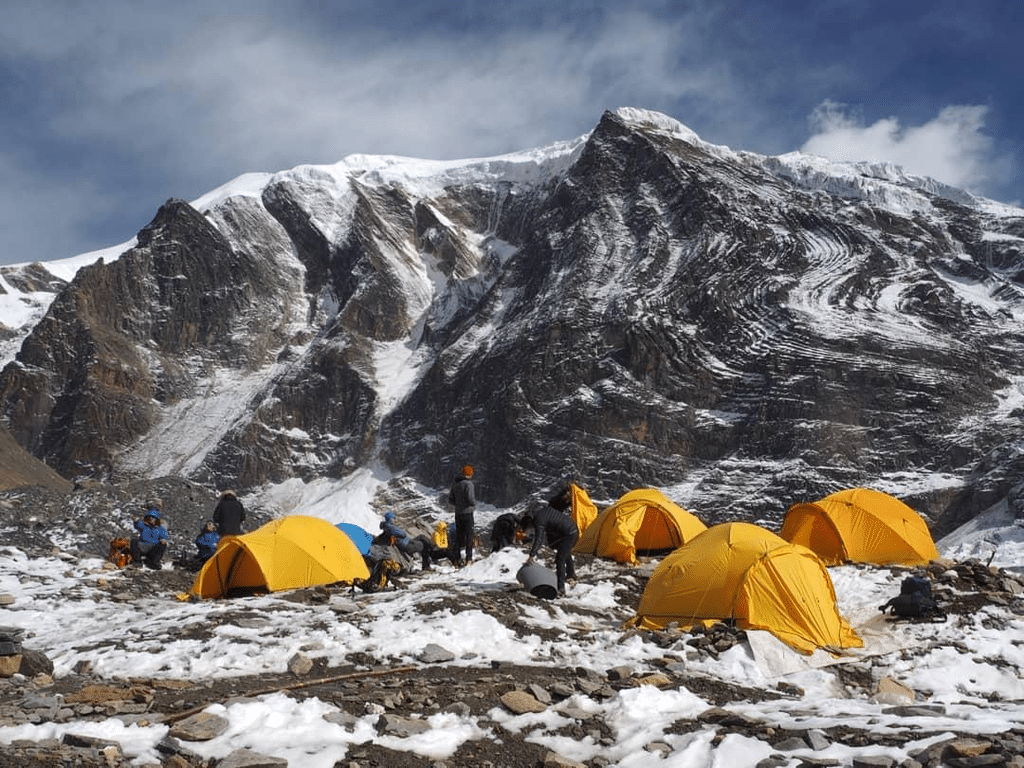
Camping in Nepal is not two people with a tent and a stove. It is an organized expedition with a crew. A typical setup includes a licensed guide, a cook, one or two kitchen assistants, porters or pack animals, and sometimes a sirdar coordinating everything. Tents go up each afternoon: sleeping tents, a dining tent, a kitchen tent, and a toilet tent.
Food, fuel, and gas travel with the group. In genuinely remote districts a mule train or yak caravan carries the load. That crew is the reason camping costs what it does, and it is also the reason camping works at all in places with no shops for a week.
Independent wild camping is a separate question. National park and conservation area rules, restricted-area permit conditions, and the guide requirements introduced on many routes mean that pitching a tent alone is rarely the legal or practical option international trekkers expect. Check current rules before planning around it.
The Cost Gap, With Real Numbers
Here is where the assumption collapses hardest. Camping is not the budget option. It is usually two to four times the daily cost of a teahouse trek on comparable terrain.
Teahouse spending scales with altitude, because everything above roadhead is carried up by porter, mule, or yak. Prices below are typical ranges reported across major routes and should be read as a planning guide, not a fixed tariff.
| Item | Low altitude (NPR) | Mid altitude (NPR) | High altitude (NPR) |
|---|---|---|---|
| Room per night | 0 to 300 | 300 to 800 | 800 to 1,500 |
| Dal bhat, refills included | around 300 | around 550 | around 950 |
| Hot shower | 200 to 300 | 300 to 400 | 400 to 500 |
| Phone charging, per charge | 100 to 200 | 200 to 300 | 300 to 400 |
| WiFi, per day | 200 to 300 | 300 to 400 | 400 to 500 |
| Boiled water, 1 liter | 160 to 200 | 200 to 280 | 280 to 350 |
Add it up and a comfortable teahouse day lands around US$30 to US$50 for food, bed, and extras. Trek frugally, skip the WiFi, drink treated water rather than buying it, and you can hold that closer to US$25.
Camping runs on a different arithmetic. You are not paying for a bed. You are paying a crew’s wages, food, insurance, equipment, and transport, plus your own. Organized camping expeditions in restricted districts commonly price out between US$100 and US$200 per person per day once permits, staff, and logistics are included. A 28-day Upper Dolpo package advertised at around US$3,250 gives you the shape of it.
Porter and crew costs are the single largest line. Full-service porter rates quoted for 2026 and 2027 sit near US$40 per day per porter, covering wages, food, lodging, transport, insurance, equipment, and permits. A camping group needs several of them plus kitchen staff. A teahouse trekker often needs none, or shares one.
Whichever model you choose, tipping is a real budget line, not an afterthought. Our guide to tipping guides and porters in Nepal breaks down what is customary by trip length and crew size.
Comfort: An Honest Comparison
Teahouses win on warmth, food variety, and recovery. You sleep indoors. You eat hot meals you did not carry. You can charge a phone and, on many trails, message home. After a long pass day, that dining room stove matters more than any view.
Camping wins on privacy, control, and quiet. Your tent is yours. The cook adapts to your group. You are not negotiating for the last bed in a full lodge during the October peak. On popular trails in high season, that last point is not trivial.
Camping loses on cold and on effort. A tent at 4,500 meters in November is colder than a lodge room at the same altitude. Camp routine eats daylight. Hygiene takes discipline.
| Factor | Teahouse | Camping |
|---|---|---|
| Daily cost | US$25 to US$50 | US$100 to US$200 |
| Gear you carry | Clothing, sleeping bag, personal kit | Personal kit only, crew carries the rest |
| Warmth at night | Better | Colder |
| Privacy | Limited in peak season | Excellent |
| Planning lead time | Days | Weeks to months |
| Route availability | Most popular trails | Remote and restricted districts |
| Local economic benefit | Goes directly to trail families | Goes mostly to crew and agency |
Which Routes Force Which
This is the part that decides your trip. Some trails simply have no lodges, and no amount of budgeting changes that.
Teahouse Routes
Everest, Annapurna, Langtang, Manaslu, Mardi Himal, Khopra Danda, Tsum Valley, and Kanchenjunga all run on lodges now. Quality drops sharply as you move east and west from the two big hubs. Lodges on the Kanchenjunga trek exist in most villages but stay basic: expect a bed and dal bhat, not a menu and a shower.
The Manaslu Circuit is the clearest example of a route that switched. It was a camping trek within living memory. Today it is a restricted-area teahouse trek requiring a licensed guide and a minimum group.
Camping Routes
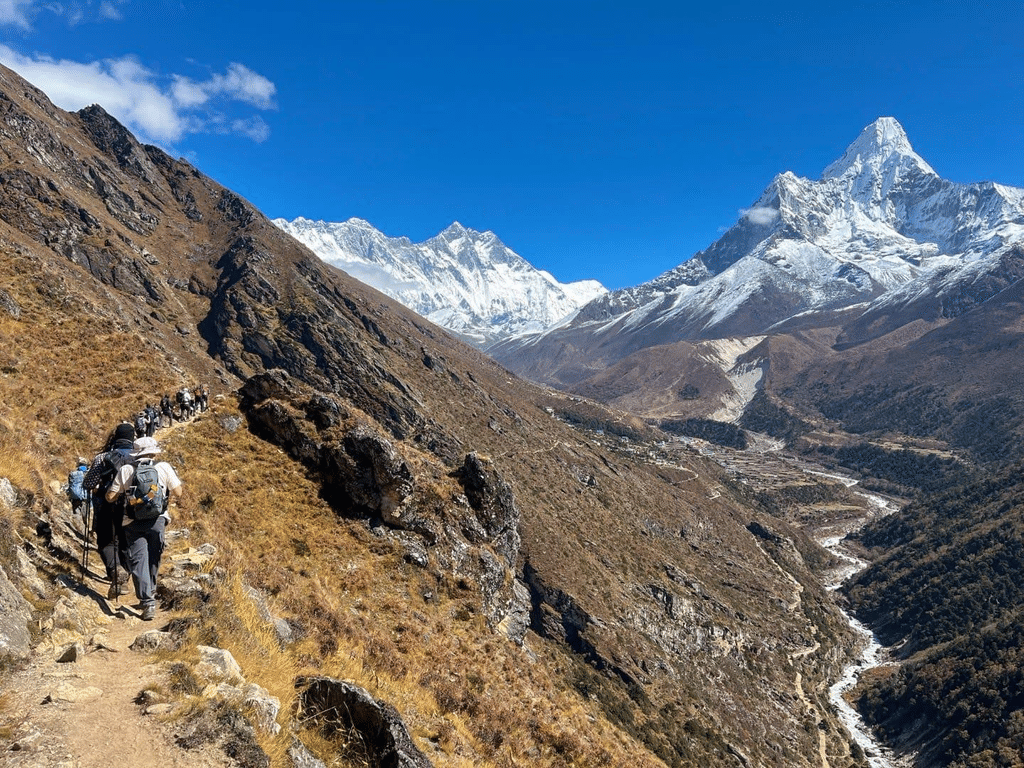
Upper Dolpo has no lodges in its high settlements, so groups carry everything. Trek duration runs 24 to 28 days including flights, and the restricted-area permit alone costs US$500 per person for the first ten days plus US$50 per day after that, with a minimum of two foreign trekkers.
Dhaulagiri Circuit is the classic mountaineering-flavored camping route. There are no teahouses across the long central stretch between Italian Base Camp and Marpha, and the trek crosses French Pass at 5,360 meters over 16 to 18 days. Makalu Barun’s upper valleys, parts of Dhorpatan, and several far-western approaches sit in the same category.
Lower Dolpo is a middle case. Some sections have simple lodging, others do not, and most agencies run it as a partial camping trip. Our guide to Lower Dolpo and Shey Phoksundo Lake covers that stretch in detail.
Permits and Paperwork Differ Too
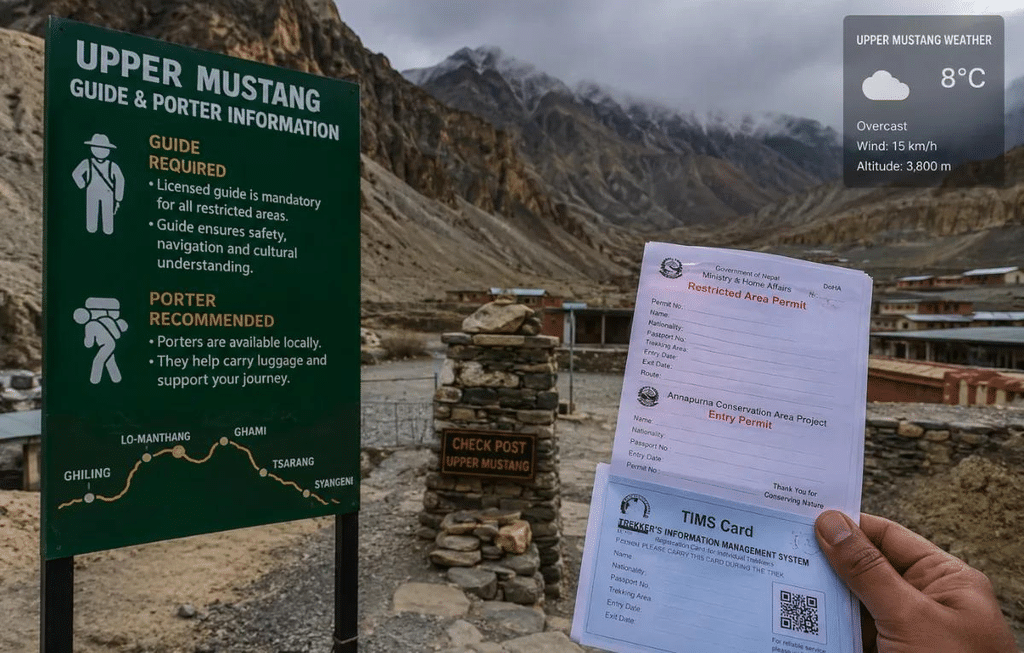
Teahouse routes generally need a national park or conservation area entry permit at NPR 3,000 for foreign nationals, plus either a TIMS card or a local municipality fee. Camping routes are usually inside restricted areas, which means permits issued through the Department of Immigration via a registered agency, minimum group sizes, and fees measured in hundreds of US dollars rather than thousands of rupees.
That difference alone explains why camping trips need long lead times. You cannot arrange a restricted-area permit yourself the afternoon before you fly. Read our overview of Nepal travel rules tourists often overlook before you finalize dates. The Trekking Agencies’ Association of Nepal publishes current TIMS details.
Which One Should You Choose
Choose teahouse if you have under three weeks, a normal budget, or a first Himalayan trek behind you rather than ahead of you. Choose camping if the specific place you want to see has no lodges, or if you want solitude badly enough to pay four times the rate for it.
Season shifts the answer. In October and April, popular lodges fill and camping’s privacy gains value. In winter, many high teahouses close entirely and a supported camping group may be the only way through. In monsoon, leeches, landslides, and wet tents make camping genuinely unpleasant on most routes.
Frequently Asked Questions
Is camping cheaper than staying in teahouses in Nepal?
No. Camping typically costs two to four times more per day, because you pay a full crew, their food, insurance, equipment, and transport. Teahouse trekking spreads those costs across many guests.
Can I camp independently on a teahouse route?
Usually not in practice. Park and conservation rules, restricted-area conditions, and guide requirements on many trails restrict independent camping. Check current regulations with the relevant park office or your agency before planning around it.
Do I still need a sleeping bag for a teahouse trek?
Yes, above roughly 3,000 meters. Lodges supply blankets, but rooms are unheated and nights drop below freezing. A bag rated to minus 10 degrees Celsius is a reasonable baseline for autumn.
Are teahouse rooms really free?
Often at low altitude, on the condition that you eat dinner and breakfast at the same lodge. Eat elsewhere and the room is charged, commonly NPR 500 to 1,500.
Which famous trek still requires camping?
Dhaulagiri Circuit and Upper Dolpo are the best-known. Dhaulagiri has no lodges between Italian Base Camp and Marpha, and Upper Dolpo’s high settlements have no lodging infrastructure at all.
How far ahead should I book a camping trek?
Two to three months is sensible. Restricted-area permits are issued only through registered agencies, minimum group sizes apply, and crew and pack animals need arranging in advance.
Is the food different between the two?
Yes. Teahouse menus are broad but repetitive across the whole trail. A camping cook prepares fresh meals for your group, which many trekkers find better on long trips, though supplies narrow as the days pass.
Which option supports local communities more?
Teahouse spending goes directly to trail families who own the lodges. Camping money flows mainly to crew wages and the agency. Both are legitimate, and hiring local crew from the district you are walking through narrows the gap.
Nepal’s trails do not reward one style over the other. They reward matching the style to the route, the season, and the time you actually have. If this guide helped you decide, explore more of our trekking coverage at NepalVue, save this page for your planning file, and share it with whoever is coming with you.