



Two people can walk the exact same trail to Everest Base Camp in the same two weeks and come home having spent $900 and $3,400 respectively. Same beds, same dal bhat, same checkpoints. The gap is almost never about luxury. It comes from four decisions made before anyone leaves Kathmandu: whether you fly or drive, how you book your guide, what you drink, and how much gear you buy new instead of renting.
So here is the Nepal trek cost question answered the way it should be answered, line by line, in Nepali rupees and US dollars, with the parts most operators quietly fold into a single “package price.”
The Short Answer, Then the Long One
Budget between $45 and $75 per person per day for a guided teahouse trek on a mainstream route in 2026, once you include permits, guide, food, and beds. Independent-style budgets in the $25 to $40 range still circulate online. They are outdated for anyone trekking legally on a protected-area route, because the guide is no longer optional and a guide is the single largest recurring line item on the list.


A 12 to 14 day Everest Base Camp trek booked with a Nepal-based agency lands between $1,200 and $2,500 all in. Annapurna Base Camp over 7 to 12 days runs $800 to $1,800. Langtang, the cheapest of the big three because there is no flight, comes in around $500 to $1,200. Manaslu Circuit costs more than all of them, roughly $1,400 to $2,800, because the restricted-area permit alone eats a few hundred dollars.
Now the individual lines.
Permits and Fees: The Fixed Costs
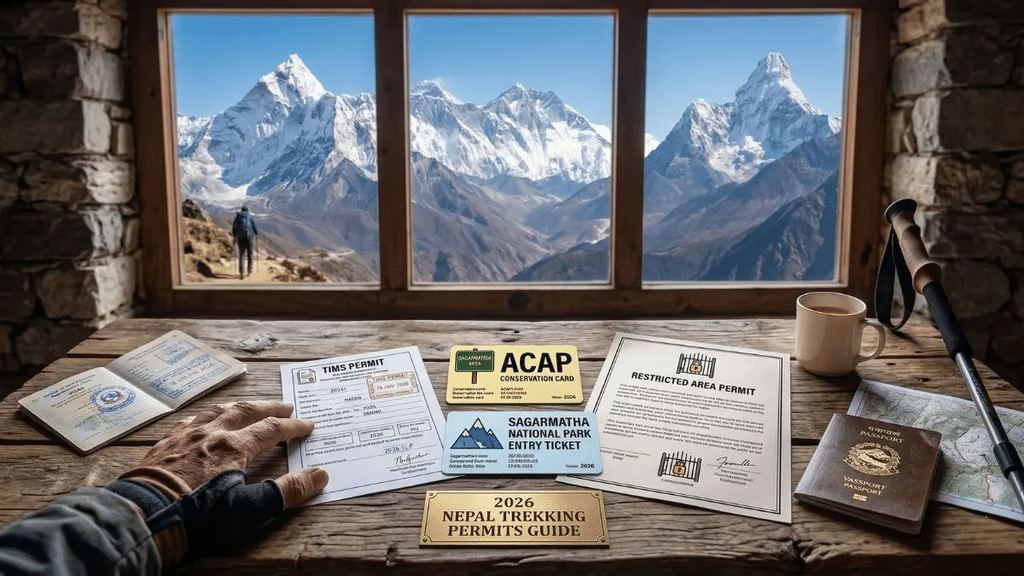
Permits are the one part of your budget nobody can negotiate. Rates are set by the Nepal Tourism Board, the National Trust for Nature Conservation, and the Department of National Parks. They are quoted in rupees and they include VAT.
| Permit | Foreigner | SAARC national | Nepali |
|---|---|---|---|
| TIMS card | NPR 2,000 (~$15) | NPR 1,000 (~$7) | Not required |
| Annapurna Conservation Area (ACAP) | NPR 3,000 (~$22) | NPR 1,000 (~$7) | Free |
| Sagarmatha National Park | NPR 3,000 (~$22) | Reduced | Free |
| Khumbu Pasang Lhamu local levy | NPR 3,000 (~$22) | NPR 3,000 | Varies |
| Langtang National Park | NPR 3,000 (~$22) | Reduced | Free |
| Manaslu Conservation Area | NPR 4,000 (~$29) | Reduced | Free |
| Manaslu restricted permit | ~$100/week peak, ~$75 off-peak | Same | Same |
| Upper Mustang restricted permit | ~$500 for 10 days | Same | Same |
| Kanchenjunga restricted permit | ~$20/week | Same | Same |
Note what happens in the Everest region. Since the local government took over collection, you pay the national park fee and then a separate NPR 3,000 rural municipality charge, usually at Lukla or Monjo. Everest trekkers pay roughly NPR 6,000 in area fees before a guide, a bed, or a plate of anything.
Restricted areas are a different animal entirely. Upper Mustang at $500 for ten days is not a formality, it is a meaningful chunk of a mid-range trek’s whole budget, and it is charged per person with no group discount.
Visa: The Line Everyone Forgets
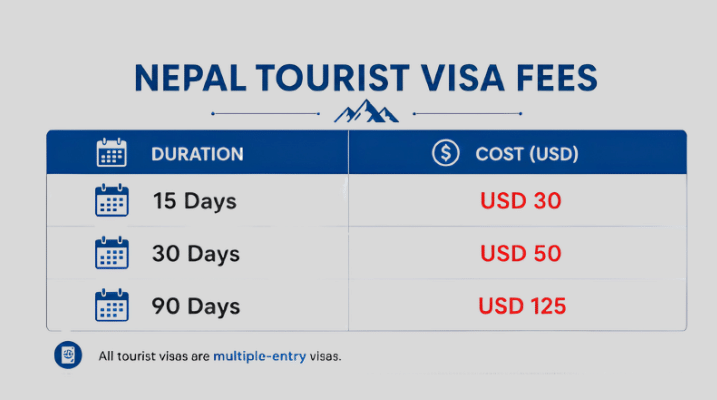
Visa on arrival at Tribhuvan International runs $30 for 15 days, $50 for 30 days, and $125 for 90 days. Extensions cost $3 per day with a 15 day minimum, so $45 is the floor. SAARC nationals get 30 days free and Indian citizens need no visa at all. Build the visa into the trek budget, because a 14 day trek plus travel days almost always pushes you past the 15 day window.
Guide and Porter: Your Biggest Recurring Cost
A licensed guide costs $25 to $35 per day on standard teahouse routes in 2026. Senior guides with technical certifications, English fluency, and high-altitude first aid training charge $40 to $60. Peak season, meaning October and November, pushes rates up 20 to 30 percent, and the good guides are booked months ahead.
Porters run $15 to $25 a day and carry up to 20 to 25 kg, which in practice means one porter comfortably handles two trekkers’ duffels. A porter-guide, a licensed guide who also carries a lighter load, sits at $20 to $30 daily and is the best value in Nepali trekking for a solo traveler on an easy route.
Here is what most guides won’t tell you, mostly because they are too polite: those daily rates are their wage, not their expenses. Reputable agencies cover the guide’s food, lodging, and insurance inside the package. Book privately at a “cheap” $20 a day and you may find yourself covering $15 to $20 daily on top for their meals and bed. Cheaper does not survive the arithmetic.
Tipping is separate and it is real. Plan 10 percent of the trek cost, or $50 to $100 for a guide and $30 to $60 for a porter on a two week trek. We wrote a full breakdown on tipping guides and porters in Nepal if you want the regional norms.
Food and Lodging on the Trail
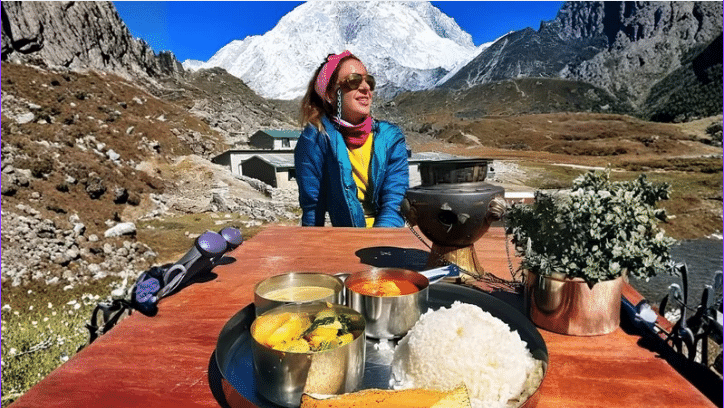
Rooms are cheap. Food is not, and the gap widens with every hundred meters of altitude, because everything above the last road head arrives on someone’s back or a mule.
| Item | Below 2,000 m | 2,000 to 3,500 m | Above 3,500 m |
|---|---|---|---|
| Teahouse room (twin) | $3 to $10 | $8 to $12 | $10 to $20 |
| Dal bhat | $4 to $6 | $5 to $8 | $8 to $12 |
| Breakfast | $3 to $5 | $4 to $7 | $6 to $10 |
| Tea or coffee (pot) | $1 to $2 | $2 to $3 | $3 to $5 |
| Hot shower | $2 to $3 | $3 to $5 | $5 to $7 |
| Device charging | Often free | $2 to $3 | $3 to $5 |
| Wi-Fi | Often free | $3 to $5 | $5 to $10 |
| Bottled water (1 L) | $1 | $2 | $4 to $6 |
Look at the room prices again, then the food prices. A $5 bed sounds like a bargain until you notice teahouses make almost nothing on the room and everything on the kitchen. Eating your dinner elsewhere is how you get your room rate quietly tripled, or lose it altogether.
Dal bhat deserves its reputation. Free refills of rice, lentils, and vegetables is not a marketing line, it is standard practice, and at 4,000 m it is the only meal on the menu that reliably delivers enough calories for the next day.
The Water Line
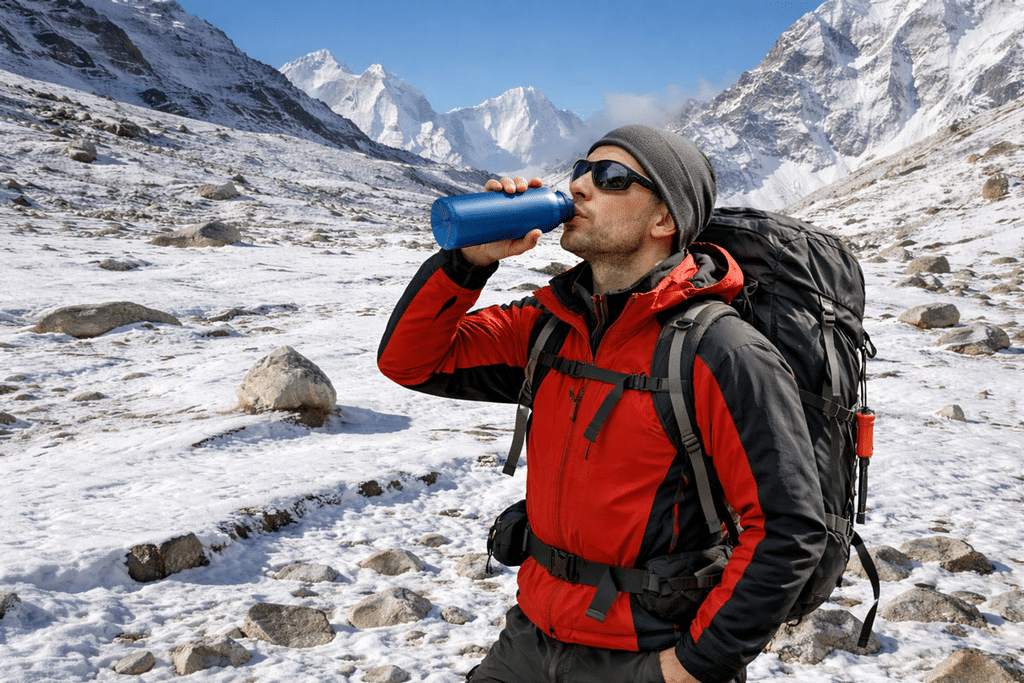
Buying bottled water for 14 days at Everest altitudes costs $50 to $80 per person and leaves a trail of plastic that Khumbu is still trying to clean up. Purification tablets cost about $15 for the entire trek. A SteriPEN or filter bottle runs $50 to $100 and pays for itself on a single trek. Boiled water from a teahouse costs $1 to $2 a liter and works fine.
Getting There: Flights and Ground Transport
Kathmandu to Lukla is the expensive one: $180 to $220 one way, $360 to $440 return, and in peak season the flight often departs from Ramechhap instead of Kathmandu, adding a four to five hour pre-dawn drive that agencies do not always mention in the quote. Ask directly, in writing, which airport your ticket uses.
Everything else is cheap by comparison. Kathmandu to Pokhara by tourist bus costs $10 to $20 over roughly 200 km and seven hours. Flying the same route takes 25 minutes and costs $100 to $130. Local buses and shared jeeps to trailheads such as Besisahar, Syabrubesi, or Nayapul run $5 to $25 depending on distance and how much of the seat is actually yours.
Jomsom flights, if you are shortening an Annapurna itinerary, cost $200 to $300 return.
Gear: Rent, Don’t Buy
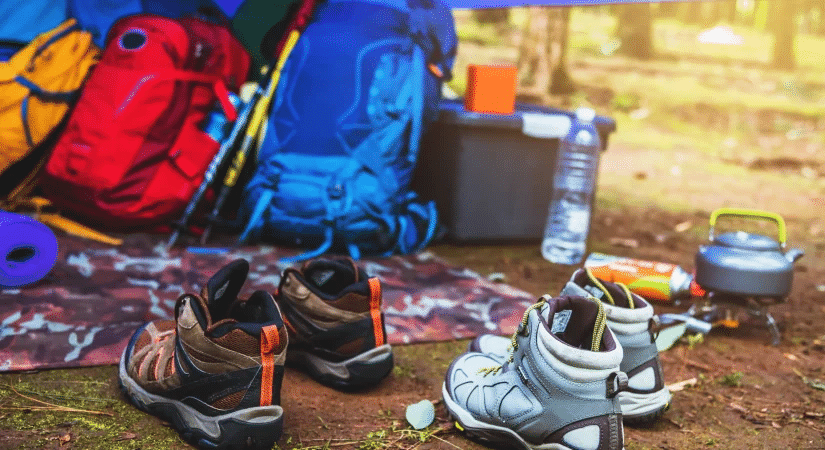
Thamel’s rental shops are the most underrated money-saver in Nepal. A down jacket rents for $1 to $2 a day. Same for a four-season sleeping bag. Trekking poles cost 50 cents to $1 a day. A complete two week rental package sits at $50 to $100.
Compare that to buying: a genuine down jacket in Kathmandu costs $80 to $200, and a real four-season bag costs more. Buy your own boots, because blisters from someone else’s footbed will end your trek faster than altitude will. Rent nearly everything else.
Budget $30 to $60 for the things nobody lists: a duffel the porter can actually carry, a sun hat, blister tape, sunscreen at 3,000 m strength, and a Nepali SIM with data.
Insurance: Non-Negotiable
Travel insurance covering trekking to at least 5,500 m and including helicopter evacuation costs $80 to $200 for a two to three week trip. Skipping it is the worst financial decision available to you in Nepal. An uninsured helicopter rescue from the Khumbu bills between $3,000 and $6,000, payable before the aircraft lifts off in many cases.
Read the altitude ceiling on your policy. Standard travel insurance often stops at 3,000 or 4,000 m, which is below the height of most teahouses on the routes people actually walk.
Three Sample Budgets
| Line item | Budget ABC, 8 days | Standard EBC, 14 days | Manaslu Circuit, 16 days |
|---|---|---|---|
| Permits | $37 | $44 | $230 |
| Guide | $225 | $420 | $480 |
| Porter (shared) | $80 | $150 | $180 |
| Food and lodging | $240 | $560 | $540 |
| Transport | $40 | $400 | $60 |
| Gear rental | $40 | $80 | $90 |
| Insurance | $90 | $140 | $160 |
| Tips and extras | $80 | $180 | $200 |
| Total | ~$830 | ~$1,975 | ~$1,940 |
Notice the Manaslu column. Permits are five times the Everest figure and transport is one seventh, which is why remote does not automatically mean expensive and famous does not automatically mean good value. Our Manaslu Circuit guide covers the route in detail.
Where People Actually Overspend
- Booking from abroad. International operators reselling the same Nepali ground agency add 40 to 100 percent. Book direct with a TAAN-registered Kathmandu agency and read reviews carefully.
- Peak season. October and November cost 20 to 30 percent more for guides and flights. Late September and early December are quieter, cheaper, and often clearer.
- Bottled water. $60 wasted, easily, plus the plastic.
- Wi-Fi packages. An Ncell or NTC data SIM covers most of the Annapurna region for a few dollars. Everest Link cards in Khumbu still cost more.
- Buying gear in your home country. Rent in Thamel unless the item touches your feet.
The single biggest saving available is choosing a shorter or lower trek that you will actually enjoy. A five day Mardi Himal trek at under $400 delivers a mountain view that many people rate above the crowded stretch into Everest Base Camp.
FAQ
How much money should I carry in cash on a trek?
Around NPR 3,000 to 5,000 per day per person for food and extras if these are not prepaid, plus tips. ATMs exist in Namche and Jomsom but they run empty and charge NPR 500 per withdrawal. Bring more rupees than you think you need, in small notes.
Is trekking in Nepal cheaper than in 2019?
No. Permit fees, the mandatory guide rule, and food prices have all risen. A trek that cost $700 in 2019 typically runs $1,200 to $1,500 in 2026.
Can I still trek without a guide to save money?
Not legally on protected-area routes. Independent trekking without a licensed guide is no longer permitted in national parks and conservation areas, and checkpoints scan permits digitally. Day hikes around the Kathmandu Valley remain free and unregulated.
What does a helicopter rescue cost if I am not insured?
Roughly $3,000 to $6,000 depending on altitude and distance. Insurance covering evacuation to 5,500 m costs a fraction of that.
Are credit cards accepted on the trail?
Rarely, and where they are, expect a 3 to 5 percent surcharge. Treat the trek as a cash economy from the trailhead onward.
How much does a porter carry, and is one enough for two people?
Legally and ethically, up to 20 to 25 kg. Two trekkers packing sensibly at 10 kg each can share one porter, which halves the cost per person.
When is the cheapest time to trek in Nepal?
Late winter, meaning January and February, on lower routes. Guide rates drop, teahouses negotiate, and the air is at its clearest. Bring a warmer bag.
Do I need to pay the whole package upfront?
A 10 to 20 percent deposit is standard, with the balance in Kathmandu before departure. Any agency demanding full payment by wire transfer before you arrive deserves a second look.
For current permit rates straight from the source, check the Nepal Tourism Board, and verify your agency’s registration with the Trekking Agencies’ Association of Nepal before paying anything.


