



Picture this: you’re somewhere above 3,000 meters, your lungs are working harder than they ever have at home, the air smells of pine and cold stone, and around the next bend is a view of a mountain so enormous it stops you mid-step. Nobody around you says a word. You don’t need to. That moment, right there, is why people fly across the world to put one foot in front of the other in Nepal. Trekking in Nepal for beginners is more accessible than most people realize, and this guide will walk you through exactly what you need to know before you lace up your boots.
Why Nepal? The Honest Answer
Here’s the thing about Nepal: it has mountains, yes, but it also has an entire ecosystem built around getting ordinary people into them safely. Tea houses line the trails every few hours. Local guides know the paths better than anyone. The routes are well-marked. And the Nepalese culture of hospitality means you’ll rarely feel alone, even on your first day out.
There are also dozens of treks at different difficulty levels, from gentle valley walks that top out at 2,000 meters to serious high-altitude challenges pushing well past 5,000 meters. You don’t need to be an athlete. You don’t need climbing experience. What you do need is preparation, and this guide gives you all of it.


If you’re still figuring out whether Nepal is right for you at all, our Nepal for first-time visitors guide is a good place to start.
The Best Beginner Treks in Nepal
Not all treks are created equal. Some take 20 days and cross a mountain pass at 5,416 meters. Others take five days and meander through rhododendron forests between comfortable tea houses. For first-timers, these are the three routes worth seriously considering.
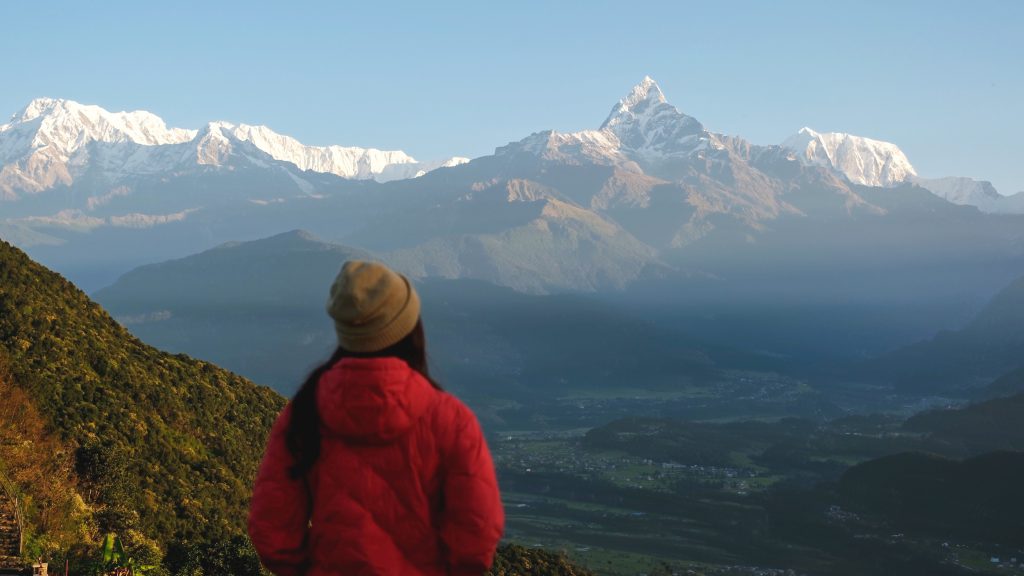
Ghorepani Poon Hill Trek (4-5 days)
This is the classic entry point. It’s short, the altitude stays manageable (3,210m at the summit viewpoint), and the payoff is one of the most photographed sunrises in Asia. You’ll walk through Gurung villages, thick forests of rhododendron in bloom if you’re there in March or April, and arrive at Poon Hill early morning to watch Dhaulagiri and Annapurna South glow pink before the rest of the world wakes up. Trek days average about 5-6 hours of walking. Nothing extreme.
Annapurna Base Camp Trek (10-13 days)
A step up in length and altitude, the ABC trek takes you to 4,130 metres inside a natural amphitheatre ringed by some of the world’s highest peaks. It’s moderate difficulty. Most days you’ll walk 5-7 hours over well-maintained paths, and tea houses appear at regular intervals throughout. You don’t need prior trekking experience for this one, but you should be comfortable walking uphill for several hours at a time. Total package costs typically run between $600 and $900 when booked through a reputable agency, or you can organise it independently for less.
Langtang Valley Trek (7-10 days)
Langtang doesn’t get the same attention as Annapurna, and that’s exactly what makes it worth doing. It’s quieter, the Tamang culture feels more present and less tourist-facing, and the Kyanjin Gompa monastery at the top of the valley is genuinely beautiful. Maximum altitude is around 3,870 metres. It’s also closer to Kathmandu, which cuts down on travel time to the trailhead.
When to Go: Seasons That Actually Matter
Most guides will tell you “spring or autumn.” That’s true, but let’s be more specific about what you’re actually getting in each window.
Spring (March to May) brings rhododendron forests in full bloom, temperatures that are cool but not biting, and stable weather before the monsoon arrives. March and April are the sweet spot. May starts to get humid and hazy at lower elevations.
Autumn (late September to November) is when the air is clearest, post-monsoon dust has been washed from the atmosphere, and mountain views are sharpest. October is the most popular month on the trails, which means more fellow trekkers and slightly higher prices. November is quieter, colder at night (expect 0°C or below at altitude), but stunning.
Avoid the monsoon months of June, July, and August unless you specifically want leeches, muddy trails, and mountain views completely lost behind cloud. Winter (December to February) is possible on lower-altitude treks but can be extremely cold, and high passes may be impassable.
Permits: What Changed in 2026
This is where most guides go wrong, because the rules changed significantly. As of 2026, the TIMS card (Trekkers’ Information Management System) has been abolished. You no longer need it. What you do need depends on which region you’re trekking in.
For the Annapurna region, you need an ACAP permit (Annapurna Conservation Area Permit), which costs around $30 USD. For Langtang, it’s the LNPAP (Langtang National Park Permit) at around $30 USD. For Everest region treks, the SAGARMATHA NATIONAL PARK permit is required at $30 USD.
Here’s the bigger change: solo trekking now requires a licensed guide in most restricted areas. Since March 2026, solo trekkers must hire a licensed guide through a registered agency. This actually makes things safer for first-timers, though it does add to the cost.
For a full breakdown, see our dedicated Nepal trekking permits guide.
How Fit Do You Actually Need to Be?
The truth is, you don’t need to be a runner or a gym regular. What you do need is the ability to walk uphill for several consecutive hours, day after day, for however long your trek lasts. Your cardiovascular system matters more than raw strength here.
A solid preparation plan: start walking hills or stairs 6-8 weeks before your trek. Work up to carrying a day pack of 5-8 kg. If you can comfortably walk for 6 hours with some elevation gain, you’ll handle the Poon Hill or Langtang routes just fine. For Annapurna Base Camp, add some longer days (7-8 hours) to your training and you’ll be in good shape.
One thing most beginners underestimate is mental stamina. Physical tiredness on day one feels fine. On day six, it requires more grit. Build that awareness before you go.
What to Pack: The Actual Essentials
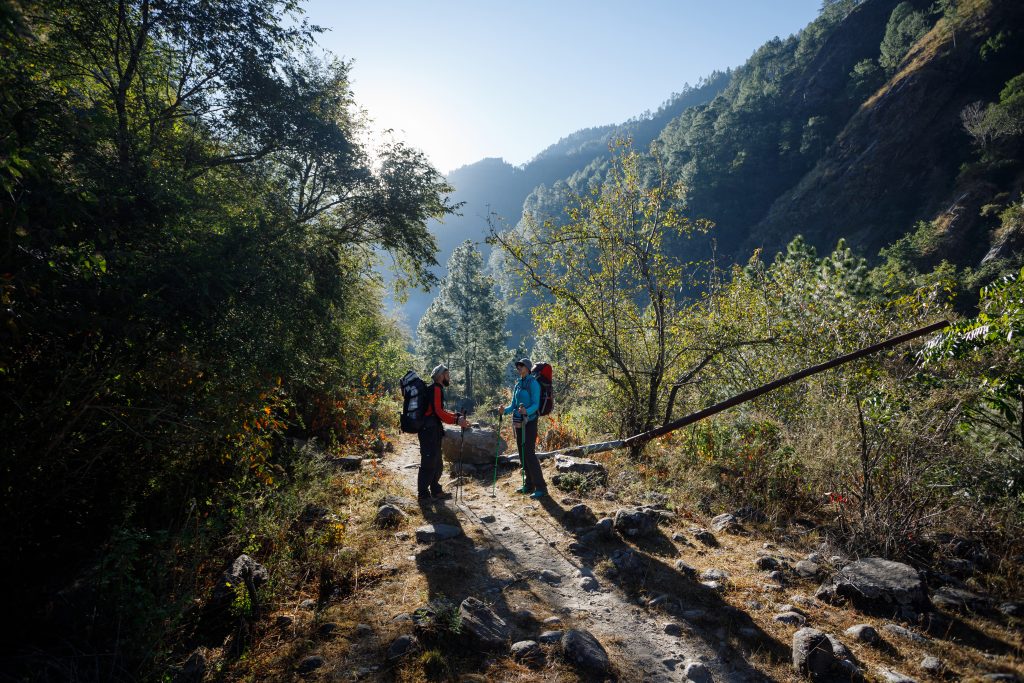
Keep your pack light. This is the rule most first-timers break, and they regret every extra kilogram by day three. Aim for a 30-40L backpack weighing no more than 8-10 kg.
Clothing Layers
- Moisture-wicking base layer tops (2-3)
- Mid-layer fleece or softshell
- Down jacket (essential above 3,000m)
- Waterproof shell jacket and trousers
- Trekking trousers (2 pairs)
- Warm hat, sun hat, and gloves
- Thick hiking socks (4-5 pairs), liner socks
Footwear
- Waterproof ankle-support hiking boots, broken in before the trek
- Lightweight camp sandals or shoes for evenings at the tea house
Gear and Health
- Sleeping bag rated to -10°C (tea house blankets exist but aren’t always thick enough)
- Headlamp with spare batteries
- Trekking poles (optional but kind on your knees going downhill)
- Water purification tablets or a filter bottle
- Basic first aid kit including blister plasters, ibuprofen, oral rehydration salts
- Sunscreen SPF 50+ and SPF lip balm (UV exposure increases significantly at altitude)
- Diamox (acetazolamide) for altitude sickness prevention, available in Kathmandu pharmacies
Altitude Sickness: Don’t Ignore This Section
This is where most people go wrong. Altitude sickness doesn’t care how fit you are. It doesn’t care how experienced you are. It’s a physiological response to reduced oxygen at elevation, and it can happen to anyone above 2,500 metres.
Symptoms include headache, nausea, dizziness, fatigue, and disturbed sleep. Mild symptoms are normal. Severe symptoms, including confusion, loss of coordination, or a wet cough at rest, require immediate descent.
The golden rules: ascend no more than 500 metres per day above 3,000 metres. Take rest days. Drink 3-5 litres of fluid daily. Use the “climb high, sleep low” strategy where the route allows. Avoid alcohol and sleeping pills, both of which suppress breathing at altitude.
If you want extra protection, speak to a doctor about Diamox before you leave home. It’s widely used and genuinely effective as a preventative.
Life in the Tea Houses
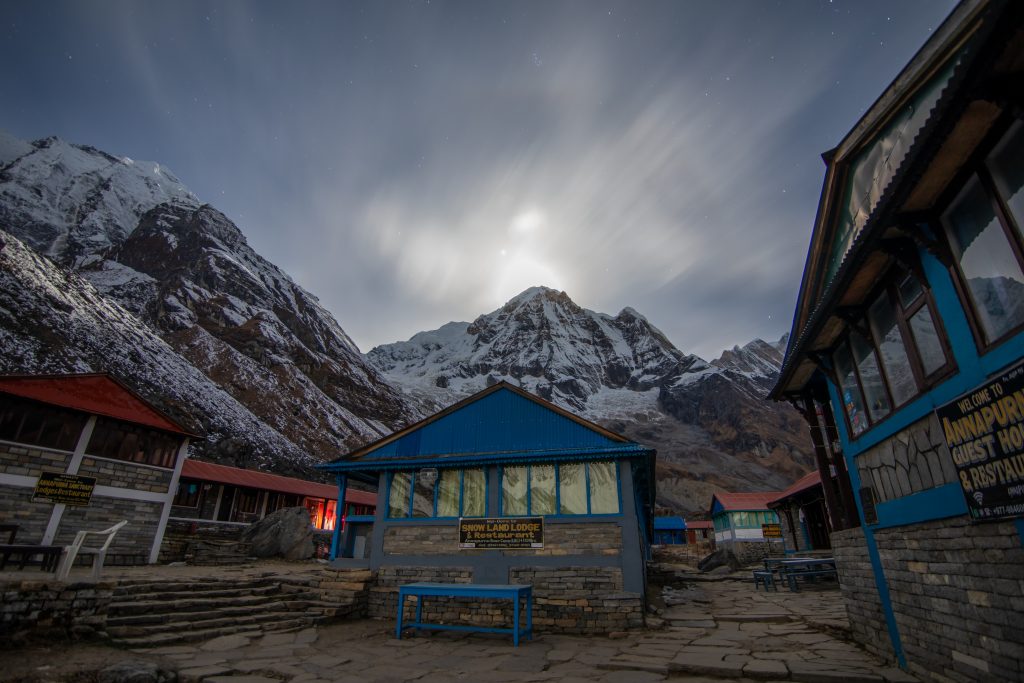
Tea houses are the backbone of Nepal trekking. They’re small guesthouses run by local families, usually with shared bathrooms, basic but warming meals, and a communal dining room heated by a wood or yak-dung stove. Think less hostel, more Himalayan farmhouse.
Rooms typically cost between $5 and $15 per night. You’re expected to eat your meals at the same tea house where you sleep. Meals are simple: dal bhat (the national dish of lentil soup, rice, and vegetables), noodles, pasta, fried rice, and eggs. Dal bhat is your best value meal at around $5-7, and it often comes with unlimited refills.
Cash is essential. There are no ATMs above Namche Bazaar on the Everest route or above Manang/Jomsom in the Annapurna region. Bring all the Nepali rupees you’ll need from Kathmandu or Pokhara before you start walking. Some larger tea houses accept cards now, but don’t rely on it.
Should You Hire a Guide, a Porter, or Both?
For 2026 trekking, a licensed guide is now required in most restricted areas for solo trekkers. Even where it’s not mandatory, a local guide adds enormous value. They know the trails, they speak the language, they can negotiate at tea houses, and they’re your first line of defence if something goes wrong medically at altitude. Guides cost $25-40 per day.
A porter carries your pack. If you’re not used to carrying weight over long distances, this isn’t a luxury. It’s a practical choice that lets you enjoy the walk instead of suffering through it. Porters cost $15-25 per day. You pay separately for their food and accommodation, and you should.
Tipping both at the end of the trek is expected and important. Around 10-15% of their total fees is a standard and appreciated gesture.
Still deciding between the Annapurna and Everest regions? Our comparison guide on Annapurna vs Everest Base Camp lays out the key differences clearly.
Budget: What Trekking in Nepal Actually Costs
Budget for $25-40 per day on the trail, covering food and accommodation at tea houses. Add guide fees, porter fees if required, permits ($30-60 depending on region), gear (rentable in Kathmandu’s Thamel district), and flights. A 10-day beginner trek in the Annapurna region, organised independently with a guide and porter, will typically cost $800-1,200 all in once you’re in Nepal, not counting international flights.
If you book through an agency from abroad, expect $1,200-1,800 for a well-organised 10-day itinerary with all logistics included. It’s worth it for a first time, when you don’t yet know how things work on the ground.
Frequently Asked Questions
Do I need prior trekking experience to trek in Nepal?
No, you don’t. Routes like Ghorepani Poon Hill and Langtang Valley are designed for people who have never trekked before. The trails are well-maintained, tea houses are frequent, and local guides are available to support you throughout. Basic physical fitness and the right gear matter far more than experience.
Is it safe to trek in Nepal as a solo traveller?
Yes, with some conditions. As of 2026, solo trekkers in most restricted areas are required to hire a licensed guide through a registered agency. On well-trafficked routes like Annapurna and Everest, you’ll rarely be truly alone on the trail. With a guide, the risk is very low. Go through a reputable agency and share your itinerary with someone at home.
How long does a typical beginner trek take?
The Ghorepani Poon Hill trek takes 4-5 days. Langtang Valley is typically 7-10 days. Annapurna Base Camp runs 10-13 days. All of these include enough rest days to acclimatise properly. Rushing a trek to fit a tight schedule is one of the most common beginner mistakes, and it increases altitude sickness risk significantly.
What is the best time of year to trek in Nepal as a beginner?
October and November are the most popular months for clear skies and stable trails. March and April are ideal for spring blooms and warmer temperatures. Avoid the monsoon season (June to August) unless you’re doing a rain-shadow region trek like Mustang, which stays dry year-round. December to February is cold but manageable on lower-altitude routes.
How much does it cost to trek in Nepal?
Budget roughly $25-40 per day on the trail for food and accommodation. Add your guide ($25-40 per day), porter if needed ($15-25 per day), and permits ($30-60). A 10-day trek organised independently can cost $800-1,200 inside Nepal. Agency-booked packages from abroad run $1,200-1,800 for a comparable itinerary.
Do I need to carry a lot of cash on the trek?
Yes. ATMs are not available above Namche Bazaar on the Everest route or in upper Annapurna. Withdraw all the Nepali rupees you’ll need in Kathmandu or Pokhara before you start. Count on roughly 3,000-5,000 NPR (around $22-37 USD) per day for meals and accommodation at tea houses.
What happens if I get altitude sickness on the trail?
Mild symptoms such as headache and fatigue are common and usually pass with rest and hydration. If symptoms worsen or don’t improve after 24 hours, descend immediately. Your guide will help manage this. In serious cases, a helicopter evacuation can be arranged, which is why comprehensive travel insurance with emergency evacuation cover is non-negotiable for any Nepal trek.
Can I rent trekking gear in Nepal rather than bringing it from home?
Absolutely. Kathmandu’s Thamel neighbourhood has dozens of gear rental shops where you can hire quality down jackets, sleeping bags, trekking poles, and more at reasonable daily rates. Buying gear at home before you go is worthwhile for boots and base layers, but most equipment can be rented locally if you’re trying to keep luggage weight down.
For more on Nepal’s trekking regions and culture, check out official guidance from the Nepal Tourism Board and the Trekking Agencies’ Association of Nepal.


