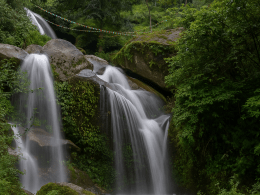



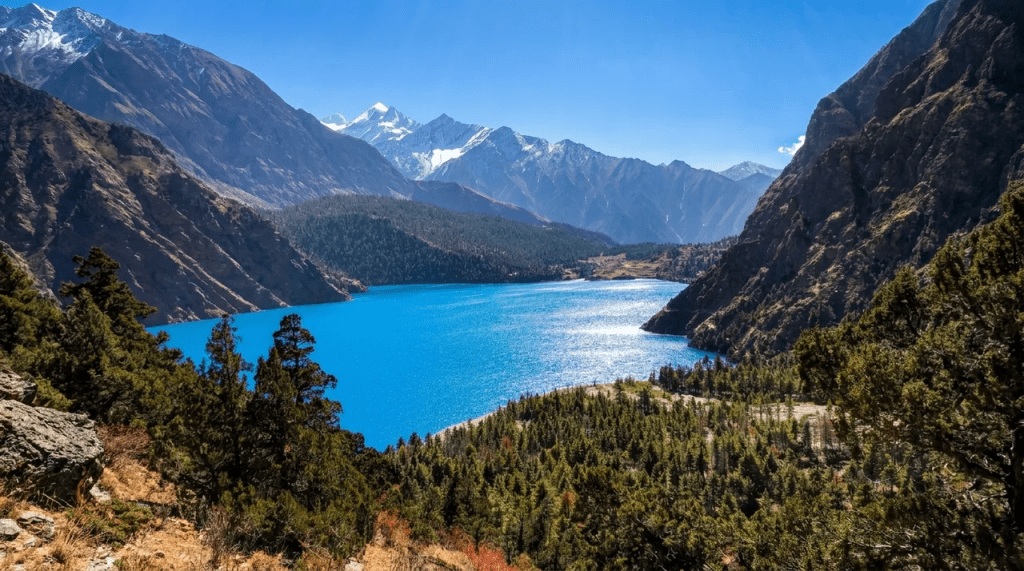
Nepal’s deepest lake sits at roughly 3,600 meters, plunges about 145 meters down, and glows a shade of turquoise so intense that first-time visitors assume the photos were edited. They were not. Shey Phoksundo Lake is the real thing, tucked into the far western district of Dolpa, and getting there is half the story. This is one of the few corners of the Himalaya where the mountains block most of the rain, the crowds never arrived, and an ancient pre-Buddhist religion still shapes daily life.
Here is what most trek listings gloss over: Lower Dolpo is remote in a way that changes how you plan. You fly twice just to reach the trailhead. You walk for days through villages that see a handful of foreigners a season. And the reward is a lake and a culture that feel genuinely untouched, not packaged.
Why Shey Phoksundo Lake Belongs on Your List
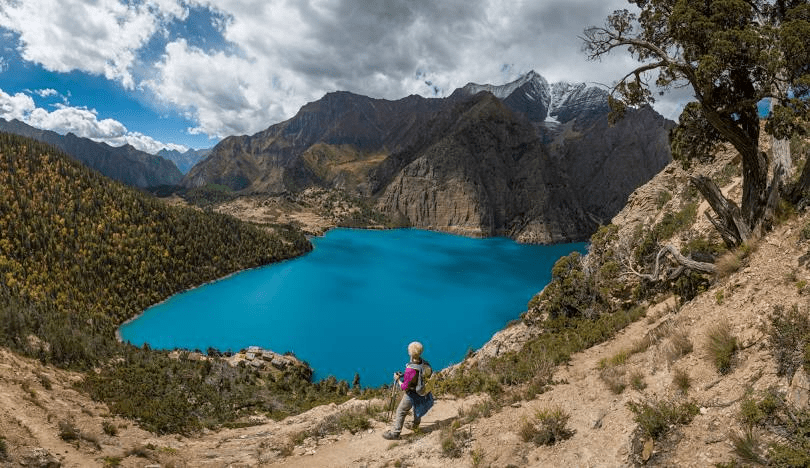
The color is the headline. Phoksundo is an oligotrophic alpine freshwater lake, which is a technical way of saying the water is exceptionally low in nutrients and sediment. Less stuff floating in the water means light scatters differently, and you get that unreal blue-green that no filter can fake.


It is also Nepal’s deepest lake. At around 145 meters, the water near the center drops far below anything you could wade into, and the surface stretches across roughly 494 hectares. Standing on the southern shore at Ringmo village, with prayer flags snapping in the wind and the lake spreading out cold and still, you understand why pilgrims have walked here for centuries.
There is a cinematic footnote too. The lake and the surrounding trails featured in the 1999 film often released as “Himalaya” (also titled “Caravan”), which earned an Academy Award nomination and put Dolpo on the map for a global audience. Most people who visit have seen the film without realizing where it was shot.
The rain shadow advantage
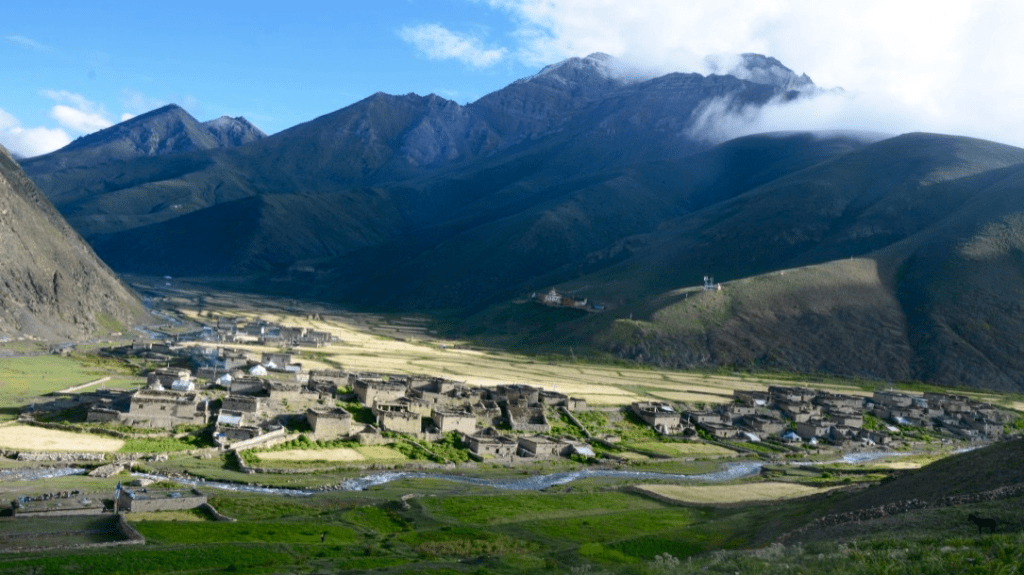
Dolpo sits in the Trans-Himalayan rain shadow, behind the high peaks of the Dhaulagiri massif. When the monsoon dumps water on Pokhara and the Annapurna foothills from June through September, much of that moisture gets wrung out before it ever reaches Dolpo. That does not make the region monsoon-proof. Lower Dolpo still catches more rain than the high desert of Upper Dolpo or Mustang. But it stays drier than almost anywhere else in the country during the wet months, which is exactly why some travelers chase it in summer when the rest of Nepal turns to mud.
Getting to Lower Dolpo: The Flights Nobody Warns You About
Reaching the trailhead is the single biggest logistical hurdle, and it trips up a lot of first-timers. You cannot drive there in any reasonable timeframe. The standard route involves two flights.
- Flight one: Kathmandu to Nepalgunj, a hot lowland city near the Indian border. This is a regular scheduled flight of about an hour.
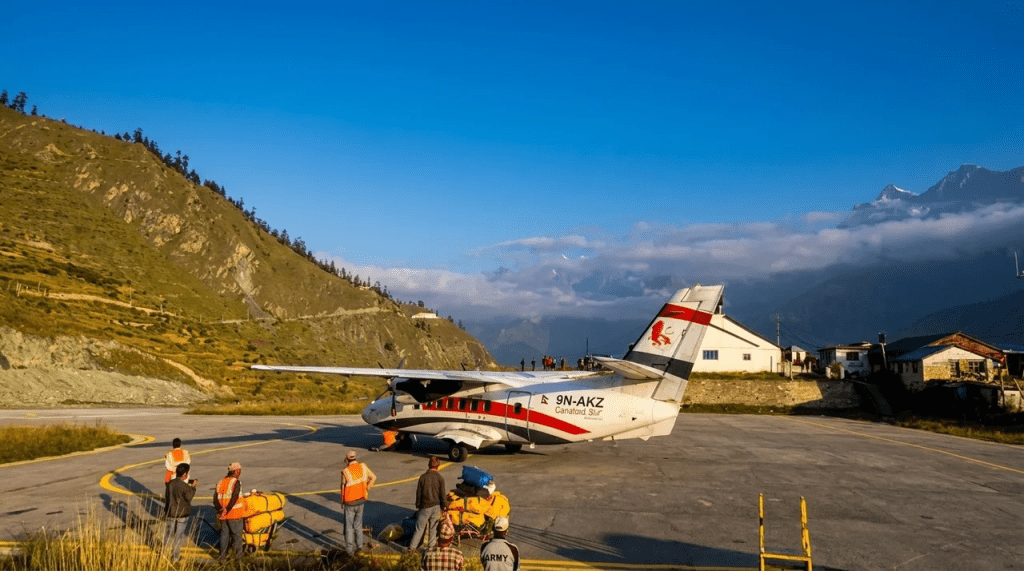
- Flight two: Nepalgunj to Juphal, the tiny airstrip that serves Dolpa. The hop takes only 30 to 35 minutes, but it runs on small aircraft and is notoriously weather-dependent.
Build buffer days into your plan. Juphal flights get canceled or delayed when clouds roll in, and during the monsoon that happens often. Smart trekkers add one or two spare days on each end so a single weather day does not collapse the whole trip.
From Juphal, the trek begins almost immediately. Dunai, the district headquarters of Dolpa, lies about 11 kilometers away and takes roughly three hours of walking to reach. From Dunai you follow the river valley north, passing through Chhepka and a string of small settlements, before the final climb toward Ringmo and the lake.
Permits for the Shey Phoksundo Lake Trek
Lower Dolpo is a restricted area, and that comes with paperwork and rules you cannot skip. You will need two main permits.
The first is the Shey Phoksundo National Park entry permit. As of early 2025, this cost around NPR 3,000 per person, which works out to roughly 25 US dollars depending on the exchange rate. The park is the largest national park in Nepal, and the fee supports its conservation work.
The second is the Lower Dolpo restricted area permit. Pricing here is where sources disagree, so treat the numbers as estimates and confirm before you go. As of early 2025, most operators quoted approximately 20 US dollars per person for the first week, plus around 5 US dollars per additional day. Some agencies instead cite a structure closer to 50 dollars for the first ten days. The discrepancy usually comes down to how different operators package the weekly versus daily rates, so get a written breakdown from your agency.
The solo trekking rule
One rule is non-negotiable: you cannot trek Lower Dolpo independently. Restricted area permits are only issued through a registered trekking agency, and you must travel with a licensed guide. This is not a soft suggestion. Checkpoints along the route verify permits, and turning up without the right documents means getting turned back. If you have read our wider breakdown of Nepal trekking permits, you already know the restricted zones play by stricter rules than the open trails.
The Route and What Daily Life on the Trail Looks Like
A typical Shey Phoksundo Lake itinerary runs somewhere between 9 and 13 days, counting the flights, the trek in, time at the lake, and the walk back. The exact length depends on your pace and how many acclimatization or buffer days you fold in.
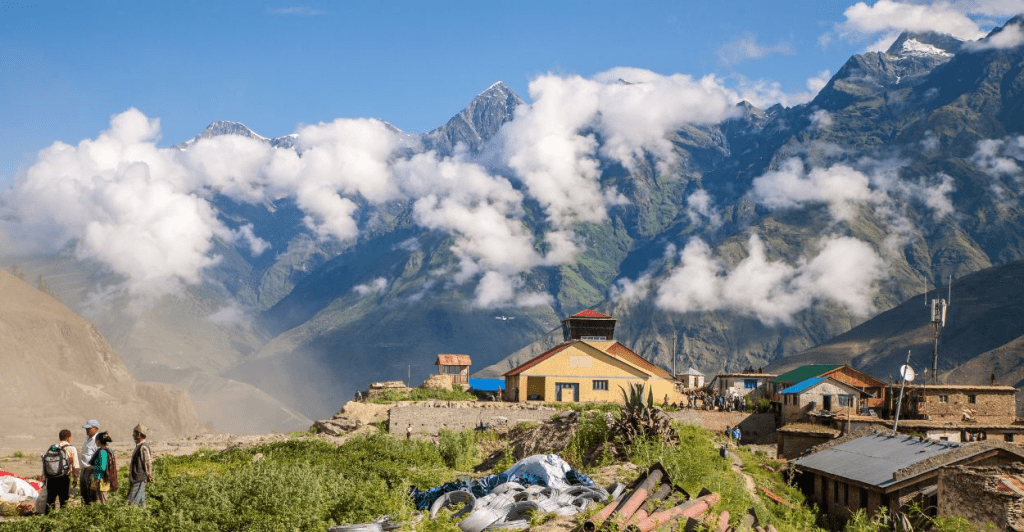
Most walking days involve five to seven hours on the trail at a steady pace. Distances are not extreme, but the terrain is rugged and the valley narrows into steep, dramatic gorges in places. You climb gradually, gaining altitude over several days rather than all at once, which keeps the trek manageable for people without high-altitude experience.
Accommodation is basic. Expect simple teahouses and lodges in the larger villages and homestays or camping arrangements in the smaller ones. Do not come expecting hot showers and Wi-Fi. The food leans toward dal bhat, the rice and lentil staple that fuels half the country, with limited variety the deeper you go.
How hard is it really?
Compared with the big-name routes, this one is forgiving. The highest point sits around 3,600 meters at the lake, which is considerably lower than the 5,000-plus-meter passes on the Everest or Annapurna circuits. Altitude sickness risk drops sharply at that elevation. For anyone weighing their first Himalayan walk, our guide to trekking in Nepal for beginners pairs well with this route, because Lower Dolpo asks for stamina and patience more than technical skill.
The real difficulty is remoteness. Help is far away, travel days are long, and the simplicity of the region means you carry more self-reliance than you would on a busier trail. That isolation is also the whole point.
The Culture: Bon, Buddhism, and Villages Frozen in Time
Dolpo is one of the last strongholds of Bon, the indigenous spiritual tradition that predates Tibetan Buddhism. Walk the trails and you will notice something subtle: some pilgrims circle shrines and spin prayer wheels counterclockwise, the opposite of Buddhist practice. That is Bon, quietly persisting in a way it no longer does in most of the Himalaya.
Ringmo village, perched on the lake’s southern shore at roughly 3,600 meters, is the cultural heart of the trek. Its gompa, the old monastery near the water, is worth the time to visit. The people here are ethnically and culturally Tibetan, and their way of life, built around barley, yaks, and trade over high passes, has barely changed in generations.
Be a respectful guest. Ask before photographing people or interiors of monasteries, walk clockwise around Buddhist stupas, and remember that you are passing through homes, not a museum.
Wildlife in Shey Phoksundo National Park
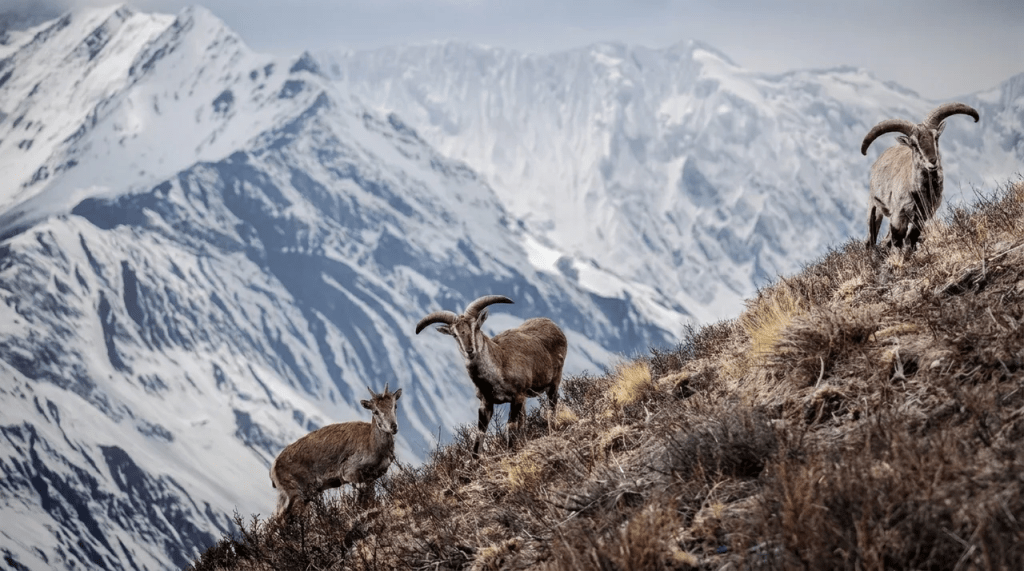
This park is prime habitat for some of the Himalaya’s most elusive animals. Its headline species is the snow leopard, the ghost of the mountains that almost nobody sees but that genuinely roams these slopes. More commonly spotted are Himalayan blue sheep, the leopard’s main prey, grazing on the high pastures. Musk deer move through the forested lower sections, and the birdlife is rich for those who look up.
Your odds of seeing a snow leopard on a standard trek are slim, so set expectations accordingly. Still, knowing they are out there changes how the landscape feels. If wildlife is a major draw for your trip, our overview of wildlife in Nepal covers what lives beyond the mountains across the country.
Best Time to Visit
Spring, from March to May, and autumn, from September to November, are the prime windows. Skies tend to be clear, temperatures are comfortable for walking, and the lake shows off its color under direct sun. Autumn in particular delivers crisp visibility after the monsoon has cleared the air.
Summer is the contrarian choice. Because Lower Dolpo sits partly in the rain shadow, some travelers trek it during the monsoon months when the rest of Nepal is washed out. It can work, but flights to Juphal grow even less reliable in that season, so the trade-off is real. Winter brings cold and snow that can close passes and make travel genuinely difficult.
Practical Tips Before You Go
- Carry enough cash. There are no ATMs once you leave Nepalgunj, and the region runs on rupees.
- Pack for cold nights even in warmer seasons. Temperatures drop fast after sunset at altitude.
- Bring a basic medical kit and any personal medication. Pharmacies are nonexistent on the trail.
- Book through a reputable, registered agency. It is a legal requirement here, not just a convenience.
- Respect the buffer-day rule for flights. A canceled Juphal flight is a when, not an if.
For official tourism information and current advisories, the Nepal Tourism Board is the authoritative starting point.
Frequently Asked Questions
How deep is Shey Phoksundo Lake?
The lake reaches a depth of around 145 meters, making it the deepest lake in Nepal. Its surface sits at roughly 3,600 meters above sea level and covers about 494 hectares.
Do I need a guide to trek to Phoksundo Lake?
Yes. Lower Dolpo is a restricted area, so you cannot trek independently. Permits are issued only through registered agencies, and you must be accompanied by a licensed guide.
How many days does the Shey Phoksundo Lake trek take?
Most itineraries run between 9 and 13 days, including the flights from Kathmandu, the trek to the lake, time at Ringmo, and the return. Adding buffer days for weather is strongly recommended.
How much do permits cost?
As of early 2025, the Shey Phoksundo National Park entry permit was approximately NPR 3,000 (around 25 US dollars), and the Lower Dolpo restricted area permit was roughly 20 US dollars per person per week plus a small daily add-on. Confirm current rates with your agency, since pricing structures vary.
Is the trek suitable for beginners?
It is considered moderate and beginner-friendly. A maximum elevation of about 3,600 meters keeps altitude risk low. The bigger challenges are the remoteness, the long travel days, and the basic facilities rather than the walking itself.
How do you get to the trailhead?
You fly from Kathmandu to Nepalgunj, then take a second short flight of 30 to 35 minutes from Nepalgunj to Juphal. From Juphal, the trek begins, with Dunai about three hours away on foot.
What is the best time of year to visit?
Spring (March to May) and autumn (September to November) offer the clearest skies and most comfortable conditions. Because of the rain shadow, some trekkers also attempt it during the monsoon, though flights become less reliable then.
Can I see a snow leopard there?
Snow leopards live in Shey Phoksundo National Park, but sightings are extremely rare. You are far more likely to spot Himalayan blue sheep, musk deer, and a wide range of birdlife.