



You can smell the difference before you taste it. Jumli Marsi cooks with a faintly nutty, milky scent that commercial white rice does not have, and the cooked grain carries a pink-brown blush rather than pure white. Jumli Marsi rice grows in the Karnali highlands of Jumla district at elevations where agronomists once assumed rice simply could not set grain. Its story is partly about plant genetics and cold tolerance, partly about a crop that nearly disappeared, and partly about what happens when a landrace suddenly acquires a market. Here is what the agronomy actually shows and where the numbers are contested.
Where It Grows, and Why That Is Remarkable
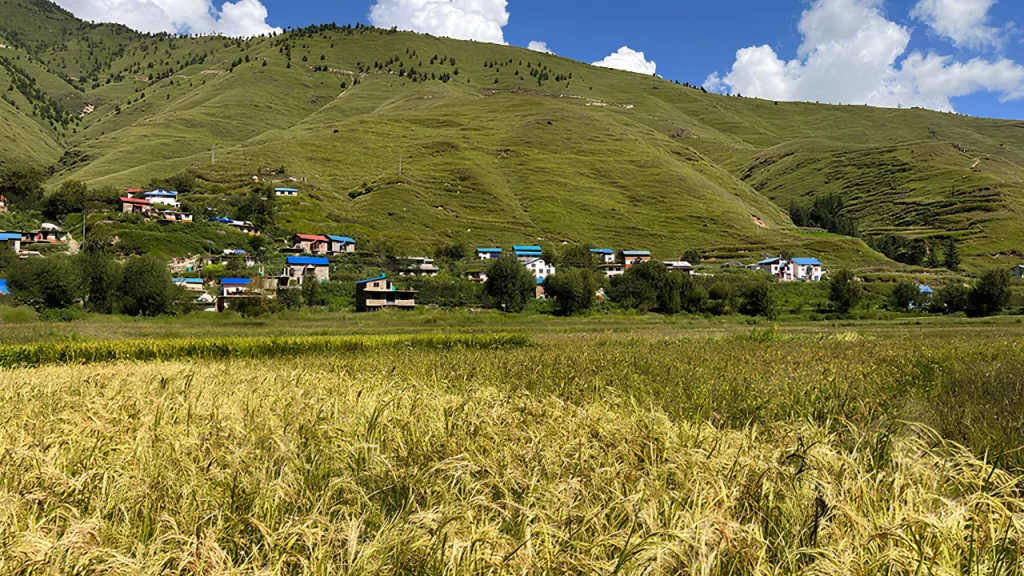
Rice in Nepal is overwhelmingly a lowland crop. Most of the national harvest comes from the Terai plains, generally below 300 meters, where warmth and water are abundant. Jumla sits in a different world. Valley floors lie between roughly 2,300 and 2,700 meters, winters are hard, and the growing season is short.
Marsi is cultivated across the district between about 2,400 and 3,050 meters. Published research and reporting identify Chhumchaur village in Patarasi Rural Municipality, at roughly 3,050 meters, as the highest site. Several sources describe this as the highest elevation at which rice is grown anywhere in the world. That claim is widely repeated in Nepali and international reporting, and it is plausible, but we have not found a global survey that formally verifies it. Treat it as a strong claim rather than a confirmed record.


What is not in doubt is the agronomic difficulty. Rice is a warm-season grass. At the panicle initiation and flowering stages it is highly sensitive to low temperature, which causes pollen sterility and empty grains. Growing it at 3,000 meters requires a plant that can get through those stages in cool conditions and still fill grain before the first hard frost.
The Plant Itself
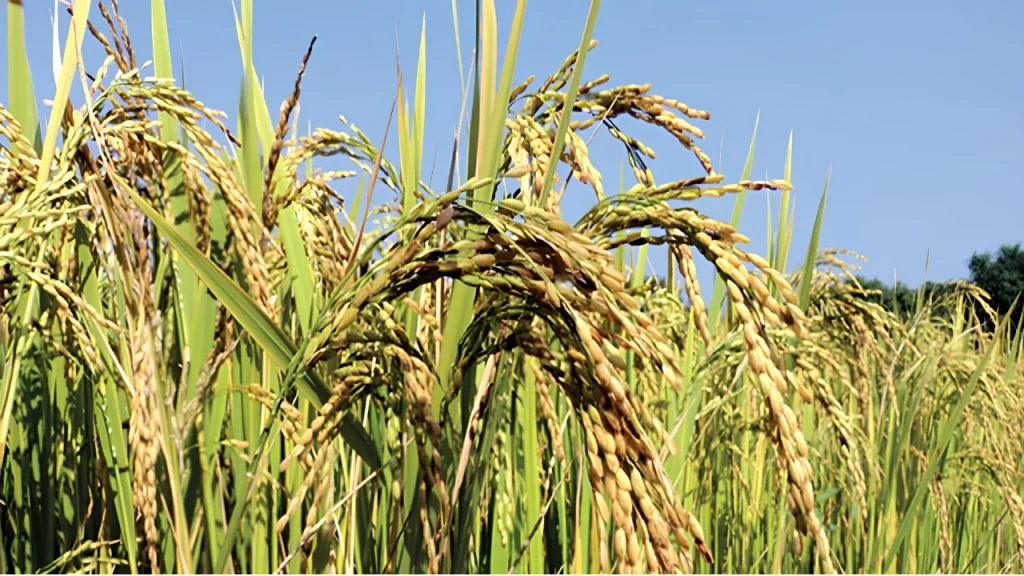
Jumli Marsi is a japonica-type landrace. Japonica rices are generally shorter-grained and more cold-adapted than the indica types that dominate South Asian lowlands, and the distinction matters here. A published review of the variety’s status in Nepal records that the International Rice Research Institute confirmed a cold-tolerance gene in the variety, which is the main reason plant breeders treat it as a genetic resource rather than a local curiosity.
Local tradition in Jumla attributes the crop’s origin to the sage Chandannath Baba, said to have found a wild rice plant on the banks of the Tila River. Reporting in the Kathmandu Post notes an estimate of roughly 550 years of cultivation. Origin dates for landraces are rarely verifiable, and this one rests on oral tradition rather than archaeology or genetics.
Grain Characteristics
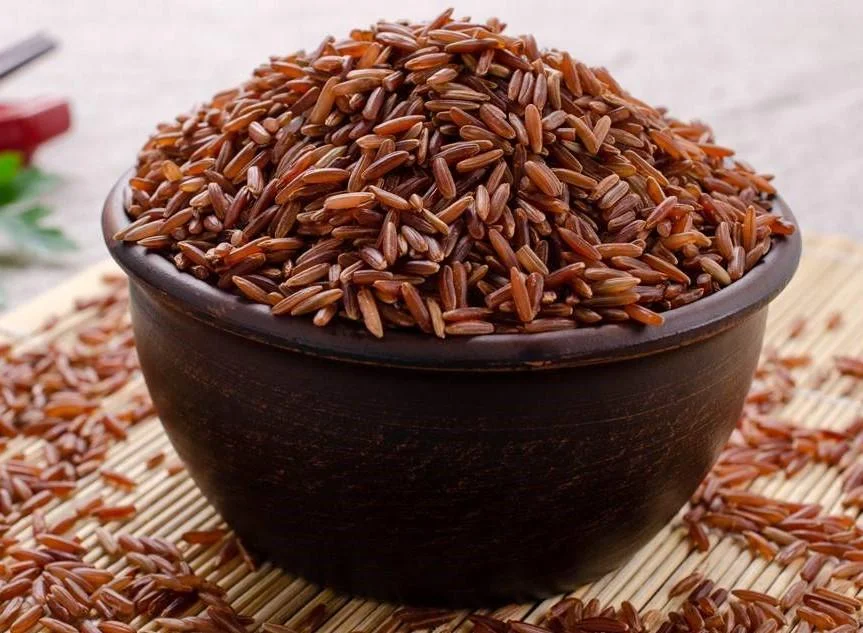
Marsi is a red rice. Color comes from pigments in the bran layer, which is retained because the grain is typically milled lightly rather than polished white. Farmers and cooks in Jumla describe three practical qualities: it absorbs milk and ghee well, it sweetens as it cooks, and it stores for two to three years in cool conditions without losing palatability.
Nutritional figures reported by the Kathmandu Post, citing a research report, give fiber at 2.01 percent, protein at 9.86 percent and carbohydrate at 72.74 percent, with iron at 0.57 mg per 100 g, calcium at 66.70 mg per 100 g and phosphorus at 57.54 mg per 100 g. Those figures come from a single cited report rather than from repeated independent analysis.
Claims that the rice is particularly suitable for people with diabetes circulate widely in Nepali media and marketing. Unmilled and lightly milled rices generally have a lower glycemic response than polished white rice, which is well established in nutrition science. A specific clinical claim for this variety is not something we found supported by published trials, and it should not be read as medical guidance.
The Growing Calendar
Marsi agronomy is built entirely around a compressed season. Farmers start much earlier in the year than lowland rice growers, and every step is designed to buy days.
| Stage | Timing | Practice |
|---|---|---|
| Seed soaking and incubation | Around 25 March (12 Chaitra) | Seed soaked and kept warm indoors for 4 to 5 days to force germination |
| Nursery sowing | Early April (around 3 April) | Sprouted seed broadcast into wet nursery beds |
| Transplanting | 28 May to 12 June | Seedlings about one month old, one per hill, spaced 5 to 7 cm apart |
| Harvest | Early October into late October | Overlaps with the Dashain and Tihar festival period |
Two details are worth pausing on. Indoor germination is a deliberate workaround for cold soil, effectively giving the seed a warm start the environment will not provide. Very close spacing of 5 to 7 centimeters, with a single seedling per hill, is far tighter than lowland practice and compensates for the limited tillering that cool conditions allow.
Reported nursery conditions of roughly 27 to 28 degrees Celsius maximum and 5 to 6 degrees minimum give a sense of the daily swing these seedlings endure. Farmers also intercrop local soybean varieties on the field bunds, a practice that uses otherwise idle space and, as with legumes generally, contributes nitrogen to the system.
The Problem: Blast, Yield, and Decline
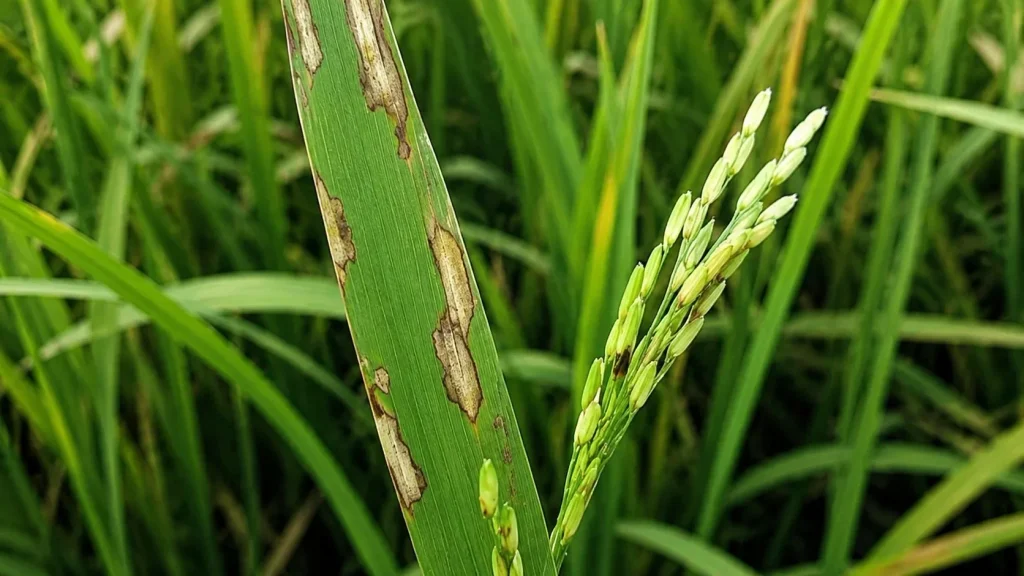
Marsi is in trouble for reasons that have little to do with its cultural value. Rice blast, caused by the fungus Pyricularia oryzae, attacks leaves and panicle necks and can destroy a crop late in the season. Jumli Marsi is highly susceptible.
Figures reported by the Kathmandu Post in 2023, drawing on the Agricultural Research Station at Bijayanagar, put annual blast damage at around 26 percent of the crop, with losses of about NPR 60 million. Yield was given as 1.8 tonnes per hectare, which is low by any modern standard. Improved varieties released by NARC, Chandanath-1 and Chandanath-3, were reported to yield substantially more, with one account putting Chandanath-3 at over 50 percent above Marsi.
Farmers responded rationally. A landrace that yields less and dies more often loses ground to alternatives, and researchers writing in the late 2010s described Marsi as heading toward extinction in practical terms. Other recorded pressures include fertile valley land lost to road construction, seed deterioration from repeated saving of farm-saved seed, labor loss to outmigration, and hail and late rain that shatter grain before harvest.
Breeding a Way Out
Nepal’s response has been conventional plant breeding rather than abandonment. Researchers at Bijayanagar crossed the local landrace with IR-64, a widely used high-yielding, early-maturing and disease-resistant variety first released in the Philippines in 1985. Reporting in 2023 described three candidate lines under preparation, Jumli Marshi-18, -20 and -22, after roughly thirteen years of work and collection dating from 2010.
Breeders stated the aim as matching the original in height, cold tolerance, maturity period and grain size while adding blast resistance. We have not been able to confirm from a current official source whether these lines have since completed formal release by the Nepal Agricultural Research Council. Anyone citing them as released varieties should verify with NARC directly.
There is a tension here that deserves naming. Crossing a landrace with an international cultivar to fix one trait risks diluting the very combination of traits that made it distinctive. Whether the new lines retain Marsi’s eating and storage qualities is a question that farmers and cooks will answer, not laboratories.
The Market Turn
Something changed in the last decade. Marsi acquired national visibility, helped along by a 2018 photograph of Nepal’s senior political leaders eating the rice that circulated widely. Demand followed.
UNDP Nepal, reporting in October 2026 on its Renewable Energy for Resilient Agri-Food Systems project in the district, gives the clearest recent picture of scale. Jumla has about 2,888 hectares of arable paddy land. Native Marshi occupies 1,068 hectares of that, roughly 37 percent, with improved varieties on the remaining 1,820 hectares. Marshi is grown in all eight local municipalities, with major areas at Lachu Jyulo in Tatopani, Shera Jyulo in Chandannath, and river terraces in Sinja, Hima and Tila.
Production for fiscal year 2023/24 was reported at about 3,000 metric tons. Between November 2025 and March 2026, roughly 175 metric tons of processed Marshi left the district for urban markets, earning over NPR 35 million. Farm-gate prices average around NPR 180 per kilogram, with premium packaged rice reaching up to NPR 250 per kilogram in Kathmandu.
Compare that to the 2023 reporting, which put cultivation at about 1,400 hectares. The figures are not directly comparable, since they come from different sources with different methods, but the direction is interesting: area under the native variety appears to have contracted while value per kilogram has risen sharply. A smaller, more valuable crop is a different thing from a revived one.
What the Project Actually Changed
The UNDP work, funded by Norway and Finland, focused on inputs and post-harvest handling rather than on the plant: solar-powered irrigation and machinery, processing and storage, packaging, and direct market links. On the agronomic side, farmers adopted certified seed, line transplanting, balanced fertilizer use and improved water management.
Local institutions did the organizing. Groups such as the Kalika Agro-Biodiversity Conservation Group in Tatopani Rural Municipality are named in the reporting as the vehicles for these changes. Jumla was declared an organic farming district in 2009, which gives the crop a marketing position it would not otherwise have.
Why This Matters Beyond Jumla
Cold tolerance in rice is a globally scarce trait. As growing seasons shift and cultivation is pushed into marginal environments, genes that let rice set grain in cool conditions have value far beyond one Karnali district. A landrace that has been selected by farmers for centuries in exactly those conditions is a genetic archive.
Conservation of such material has two forms, and both are needed. Seed banks preserve what exists. On-farm cultivation keeps the variety evolving against real pests, real weather and real soils, which a freezer cannot do. Marsi is only being conserved in the second sense as long as people in Jumla find it worth planting.
Nepal has comparable stories in other high valleys. Our reporting on the heritage apples of Marpha covers a similar collision between a distinctive highland crop and market pressure, and our feature on the tea gardens of Ilam looks at how altitude and soil shape a very different Nepali crop.
Visiting the Region
Jumla is reached by air from Nepalgunj or by a long road journey through Surkhet. Harvest runs from early October into late October, overlapping with Dashain and Tihar, which is the most visually striking time in the valleys but also the busiest period for households.
Visitors should be aware that paddy terraces are working land and that harvest is labor-intensive, time-critical work. Ask before photographing people at work, and buy from cooperatives rather than middlemen if you want the value to stay in the district. Karnali travel in general rewards preparation: see our Rara Lake trek guide for the logistics of reaching this part of Nepal, and our piece on Gaura Parva in Sudurpashchim and Karnali for context on the region’s cultural calendar.
Frequently Asked Questions
Is Jumli Marsi really the highest-altitude rice in the world?
It is grown at about 3,050 meters at Chhumchaur in Jumla, and multiple published sources describe this as the world’s highest rice cultivation. We have not found a formal global verification of that record, so the claim is best stated as widely reported rather than confirmed.
What makes it cold tolerant?
It is a japonica-type landrace, and the International Rice Research Institute has confirmed a cold-tolerance gene in it. Farming practice contributes too: seed is germinated indoors, seedlings are transplanted densely, and the calendar is built to finish grain fill before frost.
Why is it red?
Pigment sits in the bran layer, which is retained because the grain is lightly milled rather than polished white. Polishing it heavily would remove both the color and much of the fiber and mineral content.
Is Marsi rice healthier than white rice?
Lightly milled rices generally retain more fiber and minerals than polished white rice, which is well established. Specific health claims for this variety, including claims about diabetes, are not supported by published clinical trials that we could find, and this article is not medical advice.
Why is production declining if demand is rising?
Yield is low, around 1.8 tonnes per hectare in 2023 reporting, and blast disease was reported to damage about 26 percent of the crop annually. Farmers have shifted to higher-yielding alternatives such as Chandanath-1 and Chandanath-3 even as prices for Marsi have risen.
What is being done to save it?
Breeders at the Agricultural Research Station in Bijayanagar have crossed the landrace with IR-64 to add blast resistance, with candidate lines reported in 2023. Separately, development projects have improved irrigation, processing, packaging and market access to raise the return per kilogram.
Can I buy it outside Nepal?
Some packaged Marsi reaches urban Nepali markets and specialty retailers. Supply is small: around 175 metric tons left the district for urban markets in a recent five-month period, so availability is limited and prices are high relative to ordinary rice.
When is the rice harvested?
Harvest generally runs from the first week of October to the end of the month, though reporting also describes a wider September to November window depending on site and season.
NepalVue reports on Nepal’s food systems alongside its mountains and heritage. Save this guide, share it with anyone curious about Himalayan agriculture, and follow NepalVue for more on the crops that shape life in Nepal’s high valleys.


