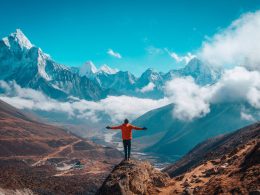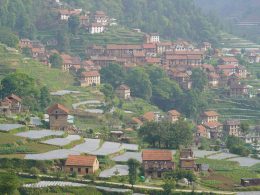



Nepal rewards families more than its reputation suggests. Children are welcomed almost everywhere, short walking routes connect real villages rather than empty wilderness, and the country is small enough that a two-week trip can include mountains, jungle, and old cities without exhausting travel days. What it does require is realistic planning around altitude, road time, and food. Taking a toddler to Everest Base Camp is not a plan. Walking three days through Gurung villages at 2,000 meters is. Here is what works for Nepal with kids, broken down by age, region, and the practical details that decide whether a family trip goes well.
Start With Altitude, Because It Sets Everything Else
Altitude is the first constraint, and it narrows the map before anything else does.
Published expert guidance for children is more conservative than for adults, and it is based largely on consensus rather than large trials. A French Delphi study of pediatric altitude recommendations advised a maximum of about 2,000 meters for children under one year, and about 2,500 meters for children under three, with gradual ascent and stops roughly every 500 meters. Those panels focused on moderate altitude and short stays, so treat the figures as a cautious planning baseline rather than a hard medical rule.


Beyond the numbers, there is a practical problem. Young children cannot reliably describe a headache or nausea, and the early signs of acute mountain sickness look a lot like ordinary tiredness or a bad mood. A grumpy, off-food four-year-old at 3,500 meters is genuinely hard to assess.
For most families, that argues for staying below roughly 3,000 meters with school-age children, and considerably lower with toddlers. Nepal has plenty to offer under that ceiling.
Useful Altitudes to Know
| Place | Approximate altitude | Family suitability |
|---|---|---|
| Chitwan and the Terai | About 150 m | No altitude concern at any age |
| Pokhara | About 820 m | Comfortable for all ages |
| Kathmandu | About 1,400 m | Fine for all ages, air quality is the bigger issue |
| Bandipur | About 1,030 m | Easy, walkable, car-free center |
| Dhampus and Australian Camp | 1,650 m to 2,060 m | Good first trek for children roughly 5 and up |
| Ghandruk | About 1,940 m | Good for school-age children, strong cultural interest |
| Nagarkot | About 2,175 m | Easy mountain views close to Kathmandu |
| Ghorepani and Poon Hill | About 2,850 m to 3,210 m | Realistic for fit children around 8 and up |
Treks That Suit Families
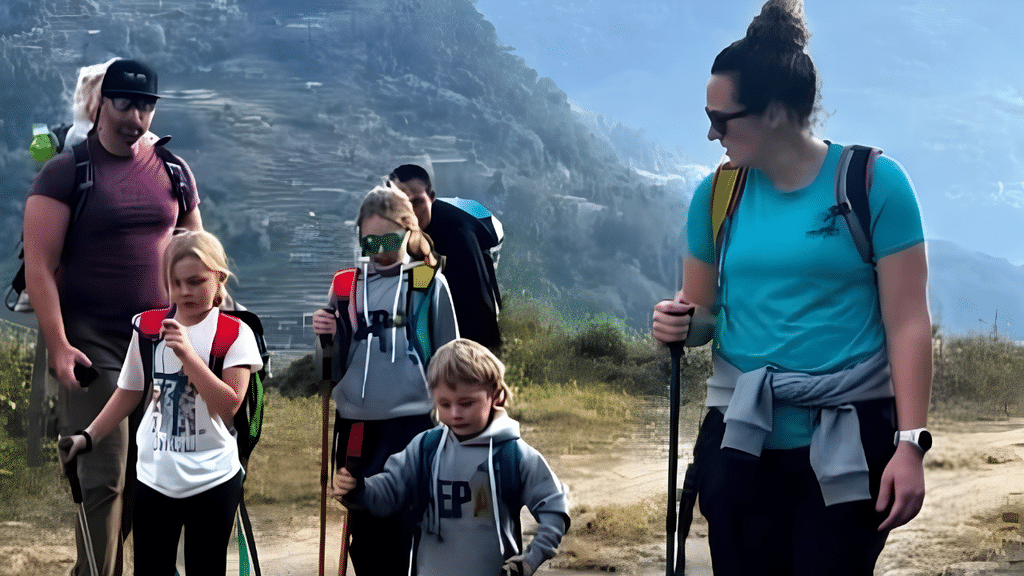
Nepali trekking is village to village, not wilderness camping. Children walk between settlements, sleep in lodges, and eat cooked meals. That structure suits families far better than most people expect.
Dhampus and Australian Camp, 1 to 3 days
Short, low, and close to Pokhara. Road access at both ends means you can shorten the walk on the day if energy runs out. Mountain views are genuinely good for the effort involved.
Ghandruk Loop, 2 to 4 days
A Gurung village with stone houses, a small museum, and a working community rather than a trekking outpost. Walking days are short. Our Ghandruk coverage goes into what the village is like beyond the trail.
Ghorepani and Poon Hill, 4 to 6 days
Doable for fit children from about age eight, with an early morning climb to a viewpoint at roughly 3,210 meters. Long staircase sections test young legs. Build in a rest day.
Kathmandu Valley Day Hikes
Nagarkot, Champadevi, and Shivapuri give you ridge walks and mountain views with a bed in the city at the end. Ideal for testing whether your children enjoy walking before committing to a multi-day route.
Practical Trekking Notes for Families
- Hire a porter. Carrying a tired small child plus a pack is not realistic over stone staircases.
- Plan walking days of three to four hours, not six.
- Teahouse menus are predictable: dal bhat, fried rice, noodles, eggs, potatoes, pancakes. Picky eaters usually find something.
- Bring snacks children already like. Familiar food defuses a lot of trail misery.
- Suspension bridges worry some children more than any climb. Walk across with them the first few times.
Wildlife: Chitwan and Bardia
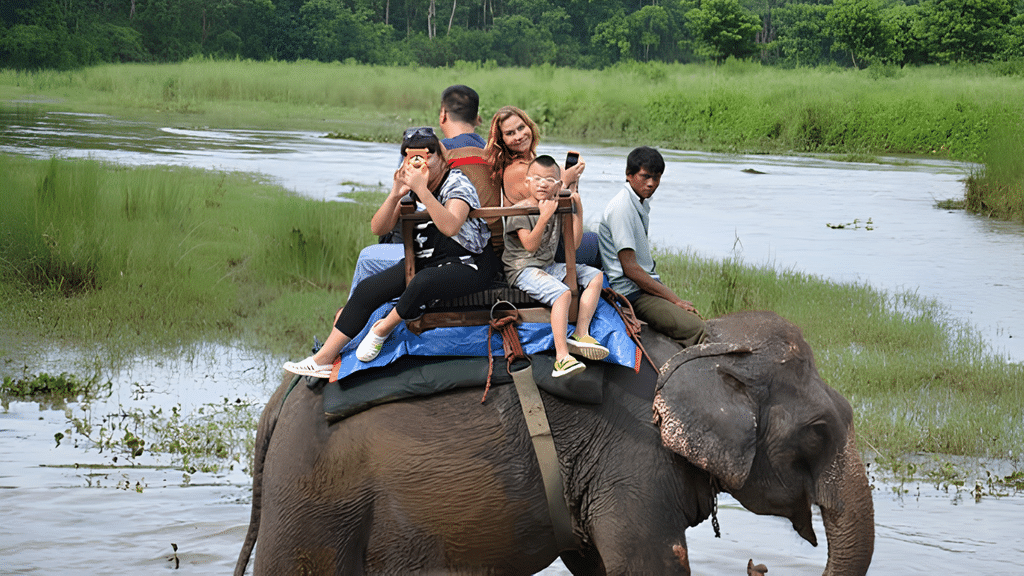
Lowland national parks are the strongest family draw in Nepal after the hills, and they involve no altitude at all.
Chitwan National Park sits in the Terai at around 150 meters. Rhino sightings are common, and the park also holds tigers, gharial crocodiles, deer, and more than 500 bird species. Published entry fees run around NPR 2,000 per day for foreign visitors and NPR 1,000 for SAARC nationals, though rates change, so confirm when booking.
Activities include jeep safaris, canoe trips on the Rapti river, guided jungle walks, and elephant-back rides. Worth knowing before you arrive: elephant riding draws sustained criticism from animal welfare organizations, and many visitors and operators now choose jeep, canoe, or walking alternatives instead. Families often find the canoe trip and the elephant breeding center more engaging for children anyway, and they avoid the question entirely.
Guided jungle walks are generally not recommended for young children. Guides regularly discourage bringing small or noisy children on foot in the park, which is a safety matter around rhinos and sloth bears rather than a courtesy. Jeep safaris suit families better.
Bardia National Park, further west, is quieter and better for tiger sightings, but adds a long travel day. Our Chitwan National Park guide covers logistics in more detail.
Cities and Towns That Work With Children
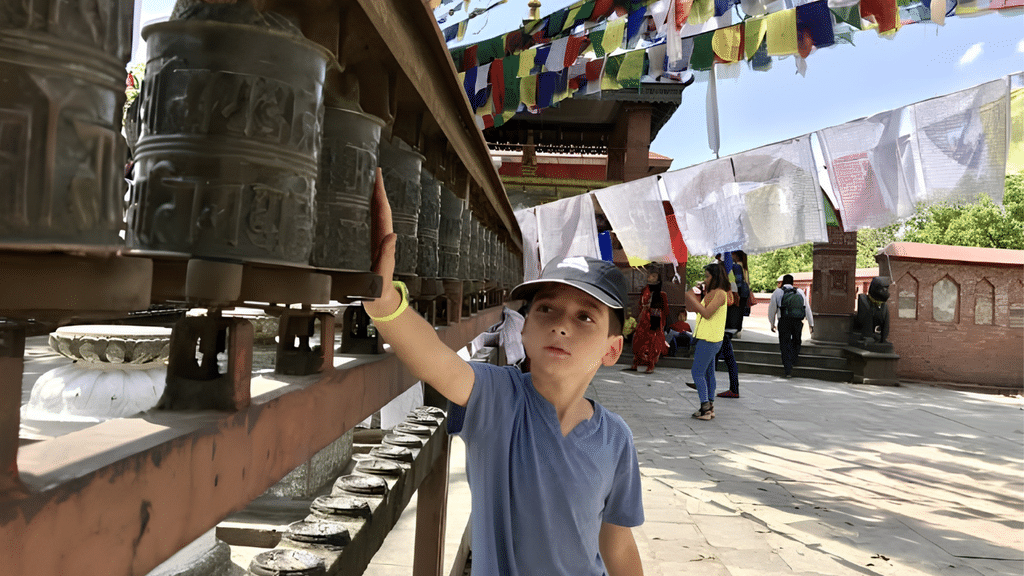
Kathmandu
Dense, loud, and visually extraordinary. Children often respond well to Boudhanath and Swayambhunath, where there is space to walk, pigeons, monkeys, and movement. Durbar squares reward short visits rather than long ones.
Air quality is the real concern, particularly in winter and spring. Children with asthma need a plan, and it is worth tracking daily air quality rather than assuming. Limit time on main roads during rush hour.
Pokhara
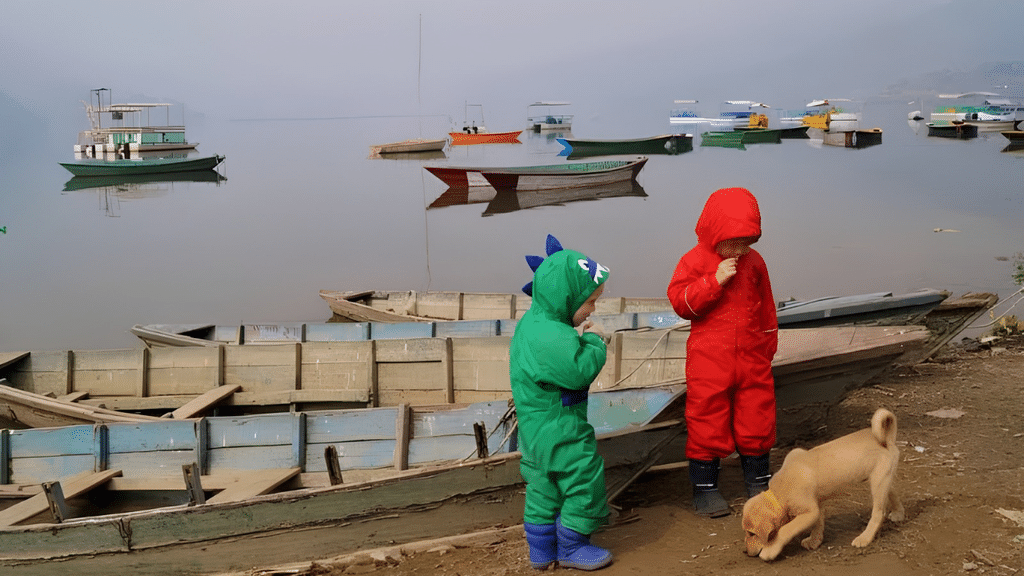
Easier than Kathmandu in almost every way for families. Lakeside is walkable, traffic is lighter, and boating on Phewa Lake, the International Mountain Museum, and nearby caves fill several days. Our Pokhara guide has the details.
Bandipur
A Newar hill town with a pedestrianized main street, which is rare in Nepal and a genuine relief with small children. No traffic to watch for. Good base between Kathmandu and Pokhara, breaking up a long road day. See our Bandipur travel guide.
Bhaktapur
Largely traffic-free in the old core, with pottery squares where children can watch and sometimes try the wheel. Easier to navigate with a stroller than anywhere else in the valley, though cobblestones still make a carrier the better choice.
Getting Around: The Part Families Underestimate
Road travel is the hardest part of family trips in Nepal. Distances look small and take much longer than the map suggests.
Kathmandu to Pokhara is roughly 200 km. Expect six to eight hours by road in good conditions, sometimes longer with traffic, roadworks, or monsoon damage. A 25 to 30 minute domestic flight covers the same distance and is worth the cost with young children.
Mountain roads are winding, and motion sickness is common. Bring remedies you have already tested at home. Private vehicle hire costs more than a tourist bus but lets you stop when a child needs to, which is often the deciding factor.
Child car seats are not standard in Nepali vehicles and are rarely available from rental operators. Families who want one generally bring it. Ask your operator directly rather than assuming.
Health, Food, and Water
- Stick to bottled, filtered, or boiled water, including for brushing teeth. Children are less careful about this than adults.
- Eat hot, freshly cooked food. Dal bhat is cooked to order almost everywhere and is a safe default.
- Bring oral rehydration salts. Stomach upsets are the most common family travel problem by a wide margin.
- Check routine vaccinations and discuss travel vaccines with your doctor well before departure.
- Carry a basic kit: antiseptic, blister care, children’s paracetamol, rehydration salts, sunscreen, and insect repellent.
- Sun exposure at altitude is stronger than most families expect. Hats and high-factor sunscreen matter even on cool days.
Medical facilities in Kathmandu and Pokhara are reasonable, with hospitals used to treating foreign travelers. Rural areas have far less. Travel insurance covering children and including evacuation is not optional.
Visas and Paperwork
Most nationalities can obtain a tourist visa on arrival at Tribhuvan International Airport or at land borders. Children require their own passports and their own visa applications, and rules on fee exemptions for younger children have varied over time.
Check current requirements with Nepal’s Department of Immigration before traveling rather than relying on secondhand figures. Families traveling with one parent, or with a child whose surname differs, should carry supporting documentation such as a birth certificate or consent letter. Our Nepal visa and entry guide explains the process.
When to Go
Autumn, October to November, offers the clearest mountain views and stable weather, and it coincides with Dashain and Tihar. Festival season is memorable for families, though transport fills up and some businesses close. Spring, March to May, is warmer with flowering rhododendron and slightly hazier views.
Winter is cold at altitude but fine in Chitwan and the lower hills. Monsoon, June to September, brings leeches, landslides, and flight delays, which is a difficult combination with children. Our guide to the best time to visit Nepal compares seasons by region.
A Workable Two-Week Shape
- Days 1 to 3: Kathmandu Valley, including Bhaktapur and Boudhanath, adjusting to the time zone
- Days 4 to 5: Drive or fly to Pokhara, with an overnight in Bandipur if driving
- Days 6 to 9: Short trek around Dhampus, Australian Camp, or Ghandruk
- Days 10 to 12: Chitwan National Park for jeep safari and canoe
- Days 13 to 14: Return to Kathmandu, buffer day for flight delays
Build in that buffer day. Domestic flights and mountain roads both get disrupted, and a tight connection home is a bad thing to depend on.
Frequently Asked Questions
What is the minimum age for trekking in Nepal?
No legal minimum applies to standard teahouse treks. In practice, children from about age five manage short low-altitude routes with rest days and a porter. Younger children can be carried, but this limits route choice and the altitude you should attempt.
How high can children safely go?
Expert consensus guidance suggests roughly 2,000 meters for infants under one and 2,500 meters for children under three. For school-age children, many families stay below about 3,000 meters, mainly because young children cannot reliably report altitude symptoms. Discuss your specific plan with a doctor.
Is Nepal safe for children?
Nepal is generally welcoming and low-crime toward families. The main risks are road travel, stomach upsets, air pollution in Kathmandu, and altitude. All four are manageable with planning. Supervise closely around traffic and unfenced drops, which are common.
Can we take a stroller?
Mostly no. Sidewalks are uneven or absent, and old town cores are cobbled with steps. A child carrier backpack works far better almost everywhere in Nepal.
Do children need their own visa?
Yes. Children need their own passport and visa. Fee rules for younger children have changed over time, so verify current policy with the Department of Immigration before you travel.
Should we visit Chitwan or Bardia with children?
Chitwan is easier to reach and has more family infrastructure, making it the usual choice. Bardia is quieter with better tiger odds but requires a longer journey. Either way, jeep safaris and canoe trips suit children better than guided jungle walks on foot.
Is the food manageable for children?
Generally yes. Dal bhat, momos, fried rice, noodles, eggs, and potatoes appear on almost every menu, and spice levels can usually be adjusted on request. Food traditions vary by region and household, so a homestay meal may differ from a tourist restaurant.
How long should a family trip to Nepal be?
Two weeks lets you combine the Kathmandu Valley, a short trek, and a national park without rushing. Ten days works if you drop one element. Anything shorter means spending a disproportionate share of your trip on roads.
Planning Your Family Trip
Nepal with children works when you plan around the constraints rather than against them. Keep the altitude modest, the walking days short, the road days few, and the buffer generous. What you get in return is a country where children are genuinely welcome, where a three-day walk ends in a village rather than a car park, and where a rhino at breakfast is a reasonable expectation.
Explore more of Nepal with NepalVue. Save this guide for your trip planning, and share it with other families weighing the same questions.