



You’ve booked the flight. Maybe your bags are already half-packed. But somewhere between the excitement and the countdown, a quiet question creeps in: do I actually know how to get into Nepal? The honest answer, for most travelers, is “kind of.” People spend weeks planning their trek itinerary or Kathmandu hotel and then scramble through a dozen browser tabs the night before departure trying to sort out the visa. Don’t be that person. This guide cuts through the confusion.
Nepal visa requirements in 2026 are actually more straightforward than you’d expect for a Himalayan country that borders the two most populous nations on earth. Most visitors can get a visa on arrival, apply online beforehand, or in some cases, enter completely free. Here’s everything you need, organized the way a seasoned Nepal traveler would explain it over a cup of chiya.
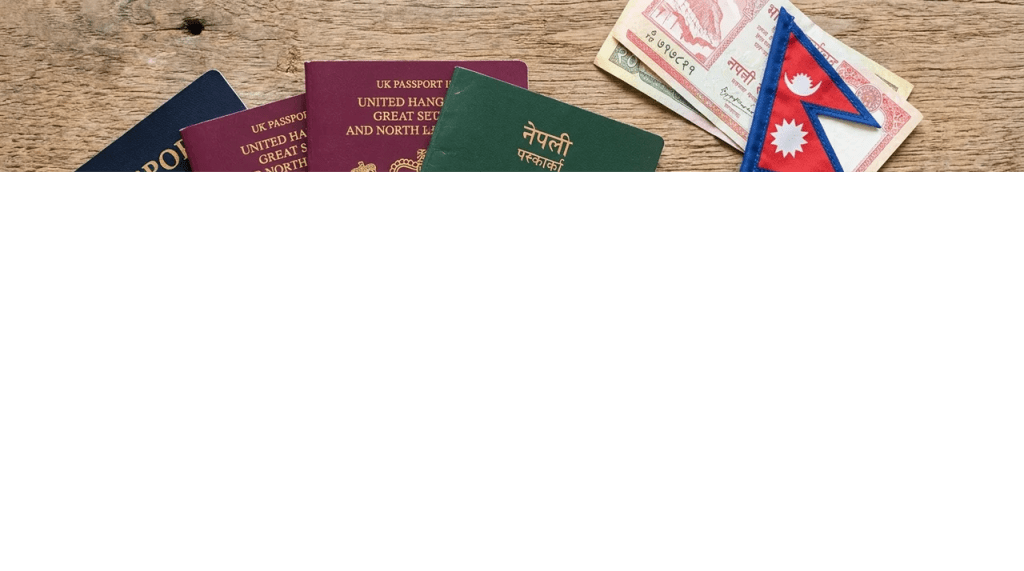


Who Needs a Visa to Enter Nepal?
Let’s start with the easy answer: almost everyone needs one. But the exceptions matter, and they matter a lot.
Indian nationals are completely visa-free. Always have been. The 1950 Indo-Nepal Treaty of Peace and Friendship allows free movement across the open border, which means Indian citizens can enter Nepal with just a valid identity document: no passport required, no fee, no form to fill. It’s one of the most open border arrangements in the world.
Citizens of SAARC member countries (Bangladesh, Bhutan, Maldives, Pakistan, and Sri Lanka) receive a free 30-day tourist visa once per calendar year. Second visit in the same year? Standard fees apply. Afghanistan is the one SAARC exception: Afghan nationals must apply at a Nepal embassy before traveling.
Chinese nationals enjoy a special arrangement too. Nepal offers free tourist visas to Chinese citizens for 15, 30, or 90-day stays. No fees, but they still go through the same on-arrival or online process.
For everyone else, including Americans, British, Australians, Europeans, and Canadians, a visa is required, and you’ll pay for it. The good news is getting one is genuinely simple.
Nepal Visa Options in 2026: Three Ways to Enter
1. Visa on Arrival at the Airport
This is how the majority of international visitors arrive. Land at Tribhuvan International Airport in Kathmandu, follow the signs to immigration, and you’ll get your visa stamped right there. No embassy visit, no prior paperwork required. Doing a bit of prep online first (more on that below) will save you time in the queue.
The fees are set in US dollars and have been stable for several years. For 2026, the tourist visa on arrival costs:
- 15 days: $30 USD
- 30 days: $50 USD
- 90 days: $125 USD
All tourist visas are multiple entry. That matters if you’re planning a trip that dips into India or Tibet and comes back. Your Nepal visa doesn’t expire the moment you cross the border. Processing time at the airport runs anywhere from 20 to 60 minutes depending on how many flights landed before yours. During peak trekking season (March to May, September to November), expect the upper end of that range.
Bring US dollars in cash. While payment counters increasingly accept cards and other currencies, cash is the safest bet, and nobody wants to be the person held up at immigration because the card reader is down.
2. Nepal’s Online Pre-Registration (ETA System)
Here’s what most guides won’t tell you clearly: Nepal’s online “e-visa” is not a visa waiver or a full electronic visa. It’s a pre-registration system: an Electronic Travel Authorization (ETA) introduced in early 2024. You fill in your details online, upload a photo, and get a barcode receipt. You still pay the full visa fee and receive your physical stamp at the airport. What you skip is standing at the kiosk filling out forms by hand when you’re jet-lagged at 2am.
The online application takes about 10 to 15 minutes. You’ll need:
- A valid passport with at least 6 months of remaining validity
- A digital passport photo (1.5″ x 1.5″, white background)
- Your travel dates and accommodation details
- A credit or debit card for the processing fee
The receipt is valid for 15 days from submission. Don’t apply too far in advance. Apply close to your departure date, print the barcode receipt or save it on your phone, and present it at immigration. You’ll move through faster than anyone who showed up without pre-registering.
Apply through the official portal at Nepal Department of Immigration’s official ETA portal. Be cautious of third-party sites charging extra fees for the same service.
3. Visa from a Nepal Embassy Abroad
Most travelers don’t need this route. But if you’re a citizen of a country on Nepal’s restricted list (Nigeria, Ghana, Zimbabwe, Swaziland, Cameroon, Ethiopia, Liberia, Somalia, Afghanistan, Iraq, or Syria), you’re required to obtain your visa from a Nepal embassy or consulate before traveling. You cannot get a visa on arrival. This is firm policy and it won’t change at the immigration counter regardless of how you plead your case.
If you hold one of these passports and are planning to visit Nepal, contact your nearest Nepal embassy at least 4 to 6 weeks before your intended travel date. Processing times vary by location.
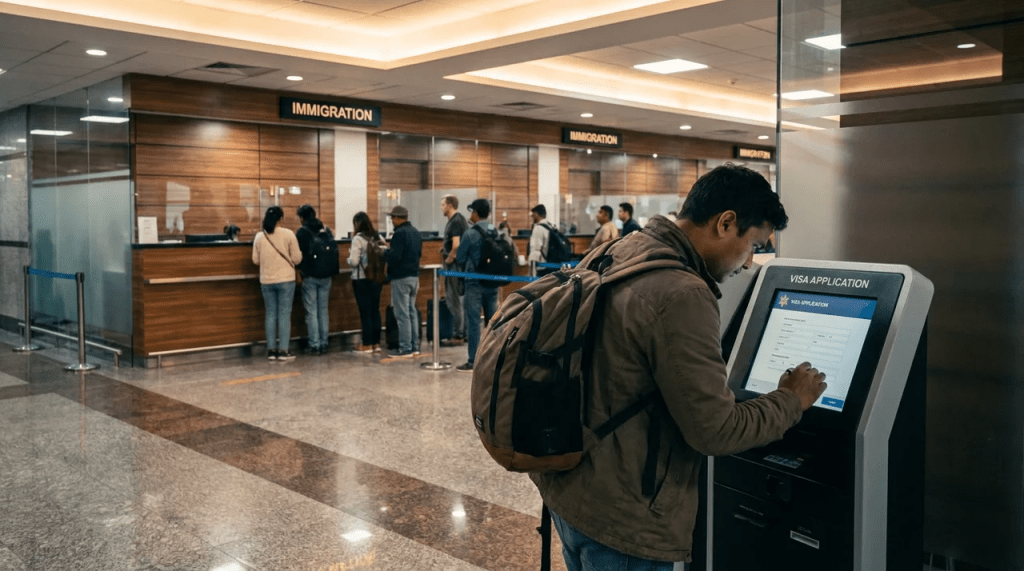
Entering Nepal by Land: What You Need to Know
Flying into Kathmandu is the standard entry point, but thousands of travelers enter Nepal overland every year, usually from India. Three major crossings handle most of the traffic:
- Sunauli / Bhairahawa: The busiest crossing from India. It connects to Varanasi on the Indian side and puts you within easy reach of Lumbini and Pokhara on the Nepal side. This is the classic backpacker route.
- Birgunj / Raxaul: The main commercial crossing and a major freight corridor. Less popular with tourists but fully functional for visa on arrival.
- Kakarbhitta / Panitanki: The eastern gateway, used by travelers coming from Darjeeling, Sikkim, or the northeast. A good entry point if you’re planning to explore the Ilam tea country or head toward Chitwan.
Visa on arrival is available at all three crossings. Immigration offices run 24 hours a day. One critical difference from the airport: land borders are cash only. There are no card machines. Bring your visa fee in US dollars and don’t rely on being able to change money at the border itself (some moneychangers operate nearby, but rates are poor).
If you’re making the crossing from India, read our complete guide for first-time visitors to Nepal. It covers everything from what to expect at the border to getting your bearings once you’re in the country.
How Long Can You Stay in Nepal on a Tourist Visa?
The standard tourist visa allows you to stay for up to 150 days in any given visa year (January to December). You enter on a 15, 30, or 90-day visa and can extend it at the Department of Immigration in Kathmandu or Pokhara.
Extension fees run $45 per month (roughly $3 per extra day for shorter extensions). You’ll need your passport, two passport photos, and a completed application form. Extensions are generally processed the same day if you arrive early at the immigration office.
This is where most people go wrong: they assume extending a visa is complicated and rush their trip instead of simply asking for more time. Nepal’s immigration office is one of the more straightforward bureaucratic experiences in South Asia. Show up, fill out the form, pay the fee, and you’re done in a few hours.
What to Bring: The Visa Checklist
Whether you’re doing visa on arrival or pre-registering online, have these things ready:
- Passport valid for at least 6 months beyond your intended departure from Nepal
- Two recent passport-size photos (some counters have photo booths, but bring your own to save time)
- Visa fee in US dollars cash (exact change is helpful but not mandatory)
- Printed or digital ETA barcode receipt if you pre-registered online
- Onward travel details (return flight or continuation itinerary)
- Accommodation address for your first night (a hotel name is fine)
Nepal does not require proof of sufficient funds at entry, though immigration officers can technically ask. Having a credit card and a rough sense of your budget is more than enough.
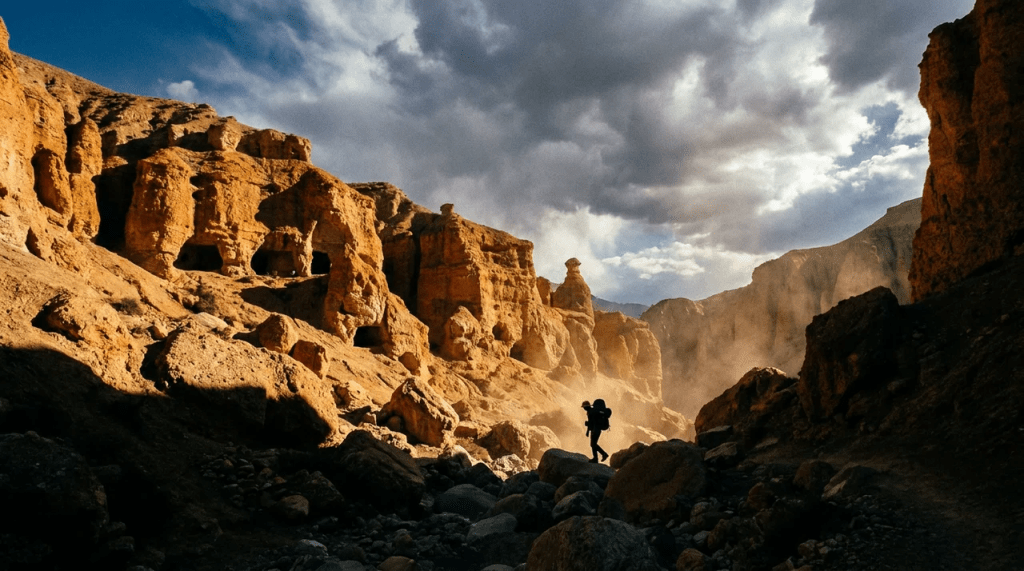
Restricted and Special Permit Areas
Getting into Nepal is one thing. Getting to certain parts of Nepal is another conversation entirely.
Beyond the standard tourist visa, some regions require additional permits. Upper Mustang, Dolpo, Manaslu Circuit, and certain restricted areas near the Tibetan border need special permits issued separately from your tourist visa. These are obtained through registered trekking agencies and cost significantly more than your entry visa. Upper Mustang, for example, requires a restricted area permit at $500 for 10 days.
If you’re planning any trekking beyond the standard trails, read our full guide on trekking in Nepal for beginners which covers permit requirements in detail. Showing up at a checkpoint without the right paperwork will turn you around, full stop.
For the major trekking regions of Everest, Annapurna, and Langtang, you’ll need a TIMS card and a national park entry permit in addition to your tourist visa, but these are not visa requirements and can be sorted out after you arrive. Check the Nepal Tourism Board’s official entry information for the most up-to-date permit fees.
Common Mistakes Travelers Make with Nepal Visas
The truth is, Nepal’s visa system trips people up not because it’s complicated but because travelers don’t read the details before they’re standing at immigration. Here’s what to avoid:
- Not checking passport validity. A six-month validity rule is strictly enforced. If your passport expires in four months, you will be denied entry.
- Using third-party e-visa websites. Many sites charge $20 to $50 to fill out the same form the Nepal government offers for free (or at just the official visa cost). Go directly to the Department of Immigration portal.
- Assuming land border crossings have ATMs. They often don’t. Or the one ATM has no cash. Plan for a cash-only crossing.
- Overstaying. Nepal takes overstays seriously. Fines are $3 per day and must be paid before you can depart. Repeatedly overstaying can result in future entry bans.
- Not pre-registering if you’re flying in during peak season. The on-arrival queue during October can be brutal. Twenty minutes of online prep can save you an hour of standing in line.
Frequently Asked Questions
Can I get a Nepal visa on arrival in 2026?
Yes. Citizens of most countries can get a tourist visa on arrival at Tribhuvan International Airport in Kathmandu and at major land border crossings from India. The process takes 20 to 60 minutes at the airport. Citizens of certain countries (Nigeria, Ghana, Afghanistan, Iraq, Syria, and a few others) must get their visa from a Nepal embassy before traveling.
How much does a Nepal tourist visa cost in 2026?
Tourist visa fees in 2026 are $30 USD for 15 days, $50 USD for 30 days, and $125 USD for 90 days. All are multiple-entry visas. Indian, Chinese, and SAARC nationals have separate arrangements. Indian nationals enter free with no visa required.
Do I need to apply for a Nepal visa before I travel?
Not necessarily. Most travelers apply on arrival. However, pre-registering through Nepal’s online ETA portal saves time at the airport and is highly recommended during peak trekking season (March to May, September to November). The ETA is a pre-registration receipt, not a full visa. You still get your stamp at immigration.
How long can I stay in Nepal on a tourist visa?
You can stay up to 150 days in a single calendar year. Tourist visas are issued for 15, 30, or 90 days and can be extended at immigration offices in Kathmandu or Pokhara. Extensions cost approximately $45 per month.
Can I enter Nepal by land from India?
Yes. The main land border crossings at Sunauli (Bhairahawa), Birgunj (Raxaul), and Kakarbhitta (Panitanki) all offer visa on arrival. Immigration offices at these crossings operate 24 hours. Bring your visa fee in USD cash, as card machines are not reliably available at land borders.
What documents do I need for a Nepal visa on arrival?
You need a valid passport with at least 6 months of remaining validity, two passport-size photos, and your visa fee in USD cash. If you pre-registered online, bring your printed or digital ETA barcode receipt. Having your first night’s accommodation address on hand is useful but rarely checked strictly.
Is Nepal safe for travelers and are there any entry restrictions in 2026?
Nepal is considered a safe destination for international travelers. There are no COVID-era entry restrictions as of 2026. Standard travel advisories apply. Always check your government’s official travel advisory before any international trip. Certain border regions near Tibet and some restricted trekking areas require additional permits beyond the standard tourist visa.
Can I extend my Nepal tourist visa inside the country?
Yes. Extensions are processed at the Department of Immigration offices in Kathmandu (Kalikasthan) and Pokhara. The fee is $45 per month, and same-day processing is available if you arrive early. You’ll need your passport, two photos, and a completed extension form. The maximum total stay is 150 days per calendar year.


