



Paragliding in Pokhara has always meant one thing: Sarangkot. For over two decades, this hilltop was the heart of Nepal’s air sports scene. However, things have changed. New airport rules, shifting flight zones, and evolving safety standards have reshaped how paragliding in Pokhara actually works today. This article walks through that transition, step by step, so you know exactly what to expect before you book a flight.
A Quick Look Back: Paragliding in Pokhara’s Early Days
Commercial paragliding in Pokhara began around 2001. Back then, pilots used four main zones: Sarangkot, Toripani, Mandredhunga, and Tamagi. Sarangkot quickly became the favorite. It sits at roughly 1,592 meters above sea level. From there, pilots could see Annapurna, Dhaulagiri, and Machhapuchhre in one sweeping view. Landings happened right along Phewa Lake. As a result, tourists at the lakeside could watch paragliders drift down like colorful birds. This image became one of Pokhara’s most famous postcard scenes. Over the years, more than 69 paragliding companies opened for business. Together, they built an industry worth over a billion Nepali rupees annually.
Why Sarangkot Had to Change
Everything shifted with the construction of Pokhara International Airport. The airport officially opened on January 1, 2023. Suddenly, aviation rules took priority over tradition. International standards do not allow recreational flights near an active international airport’s airspace. Specifically, paragliding and hot-air balloons are restricted within 10 nautical miles of the airport center. They are also banned within 5 nautical miles of any flight route. Since Sarangkot sits inside this restricted zone, the Civil Aviation Authority of Nepal, or CAAN, had no choice. Consequently, paragliding from Sarangkot, Toripani, and Tamagi was suspended. Only Mandredhunga, located about five kilometers west, remained approved for flights.


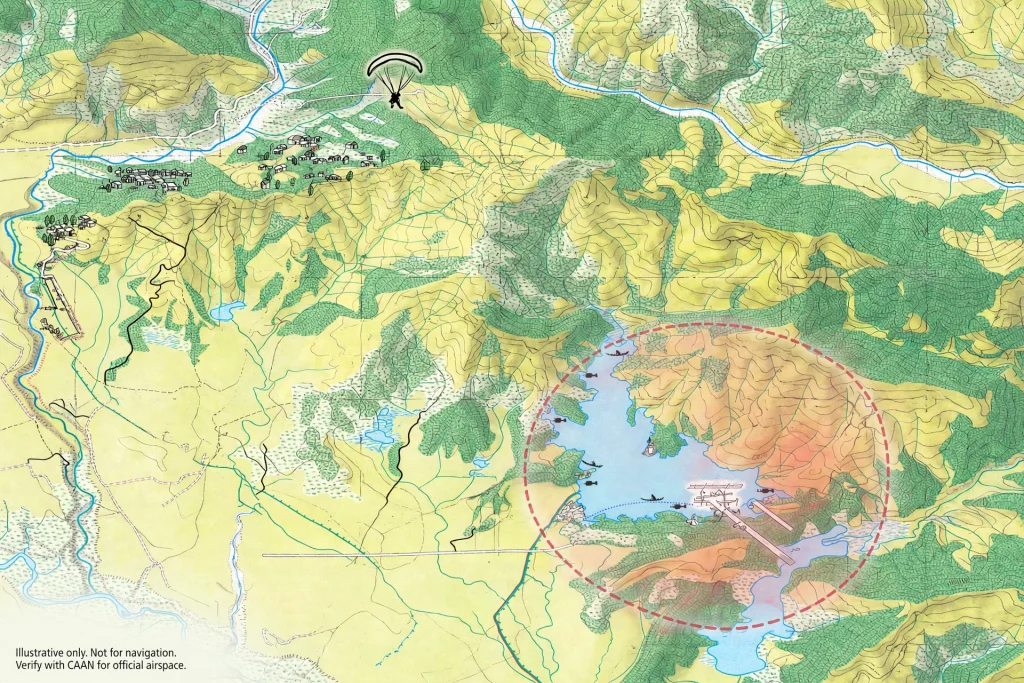
The Difficult Chapter: Flying from Mandredhunga
The move to Mandredhunga was not easy for local operators. This area lacked the infrastructure that Sarangkot had built up over two decades. There were no proper roads, viewing areas, or established landing fields. Additionally, the new landing zone shifted from Khapaudi to the opposite side of the Pame River. This meant paragliders no longer descended directly over Phewa Lake. For visitors, the experience felt less iconic. For local businesses, it felt like a serious blow. In fact, over 150 paragliding pilots reportedly lost steady work during this period. Meanwhile, flight hours were also restricted to just four hours daily, from 11 am to 3 pm. Naturally, this limited how many tourists could fly each day.
New Zones Take Shape: Toripani and Bahakot
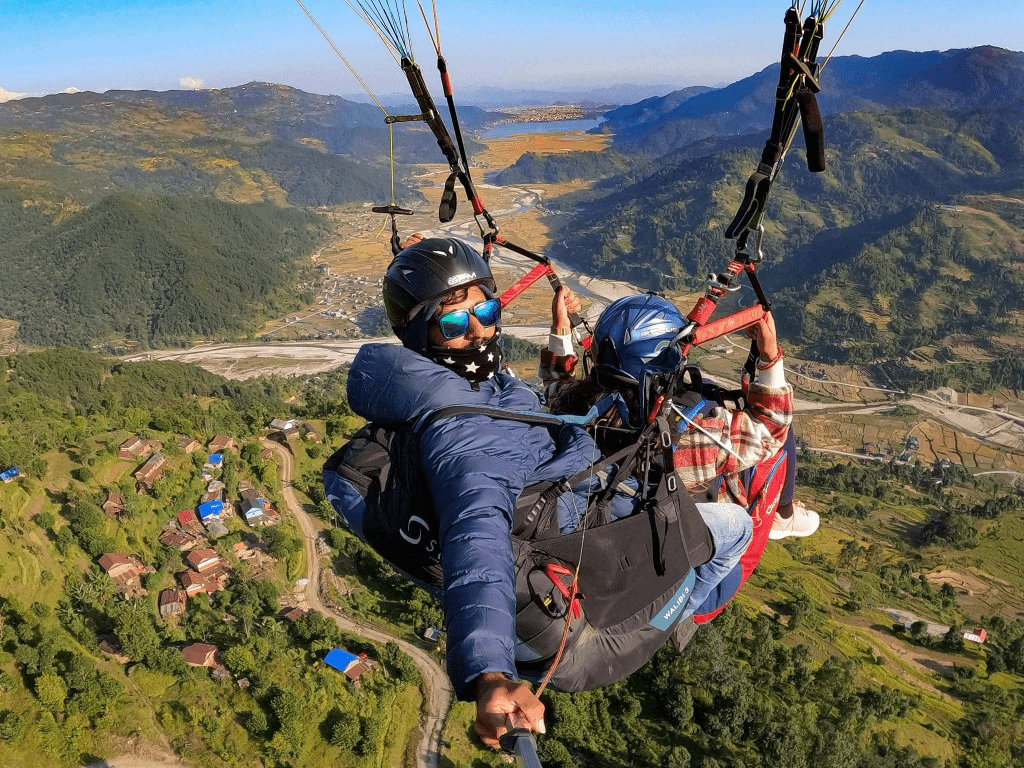
Fortunately, the story did not end there. Following continued advocacy by the Nepal Air Sports Association, or NAA, authorities agreed to a fresh approach. Takeoffs gradually returned closer to their original home. First, Toripani reopened as an approved launch site. Landings moved back to Khapaudi, near the familiar shores of Phewa Lake. This alone brought back some of the magic tourists had missed. Then, in late 2025, a broader agreement expanded things further. Under this new deal, takeoffs are now permitted from three zones: Sarangkot, Toripani, and Bahakot. Landings continue at Khapaudi. This arrangement finally restored much of what made paragliding in Pokhara special in the first place.
How Local Businesses Adapted to the Change
The relocation years tested Pokhara’s paragliding industry in real ways. Many operators had built their entire business around Sarangkot’s location. Suddenly, that foundation shifted overnight. Some companies struggled to keep staff employed during the Mandredhunga period. Others invested in new vehicles and routes to reach the alternate site. Meanwhile, marketing materials, maps, and even hotel partnerships needed updating. Despite these hurdles, most established operators managed to stay afloat. Their persistence, combined with continuous pressure from the Nepal Air Sports Association, helped push authorities toward compromise. Local government also played a role. Pokhara’s mayor publicly backed the return of familiar launch and landing sites, framing it as essential for tourism recovery. This kind of cooperation between businesses, associations, and city officials proved crucial. Without it, paragliding in Pokhara might have remained scattered across less convenient zones for much longer.
Impact on Pokhara’s Wider Tourism Economy
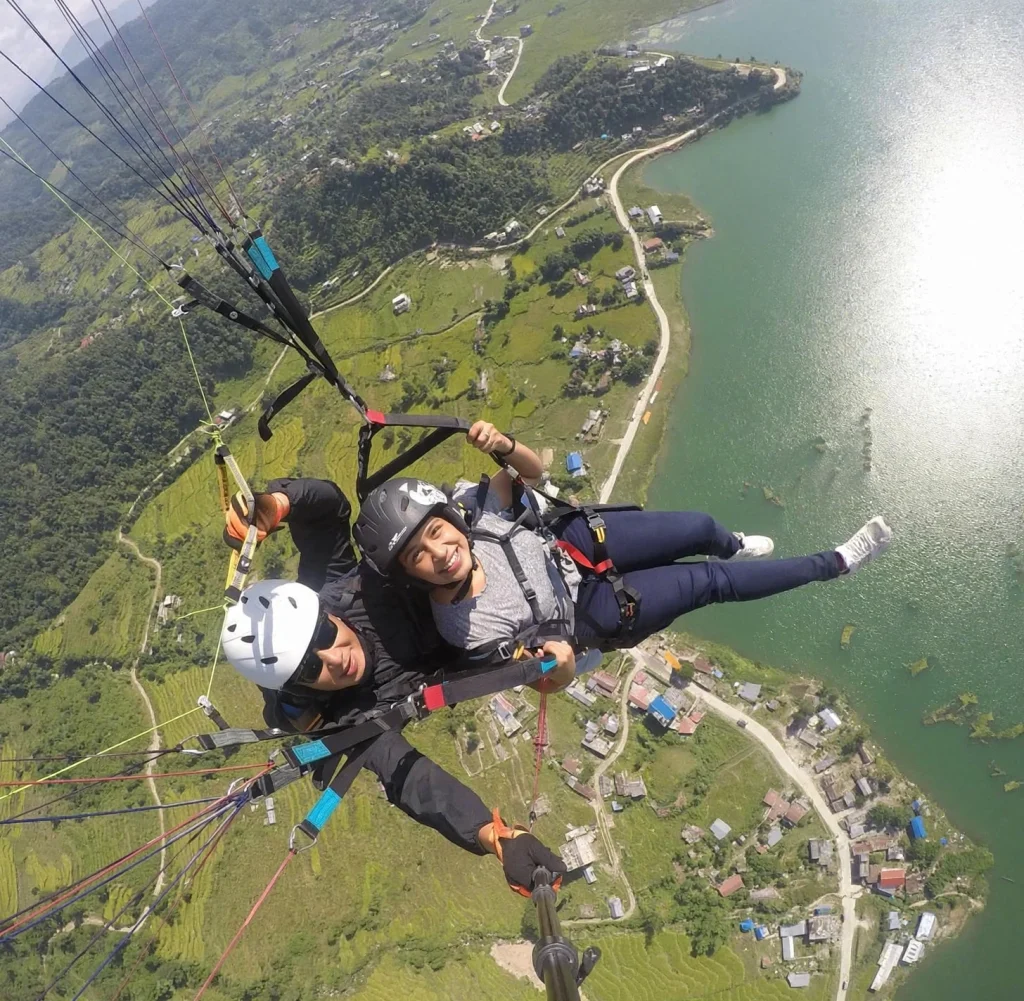
Paragliding is not just a standalone activity in Pokhara. It’s tightly woven into the city’s broader tourism identity. Lakeside hotels, restaurants, and trekking agencies all benefit when paragliders fill the skies. During the Mandredhunga years, this ripple effect weakened noticeably. Fewer visible flights meant fewer spontaneous bookings from tourists strolling along Phewa Lake. Business owners in Lakeside reported feeling the slowdown directly. Once flights returned closer to their original path, that visible energy came back too. Colorful canopies drifting over the lake once again became part of the daily scenery. This matters because visual appeal drives impulse bookings in adventure tourism. Tourists often decide to fly after watching others land safely nearby. Therefore, restoring familiar zones did more than satisfy pilots. It helped reactivate an entire chain of local businesses connected to the sport.
What the Transition Means for Flyers Today
So, what does this mean if you’re planning a flight? Essentially, you now have more flexibility. Pilots choose between Sarangkot, Toripani, and Bahakot depending on wind conditions and air traffic that day. Therefore, your exact launch point may vary. Still, the overall experience remains familiar. You’ll get hotel pickup, a scenic drive up the hillside, and a safety briefing before launch. From there, you’ll soar above the Pokhara Valley with sweeping mountain views. Flight times have also improved. Paragliding is now allowed from 11 am to 4:30 pm, an extra ninety minutes compared to the earlier restriction. This gives operators more room to serve tourists, especially during busy seasons.
Landing Zones: From Pame Back to Khapaudi
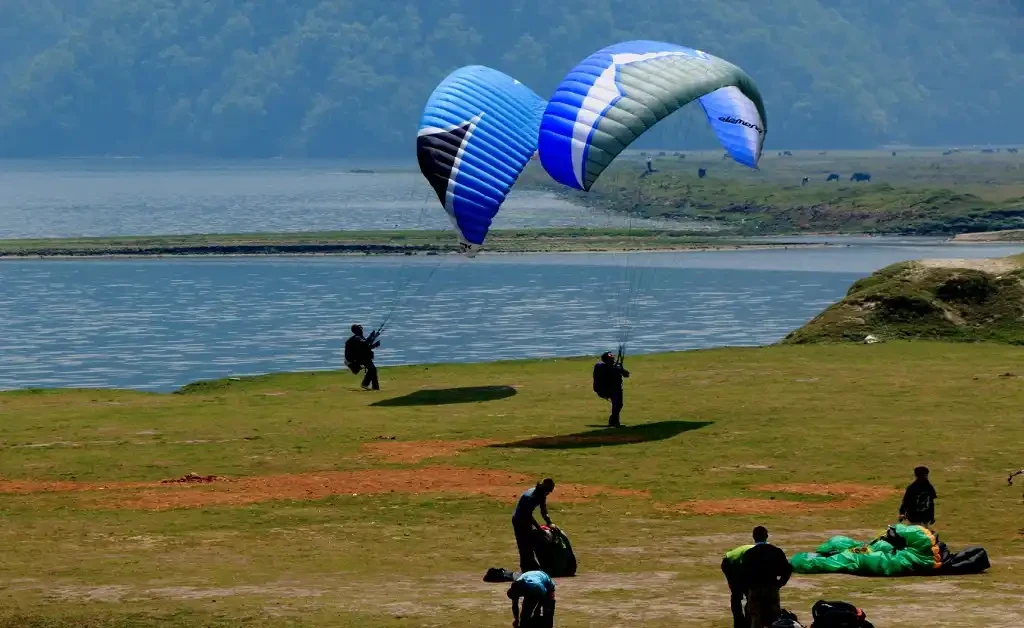
The return of Khapaudi as the main landing site matters more than it might seem. Khapaudi sits at the northern end of Phewa Lake. It offers open, grassy fields ideal for safe touchdowns. Just as importantly, it puts paragliders back within view of Lakeside’s restaurants and cafes. Visitors sipping coffee by the water can once again watch flights land nearby. This detail may sound small, but it plays a big role in Pokhara’s tourism appeal. Ultimately, aerial sports and lakeside charm work best together, not apart.
Safety Standards Behind the New Zones
Beyond location changes, safety regulations have tightened significantly. The NAA now enforces strict licensing for all tandem pilots. Specifically, pilots need around 18 months of training before carrying passengers. They must also log a minimum of 1,000 solo flying hours first. Medical fitness checks and incident simulation testing are mandatory too. Moreover, pilots are limited to one shift per day to avoid fatigue. Solo and tandem launch areas remain physically separated at every site. Flights are grounded entirely when weather fails to meet minimum safety thresholds. These measures followed a cluster of serious incidents around 2019, most involving solo pilots rather than tandem operations. Since then, safety records for commercial tandem flights have improved considerably. Most reported incidents in recent years involve solo pilots, not tandem operators working with licensed companies. This distinction matters for travelers weighing the risks. Choosing a tandem flight with a certified pilot remains the safest way to experience paragliding in Pokhara. Furthermore, weather monitoring has become more rigorous at every zone. Pilots now check thermal conditions, wind speed, and visibility before every single flight. If conditions look unstable, operators simply reschedule rather than risk passenger safety. This cautious approach reflects lessons learned from the past.
Best Time to Fly Paragliding in Pokhara
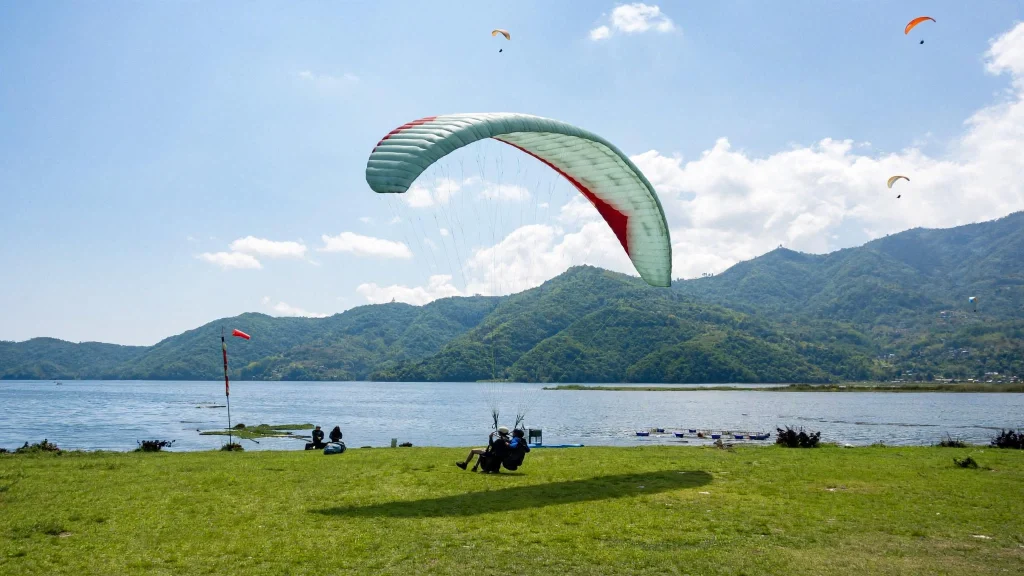
Timing matters a lot for this activity. The peak paragliding season runs from September to November. A second good window opens between February and March. During these months, skies stay clearer and thermals remain more predictable. Winter flights are still possible, though cooler temperatures and occasional fog can shorten flight windows. Monsoon season, from June to August, is generally not recommended. Heavy rain and unstable winds make flying unsafe during these months. Regardless of season, temperatures at flight altitude run noticeably cooler than on the ground. Expect it to feel 8 to 12 degrees Celsius colder while airborne, even on a warm day.
Tips for Booking Your Flight
Before booking, always choose a licensed operator registered with the NAA. This single step matters more than price comparisons. Ask directly whether the launch site will be Sarangkot, Toripani, or Bahakot. Conditions change daily, so operators may adjust based on wind and traffic. Confirm that insurance is included in your package. Standard tandem flights currently cost around NPR 8,500 per person. This typically covers pickup, transport, a 25 to 30 minute flight, and basic insurance. Cross-country flights run longer, usually 40 to 60 minutes, and cost between NPR 12,000 and 13,000. GoPro photo and video packages usually add another NPR 1,000 or so. Finally, avoid booking through unofficial street agents. Book directly with the company whenever possible to prevent last-minute price disputes.
It also helps to book a day or two in advance during peak season. Flights fill up quickly between September and November. Wear closed shoes and a light jacket, since it gets noticeably cooler in the air. Bring only a small bag, as larger items must stay in the vehicle. If you feel nervous about heights, tell your pilot before takeoff. Most pilots are happy to keep the flight calm and steady rather than adding spins or spirals. On the other hand, if you want an adrenaline boost, simply ask for acrobatic maneuvers once airborne. Either way, communication with your pilot makes the experience smoother and more enjoyable.
The Future of Paragliding in Pokhara
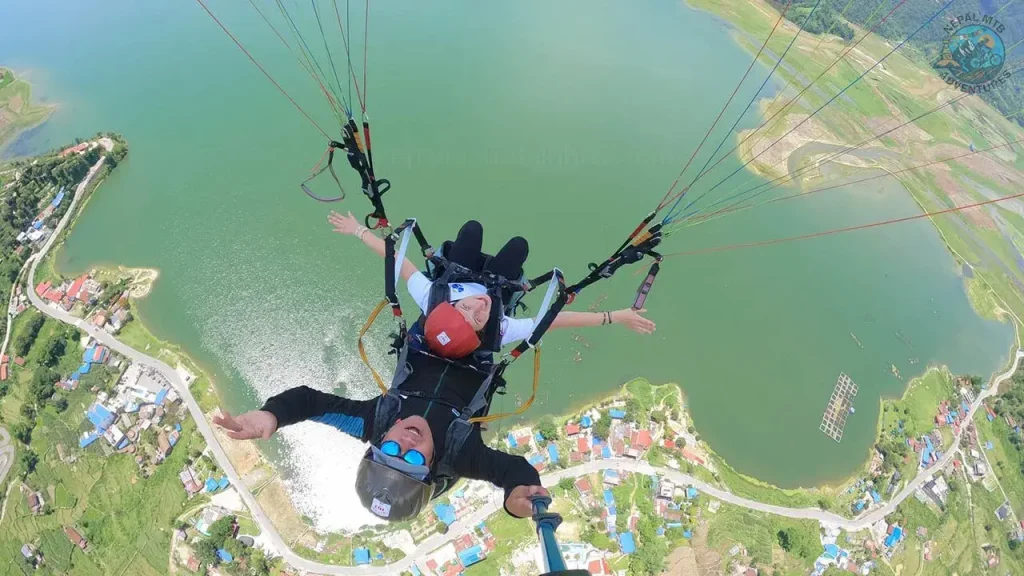
Looking ahead, things appear genuinely promising. Local authorities have expressed strong support for expanding the sport further. Plans are reportedly underway to resume solo paragliding permits in the near future. There is also talk of hosting new international paragliding competitions. In fact, the Nepal Open Paragliding Competition returned in 2026 after a long pause. This event had been suspended due to the pandemic and airspace restrictions. Its return signals renewed confidence in Pokhara’s status as a premier flying destination. Nationally, the NAA now regulates 13 different paragliding sites across Nepal. Still, Pokhara remains the undisputed center of the sport. As tourism initiatives like Pokhara Visit Year continue, further improvements to launch zones and safety infrastructure seem likely.
Final Thoughts
Paragliding in Pokhara has been through a lot of change since 2023. What started as a smooth, uninterrupted tradition from Sarangkot became a story of adaptation. Airport regulations forced difficult relocations. Yet through persistent negotiation, operators and authorities found workable solutions. Today, paragliding in Pokhara operates across three approved zones: Sarangkot, Toripani, and Bahakot. Landings have returned to the beloved Khapaudi site near Phewa Lake. Safety standards are stronger than ever. For travelers, this means the experience remains just as breathtaking as before, even if the exact launch point varies. If you’re planning a trip, Pokhara still delivers one of the best paragliding experiences on Earth.
Frequently Asked Questions
Is paragliding still available from Sarangkot in Pokhara?
Yes, Sarangkot is once again an approved launch site. As of late 2025, takeoffs happen from Sarangkot, Toripani, and Bahakot depending on daily conditions.
Why did paragliding move away from Sarangkot in the first place?
Pokhara International Airport opened in January 2023. Aviation safety rules then restricted flights near the airport’s airspace, forcing a temporary relocation to Mandredhunga.
Where do paragliding flights land in Pokhara now?
Most flights now land at Khapaudi, near the northern end of Phewa Lake. This restored the classic lakeside landing experience tourists remember.
How much does paragliding in Pokhara cost in 2026?
Standard tandem flights cost around NPR 8,500 per person. Cross-country flights, which last longer, typically cost between NPR 12,000 and 13,000.
What is the best time of year for paragliding in Pokhara?
The best seasons run from September to November and February to March. Skies are clearer, and thermal winds are more stable during these months.
Is paragliding in Pokhara safe for beginners?
Yes, tandem flights with licensed pilots are considered safe. Pilots must complete extensive training and hold valid Nepal Air Sports Association certification.
How long does a paragliding flight in Pokhara last?
Standard flights last around 25 to 30 minutes. Cross-country options extend the experience to 40 or even 60 minutes for more adventurous flyers.
Can I fly solo while paragliding in Pokhara?
Solo flying requires a special permit from the civil aviation office. Tandem flights remain the standard option for tourists without prior paragliding experience.


