



Nepal is one of those rare destinations that rewards almost any level of planning. Whether you arrive with a detailed spreadsheet or just a rough sense of direction, the country tends to pull first-time visitors toward the right places. Seven days is genuinely enough to experience three distinct worlds: the ancient, layered city streets of Kathmandu, the lakeside calm of Pokhara, and the wild lowland jungles of Chitwan. Each stop feels completely different from the last, and the route connecting them is exactly what makes a first week in Nepal so satisfying.
This 7 day Nepal itinerary is built around what actually works for first-time visitors, not just what looks good on a map. It accounts for realistic travel times, the energy cost of switching environments, and the moments most guides gloss over. Follow it closely and you will leave with a genuine sense of the country: not just a checklist of UNESCO sites and selfie coordinates.
Why the Classic “Silver Triangle” Route Works
Travel agencies call it the Silver Triangle: Kathmandu, Pokhara, and Chitwan. The logic is solid. Kathmandu gives you history and some of the most complex sacred architecture in Asia. Pokhara gives you mountain views and breathing room after the capital. Chitwan gives you the jungle, wildlife, and the slow character of Nepal’s southern lowlands.


What most itinerary posts skip: the order matters. Doing Chitwan first means returning to Kathmandu with your best memories already behind you. Doing Pokhara first puts you at the mountains before you have fully adjusted. Kathmandu-Pokhara-Chitwan-Kathmandu flows naturally, and experienced Nepal guides recommend it in almost exactly that sequence.
Your Complete 7 Day Nepal Itinerary: Day by Day
Day 1: Arrival in Kathmandu. Get Your Bearings
Arrive at Tribhuvan International Airport, clear immigration, and resist the urge to plan too much for day one. Kathmandu is overwhelming on arrival: the traffic, the noise, the altitude (1,400 meters above sea level), and the jet lag combine to hit first-time visitors harder than expected. Check into your hotel in Thamel, walk the narrow lanes at whatever pace feels comfortable, and eat a proper Nepali meal. Dal bhat, momos, or a bowl of thukpa from one of the countless small restaurants around Thamel will cost you less than $3 and will be better than anything you planned.
If you land early enough, a short taxi ride to Boudhanath Stupa in the late afternoon is worthwhile. Entry is free after 5pm, and the stupa at dusk, with butter lamps flickering at the base and monks circling the great white dome, is a gentle, quiet entry point into Kathmandu’s spiritual atmosphere. Spend the rest of the evening sorting your onward bus or flight bookings for Day 3.
Day 2: Kathmandu’s UNESCO Heritage Sites
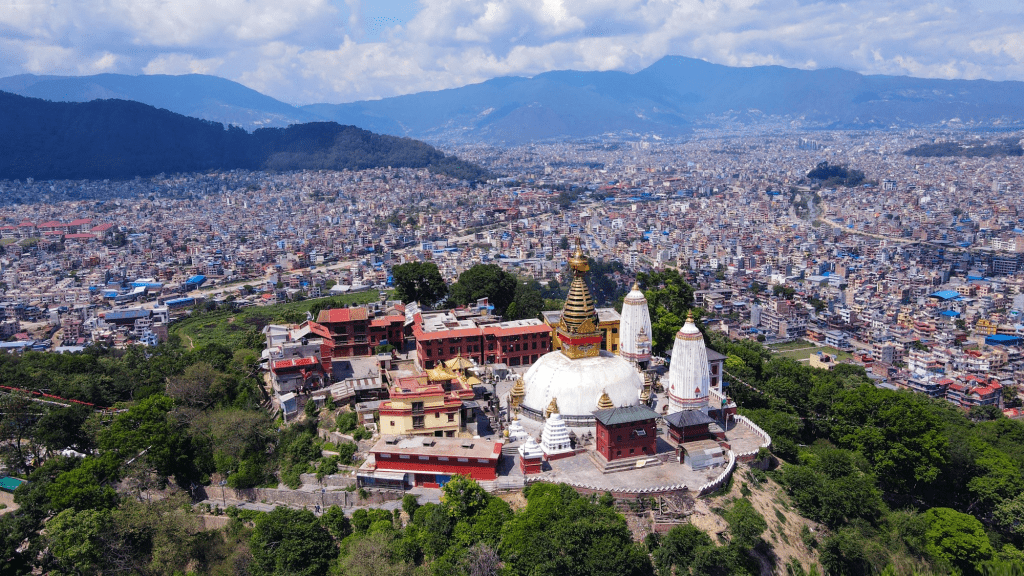
Start early, ideally before 8am. Swayambhunath Stupa (universally known as the Monkey Temple) is best in the first light of morning, before the tour buses arrive and while the resident monkeys are still moving. Entry costs NPR 200 for foreign visitors, roughly $1.50. Climb the 365 stone steps and you earn a panoramic sweep of Kathmandu Valley from the top: rooftops, temples, haze, and the surrounding hills stretching in every direction.
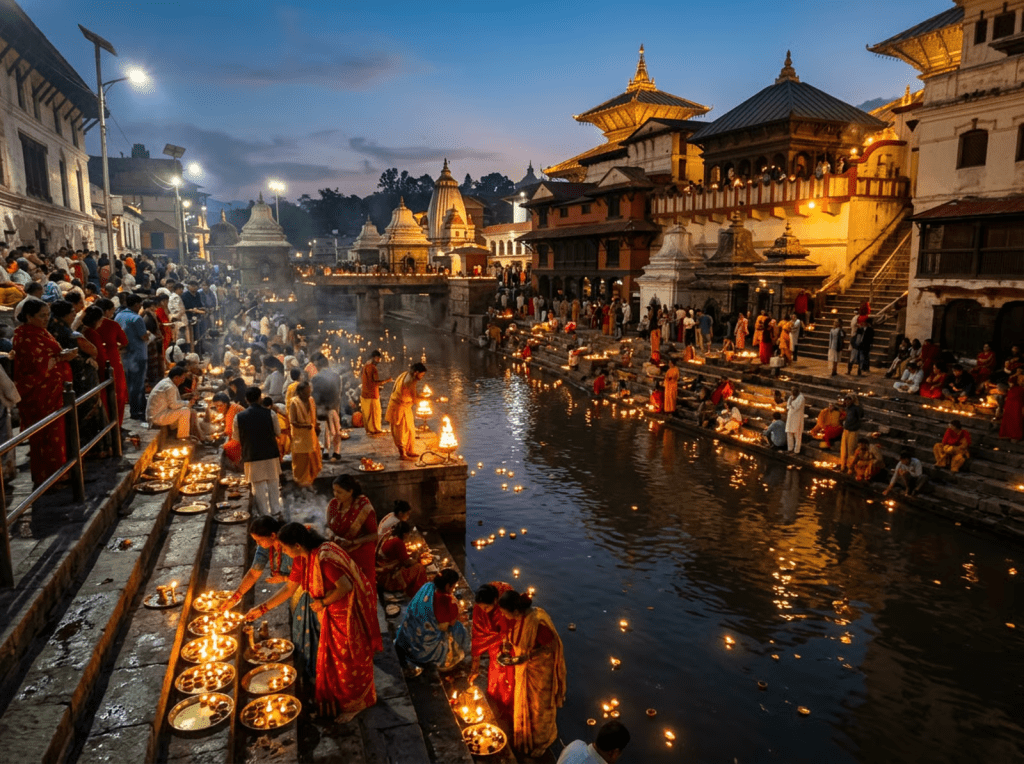
From Swayambhunath, head to Pashupatinath Temple on the banks of the Bagmati River. Non-Hindus cannot enter the main temple complex, but the surrounding ghats are fully open. Entry is NPR 1,000 (about $7.50). Take your time here. Pashupatinath is one of the most sacred Hindu cremation sites in the world, and the rituals at the ghats are neither a performance nor a tourist exhibit. Be thoughtful about photography.
Wrap up the afternoon at Kathmandu Durbar Square in Basantapur. Wander the palace complex, spot the historic Kumari residence, and have coffee from one of the rooftop cafes with views across the temples. Our full Kathmandu travel guide covers every corner of the valley in much more detail.
Day 3: Bhaktapur Morning, Then Head to Pokhara
Leave Thamel by 7am and take a taxi or local bus to Bhaktapur, about 13 km east of Kathmandu. Entry costs USD $18 for foreign visitors, and it earns every cent. Bhaktapur is a medieval city that feels almost untouched: cobblestone streets, pottery squares, ancient temples leaning into each other at odd angles. Walk through Taumadhi Square to see the five-tiered Nyatapola Temple, then spend time in the pottery market watching locals throw traditional black clay. Give yourself at least 2.5 to 3 hours.
Head back to Kathmandu by early afternoon and catch the tourist bus to Pokhara from Kantipath or Sorhakhutte. The bus fare runs NPR 1,200 to NPR 1,700 (about $10-13). Officially, the journey is listed as 6-7 hours. In practice, with ongoing road construction on the Prithvi Highway continuing through 2026, plan for 8-10 hours. Bring snacks, a good playlist, and motion sickness medicine if winding mountain roads affect you. If your schedule is tight, a one-way flight takes 25 minutes and costs $70-120 one-way, a genuine option worth considering.
Day 4: Pokhara: Sarangkot Sunrise and Lakeside Life
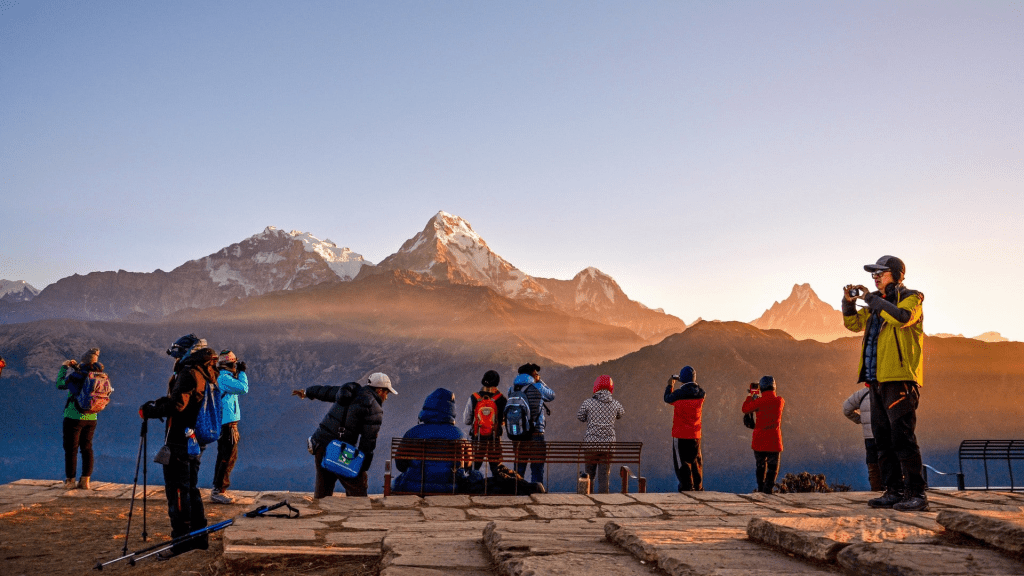
Wake up at 5am. Non-negotiable. Sarangkot hill, 5 km north of Pokhara, offers one of the best mountain views in Nepal: the Annapurna range, Dhaulagiri, and Machhapuchhre (Fishtail) turning pink then gold at first light. Take a taxi up (NPR 600-800 return), watch the sunrise, and walk back down through local villages if the mood is right.
Spend the rest of the day at Phewa Lake. Rent a rowboat (NPR 300-500 per hour) and paddle across to Tal Barahi Temple on its small island. Davis Falls, where the Pardi Khola drops into an underground gorge, is a 2 km detour worth a quick stop. Pokhara is also where tandem paragliding happens: flights from Sarangkot run $80-100 per person. Our Pokhara travel guide covers what is worth doing and what you can skip.
Day 5: Pokhara to Chitwan National Park
The tourist bus from Pokhara to Sauraha (the gateway village for Chitwan) takes 4-5 hours and costs NPR 800-1,200 per person. Most Chitwan resorts and package operators arrange this transfer, sometimes included in the package price. Book your accommodation before you leave Pokhara so someone is expecting you.
Arrive by early afternoon, check in, eat lunch, and take an orientation walk along the Rapti River. Mugger crocodiles are almost always visible sunbathing on the opposite bank. Within 20 minutes of arriving, you will have already spotted wildlife. Use the evening to book your safari activities for Day 6. Note that entering the national park itself requires a separate entry fee of NPR 2,000 per day (about $15), on top of any guide or jeep costs.
Day 6: Jungle Safari in Chitwan
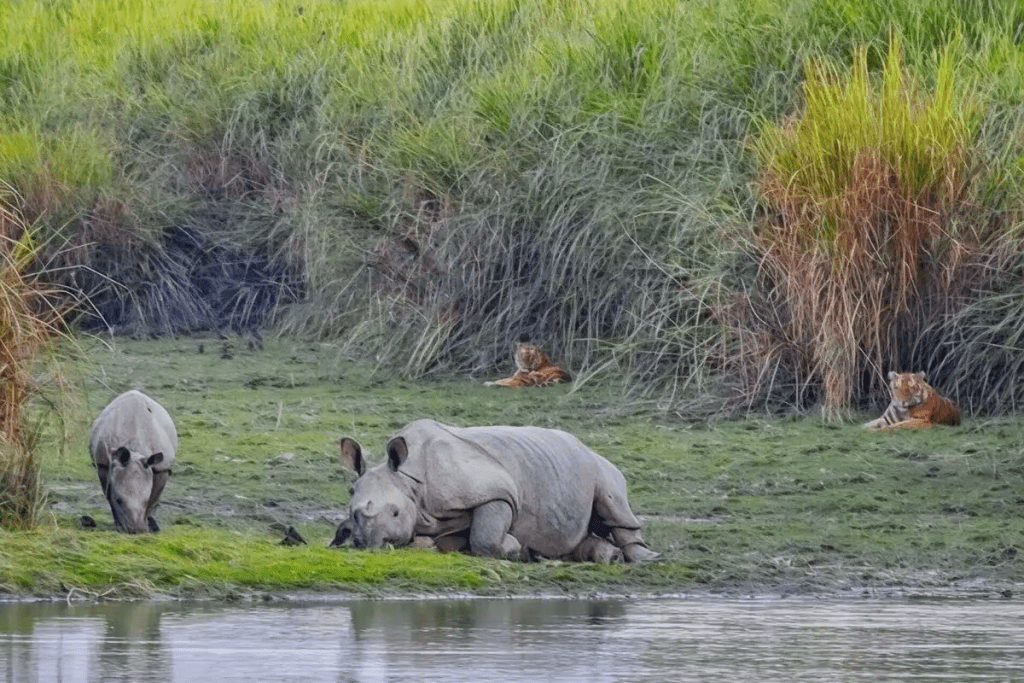
An early morning jeep safari starting around 6am is the prime time for wildlife. Chitwan National Park is home to over 68 species of mammals and more than 500 bird species. One-horned rhinos are spotted on the vast majority of morning safaris. Deer, langur monkeys, marsh muggers, and gharial crocodiles are near-certainties. Tiger sightings are rare but real, particularly in the Sauraha buffer zone. A combined jeep safari and jungle walk with a local guide runs roughly NPR 3,500-5,000 ($26-37) per person through reputable Sauraha operators, beyond the park entry fee.
Afternoon options include a dugout canoe ride on the Rapti River for up-close crocodile watching, or a visit to a nearby Tharu village to understand how the indigenous people of the Terai lowlands have lived alongside the jungle for centuries. Our detailed Chitwan National Park guide covers the full range of safari options, best operators, and what to realistically expect.
Day 7: Return to Kathmandu and Departure
The drive from Sauraha to Kathmandu takes 5-6 hours, so plan your departure time around your flight. An evening international flight allows a comfortable midday departure from Chitwan. For a morning flight, arrange an airport transfer the night before and leave before dawn.
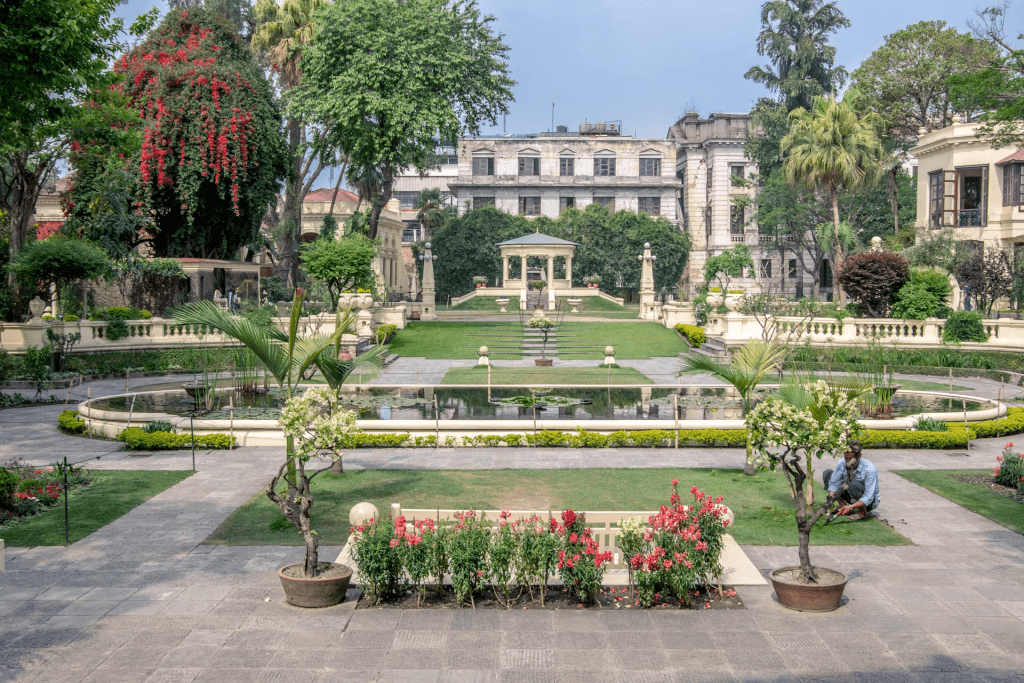
With a few hours to spare in Kathmandu, Thamel is good for last-minute shopping: thangka paintings, pashmina scarves, handmade paper products, and locally produced teas. The Garden of Dreams, a restored Edwardian garden a short walk from Thamel, costs NPR 400 and is one of the quieter ways to spend a final hour in the capital.
How Much Does a 7-Day Nepal Trip Cost?
Budget travelers on guesthouses, local food, and public buses can manage on $25-35 per day. Mid-range travelers using comfortable hotels and guided activities should plan for $60-90 per day. Rough per-person costs for the week:
- Visa on arrival (30 days): $50 in USD cash
- Accommodation (7 nights): $60-220 depending on travel style
- Transport (all three bus legs): $30-45 by road, or $100-200+ if you fly Kathmandu-Pokhara
- Entry fees (Swayambhunath, Pashupatinath, Bhaktapur, Chitwan): approximately $55 total
- Food and activities: $100-250 combined, depending on choices
A comfortable mid-range week runs roughly $400-600 per person, not counting international flights. The Nepal Tourism Board publishes current fee schedules on its official site.
Practical Tips Before You Go
- Book tourist buses in advance during peak season (October-November and March-May). Seats on the Kathmandu-Pokhara run fill up quickly.
- Carry Nepali rupees in cash. ATMs exist in Kathmandu, Pokhara, and Sauraha, but they have withdrawal limits and occasionally run dry. Draw enough before leaving each city.
- Dress conservatively at religious sites: shoulders and knees covered, shoes removed before entry. Keep a light scarf in your daypack.
- Get travel insurance that covers adventure activities. Paragliding and jungle walks are sometimes excluded from standard policies. Check before you fly.
For visa requirements, see our Nepal visa and entry guide for 2026.
Frequently Asked Questions
Is 7 days enough to visit Nepal?
Seven days covers the three main highlights at a comfortable pace. It does not leave room for trekking or remote destinations, but it gives you a genuine and varied first impression. Many travelers who do this route come back specifically for a longer trip. Think of it as a strong first chapter.
What is the best time of year for this itinerary?
October-November is the prime window: clear skies post-monsoon and excellent wildlife visibility in Chitwan. March-May is also good, with rhododendrons in bloom and mild temperatures. Avoid June through September if possible. Monsoon season brings flooding and unpredictable road conditions on the Prithvi Highway.
Do I need a visa for Nepal?
Most nationalities can get a visa on arrival at Tribhuvan International Airport in Kathmandu. A 15-day tourist visa costs $30, a 30-day visa costs $50, and a 90-day visa costs $125 (as of early 2025; confirm current rates before travel). Indian nationals do not require a visa. Pay in USD cash at the airport; card machines are not reliably available at the visa counter.
How do I get from Kathmandu to Pokhara?
A tourist bus costs NPR 1,200-1,700 ($10-13) and takes 8-10 hours with current road conditions. A domestic flight takes 25 minutes and costs $70-120 one-way. If you are short on time or prone to motion sickness on mountain roads, opt to fly.
How do I get from Pokhara to Chitwan?
Tourist buses run daily between Pokhara and Sauraha, taking 4-5 hours at NPR 800-1,200. Most Chitwan resorts include this transfer in their packages. There is no flight option; all routes are by road.
Do I need a licensed guide in Nepal?
From 2025 onward, all foreign trekkers on designated trekking routes must hire a licensed guide. For city sightseeing and Chitwan activities, a guide is not legally required but strongly recommended. A good local guide at Pashupatinath, Bhaktapur, or inside Chitwan changes the experience entirely. Budget NPR 1,500-2,500 ($11-18) per day.
Is Nepal safe for solo travelers?
Nepal is consistently rated one of the safer destinations in Asia for solo travel. Violent crime against tourists is rare. Main practical risks are road safety on mountain highways (avoid night travel), and petty theft in crowded Thamel streets. The Kathmandu-Pokhara-Chitwan route stays at low elevations, so altitude sickness is not a concern on this itinerary.
What should I pack for 7 days in Nepal?
Light layers cover most situations: mornings in Kathmandu and Pokhara can be cool, while Chitwan afternoons are warm and humid. Bring comfortable walking shoes for temple steps and stone streets, long sleeves for Chitwan evenings to ward off mosquitoes, sunscreen, a hat, a reusable water bottle, and a small headlamp. Leave space in your bag for Thamel shopping on the way home.


