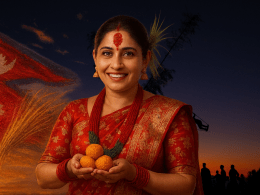



Most coverage of Chhath leads with the photographs: women standing waist-deep in river water at sunset, bamboo baskets heaped with fruit, lamps floating on the current. Those images are accurate and almost entirely beside the point. What makes Chhath Puja in Nepal significant is not how it looks from the bank. It is a four-day regimen of physical discipline, undertaken mostly by women, that includes a fast without food or water for roughly thirty-six hours. Understanding what is actually being done, and at what cost, is the difference between witnessing worship and consuming a spectacle.
What Chhath Is
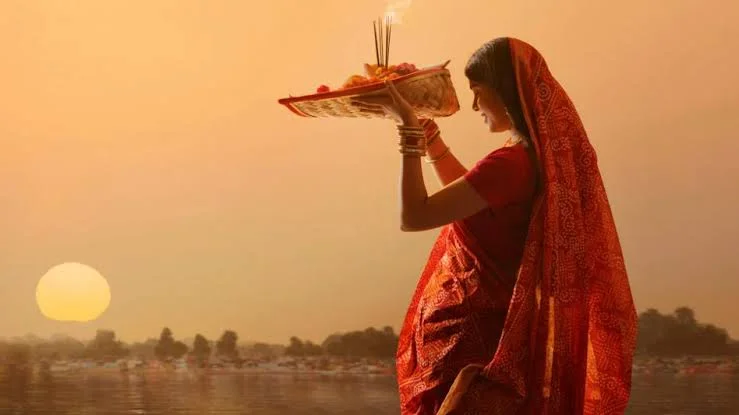
Chhath is a Hindu observance dedicated to Surya, the sun, and to Chhathi Maiya, a goddess associated with the sixth day after birth and with the protection of children. Devotees ask for the health and longevity of their families, particularly their children.
Two features set it apart from most Hindu festivals in Nepal. First, there is no priest. Households perform the ritual themselves, and the knowledge passes between generations rather than through religious specialists. Second, there is no temple. Worship happens at water: a river, a pond, a canal, or a tank built for the purpose.


Chhath is observed twice a year. Chaiti Chhath falls in spring. Kartik Chhath, in late autumn, is far larger and is the one most people mean.
When Chhath Falls in 2026
For 2026, Kartik Chhath runs from Friday, November 13 to Monday, November 16. Nepal’s public holiday calendar marks Kartik 29, corresponding to November 15, which is the evening arghya, the single most attended moment of the four days.
| Day | Date in 2026 | Name | What happens |
|---|---|---|---|
| Day 1 | Friday, November 13 | Nahay Khay | Ritual bathing, cleaning of the home and kitchen, one simple satvik meal |
| Day 2 | Saturday, November 14 | Kharna | Day-long fast, broken after sunset with kheer and roti. The waterless fast begins after this meal |
| Day 3 | Sunday, November 15 | Sandhya Arghya | Offerings to the setting sun, standing in water. Public holiday. Largest gatherings |
| Day 4 | Monday, November 16 | Usha Arghya | Offerings to the rising sun before dawn, then the fast is broken |
Dates follow the lunar calendar and move each year. Confirm against a current Nepali calendar before making travel plans around them.
The Fast Is the Festival
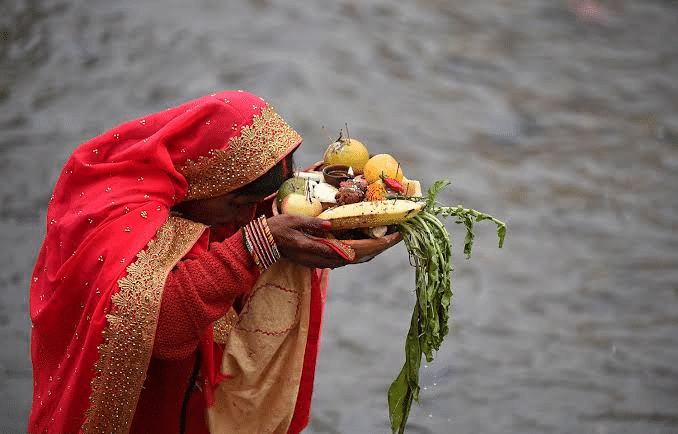
Here is what the photographs do not convey. After the Kharna meal on the evening of day two, the observer, called a parvaitin or vratin, begins a nirjala fast. No food. No water. Not a sip.
That fast holds through all of day three, including the hours spent standing in cold river water at sunset. It holds overnight. It holds through the pre-dawn return to the water on day four. Only after the sunrise offering does it break. Total duration runs roughly thirty-six hours.
Mid-November water in the Terai is not warm. Neither is the air before dawn. Women in their sixties and seventies observe this fast, some for decades running, and many stand in the water for an hour or more each session.
When you see someone smiling on the bank at sunrise on day four, you are seeing the end of that. Frame it accordingly.
Women as Primary Observers, and Why That Matters
Chhath is overwhelmingly observed by women, though it is not formally restricted by gender, and men do keep the fast, often in households where a woman cannot. The Nepal Tourism Board notes that worshippers are almost exclusively women.
Consider what that concentrates. A festival with no priesthood places its entire ritual authority in the hands of the household, and in practice in the hands of women who have learned the sequence from their mothers and grandmothers. Preparation is enormous: the kitchen is scrubbed and kept ritually pure, wheat is cleaned and ground, thekua is baked, fruit and sugarcane are sourced, and the bamboo soop baskets are assembled. Men and younger family members carry loads, build the ghat platform, and guard the site overnight, but the observance itself belongs to the fasting woman.
Framing Chhath as a picturesque women’s festival misses this. It is one of the few large religious observances in South Asia where women hold the central ritual role from start to finish.
Chhath and Madhesi Identity in Nepal
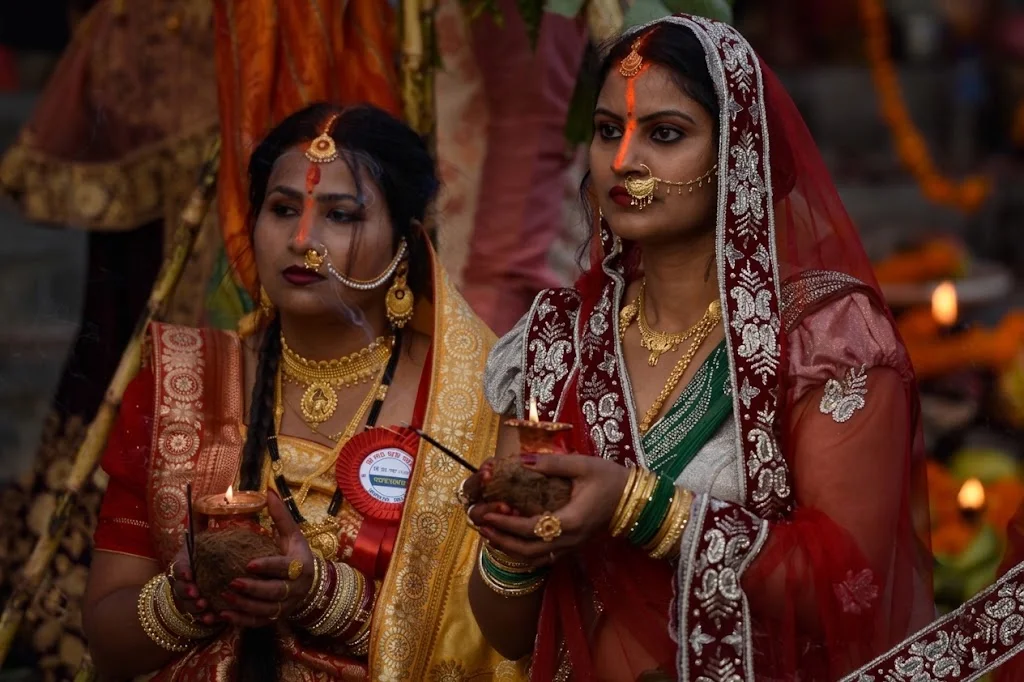
Chhath is rooted in the Mithila region spanning Nepal’s eastern and central Terai and the Indian state of Bihar. In Nepal it is most intensively observed in Madhesh Province, in districts including Dhanusha, Siraha, Saptari, Mahottari and Sarlahi, with Janakpur as its best-known center. Observance also extends into Koshi, Bagmati, Gandaki and Lumbini provinces, carried in part by Madhesi families who have moved to the hills and the Valley.
For many Madhesi Nepalis, Chhath carries weight beyond the religious. Nepal’s national festival calendar and its public culture have long been organized around hill traditions. Chhath’s recognition as a national public holiday, and the scale of its observance in Kathmandu along the Bagmati, register as acknowledgment that Madhesi practice is Nepali practice and not an import.
Saying so is not overreading. Ask people in Janakpur what Chhath means to them and the answer frequently combines devotion with something closer to civic pride.
Traditions vary within the region too. Maithili, Bhojpuri and Awadhi-speaking communities each have their own songs and details of practice, and Tharu households in some districts observe Chhath while others do not.
Where Chhath Is Observed
Janakpur and the Madhesh districts remain the heart of it. In the Kathmandu Valley, large gatherings form along the Bagmati near Pashupatinath and Guheshwori, at Kamal Pokhari, at Ranipokhari and at ponds in Lalitpur and Bhaktapur. Biratnagar, Birgunj, Nepalgunj and Bharatpur all host substantial observances.
If you are looking for specific locations and logistics, our companion guide to Chhath celebration sites across Nepal covers where to go. Keep in mind while reading it that these are worship sites first and viewing sites a distant second.
Photography: Get This Right
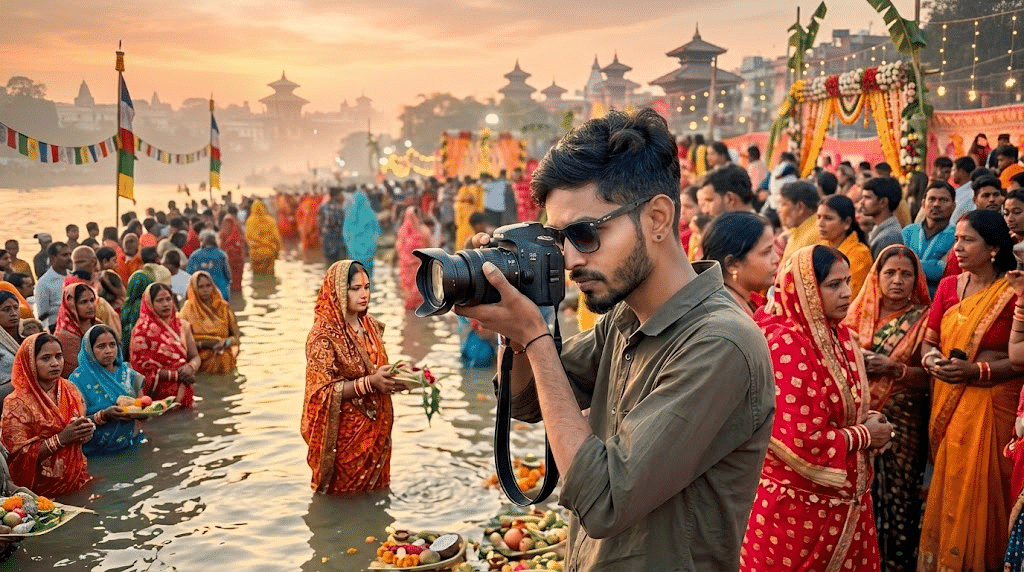
Chhath is heavily photographed, and much of that photography is done badly.
- Ask before photographing a person. A woman standing in water in the thirty-fifth hour of a waterless fast is not a subject you have implicit permission to shoot. Wide shots of a crowded ghat are different from a close portrait of an individual.
- Do not enter the water. Ghats are prepared and ritually cleaned. Walking in for a better angle contaminates the site and will be read exactly that way.
- Stay off the offerings. Baskets, lamps and the ghat platform itself are consecrated. Do not step over, touch or rearrange them, and watch your feet in crowds.
- No flash at dawn or dusk. Both arghya sessions happen in low light by design.
- Drones are a bad idea. Aside from local rules, they are intrusive over a religious gathering.
- If someone declines, that is the end of it. Do not negotiate or shoot from further back.
A useful test: would you photograph this in a place of worship at home, without asking, and publish it? If not, do not do it here.
Etiquette for Visitors
Visitors are generally welcome at Chhath ghats. Hospitality in the Terai is real, and you may be offered prasad, which is the fruit or thekua from the offering. Accept it with your right hand if you are comfortable doing so, and eat it rather than discarding it.
Dress modestly: covered shoulders and legs. Remove your shoes at the edge of the ghat area, as everyone else does. Keep your voice down, particularly during the arghya itself. Avoid alcohol before attending, and note that many households abstain entirely during these four days. Do not offer food or water to someone who is fasting, even kindly.
Arrive early if you want a place to stand at Sandhya Arghya. Crowds at major ghats are dense, and the last hour before sunset is the busiest of the four days.
Practical Notes for Travelers
- November 15, 2026 is a public holiday. Expect government offices and many banks to close, with the heaviest effect in Madhesh Province.
- Transport fills up. Buses and trains toward the Terai are crowded for several days before, as families travel home. Book ahead.
- Accommodation in Janakpur is limited and fills during Chhath. Reserve well in advance or base yourself in a larger town nearby.
- Weather is pleasant. Mid-November in the Terai typically runs warm by day and cool before dawn. Bring a layer for the sunrise session.
- Roads near ghats close. Local traffic management around riverbanks and ponds changes for two days. Walk rather than drive.
For broader context on the season, see our overview of Tihar, which precedes Chhath by about two weeks, and our guide to Nepal’s ethnic and linguistic communities. Another Terai observance worth reading about is Jitiya, which shares Chhath’s pattern of rigorous fasting undertaken by mothers.
Frequently Asked Questions
When is Chhath Puja in Nepal in 2026?
The four days run from Friday, November 13 to Monday, November 16, 2026. Sandhya Arghya, the evening offering, falls on Sunday, November 15, which is the public holiday. Dates follow the lunar calendar and change every year.
Do devotees really go without water?
Yes. After the Kharna meal on the evening of the second day, observers keep a nirjala fast, without food or water, until the sunrise offering on the fourth morning. That is roughly thirty-six hours, including time spent standing in river water.
Who observes Chhath?
Primarily women, though men also keep the fast and it is not formally gender-restricted. It is most widely observed by Madhesi communities in Nepal’s Terai, especially in the Mithila region, and by families from those communities living elsewhere in Nepal.
Can tourists attend Chhath?
Yes. Public ghats are open and visitors are generally welcomed. Attend as you would any act of worship: dress modestly, stay out of the water, ask before photographing individuals, and keep quiet during the offerings.
Is Chhath a Hindu festival?
Yes, though it is unusual within Hindu practice. There is no priest and no temple. Households perform the ritual themselves at a body of water, and the tradition is passed down within families rather than through religious specialists.
Where is the best place to see Chhath in Nepal?
Janakpur and the Madhesh districts are the center of observance. In Kathmandu, the Bagmati near Pashupatinath and Guheshwori draws large gatherings, as do Kamal Pokhari and Ranipokhari. Biratnagar, Birgunj and Nepalgunj also hold significant observances.
What is offered during Chhath?
Offerings are placed in bamboo soop baskets and typically include thekua, a baked wheat and jaggery sweet, along with sugarcane, coconut, bananas, other seasonal fruit, and earthen lamps. Preparation follows strict rules of cleanliness.
How does Chhath affect travel in Nepal?
Expect a public holiday on November 15, 2026, closed offices and banks, and crowded transport toward the Terai for several days beforehand. Roads near major ghats are restricted, and accommodation in Janakpur books out well ahead.
Before You Travel
If you plan to be in Nepal in mid-November, Chhath is worth understanding before you encounter it. Cross-check dates against the Nepal Tourism Board and local sources closer to the time, since lunar dates shift and holiday notices are issued in the weeks before.
NepalVue covers festivals across all of Nepal’s regions, not only the hill calendar. Save this guide for your November planning, share it with anyone traveling to the Terai, and explore more of our cultural coverage as you plan the rest of your route.