



Nepal’s most consequential environmental policy was not a protected area, a species program or an international treaty. It was a transfer of legal control over national forest to village groups, and it produced one of the few documented reversals of large-scale deforestation anywhere in the developing world. Nepal’s community forestry legacy is now cited globally as a model. It also has a set of problems that its admirers rarely mention. This article covers what the data actually show, what drove the recovery, and what the program has not delivered.
The Crisis That Started It
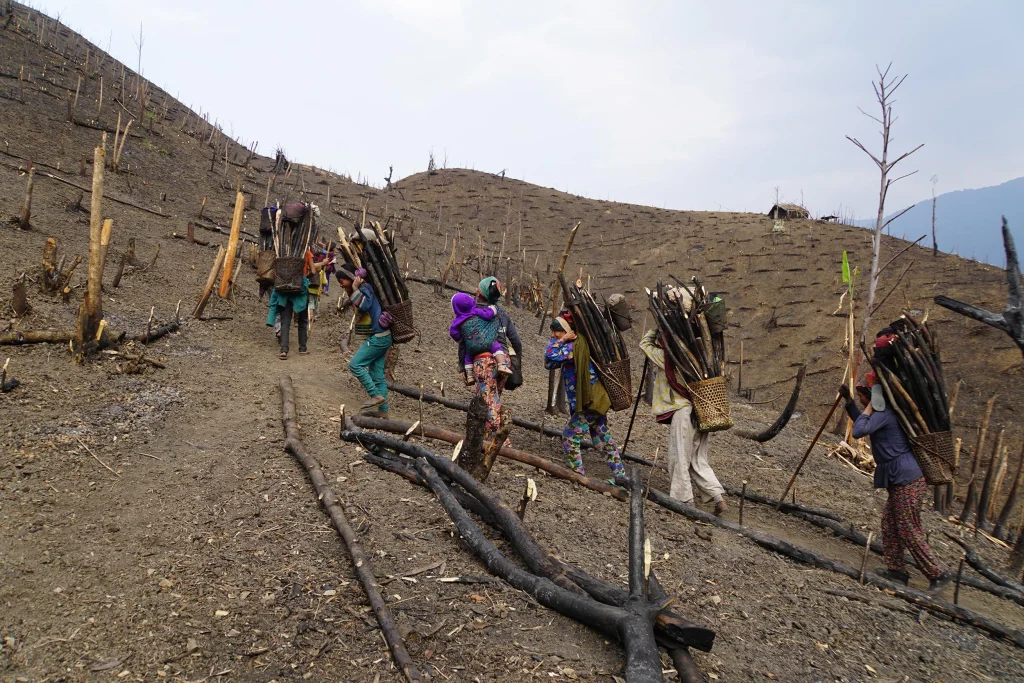
In the 1970s, Nepal’s hill forests looked finished. A frequently cited 1979 World Bank assessment warned that forests in the hills would be largely gone by 1990. Fuelwood, fodder and timber demand from a growing rural population was stripping slopes that had been nationalized in 1957, which had the perverse effect of removing local control without putting enforceable state control in its place.
Forests that belong to everyone in principle and to nobody in practice get used accordingly. Village institutions that had regulated grazing and cutting lost legal standing, and the Department of Forests had neither the staff nor the presence to replace them.


Policy began shifting in the late 1970s and through the 1980s, and the decisive legal change came with the Forest Act of 1993. Under that act, forest officials could hand national forest over to community forest user groups, which then managed it under an approved operational plan and kept the income from it.
What the Satellite Record Shows
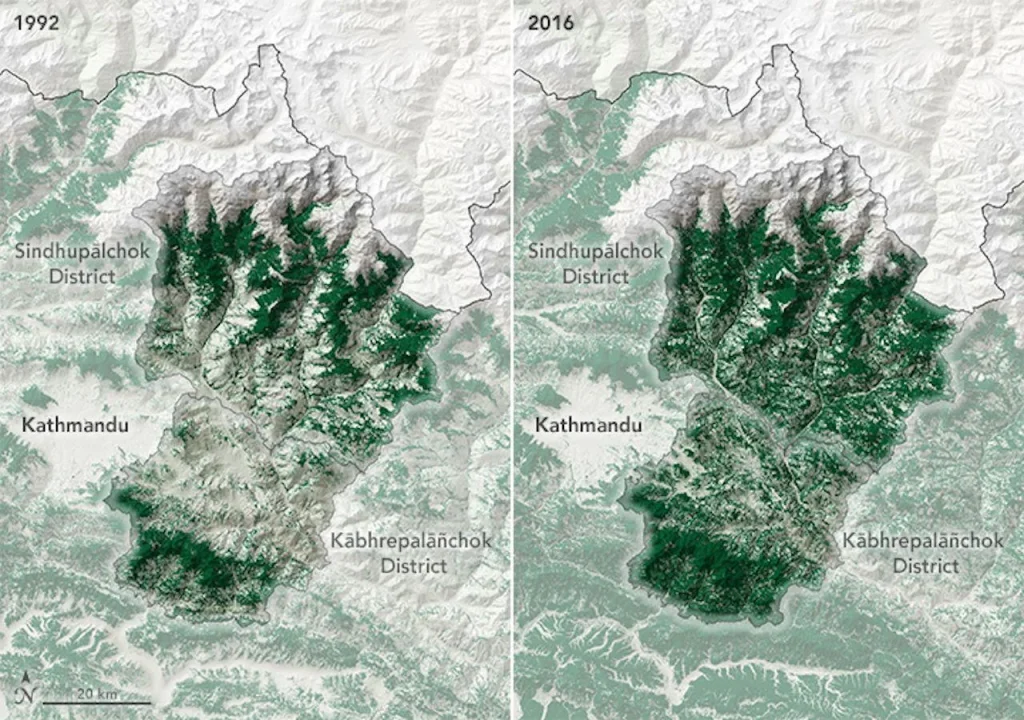
Forest cover change in Nepal is unusually well documented because the Landsat archive goes back far enough to capture the whole arc. NASA’s Earth Observatory summarizes the headline result: national forest cover rose from about 26 percent in 1992 to about 45 percent in 2016, drawing on work by Jefferson Fox and colleagues and a 25-year cross-scale evaluation published in Remote Sensing in 2021.
Government figures tell a compatible story with slightly different baselines and methods. Reporting on Nepal’s Economic Survey gives a sequence of 39.6 percent in the 1990s, 44.74 percent in 2015, 45.31 percent in 2019 and 46.08 percent in 2024, placing Nepal second in South Asia behind Bhutan.
Different numbers for the same country reflect genuine methodological differences, not error. Satellite-derived tree cover and official forest inventory use different definitions of what counts as forest, different minimum canopy thresholds and different treatment of shrubland. Take the trend seriously and the decimal places lightly.
| Year | Reported forest cover | Source basis |
|---|---|---|
| 1990s | about 39.6% | Government figures via Economic Survey reporting |
| 1992 | about 26% | Landsat-based analysis cited by NASA Earth Observatory |
| 2015 | 44.74% | Government figures via Economic Survey reporting |
| 2016 | about 45% | Landsat-based analysis cited by NASA Earth Observatory |
| 2019 | 45.31% | Government figures via Economic Survey reporting |
| 2024 | 46.08% | Economic Survey for FY 2082/083 |
Geography matters as much as the national number. Most regrowth happened in the middle hills, between the high Himalaya and the Terai plains, which is exactly where community forestry was most densely applied.
One Village, Documented
Aggregate percentages hide the mechanism. A single case from the NASA summary makes it concrete: Devithan community forest went from 12 percent forest cover in 1988 to 92 percent in 2016. Formal handover came in 2000, but the community had begun informal management after 1993, and roughly a quarter of the regeneration happened before legal recognition arrived.
That last detail is the interesting one. Legal transfer mattered, but what actually changed the trajectory was the community acting as though the forest were theirs, with the law catching up afterward.
How the System Works
A community forest user group, or CFUG, is a legally recognized body with a membership list, an executive committee, a constitution and an operational plan approved by the division forest office. Within that plan, the group decides who may harvest what, when and how much.
Typical rules are unglamorous and effective: seasonal closures to grazing, bans on green felling, limits on fuelwood collection, permits for construction timber, and rotating patrols by members. Collection of fodder, fruit, medicinal plants and leaf litter generally continues. Groups can sell forest products and keep the revenue, which funds schools, trails, drinking water schemes and group operations.
Scale is the striking part. Reporting on the Economic Survey puts the current count at 23,162 community forest user groups managing about 2.5 million hectares, with a further 899 groups formed in buffer zones and protected areas. Earlier accounts give roughly 22,000 groups covering about a third of national forest and involving around 3 million households.
Regeneration, Not Planting
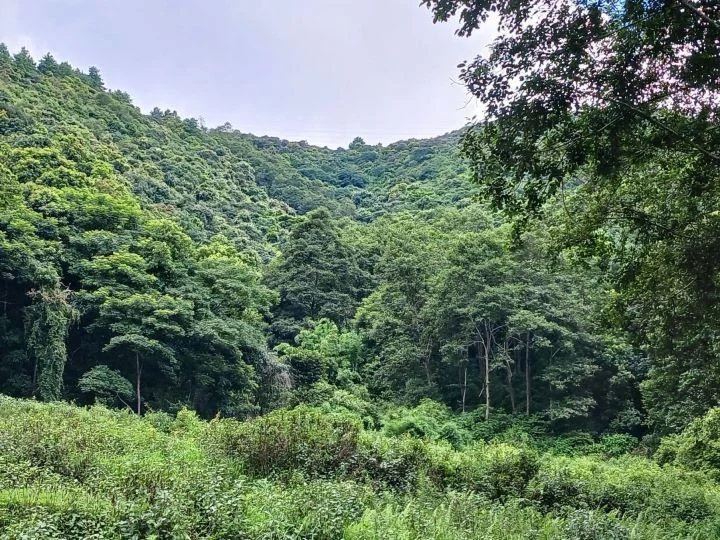
A persistent misconception is that Nepal planted its way back. Jefferson Fox, principal investigator on the NASA land cover project, is quoted saying regrowth was mainly natural regeneration once communities actively managed the forests. Australian-funded plantation work in the 1980s supported some districts, particularly on lower barren land, but it was not the main driver.
Mechanically this makes sense. Hill forests that are grazed and cut heavily often retain live rootstock and a seed source. Remove the pressure and they come back on their own, faster and cheaper than any planting program could manage.
The Other Half of the Story
Here is where the celebratory version usually stops. It should not.
A report edited by Paudel, Ojha, Banjade, Karki and Tamang for ForestAction Nepal, produced under the EnLiFT2 program, argues that biodiversity has been poorly integrated into the program. Positive effects exist, including reduced poaching and improved habitat in some areas, but the report characterizes these as exceptions rather than the norm.
Several specific criticisms recur in the literature and in Mongabay’s reporting on that research:
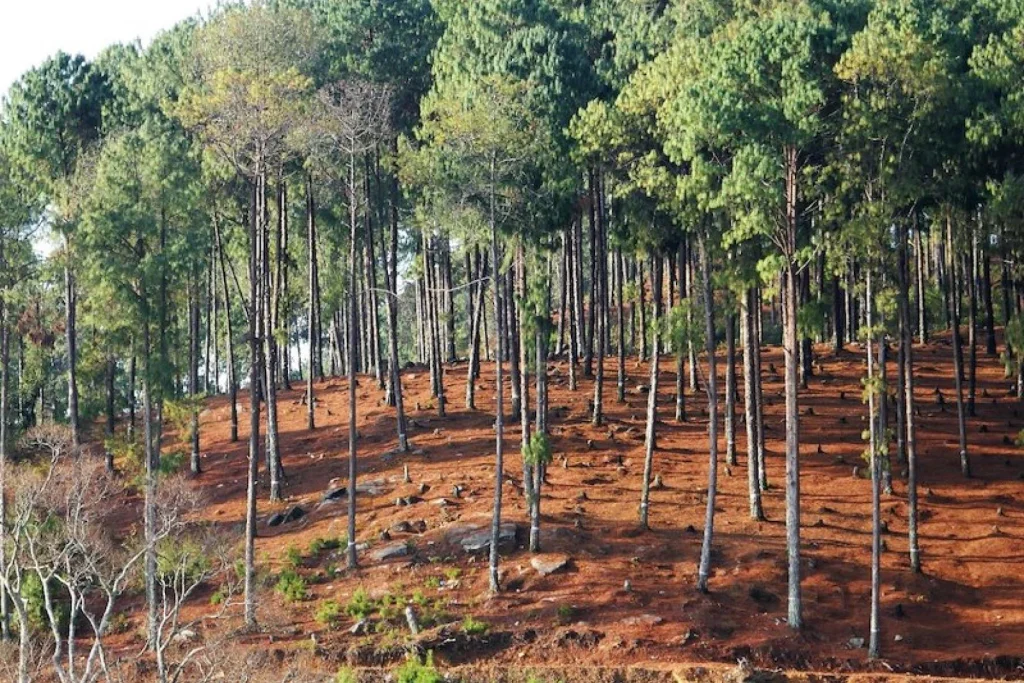
- Species composition: Management plans favor economically valuable timber species, which can homogenize forest flora. Pine-dominated stands shade out undergrowth and produce what critics call green deserts, structurally forest but biologically thin.
- Wildlife feedback: Pine plantations supply wood but not the wild fruit that macaques and other species depend on, pushing animals toward farmland. Human-wildlife conflict involving leopards and rhesus macaques has risen in the hills.
- Institutional split: Forests fall under the Department of Forests while wildlife falls under the Department of National Parks and Wildlife Conservation. No single authority looks at both together.
- Thin monitoring: Operational plans are revised roughly every decade and typically include only basic wildlife inventories.
Our reporting on invasive plants in Nepal’s national parks covers a related failure mode: forest cover can increase while the species inside it shift toward a less valuable assemblage.
Equity Inside the Group
A user group is a village institution, and village institutions reproduce village hierarchies. Research across three decades has repeatedly found that committee positions and decision-making tend to concentrate among wealthier households and dominant caste groups, while Dalit households, landless families and women who depend most heavily on forest products for fuel and fodder often have the least say.
Rules that restrict collection fall hardest on households with no alternative. A ban on grazing is a minor inconvenience to a family with stall-fed livestock and a serious cost to one without. Successive policy reforms have tried to mandate inclusive representation, with uneven results.
Outmigration as a Hidden Driver
An uncomfortable question runs through recent scholarship: how much of the forest recovery is policy, and how much is depopulation? Labor migration from the middle hills has been substantial for decades, and research has examined the links between forestry, agriculture and migration in this landscape. Fields have been abandoned, livestock numbers have fallen in places, and fuelwood demand has eased as remittances funded gas cylinders and better stoves.
Separating the effect of good institutions from the effect of fewer people is genuinely hard, and researchers disagree about the relative weight. Honest reading: community forestry worked, and it worked in a demographic context that made success easier. Both can be true.
Where the Policy Stands Now
Nepal’s federal restructuring under the 2015 constitution redistributed forest authority across federal, provincial and local governments, and the Forest Act of 2019 replaced the 1993 legislation. User groups have expressed concern about provisions that could increase government discretion over community forests and their revenue, and about overlapping mandates between tiers of government.
A separate debate concerns use. Having restored the resource, Nepal now has substantial standing timber that is largely unharvested, while the country imports wood. Arguments for commercializing community forests collide with arguments for conservation and with the question of who captures the income.
Carbon finance adds another layer. Payments for forest carbon create a new revenue stream and a new set of questions about whether communities or governments control it.
What Other Countries Can and Cannot Copy
The transferable lesson is not “plant trees.” It is that secure, legally recognized local tenure combined with the right to benefit from the resource can change behavior at a scale no enforcement budget can reach. Nepal gave groups real authority and let them keep the proceeds.
What is less transferable is context: a landscape where natural regeneration was fast once pressure eased, strong pre-existing village institutions, decades of consistent donor support, and demographic change that reduced forest demand. Dropping the legal framework into a different setting without those conditions would not reproduce the result.
For a sense of what restored landscapes can support when habitat connectivity is managed deliberately, see our features on rewilding in the Terai Arc corridor and on red pandas and bamboo in Kanchenjunga. Our guide to Koshi Tappu Wildlife Reserve covers a very different conservation model in the Terai.
Frequently Asked Questions
How much did Nepal’s forest cover actually increase?
Landsat-based analysis cited by NASA puts it at roughly 26 percent in 1992 to about 45 percent in 2016. Government figures report 39.6 percent in the 1990s rising to 46.08 percent in 2024. The baselines differ because of differing definitions and methods; the upward trend is consistent across both.
When did community forestry start?
Policy shifts began in the late 1970s and 1980s, but the decisive legal change was the Forest Act of 1993, which allowed forest officials to hand national forest to community user groups. The Forest Act of 2019 has since replaced it.
How many community forests are there?
Reporting on Nepal’s Economic Survey gives 23,162 community forest user groups managing about 2.5 million hectares, plus 899 groups in buffer zones and protected areas. Earlier figures of around 22,000 groups covering roughly a third of national forest remain widely cited.
Were the forests planted or did they grow back naturally?
Mainly natural regeneration, according to researchers on the NASA land cover project, once communities restricted grazing and cutting. Donor-funded planting in the 1980s contributed in some districts, especially on barren lower land.
Is more forest always good for biodiversity?
No. ForestAction Nepal’s research argues biodiversity has been weakly integrated into community forest management, with plans favoring commercially valuable timber species. Pine-dominated stands can have very limited understory and support fewer species than mixed native forest.
Has community forestry increased human-wildlife conflict?
Conflict with leopards and rhesus macaques in the hills has risen alongside forest recovery, and researchers link part of this to forest composition that fails to provide wild food. Attributing conflict trends to a single cause is difficult, and other factors including land use change contribute.
Does everyone in a village benefit equally?
Generally not. Research has consistently found that decision-making concentrates among wealthier and dominant-caste households, while Dalit, landless and women members who depend most on forest products often have less influence. Policy reforms have aimed at inclusion with mixed results.
Did outmigration cause the forest recovery?
It is a contributing factor that researchers take seriously, since labor migration reduced farming pressure and fuelwood demand in the middle hills. How much of the recovery it explains relative to community management remains an open and contested question.
NepalVue covers conservation policy alongside the places it shapes. Save this piece, share it with anyone who cites Nepal as a restoration success story, and follow NepalVue for more reporting on the country’s changing landscapes.


