


There is no guild of bone setters in Mustang. That phrase, which appears often in travel writing about the Nepali Himalaya, flattens something more specific and more interesting: a formal medical system, called Sowa Rigpa, whose practitioners are known as amchi, and within which the treatment of fractures, dislocations and joint injury is one branch among many. This article explains what that system is, how its trauma care is actually structured, what the Lo and Thakali communities of Mustang have done to keep it alive, and what changed in Nepali law in 2025. Bone setters in Mustang is a label worth unpacking rather than repeating.
Sowa Rigpa is a system, not a folk remedy
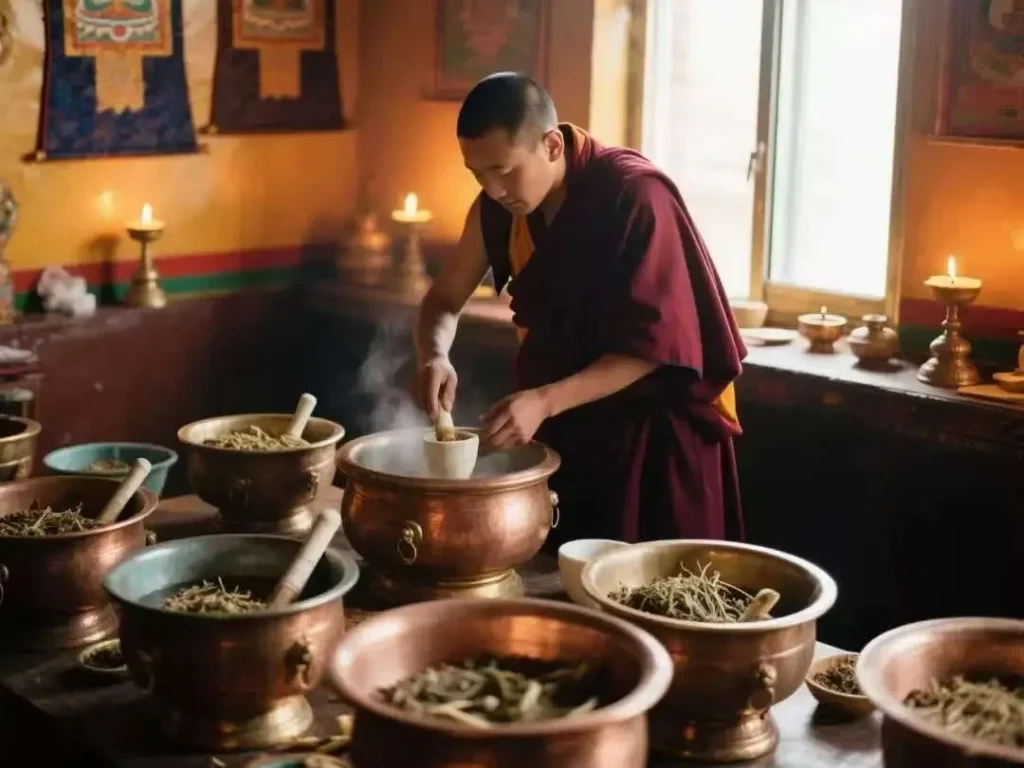
Sowa Rigpa translates roughly as the science of healing. It is practiced across the Tibetan cultural world and in Nepal’s high-altitude districts, and it is formally recognized as a medical system in India, China, Bhutan and Mongolia.
Its textual foundation is the Gyushi, the Four Tantras, an eighth-century Tibetan medical corpus. Diagnosis works through pulse reading, examination of the tongue and urine, visual inspection and structured questioning. The framework organizes illness around the balance of three principles usually rendered in English as wind, bile and phlegm, and the tradition enumerates 404 recognized diseases.


Treatment is divided into four areas: diet, behavior, medicine, and what the tradition calls accessory or external therapies. Trauma care sits mostly in that fourth category.
Where fracture and joint care actually fits
The external therapies include moxibustion, which applies controlled heat at specific points, along with fomentation, massage, herbal baths, herbal pastes and venesection. Documentation of Nepali amchi practice by the Center for Indigenous Peoples’ Research and Development, published in 2019, records practitioners using heat therapy for bone fractures, joint disorders, sprains and jaw dislocation, and bloodletting in cases of paralysis.
The same study records a specific case: a teenage boy with a pelvic fracture treated over roughly a month with oral medicine and herbal paste. The family paid NRs 5,000. A helicopter evacuation had been quoted at NRs 45,000.
That cost comparison is the most important single fact in any honest account of this subject. In the upper valleys of Mustang, Dolpa, Humla and Mugu, the nearest operating theater may be a day of travel and a sum of money the household does not have. Traditional trauma care in these districts is not a lifestyle preference. It is often the available option.
It is worth saying plainly that this article describes a medical tradition. It is not medical advice, and specific treatment decisions belong with qualified practitioners.
Mustang’s place in the picture
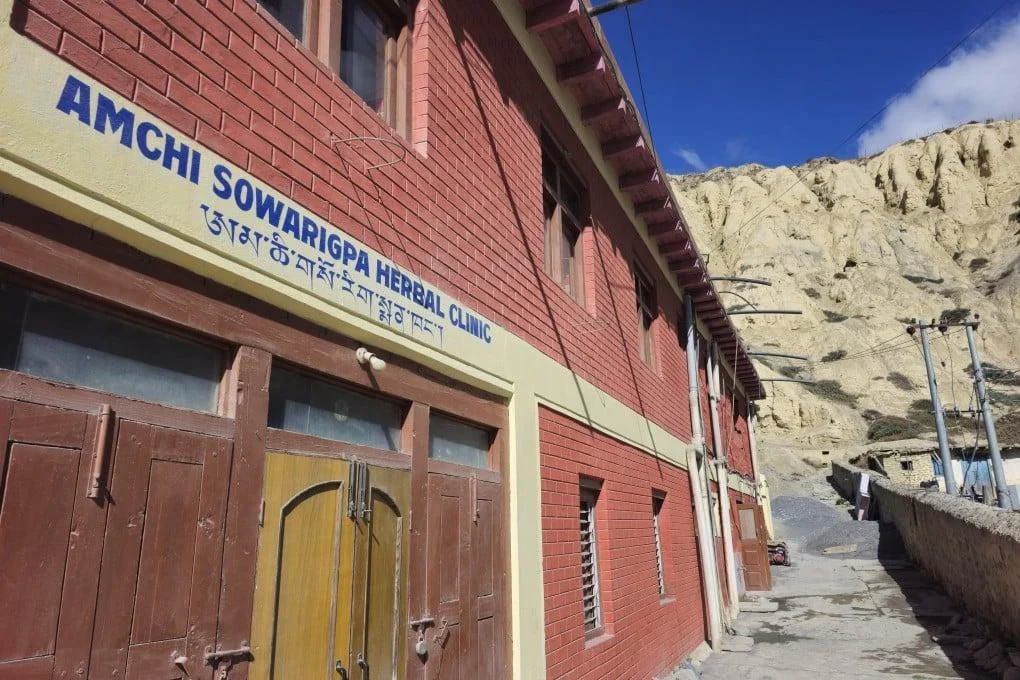
Mustang has more amchi than any Nepali district except Dolpa, according to the 2019 CIPRED documentation. The practice is concentrated in Upper Mustang, among the Loba, the Tibetan-speaking communities of the former kingdom of Lo, with Lo Manthang as the historical center. Lower Mustang has a different demographic and religious profile, with substantial Thakali and Gurung populations, and the relationship to amchi medicine there is not identical. Traditions vary by valley, by community and by household.
Lo Manthang is also where formal training has been rebuilt. Lo Kunphen, a Sowa Rigpa school in Mustang, is one of four small schools of its kind in Nepal and had 30 students enrolled at the time of the CIPRED study. The Himalaya Amchi Association, formed in 1998, is chaired by Gyatso Bista, a fifth-generation amchi based in Lo Manthang, and counts more than 100 member practitioners nationally.
How the knowledge is transmitted
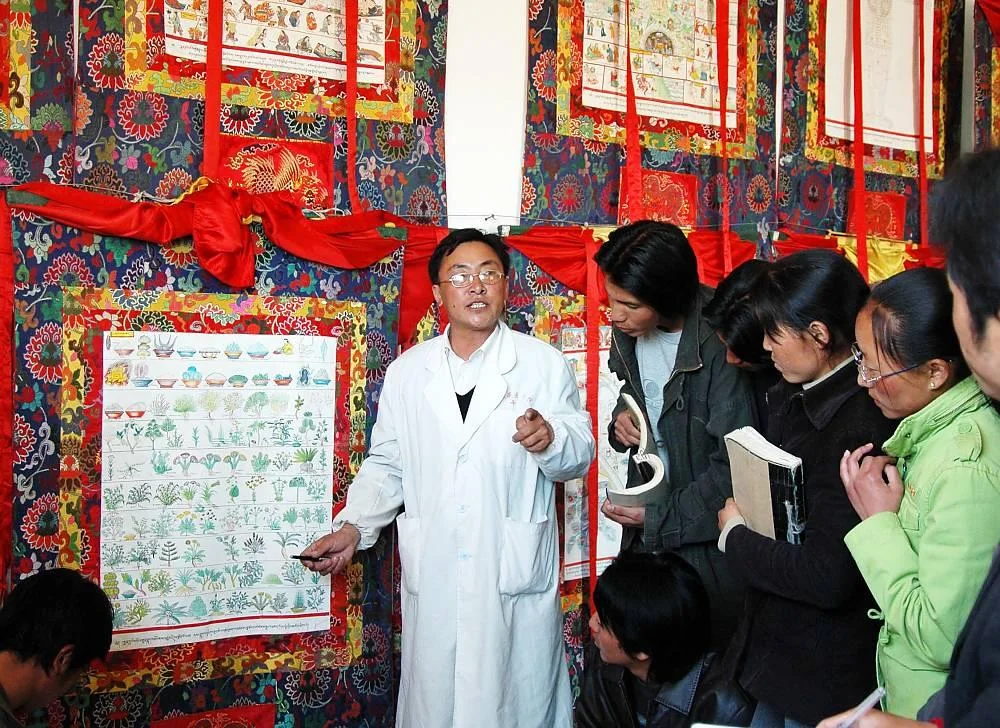
Traditional transmission runs through two channels. One is the guru-disciple relationship. The other is family lineage, often father to son, with training frequently beginning in childhood and continuing for years. Students learned by accompanying a teacher on patient visits, and were formally certified in a ceremony held before the community.
That community certification matters. It means the amchi’s authority was socially conferred, not self-declared, and that the practitioner was accountable to the people they treated.
Alongside lineage training, shorter courses and institutional programs have appeared. The Sowa Rigpa International College, founded by Tenjing Dharke Gurung, an amchi from Upper Mustang now practicing in Kathmandu, is affiliated with Lumbini Buddhist University and began its degree program in 2016.

The 2025 legal change
For decades, amchi in Nepal practiced without legal recognition. Practitioners reported hesitating to treat complex cases because their standing was unclear, and graduates of recognized curricula could not obtain licenses from the Nepal Health Professional Council.
That changed. According to The Rising Nepal, in March 2025 the Government of Nepal formally recognized Sowa Rigpa within the national healthcare and education systems, creating a pathway to professional licensing and integrating the practice into formal medical education. The Nepal Health Professional Council has begun registering practitioners, and the Medical Education Commission approved a Sowa Rigpa curriculum.
How this works in practice for an amchi in Upper Mustang who trained through lineage rather than a degree program is the open question. Recognition of a system is not the same as licensing of every practitioner within it, and the rules on recognizing lineage-trained practitioners were still being worked through at the time of reporting. Anyone needing the current position should check directly with the Nepal Health Professional Council.
| Milestone | Date | What it established |
|---|---|---|
| Himalaya Amchi Association formed | 1998 | National body representing amchi practitioners |
| Sowa Rigpa International College degree program | 2016 | Formal academic route, Lumbini Buddhist University affiliation |
| CIPRED documentation of amchi practice | 2019 | Field record of practice, districts and transmission |
| Government recognition of Sowa Rigpa | March 2025 | Place in national health and education systems; licensing pathway |
The pharmacy problem
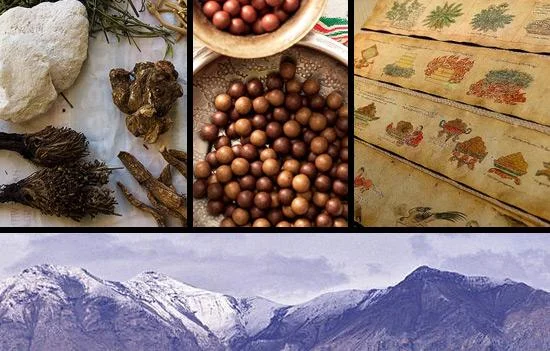
Sowa Rigpa is built on ethnobotany. Hundreds of plant species, along with fungi, lichens and minerals, make up the materia medica. Several of the key species grow only at high altitude, and several are now under pressure.
Kutki (Picrorhiza scrophulariiflora), used for fever, cough and liver complaints, grows above 2,000 meters. Gyatso Bista told Mongabay that household yields fell from 30 to 40 kilograms in his childhood to around 5 kilograms now. Padamchal (Rheum australe) and jatamansi (Nardostachys jatamansi) are harvested for their rootstalks, which makes regrowth slow. Caterpillar fungus (Ophiocordyceps sinensis) was assessed as Vulnerable by the IUCN in 2020.
Whether the decline is driven mainly by climate change or mainly by commercial overharvesting is contested, and the honest answer is that both are at work in proportions nobody has cleanly separated. Practitioners in Dolpa and Mustang report warmer winters and shifting snowfall. They also describe traders buying in volume for urban markets.
Bista tried cultivating ten medicinal herbs in Lo Manthang. Two grew.
A substitution project involving the Himalaya Amchi Association, the Department of Botany at Tribhuvan University and WWF Nepal has identified more than 200 substitute products, including 92 plant species and varieties and nine mineral types, surveyed among amchi in Dolpa, Mustang and Kathmandu. Some of those substitutions replace wildlife-derived ingredients that are now illegal to use.
What is restricted, and what visitors should not ask for
Parts of this knowledge are not public. Certain preparations, ritual components and lineage transmissions are treated by practitioners as restricted or sacred, and amchi have been explicit in interviews about intending to keep them that way.
This article therefore does not describe preparation methods, dosages or technique. Travelers to Upper Mustang should not treat amchi practice as an attraction, should not ask practitioners to demonstrate treatments, and should not photograph consultations without clear consent. A clinic is a clinic.
If you want to engage substantively, the useful routes are supporting the training institutions, buying from community rather than extractive supply chains, and reading the ethnographic work. The anthropologist Sienna Craig of Dartmouth College has written at length on Himalayan medicine and the commercialization pressures around it.
Where the evidence is thin
Several things commonly asserted about this subject are not established.
First, there is no documented separate profession of bone setters in Mustang distinct from amchi practice. Nepal does have traditional bone setters in various regions, as do many South Asian countries, but a named Mustang bone-setting lineage is not something the available literature supports, and this article does not claim one.
Second, clinical outcome data is missing. Studies measuring fracture outcomes after traditional treatment exist for several other countries, but comparable Nepal-specific research, and Mustang-specific research in particular, does not appear in the published literature. Claims about success rates in either direction should be treated as unsupported.
Third, practitioner counts are soft. The figure of more than 100 HAA members and the Sowa Rigpa Association’s 170 practitioners are membership numbers, not a national register.
Related reading on NepalVue
For more of the same region, see our guides to the sky caves of Chhoser, Jomsom and Kagbeni, and an overland itinerary through Upper Mustang. For other accounts of Nepali communities holding specialized knowledge, see the honey hunters of Kaski and the Raute and forest rights.
Frequently asked questions
What does amchi mean?
Amchi is the term used for a practitioner of Sowa Rigpa in Tibetan-speaking communities, including those of Upper Mustang, Dolpa, Humla and Mugu. It denotes a trained physician within that system.
Is Sowa Rigpa the same as Ayurveda?
No. They are distinct systems with different texts, diagnostics and institutions, though they share some materia medica and have influenced each other historically. Nepal regulates them separately.
Is Sowa Rigpa legal in Nepal now?
The Government of Nepal recognized Sowa Rigpa within the national health and education systems in March 2025, and the Nepal Health Professional Council has begun registration. How lineage-trained practitioners without formal degrees fit into licensing was still being resolved, so check the current position with the council directly.
How do amchi treat a fracture?
Documented practice includes immobilization, heat therapy, herbal pastes applied externally and oral medicine over a treatment period of weeks. This article does not give technique or dosage, because those belong to trained practitioners and parts of the knowledge are treated as restricted.
Can a visitor consult an amchi in Mustang?
Amchi do treat patients, including visitors, in the districts where they practice. The respectful approach is to go as a patient with a genuine complaint, not as an observer, and to pay appropriately. Do not request demonstrations.
Why is Dolpa mentioned so often alongside Mustang?
Dolpa has the largest number of amchi in Nepal, with Mustang second, according to the 2019 CIPRED documentation. The two districts anchor the tradition in the country.
Are the medicinal plants running out?
Several key species are under real pressure, with practitioners reporting steep declines in yields and the IUCN assessing caterpillar fungus as Vulnerable in 2020. The relative weight of climate change versus overharvesting is disputed. Substitution research has identified over 200 alternative products.
Is this knowledge disappearing?
It is under pressure from migration and cash economies, but describing it as disappearing understates what communities have built. Mustang has a training school, a national association, an accredited degree program and, since 2025, legal recognition. The direction is contested, not settled.
NepalVue writes about Nepal’s communities as communities, not as material. Explore more of the country with us, save this piece if it was useful, share it with someone heading to Mustang, and follow NepalVue for the rest.