



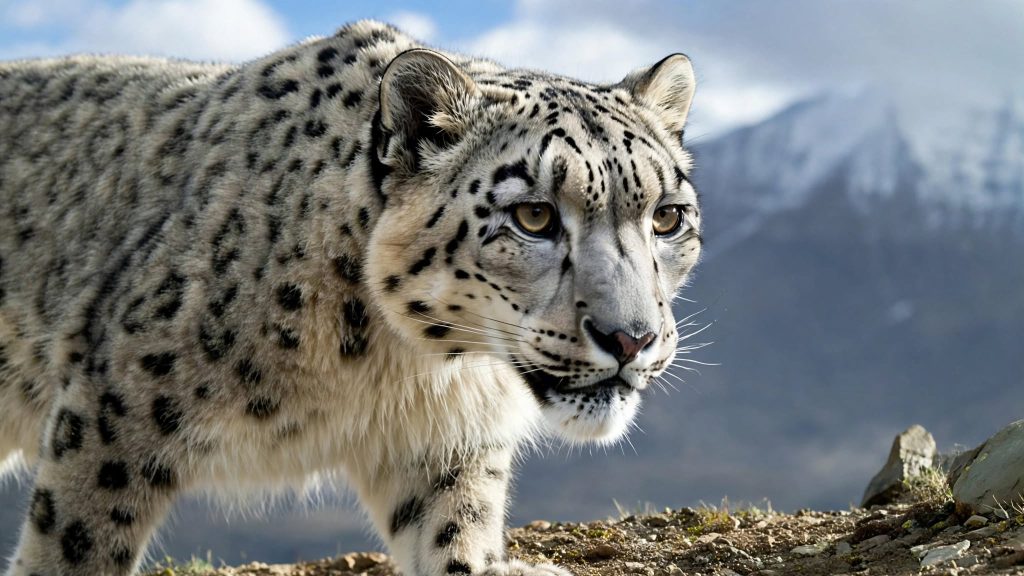
At 4,100 meters above Shey Phoksundo, a camera trap fires at 2:47 in the morning and records nothing a human eye would have caught. A pale shoulder. A tail thicker than a forearm. Then empty rock again. Between 2019 and 2022, 319 such cameras across Nepal’s largest national park produced enough of these fragments to estimate that 90 snow leopards live there. That number matters less than what it implies about movement: the cats recorded on one ridge turn up months later on another, across valleys, sometimes across borders. Understanding where they travel, and what now blocks those routes, is the central question in Dolpo conservation.
What a Corridor Actually Is
A wildlife corridor is not a marked path. It is the set of routes an animal can realistically use to move between patches of good habitat without starving, freezing, or being killed. For snow leopards in Upper Dolpo, those routes run along high ridgelines, through passes between 4,000 and 5,500 meters, and down into valleys where blue sheep graze.
Corridors matter for one reason above all: genetics. A population cut into isolated fragments loses genetic diversity. Small, closed populations accumulate harmful mutations and lose the capacity to adapt. Connectivity is what prevents that slow decline.


Researchers reviewing Nepal’s snow leopard conservation planning have flagged exactly this concern, noting evidence of isolated populations with limited genetic exchange between them. Movement data for individual cats across the Nepali trans-Himalaya remains thin, so the picture is incomplete rather than settled.
The 2025 National Assessment and What It Did Not Resolve
On April 20, 2025, Nepal’s Department of National Parks and Wildlife Conservation and Department of Forests and Soil Conservation released the country’s first comprehensive national estimate. Nepal has an estimated 397 snow leopards, with a 95 percent confidence interval of roughly 331 to 476 animals, and a mean density of 1.56 individuals per 100 square kilometers.
Behind that single number sits a decade of fieldwork. Surveys ran from 2015 to 2024 across nine study zones. Seven were protected areas: Api Nampa Conservation Area, Shey Phoksundo National Park, Annapurna Conservation Area, Manaslu Conservation Area, Langtang National Park, Gaurishankar Conservation Area, and Kangchenjunga Conservation Area. Two were unprotected: the Humla-Limi valley and eastern Dolpa.
That last detail deserves attention. Eastern Dolpa was surveyed precisely because snow leopards there live outside any national park boundary.
Reading the Number Honestly
Analysts combined camera trapping, genetic analysis of scat, and habitat suitability modeling, using spatial capture-recapture methods under the PAWS protocol developed through the Global Snow Leopard and Ecosystem Protection Program. Merging those data types is not trivial. Kamal Thapa, one of the researchers involved, described the core difficulty as making camera-trap data comparable with DNA-based scat analysis.
Coverage was partial. Survey data came from about 43 percent of Nepal’s potential snow leopard habitat. Dhorpatan, Dhaulagiri, and Api Nampa remain under-surveyed. Rinzin Phunsok Lama, another researcher on the work, put the limits plainly, calling the result an educated guess given how elusive the animals are and how vast their landscapes.
Treat 397 as the best available estimate from a defensible method, not as a census. Numbers from modeled habitat are inferences. Numbers from identified individual cats on camera are observations. Both appear in the same report, and they are not the same kind of fact.
Why Dolpo Sits at the Center
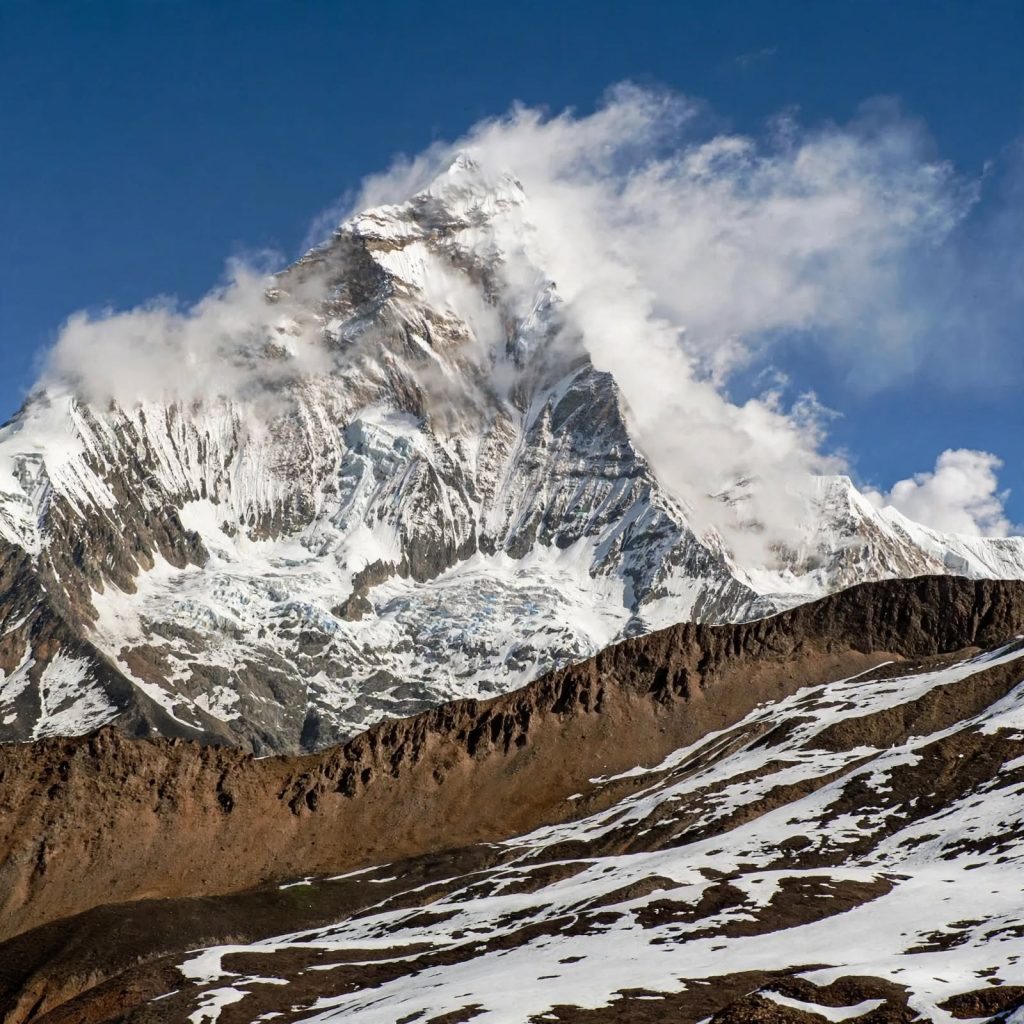
Shey Phoksundo National Park covers 3,555 square kilometers across Dolpa and Mugu districts. It is Nepal’s largest national park, and most of it lies in the trans-Himalayan rain shadow north of the main Himalayan crest, where annual precipitation is low and vegetation is sparse.
Field results from the 2019 to 2022 survey gave an abundance of 90 snow leopards inside the park, at a density of 2.21 per 100 square kilometers. Compare that to the national mean of 1.56 and the significance becomes clear. Dolpo carries one of Nepal’s densest known concentrations.
A caution is needed here. An earlier assessment in 2009 estimated 110 to 130 animals in the same park. Reading that as a decline would be a mistake, because the two assessments used different methods and different levels of effort. Comparing a modern spatial capture-recapture estimate to an older sign-based figure measures changes in technique as much as changes in cats.
| Measure | Shey Phoksundo (2019-2022) | Nepal national (2025 report) |
|---|---|---|
| Estimated snow leopards | 90 | 397 (95% CI 331-476) |
| Density per 100 km² | 2.21 | 1.56 |
| Area covered | 3,555 km² park and buffer zone | About 43% of potential habitat |
| Primary method | 319 camera traps, spatial capture-recapture | Camera traps, scat genetics, habitat modeling |
| Lead agencies | DNPWC with WWF support | DNPWC and DoFSC, Ministry of Forests and Environment |
The Prey Question
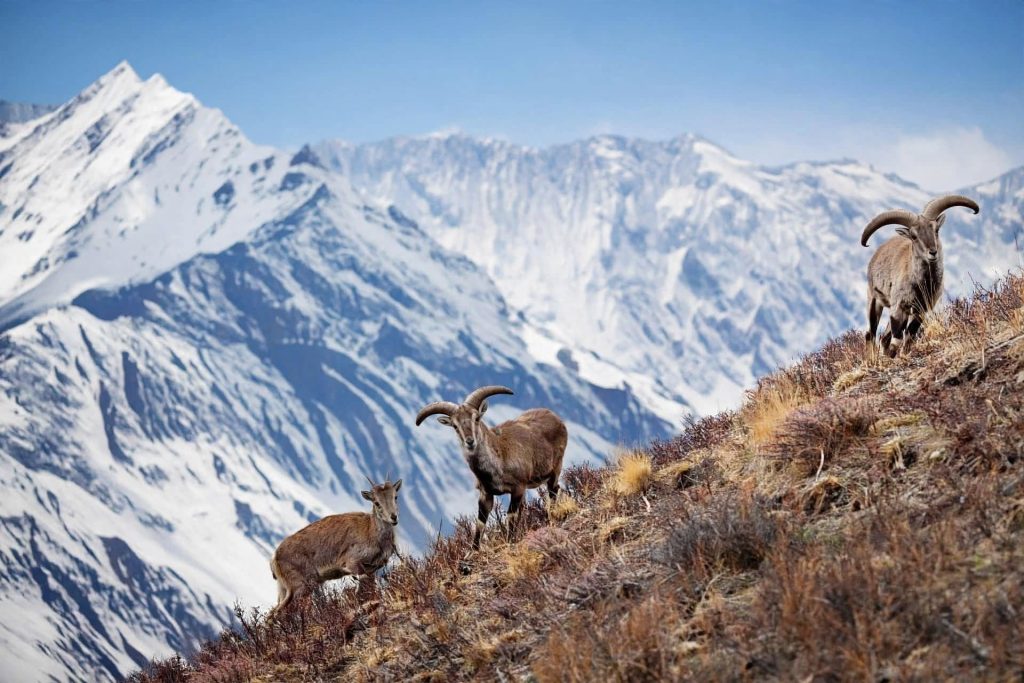
Snow leopard distribution follows prey distribution. In Dolpo the key species is the blue sheep, or bharal, Pseudois nayaur, along with Himalayan tahr and goral at lower elevations. Surveys accompanying the Shey Phoksundo work counted more than 4,000 of these wild ungulates across the park.
Prey density shapes everything downstream. Where wild prey is abundant, a snow leopard can meet its energy needs without approaching settlements. Where wild prey thins out, livestock becomes the alternative, and the relationship between herders and cats turns adversarial.
Research across the Nepali trans-Himalaya has examined how wild prey abundance and livestock abundance jointly predict predation on herds. Findings vary by site, and no single ratio explains conflict everywhere. Generalizing from one valley to the next is a common error in reporting on this subject.
Herders, Losses, and the Limits of Compensation
Livestock losses in Dolpa and neighboring districts are not abstract. Reported incidents include 52 mountain goats killed in a single event in Upper Dolpa in March 2021, 98 sheep and goats lost in one attack in Dolpa in February 2022, and 82 goats killed in Mustang in November 2023.
For a household running a few dozen animals, a single night like that can erase a year of income. Communities in Dolpa include Tibetan Buddhist herding households whose livelihoods combine livestock, trade, and increasingly, labor migration. Practices and attitudes differ between settlements, and between Dolpa and the Sherpa or Manangi communities further east, so no single framing of “mountain people and predators” holds across Nepal.
Nepal’s Snow Leopard Conservation Action Plan for 2024 to 2030 carries a budget of about 14.24 million US dollars, more than four times the roughly 3.15 million dollars in the previous plan. Allocation shifted as well. Community engagement and conflict mitigation take about 35 percent, while research and monitoring take about 30 percent. Another 26 percent targets illegal wildlife trade through enforcement and international cooperation.
Tools on the ground include predator-proof corrals and community-managed livestock insurance schemes. Evidence on effectiveness is mixed and site-specific. Corrals reduce losses when herds are penned, which does not help animals grazing on open pasture. Insurance works when payouts arrive quickly and the scheme stays solvent, and fails when they do not.
What Threatens Connectivity
Several pressures act on movement routes, and they interact.
- Road construction. New road alignments across the far west and the trans-Himalaya cut through terrain that previously saw little traffic. Direct mortality is rare, but roads bring settlement, livestock, dogs, and easier access.
- Free-ranging dogs. Dog populations around settlements compete with and harass wild carnivores, and are a documented concern in several Himalayan landscapes.
- Retaliatory killing. Where depredation goes uncompensated, the risk to individual cats rises.
- Habitat outside protected areas. Much snow leopard range in Nepal falls outside national parks and conservation areas, where management tools are weaker.
- Climate-driven treeline shift. Warming is projected to move the treeline upward and shrink alpine habitat over decades. Projections differ substantially between models, and this is modeled change rather than measured loss.
On that last point, Badri Raj Dhungana, Director General of the Department of Forests and Soil Conservation, framed the policy implication at the 2025 report’s release: a significant portion of Nepal’s snow leopard habitat sits outside designated protected areas, which makes community-based initiatives, habitat connectivity, and conflict mitigation the areas needing work.
Transboundary Movement
Upper Dolpo shares a long border with the Tibet Autonomous Region of China. Snow leopards do not recognize that line, and neither do their prey. The species ranges across twelve countries, and is listed as Vulnerable on the IUCN Red List following its 2017 reassessment, which downgraded it from Endangered on the basis of revised population and range estimates rather than any confirmed recovery.
Several conservation biologists objected to that downlisting at the time, arguing the underlying data were too weak to justify the change. Both positions rest on the same core problem, which is that nobody has reliable counts across most of the range. Readers should understand the Vulnerable listing as a judgment under uncertainty, not a verdict that the species is doing well.
What Visitors Should and Should Not Expect
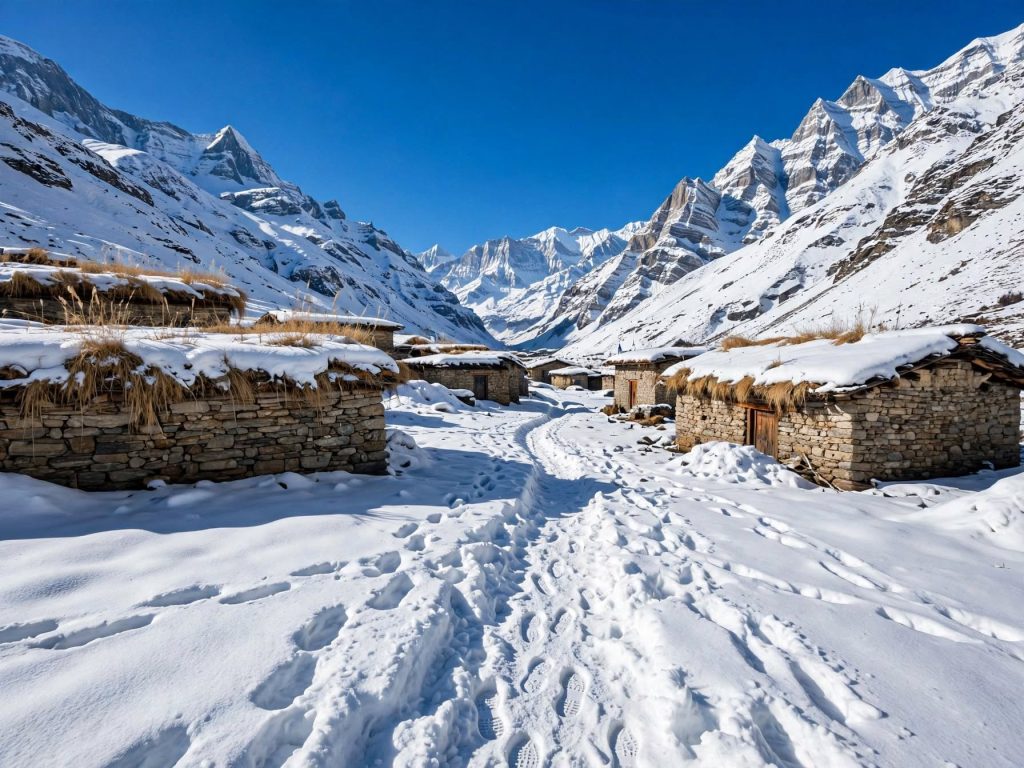
Dolpo is remote, permit-controlled, and expensive to reach. Upper Dolpo requires a restricted area permit and a registered guide, and the trekking season is short. Our Upper Dolpo trek guide covers the logistics in detail, and the Lower Dolpo and Shey Phoksundo route is the more accessible option for most travelers.
Seeing a snow leopard is unlikely. Most researchers who have worked in the region for years have seen very few in the wild, and camera traps exist precisely because direct observation fails. Anyone selling a guaranteed sighting is selling something they cannot deliver.
What visitors can do is avoid adding pressure. Keep distance from herds and herding camps, do not feed or follow dogs, carry out waste, and treat monastery and village space as private unless invited. For broader context on Nepal’s wildlife and responsible behavior in the field, see our Nepal wildlife guide and the practical advice on wildlife encounters in Nepal.
Where the Science Goes Next
Three gaps stand out. Movement ecology comes first: Nepal has very little GPS-collar data on snow leopards, which is the direct way to map corridors rather than infer them. Second, landscape genetics could show whether populations in Dolpo, Humla, and Mustang are actually exchanging animals. Third, the under-surveyed blocks named in the 2025 report, including Dhorpatan and Dhaulagiri, need coverage before national trends can be tracked with confidence.
None of that is cheap, and all of it depends on herding communities tolerating an animal that occasionally costs them a great deal. Corridor conservation in Dolpo is as much a question of local economics as of ecology.
Frequently Asked Questions
How many snow leopards are there in Nepal?
Nepal’s first comprehensive national assessment, released in April 2025, estimated 397 individuals with a 95 percent confidence interval of about 331 to 476, at a mean density of 1.56 per 100 square kilometers. Survey data covered roughly 43 percent of potential habitat, so the figure is a modeled estimate rather than a census.
How many snow leopards live in Shey Phoksundo National Park?
A survey running from 2019 to 2022, using 319 camera traps and spatial capture-recapture analysis, estimated 90 snow leopards at a density of 2.21 per 100 square kilometers. Work was carried out by the Department of National Parks and Wildlife Conservation with WWF support.
Is the snow leopard population increasing or decreasing in Nepal?
No reliable trend exists yet. Earlier figures used different methods, so comparing them to the 2025 assessment measures methodological change as well as biological change. Nepal’s 2025 report is best understood as a baseline for future monitoring.
What do snow leopards in Dolpo eat?
Blue sheep, or bharal, are the main wild prey, with Himalayan tahr and goral also present. Surveys in Shey Phoksundo recorded more than 4,000 wild ungulates across the park. Livestock is taken as well, which is the main source of conflict with herding households.
Can I see a snow leopard on a trek in Dolpo?
Very unlikely. Snow leopards are solitary, cryptic, and active largely at dawn, dusk, and night across enormous ranges. Experienced researchers go years between sightings. Treat any guaranteed-sighting offer with skepticism.
Why do corridors matter more than total numbers?
Isolated populations lose genetic diversity and adaptive capacity over generations, even when the headline count looks stable. Connectivity between habitat patches is what keeps a regional population functioning as one unit.
What is Nepal doing about livestock losses?
The Snow Leopard Conservation Action Plan 2024-2030, budgeted at about 14.24 million US dollars, directs roughly 35 percent of funding to community engagement and conflict mitigation. Measures include predator-proof corrals and community-managed insurance. Effectiveness varies by site and depends heavily on prompt payouts.
Is the snow leopard still an endangered species?
It is listed as Vulnerable on the IUCN Red List after a 2017 reassessment that moved it down from Endangered. That change reflected revised range and population estimates rather than documented recovery, and several researchers questioned whether the underlying data supported it.
Sources used for this article include the National Trust for Nature Conservation’s summary of the 2025 national assessment and Mongabay’s reporting on the assessment and its limitations.
NepalVue publishes evidence-led reporting on Nepal’s landscapes, wildlife, and communities. Save this guide for your Dolpo planning, share it with anyone who assumes the Himalaya is empty country, and follow NepalVue for more from the trans-Himalaya.


