



You hear the ringal bamboo before you see anything move. A dry rattle somewhere above head height in the oak and rhododendron, between 2,600 and 3,600 meters, where cloud sits in the branches most mornings of the year. Look up long enough and you may catch a rust-colored shape flattened along a mossy limb, motionless. Most people never do. Red panda habitat in Nepal is thin, high, and increasingly broken into pieces, and the bamboo understory that decides where the animal can live is the part of the forest least likely to be protected.
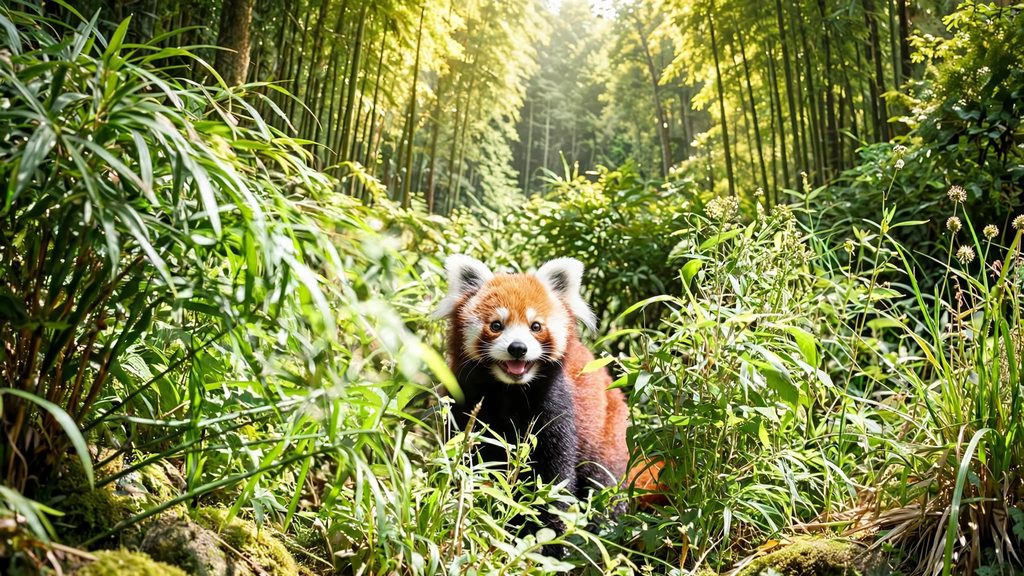
An animal that is not a panda
Ailurus fulgens is not closely related to the giant panda. It occupies its own family, Ailuridae, with no other living members, and it is the only survivor of a lineage that once spread across Eurasia and North America. Calling it a panda is a historical accident of naming.
Genetic work has split the animal into two species that separated roughly 250,000 years ago: the Himalayan red panda, Ailurus fulgens fulgens, and the Chinese red panda, Ailurus fulgens styani. Nepal holds the Himalayan species.


Globally the IUCN Red List classifies the red panda as Endangered, with a world population estimated at around 10,000 individuals and a decreasing trend. Range countries are Nepal, India, Bhutan, Myanmar and China.
Why bamboo decides everything
Bamboo leaves and shoots make up more than 83 percent of the red panda’s diet, according to Nepal’s Red Panda Conservation Action Plan. An adult eats on the order of 1.5 kilograms of fresh leaves or up to 4 kilograms of fresh shoots in a day.
Consider what that implies. Bamboo is poor food. Cellulose is hard to digest, and the red panda has a carnivore’s gut: short, simple, and not built for fermenting plant matter. Extracting enough energy means eating constantly and moving as little as possible between meals.
That constraint sets the animal’s entire ecology. Home ranges are small. Energy budgets are tight. An animal forced to travel further between bamboo patches is an animal spending calories it cannot easily replace.
So red panda habitat is not simply “forest.” It is forest with a specific understory, at a specific elevation band, with enough canopy cover overhead to provide shelter and escape routes. Remove the bamboo and the trees are no longer habitat.
Where they are in Nepal
Nepal’s action plan, issued jointly by the Department of National Parks and Wildlife Conservation and the Department of Forests and Soil Conservation for 2019 to 2023, recorded red panda presence across 24 districts and 7 protected areas, with potential habitat covering roughly 23,977 square kilometers.
| Measure | Figure | Source |
|---|---|---|
| Global population estimate | About 10,000 individuals, decreasing | IUCN Red List |
| Nepal population estimate | 237 to 1,061 across 11 sub-populations | Nepal Red Panda Action Plan 2019-2023 |
| Districts with recorded presence | 24 | Nepal Red Panda Action Plan |
| Protected areas with presence | 7 | Nepal Red Panda Action Plan |
| Potential habitat in Nepal | About 23,977 km² | Nepal Red Panda Action Plan |
| Bamboo share of diet | More than 83% | Nepal Red Panda Action Plan |
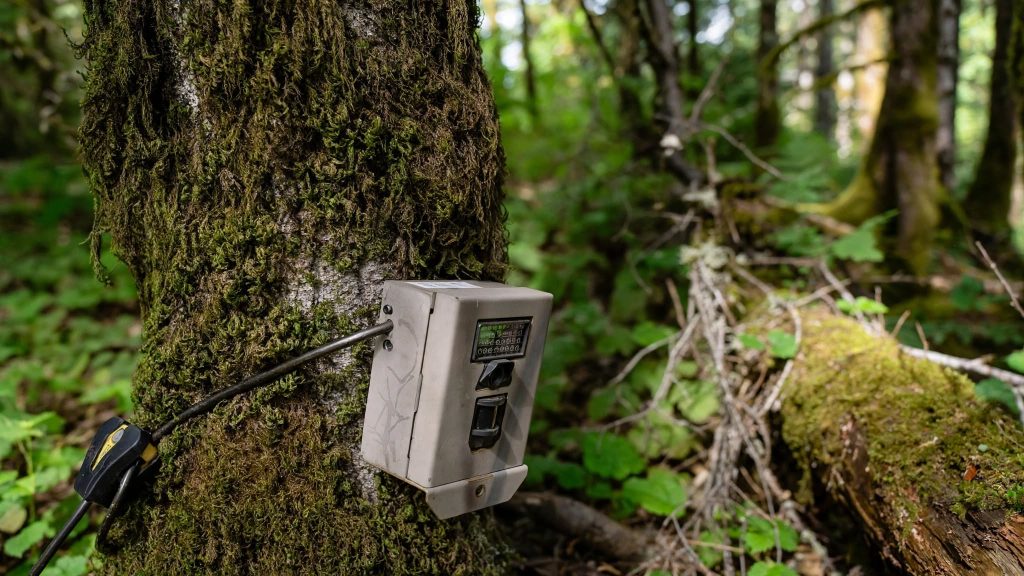
Note the width of that population range. A figure spanning 237 to 1,061 is not a precise count, and the action plan itself presents it as an estimate across sub-populations rather than a census. Red pandas are solitary, arboreal, nocturnal and crepuscular, and they live in terrain where survey effort is expensive. Anyone quoting a single confident number for Nepal is going beyond what the data supports.
What fragmentation actually does
Habitat loss removes habitat. Fragmentation does something different and in some ways worse: it leaves the habitat standing but cuts it into pieces too small or too separated for a population to function as one.
Three consequences follow.
Small patches support small numbers. A fragment holding a handful of animals is vulnerable to ordinary bad luck: a disease outbreak, a run of poor breeding years, a landslide.
Separated patches stop exchanging animals. Red pandas crossing open ground between forest blocks are exposed to dogs, to people, and to terrain that offers no escape upward. Movement that used to be routine becomes risky, then rare.
Rare movement means genetic isolation. Research on Himalayan red panda populations has reported low genetic diversity, which reduces a population’s capacity to respond to disease and environmental change over time.
The measured pressures
A survey of Dhorpatan Hunting Reserve in western Nepal by Panthi and colleagues, published in PLOS ONE, walked 425 kilometers across 54 grid cells and found red panda signs at 21 of them.
Bamboo extraction showed the strongest negative association with red panda occupancy in that analysis. Livestock grazing was recorded in 53 percent of red panda habitat and wood extraction at 54 percent of sites, though the statistical effects of both were inconclusive in that survey.
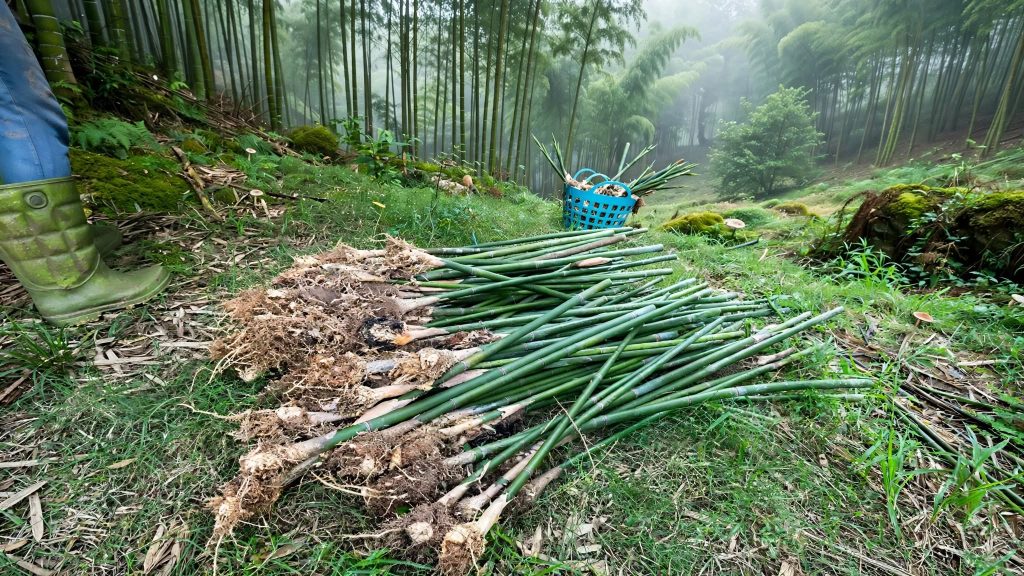
Dhorpatan is in western Nepal, not the east, and the specific numbers belong to that reserve. The mechanism, though, is general: people harvesting ringal bamboo for baskets, mats, fencing and fodder are removing the exact resource the animal depends on, from the exact elevation band where it lives.
Nepal’s action plan ranks the national threats in order: habitat loss, degradation and fragmentation first, then poaching and illegal trade, then small isolated populations, then disease and parasites, infrastructure development, inadequate awareness, and climate change.
Herding dogs deserve a separate mention. Livestock in red panda forest arrives with dogs, and dogs kill red pandas and transmit disease. The problem is not grazing alone but everything that comes with it.
Kanchenjunga and the eastern corridor
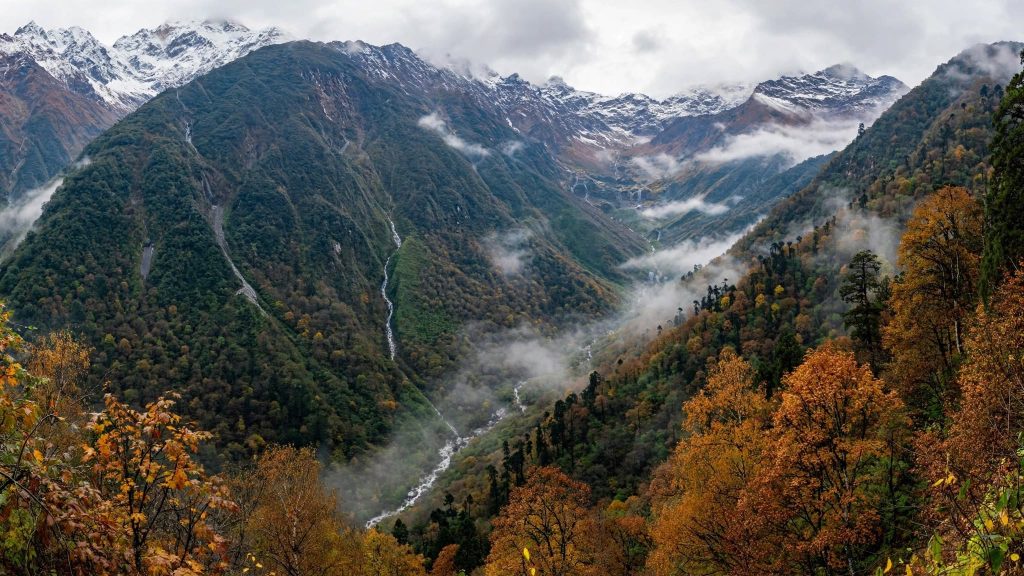
Kanchenjunga Conservation Area in Taplejung is among the protected areas with confirmed red panda presence. Eastern Nepal matters disproportionately here, and the reason is geography.
Red panda habitat in the east runs through the Panchthar, Ilam and Taplejung districts in a band of temperate forest that connects, across the border, to populations in Sikkim and West Bengal. Researchers refer to this as the Panchthar-Ilam-Taplejung corridor, and habitat studies have examined it specifically.
Most of that corridor is not inside a national park. It is community forest, private land, grazing ground and tea estate margin. Which means conservation there is not a matter of enforcement inside a boundary. It depends on what thousands of households decide to do with their own forest.
The forest guardian model
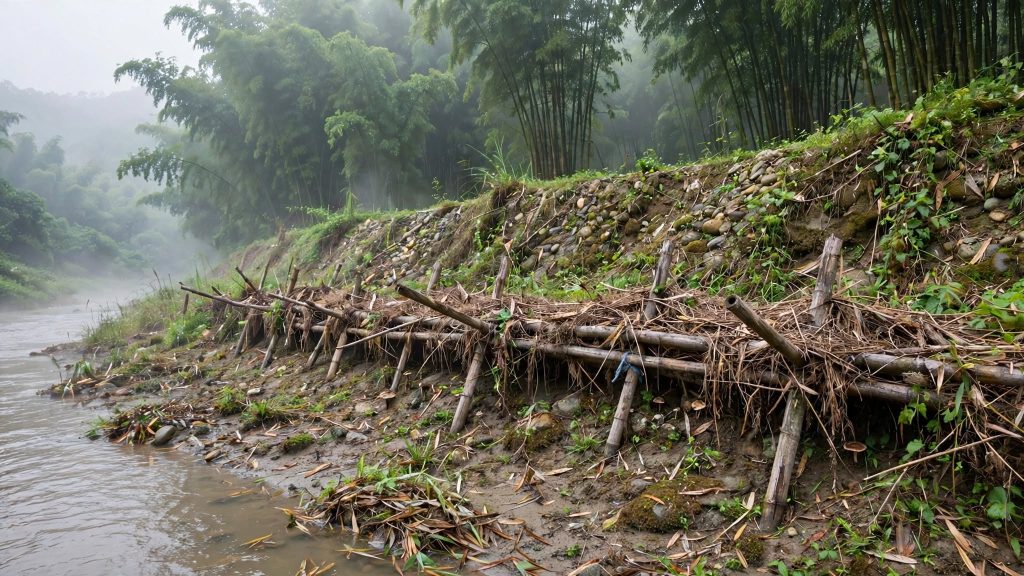
Community-based monitoring has become the dominant conservation approach in these districts. Local residents are trained and employed to patrol, record sightings and signs, and work with their own community forest user groups on bamboo management.
Two observations about why this works where it does. It pays people who live in the forest to keep it intact, which changes the household economics of bamboo harvesting. And it produces monitoring data from terrain that no visiting researcher could cover at that frequency.
Enthusiasm should be measured, though. Community monitoring produces presence records, not population estimates, and presence data cannot by itself demonstrate that numbers are rising. Reports of recovering populations in particular districts are encouraging and are not the same as a verified national trend.
Nepal has built visibility for the species through local events too, including the Sandakpur route marathon in Ilam and the red panda marathon through Salleri in Solukhumbu, both of which we have covered: see our reports on the Ilam and Sandakpur red panda day marathon and the Salleri trail event.
What a visitor should and should not expect
Seeing a red panda in the wild is unlikely. They are solitary, cryptic, and most active around dawn and dusk in dense cover. Guides in Ilam and Taplejung who work these forests daily go weeks without a sighting.
If you are walking in red panda country, which includes stretches of the Kanchenjunga trekking routes and the ridges above the Ilam tea gardens, the useful behaviors are unglamorous. Stay on trails. Keep dogs out of the forest. Do not pursue an animal if you see one, and do not post precise locations, since poaching for the illegal pelt trade is listed among the threats. More on Nepal’s wider fauna in our Nepal wildlife guide.
Where the science is uncertain
Three honest gaps.
Population size in Nepal is not well constrained. The 237 to 1,061 range reflects genuine uncertainty, and different methods produce different answers.
Climate projections for bamboo are contested. Warming is expected to shift suitable bamboo zones upslope, which in principle squeezes habitat against the treeline. How fast, how far, and whether bamboo can actually migrate at that rate are modeled rather than observed, and the models disagree.
Trend direction at national scale is not established. Local recovery in well-monitored community forests is documented. Whether Nepal’s total population is rising, stable or falling is not, because there is no repeated national survey using a consistent method.
None of that uncertainty argues against action. Habitat loss and fragmentation are observed, the dependence on bamboo is measured, and the direction of the global trend is clear.
Frequently asked questions
How many red pandas are left in Nepal?
Nepal’s Red Panda Conservation Action Plan gives a range of 237 to 1,061 individuals across 11 sub-populations. The width of that range reflects real uncertainty, and no precise national count exists.
Are red pandas related to giant pandas?
Not closely. The red panda is the only living member of the family Ailuridae, a lineage separate from bears. Shared diet and a shared common name account for the confusion.
Why is bamboo so important to them?
Bamboo leaves and shoots make up more than 83 percent of the diet, yet the animal has a carnivore’s digestive system and extracts energy from it poorly. It must eat large quantities continuously, which ties it to forests with a dense bamboo understory.
Where in Nepal do red pandas live?
Across 24 districts and 7 protected areas, in temperate forest generally between about 2,600 and 3,600 meters, with Kanchenjunga Conservation Area and the Panchthar-Ilam-Taplejung corridor among the important eastern areas.
What is the biggest threat?
Nepal’s action plan ranks habitat loss, degradation and fragmentation first, ahead of poaching and illegal trade. Bamboo harvesting, livestock grazing with accompanying herding dogs, and infrastructure all contribute.
Can you see a red panda while trekking?
Rarely. They are solitary, cryptic and most active at dawn and dusk in dense cover. Experienced local guides go long periods without sightings. Treat any encounter as luck rather than an itinerary item.
Is the population in Nepal recovering?
Local gains have been reported in some well-monitored community forests. A national trend has not been established, because Nepal lacks a repeated survey using a consistent method, so recovery claims should be read as local rather than countrywide.
What does the forest guardian programme do?
It trains and employs local residents to patrol forests, record red panda signs, and work with community forest user groups on bamboo management. Most red panda habitat in eastern Nepal sits outside national parks, on community and private land, which makes household decisions decisive.
Further reading
The primary sources here are Nepal’s Red Panda Conservation Action Plan 2019-2023 and the Dhorpatan distribution survey published in PLOS ONE.
NepalVue writes about Nepal’s forests as working landscapes shared by people and wildlife. Save this one, share it with anyone heading east, and follow NepalVue for more on Nepal’s species and the communities protecting them.


