



6At 19:27 on 29 July 2021, a camera trap at 4,968 m in Upper Humla recorded a Eurasian lynx. It was the first verified evidence of the species in that corner of northwestern Nepal. Three more lynx captures followed across two survey seasons. This article explains what those few frames establish, what they do not, and why a cat that is globally classed as Least Concern is listed as Vulnerable in Nepal. It also covers how the survey was done, what remains unknown about lynx ecology in the Nepal Himalaya, and what the researchers recommend.
What Was Actually Recorded
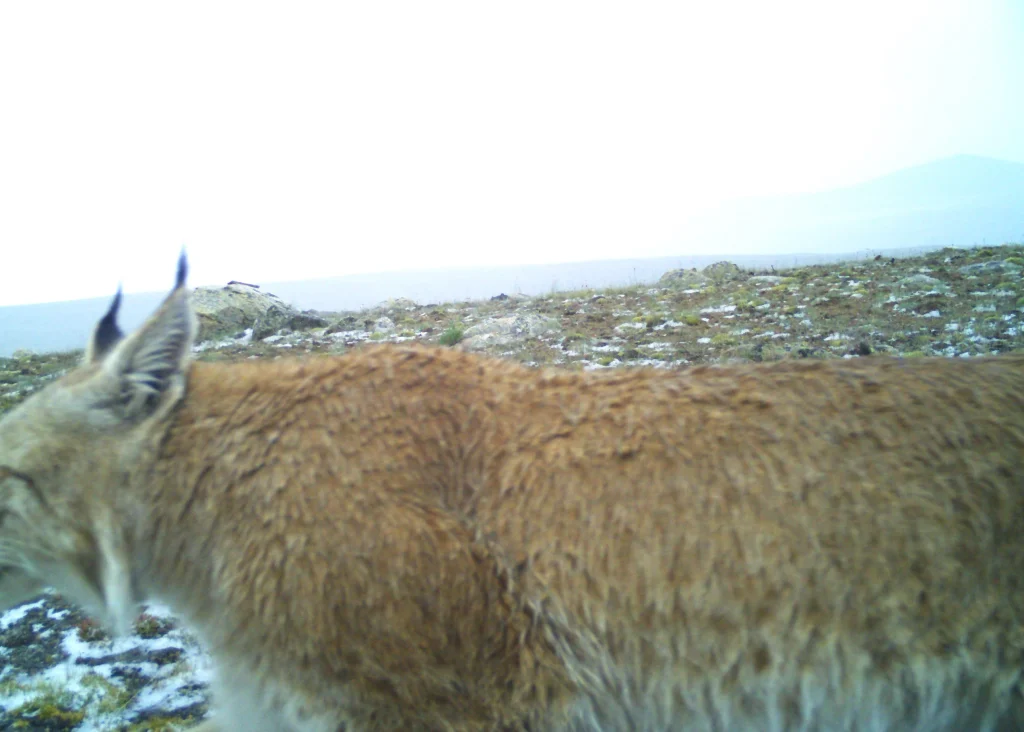
The secret life of the Himalayan lynx in Nepal is documented by a very small number of images. The Humla records were published by Werhahn and colleagues in CATnews 80, Summer 2024, under the title “First verified evidence of Eurasian lynx and Pallas’s cat in Humla, Nepal.” Nepali and local Humla field researchers worked on the team alongside officials from Nepal’s protected area administration.
Cameras covered 336 km² of Upper Humla, set on a 4 km by 4 km grid, two per cell.


| Season | Cameras | Trap nights | Dates | Lynx captures |
|---|---|---|---|---|
| 2021 | 61 | 3,145 | 12 July to 6 October 2021 | 3 independent |
| 2022 | 61 | 3,139 | 28 May to 30 August 2022 | 1 independent |
The individual lynx records, as published:
- 29 July 2021, 19:27, elevation 4,968 m
- 23 August 2021, 15:21, elevation 4,980 m
- 26 September 2021, 10:56, elevation 4,980 m
- 1 August 2022, 19:44, elevation 4,980 m, at the same camera site as two of the 2021 captures
Relative abundance, expressed as independent captures per 100 trap nights, was 0.095 in 2021 and 0.032 in 2022. Those are small numbers, and the authors treat them as such.
The same survey produced the first verified Pallas’s cat records for Humla, including one frame on 3 August 2021 at 5,127 m showing two adults with a cub. Lynx camera sites were on gently rolling hillslopes. Pallas’s cat sites were a steep ridgeline with talus and a broken boulder field.
Why “relative abundance” is not a population estimate
Capture rate per 100 trap nights tells you how often a species walked past a camera. It does not tell you how many animals there are. Lynx range widely, and a single individual passing one camera repeatedly can produce several captures. The drop from 0.095 to 0.032 between seasons could reflect a change in animal movement, a change in survey timing, or simple chance in a dataset this small. Treating it as a population decline would be a misreading of the data.
Which Lynx This Is
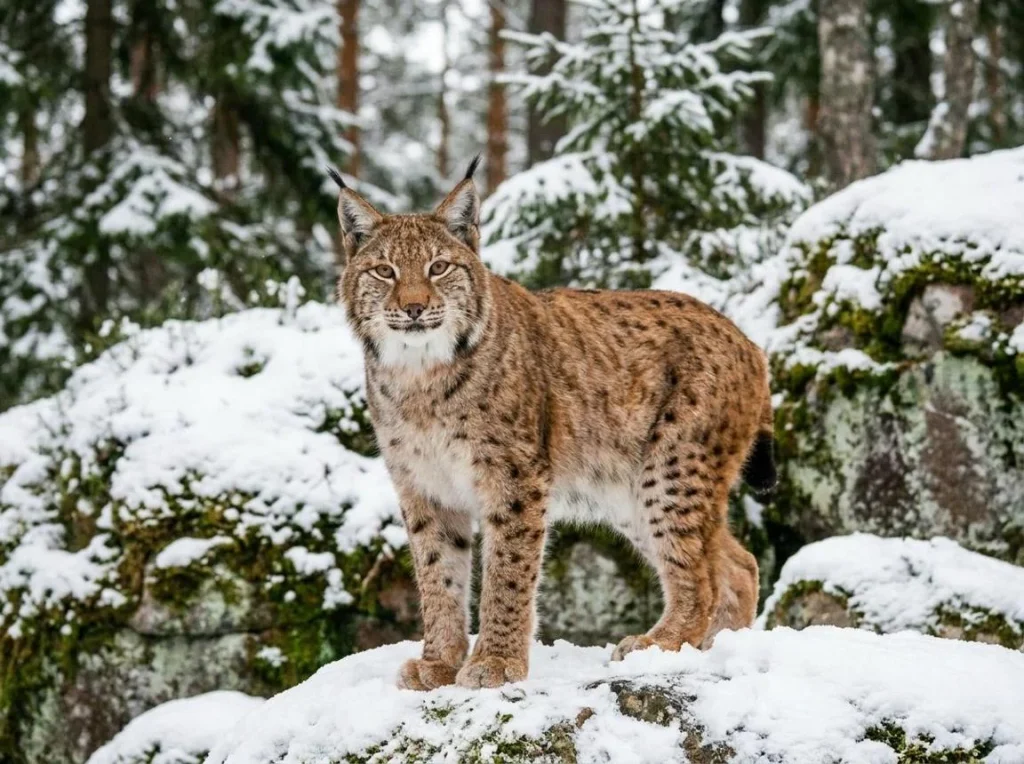
The animal is the Eurasian lynx, Lynx lynx, the largest of the four lynx species. Populations across the Himalaya and Central Asia are often referred to the subspecies Lynx lynx isabellinus, sometimes called the Himalayan or Turkestan lynx. Lynx subspecies boundaries have been revised repeatedly as genetic work accumulates, so the subspecies label should be read as a working classification rather than a settled fact.
Field identification is reasonably clear. Look for the long black ear tufts, the short black-tipped tail, the ruff of longer fur along the jaw, and disproportionately long hind legs. A snow leopard, by contrast, is longer bodied with a thick, very long tail and heavy rosette patterning. Pallas’s cat is far smaller, low-slung, and flat-faced.
Where Else Lynx Have Been Found in Nepal
Verified Nepali records remain sparse. The CATnews paper cites confirmed records from Shey-Phoksundo National Park, Dhorpatan Hunting Reserve and Annapurna Conservation Area, drawing on Fox (1985), Kusi et al. (2018) and Werhahn et al. (2018). Jnawali and colleagues mapped lynx in Rara National Park in 2011 without confirmed records.
The closest prior record to Upper Humla was in Upper Dolpa, roughly 180 km east. For Upper Mustang, Kusi and colleagues reported a relative abundance of 0.06, close to the Humla figures.
Taken together, the picture is a thin scatter of verified points across Nepal’s trans-Himalayan belt, broadly consistent with the IUCN distribution range for the species, which indicated lynx should occur in northwestern Nepal before any specific evidence existed there.
Conservation status: two answers that both hold
| Assessment | Status | Source |
|---|---|---|
| Global IUCN Red List | Least Concern | Breitenmoser et al. 2015 |
| Nepal national assessment | Vulnerable, with suspected decline | Jnawali et al. 2011 |
Both are accurate. Eurasian lynx occupy an enormous global range across Europe and Asia, which supports the Least Concern listing. Nepal sits at the southern edge of that range, holds a small and poorly documented share of it, and the national assessment reflects that. Confusing the two produces the common error of treating the global listing as a verdict on Nepal.
Kusi and colleagues have argued that lynx should be covered by the government’s wildlife damage relief guidelines, so that herders who lose livestock to lynx can claim compensation. Coverage matters practically: a predator outside the compensation schedule generates uncompensated loss, which is a reliable driver of retaliation.
What We Still Do Not Know
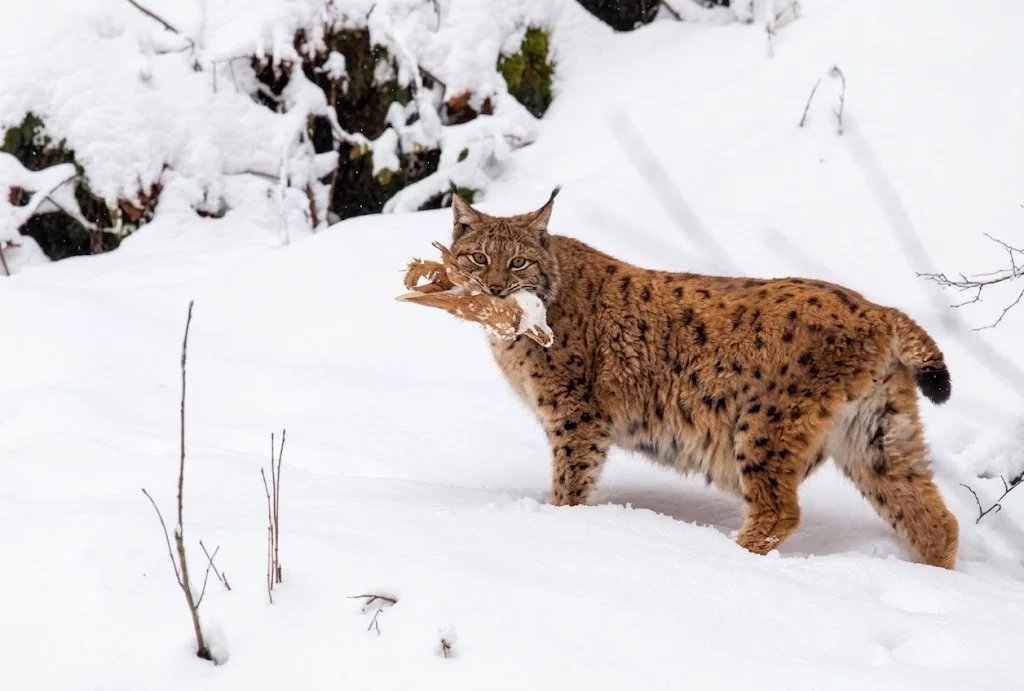
This is where honesty is more useful than confidence. For Nepal specifically, there is no published population estimate for lynx, no diet study, no home range estimate and no genetic sampling of the kind that has been done for Himalayan wolf. Statements about what Nepali lynx eat are extrapolated from studies elsewhere in the species’ range, where Eurasian lynx take hares, pikas, rodents, ground birds and small to medium ungulates depending on what is available locally. Applying those findings to Upper Humla is a reasonable working assumption, not a finding.
Several open questions follow:
- Are Nepal’s lynx a resident breeding population, or animals moving in from larger populations to the north across the Tibetan Plateau? The Humla data cannot distinguish these.
- How much do lynx overlap with snow leopard, Pallas’s cat and Himalayan wolf in the same landscape, and does that overlap shape where each one hunts?
- How often do lynx take livestock in Nepal, and how is that loss currently handled by herding households?
- Is the apparent rarity real, or an artifact of almost no survey effort in the far northwest until recently?
The last question deserves weight. Upper Humla received systematic camera trapping only recently. Researchers have reported that local elders in the area were unaware these cats still lived there, which says as much about how seldom the animals are seen as about their numbers.
The Landscape and the People in It
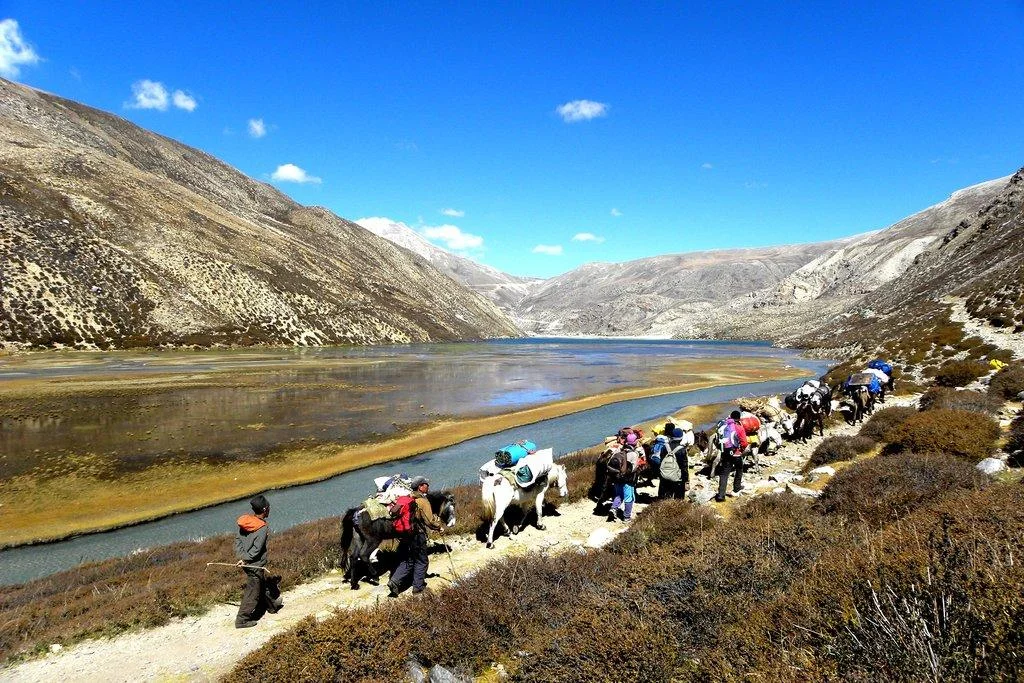
Upper Humla is in Karnali Province, in Nepal’s far northwest, bordering the Tibet Autonomous Region of China. It is high, dry trans-Himalayan country: cold desert and alpine grassland rather than forest. Communities there are predominantly Tibetan Buddhist in practice, with livelihoods built around yak and sheep and goat herding, limited high-altitude agriculture, and historically on trade across the border. These are working landscapes, not wilderness in the sense that word is often used.
Access is among the hardest in Nepal. That remoteness is part of why the area is biologically interesting and part of why it has been so little surveyed.
Upper Humla also lacks the protected-area designation that covers comparable landscapes elsewhere in the trans-Himalaya. The central recommendation of the CATnews paper is to implement protection for the Upper Humla landscape quickly and in close collaboration with local communities, and to conduct focused research on the population status and ecology of both cats in Nepal. That collaboration clause is not decoration: a protected area declared over herding grounds without the herders behind it tends to fail on both counts.
What This Means for Visitors
Your odds of seeing a Eurasian lynx in Nepal are effectively zero. Four camera trap captures from over 6,200 trap nights is the realistic benchmark. Anyone selling a lynx sighting is selling something else.
What does help is reporting. Herders and trekkers who photograph an unidentified cat, a track, or a kill can contribute usefully by passing images with a location and date to the Department of National Parks and Wildlife Conservation or to research groups working in the region. In a landscape with this little data, a single verified record moves the science.
For high-altitude predator reporting elsewhere in Nepal’s trans-Himalaya, our feature on snow leopard corridors in Upper Dolpo covers the nearest comparable landscape, and our Upper Dolpo trek guide gives a sense of what access to this kind of country involves. For how Nepal’s conservation picture differs at the other end of the country, see our guides to the Terai Arc corridor, Nepal’s tiger parks and invasive plants in the national parks.
Frequently Asked Questions
Is the Himalayan lynx a separate species?
No. It is the Eurasian lynx, Lynx lynx, the same species found across Europe and northern Asia. Himalayan and Central Asian populations are often assigned to the subspecies Lynx lynx isabellinus, though subspecies boundaries in lynx have been revised as genetic work has accumulated.
How many lynx are there in Nepal?
Nobody knows. There is no published population estimate. What exists is a thin scatter of verified records from Shey-Phoksundo, Dhorpatan, Annapurna Conservation Area, Upper Dolpa, Upper Mustang and now Upper Humla, plus relative abundance figures that describe capture rates rather than animal numbers.
Why is it Least Concern globally but Vulnerable in Nepal?
The global IUCN assessment reflects an enormous range across Europe and Asia. Nepal’s national assessment, by Jnawali and colleagues in 2011, reflects a small, poorly documented and suspected declining presence at the southern edge of that range. Both can be true at once.
Where exactly were the Humla lynx recorded?
In Upper Humla, Karnali Province, at elevations of 4,968 m and 4,980 m, within a 336 km² camera trap survey area. Three records came in 2021 and one in 2022, with three of the four at the same two camera sites.
What do Eurasian lynx in Nepal eat?
No diet study has been published for Nepal. Elsewhere in the species’ range, Eurasian lynx take hares, pikas, rodents, ground birds and small to medium ungulates depending on local availability. Applying that to Upper Humla is a reasonable assumption rather than an established finding.
Do lynx kill livestock in Humla?
There is no published quantification of lynx depredation in Nepal. Researchers including Kusi and colleagues have argued that lynx should be covered by the government’s wildlife damage relief guidelines so that affected herders can claim compensation, which implies depredation occurs. The scale is not documented.
Could I see a lynx on a trek in Nepal?
Realistically, no. Four independent captures across more than 6,200 camera trap nights indicates an animal that is both genuinely scarce and extremely elusive. Snow leopard sightings, which are themselves rare, are far more likely.
Is Upper Humla a protected area?
It does not carry the protected-area designation that covers comparable trans-Himalayan landscapes such as Shey-Phoksundo. Establishing protection there, developed with local communities, is the main recommendation of the 2024 CATnews paper. Readers should check current Government of Nepal designations, since protected area boundaries can change.
Nepal’s least-documented wildlife is often the most interesting. Explore more of our conservation science coverage, save this guide, and follow NepalVue for reporting from the parts of the country that rarely make the itinerary.


