



About 185 species of dragonfly and damselfly have been recorded in Nepal, most of them in the lowland Terai. That figure comes from a checklist built on Graham Vick’s 1989 survey, updated piecemeal ever since. No government agency maintains a current national inventory, and no one monitors these insects year to year the way Nepal monitors birds or tigers. Yet the dragonflies of the Terai are among the most sensitive wetland indicators available: their larvae spend months or years underwater, so they register pollution, drying and sedimentation that a single water sample would miss. This article explains how that works, what Nepal actually knows, and what it does not.
Why an insect makes a good water gauge
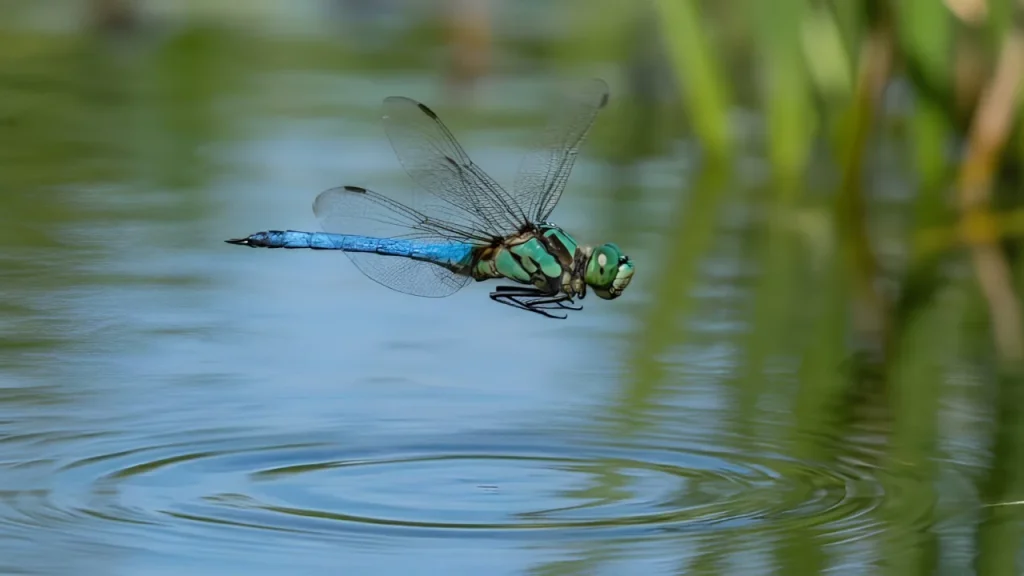
Odonata is the scientific order that holds dragonflies and damselflies. Adults are the familiar part: fast, metallic, hunting over open water. Most of an odonate’s life happens out of sight.
Eggs are laid in or near water. Larvae, called nymphs, live submerged, breathing through gills and hunting other invertebrates. Depending on species and altitude, that underwater stage lasts from a few months to several years. Only then does the nymph climb a stem, split its skin, and emerge as a winged adult.


That long aquatic phase is the whole point for anyone measuring water quality. A chemical test tells you about the water on the morning you sampled it. A nymph that survived two years in the same pond tells you the water was tolerable for two years, including through the dry season and through whatever ran off the surrounding fields.
Different species also tolerate very different conditions. Some skimmers thrive in warm, nutrient-heavy, partly polluted ponds. Others, particularly forest damselflies and stream-breeding clubtails, need clear, shaded, well-oxygenated water and disappear quickly when a stream is silted or its bank cleared. Because of that spread, the useful signal is not whether dragonflies are present. It is which ones.
What a shifting community looks like
Ecologists call this a change in community composition. A wetland losing condition usually does not go silent. It fills instead with a smaller set of tough generalists, while specialists drop out one by one.
Read that way, a pond buzzing with wandering gliders can still be a degraded pond. Researchers working in other parts of South Asia have used exactly this pattern to grade stream and wetland health. In Nepal the method is accepted in principle and barely applied in practice.
What Nepal actually knows about its odonates
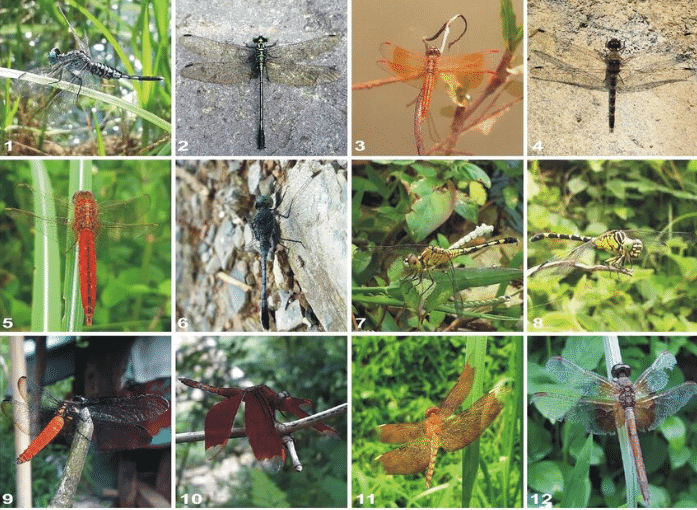
Survey effort in Nepal has been thin, uneven and mostly voluntary. New records still arrive regularly, which is itself a sign of how incomplete the picture is.
In 2024, Manoj Sharma, Buddhi Ram Oli and Ishan Gautam published results from fieldwork in the Karnali River basin in western Nepal, carried out between April and early October 2022. They reported four species recorded in Nepal for the first time: Aristocypha spuria, Pseudocopera ciliata, Aciagrion occidentale and Zyxomma petiolatum. Thirteen further species were new to the western region.
Four national first records from a single season of fieldwork in one river basin is a striking result. It does not mean those species just arrived. It means nobody had looked there carefully before.
| Question | What is known | Confidence |
|---|---|---|
| How many species occur in Nepal? | Roughly 185 species in 17 families on the standing checklist | Moderate. The list is a compilation, not a current national survey |
| Are new species still being found? | Yes. Four national first records published in 2024 from the Karnali basin alone | High |
| How many are threatened? | No national red list assessment for Nepal’s Odonata | Unknown |
| Are populations declining? | No systematic time series exists for Nepal | Unknown. Habitat loss is documented, insect trends are not |
| Is habitat shrinking? | Yes. Documented drying, encroachment and invasion at Terai wetlands | High for habitat, inferred for insects |
Here is the honest version. Nepal has a species list, growing evidence of habitat damage, and no population data for these insects at all. Anyone who tells you dragonfly numbers in the Terai have fallen by a specific percentage is inventing it.
The habitat side: what is happening to Terai wetlands
Here the evidence is much stronger, because wetlands and waterbirds are monitored. Nepal has ten Wetlands of International Importance designated under the Ramsar Convention, covering about 60,561 hectares in total. Four sit in the Terai or inner Terai: Koshi Tappu, Ghodaghodi Lake Area, Jagadishpur Reservoir and Beeshazar and Associated Lakes.
Designation is not protection on its own. Reporting by the Kathmandu Post in September 2026, drawing on Nepal’s annual waterbird census, described a broad decline across monitored sites. Counts of aquatic birds fell from 96,565 in 2025 to 90,688 in 2026, and recorded species dropped from 94 to 89. Half the monitored sites showed lower diversity than the previous year.
Waterbirds are not dragonflies. Both depend on the same thing: water that stays where it is long enough to support a food web.
Four pressures that matter most for aquatic insects
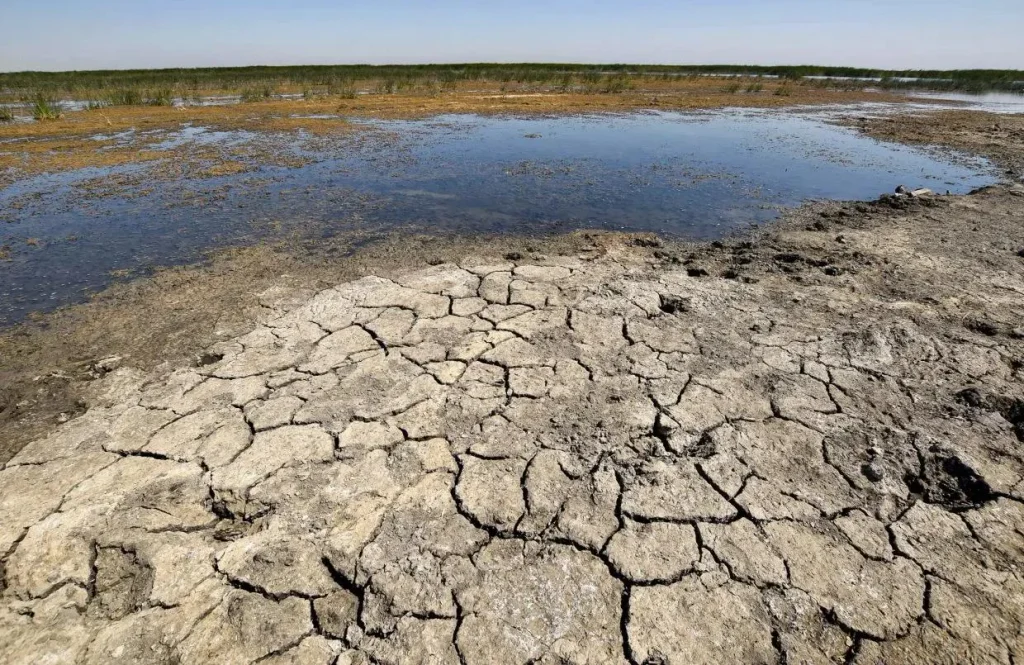
- Drying and hydrological change. At Koshi Tappu, oxbow lakes and marshes have largely dried after shifts in the Koshi River and repeated flooding. Duck flocks once numbering close to 50,000 are now rarely more than about 100 birds, according to the same reporting. A nymph needing two years of standing water cannot complete its life cycle in a pond that disappears each spring.
- Invasive aquatic plants. Water hyacinth has been reported choking the surface at Badhaiya Lake in Bardiya and at Barju Lake. A closed mat of floating vegetation blocks light, lowers dissolved oxygen as it decays, and removes the open water that many dragonflies need for perching and egg laying.
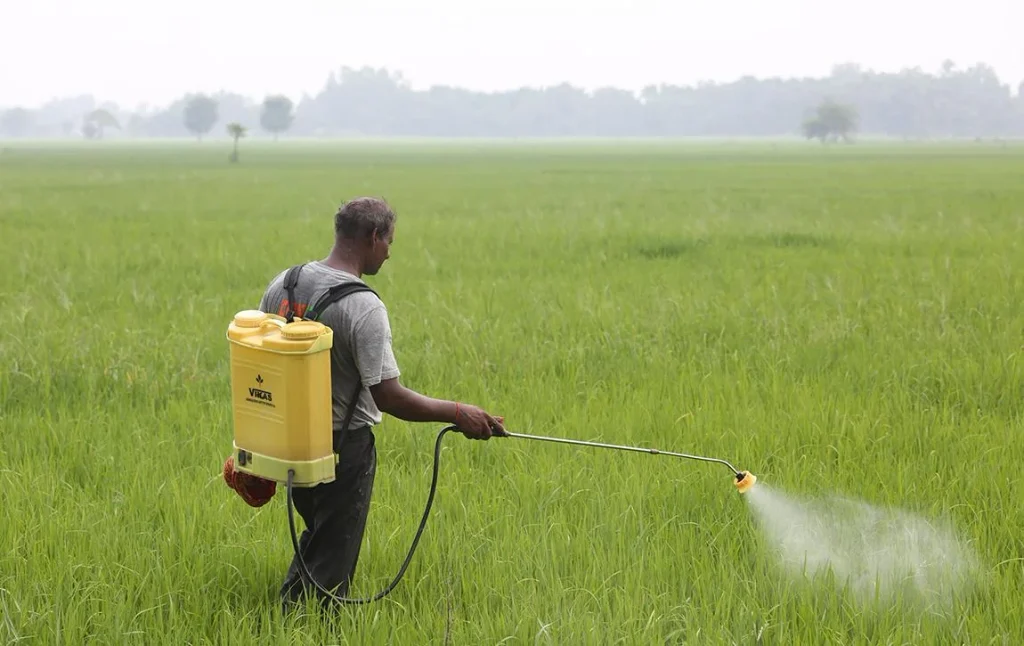
- Agricultural runoff. Pesticide contamination is repeatedly named as a pressure on Nepal’s wetlands. Aquatic insects are often more exposed than vertebrates, because they absorb dissolved compounds across gills through an entire larval stage.
- Encroachment and conversion. Wetland margins are converted to cropland and to commercial development, including construction around lake edges. Marginal shallows and seasonal pools, the exact zones many damselflies breed in, are usually the first to go.
Seasonal pools deserve particular attention. They look like nothing. A field edge, a cattle wallow, a monsoon depression that holds water into December. Several lowland species depend on precisely these temporary habitats, and because they carry no conservation label, they are drained without anyone recording the loss.
Who manages these wetlands, and under what rules
Responsibility is split. Wetlands inside protected areas fall to the Department of National Parks and Wildlife Conservation. Those outside fall variously to the Department of Forests and Soil Conservation, provincial authorities and local governments. Ramsar designation adds an international reporting obligation rather than a new Nepali enforcement power.
Conservation organizations including Bird Conservation Nepal and the Nepalese Ornithological Union carry much of the monitoring load. Their focus is birds, which is reasonable: birds are countable by volunteers and legible to funders. Invertebrate monitoring has no comparable base.
That gap has a practical consequence. If a Terai wetland’s dragonfly community collapsed over the next decade, Nepal would have no baseline against which to notice.
What this means for the people who live with these wetlands
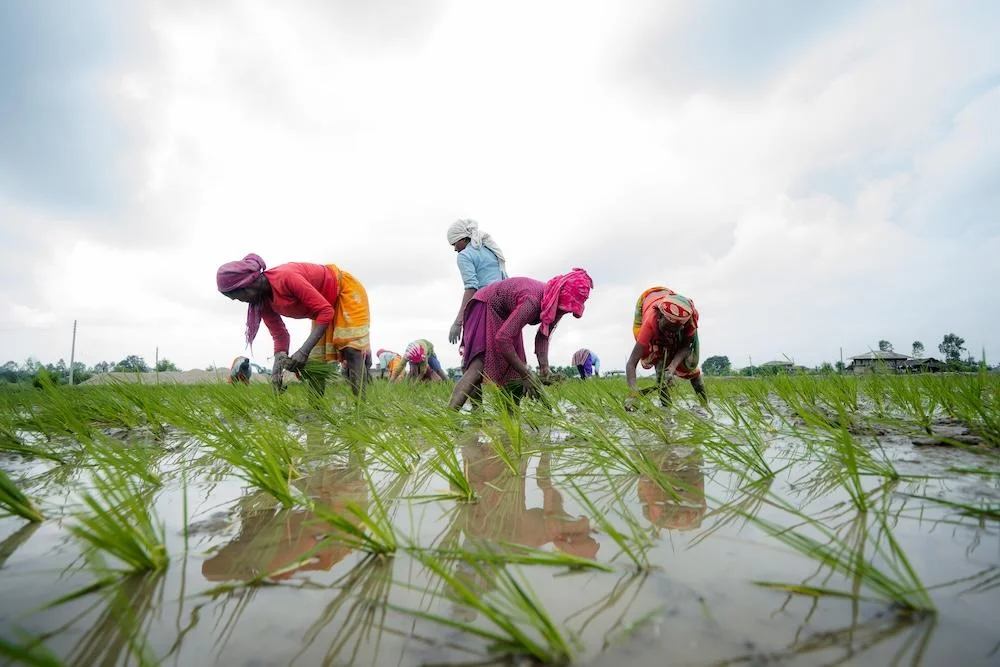
Terai wetlands are working landscapes, not scenery. Tharu communities across the central and western Terai have long fished, grazed livestock and harvested reeds and aquatic plants in and around these waters, and in places hold formal roles in community management. Madhesi farming households draw irrigation from the same systems. Practices and rights vary considerably by district and by community, and lumping them together as “locals” obscures who actually decides what happens to a given lake.
Several Terai wetlands are also sites of religious observance. Chhath, kept by many Madhesi and Tharu households, brings large gatherings to riverbanks and ponds. Access to clean standing water is not an abstract conservation value there.
Insect conservation often fails because it sounds like a luxury. It argues better when it is framed accurately: the species list in a pond is a readout on whether that pond still works for fish, for irrigation and for the people using it.
Where the science could go next
Several things would change the picture quickly, and none require large budgets.
- A repeatable national survey protocol, with fixed transects at the four Terai Ramsar sites walked at the same points each season.
- A Nepal red list assessment for Odonata, so threatened species can be named rather than guessed at.
- Attaching insect transects to existing waterbird census routes, which already have trained observers in the field.
- Structured citizen science. Adult dragonflies are photographable, and much of the existing Nepali record already comes from dedicated amateurs.
One caution is worth stating. Odonata respond to climate as well as to water quality. Warming can push species upslope and extend flight seasons, so a changing community at a single site may reflect regional climate rather than local pollution. Separating the two requires more than one monitoring site, which is another argument for building a network rather than a showcase.
Reading a wetland yourself
If you visit a Terai wetland, a few things are worth noticing. Is there open water, or is the surface closed over by floating plants? Are the margins vegetated, or cut hard to the edge by cropland? Do you see a range of insect body shapes and sizes over the water, or the same two or three large species everywhere?
None of that is a survey. It is enough to tell you whether you are looking at a functioning wetland or a holding pond.
Dawn and late morning are the productive hours for adults, and the warm months either side of the monsoon give the highest activity. If you are planning a lowland trip, our guides to Bardia National Park, Chitwan in September and jungle safaris in Nepal cover access and timing. For a very different wetland in the eastern hills, see our piece on Mai Pokhari, Nepal’s smallest Ramsar site.
Frequently asked questions
How many dragonfly species live in Nepal?
The standing checklist records about 185 species in 17 families, assembled from Graham Vick’s 1989 survey plus later additions. It is almost certainly an undercount. Four species were added as national first records in a single 2024 paper.
Are Nepal’s dragonflies endangered?
No one can say with confidence. Nepal has no national red list assessment for Odonata and no long-term population monitoring. Habitat loss at Terai wetlands is well documented, but the link to specific insect declines in Nepal has not been measured.
Why are dragonflies used as bioindicators?
Their larvae live underwater for months or years, so the species present reflect sustained conditions rather than a single moment. Species differ sharply in pollution tolerance, so a shift from specialists to generalists signals degradation.
Which Terai wetlands are internationally protected?
Koshi Tappu, Ghodaghodi Lake Area, Jagadishpur Reservoir, and Beeshazar and Associated Lakes are Ramsar sites in the Terai or inner Terai. Nepal has ten Ramsar sites in total, covering roughly 60,561 hectares.
What is the biggest threat to lowland wetlands in Nepal?
There is no single answer, and it varies by site. Drying and river channel change, invasive water hyacinth, agricultural runoff and conversion of wetland margins are the pressures most consistently reported.
When is the best time to see dragonflies in the Terai?
Warm months either side of the monsoon give the most adult activity, with mornings generally better than afternoons. Flight seasons differ by species, so a single visit samples only part of the community.
Does the title “last dragonflies” mean they are about to disappear?
No. It points to a real risk rather than a measured collapse. Some specialist species tied to clear streams and seasonal pools are plausibly at risk in degraded areas, but Nepal lacks the monitoring needed to confirm that.
Can visitors help with dragonfly records?
Yes, within reason. Dated, located photographs of adults contribute usable records, and much of Nepal’s existing odonate data comes from amateur observers. Collecting specimens inside protected areas requires permission.
Sources used
Species records in this article draw on Sharma, Oli and Gautam’s 2024 paper in the Journal of Insect Biodiversity and Systematics. Wetland designations follow the Ramsar Convention country profile for Nepal.
NepalVue covers the parts of Nepal that rarely make the trekking brochures, from lowland wetlands to high passes. If this was useful, save it for your next trip south, pass it to someone planning one, and follow NepalVue for more reporting from the field.


