



High among the icy peaks of the Himalayas lives one of the world’s greatest mysteries. In Nepal, this legendary creature is known as the Yeti. It is often called the Abominable Snowman in Western culture. However, to the native mountain dwellers, The Yeti: A Nepali Folklore represents something far deeper than a movie monster.
For centuries, local communities have shared stories of a large, ape-like creature roaming remote high-altitude valleys. It serves as an essential part of Himalayan culture, spiritual beliefs, and oral storytelling. This comprehensive guide explores the rich history, cultural significance, and scientific investigations behind this iconic Himalayan myth.
What Is the Yeti in Nepali Folklore?
In local traditions, the word Yeti comes from the Sherpa language words Yeh-Teh. This translates roughly to “rock bear” or “creature of the rocky places.” Another common local name is Meh-Teh, which means “man-bear.”


Unlike the giant, aggressive monster often shown in modern movies, traditional folklore describes a complex creature. Native Himalayan peoples view the Yeti as a wild, ape-like bipedal beast. It inhabits the thick alpine forests and hidden snowfields near the tree line.
Key Characteristics in Local Mythology
- Physical Appearance: Standing between five and eight feet tall, covered in thick reddish-brown or dark hair.
- Locomotion: Able to walk upright on two legs or drop onto all fours when moving quickly across steep slopes.
- Behavior: Shy, elusive, and deeply protective of its high-altitude territory.
- Vocalizations: Known for loud, echoing whistles or roaring cries that bounce across desolate mountain valleys.
The Role of the Yeti in Sherpa Culture and Beliefs
To the Sherpa people of the Everest region, the Yeti is not merely a ghost story. Instead, it holds real spiritual and practical importance within their mountain culture.
A Symbol of Danger and Respect
Historically, elders used Yeti stories to teach young children caution. The vast Himalayan terrain presents constant dangers, including crevasses, blizzards, and avalanches.
Telling children that a wild creature hunted lone travelers kept them from wandering away from their villages. Thus, the creature served as a protective cultural warning system against harsh natural hazards.
Spiritual Connection in Himalayan Monasteries
Several ancient Buddhist monasteries across northern Nepal house sacred artifacts linked to the creature. For example, Khumjung Monastery in the Solukhumbu district proudly displays a famous scalp said to belong to a Yeti.
Similarly, Pangboche Monastery historically kept alleged Yeti hand bones and skin fragments. Monks considered these relics sacred artifacts that brought protection and balance to the valley.
How Western Exploration Transformed the Legend
While local tribes knew the myth for generations, global fascination began during the early twentieth century. Western mountaineers exploring the Himalayas brought back thrilling reports to international newspapers.
The Origin of the Abominable Snowman
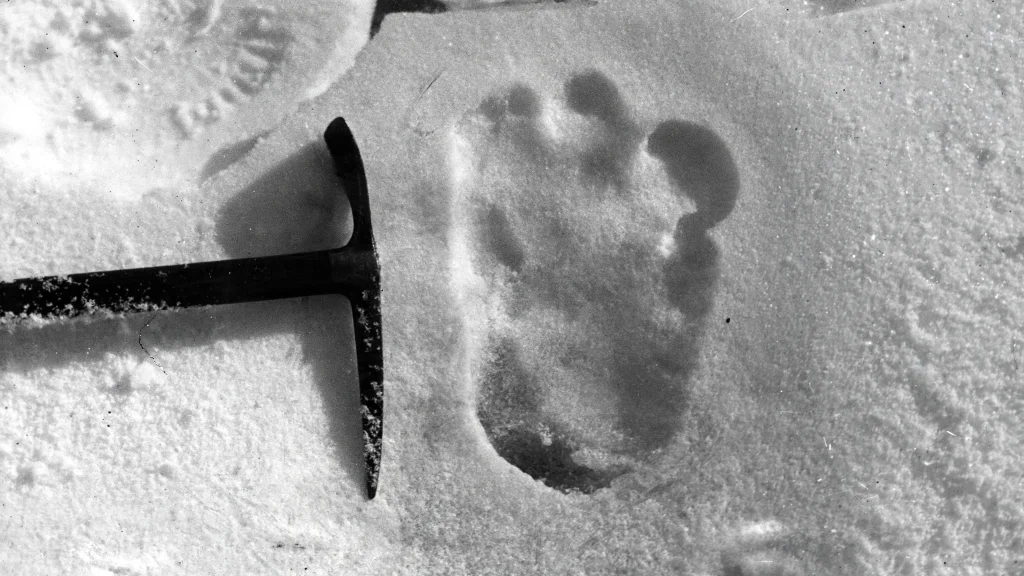
In 1921, Lieutenant-Colonel Charles Howard-Bury led a British Everest reconnaissance expedition. At high altitude, his team spotted mysterious, oversized footprints in the snow.
His native guides explained that the tracks belonged to the Metoh-Kangmi (man-bear snow-man). However, a journalist accidentally translated the word Metoh as “dirty” or “abominable.” Consequently, the dramatic phrase “Abominable Snowman” was born in Western media.
Famous High-Altitude Expeditions
During the 1950s, global interest reached its peak. Several wealthy explorers launched dedicated expeditions to track down the creature.
- Daily Mail Expedition (1954): A major British newspaper sent a team equipped with hounds and cameras to collect hair samples and footprint casts across Nepal.
- Sir Edmund Hillary’s Expedition (1960): The famous Everest conqueror led an expedition to scientifically evaluate Yeti artifacts. He collected the Khumjung scalp and sent it to international laboratories for scientific testing.
Scientific Investigations and Genetic Realities
Over the decades, scientists have used modern technology to analyze physical evidence attributed to the creature.
Footprint Explanations
Trackways discovered high in the snow often appear unnaturally large. However, high-altitude weather explains this phenomenon clearly. Warm sunlight melts the edges of normal footprints made by snow leopards, bears, or humans. Afterward, freezing winds expand the print impressions, making them look like giant, mysterious tracks.
DNA Analysis of Sacred Relics
In recent years, geneticists conducted detailed DNA analysis on bone fragments, hair strands, and teeth collected from Himalayan monasteries and remote caves.
- The 2014 Study: Genetic testing revealed that several hair samples matched an ancient polar bear species from the Pleistocene era.
- The 2017 Comprehensive Study: Scientists analyzed nine separate Yeti relics from Nepal and Tibet. The DNA results showed that eight samples came from native Himalayan brown bears and Asian black bears. The remaining sample belonged to a domestic dog.
Scientifically, these studies proved that real native bears account for the physical evidence behind the legend.
The Natural Reality: Bears of the Himalayas
The actual animals behind the myth are fascinating in their own right. Nepal’s high-altitude regions host rare bear species that closely match Yeti descriptions:
- Himalayan Brown Bear (Ursus arctos isabellinus): A large, reddish-brown bear that occasionally walks upright on its hind legs to survey terrain.
- Asian Black Bear (Ursus thibetanus): A forest-dwelling bear known for white chest markings and aggressive defensive behavior.
When travelers glimpse these rare animals through thick mountain fog, their minds easily interpret them as mythical creatures.
The Modern Cultural Impact in Nepal
Today, the creature remains an important cultural icon across Nepal. It has shifted from an intimidating wilderness guardian into a celebrated symbol of adventure and tourism.
- Tourism and Branding: Hotels, trekking agencies, and local airlines across Kathmandu and Pokhara use the creature’s name and image.
- Visit Nepal Campaigns: Government tourism boards frequently feature the legendary ape in international promotional campaigns.
- Local Handicrafts: Artisans craft wooden carvings, wool masks, and souvenirs depicting the creature for visitors.
Frequently Asked Questions (FAQ)
Is the Yeti real in Nepali folklore?
In folklore, the creature is a real spiritual and physical inhabitant of the Himalayas. Scientifically, modern DNA testing confirms that physical evidence comes from native Himalayan bears.
What does the word Yeti mean?
The name comes from the Sherpa words Yeh-Teh, which translates to “rock bear” or “creature of the rocky places.”
Where is the famous Yeti scalp kept in Nepal?
A famous alleged scalp is preserved and displayed inside the Khumjung Monastery in the Everest region of Nepal.
What animal is most often mistaken for the Yeti?
The Himalayan brown bear and the Asian black bear are the animals most commonly mistaken for the creature due to their size, fur color, and ability to stand upright.
Conclusion
In summary, The Yeti: A Nepali Folklore represents a magnificent cultural treasure of the Himalayas. While modern science points to native bears, the true value of the story lies in its cultural roots. It reflects humanity’s deep respect for the wild, unexplored corners of our world. As long as snow falls on the Himalayan peaks, the legend of the mountain guardian will live on in the hearts of storytellers.


