



Almost everything written about the Raute in English treats them as a countdown. Last nomads, vanishing, final generation. Framing of that kind is not neutral reporting, because it quietly settles the question it should be asking. Raute people have stated their own position repeatedly and consistently: they want to remain mobile, keep their language, and continue living from the forest.
What has changed in the past two decades is not that desire. What has changed is their legal access to forest, and the policy Nepal has built in place of it. Raute forest rights are the real subject here, and the cash-transfer scheme that now substitutes for them is under serious scrutiny.
Who the Raute are
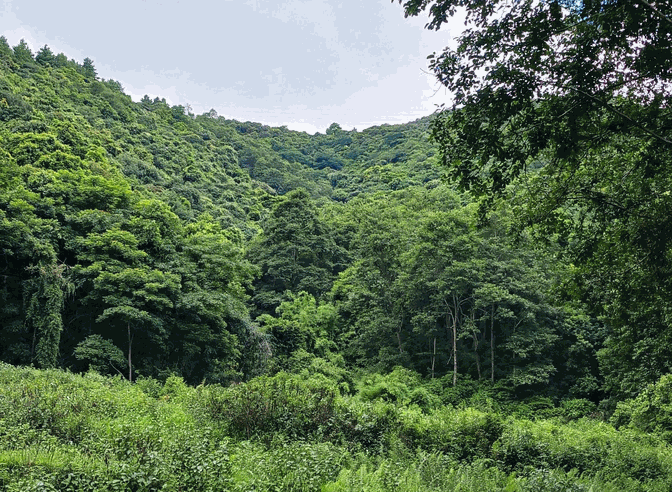
Raute are an Indigenous people of western Nepal, officially listed among Nepal’s Indigenous nationalities and recognized by the state as a highly marginalized group. Their language, which they call Khamci, meaning roughly “our talk,” belongs to the Tibeto-Burman family and is related to Raji and Ban Raji, spoken by neighboring communities.


Precision matters here because outsiders routinely merge distinct peoples. Raute are not Raji, and the nomadic Raute are not the same community as Raute households who settled generations ago. Nepal’s 2011 census recorded 618 people identifying as Raute in total, the great majority of them long settled. Estimates of the mobile group have been around 150 people in recent years.
Most Raute now live in settled communities. A smaller group has continued moving, historically through the forests of Dadeldhura, Dailekh, Surkhet, Salyan, Darchula and neighboring districts, generally spending no more than four or five months in one camp.
How the forest economy works
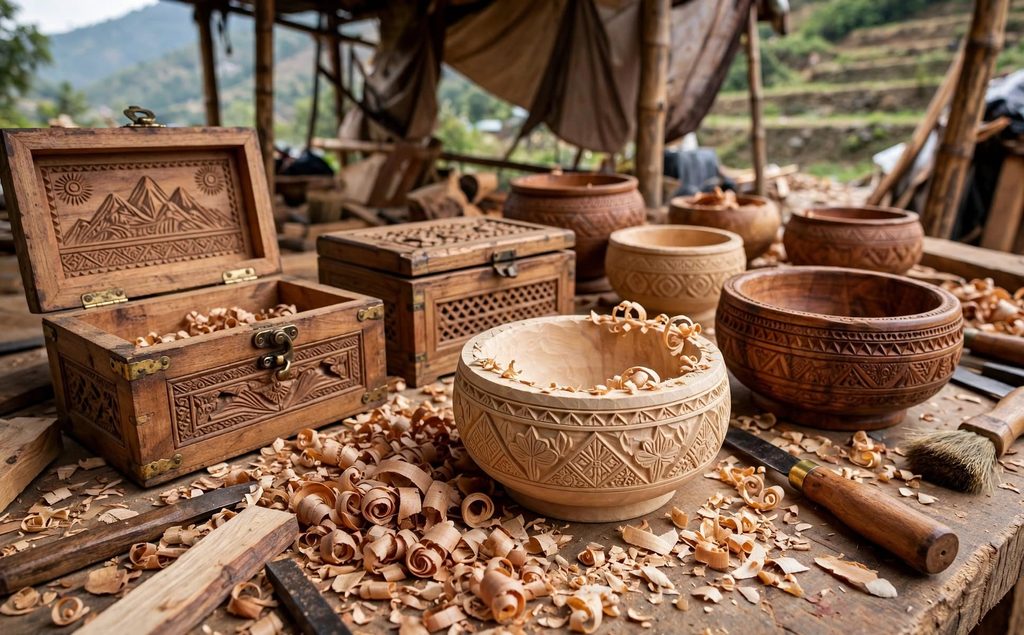
Raute subsistence combines three strands, and understanding why forest access is the binding issue means understanding how they fit together.
Foraging supplies wild tubers, fruits and greens from forest ground. Hunting supplies protein, principally langur and macaque monkeys, a practice ethnographers including Jana Fortier have documented in detail and one that carries ritual significance within the community rather than being simply a food source.
Craft supplies everything else. Raute carvers make wooden bowls, boxes and storage vessels from forest timber, and trade them in hill villages for grain, rice, iron, cloth and other goods. Exchange of that kind is not a sideline. It is the mechanism that converts forest resources into a diet broader than the forest alone provides.
Notice what every strand has in common. Each requires physical access to standing forest, and each requires the right to take something from it.
Some aspects of Raute life, including practices around death and certain ritual knowledge, are not discussed with outsiders. Researchers who have worked with the community have respected that boundary, and this article does likewise. Absence of detail here is deliberate.
Where the law collides
Nepal’s forest and wildlife legislation was not written with mobile foragers in mind, and three provisions cut directly across Raute subsistence.
Timber extraction is regulated. Community forest user groups control harvesting in the community forests that cover much of the Raute’s historical range, and those groups answer to their own members, who are not Raute. Government permission to cut small trees for tent poles exists, and it is narrow, and it regularly produces friction with the villages whose forest is being used.
Wildlife protection applies without exemption. Nepal’s conservation framework protects primates, and the legal position of subsistence hunting by an Indigenous community whose practice predates the legislation has never been cleanly resolved.
Protected area and community forest boundaries assume residence. Rights in Nepal’s community forestry system attach to user groups defined by locality. A people who are in a given forest for four months and gone for the next eight do not fit the category the system is built around.
Reports from Raute families who have moved into settled locations describe the practical result bluntly: traditional woodworking is no longer viable because the timber is no longer legally obtainable. Remove access to raw material and the craft economy stops, regardless of whether the skill remains.
The allowance, and what it has produced
Nepal’s response has been cash. Raute receive payments under the state’s provision for highly marginalized endangered groups, administered through local government.
An investigation published by the Centre for Investigative Journalism Nepal in April 2026, following reporting in Kantipur in March, set out the figures. Payments run at Rs 44,000 per person per year, distributed through Gurans Rural Municipality in Dailekh. Over 17 years from 2008, the government has spent Rs 74.7 million on these allowances, with a further Rs 150 million spent by government bodies and non-governmental organizations on related programs.
Separate reporting from 2025 on Raute families who moved to Kanchanpur district described the payment as around Rs 4,000 per month, distributed quarterly, and recorded community members saying it does not cover basic expenses.
| Measure | Figure | Source and date |
|---|---|---|
| Raute population, 2011 census (all, mostly settled) | 618 | Nepal census 2011 |
| Mobile group, recent estimates | About 150 | Ethnographic reporting, around 2016 |
| Counted at the Dailekh-administered settlement, 2008 | 165 | CIJ Nepal, April 2026 |
| Counted at the same settlement, February 2026 | 133 | CIJ Nepal, April 2026 |
| Allowance per person | Rs 44,000 per year | CIJ Nepal, April 2026 |
| Total allowance spending, 2008 to 2026 | Rs 74.7 million | CIJ Nepal, April 2026 |
| Additional government and NGO programme spending | About Rs 150 million | CIJ Nepal, April 2026 |
Two numbers in that table deserve to be read together. Population at the settlement fell from 165 in 2008 to 133 in February 2026, over the same period in which roughly Rs 225 million was spent. Whatever the policy was meant to achieve, it has not stabilized the community it was built for.
What the investigation found in the accounts
The CIJ reporting documented specific administrative failures. Allowances continued to be paid for seven years after one beneficiary’s death in July 2018, totaling Rs 336,000. One individual appeared under two names, inflating the beneficiary count. Ten listed names were identified as fictitious or belonging to people not resident at the settlement. Record sets supplied by the municipality contradicted each other.
Money going astray is the narrow finding. A wider one sits underneath it: a community with low literacy in Nepali administrative systems, no independent oversight of the funds nominally theirs, and a local government holding the records has no practical way to audit what it is owed.
The argument about cash
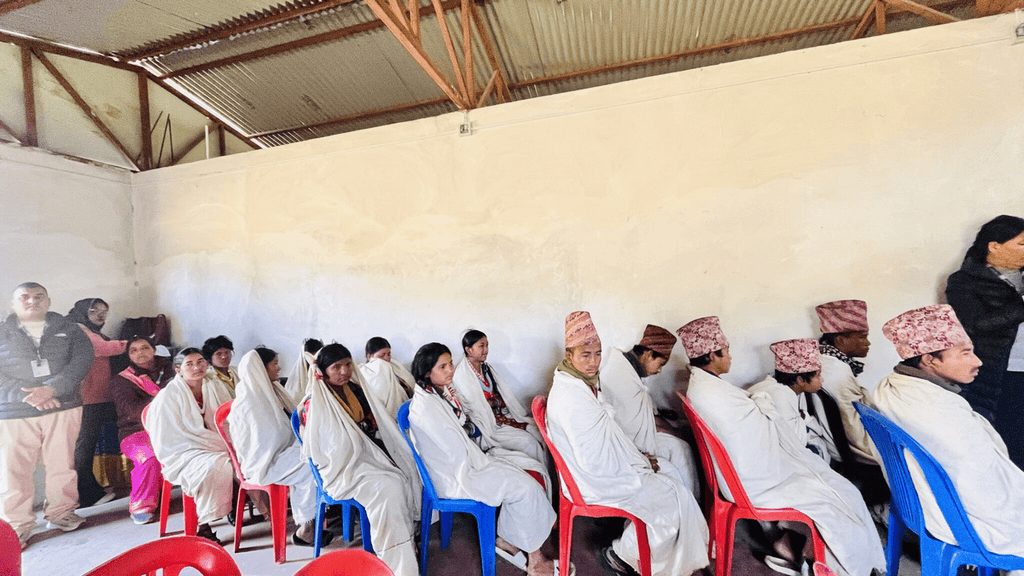
Debate over the scheme is genuine, and both positions deserve stating fairly.
One view, articulated by health workers and some researchers, is that unconditional cash paid directly to individuals in a community with no prior cash economy has produced harm, including spending patterns that damage health. A physician quoted in the CIJ investigation, Dr Nawaraj KC, put it directly: giving cash straight into people’s hands is a mistake.
Against that sits an obvious objection. Deciding that an Indigenous community cannot be trusted with its own money is a familiar move in the history of Indigenous administration, in Nepal and elsewhere, and it has a poor record. Substituting in-kind provision for cash transfers restores exactly the dependency relationship that cash was supposed to replace.
There is a third position, and it is the one Raute representations most closely resemble. Cash and in-kind provision are both substitutes for the thing actually removed, which was secure access to forest. A community that could still forage, hunt within an agreed framework, and obtain timber for carving would not be arguing about the design of a welfare payment.
Whether a rights-based alternative is workable is a real question. Nepal’s community forestry system is one of the more successful models of devolved forest governance anywhere, and its success rests on exclusive, locality-based user rights. Writing mobile use rights into that structure is legally and politically difficult. Difficulty is not the same as impossibility, and it is a different conversation from the one currently being had.
Settlement, and what Raute have said about it
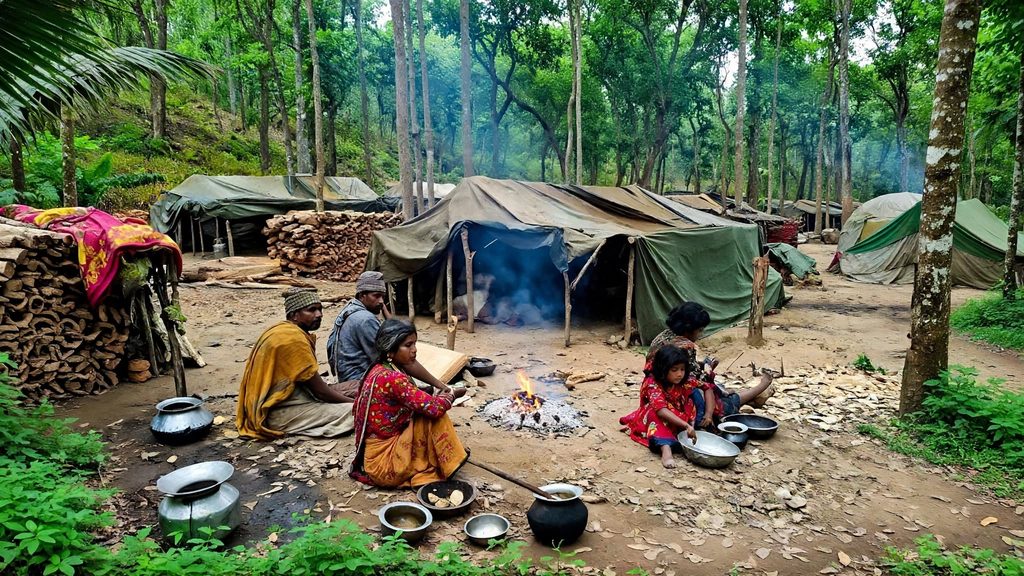
Government policy over the past two decades has moved toward settlement, through land allocation and the construction of housing at fixed sites. In 2025, Raute families relocated to Kanchanpur district, having moved from Darchula via Dadeldhura.
Community members quoted in that reporting expressed mixed assessments. Living like other citizens was described as positive. The absence of income opportunities was not. Requests recorded in reporting have centered on skills training suited to present-day livelihoods rather than on ancestral occupations that current law no longer permits.
Raute positions stated across ethnographic work and in reporting have consistently held three things together: a preference for mobility, maintenance of language and culture, and continuation of a forest-based livelihood. Individual families making different choices under pressure is not evidence that the collective position changed. It is evidence of pressure.
Describing the result as a community disappearing, as some coverage does, gets the causation backwards. Mobility has been constrained by law and by forest tenure. A smaller, less mobile population is downstream of that.
A note on visiting
Raute camps are not a destination, and this article should not be read as directions to one.
Tourists and photographers seeking out Raute settlements has been a recurring problem, documented over years. Raute people have not invited this, several accounts record discomfort with it, and there is no arrangement in place by which visits benefit the community. Pursuing a camp for photographs is intrusion, not cultural interest.
If you want to understand Nepal’s Indigenous and ethnic diversity, there is a great deal to read and a great many communities who do host visitors on their own terms. Our overviews of Nepal’s ethnic groups and the country’s 129 languages are a starting point, alongside pieces on Magar culture and cuisine and on Gaura Parva in Sudurpaschim and Karnali.
What is documented and what is not
Several things in this article rest on a thin evidentiary base, and saying so is more useful than writing around it.
Population figures vary by source and by definition. Census counts, settlement headcounts and estimates of the mobile group measure different things, and they are frequently quoted interchangeably.
Health and mortality data for the community is limited and largely derived from small studies and from administrative records of uncertain quality. Strong causal claims about the drivers of population decline are not supportable from what exists.
Raute voices in the published record reach outsiders mostly through interpreters, journalists and researchers. Organizations run by Raute people themselves, able to speak for the community directly, are not prominent in the accessible literature. Anything written about them from outside, including this, carries that limitation.
Frequently asked questions
How many Raute are there?
Nepal’s 2011 census recorded 618 people identifying as Raute, most of them long settled. Estimates of the mobile group have been around 150 in recent years, and a settlement administered through Dailekh was counted at 133 people in February 2026, down from 165 in 2008.
What language do Raute speak?
Khamci, meaning roughly “our talk,” a Tibeto-Burman language related to Raji and Ban Raji. Many Raute also speak Nepali for trade and dealings with officials.
How do Raute make a living?
Through foraging for wild tubers, fruits and greens, hunting, and carving wooden bowls and boxes traded in hill villages for grain and other goods. All three depend on access to standing forest.
Why is forest access the central issue?
Nepal’s forest law allocates rights through locality-based community forest user groups, wildlife law protects primates without a subsistence exemption, and timber harvesting is regulated. A mobile community does not fit those categories, so its subsistence base has become legally inaccessible.
What is the government allowance and does it work?
Payments run at Rs 44,000 per person per year through local government. Investigative reporting in 2026 documented payments continuing for seven years after a beneficiary’s death, duplicate and fictitious names, and contradictory municipal records. Population at the settlement fell over the same period in which roughly Rs 225 million was spent.
Are Raute being forced to settle?
Policy has moved toward settlement through land allocation and housing, and families have relocated. Raute positions recorded over many years have consistently favored mobility, so individual decisions made under legal and economic pressure should not be read as a change of collective preference.
Is it accurate to call the Raute a disappearing people?
That framing confuses cause and effect. Loss of secure forest access and of a viable craft economy, both consequences of law and tenure, come first. Smaller numbers and reduced mobility follow. Raute have stated their intention to continue as a distinct community.
Can visitors meet the Raute?
They should not seek to. Raute camps are not a tourist site, there is no arrangement by which visits benefit the community, and unsolicited visits and photography have been a documented problem. Other Nepali communities do host visitors on terms they set themselves.
Further reading
The investigative reporting underlying much of this article is the Centre for Investigative Journalism Nepal analysis of the Raute allowance scheme. The scholarly literature on Raute subsistence and language is anchored by the ethnographic work of Jana Fortier, with earlier Nepali scholarship by Dor Bahadur Bista.
NepalVue writes about Nepal’s communities as people with present-day interests, not as heritage. Save this one, share it with anyone who has only met the Raute through travel photography, and follow NepalVue for more reporting from western Nepal.