



By 7 in the morning on the fifteenth day of Asar, the paddy fields below Khokana are already loud. Bare feet sink ankle-deep into warm mud, someone is singing an off-key verse that everyone else answers, and a teenager is being dragged into a flooded plot against his very loud objections. This is the Asar 15 Nepal festival, and it looks less like a national holiday and more like the best kind of chaos. Here is the part most travel guides skip: this muddy, joyful mess is one of the most genuine cultural experiences you can stumble into in the entire country, and almost no foreign visitor plans for it.
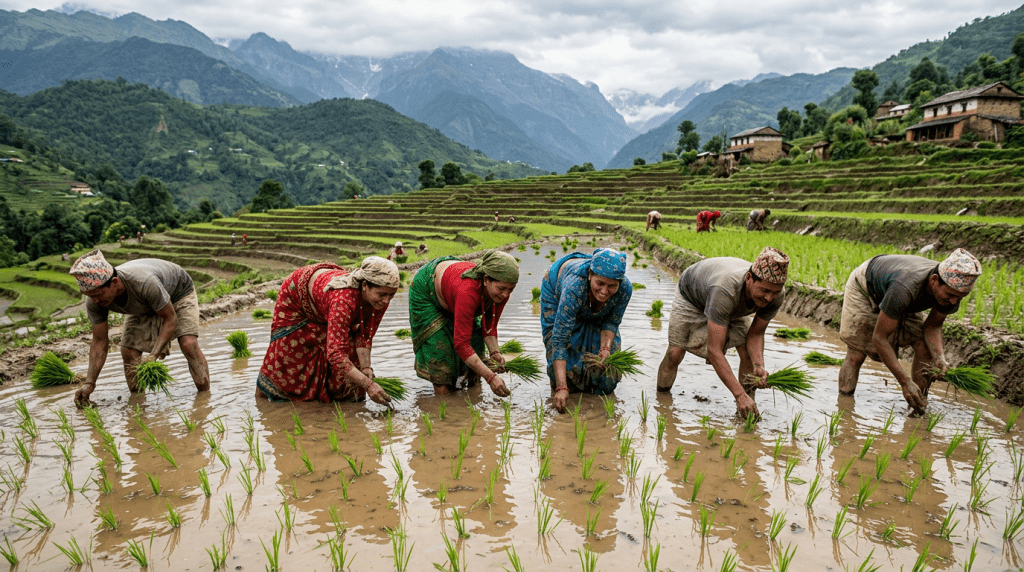
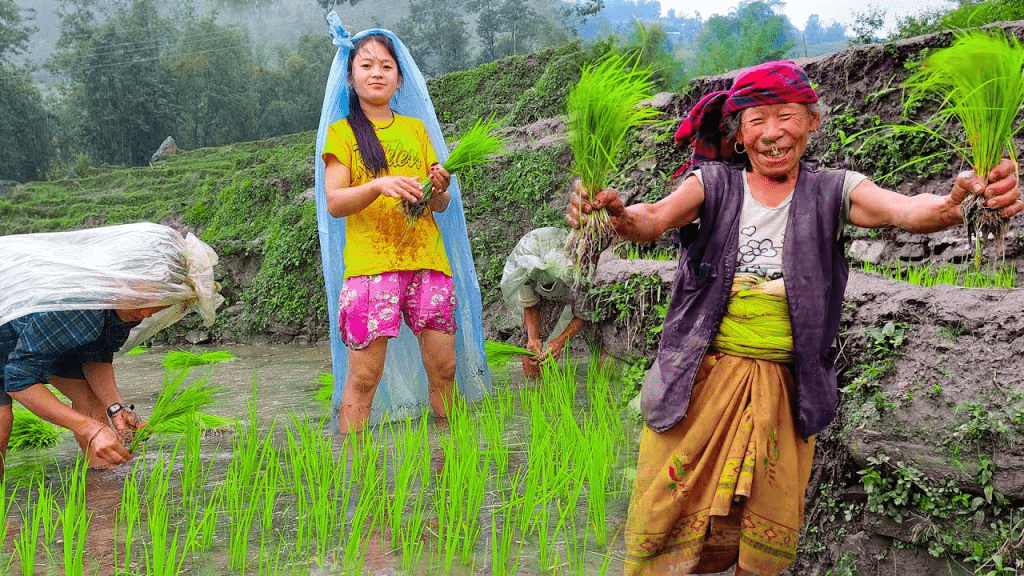
Officially it is called National Paddy Day, or Dhan Diwas. Locals just call it Asar Pandhra, which literally means Asar 15. The day marks the peak of the rice planting season, when monsoon rain has finally soaked the terraces enough for farmers to push young paddy shoots into the soft earth. It is agriculture, ritual, and a full-blown party rolled into a single muddy afternoon.
What Is the Asar 15 Nepal Festival?
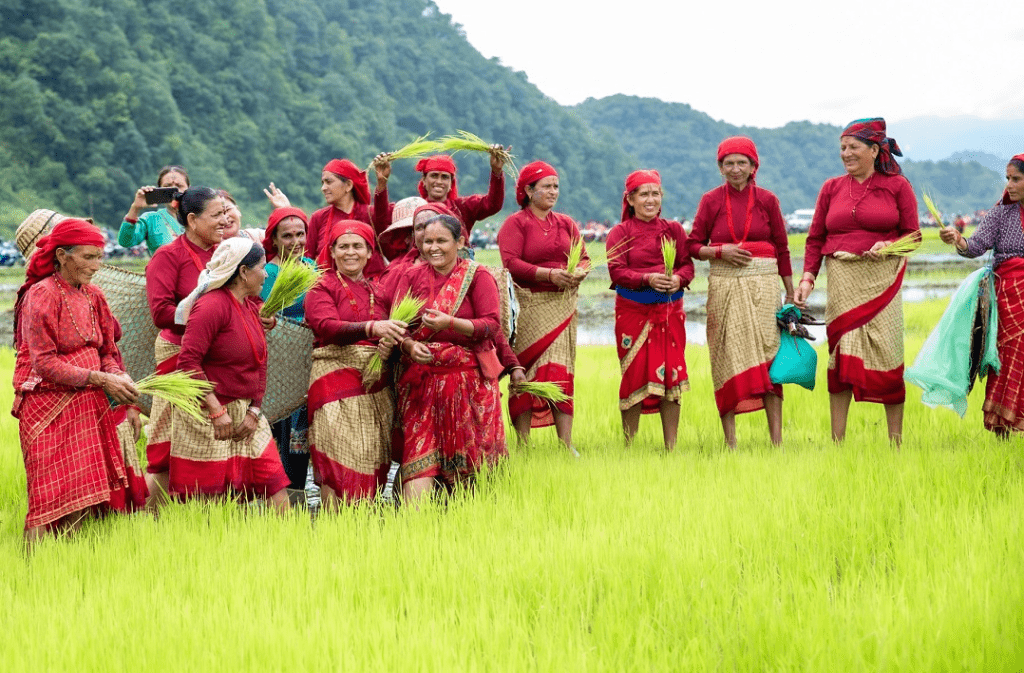
Asar is the third month of the Nepali calendar, and the fifteenth day usually lands in late June. In 2025 it fell on June 29, and 2026 is expected to land on or around the same dates, though the exact Gregorian date shifts slightly each year because the Bikram Sambat calendar follows its own astronomical math. To plan a trip around it, confirm the date on a current Nepali calendar a few weeks ahead.


Nepal began marking Asar 15 as National Paddy Day following a minister-level decision in late 2004, the same year the United Nations declared an International Year of Rice. So while rice planting itself is thousands of years old here, the formal national observance is relatively young.
Why does a single planting day get its own holiday? Agriculture still employs roughly two thirds of Nepal’s population and remains one of the largest contributors to the economy. Rice is not just food. It is income, identity, and survival for millions of households.
The Mud: Why Everyone Gets Filthy on Purpose
The mud is not an accident. It is the whole point.
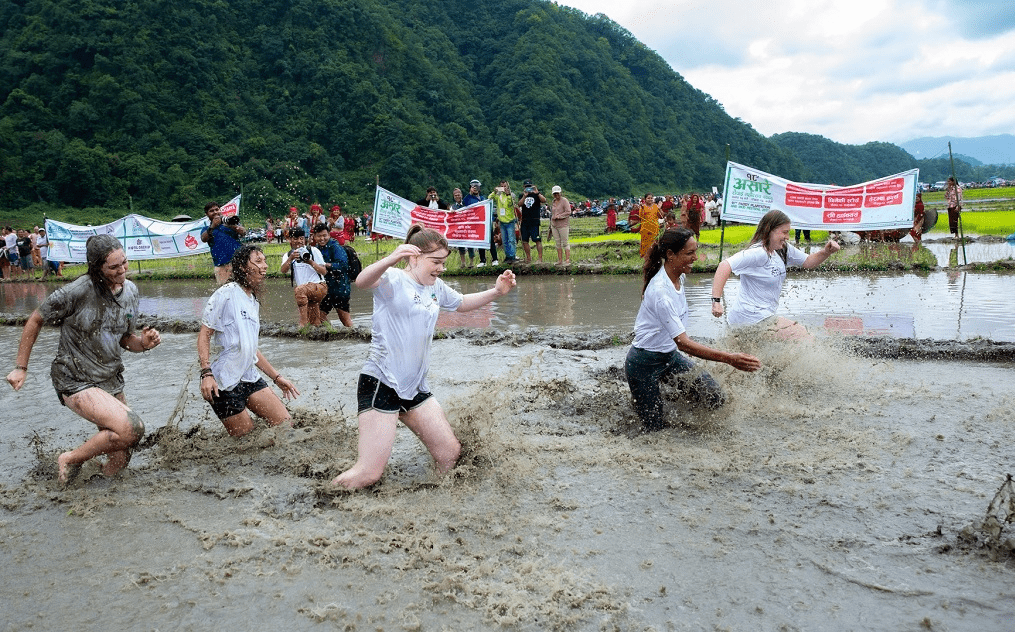
Transplanting paddy requires flooded, churned-up fields, and once you are knee-deep in that slop with twenty other people, a mud fight is basically inevitable. Over time it became tradition. Mud here is tied to fertility and prosperity, so getting splashed is closer to a blessing than an insult. Children chase each other across the terraces. Young people stage mud races and tug-of-war matches that usually end with both teams flat on their backs in the muck.
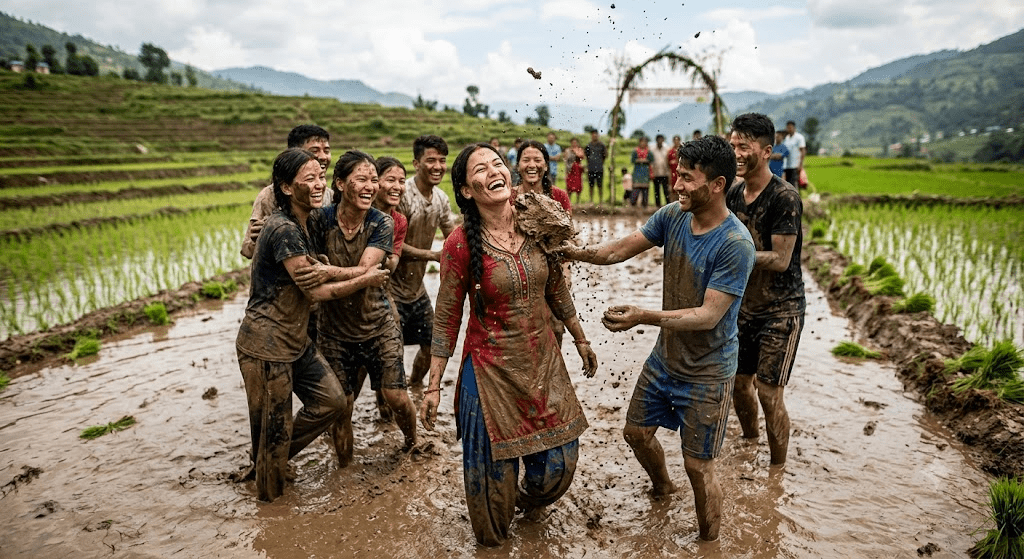
What surprises most first-timers is how welcoming it all is. You do not watch from the edge. Someone will hand you a bundle of seedlings, show you how to space them, and within minutes you are part of the line, planting and getting plastered with mud like everyone else. In recent years foreign visitors have started joining in deliberately, some even showing up in traditional farming dress. It has quietly become one of the friendliest cultural exchanges in the country.
Asare Geet: The Soundtrack of the Fields
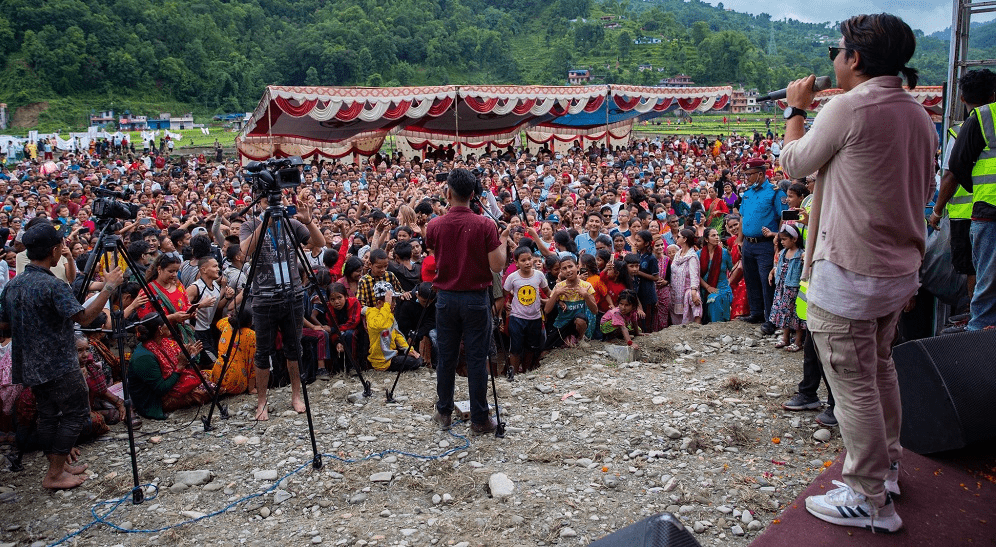
You will hear Asar 15 before you fully understand it. The fields fill with Asare Geet, the seasonal folk songs sung during planting. These are call-and-response tunes, one person leads a line and the rest of the row answers, and the rhythm helps keep the back-breaking work moving.
The lyrics are honest and often funny. Some are about love and longing, sung between rows of young men and women working opposite sides of a field. Others grumble about hard labor, monsoon mud, and aching backs, turning complaint into comedy. A few drift into outright flirtation. There is no stage and no audience. The work is the performance, and the songs are how a long muddy day stays bearable and even fun.
Dahi Chiura: The Meal That Defines the Day
No discussion of Asar 15 is complete without dahi chiura. If the mud is the body of this festival, this dish is its soul.
The combination is simple: dahi, which is yogurt, mixed with chiura, which is beaten or flattened rice. People often add seasonal fruit like ripe mango or banana, sometimes a spoon of sugar, sometimes nothing at all. That is the entire recipe. Its genius is in its practicality.
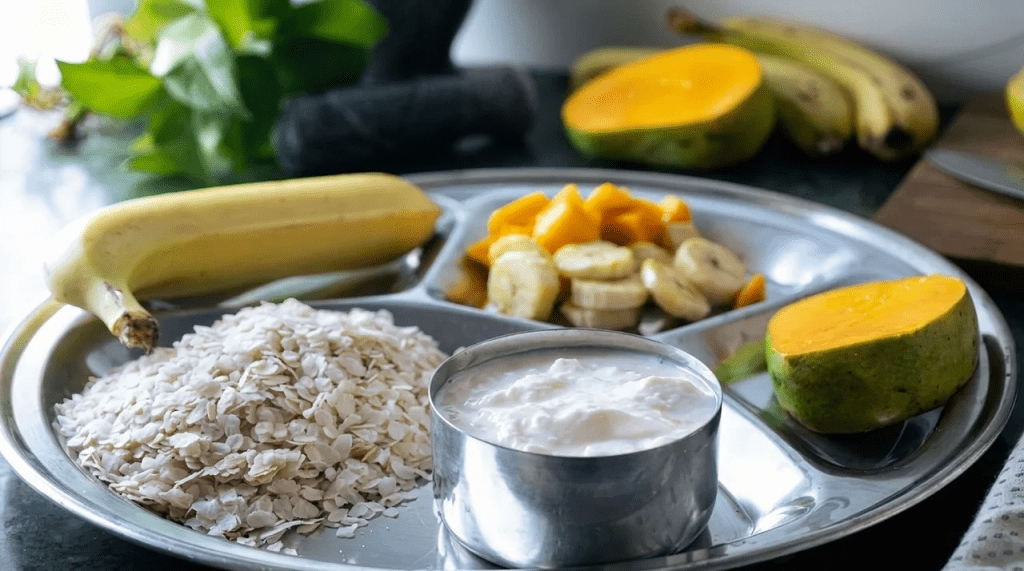
Think about the conditions. Farmers spend hours in flooded fields under monsoon heat. Yogurt is cooling and easy to digest. Beaten rice needs no cooking, stores well, and delivers fast energy. Put them together and you get a light, high-energy meal that fuels a hard day without weighing anyone down. Generations of farmers figured out the perfect field food long before anyone used the words “performance nutrition.” Yogurt is also linked to purity and good fortune, which is why dahi chiura shows up at other auspicious moments in Nepali life. To see how deeply food shapes celebration here, it is worth exploring traditional Nepali food dishes more broadly.
Where the Celebrations Happen
Asar 15 is celebrated almost everywhere there are rice fields. That said, some spots are easier for visitors to reach and tend to host livelier events.
In the Kathmandu Valley, the traditional farming towns just outside the city center come alive. Places worth knowing include:
- Khokana and Bungamati: two historic Newar villages south of Kathmandu, both deeply tied to farming traditions and easy to reach for a day trip.
- Chapagaun and Lele: rural pockets in the southern valley where the fields are wide and the planting is in full swing.
- Kirtipur, Thimi, and Kavresthali: old settlements where paddy culture and Newar heritage overlap, giving the day extra texture.
- Bhaktapur: the wider district around this heritage city has plenty of active fields within easy reach.
Outside the valley, Pokhara has turned the day into a bigger event. The lakeside city hosts a Ropai Mahotsav, or rice planting festival, that blends the agricultural ritual with tourism-friendly programming, cultural performances, and food. If you happen to be in Pokhara in late June, it is well worth a morning. While you are mapping out the region, our Pokhara travel guide covers what else to do there.
The Bigger Picture: Why Rice Still Matters Here

Behind all the laughter, Asar 15 also carries a quieter, more serious message about food and self-reliance. Nepal grows a huge amount of rice, but it still does not grow enough.
The numbers tell the story. Out of roughly 7 million tonnes of rice the country needs, there is an annual shortfall of around 1 million tonnes. By mid-2025, Nepal had imported hundreds of thousands of tonnes of rice, paddy, and seed worth tens of billions of rupees. In the 2024 and 2025 fiscal year the area planted with paddy actually dipped slightly, even as average productivity per hectare rose to a record. Translation: farmers are getting more efficient, but younger generations leaving the land remains a real pressure.
That is part of why the government keeps the holiday alive. It is a celebration, yes, but it is also a yearly reminder that the people in those muddy fields are doing essential, undervalued work. Asar 15 falls right at the heart of the rainy season, so if you are timing a visit, it helps to understand the wider Nepal monsoon season and what travel actually looks like during those months.
Tips for Travelers Who Want to Join In
If you want to experience Asar 15 firsthand rather than just read about it, a little preparation goes a long way.
- Wear clothes you can ruin. You will get muddy. There is no version of this where you stay clean, so leave the nice gear at the hotel.
- Go early. Planting starts in the morning and the energy peaks before midday. Arrive by 8 or 9 to catch the best of it.
- Bring a waterproof bag. Phones, cameras, and mud do not mix. Protect anything electronic.
- Ask before you jump in. Most farmers love extra hands and will welcome you warmly, but a quick smile and gesture of asking goes a long way in rural communities.
- Try the dahi chiura. If it is offered, accept it. Sharing food is central to the day, and refusing can feel cold.
- Hire a local guide or homestay host. A local contact turns you from an onlooker into a participant, and they will know exactly which fields are celebrating.
One honest warning: this is working farmland, not a theme park. Follow the lead of the people who own the fields, and remember the planting is real labor with real stakes. The festival mood is genuine, but so is the work underneath it.
How Asar 15 Fits Into Nepal’s Festival Calendar
Asar 15 is not the flashiest festival on the Nepali calendar. It has no giant processions, no temple crowds, no fireworks. What it offers instead is intimacy and authenticity, a chance to get your hands dirty in the literal foundation of Nepali life. For travelers who have already done the temples and trekking and want something rawer, it is hard to beat. If you are building a longer trip, our Nepal festivals calendar shows how this rainy-season celebration connects to the bigger autumn festivals like Dashain and Tihar.
For official cultural and tourism information, the Nepal Tourism Board is a reliable starting point, and the broader history of the observance is documented on National Paddy Day resources.
Frequently Asked Questions
When is Asar 15 celebrated in 2026?
Asar 15 falls in late June. In 2025 it was observed on June 29, and 2026 is expected to land on or very near the same dates. Because the Nepali Bikram Sambat calendar uses its own astronomical calculations, confirm the exact Gregorian date on a current Nepali calendar a few weeks before you travel.
What is dahi chiura and why is it eaten on this day?
Dahi chiura is yogurt mixed with beaten rice, often with seasonal fruit like mango. It is cooling, easy to digest, needs no cooking, and provides quick energy, which makes it ideal field food for farmers working long hours in monsoon heat. It also carries cultural associations with purity and good fortune.
Can tourists participate in the mud planting?
Yes. In recent years both domestic and foreign visitors have joined in, planting seedlings, singing, and taking part in the mud play. Most farmers welcome extra hands warmly. Just ask politely, wear clothes you do not mind ruining, and follow the lead of the field owners.
Why do people throw mud at each other on Asar 15?
Mud is linked to fertility and prosperity in Nepali tradition, so splashing it around is more blessing than insult. Practically, planting in flooded fields makes mud play almost unavoidable, and over generations it grew into a beloved part of the celebration alongside mud races and tug-of-war.
What are Asare Geet?
Asare Geet are the seasonal folk songs sung during rice planting. They are call-and-response tunes covering love, hardship, humor, and flirtation. The rhythm helps coordinate the planting and keeps spirits up through a long, physically demanding day.
Where are the best places to experience Asar 15?
In the Kathmandu Valley, head to farming towns like Khokana, Bungamati, Chapagaun, Lele, Kirtipur, and Thimi. Outside the valley, Pokhara hosts a larger Ropai Mahotsav with cultural programming that is friendly to visitors.
Is Asar 15 a public holiday in Nepal?
Asar 15 is observed nationally as National Paddy Day, recognized through a government decision dating to 2004. It is widely marked across the country, though the scale of public celebration varies by region and year.
Why does Nepal celebrate a rice planting day at all?
Agriculture employs roughly two thirds of Nepal’s population and is central to the economy. Rice is the staple crop, yet the country still imports about a million tonnes a year to meet demand. The holiday honors farmers’ essential work and keeps national attention on food security.


