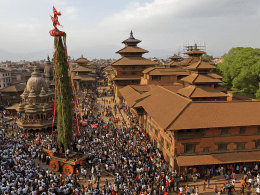



Most countries this size count their major ethnic communities on two hands. Nepal counts 142. The 2021 national census recorded that many distinct caste and ethnic groups inside a territory smaller than the state of Florida, up from 125 just a decade earlier. Understanding the ethnic groups of Nepal is the single best way to make sense of why a four-hour bus ride here can drop you into a completely different language, diet, and set of festivals than the one you left behind.
Here is what most travel guides won’t tell you: Nepal is not one culture wearing different costumes. It is dozens of cultures, layered on top of each other across one of the steepest landscapes on earth, and the mountains are the reason they stayed distinct for so long.
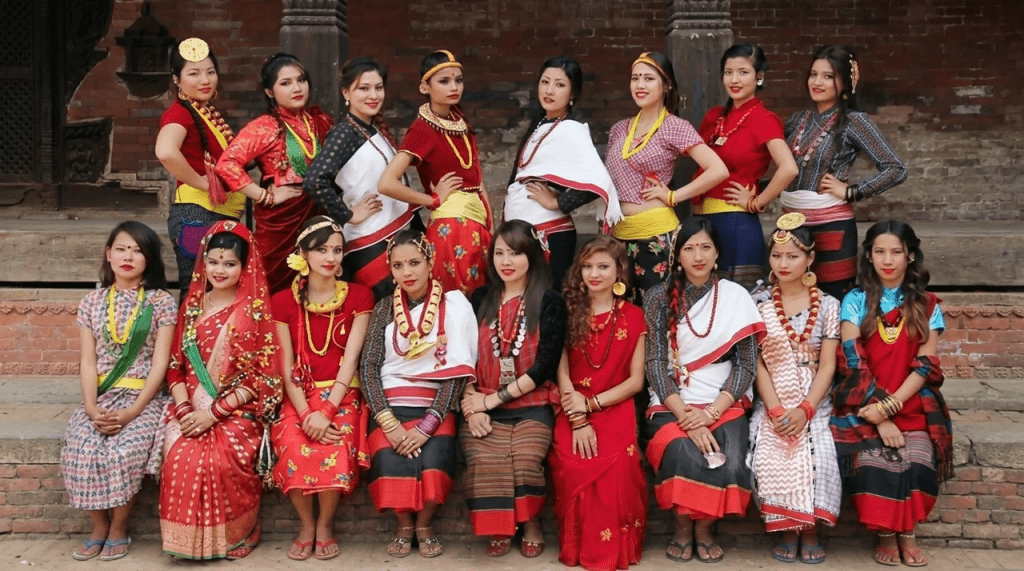
Why Nepal Has So Many Ethnic Groups
Geography did most of the work. Think about what it takes to cross this country on foot: ridges that swallow days, river valleys sealed off from each other, altitudes that swing from 60 meters in the southern plains to over 8,000 meters along the northern border. Communities settled into these pockets centuries ago and developed their own languages and customs with little outside contact.


There is also the migration story. Nepal sits on a fault line between two enormous human currents. Indo-Aryan peoples moved up from the Indian plains to the south. Tibeto-Burman peoples moved down from the Tibetan plateau to the north. Where they met, mixed, and settled is roughly the map of Nepal’s ethnic diversity today. A third, older set of communities, including the Newar and the Tharu, are believed to have settled the region before either of those big migrations arrived.
The result is a country where, according to the 2021 census, people speak well over 120 languages belonging to several different language families. Indigenous peoples alone make up around 35 percent of the total population, and the government formally recognizes 59 of them.
The Largest Ethnic Groups of Nepal by Population
Nepal’s official data lumps caste groups and ethnic groups into one list, which is why the numbers look the way they do. By raw count, the single largest category is the Chhetri, at 16.45 percent of the population. Hill Brahmans come next at 11.29 percent. After that the list shifts toward the indigenous communities that most travelers come to Nepal hoping to encounter.
- Chhetri (16.45%): Traditionally the warrior and ruler caste, spread across the hills nationwide.
- Brahman-Hill (11.29%): The priestly caste, historically dominant in education and government.
- Magar (6.9%): Nepal’s largest indigenous group, concentrated in the western and central hills.
- Tharu (6.2%): The major indigenous community of the southern Tarai plains.
- Tamang (5.62%): Hill people of the central region, with a strong presence around the Kathmandu Valley rim.
- Bishwakarma (5.04%): A Dalit community traditionally associated with metalwork.
- Newar (4.6%): The historic inhabitants of the Kathmandu Valley.
- Rai (2.2%) and Limbu (1.42%): The Kirat peoples of the eastern hills.
- Gurung (1.86%): Mountain people of the Annapurna region, famous as Gurkha soldiers.
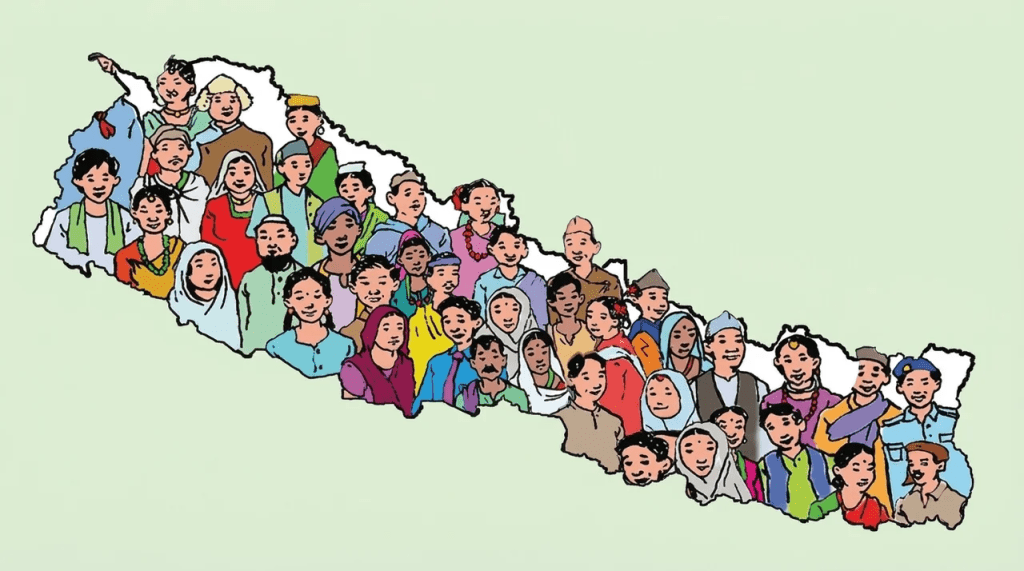
The Hill and Mountain Peoples
Magar and Gurung: The West-Central Highlands
Magar and Gurung communities dominate the foothills of west-central Nepal, including the trails around Pokhara and the Annapurna range. Both have a long association with the legendary Gurkha regiments. If you have trekked the Annapurna Circuit, you have almost certainly slept in a Gurung-run teahouse and eaten dal bhat cooked by a Magar family. Their traditional homes, stone-built with slate roofs, are a recognizable feature of the middle hills.
Tamang: Around the Valley and North
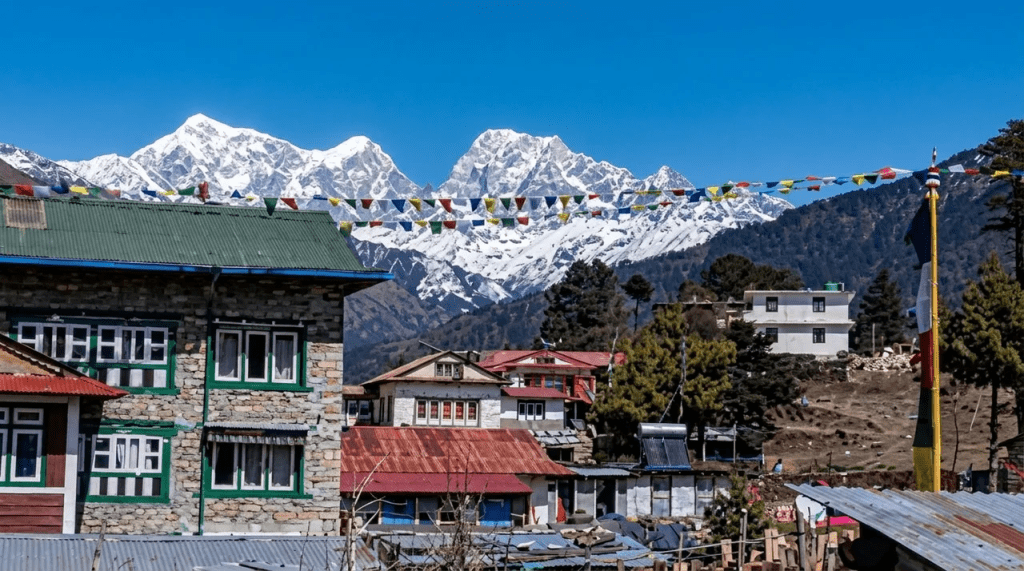
Tamang people are the largest single ethnic group in Bagmati Province, which surrounds Kathmandu. Their heartland runs through the central hills and into the Langtang and Helambu regions just north of the capital. Tibetan Buddhism shapes much of Tamang life, from the prayer flags strung across hillsides to the gompas that anchor village life. The Tamang Heritage Trail near Langtang has become one of the better community-based trekking routes for travelers who want culture alongside scenery.
Rai and Limbu: The Kirat East
Head east and the cultural map changes again. Rai and Limbu communities, collectively known as the Kirat, fill the eastern hills around the Koshi region. They follow Kirat Mundhum, an indigenous animist tradition distinct from both Hinduism and Buddhism. Limbu communities are known for tongba, a warm millet beer sipped through a bamboo straw, which is exactly the thing you want after a cold day on the trail to Kanchenjunga.
Sherpa and the High Himalaya
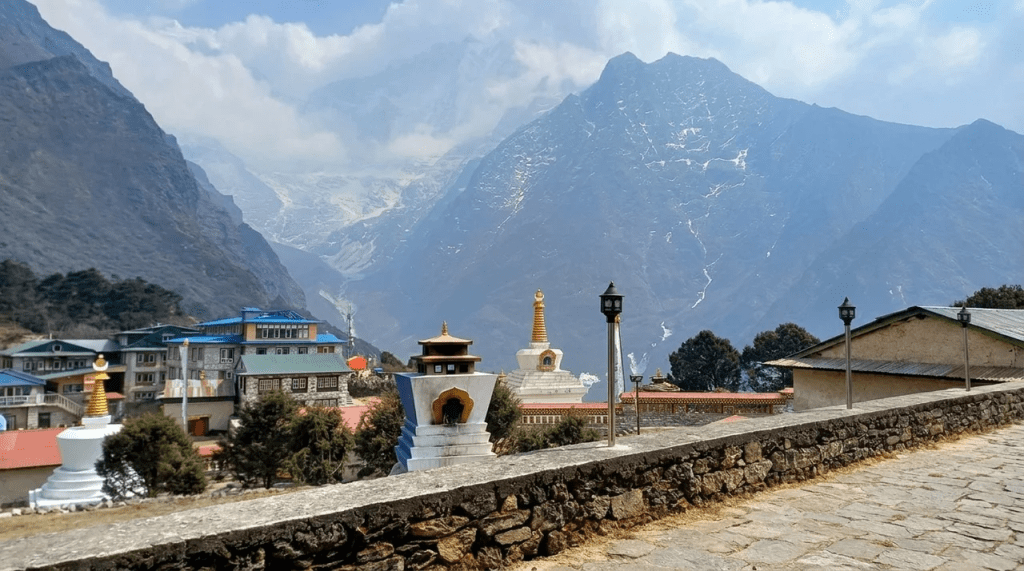
The Sherpa are probably the most internationally famous of Nepal’s ethnic groups, and also one of the most misunderstood. They are a specific community of Tibetan origin who settled the high valleys of the Everest region, not a job title. Mountaineering became central to the Sherpa economy in the 20th century, but their culture runs far deeper than expedition work. Monasteries like Tengboche, Buddhist festivals like Mani Rimdu, and a language closely related to Tibetan all predate the first climbers by centuries.
The Valley and the Plains
Newar: Masters of the Kathmandu Valley
No single community has shaped what visitors actually see in Nepal more than the Newar. Its temples, pagoda architecture, and carved wooden windows across Kathmandu, Patan, and Bhaktapur are Newar work. So is a huge share of the country’s most celebrated food. Newar society is unusual because it is itself internally diverse, organized into its own complex set of occupational groups, and it bridges Hinduism and Buddhism in a way few other cultures manage. To understand the valley properly, start with the people who built it. Our deeper dive into Newari culture and cuisine is a good next stop.
Tharu: The People of the Tarai
Down on the hot southern plains, the Tharu are the major indigenous community. For generations they lived in the forested, malaria-prone Tarai, and developed a genetic and cultural resilience to a landscape that newcomers struggled to survive. Tharu villages around Chitwan and Bardia are known for their longhouses, intricate mud-relief wall art, and stick dances performed during festivals. Many travelers encounter Tharu culture without realizing it, since the homestays and cultural shows around the national parks are largely Tharu-run.
Religion, Language, and Daily Life
Religion in Nepal does not map cleanly onto ethnicity, and that is part of what makes the country fascinating. Hinduism is the majority faith, followed by Buddhism, but the line between them blurs constantly. A Newar family might worship at both a Hindu temple and a Buddhist stupa in the same week. Kirat communities follow their own animist path. Islam and Christianity have smaller but growing footprints, especially in the Tarai and the cities.
Language tells a similar story. Nepali, an Indo-Aryan language, is the national lingua franca and what binds the country together. Underneath it sit dozens of mother tongues: Maithili and Bhojpuri in the plains, Tamang and Newar and Magar and Gurung in the hills, and a whole family of Tibetan-related tongues in the north. Many Nepalis grow up bilingual or trilingual without thinking twice about it. If you want to see how this diversity expresses itself in celebration, the country’s packed festival schedule is the clearest window. Our Nepal festivals calendar lays out which group celebrates what, and when.
How Diversity Shapes the Travel Experience
This matters more than it might sound. The food changes as you move. In the eastern hills you get Kirat dishes and millet. In the Tarai the flavors lean toward the spicier, lighter cooking of the plains. In the Kathmandu Valley you get the rich, layered Newari feast that is unlike anything else in the country. If food is a big part of why you travel, Nepal rewards you for moving around, and our guide to traditional Nepali dishes is a useful primer before you go.
Festivals change too. Dashain and Tihar are national, but Lhosar is a Tibetan-Buddhist new year celebrated by Tamang, Gurung, and Sherpa communities at different times. The Kirat have their own observances. Travel in the right window and you can stumble into a celebration that most foreign visitors never even hear about.
One honest word of caution. Caste and ethnicity remain socially and politically sensitive in Nepal. Discrimination based on caste is illegal, but its legacy has not vanished, particularly for Dalit communities. As a visitor you do not need to navigate any of that, but a little awareness goes a long way, and it is worth reading reporting from outlets like the Kathmandu Post to understand how the country itself talks about its diversity.
Frequently Asked Questions
How many ethnic groups are there in Nepal?
The 2021 national census recorded 142 distinct caste and ethnic groups, an increase from 125 in the 2011 census. That jump comes partly from communities being formally counted for the first time, not from new groups appearing.
What is the largest ethnic group in Nepal?
By the census categories, the Chhetri are the largest single group at 16.45 percent of the population, followed by Hill Brahmans at 11.29 percent. Among indigenous peoples specifically, the Magar are the largest at around 6.9 percent.
What is the difference between caste and ethnic groups in Nepal?
Caste groups such as Brahman, Chhetri, and Dalit communities come out of the Hindu social system. Ethnic groups, often called Janajati or Adivasi, are indigenous nationalities like the Magar, Tamang, Newar, and Sherpa with their own languages and traditions. Nepal’s census lists both together.
Are Sherpas an ethnic group or a profession?
Sherpa is an ethnic group of Tibetan origin who settled the high valleys around Everest. The word is often used loosely abroad to mean a mountain guide or porter, but that is a misuse. Many guides on Everest are Sherpa, yet plenty are from other communities entirely.
What languages do Nepal’s ethnic groups speak?
Nepali is the national language and common tongue. Beyond it, people speak well over 120 languages, split mainly between Indo-Aryan tongues in the south and Tibeto-Burman languages in the hills and mountains. Many Nepalis are fluent in two or three.
Which region of Nepal is the most ethnically diverse?
Bagmati Province, which surrounds the Kathmandu Valley, is the most diverse, with representatives of 135 of the 142 recorded groups. Tamang form the largest single community there, alongside the Newar heartland in the valley itself.
Can travelers visit and learn about specific ethnic communities?
Yes, and it is one of the best things you can do here. Community-based trekking routes like the Tamang Heritage Trail, Tharu homestays around Chitwan and Bardia, and Gurung villages in the Annapurna foothills are all set up to welcome visitors respectfully.
Is it sensitive to discuss caste in Nepal?
It can be. Caste-based discrimination is illegal but its social legacy persists, especially for Dalit communities. As a visitor you are not expected to navigate it, but listening more than you ask, and treating everyone you meet with the same respect, is always the right approach.