



Most festival guides to Nepal describe a calendar that belongs to the hills. Dashain in autumn, Tihar two weeks later, Holi in spring, and a handful of Kathmandu jatras in between. Travel south to the Terai plains and that calendar stops being the whole story. Tharu festivals in Nepal run on their own cycle, anchored to the farming year rather than the hill ritual year, and they are observed by the largest indigenous population of the lowlands. Knowing what happens down there, and when, changes what a Terai trip can be.
Who the Terai Actually Is
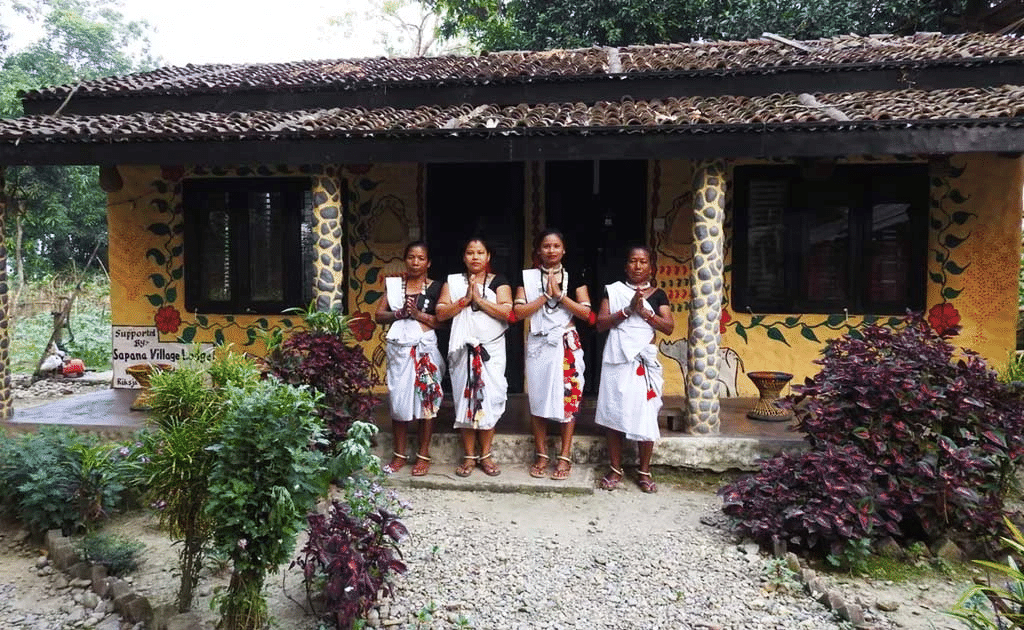
Nepal’s southern plains stretch the length of the country, from Jhapa in the east to Kanchanpur in the west. Roughly half the national population lives there. Two broad cultural worlds overlap across that strip, and they are not interchangeable.
Tharu people are indigenous to the Terai and are among Nepal’s largest ethnic groups. Their communities span the whole plain, but the subgroups differ substantially. Dangaura Tharu in Dang, Banke, Bardiya and Kailali, Rana Tharu in the far west, Kochila and Morangia Tharu in the east, and Chitwania Tharu in the central Terai each carry their own language variety, dress and ritual calendar.


Madhesi communities, largely Maithili, Bhojpuri and Awadhi speaking, share the plains and bring another set of observances. Chhath, Jur Sital, Sama Chakeva and Vivaha Panchami belong to this world. Grouping all of it under “Terai festivals” is convenient, but it flattens distinctions that matter to the people involved.
Maghi: The Festival That Runs the Year
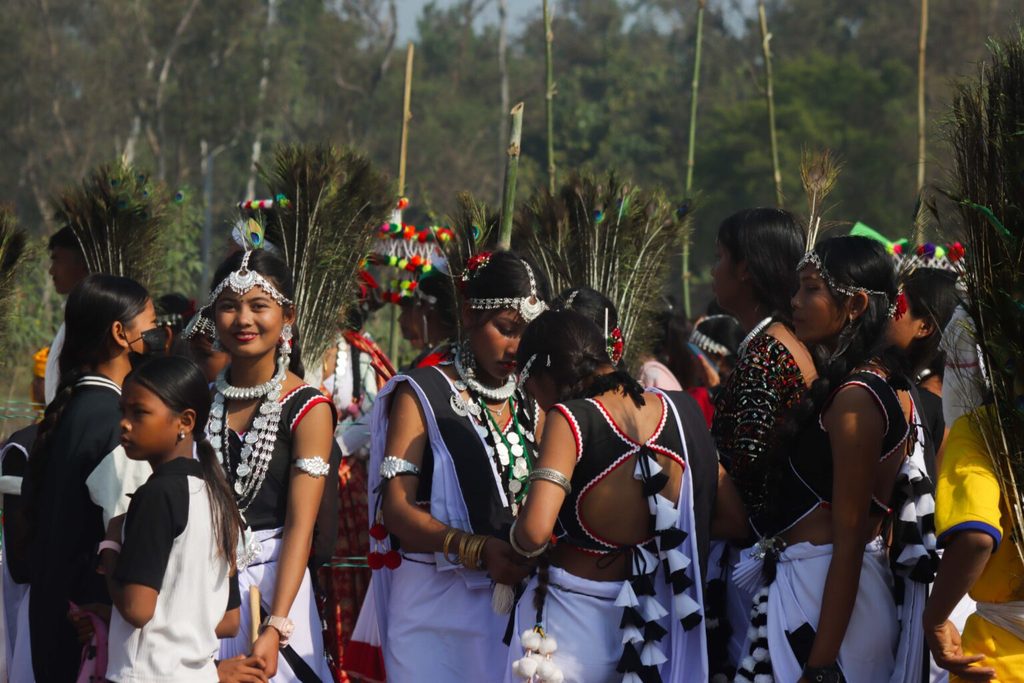
If you learn one Terai festival, learn this one. Maghi falls on the first day of Magh, which lands around January 14 or 15 each year, and for Tharu communities it functions as the new year.
Hill households observe the same solar date as Maghe Sankranti, with sesame sweets, ghee and yam. Tharu Maghi is a larger and structurally different event. It runs across multiple days, reorganizes the household, and resets community roles for the year ahead.
What happens, day by day
- The day before, families prepare food and, in many households, observe a ritual slaughter for the feast. Practice varies, and a growing number of families now skip it.
- Maghi morning begins with a bath in a river or stream, in genuinely cold water, followed by worship and greetings.
- Blessings pass from elders to younger family members, in a sequence that some households treat as formally as a hill family treats tika.
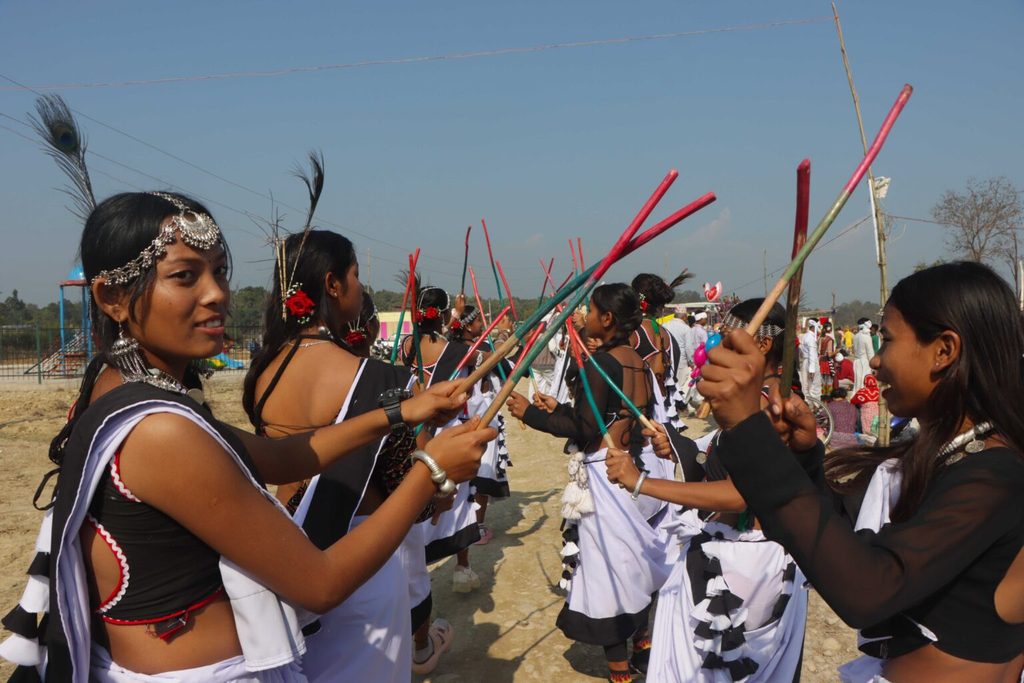
- Feasting and dancing fill the rest of the day, with Jhumra, Sakhiya and Lathi Nach stick dancing among the most widely performed forms.
- Household decisions get made in the days that follow: labor arrangements, family separations, and in many villages the selection or reconfirmation of the Badghar, the elected village head.
Names and food change across the plain
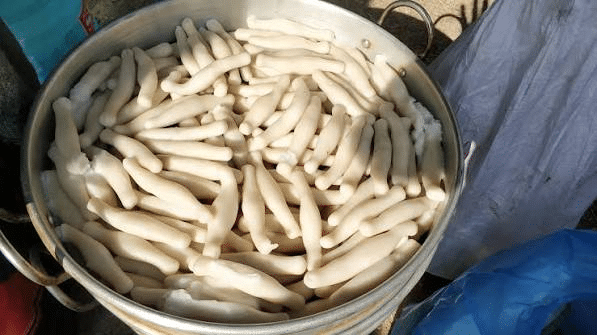
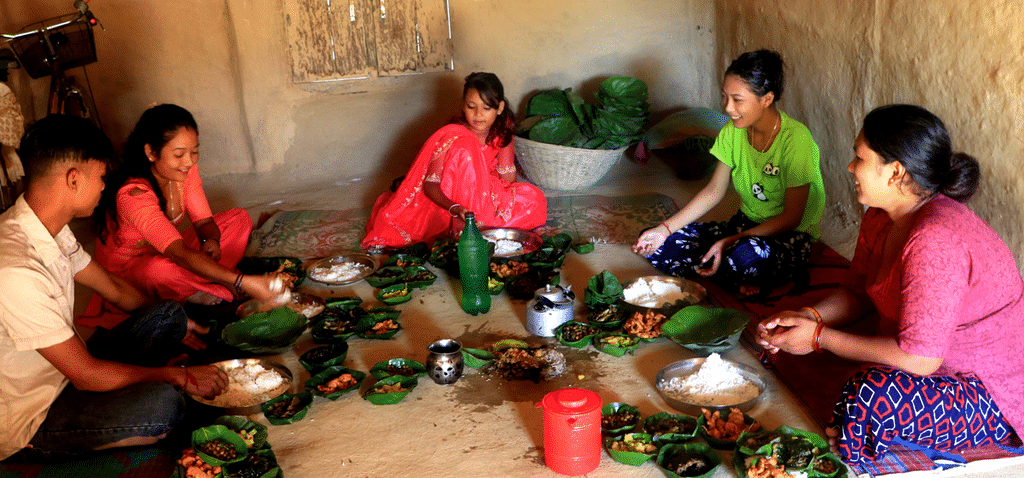
More than fifty Tharu subgroups observe the festival, and the name shifts with geography. Tila Sakranti, Khichara or Maghi in the center, Khichadi in the east, and simply Magh in the far west. Foods track the same pattern. Bageya features in central areas and Dhikri, a steamed rice flour dumpling, in the far west. Sesame balls, puffed rice sweets and a snail dish appear widely, and Kichadi cooked with a dozen ingredients including lentils, spices and ghee is the shared centerpiece.
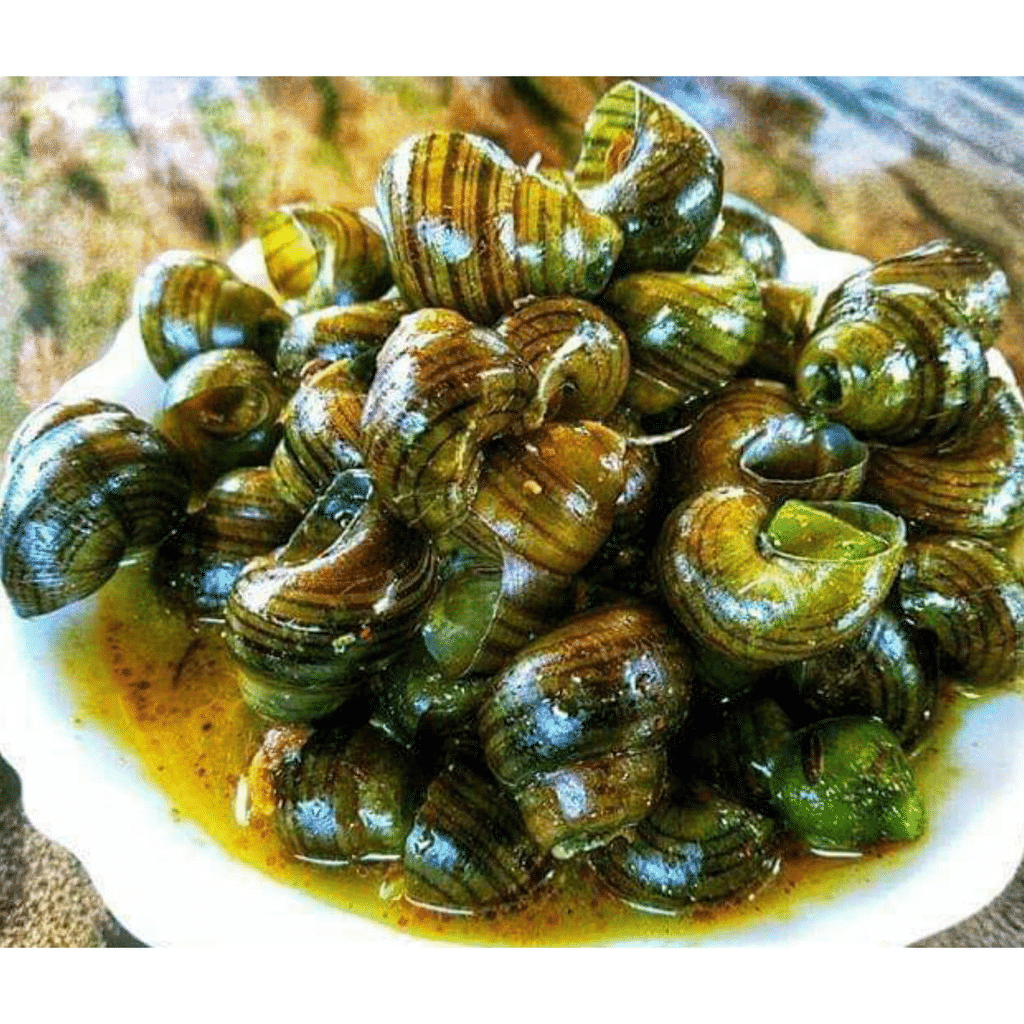
Modern Maghi has a public face that the older version did not. Parades in white and green traditional dress, stage programs and municipal events are now common, particularly in Dang and Bardiya. Cultural commentators in Nepal have noted that the parade version differs from the household observance, which was and largely remains about renewal, family and the year’s planning.
The Rest of the Tharu Calendar
Astimki
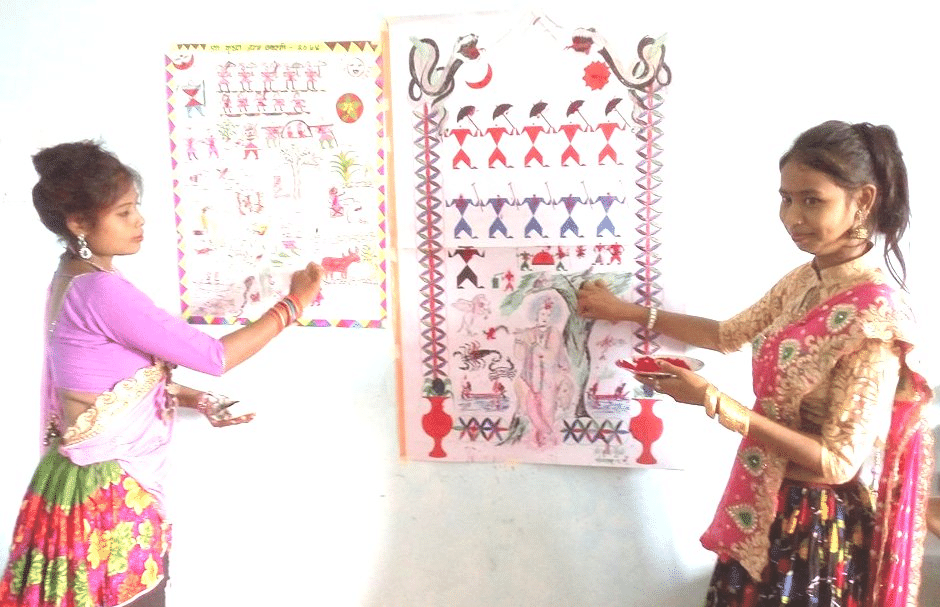
Observed on Krishna Janmashtami, usually in August or September, Astimki is strongest among Dangaura Tharu in the western Terai. Its distinctive element is a painting. A large mural known as the Astimki Chitra is made on the wall of a village elder’s house, depicting a version of the creation of the world alongside Krishna’s story. Households fast through the day, bathe in the evening, gather at the elder’s house for the rites, then sing while the painting is completed and worshipped. Materials go into a river the next day.
Wall painting is not incidental to Tharu culture. Mural work in floral and geometric forms, using clay and ash pigments, appears on house walls across the Terai outside festival time as well.
Atwari
Falling on a Sunday after Astimki, Atwari is described in western Nepal as the second largest Tharu festival after Maghi. Brothers fast for their sisters’ wellbeing, and the day honors Bhima alongside prayers to the sun. Observance is concentrated among Tharu communities of the western plains and is not widely marked further east.
Jitiya
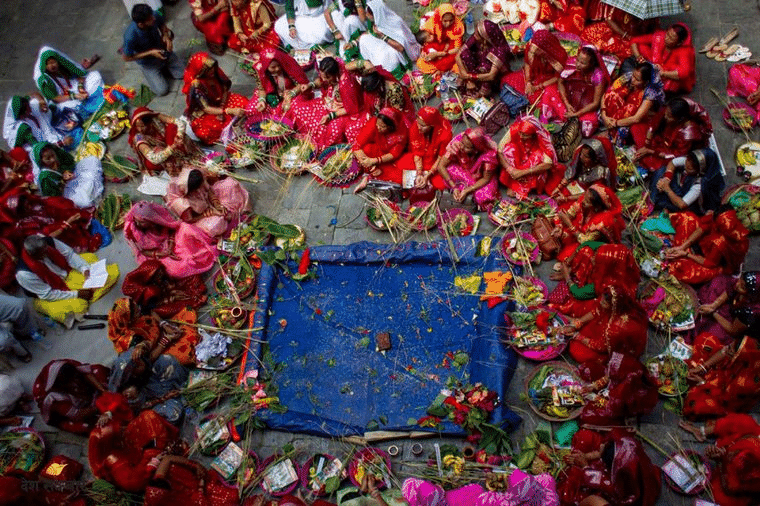
Jitiya, or Jivitputrika, is kept by mothers across both Tharu and Madhesi households of the Terai, along with parts of the eastern hills. Mothers fast without food or water for the wellbeing of their children. It falls in Ashwin, often shortly before Dashain, and is one of the most demanding fasts in the regional calendar. We cover it in detail in our guide to the Jitiya festival in Nepal.
Barka Naach
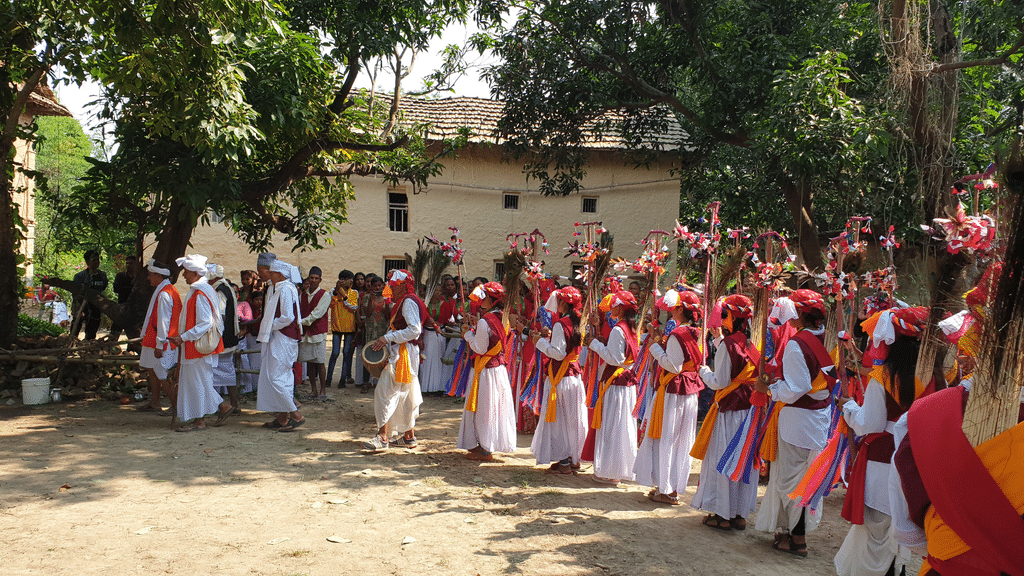
Less a festival than a performance tradition, Barka Naach is a long Dangaura Tharu dance drama drawn from Mahabharata episodes, performed by village troupes over multiple nights, traditionally in the agricultural off season. Fewer villages stage the full cycle now. Where it survives, in parts of Dang and Bardiya, it is a serious undertaking rather than a tourist show.
How Dashain Sits Differently in the South
Dashain is a national holiday and the Terai closes for it like everywhere else. Weight and meaning, though, are not uniform.
In many hill and Kathmandu Valley households, Dashain is the emotional center of the year. Among a good number of Tharu families, it is observed but does not carry that role, because Maghi already does. Some Tharu households mark Dashain fully with tika and family gatherings. Others keep it lightly, and in parts of the western Terai there are communities where it has been actively de-emphasized in favor of indigenous observances, a position tied to broader questions of identity and recognition.
Madhesi households across the plains generally observe Dashain and Tihar, with Chhath following Tihar as the larger event for many families. Traditions vary by community and region, and the safe assumption for a visitor is to ask rather than to expect.
Our companion piece on Dashain invitation etiquette covers what to do if you are asked to join a household anywhere in the country.
Madhesi Observances Worth Knowing
| Festival | Season | Who observes | What a visitor sees |
|---|---|---|---|
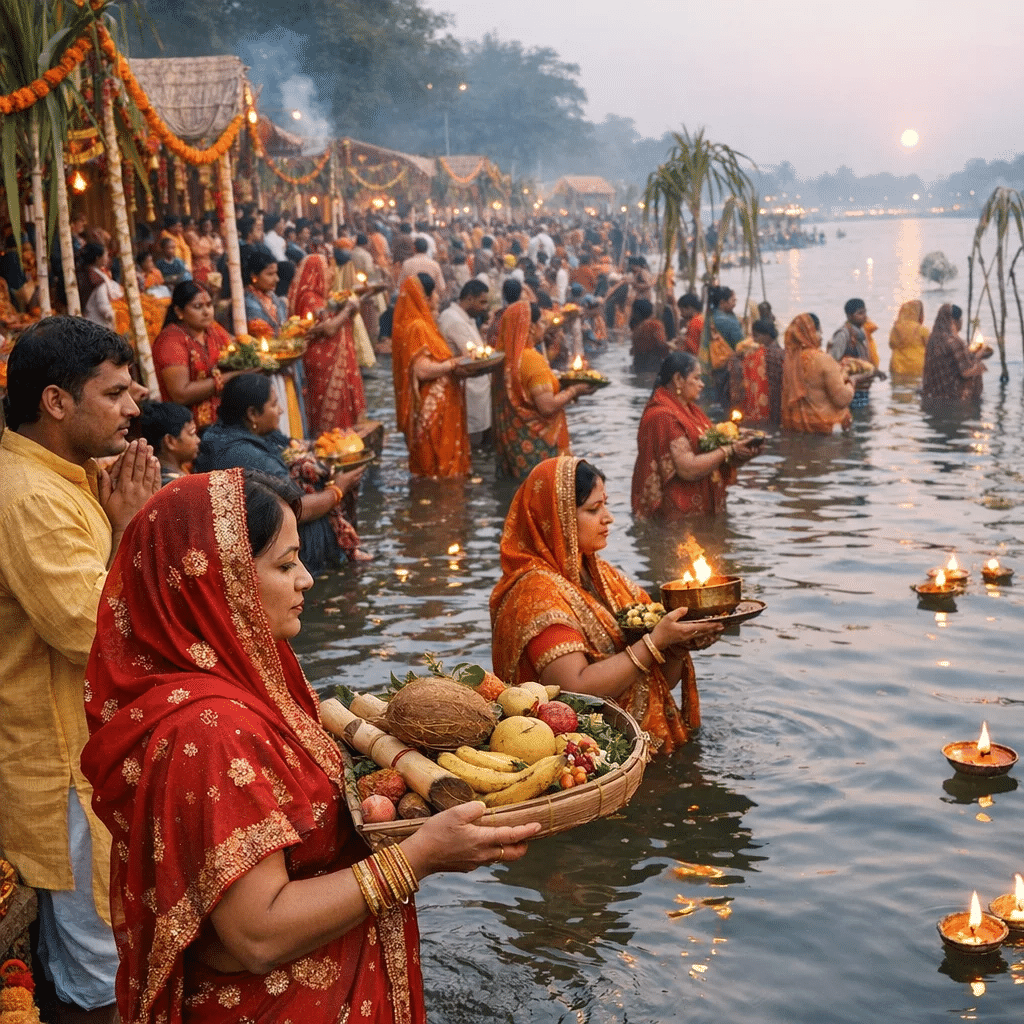
| Chhath | Autumn, days after Tihar | Madhesi and increasingly nationwide | Riverbanks and ponds at sunset and sunrise, long fasting, offerings to the sun |
| Jur Sital | Mid-April, Maithili new year | Maithili communities | Water pouring between generations, cooling foods, family visits |
| Sama Chakeva | Late autumn | Maithili communities | Clay figures made by women and girls, songs about sibling bonds |
| Vivaha Panchami | Late Nov or Dec | Janakpur and Mithila region | Large pilgrimage and reenactment of the marriage of Ram and Sita at Janaki Mandir |
| Holi | Spring | Terai-wide | Observed one day after the hills, a detail that catches travelers out |
That last row is a practical trap. Holi in the Terai falls the day after the Kathmandu Valley celebration, so a traveler timing a trip on Kathmandu’s date will arrive in Janakpur or Birgunj a day early or a day late. For Chhath specifically, our guide to the main Chhath celebrations in Nepal lists where the largest gatherings happen.
Visiting the Terai During a Festival
Where to base yourself
- Chitwan, around Sauraha and Meghauli: the easiest introduction, with Tharu villages, the Tharu Cultural Museum and Research Centre at Bachhauli, and regular evening dance programs. Most accessible, and the most commercialized.
- Bardiya and Dang: the heartland of Dangaura Tharu culture and the strongest place to encounter Maghi as a community event rather than a performance. Fewer visitors, fewer services.
- Kailali and Kanchanpur: Rana Tharu traditions, distinct dress and dialect, and Dhikri rather than Bageya at Maghi.
- Janakpur: the center of Mithila culture, and the place for Vivaha Panchami and Chhath at scale.
Practical notes
January in the Terai is cold in the mornings and foggy. Dense fog through January frequently delays or cancels domestic flights into Bhairahawa, Nepalgunj, Janakpur and Biratnagar, and it slows the East West Highway too. If you are traveling for Maghi, build a spare day into the plan and prefer road or rail links where they exist.
Accommodation outside Sauraha and Janakpur is limited. Bardiya and Dang have homestays and small lodges rather than hotels, and festival weeks fill up. Book ahead, and understand that a homestay during Maghi means joining a household that is busy with its own family obligations.
Etiquette
- Ask before photographing people, especially women in traditional dress and anyone in a ritual role. A stage program is different from a household rite.
- Remove shoes when entering a home. Accept food and drink with your right hand.
- Alcohol is part of some Tharu festival hospitality and absent in other households. Follow your hosts rather than assuming either way.
- Do not treat a village as an exhibit. Photographing house interiors, cooking or bathing without permission is intrusive in any community.
- If a paid cultural program is on offer, ask who runs it. Community-managed programs return more of the money to the village than hotel-run ones.
Food is one of the easier entry points. Ghonghi, the river snail dish that appears in Tharu kitchens across the Terai, is worth trying if it is offered, and we have written about it separately in our piece on ghonghi as a Terai delicacy. For itinerary ideas in the lowlands and beyond, see our roundup of destinations in eastern Nepal.
For official background on Tharu heritage and Terai destinations, the Nepal Tourism Board publishes community and regional guides.
A Note on Framing
Terai festivals are frequently written up as colorful, exotic or authentic, three words that position the reader as an observer and the community as a display. Tharu Maghi is not a hill festival’s southern variant, and Chhath is not a photo opportunity at a riverbank. Each has its own logic, history and meaning to the people keeping it. Arriving with that assumption is most of what separates a welcome visitor from an awkward one.
Frequently Asked Questions
What is the biggest Tharu festival?
Maghi, observed around January 14 or 15 as the Tharu new year. It carries a weight in many Tharu households comparable to what Dashain carries in many hill households.
Is Maghi the same as Maghe Sankranti?
They fall on the same solar date and share a seasonal logic, but they are not the same observance. Maghe Sankranti in the hills is largely a one-day food and bathing festival. Tharu Maghi runs longer, functions as a new year, and includes community decisions such as the Badghar arrangement.
Do Tharu people celebrate Dashain?
Many do, some lightly, and some households prioritize indigenous festivals instead. Practice varies by family, subgroup and district, so there is no single answer.
When is the best time to visit the Terai for festivals?
Mid-January for Maghi, or late autumn for Chhath, which follows a few days after Tihar. August and September bring Astimki, Atwari and Jitiya in the western and central plains.
Can visitors attend Tharu festivals?
Public programs and municipal parades are open to anyone. Household rites and village ceremonies depend on invitation, and a community homestay is the most straightforward route to being included rather than watching from outside.
Is Holi celebrated on the same day in the Terai as in Kathmandu?
No. The Terai observes it one day after the hills and the Kathmandu Valley. Check the specific year’s dates before booking.
Are Tharu dance performances at resorts authentic?
Forms such as Jhumra, Sakhiya and Lathi Nach are genuine traditions, though a thirty minute hotel show is a condensed version performed out of season. Community-run cultural centers and village programs during actual festival dates give a fuller picture.
What should I know about animal sacrifice at Terai festivals?
Ritual slaughter occurs in some households before Maghi and at certain other observances, as it does in parts of the hills. Practice is declining in many families. Visitors are never obliged to attend, and stepping away quietly is entirely acceptable.
The Terai holds a calendar most visitors never see. Explore more of Nepal beyond the hill circuit with NepalVue, save this guide for your Maghi or Chhath trip, and share it with travelers who think Nepal’s festival year ends at the Valley rim.


