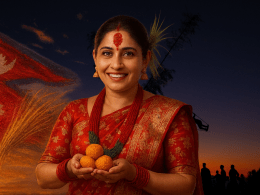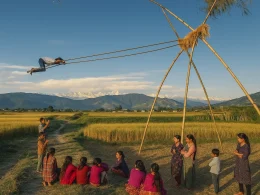



Every year, as the month of Bhadra arrives, the hills of far-western Nepal come alive with song, ritual, and devotion. Gaura Parva is among the region’s most important cultural celebrations. It is deeply rooted in Sudurpashchim and Karnali’s cultural identity. This guide explores Gaura Parva’s history, rituals, and significance. Learn why the festival remains deeply meaningful to its communities.
Unlike many national festivals in Nepal, Gaura Parva belongs specifically to the far west. So, let’s explore its origins, its rituals, and why it continues to define cultural identity across this region.
What Is Gaura Parva?
Gaura Parva, also called Gamara, Saton-Athon, or Gora, is a Hindu festival.
It is celebrated mainly by the Khas community in Sudurpashchim and parts of Karnali. The celebration also extends across the border into the Kumaon region of Uttarakhand, India, where it carries similar cultural weight.


At its core, this festival commemorates the sacred marriage of Goddess Gaura, also known as Gauri or Parvati, to Lord Shiva, referred to locally as Maheshwor. The bond between these two deities represents devotion, marital harmony, and divine love, themes that shape nearly every ritual performed during the festival.
When Is Gaura Parva Celebrated?
Gaura Parva follows the lunar calendar rather than a fixed date, falling within the Nepali month of Bhadra, which typically corresponds to August or September. Depending on the year, the festival occurs either during Krishna Paksha, the waning phase of the moon, or Shukla Paksha, its waxing phase.
The celebration generally spans four to five days, stretching from Panchami through Ashtami of the lunar cycle. Because it follows lunar timing rather than a solar date, the exact days shift slightly from year to year, much like several other traditional Nepali festivals.
The Mythology Behind Gaura Parva
Several legends explain the origins of this festival, each adding a different layer of meaning to the celebration.
The Penance of Goddess Gauri
The most widely told story centers on Goddess Gauri’s devotion to Lord Shiva. According to tradition, Gauri, the daughter of Himavan, lord of the Himalayas, undertook intense penance to win Shiva as her husband. Her patience and unwavering faith are honored each year through the rituals of Gaura Parva, symbolizing the ideal of marital devotion.
The Tale of the Grieving Brahmin Widows
A second legend ties the festival to a story of justice and protection. According to this tale, a king named Sahastrarjuna killed a group of Bhriguvansi Brahmins while demanding the return of his wealth. The widowed wives of these Brahmins fasted and prayed fervently to Goddess Gauri, seeking protection for their honor and families.
Their devotion was rewarded when one of the women gave birth to a remarkably skillful son, who eventually confronted and defeated the king. Realizing his wrongdoing, the king repented before the women. This story is honored during Gaura Parva as a tribute to the goddess’s benevolence and protective power.
The Rituals of Gaura Parva
Gaura Parva unfolds over several days, with each stage carrying its own symbolic significance.
Day One: Panchami and the Preparation of Biruda
The festival starts with women making Biruda, a sacred blend of five seeds and grains. It usually contains wheat, lentils, and other local crops. This mixture is soaked in a copper or brass vessel, marking the formal start of the celebration. Many women begin fasting on this day as well, a practice that continues in stages throughout the festival.
Day Two: Sasthi and the Renewal of Offerings
On the second day, called Sasthi, women wash the soaked Biruda mixture. They replace the water and pray to the goddess. This step reinforces the purity of the offering before it is used in later rituals.
Day Three: Saptami and the Sacred Bath
By the third day, Saptami, married women take a holy bath as part of their spiritual preparation.They then pray to an idol of Goddess Gauri. It is traditionally crafted from paddy, sesame, saun, balballu, and opamarga plants. This handcrafted idol becomes the central focus of worship for the remainder of the festival.
The Final Blessing With Biruda
Once the rituals conclude, women return home and bless their husbands using the sacred Biruda mixture. This blessing is believed to grant health and long life, reflecting the deep emphasis Gaura Parva places on marital wellbeing and family protection.
Fasting and Devotion
Throughout the festival, women observing the rituals are often referred to as Upavasi, meaning those who fast. Similar to the Haritalika Teej festival, Gaura Parva rituals also frequently include worship of Lord Ganesha alongside Shiva and Gauri, reflecting broader Hindu traditions of seeking blessings before major devotional acts.
Deuda Dance: The Heartbeat of Gaura Parva
No description of Gaura Parva feels complete without mentioning Deuda, the traditional circular dance performed throughout the celebration. Women gather in groups, singing folk songs while moving together in rhythmic, circular patterns that have been passed down for generations.
Deuda serves as more than entertainment during Gaura Parva. It functions as a communal expression of joy, unity, and cultural pride, bringing entire villages together during the celebration. In towns known for high-energy performances, these dances often continue late into the evening, filling communities with music and movement.
Where Gaura Parva Is Celebrated
While Gaura Parva belongs primarily to Sudurpashchim Province, its reach extends across several districts and communities.
Core Districts in Sudurpashchim Province
The festival holds particular significance in districts such as Darchula, Baitadi, Doti, and Dadeldhura. These areas maintain some of the most traditional and authentic forms of Gaura worship, preserving rituals largely unchanged over generations.
Celebrations in Karnali Province
Parts of Karnali Province also observe Gaura Parva, reflecting the shared cultural heritage between these two neighboring provinces. Though celebrations here may look slightly different from village to village, the core devotion to Gauri and Shiva remains consistent.
Urban Celebrations in Dhangadhi
As the largest city in Sudurpashchim Province, Dhangadhi hosts some of the most elaborate Gaura Parva celebrations. Here, rural and urban traditions meet, producing grand processions, bustling markets, and a blend of traditional and modern performances.
Cross-Border Celebrations in Uttarakhand
Beyond Nepal’s borders, communities in the Kumaon and Garhwal regions of Uttarakhand, India, also celebrate a closely related festival, often called Saton-Athon or Gamara Parva. This shared tradition highlights the deep cultural ties between far-western Nepal and neighboring regions of India.
Why Gaura Parva Matters Beyond Religion
Gaura Parva represents far more than religious observance. Over the years, this festival has become a defining identifier for the people of Sudurpashchim Province, closely tied to the historical roots of the Khas kingdom and the origins of the Nepali language itself.
For many communities, Gaura Parva functions as a living expression of cultural identity, social unity, and generational continuity. As families gather, prepare rituals together, and dance late into the evening, the festival reinforces bonds not just between spouses, but across entire communities.
Final Thoughts
Gaura Parva offers a powerful glimpse into the cultural heart of far-western Nepal. From the mythological devotion of Goddess Gauri to the rhythmic pulse of Deuda dance, every element of this festival reflects centuries of tradition, faith, and community bonding. Whether observed in a quiet village in Darchula or celebrated with grand processions in Dhangadhi, Gaura Parva continues to shape the identity of Sudurpashchim and Karnali provinces, one devoted ritual at a time.
Frequently Asked Questions
What does Gaura Parva celebrate? Gaura Parva commemorates the sacred marriage of Goddess Gaura, also known as Gauri or Parvati, to Lord Shiva, symbolizing marital devotion and divine love.
Which provinces of Nepal celebrate Gaura Parva? Gaura Parva is primarily celebrated in Sudurpashchim Province and parts of Karnali Province, with related celebrations in Uttarakhand, India.
What is Biruda in Gaura Parva rituals? Biruda is a sacred mixture of five types of seeds and grains, soaked, washed, and offered as part of the festival’s key rituals.
Who observes fasting during Gaura Parva? Married women, often referred to as Upavasi, observe fasting throughout the festival to seek blessings for their husbands’ health and long life.
What is Deuda dance, and how is it connected to Gaura Parva? Deuda is a traditional circular folk dance performed with communal singing, forming a central cultural expression during Gaura Parva celebrations.
When does Gaura Parva usually fall each year? Gaura Parva follows the lunar calendar and typically falls within the Nepali month of Bhadra, corresponding to August or September.