


Nepal’s most misunderstood civilization isn’t hidden behind a monastery gate or buried in a remote valley. It’s right there in plain sight: carved into every temple doorway in Kathmandu, woven into the calendar of festivals that keeps the old city running, laid out in the ceremonial food platter at every Newar wedding. The Newar people built this valley over 2,500 years, and most visitors walk through their legacy every single day without knowing their name.
That’s the thing about Newari culture in Nepal: it isn’t a museum-piece heritage. The Guthi system still maintains the temples, the Kumari living goddess tradition still operates, and a cuisine that predates dal bhat by centuries is still being cooked in the same neighborhoods where it was invented. Understanding who the Newars are doesn’t just add context to your trip; it entirely changes what you see when you look at Kathmandu.
This guide covers what actually matters: the history, the religion, the social system that kept it all intact, the food you should be eating, and where to find it.


Who Are the Newar People?
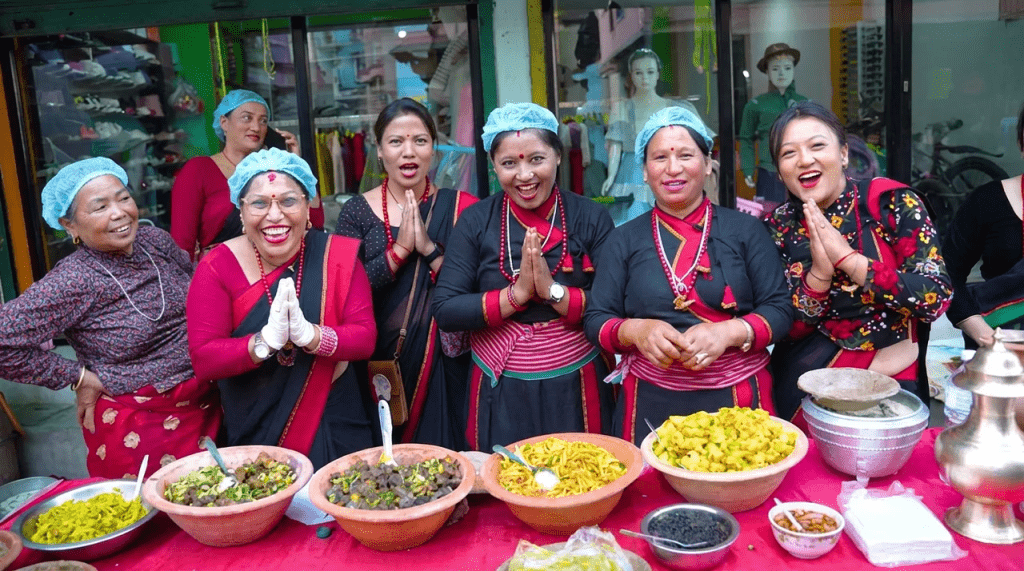
The Newars have lived in the Kathmandu Valley for at least 2,500 years, possibly longer. They are not a single ethnic group in the biological sense. Rather, they are a community defined by a shared language, shared customs, and a remarkable social system that held their civilization together through invasions, earthquakes, and political upheaval across centuries.
Their language, Nepal Bhasa, belongs to the Sino-Tibetan family and was the official administrative language of the entire Kathmandu Valley during the Malla kingdom era (roughly 12th to 18th century). Today it is spoken by around 800,000 people, mostly in the valley. During the unification of Nepal under Prithvi Narayan Shah in 1768, Nepali (Khas Kura) replaced Nepal Bhasa as the dominant language, but the Newars kept their culture stubbornly intact.
What makes the Newars genuinely unusual is their religion. Most Newars practice a fusion of Hinduism and Vajrayana Buddhism so deeply intertwined that separating them is almost impossible. A Newar family might worship at a Hindu shrine in the morning and make offerings at a Buddhist monastery in the afternoon without any sense of contradiction. Deities like Shiva and Tara occupy the same temples. Priests from both traditions perform rites at the same ceremonies. It sounds like it shouldn’t work, but after 2,000 years, it clearly does.
The Guthi: The Social Engine of Newar Life
Here’s something most guides won’t tell you: the real reason Newari culture has survived so intact is not just architecture or religion. It’s an organizational system called the guthi.
A guthi is a hereditary social institution, something between a community trust, a religious society, and a neighborhood council. Every Newar family belongs to multiple guthis, each responsible for different community functions: maintaining a specific temple, organizing a particular festival, managing a public water spout (called a hiti), or hosting the communal feast after a funeral. Membership passes from father to son. Responsibilities are non-negotiable. Miss your guthi duties and you face real social consequences.
It sounds rigid, and in some ways it is. But the guthi system explains why temples in the Kathmandu Valley have survived for centuries without government maintenance programs. Someone is always responsible. Someone always shows up. The 7 UNESCO World Heritage Sites clustered in the valley, including Kathmandu Durbar Square, Patan Durbar Square, and Bhaktapur Durbar Square, exist in large part because guthi networks kept them standing.
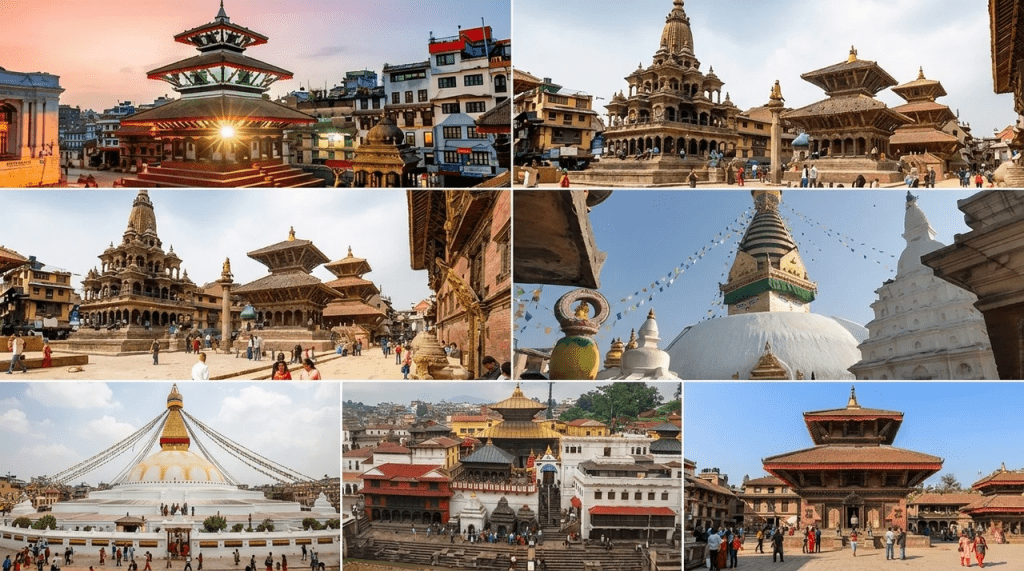
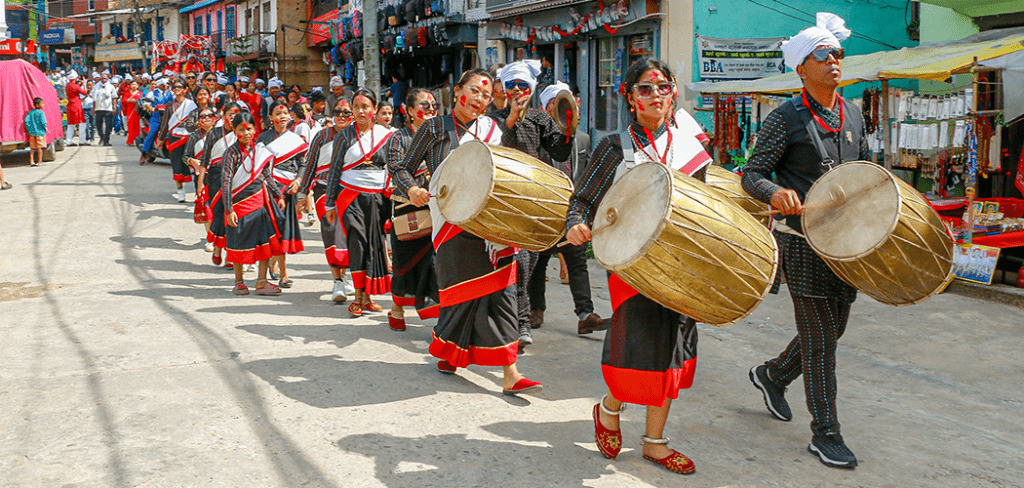
For visitors, the best way to glimpse the guthi system at work is to show up during a festival. Check the Nepal festivals calendar before you visit. The Kathmandu Valley’s festival density is genuinely staggering. On any given month, something is happening somewhere.
Newari Architecture: Carving as a Sacred Act
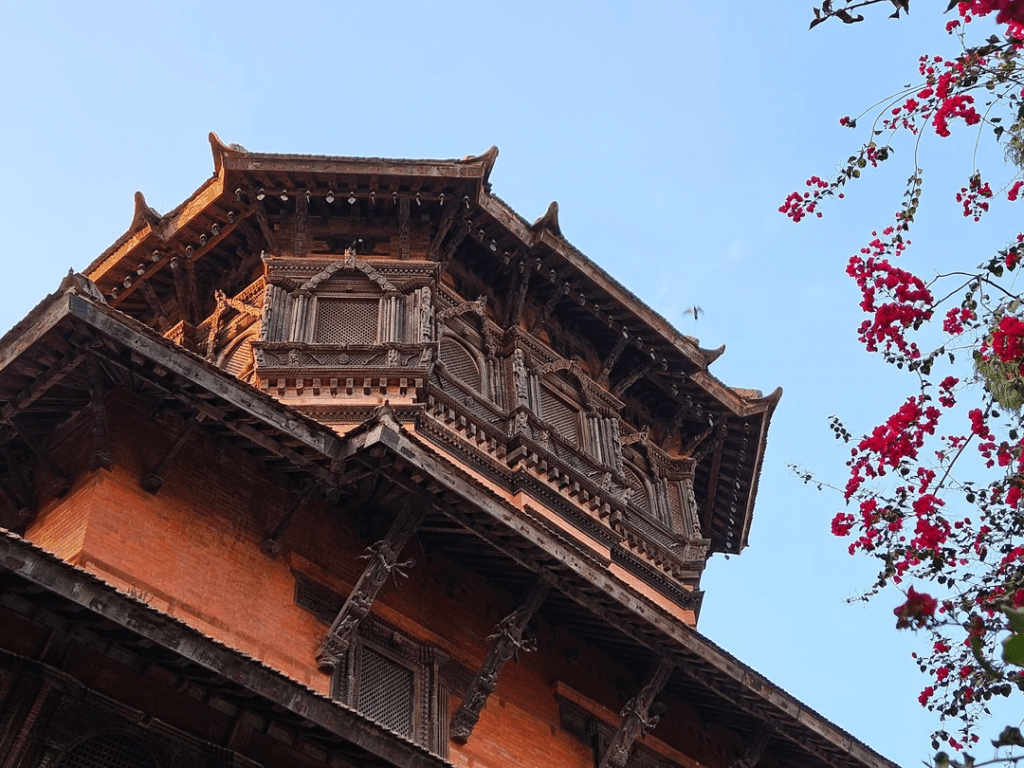
Walk through any Newari neighborhood and you’ll notice the buildings seem almost aggressively beautiful. Tiered pagoda roofs, windows latticed with intricate wood screens, doorways framed by panels depicting gods, demons, erotic carvings, and geometric patterns, all packed into narrow alleys where two people can barely walk side by side.
Newari architecture is not decoration. Each element carries meaning. The multi-tiered pagoda form represents Mount Meru, the cosmic axis of the Hindu and Buddhist universe. People believed that erotic wood carvings near temple roofs could ward off lightning because the goddess of lightning was thought to be a modest, virgin deity. The peacock windows of Bhaktapur, carved in the 15th century, remain some of the most technically accomplished woodwork anywhere in South Asia.
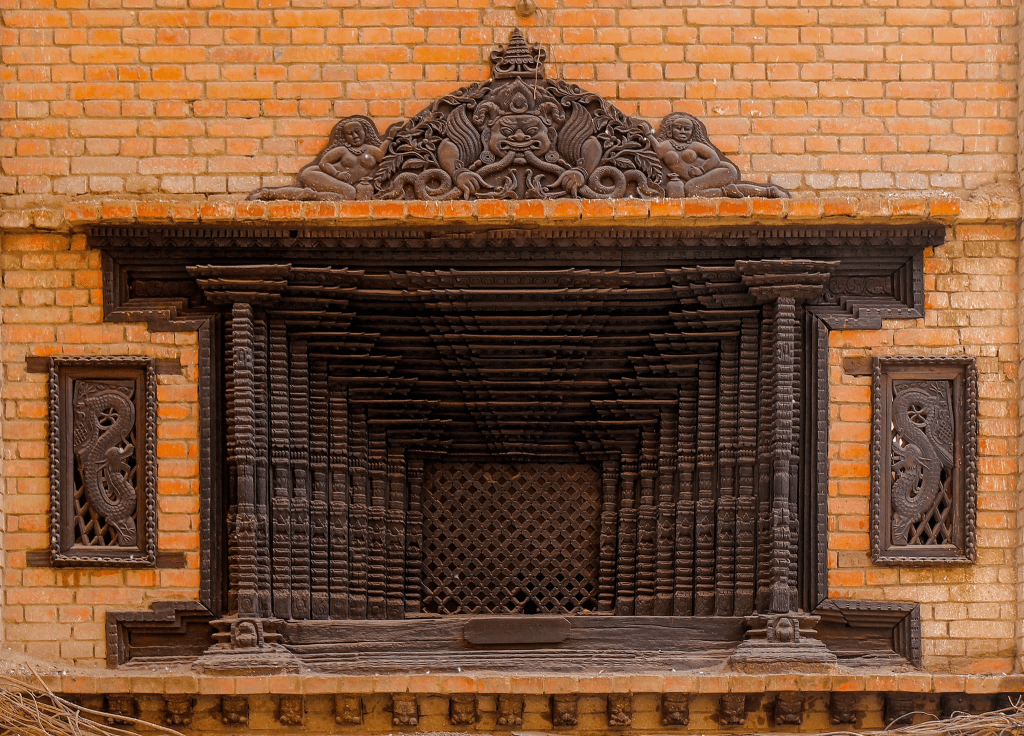
Newari craftsmen (called Shilpakars) were so highly regarded that they were hired by the Mughal emperor Akbar to help design elements of his court at Agra. Their metalwork, particularly the art of repoussé (hammering intricate designs into copper and gold), produced the golden gates and deity statues that now define the look of Kathmandu’s most important shrines.
If you want to see the architecture at its most concentrated, spend a full day in Bhaktapur, about 13 km east of Kathmandu and reachable by local bus for around 40 NPR. Kathmandu’s Durbar Square is impressive too, but Bhaktapur has been better preserved and feels more lived-in.
The Living Goddess: Kumari
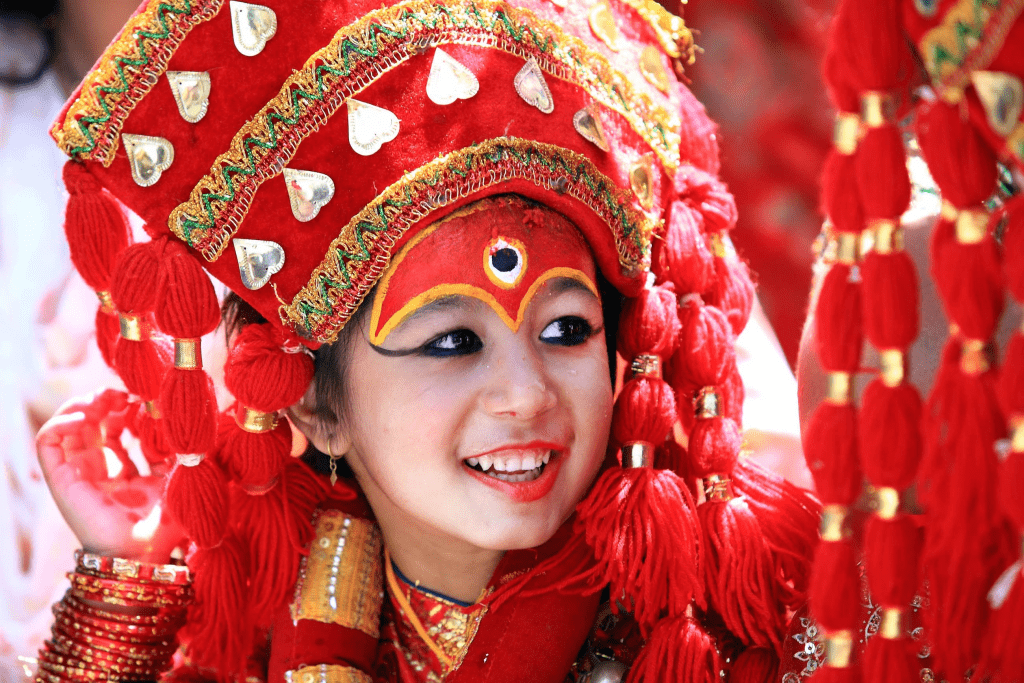
Of all the things that define Newari culture, the Kumari tradition is probably the most astonishing to outsiders. And it’s also one of the most misunderstood.
A Kumari is a living goddess, a pre-pubescent girl selected from the Shakya clan of the Newar Buddhist community to serve as the physical vessel of the Hindu goddess Taleju Bhawani. She lives in a palace called the Kumari Ghar in Kathmandu’s Durbar Square, receives petitions from devotees, and makes public appearances during major festivals, most famously Indra Jatra in September, when the chariot of the Kumari is pulled through the old city streets by hundreds of devotees.
Selection involves an exhaustive evaluation: the candidate must meet 32 physical attributes, pass a series of fearlessness tests (including sitting alone in a darkened room among slaughtered animal heads), and receive approval from a panel of priests and astrologers. Her tenure ends when she reaches puberty or loses blood through injury. After that, she returns to ordinary life with a government pension.
There are multiple Kumaris in the valley: one in Kathmandu, one in Patan, one in Bhaktapur, and several in smaller towns. The Kathmandu Kumari is the most politically significant, traditionally blessing the head of state each year at Indra Jatra. Visitors can photograph the exterior of the Kumari Ghar, and occasionally the Kumari will appear at her window, though she must not make eye contact with foreign tourists.
Newari Festivals Worth Witnessing
The Newar festival calendar is dense enough to occupy an entire year. A few stand out.
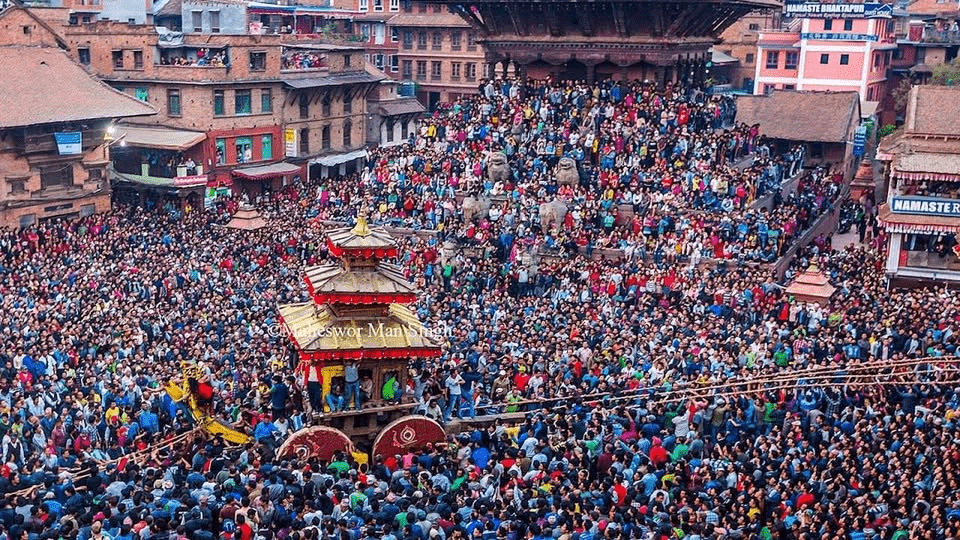
Indra Jatra runs for 8 days in September, marking the end of monsoon. Giant bamboo poles are raised, the Kumari’s chariot rolls through the streets, and mask dancers representing the demon Lakhey perform through the night. Crowds are massive. Getting there early matters.
Bisket Jatra in Bhaktapur happens over 9 days in mid-April, coinciding with Nepali New Year. A 25-meter-tall ceremonial pole is raised and then spectacularly toppled on the final day while crowds pull on ropes from competing sides. It’s chaotic, loud, and completely electric.
Gai Jatra falls in August, originally a procession honoring those who died in the past year. Today it doubles as a day of satire and comedy, when newspapers run mock editions and performers lampoon public figures. Nepalis describe it as something between a funeral and a carnival.
Yomari Punhi in December is centered on a single food: the yomari dumpling (more on that below). Families make them at home and distribute them to children. It marks the end of the rice harvest and is one of the quieter, more intimate Newari celebrations.
Newari Cuisine: The Food That Started Everything
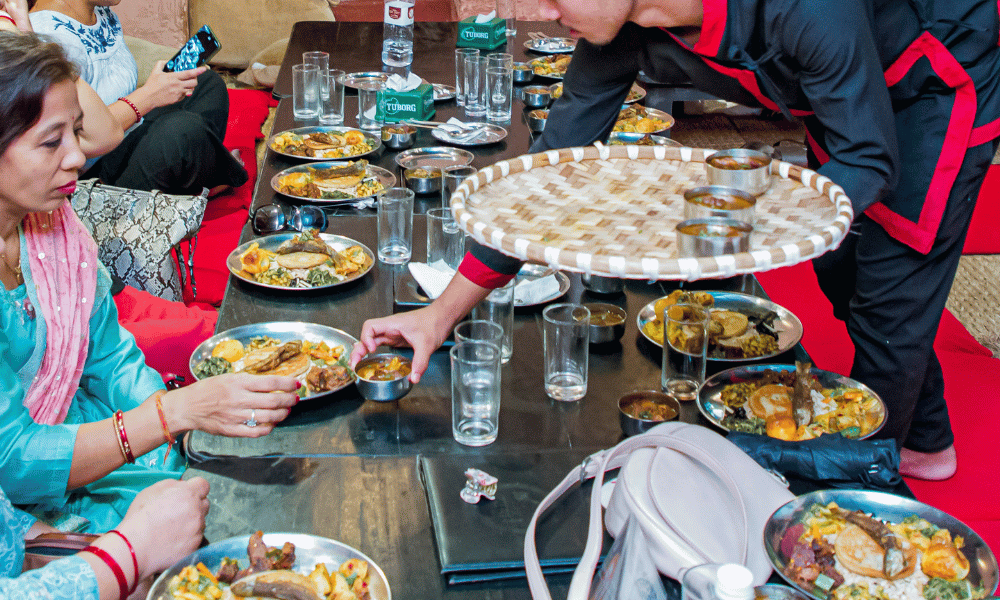
Let’s be direct: Newari food is the most complex and interesting cuisine in Nepal. Full stop. It predates the standard dal bhat by centuries and operates on a completely different logic, one built around ceremony, preservation, and communal eating rather than daily convenience.
The truth is that Newari cooking was shaped by necessity as much as tradition. Preservation techniques were crucial in a landlocked valley without refrigeration, so fermentation, smoking, and sun-drying became core methods. Mustard oil is the dominant fat, and its sharp, slightly bitter flavor is central to everything. Buffalo meat is preferred over beef (out of practical rather than purely religious reasons, since Newars are historically both Hindu and Buddhist), and every cut gets used.
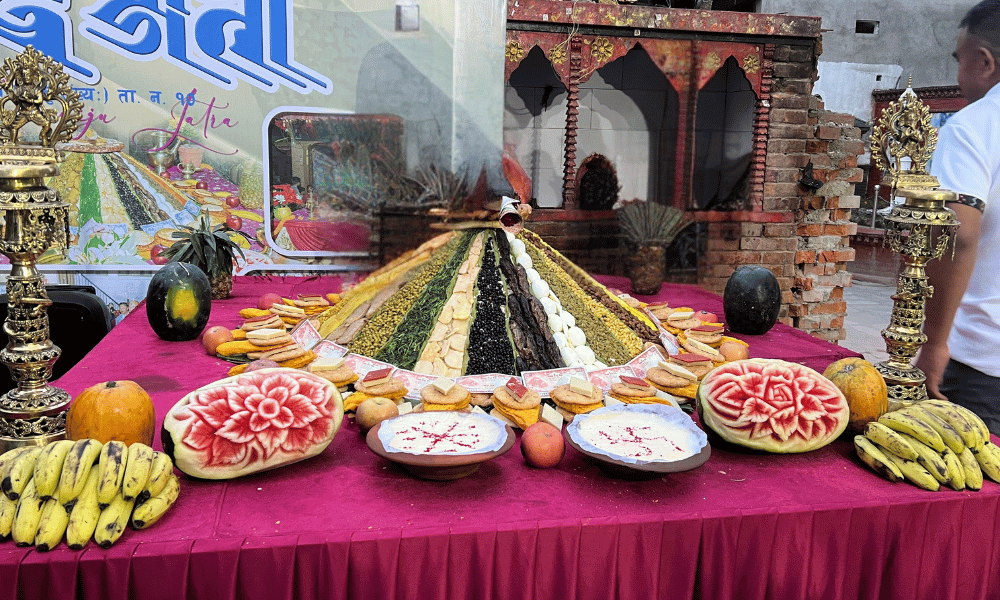
Samay Baji: The Ceremonial Plate
If there is one dish that defines Newari food culture, it’s Samay Baji. It’s not really a single dish but a ritual platter: beaten rice (chiura), smoked or grilled buffalo meat, boiled then pan-fried eggs, black soybeans cooked with ginger, pickled vegetables, and a small bowl of rice wine (aila) to wash it down. Every component has symbolic meaning tied to auspiciousness and community. You’ll find Samay Baji at weddings, festivals, guthi gatherings, and increasingly at restaurants catering to tourists.
Chatamari: Nepal’s Answer to Pizza
People call it Newari pizza and while that nickname is a little reductive, it’s not wrong in spirit. Chatamari is a thin, crispy rice crepe topped with minced meat, egg, onion, and spices, then cooked on a flat griddle. It’s light and savory, great as a snack or appetizer. Street versions cost around 80 to 150 NPR depending on toppings. Restaurant versions run slightly higher. Either way, it’s one of the most approachable entry points into Newari cuisine for first-timers.
Chhoila: Spiced Grilled Buffalo
Chhoila is grilled buffalo meat marinated in mustard oil, green chili, garlic, ginger, timur (Sichuan pepper), and fresh spices. The meat is charred directly over an open flame first, which gives it a distinctive smokiness, then sliced and tossed in the marinade. It’s intense. It’s punchy. It has a heat that sneaks up on you. Chhoila is usually eaten with chiura (beaten rice) to balance the spice.
Bara: Lentil Pancakes Done Right
Bara are thick, savory pancakes made from ground black gram (urad dal) batter. Plain bara have a slightly nutty, earthy flavor. Topped with a fried egg or minced meat, they become something much more serious. A plate of two or three bara costs 60 to 120 NPR from a street vendor and makes a filling breakfast or mid-morning snack.
Yomari: Sweet Dumplings for Special Occasions
Yomari are steamed dumplings made from rice flour dough stuffed with a mixture of molasses (chaku) and sesame seeds. The dough is shaped into a pointed teardrop form, sometimes resembling a fish or other auspicious shapes. They are traditionally made at home during Yomari Punhi in December, and finding them outside of that period can be tricky unless you visit a dedicated Newari restaurant.
Aila: The Rice Wine You Didn’t Know You Needed
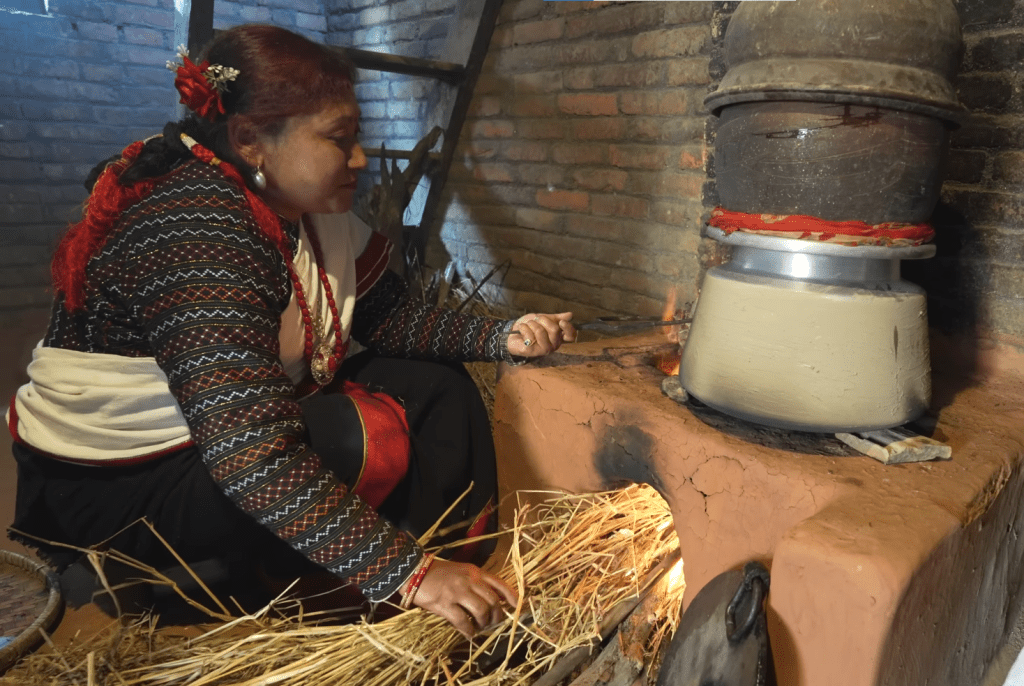
No Newari feast is complete without aila, a strong distilled rice wine made at home by many Newar families. It ranges from clear and harsh to slightly sweet and mellow depending on the maker and how long it’s been aged. Traditionally served in small clay cups. Commercially available at a few specialty shops in Kathmandu’s old city, usually around 100 to 200 NPR per glass at restaurants.
Where to Eat Newari Food in Kathmandu Valley
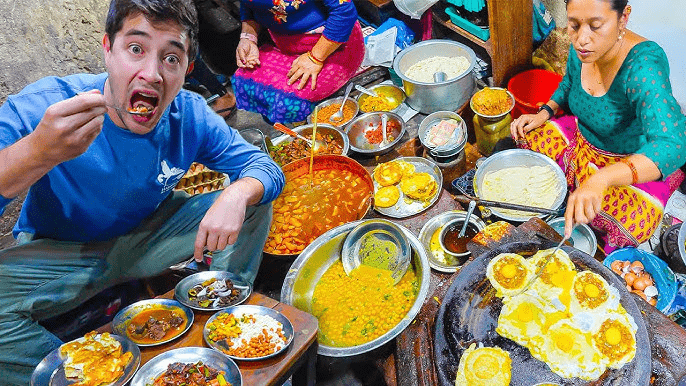
The best Newari food is still eaten in homes at festival time. That said, several restaurants do it genuinely well.
Bhojan Griha in Dillibazar is probably the most atmospheric option in Kathmandu proper. It’s housed in a converted Rana-era palace with live traditional music in the evenings. Expect to pay around 1,500 to 2,500 NPR for a full set meal per person. Book ahead for dinner.
Thamel House Restaurant offers a solid Newari set meal for around 800 to 1,000 NPR. The traditional architecture and knowledgeable staff make it a reliable choice for visitors who want context alongside their food.
Newa Lahana runs four locations including Kirtipur, Bhaktapur, Tokha, and Kamaladi in Kathmandu. Prices are lower than tourist-facing restaurants, the portions are generous, and the food is aimed at a local Newar clientele rather than visitors. That’s usually a good sign.
For street food, head to Asan Tole in central Kathmandu early morning for bara, or Indra Chowk for chatamari from vendors who have been at the same spot for generations. Budget around 100 to 200 NPR per snack.
If you’re comparing this to the broader Nepali food scene, our guide to traditional Nepali food dishes covers the full culinary landscape beyond the Kathmandu Valley.
How to Experience Newari Culture as a Visitor
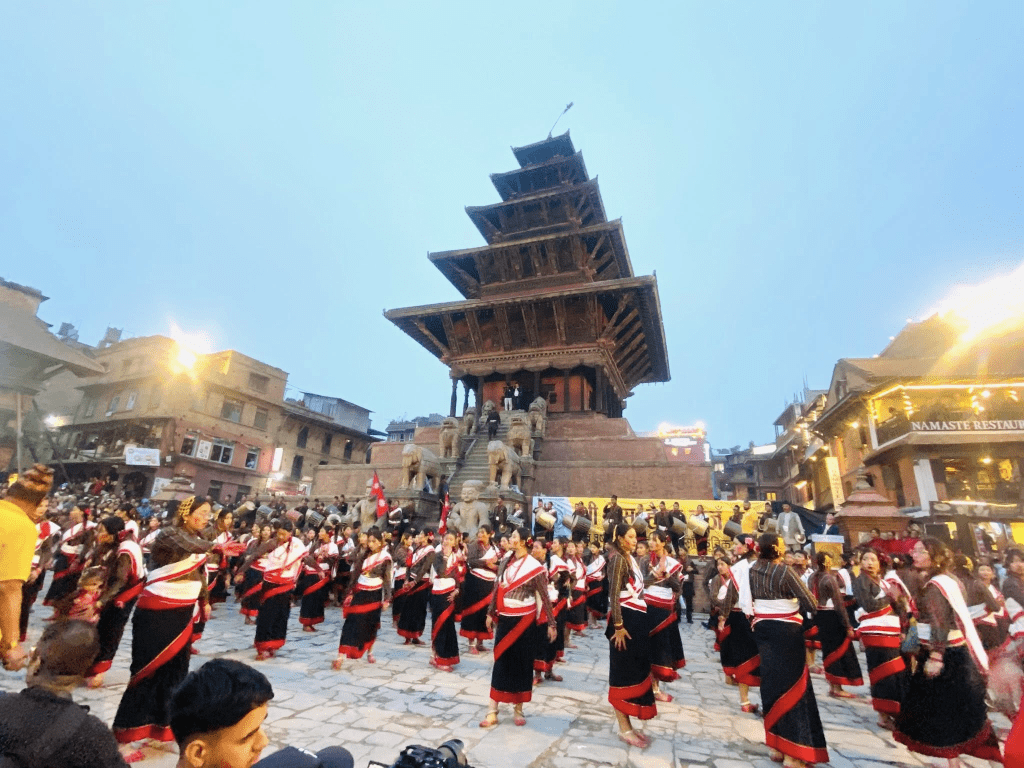
The Kathmandu Valley is small enough that you can visit all three of the main Newari city-states in a single day, though that would be doing them a disservice. Kathmandu, Patan, and Bhaktapur each have distinct characters. Patan (also called Lalitpur, about 5 km from central Kathmandu) has the finest metalwork and the most atmospheric durbar square. Bhaktapur (13 km east) has the best-preserved medieval streetscape and the only city in the valley that charges a foreigner entrance fee (around 1,500 NPR), which genuinely helps with conservation.
A few practical notes. Dress modestly when entering temples, shoulders and knees covered. Remove shoes before entering inner sanctuaries. Don’t touch statues unless you see locals doing so. Photography rules vary by site and season, particularly around the Kumari Ghar. Always ask before photographing people during rituals.
If you want structured access to the culture, look for Newari home-cooking workshops offered by guesthouses in Bhaktapur. These typically cost 2,500 to 4,000 NPR for a half-day session and include making chatamari, bara, and sometimes yomari from scratch. It’s a worthwhile few hours and one of the most direct ways to understand the logic of the cuisine.
Learn more about the wider heritage landscape from UNESCO’s World Heritage Nepal documentation, which covers all seven sites in the Kathmandu Valley with detailed historical records.
FAQ: Newari Culture and Cuisine in Nepal
Who are the Newar people of Nepal?
The Newars are the indigenous inhabitants of the Kathmandu Valley, with a documented history of at least 2,500 years. They are not a single ethnic group but a community united by a shared language (Nepal Bhasa), a unique blend of Hindu and Buddhist religious practice, and a distinctive social system called the guthi. Today roughly 1.3 million Newars live in Nepal, with most concentrated in the Kathmandu Valley cities of Kathmandu, Patan, and Bhaktapur.
What is the best Newari food to try for first-time visitors?
Start with chatamari (the rice crepe often called Newari pizza) and bara (lentil pancakes), both of which are light, flavorful, and approachable. From there, try chhoila for something more intensely spiced, and Samay Baji if you want the full ceremonial experience. Yomari is worth seeking out if you visit around December during Yomari Punhi festival.
Is Newari food spicy?
Some dishes are very spicy (chhoila and many of the pickled preparations in particular), while others are mild or even sweet. Mustard oil gives almost everything a sharp, pungent quality that some people find strong at first. If you’re heat-sensitive, start with chatamari and yomari, which are gentler on the palate.
What is the guthi system?
A guthi is a hereditary Newar institution responsible for maintaining temples, organizing festivals, managing community water sources, and hosting communal feasts. Membership is inherited through the male line. Each Newar family typically belongs to several guthis simultaneously. The system is one of the main reasons Kathmandu Valley’s cultural heritage has survived so intact despite centuries of political change.
Who is the Kumari of Kathmandu?
The Kumari is a living goddess, a pre-pubescent girl from the Newar Shakya caste selected to serve as the earthly manifestation of the goddess Taleju Bhawani. She lives in the Kumari Ghar in Kathmandu’s Durbar Square and makes public appearances during festivals, most notably Indra Jatra. Her tenure ends when she reaches puberty, after which she returns to civilian life with a government pension. Multiple Kumaris exist in the valley, but the Kathmandu Kumari is the most prominent.
What is Nepal Bhasa?
Nepal Bhasa (also called Newari) is the language of the Newar people, belonging to the Sino-Tibetan language family. It was the official administrative language of the Kathmandu Valley during the Malla dynasty and is still spoken by roughly 800,000 people today, primarily in the valley. It has a rich literary tradition dating back over 1,000 years and was the language of the valley’s royal court records and early manuscripts.
What is Bisket Jatra and when does it happen?
Bisket Jatra is one of Bhaktapur’s most dramatic festivals, celebrated over 9 days in mid-April to mark the Nepali New Year. The highlight is the raising and ceremonial toppling of a 25-meter bamboo pole, pulled by competing neighborhood factions. Chariots of local deities are also pulled through the streets. It’s one of the valley’s most physically intense cultural events and worth planning a trip around.
Are there any UNESCO World Heritage Sites related to Newari culture?
Yes, all seven UNESCO World Heritage Sites in the Kathmandu Valley are directly tied to Newari civilization. They include Kathmandu Durbar Square, Patan Durbar Square, Bhaktapur Durbar Square, Swayambhunath, Boudhanath, Pashupatinath, and Changu Narayan. All were built, decorated, and maintained largely by Newar craftsmen and are still managed in part through the guthi system today.