



Nepal packs extraordinary linguistic diversity into a relatively small country. You’ve probably heard the claim that Nepal speaks 129 different languages, and that figure does show up in respected linguistic sources. However, the real story is a little more nuanced, and genuinely fascinating once you dig into it.
This article breaks down where that number comes from, what Nepal’s most recent census actually found, and why counting languages in Nepal is harder than it sounds.
Where Does the “129 Languages” Figure Come From?
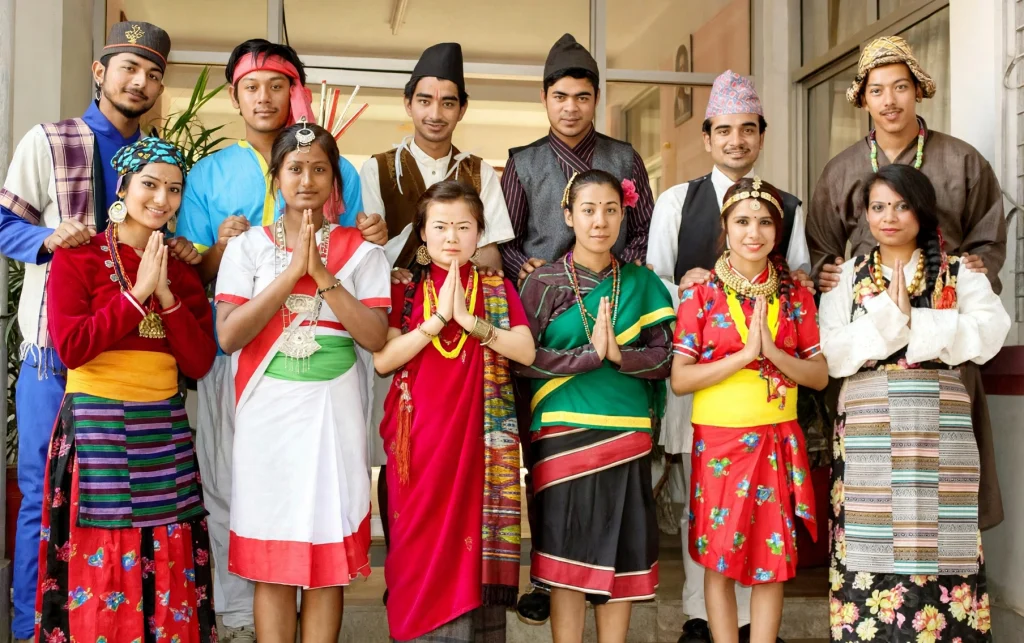
The 129 figure traces back to Ethnologue, a widely cited global reference for living languages. According to Ethnologue’s data, Nepal is home to 129 living languages, a number frequently repeated across travel guides and general reference articles.


However, Nepal’s own government data tells a slightly different story. The 2021 National Population and Housing Census recorded 124 distinct mother tongues spoken across the country. Earlier, the 2011 census identified 123 languages, with researchers noting that six additional languages were later discovered, pushing informal estimates toward 129 as well.
Consequently, whether you land on 123, 124, or 129 depends largely on which source you’re citing and when it was published. Rather than picking one “correct” number, it’s more accurate to say Nepal speaks somewhere between roughly 123 and 129 distinct languages, depending on the counting methodology used.
Why Counting Languages in Nepal Is Genuinely Difficult
This range in language counts isn’t sloppy reporting. It actually reflects a real methodological challenge. Nepal lacks an independent, purely linguistic survey of its languages. Instead, the country relies on national censuses, which researchers have repeatedly criticized as inconsistent or incomplete when it comes to capturing linguistic nuance.
Additionally, the 2021 census introduced a more detailed framework than previous counts, distinguishing between three separate categories: mother tongues, ancestral languages, and second languages. It identified 124 mother tongues, 124 ancestral languages, and 117 second languages, each classification serving a different research purpose.
Because dialects and closely related language varieties sometimes get counted separately, and sometimes grouped together, small variations in methodology can shift the total count considerably. This helps explain why respected sources don’t always agree on a single, definitive number.
How Many Language Families Does Nepal Represent?
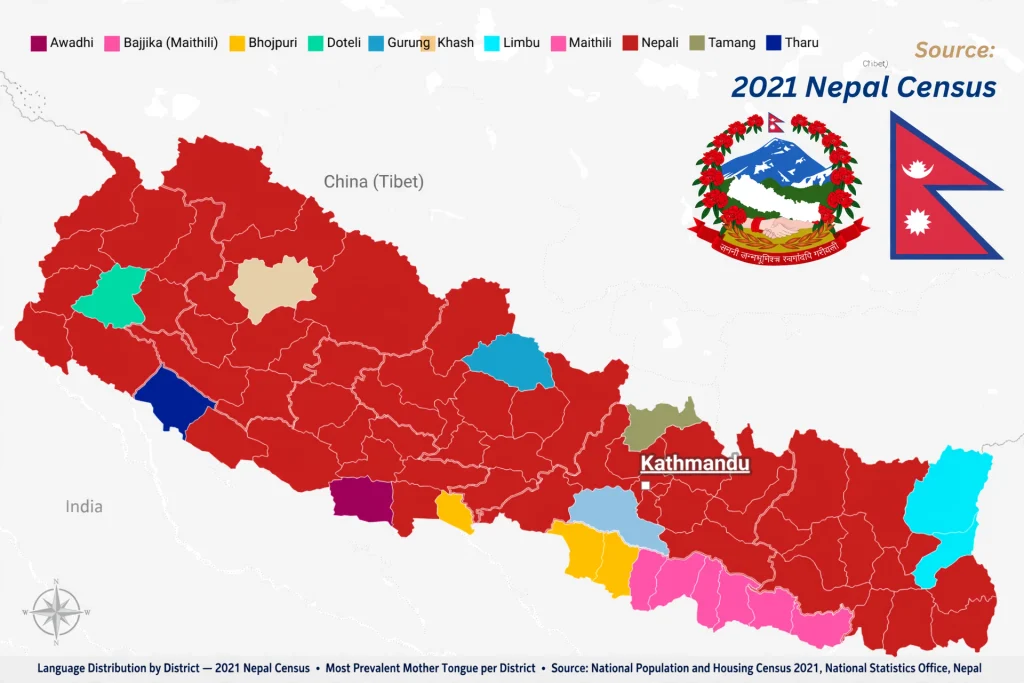
Regardless of the exact count, Nepal’s languages cluster into a genuinely diverse set of language families. According to the 2021 census, Nepal’s mother tongues fall into four major families: Indo-European, Sino-Tibetan, Austro-Asiatic, and Dravidian, plus one language isolate.
Indo-European languages, including Nepali itself, dominate in terms of speaker population. Sino-Tibetan languages, meanwhile, show remarkable structural diversity, with 72 separate Sino-Tibetan mother tongues recorded, despite representing only about 16.6 percent of the total population.
Kusunda stands out as a particularly rare case. This language isolate has no confirmed relationship to any other known language family, making it one of the most linguistically unique tongues in the world. Unfortunately, Kusunda now has only a handful of remaining speakers, placing it among the most endangered languages on Earth.
Nepal’s Most Widely Spoken Languages
While Nepal hosts well over a hundred languages, a much smaller group accounts for the overwhelming majority of speakers. Nepali, the country’s official language, ranks first by a wide margin, spoken as a mother tongue by roughly 44.86 percent of the population.
Maithili follows as the second most common mother tongue, spoken predominantly in Nepal’s southeastern Terai region. Other major languages include Bhojpuri, Tharu, Tamang, Bajjika, Awadhi, Nepal Bhasa (also known as Newari), Magar Dhut, and Doteli.
Notably, among all 124 recorded mother tongues, only 21 languages have more than 100,000 speakers each. Together, though, these 21 languages account for a substantial share of Nepal’s total population, highlighting just how concentrated language use actually is, despite the country’s overall linguistic diversity.
Where Is Nepal’s Linguistic Diversity Concentrated?
Language diversity isn’t distributed evenly across Nepal’s provinces. According to recent census analysis, Koshi and Bagmati provinces show the greatest linguistic diversity, each recording 107 distinct languages spoken within their boundaries. Karnali Province, by contrast, shows considerably less diversity, reflecting its more linguistically homogeneous population.
On average, each individual district in Nepal is home to roughly nine major languages, a striking figure for a country of Nepal’s relatively modest size. This concentration reflects Nepal’s complex ethnic geography, shaped by centuries of migration, trade routes, and distinct highland, hill, and lowland communities settling across different regions.
The Ethnic Diversity Behind the Language Count
Nepal’s linguistic diversity closely mirrors its ethnic diversity. The country recognizes 142 distinct caste and ethnic groups, each carrying its own traditions, cultural identity, and, in many cases, its own distinct language. This connection between ethnicity and language explains why linguistic diversity in Nepal runs so much deeper than simple regional variation.
Because many of these communities maintain strong cultural and linguistic identities, language in Nepal often functions as more than just communication. It serves as a marker of ethnic belonging, cultural heritage, and community history passed down across generations.
Which Languages Face the Greatest Risk of Disappearing?
Unfortunately, not every language in Nepal enjoys equal vitality. According to recent linguistic analysis, only about 47.6 percent of Nepal’s mother tongues are currently considered “safe” in terms of long-term survival. The remainder face varying degrees of risk, ranging from vulnerable status to critically endangered.
Kusunda represents the most extreme case, with only a small number of elderly speakers remaining. Similarly, smaller ethnic languages like Bankariya have been recorded with fewer than 100 total speakers, placing them at severe risk of disappearing entirely within a generation or two.
Meanwhile, some historically prominent languages face a quieter, more gradual decline. Newar, for instance, despite having 880,000 recorded native speakers according to the 2021 census, has been classified as “Definitely Endangered” by the UNESCO Atlas of the World’s Languages in Danger, largely due to younger generations shifting toward Nepali in everyday use.
Why This Linguistic Diversity Matters
Beyond academic interest, Nepal’s language diversity carries real cultural and practical significance. Each language represents a distinct way of understanding the world, encoding local knowledge about geography, tradition, and history that often doesn’t translate directly into other tongues.
For travelers, this diversity adds genuine texture to visiting different regions of Nepal. A trip through the Terai plains sounds and feels linguistically different from a trek through Tamang hill villages or a walk through a Newar city like Bhaktapur. Meanwhile, for researchers and policymakers, understanding this diversity remains essential for developing effective education, media, and cultural preservation strategies across such a linguistically fragmented population.
Should Nepal Have a Formal Language Policy?
Given the complexity and inconsistency in counting Nepal’s languages, researchers increasingly argue for a more formal, dedicated language policy. Currently, discrepancies between census methodologies, informal estimates, and international databases like Ethnologue make it genuinely difficult to track language vitality accurately over time.
A dedicated linguistic survey, conducted independently of the general population census, could help resolve these inconsistencies. Such an effort would likely provide clearer data on which languages face the greatest risk, informing more targeted preservation and education efforts going forward.
Final Thoughts on Nepal’s Linguistic Diversity
Ultimately, whether Nepal speaks 129 different languages, 124, or 123 depends on which source and methodology you’re referencing. What remains undeniable, though, is the sheer scale of linguistic diversity packed into this relatively small Himalayan nation.
From widely spoken languages like Nepali and Maithili to critically endangered tongues like Kusunda, Nepal’s languages tell a story of migration, culture, and identity stretching back centuries. So, the next time you hear that Nepal speaks 129 different languages, you’ll know exactly where that number comes from, and why the real answer is even more interesting than a single figure suggests.
Frequently Asked Questions
Does Nepal really speak 129 different languages?
The 129 figure comes from Ethnologue’s global language database. Nepal’s own 2021 census recorded 124 mother tongues, so the exact number varies slightly depending on the source.
What is the official language of Nepal?
Nepali is Nepal’s official language, spoken as a mother tongue by roughly 44.86 percent of the population and understood widely across the country.
What is the second most spoken language in Nepal?
Maithili ranks as Nepal’s second most common mother tongue, spoken predominantly by communities in the southeastern Terai region.
Which language in Nepal is closest to extinction?
Kusunda, a language isolate with no known relation to any other language family, has only a small number of remaining speakers, making it critically endangered.
Why do sources disagree on how many languages Nepal has?
Nepal lacks an independent linguistic survey, relying instead on national censuses that use varying methodologies, causing figures to range between roughly 123 and 129 languages.
Which part of Nepal has the most linguistic diversity?
Koshi and Bagmati provinces show the greatest linguistic diversity, each recording 107 distinct languages spoken within their populations.


