



Like it or not but alcohol is an important part of local culture and has maintained a strong status in the society. Almost every village, tribe, and civilization has its own preferences level on beverages. Nepal also has its own traditional beverages. Here are the seven traditional popular beverages of Nepal.
Chaang/ chyang (white chyang)
It is the most popular and preferred local drink among Newars, Sherpas & Rai people. The fermenting rice gives the whitish color. It has a mild sour taste. Many local people make chyang at their homes because of a very easy brewing process. It is the most preferred drink because it is very cheap, easily available, and have a palatable taste.
Karthon – a thick brown Chyang and ‘Hyaunthon’ – red Chyang is not easily available as white chyang.


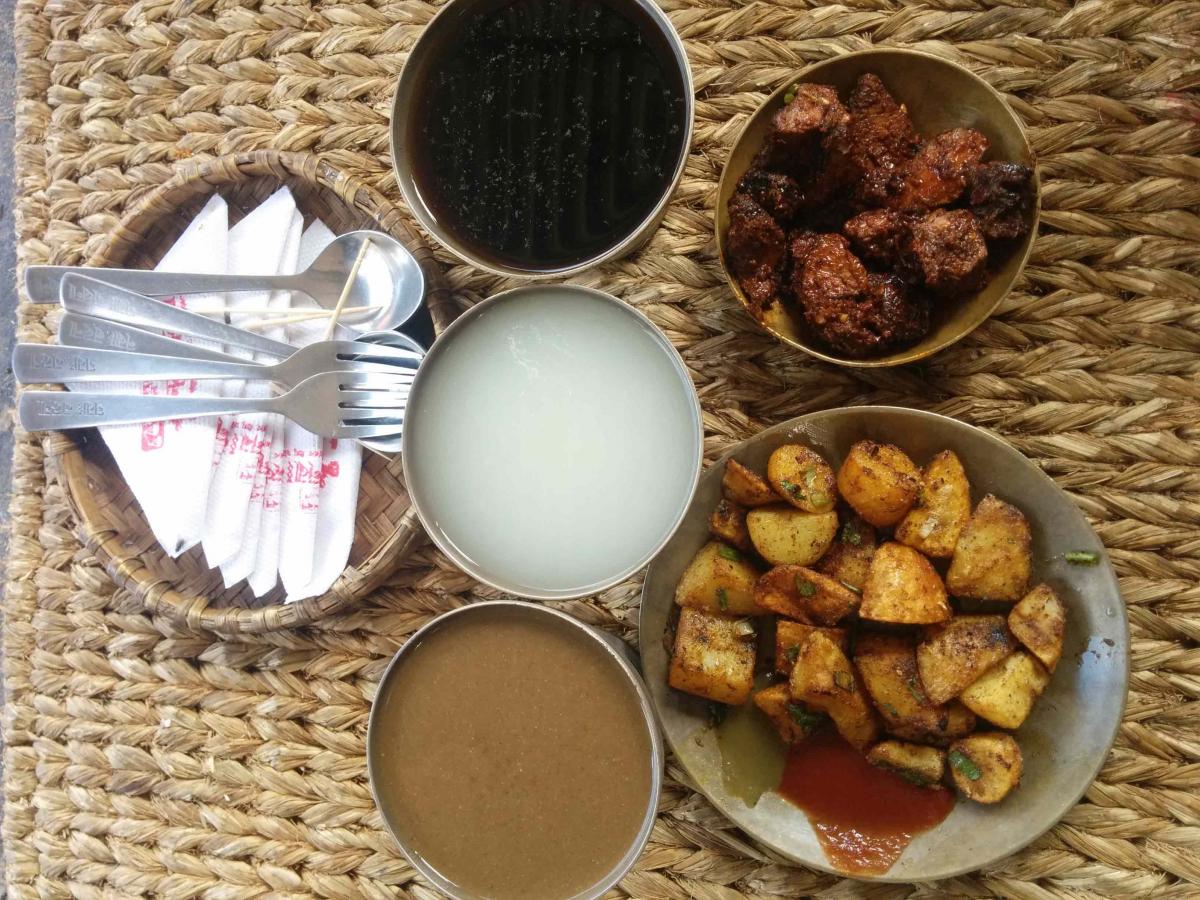
Aila
It is the most potent beverage having high alcohol content. Due to which it has a strong odor. It is brewed from millet and then distillation is done. it is colorless. In restaurants or taverns, they serve single, double, and triple distilled (referred locally as Ek pani, Dui pani, and tin pani respectively).
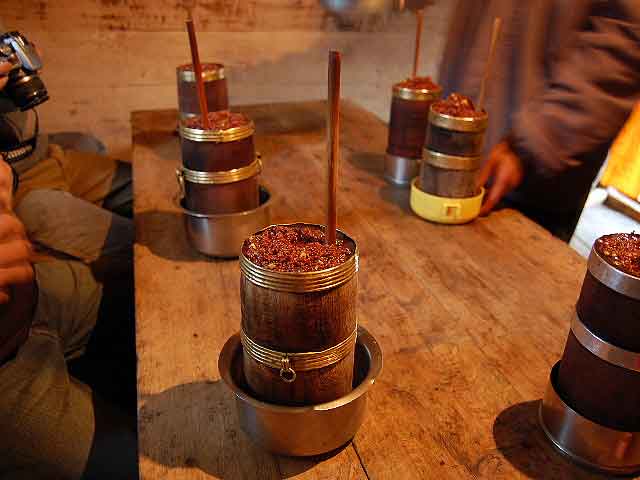
Tongba
It is the most popular beverage in the hilly region mainly in the eastern part of Nepal among Rai, Limbu, and Sherpas. Prepare from brewing millet without adding water. Container full brewed millet is served and then hot water is poured. This combination heats up the body quickly that’s why consumed in cooler places.
Toddy
It is the naturally ferment product of sap from the palm tree. Different varieties of palm makes toddy. In Nepal wild date (Phoenix syslvestris, Palmyra (Borassus flabelliefert), and dwarf date palm (Phoenix humilis) make toddy. Sap from these palm tree variety is fermented by using yeast.
Raksi
It is a major traditional beverage. Slurry of Jand by distillation gives Raksi. It has varying alcohol content.
Jand
Lastly, traditional Nepali beverage obtained by fermenting finger millet (Eleusine coracana). Locally, it is ‘Kodo ko Raksi’.
Mahuwa Raksi
Fermenting juice of Mahuwa (Maduca indica) flower makes Mahuwa. It is not very popular among traditional alcoholic beverages.


