



Picture a steaming metal plate landing in front of you at a teahouse somewhere in the hills above Pokhara. There’s a mound of rice, a pool of golden lentil soup, a curl of pickle, a smear of curry, and a small mountain of spinach. The owner sets it down and immediately starts ladling out more before you’ve even lifted a spoon. That’s dal bhat. And yes, it’s as good as it sounds. Traditional Nepali food is one of the most underrated culinary traditions in Asia: hearty, flavourful, deeply tied to the landscape and the people, and almost always cheaper than you’d believe. This guide covers 12 dishes you absolutely should eat before you leave Nepal, from the daily staples that power trekkers through the high passes to the centuries-old Newari delicacies hiding in Kathmandu’s backstreets.
Nepal’s food scene reflects everything that makes the country fascinating: the altitude ranges, the ethnic diversity, the Tibetan and Indian influences meeting somewhere in the middle, and a tradition of hospitality where feeding guests is practically a religion. Whether you’re eating at a trail teahouse, a Thamel restaurant, or someone’s home during a festival, you’re tapping into food culture that goes back hundreds of years. Let’s get into it.
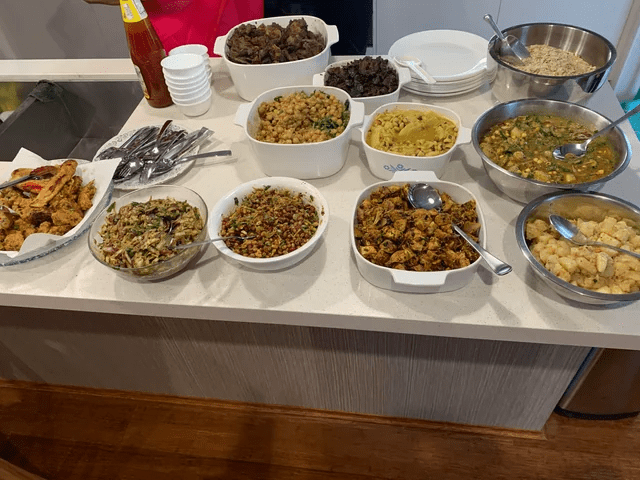
The Everyday Staples Every Visitor Should Know
1. Dal Bhat: The Dish That Runs Nepal
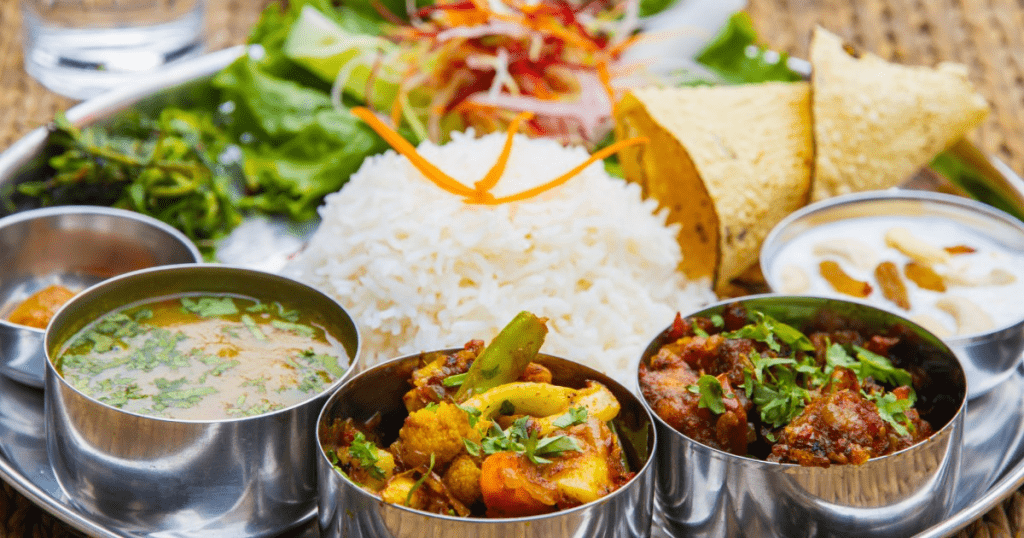
Let’s start with the obvious one. Dal bhat is not just a dish in Nepal. It’s a lifestyle, a schedule, a commitment. Most Nepalis eat it twice a day, every day, and they mean it when they say “dal bhat power, 24 hour.” The name translates simply to lentil soup and rice. But what arrives at the table is rarely that simple: you get a thali with multiple small servings alongside the rice and dal, including a vegetable curry (tarkari), pickle (achar), sometimes a meat dish, and often a side of fermented greens or papad. Most places offer unlimited refills. For around USD $2.50 to $4 at local restaurants, or slightly more on trekking routes, this is one of the most complete and filling meals on Earth.


The lentils change depending on region and cook. Down in the Terai lowlands you might get a thick, richly spiced masoor dal. At altitude you’re more likely to find a thinner, plainer version that works better for digestion when you’re breathing hard on the trail. Either way, keep your plate out and let them refill it. That’s the whole point.
2. Momo: Nepal’s Undisputed Street Food King
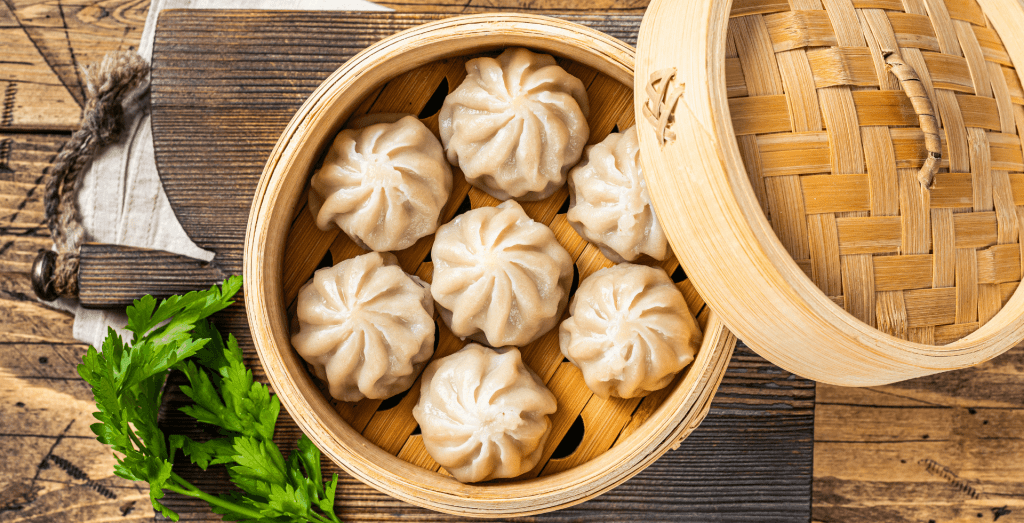
If dal bhat is the soul of Nepali cooking, momos are the heartbeat of Nepali street food. These steamed or fried dumplings are everywhere: in tiny stalls with a single steamer basket, in busy restaurant kitchens, at school canteens, on trekking trails, and now in cities across the world wherever Nepali communities have settled. The filling is typically spiced minced buffalo (buff), chicken, pork, or vegetables, wrapped in a thin flour dough and folded into a pleated crescent. A plate of ten momos costs around NPR 150 to 300 (roughly USD $1.10 to $2.25) and comes with a fiery tomato-sesame chutney that you will want to put on everything.
Steamed momos are the classic. Fried momos (C-momos) come out crispy and slightly more indulgent. Jhol momos arrive submerged in a spiced broth that is genuinely addictive. Try them all. The best ones are in Kathmandu and Pokhara, though you’ll find respectable versions everywhere from airport lounges to mountain teahouses at 3,500 metres.
3. Sel Roti: The Festival Doughnut
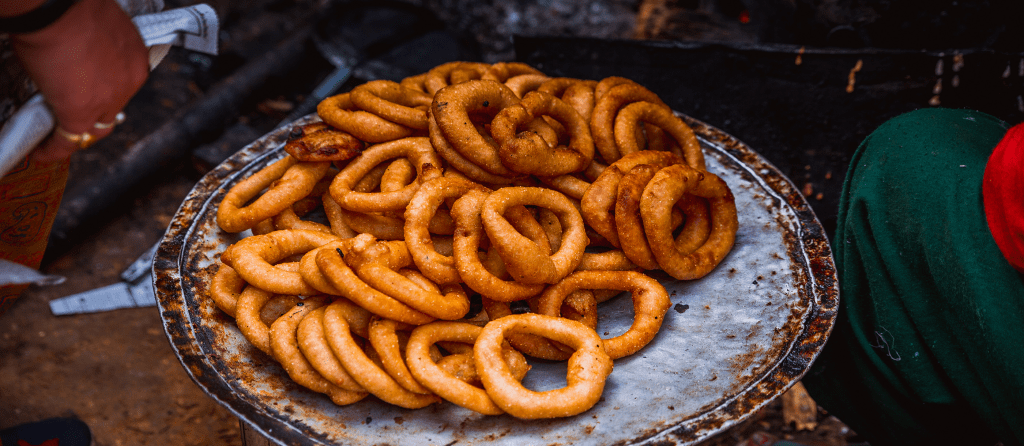
Walk through any Nepali neighbourhood during Dashain or Tihar and your nose will find sel roti before your eyes do. This is a deep-fried ring of rice flour dough, slightly sweet from added sugar and fragrant with cardamom or fennel, cooked in hot oil until the outside goes golden and the inside stays soft and chewy. It looks a bit like an elongated doughnut. It tastes like nothing else. Sel roti is festival food by tradition, the kind of thing mothers make in large batches and pass around to neighbours and relatives. At street stalls during festival season you can grab one for NPR 20 to 50 (under USD $0.40). If you’re visiting during October or November, the smell of sel roti frying will follow you everywhere.
4. Thukpa: Noodle Soup From the High Passes
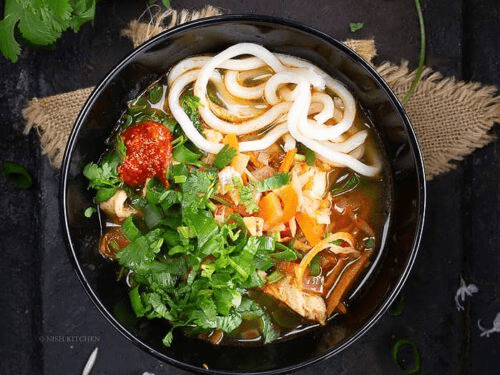
Nepal shares a long cultural border with Tibet, and thukpa is one of the most delicious things that crossed it. This is a warming noodle soup built on a clear, slightly spiced broth loaded with hand-pulled or flat noodles, vegetables, and usually a protein like chicken, buff, or mutton. You’ll find it everywhere in Nepal’s mountain regions, from teahouses on the Everest Base Camp trail to restaurant menus in Kathmandu’s Boudha neighbourhood, where the Tibetan community has deep roots. A bowl runs about USD $2 to $4 and is exactly what you want after a cold morning on the trail. The noodles are thick and satisfying. The broth warms you from the inside out. Order it with a side of butter tea if you want the full high-altitude experience.
The Fermented and the Foraged
5. Gundruk: Sour, Funky, Totally Nepali
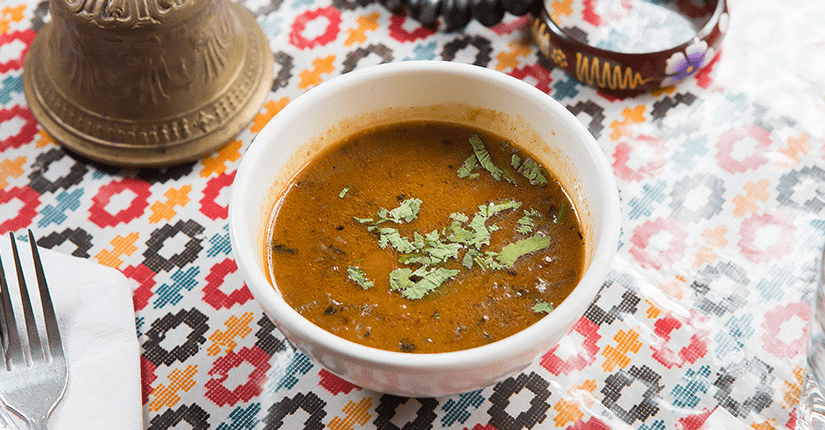
This one takes a little getting used to, and then you’ll be hooked. Gundruk is made from fermented leafy greens, usually mustard, radish, or cauliflower leaves, left to dry and ferment for several days until they develop a deeply tangy, slightly sour flavour. It’s been made in Nepal for centuries as a preservation technique, a way to keep vegetables through the winter when nothing grows at altitude. You’ll most often encounter it as a side dish with dal bhat or dhido, or in a soup called gundruk ko jhol.
Traditional Nepali food doesn’t get more authentic than this. It’s polarising for first-timers but deeply satisfying once you understand what it is: the taste of Nepali winters and mountain kitchens distilled into a small bowl.
6. Dhido: The Dish That Fed the Hills
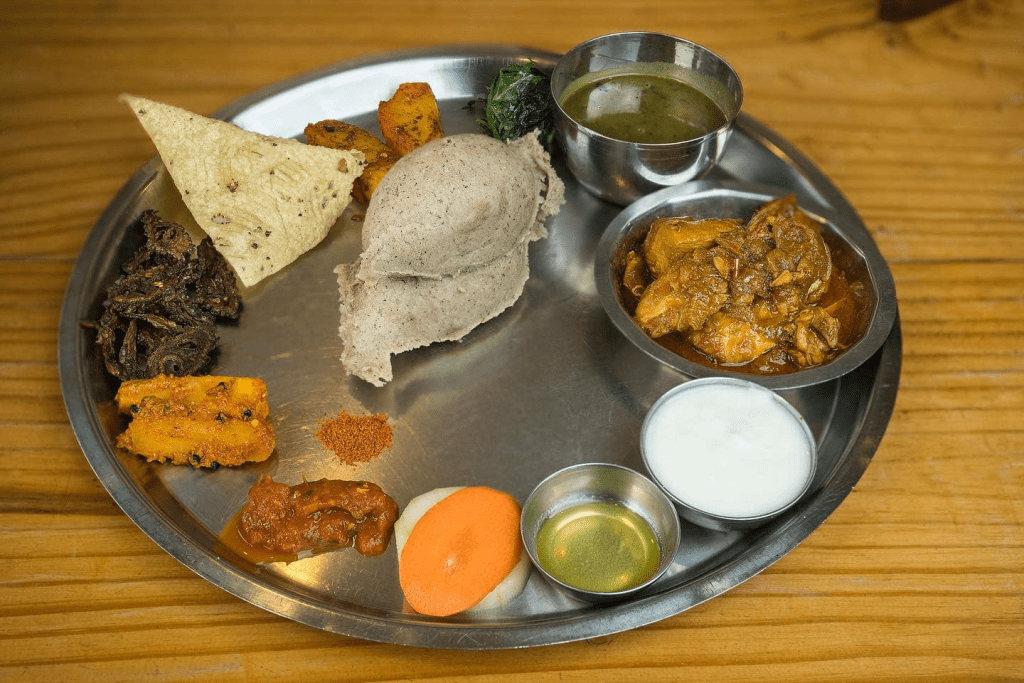
Before rice became widely accessible in Nepal’s hill regions, dhido was the daily meal for millions of people. It’s a thick, smooth porridge made by stirring buckwheat, millet, or corn flour into boiling water, then cooking and stirring until it stiffens into something close to polenta or ugali. Dense, filling, and nutty in flavour, dhido is typically eaten with a side of gundruk soup, dal, or butter. You’d need to seek it out on menus in Kathmandu, but in the hill and mountain regions it’s still a regular offering. Some trekking lodges in remote areas serve it as a hearty, altitude-friendly breakfast. It won’t win any beauty contests, but few things keep you warmer on a cold mountain morning.
The Newari Kitchen: Nepal’s Most Adventurous Cuisine
The Newars are the indigenous people of the Kathmandu Valley, and their cuisine is in a category of its own. Developed over centuries in the heart of ancient Nepal, Newari food is complex, ceremonial, and deeply tied to festivals and social rituals. Bhaktapur, Patan, and the old lanes of Kathmandu are the best places to explore it.
7. Chatamari: The Nepali Pizza
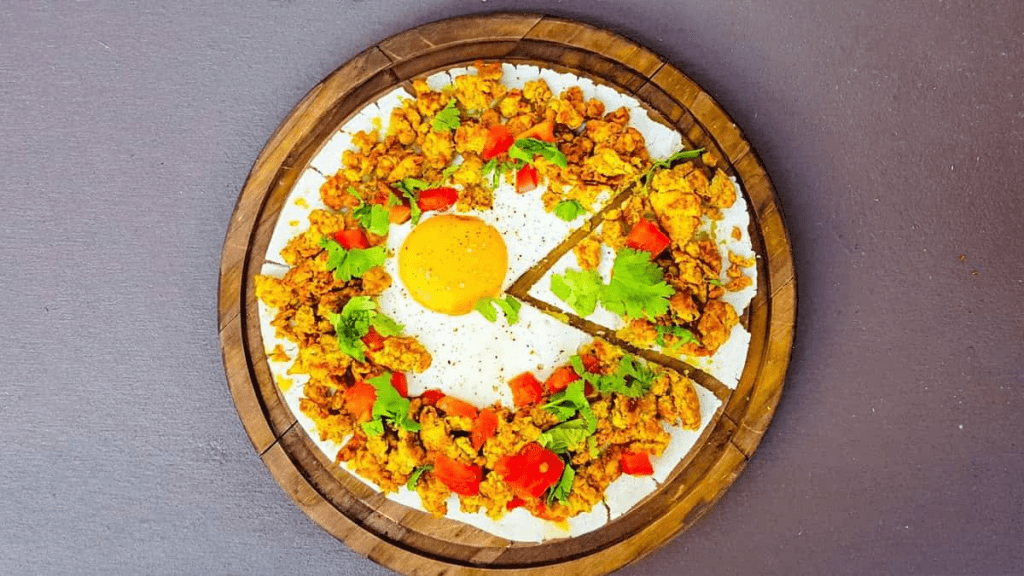
Call it “Nepali pizza” and every Newari cook will give you a stern look, but the comparison is hard to resist. Chatamari is a thin, crispy crepe made from rice flour batter, cooked flat on a hot griddle. The toppings are what make it: minced buff or chicken, a cracked egg cooked right on the surface, fresh coriander, spiced oil, and sometimes minced vegetables. It comes out crispy at the edges, slightly soft in the centre, and packed with flavour. You’ll find it at Newari restaurants across Kathmandu for around NPR 120 to 250 (USD $0.90 to $1.90). It’s one of those dishes that makes you wonder why it isn’t more famous internationally.
8. Bara: The Lentil Pancake You Didn’t Know You Needed
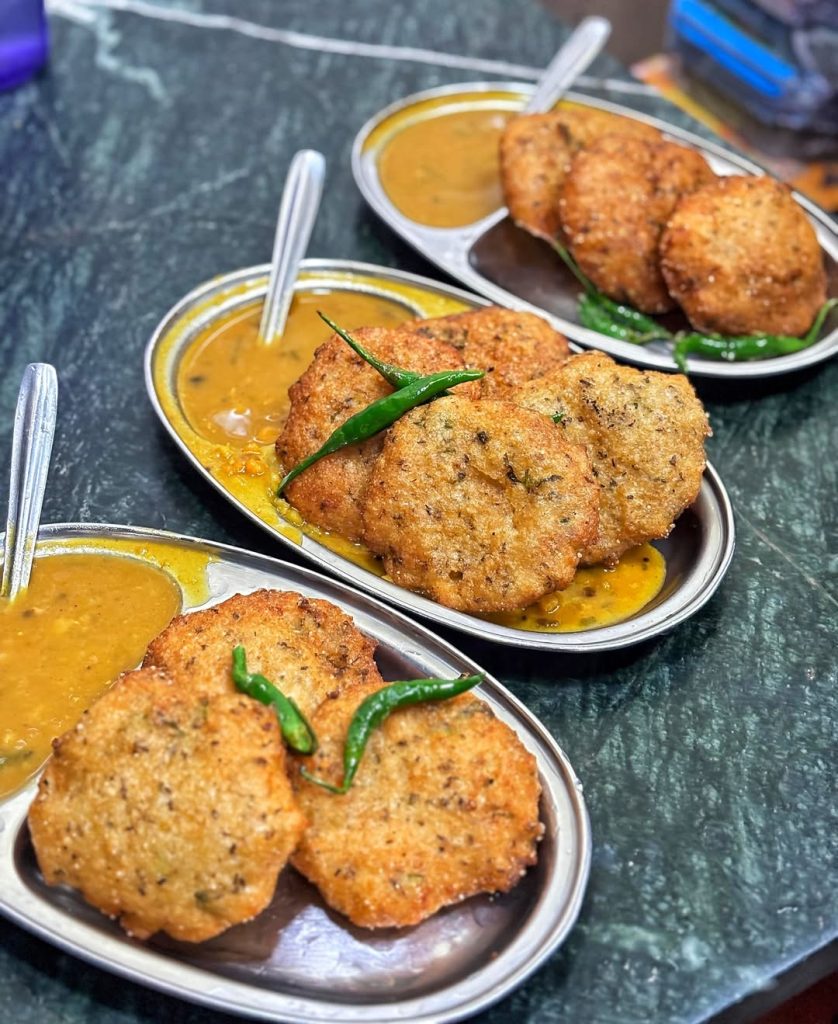
Bara (also called “wo” in Newari) is made from black lentil batter ground with garlic, ginger, and turmeric, then shaped into thick rounds and fried on a hot pan until the outside crisps and the inside stays moist and dense. Plain bara is delicious enough. But anda bara, topped with a fried egg cooked directly into the surface, is extraordinary. Buff bara, with minced spiced buffalo meat, is even better. Bhaktapur Durbar Square has stalls that have been selling bara for generations. Get there in the morning when they’re freshly made and still hot from the griddle. A piece costs NPR 40 to 100 (USD $0.30 to $0.75).
9. Kwati: The Nine-Bean Festival Soup
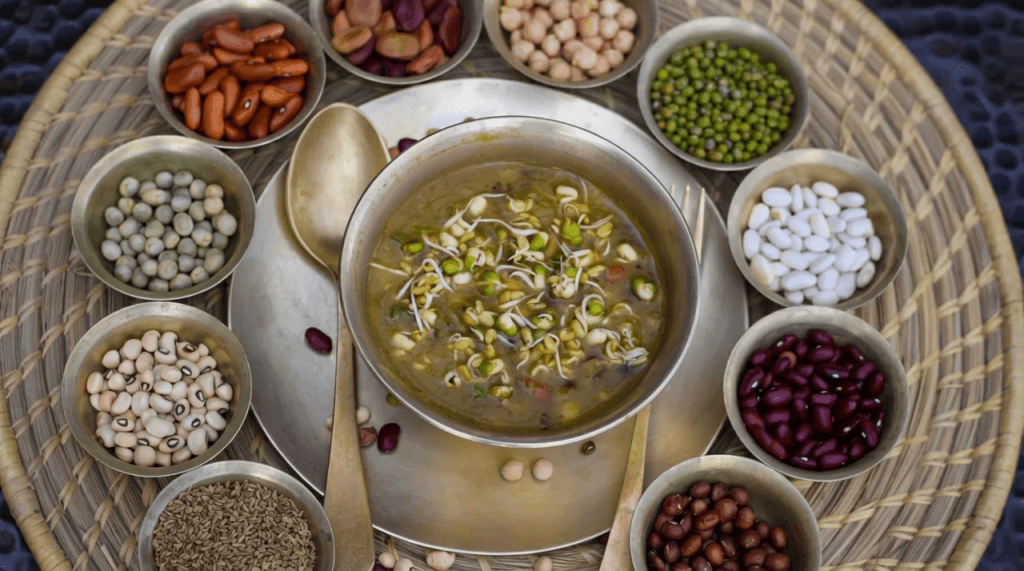
Kwati is not everyday food. This is a ceremonial soup made from nine different types of sprouted beans, cooked slowly with spices until they’re tender and the broth is thick and rich with protein. It’s traditionally prepared during Janai Purnima, a major Hindu festival in late July or August, and is believed to boost immunity as the monsoon season wears the body down. Some restaurants in Kathmandu serve it year-round as a hearty, nutritious soup. If you come across it, order it. It’s deeply nourishing and tastes like something a wise grandmother invented specifically for tired travellers.
10. Choyla: Spiced Grilled Meat, Newari Style
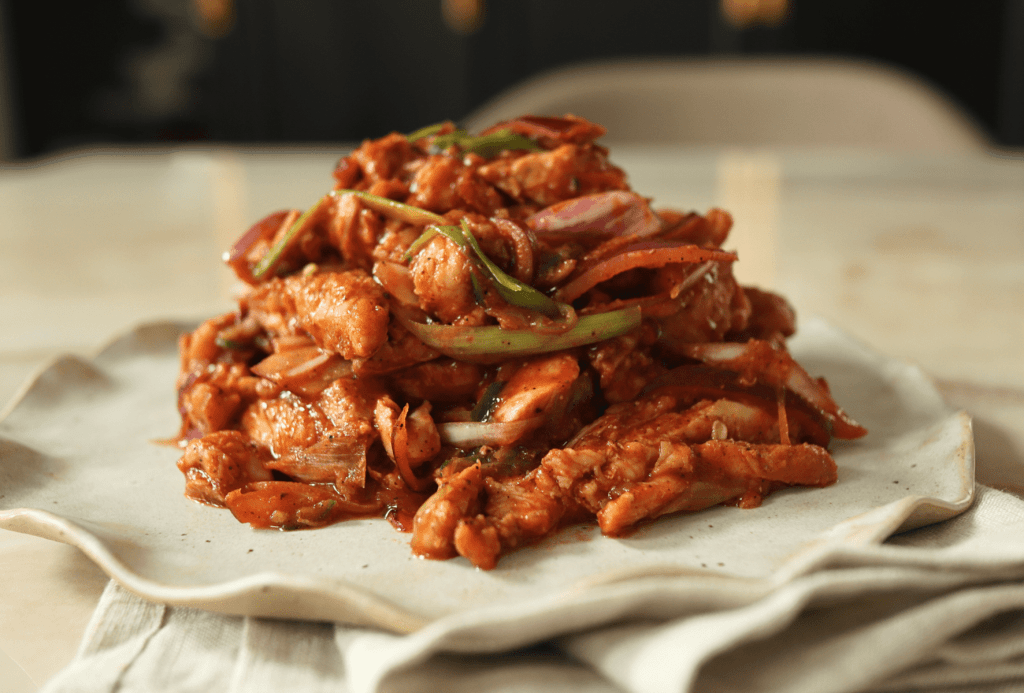
Choyla makes a lot of sense once you understand how it’s made. Buffalo (or sometimes chicken) is traditionally charred over hay or straw to impart a distinctive smoky flavour, then sliced thin and marinated in a spiced mixture of mustard oil, chili, ginger, garlic, timur (Szechuan pepper), and fenugreek. The result is intensely flavoured, slightly chewy, and spicy enough to make your eyes water if you’re not ready for it. Choyla is quintessential Newari drinking food, the kind of thing eaten with chiura (beaten rice) and a glass of local raksi (rice spirit) at a Bhaktapur bhatti. Look for it at Newari restaurants in Patan and Boudha.
Sweet Things and Drinks Worth Knowing
11. Yomari: The Rice Dumpling of the Harvest Festival
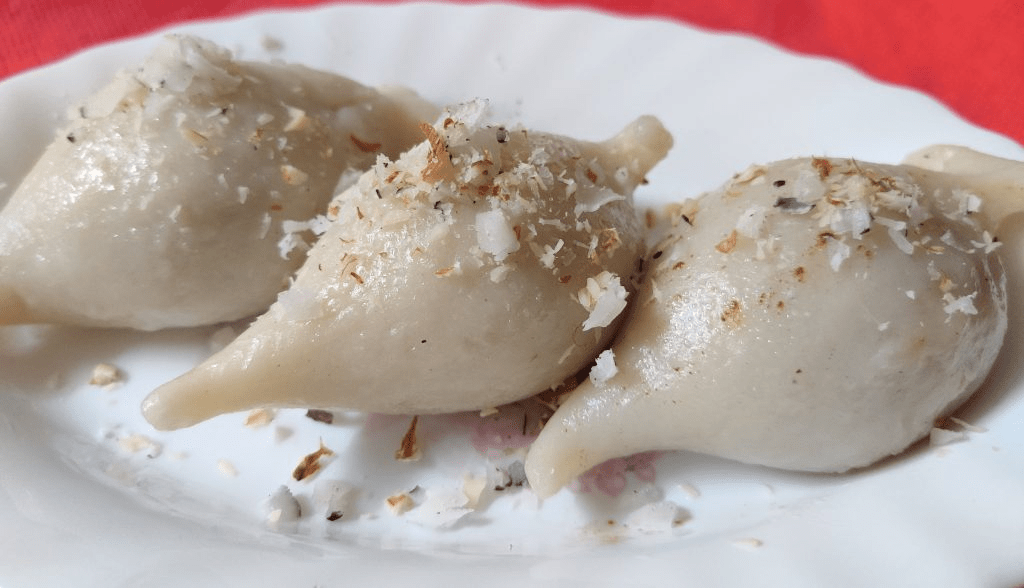
Yomari is genuinely special, the kind of dish that doesn’t translate easily beyond its cultural context. These dumplings are made from fresh rice flour dough, shaped into an elongated teardrop or fish form, and filled with either chaku (hardened molasses mixed with sesame seeds) or khuwa (condensed milk solids). They’re steamed until the outer skin turns slightly translucent and the filling softens into something dark, sticky, and deeply sweet. Yomari are made specifically for Yomari Punhi, a Newari festival celebrating the rice harvest that falls in December. During that time you’ll find them sold at Newari sweet shops across the valley. Some specialty bakeries in Kathmandu carry them year-round. One piece costs NPR 20 to 40 (under USD $0.30). Try as many as possible.
12. Chiya: The Tea That Holds Nepal Together
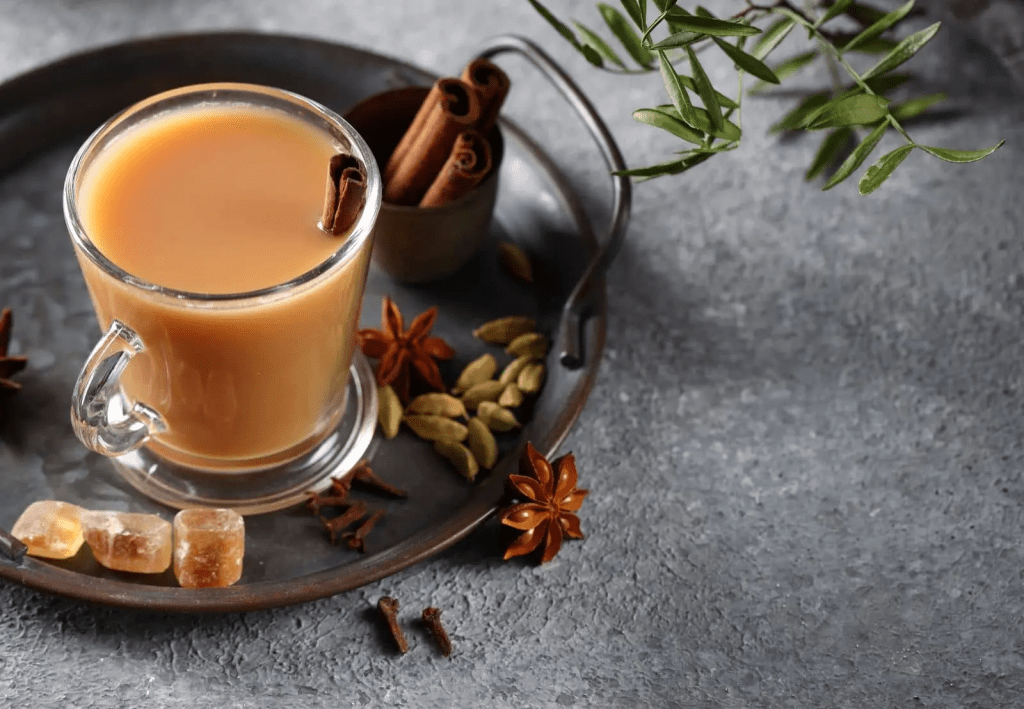
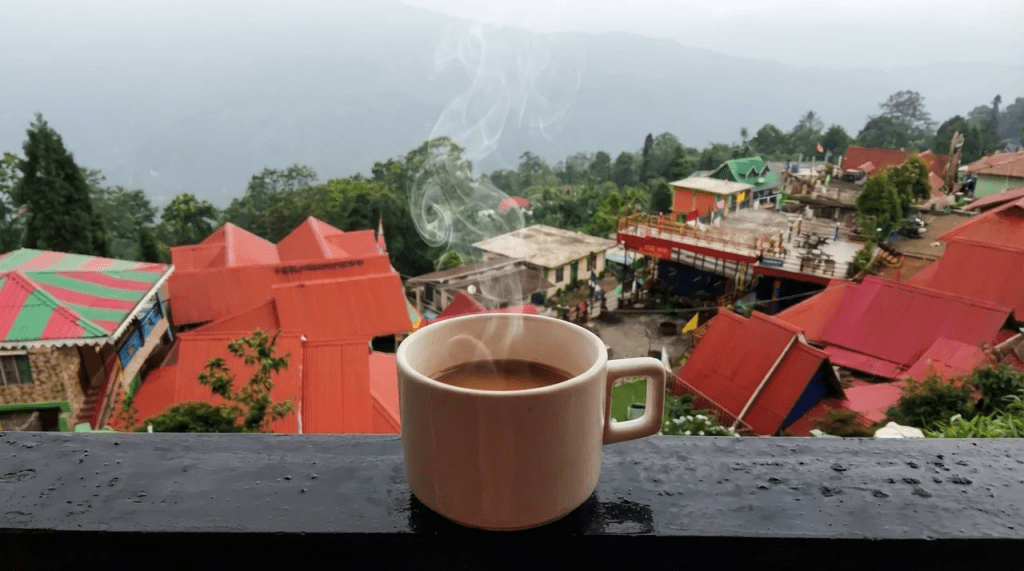
Chiya is not just a drink. It’s the thread woven through every social interaction in Nepal. You drink it in the morning before work; You drink it at 11am with the person who stops by your shop. You drink it on the trail, at altitude, after a long descent, in the rain, before a meeting, after an argument, with strangers, with family. Nepali chiya is brewed strong with black tea, fresh milk, sugar, and often a pinch of cardamom or ginger, all simmered together in a pot until the milk reduces slightly and the flavour concentrates. It’s sweeter and milkier than Indian chai, with less spice overall. A small glass costs NPR 15 to 30 (USD $0.10 to $0.25) almost anywhere in the country. Drinking it while looking out at a mountain view is one of those simple, perfect travel moments that no photograph adequately captures.
Practical Tips for Eating Your Way Through Nepal
Nepal is genuinely one of the friendliest countries in Asia for vegetarians.Dal bhat, dhido, gundruk, sel roti, yomari, chatamari, and bara are mostly vegetarian. Chiya is usually vegetarian but contains dairy. Vegan options are limited due to dairy use in tea and sweets. Vegans can rely on dal bhat and vegetable-based dishes.
Momos are traditionally made with buff (water buffalo). Beef is not used because cows are sacred in Nepal. If you’re unsure about a menu item, ask whether it contains buff, chicken, or pork. Most restaurants in tourist areas will clarify immediately.
Street food safety is generally solid in Kathmandu and Pokhara. Stick to busy stalls with high turnover. On trekking routes, teahouse food is usually freshly cooked. Avoid raw salads at altitude, where water safety can be uncertain.
For more on exploring Nepal’s regions and their food cultures, read our guides to eating in Kathmandu and Nepal for first-time visitors. The Nepal Tourism Board also has information on regional festivals where traditional food plays a central role.
Frequently Asked Questions About Traditional Nepali Food
What is the national dish of Nepal?
Dal bhat is considered the national dish of Nepal. It consists of steamed rice served with lentil soup and accompanying side dishes like vegetable curry, pickle, and sometimes meat. It’s eaten by the vast majority of Nepalis every single day and is deeply embedded in daily life and culture across every region of the country.
Is Nepali food spicy?
It varies. Dal bhat as typically served is mild to medium in spice level, with the heat coming from accompanying pickles and chutneys rather than the main dishes. Newari food like choyla and bara chutney can be quite fiery. Momos range from mild to hot depending on the chutney. If you’re sensitive to spice, ask for “kam piro” (less spicy) when ordering. Most restaurants will accommodate you without fuss.
Are there good vegetarian options in Nepal?
Yes, and plenty of them. Nepal is one of the best countries in Asia for vegetarians. Most traditional dishes have vegetarian versions, and Hindu religious traditions mean meat-free cooking is widely understood and respected. Dal bhat, momos with vegetable filling, chatamari, bara, yomari, gundruk, dhido, sel roti, and chiya are all available vegetarian. Tourist-area restaurants typically have extensive vegetarian and often vegan menus as well.
What is buff in Nepali food?
Buff is water buffalo meat. Since cows are sacred in Nepal and beef is legally prohibited, water buffalo is the most widely eaten red meat in the country. It’s slightly stronger and chewier than beef, with a deeper, richer flavour. You’ll encounter it in momos, choyla, chatamari toppings, and many other dishes. If you eat red meat, it’s absolutely worth trying.
Where can I find authentic Newari food in Kathmandu?
The best places for authentic Newari food are Bhaktapur Durbar Square (especially for bara and chatamari from street stalls that have operated for generations), the old city of Patan, and the backstreets around Boudha Stupa in Kathmandu. Thamel has Newari restaurants too, though they’re more tourist-oriented. For the real experience, head to a Newari bhatti (local eatery) in the old towns, ideally during a festival period when the food is at its most ceremonial and varied.
How much does food cost in Nepal?
Street food and local restaurants are extraordinarily affordable. Dal bhat at a local restaurant runs USD $2.50 to $4. Momos cost around USD $1 to $2 per plate. A glass of chiya is under USD $0.25. On popular trekking routes, prices rise considerably because everything has to be carried in: dal bhat on the Annapurna Circuit might cost USD $7 to $12. Mid-range Kathmandu restaurants charge USD $5 to $15 per main course.
What should I eat for breakfast in Nepal?
Options range from traditional to Western. Local breakfasts often involve chiura (beaten rice) with vegetables or yogurt, sel roti with tea, or a simple dal bhat if you’re heading out on a long trek. Teahouses and Thamel restaurants serve eggs, toast, porridge, and pancakes for visitors. If you want an authentic Nepali start to the day, find a stall selling sel roti and chiya. NPR 50 and you’re set for the morning.
What is timur and why does it appear in so many Nepali dishes?
Timur is the Nepali name for Szechuan pepper, a pungent, slightly numbing spice that’s widely used in Newari cooking and many traditional Nepali preparations. It has a citrusy, floral fragrance and creates a distinctive tingling sensation on the tongue. You’ll taste it in choyla, momo chutney, and various pickle preparations. It grows wild in the Himalayan foothills and has been part of Nepali cooking for centuries. Don’t confuse it with black pepper. It’s something entirely different and much more interesting.
Nepal Feeds You Well
The thing about eating in Nepal is that the food rarely tries too hard. There’s no performance. A dal bhat is a dal bhat, served the same way it’s been served for generations, in a metal thali, with refills and hospitality thrown in at no extra charge. A momo is a momo. But when you eat these things in the right place, at the right time, with a view of the hills or a festival drum beating somewhere nearby, they become unforgettable. Traditional Nepali food doesn’t need to compete with the world’s great cuisines. It just needs to be eaten, slowly, in good company, with a glass of chiya at the end. That’s the whole philosophy.
Ready to explore more of Nepal? Read our guide to Pokhara for food spots by the lake, or dive into our complete Nepal first-timer’s guide for everything you need before you go.


