



Most travelers arrive in Nepal assuming the country runs entirely on tea. They are half right, and increasingly half wrong. Nepal coffee culture has gone from a curiosity to a genuine movement in barely fifteen years, and the cafes pouring single-origin Himalayan beans now sit on the same streets where tea stalls have steamed for generations. What you get, as a visitor, is a small country with two beverage traditions running in parallel: one ancient and woven into daily life, the other young, loud, and growing fast.
Here’s what most guidebooks won’t tell you. The coffee being roasted in Kathmandu right now is good enough that international buyers are starting to fight over the tiny amounts Nepal can actually produce.
How Nepal Coffee Culture Went From Zero to Everywhere
Rewind to 2010. Kathmandu had roughly ten cafes worth the name. Coffee was instant, usually a sachet of imported powder, and nobody thought twice about it.


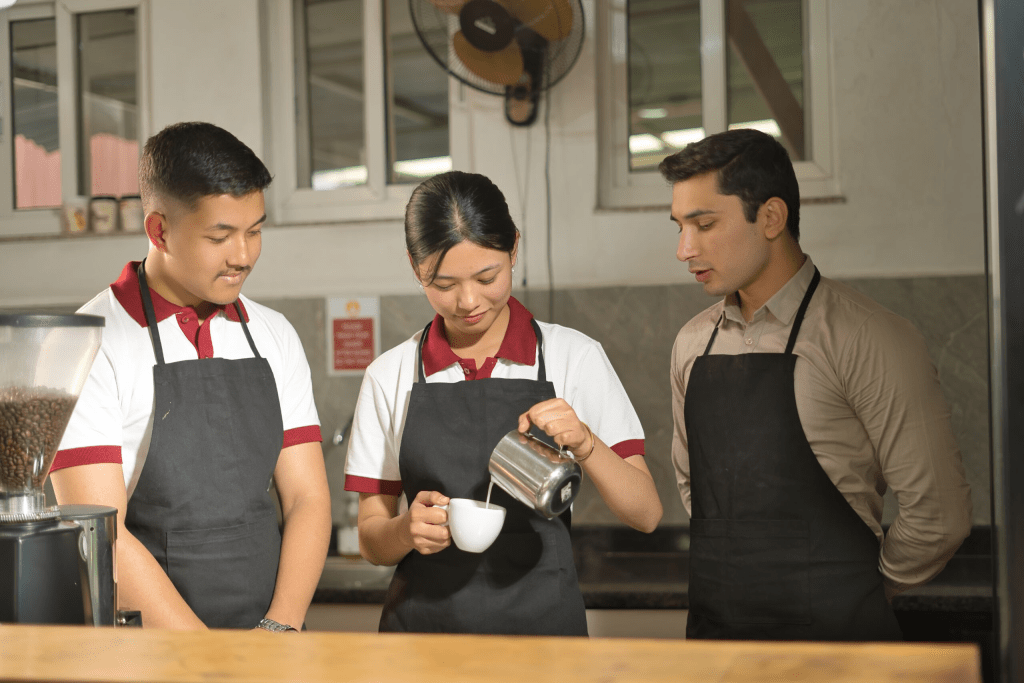
Now the city counts somewhere in the range of 6,000 to 7,000 cafes, depending on who you ask. That is not a typo. A generation of young Nepali entrepreneurs, many of whom trained or traveled abroad, came home and decided their country should drink better. Espresso machines arrived. Baristas got serious. Roasters started sourcing beans grown a few hundred kilometers away rather than shipping them in from Vietnam or India.
Thamel and the lakeside in Pokhara became the obvious tourist hotspots, but the real shift happened in neighborhoods like Jhamsikhel, where locals, not backpackers, fill the seats. Coffee stopped being a Western affectation. It became something Nepalis claimed as their own.
The growth has a catch, though. Demand for good Nepali coffee far outstrips what the farms can grow, which keeps prices high and supply thin. More on that in a moment.
Where Nepal’s Coffee Actually Comes From
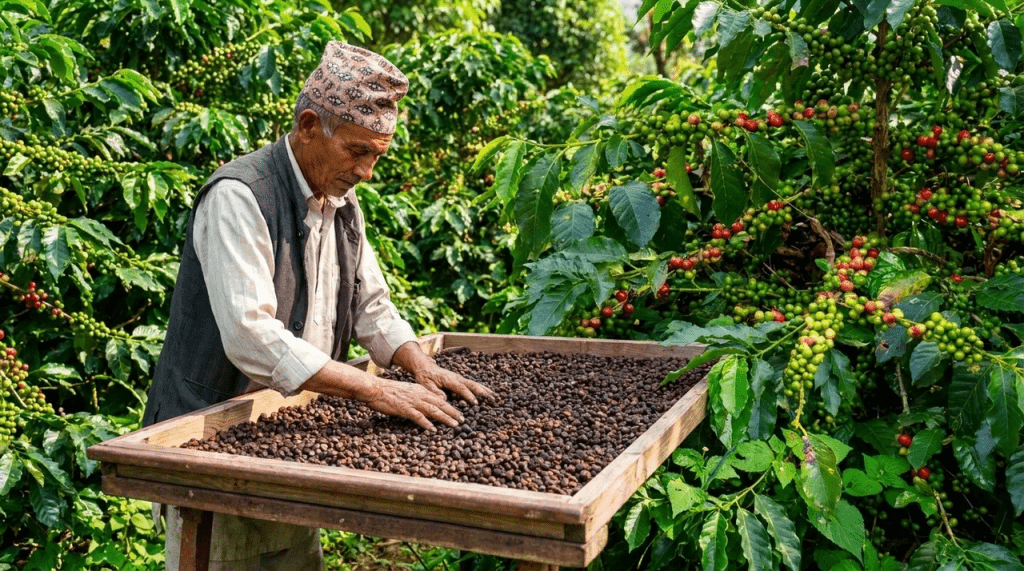
Almost all of it is Arabica, grown between roughly 800 and 1,600 meters in the mid-hills. Typica and Bourbon are the dominant varietals, and a lot of it is certified organic, partly thanks to the National Coffee Policy of 2003 that pushed farmers toward chemical-free cultivation from the start.
The heartland is the western hills. Gulmi district is often called the birthplace of Nepali coffee, and along with Palpa, Arghakhanchi, Pyuthan, and Syangja it forms a government-designated “Coffee Super Zone.” Gulmi alone covers around 231 hectares and produces about 27 tons a year, which gives you a sense of how boutique this whole thing still is.
Nationally, the numbers stay small. Total cultivation sits around 3,600 hectares, and annual production hovers somewhere between 400 and 600 metric tons, depending on the season and the source. As of early 2025, the Nepal Coffee Producers Association put production capacity near 586 metric tons. Compare that to a serious coffee nation like Ethiopia, which produces hundreds of thousands of tons, and you realize Nepal is a rounding error on the global map.
Small does not mean unimportant. Quality is the whole pitch. In fiscal year 2024/25, Nepal exported close to 64,000 kilograms of coffee, earning roughly Rs 114 million, and industry estimates suggest international demand for Nepali beans could be 8,000 metric tons or more if only the farms could supply it. That gap is exactly why specialty roasters get excited. If you want to understand the upside, the trade publication Perfect Daily Grind ran a thorough piece on how Nepal is emerging as a specialty coffee origin in 2025.
The Tea Side: Older, Bigger, and Quietly World-Class
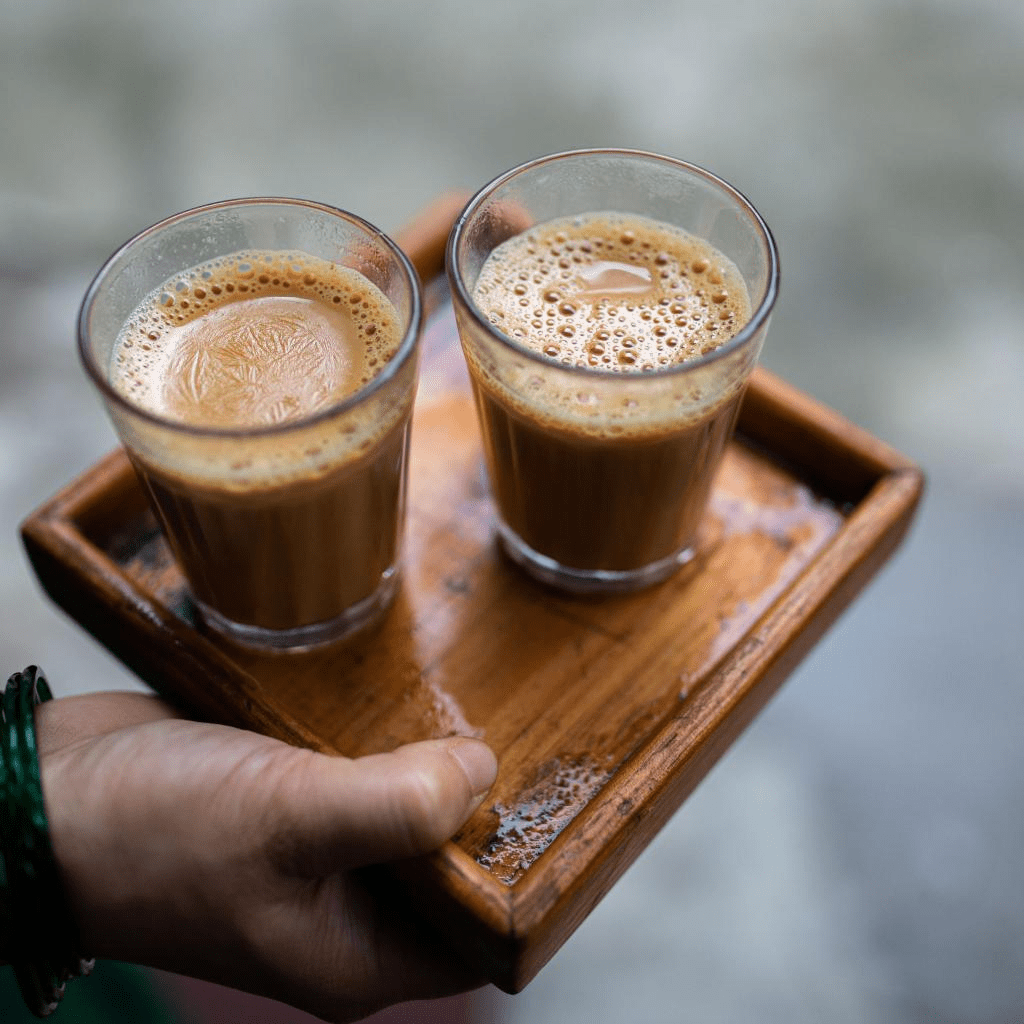
If coffee is the ambitious newcomer, tea is the established elder. Nepalis drink chiya, milky spiced tea boiled with sugar and often cardamom or ginger, all day, every day. It is the social glue of the country. Step into any home, any office, any roadside shop, and tea appears within minutes whether you asked for it or not.
Commercially, tea dwarfs coffee. Nepal produced about 26 million kilograms of processed tea in fiscal year 2024/25 from more than 20,000 hectares of plantations. Around 100,000 people work in the sector, and roughly 15,000 smallholder farmers depend on it. Tea exports brought in something close to Rs 4.59 billion in recent figures, money that coffee cannot touch yet.
Two broad styles exist here. CTC tea, the crush-tear-curl kind, is grown mostly on big estates and ends up in the strong everyday brew. Orthodox tea is the premium product, whole-leaf and carefully processed, and most of it comes from small farmers in the eastern hills.
Ilam and the Eastern Tea Belt
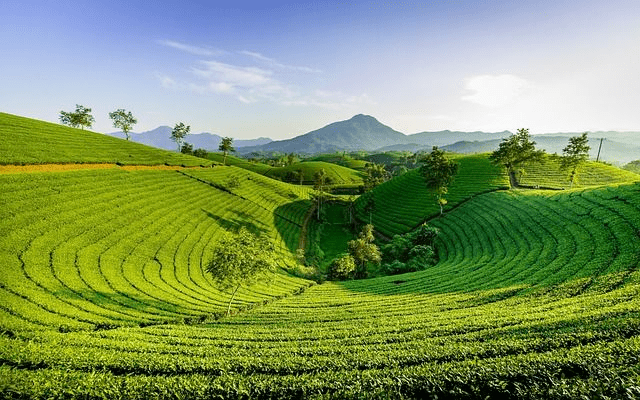
Ilam is the name to know. Sitting in Nepal’s far east near the Darjeeling border, it produces the orthodox teas that have built the country’s premium reputation, alongside neighboring Panchthar and Dhankuta. Geography does the country a favor here: the same misty, high hills that make Darjeeling famous spill straight across the border into Nepal.
Recognition is finally catching up. In 2024, the Siddha Devi Tea Estate from Ilam won “World’s Best Tea” at the World Tea Expo, beating estates from India, Japan, and China. For a region that spent decades selling its leaf cheaply to be blended and rebranded elsewhere, that award was a genuine turning point.
What This Means for You as a Visitor
You can drink your way through both traditions without leaving Kathmandu, and you should. A practical plan looks something like this.
- Start with chiya on the street. A glass costs about Rs 20 to 40 and comes from a kettle that has been simmering since dawn. It is sweet, strong, and the most authentic thing you will taste all day.
- Then find a specialty cafe. A pour-over or flat white made with Nepali single-origin beans runs roughly Rs 250 to 450 in a good Kathmandu or Pokhara shop, a fraction of what you would pay in London or New York for comparable quality.
- Buy beans and loose-leaf to take home. Both make excellent, lightweight gifts, and you are buying directly from the source rather than a middleman.
In Kathmandu, neighborhoods like Jhamsikhel and Patan have become the unofficial coffee district, with roasters who source high-grade Arabica and process it themselves. Pokhara’s lakeside has its own crop of organic-focused cafes, several growing their beans in the surrounding hills. While you are exploring the capital, a broader Kathmandu travel guide will help you slot cafe-hopping into a wider itinerary, and a dedicated Pokhara travel guide does the same for the lakeside.
A Few Honest Caveats
Not every cafe claiming “specialty” lives up to it. Plenty of tourist-strip spots serve mediocre coffee with a nice view and charge accordingly. Ask where the beans are from. If the answer is vague or imported, you are paying for the ambiance, not the cup.
Tea is harder to get wrong, but the cheap supermarket CTC most travelers buy is not the orthodox grade that wins awards. If you want the good stuff, look for single-estate Ilam orthodox tea, ideally with the estate named on the packet.
How Coffee and Tea Fit Into Nepali Food Culture
Both drinks anchor the rhythm of a Nepali day. Morning tea before anything else. Coffee has become the modern afternoon ritual for the urban young. Tea returns again with snacks at dusk.
Pair your drinking with eating and the experience deepens. Spiced tea goes beautifully with fried street snacks, and a strong coffee cuts through the richness of Newari feast food. For the food side of the equation, our Newari culture and cuisine guide covers the dishes that pair best with both. Kathmandu Post also published a sharp opinion piece on brewing change in Nepali coffee that captures where the industry is heading.
Frequently Asked Questions
Is Nepal known for coffee or tea?
Historically tea, by a wide margin. Tea is the everyday drink and a major export, with production around 26 million kilograms a year. Coffee is the fast-rising newcomer, tiny in volume but growing in reputation, especially in the specialty market.
Where is the best coffee in Nepal grown?
Western mid-hills, especially Gulmi, Palpa, Arghakhanchi, Pyuthan, and Syangja, which together form the government’s “Coffee Super Zone.” Beans grow between roughly 800 and 1,600 meters and are almost all organic Arabica.
What is chiya and how is it different from coffee shop tea?
Chiya is the milky, sweet, spiced tea Nepalis drink all day, boiled with sugar and often cardamom or ginger. It bears little resemblance to the delicate orthodox tea Nepal exports, which is whole-leaf and brewed without milk to taste its flavor properly.
How much does coffee cost in Nepal?
A specialty pour-over or flat white runs about Rs 250 to 450 in a good cafe. Street chiya costs only Rs 20 to 40 a glass. As of early 2025 these were typical ranges, though tourist areas charge more.
Is Nepali tea the same as Darjeeling tea?
Not the same, but closely related. Ilam, Nepal’s tea heartland, sits right across the border from Darjeeling and shares the same high-altitude, misty growing conditions. For years Nepali leaf was blended into Darjeeling labels, but Nepal now sells more under its own name.
Can I visit coffee or tea farms as a tourist?
Yes. Ilam in the east has a growing tea-tourism scene with estate visits and homestays. Coffee farm visits are possible in the western hills around Gulmi and near Pokhara, though they are less developed and usually require arranging a local guide in advance.
What should I bring home, beans or tea?
Both travel well and stay light. For coffee, buy whole beans from a roaster who names the origin. For tea, look for single-estate Ilam orthodox tea rather than generic CTC, which is the everyday grade and far less special.
Why is Nepali coffee so expensive if the country grows it?
Because supply is tiny. Nepal produces only 400 to 600 metric tons a year against international demand estimated in the thousands of tons. Limited supply plus rising quality keeps prices firm, both at home and abroad.


