



At 11:30am on May 29, 1953, two men stood on the highest point on Earth. One was a beekeeper from New Zealand. The other was a Sherpa from the Khumbu region of Nepal. They had 15 minutes at the top before the cold drove them back down. But those 15 minutes rewrote history.
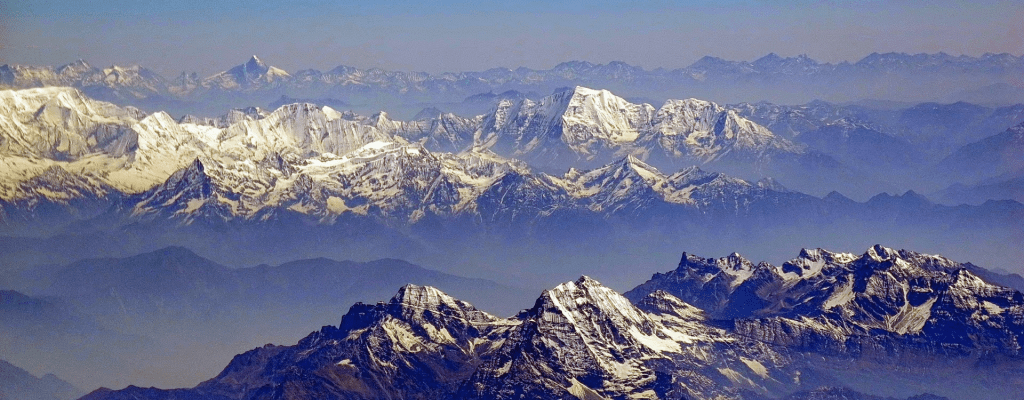
That moment is the centerpiece of Nepal mountaineering history, but it is far from the whole story. Nepal is home to eight of the world’s 14 peaks above 8,000 meters. How climbers came to this country, scaled its peaks, and transformed both the sport and the nation is a story spanning more than 75 years. Here is how it all unfolded.
A Country Closed to the World
Before Nepal’s peaks could be climbed, the country had to be entered. For the better part of two centuries, Nepal kept its borders shut to outsiders. No foreign expeditions, no surveys, no reconnaissance trips. Early Everest attempts in the 1920s and 1930s had to approach from the north, through Tibet, because Nepal was completely off limits.


George Mallory led three expeditions in 1921, 1922, and 1924 using that Tibet route. On his final expedition in 1924, Mallory disappeared near the summit. Whether he reached the top before dying remains one of mountaineering’s most debated mysteries.
Nineteen forty-nine was the turning point. Nepal’s king granted permission to British explorer Bill Tilman to travel in the country, and it was a crack in the door. By 1950, Nepal had formally opened to foreign mountaineering expeditions, and the world’s best climbers immediately made plans. The race to the eight-thousanders had begun.
The Golden Age: Nepal Mountaineering History at Its Most Dramatic (1950-1964)
What happened between 1950 and 1964 has no real parallel in the history of exploration. In the space of 14 years, climbers achieved first ascents on all 14 of the world’s eight-thousanders. It was a concentrated burst of achievement that will almost certainly never be repeated.
Annapurna I (8,091m) was first. On June 3, 1950, a French team led by Maurice Herzog and Louis Lachenal reached the summit, making Annapurna the first 8,000-meter peak ever climbed. The cost was severe: both men suffered debilitating frostbite during the descent and required amputations. Herzog later wrote a book about the expedition that became one of the bestselling mountaineering memoirs ever published. His account helped introduce Nepal’s mountains to a global audience.
Three years later came Everest. Then, in rapid succession: Kangchenjunga in 1955 (British team, George Band and Joe Brown), Makalu in 1955 (French, Lionel Terray and Jean Couzy), Lhotse in 1956 (Swiss team), and Manaslu in 1956 (Japanese climbers Toshio Imanishi and Gyalzen Norbu). Cho Oyu fell in 1954 to an Austrian team, and Dhaulagiri in 1960 to a Swiss-Austrian expedition. By 1964, every eight-thousander had been climbed for the first time.
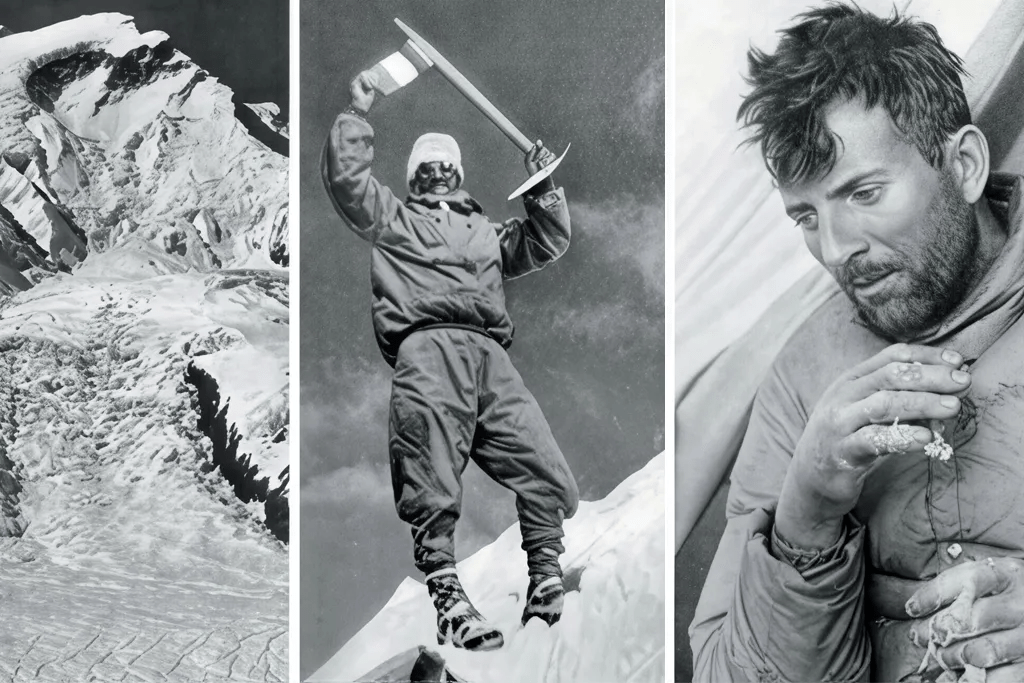
Here is what most accounts of this period miss: many of these climbs resulted in serious frostbite, amputations, and deaths on the descent. Equipment was primitive, understanding of altitude sickness was incomplete, and communications were nonexistent. What looks like a golden age in retrospect was, for the people involved, a period of enormous personal risk taken with imperfect knowledge.
May 29, 1953: The Summit That Changed Everything
The first ascent of Everest deserves its own section, not because it was technically the most impressive climb of the era, but because of what it meant for everything that followed.
Edmund Hillary, a 33-year-old New Zealander, and Tenzing Norgay, a 39-year-old Sherpa from the Khumbu valley, left their Camp IX at 8,500 meters in the early morning hours of May 29. They pushed through a steep snow-covered face, and at 11:30am, they stepped onto the summit. Hillary later said the view was “extraordinary.” Tenzing buried chocolate and biscuits in the snow as an offering. Hillary photographed Tenzing with his ice ax raised.
News of the summit reached London just in time for the coronation of Queen Elizabeth II on June 2, 1953. It became a symbol of postwar optimism. John Hunt received a knighthood, Hillary received one too, and Tenzing received the George Medal, a distinction that reflected the complicated politics of the era. A Nepali Sherpa had co-climbed the world’s highest peak, but that part of the story got somewhat lost in the British celebration.
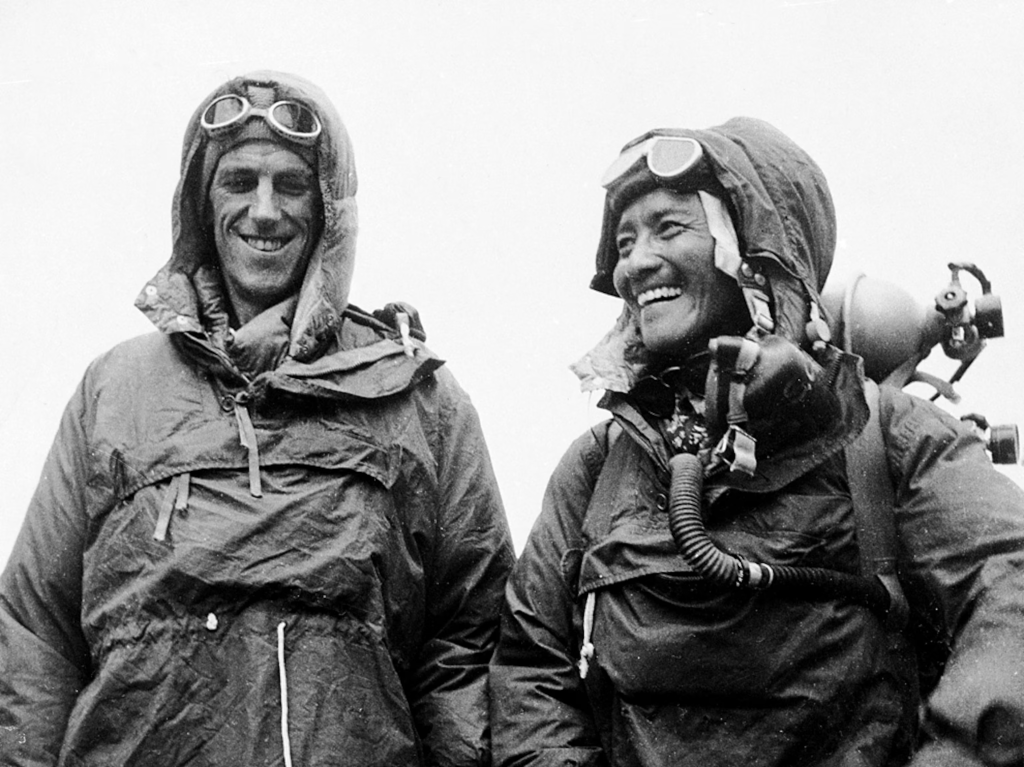
The 1953 ascent opened Nepal to expedition tourism in a way nothing else could have. Within years, foreign climbers were applying for permits to climb peaks across the country. The Nepal government, recognizing the economic potential, began formalizing its permit system.
The Sherpas: The Backbone of Nepal’s Mountaineering Tradition
The truth is that the story of Nepal mountaineering is largely a Sherpa story. Without the Sherpa community, most of the famous first ascents of the 1950s would not have happened, and a significant percentage of modern Everest summits would fail.
Sherpas are an ethnic group who migrated from the Kham region of eastern Tibet to northeastern Nepal roughly 500 years ago. Their name translates directly from Tibetan as “people from the east.” Living at altitudes between 3,500 and 5,000 meters for generations, they developed physiological adaptations that give them a genuine advantage at altitude: greater lung capacity, more efficient oxygen use, and a tolerance for cold that most people from lower elevations simply do not have.
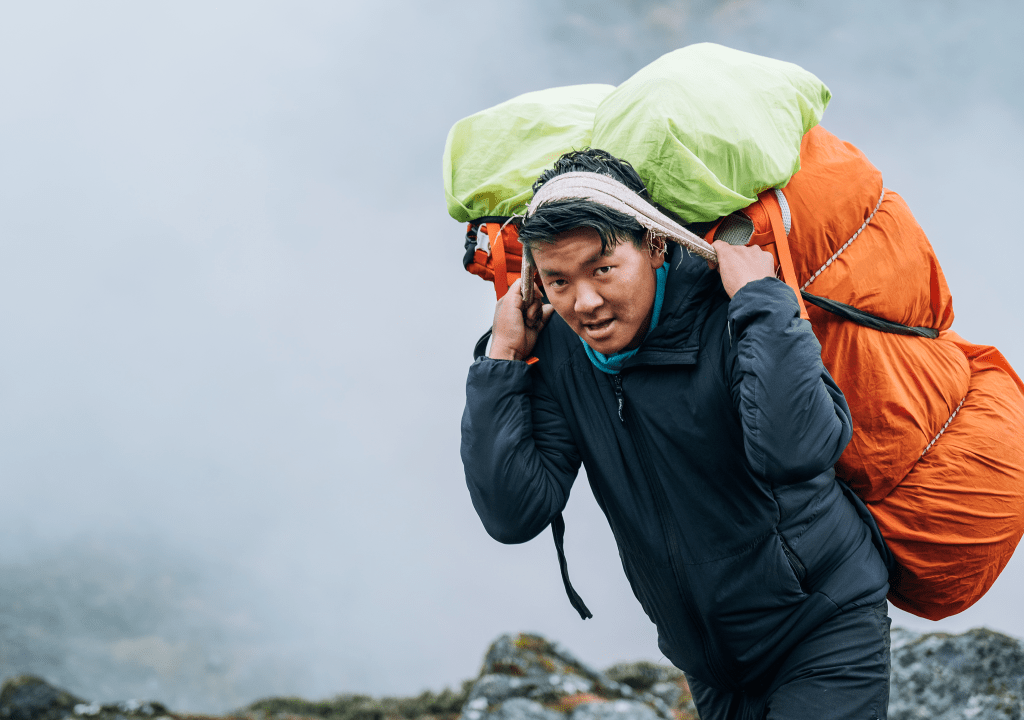
In the early days of Himalayan expeditions, the British treated Sherpas primarily as porters and load carriers. They were essential but largely uncredited. Tenzing Norgay’s summit in 1953 changed that narrative permanently. Time magazine later named him one of the 100 most influential people of the 20th century. His achievement demonstrated what the climbing world would eventually accept fully: Sherpas were not support staff. They were mountaineers.
Today, Sherpas hold some of the most remarkable records in high-altitude climbing. Kami Rita Sherpa holds the record for the most Everest summits by any individual, with more than 29 ascents as of 2025. Sherpas fix the ropes each spring, carry loads through the Khumbu Icefall, and guide the majority of commercial expeditions. If you plan to climb in Nepal, understanding the permit system is essential, but understanding the Sherpa culture matters just as much.
Records, Firsts, and the Changing Face of the Sport: 1975 to Today
After the golden age, the sport shifted. No longer “can this peak be climbed?” but rather “how can it be climbed faster, or under harder conditions?”
In 1975, Junko Tabei of Japan became the first woman to summit Everest, on May 16, via the Southeast Ridge route. She overcame an avalanche during the expedition that buried her camp and injured several team members. Her achievement opened a new chapter in the sport.
Three years later, in 1978, Italian climber Reinhold Messner and Austrian Peter Habeler did what many physiologists had said was impossible: they climbed Everest without supplemental oxygen. Medical experts had long argued that the human body could not function above 8,000 meters without bottled oxygen. Messner and Habeler proved them wrong. In 1980, Messner returned and soloed the mountain, also without oxygen. He went on to become the first person to climb all 14 eight-thousanders, completing the project on October 16, 1986, with his ascent of Lhotse.
The commercial era began in earnest in the late 1980s and accelerated through the 1990s. By 1996, the year of Jon Krakauer’s Into Thin Air, commercial expeditions were carrying paying clients to the Everest summit for fees that could exceed $65,000 per person. The 1996 season ended in disaster: eight climbers died in a single storm on May 10-11. It did not slow the industry. If anything, it intensified public interest.
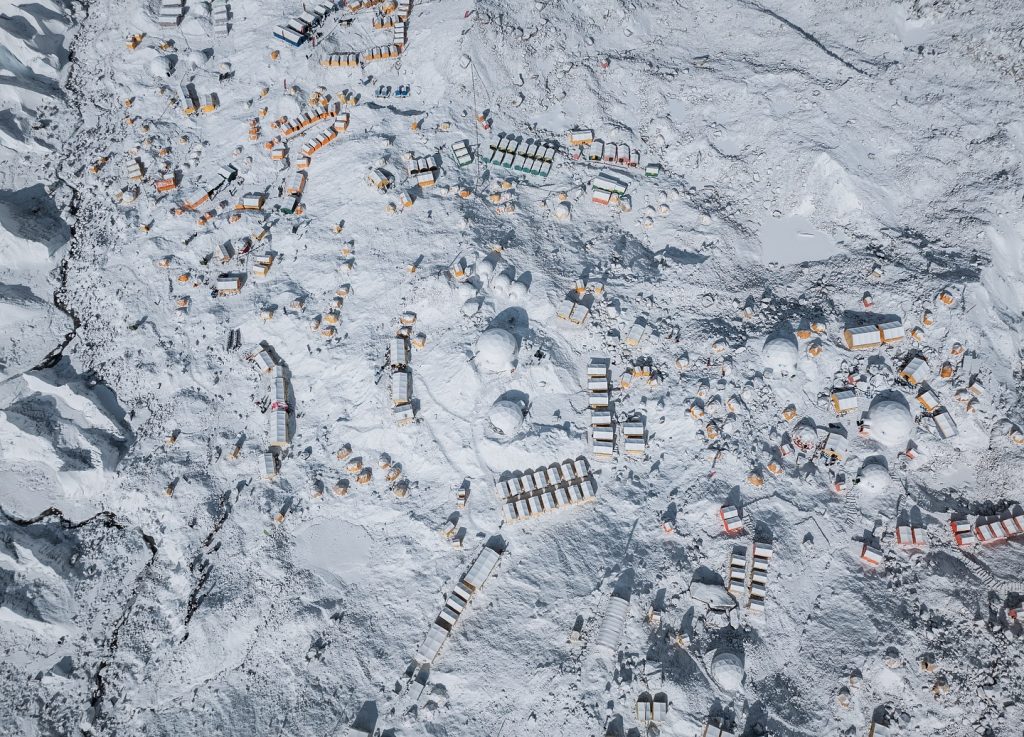
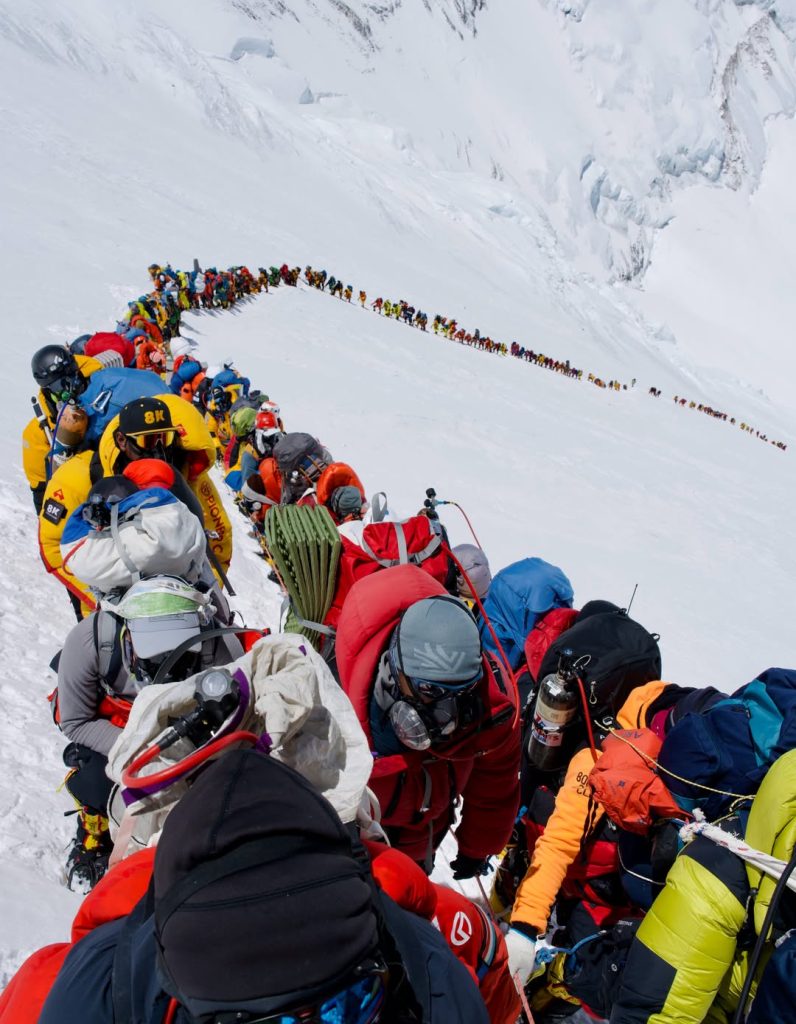
The numbers today are striking. In the 2025 spring season alone, approximately 850 climbers successfully summited Everest, including more than 700 on just two days: May 18 and 19. Nepal’s Department of Tourism issued 458 permits to foreign climbers. The permit fee stands at $15,000 per person for the spring season, a figure set effective from September 2025. Despite the volume, the 2025 season recorded only five deaths, down significantly from eight in 2024 and seventeen in 2023, suggesting that improved coordination and stricter safety standards are making a difference. For more on planning a trek in the region, the complete guide to trekking in Nepal covers what you need to know.
Nepal’s Eight-Thousanders Today: What You Should Know
Nepal’s eight 8,000-meter peaks attract climbers from every corner of the world. Cho Oyu (8,188m) is considered the most accessible eight-thousander and draws many first-time high-altitude climbers. Annapurna I (8,091m), by contrast, has one of the highest fatality-to-summit ratios of any eight-thousander. Everest sits somewhere in the middle: technically less challenging than K2 or Kangchenjunga, but infamous for its crowds and unpredictable weather.
If climbing is not on your agenda but you want to experience Nepal’s mountaineering world firsthand, trekking to Everest Base Camp or the Annapurna Circuit puts you in the same landscapes where this history unfolded. Read the comparison between these two routes before you plan your trip.
For authoritative current information on climbing regulations and peak lists, the Nepal Tourism Board’s official site is the most reliable starting point.
Frequently Asked Questions About Nepal Mountaineering History
Who was the first person to climb Mount Everest?
Edmund Hillary of New Zealand and Tenzing Norgay, a Sherpa from Nepal, were the first confirmed climbers to reach the summit of Mount Everest. They reached the top at 11:30am on May 29, 1953, as part of a British expedition led by John Hunt.
When did Nepal open to foreign mountaineers?
Nepal officially opened its borders to foreign mountaineering expeditions in 1949 to 1950. Before that, the country had been closed to outsiders for nearly two centuries. The first foreign expedition to take advantage of the new access was a French team that climbed Annapurna in June 1950.
How many 8,000-meter peaks are in Nepal?
Nepal has eight of the world’s 14 eight-thousanders: Everest (8,849m), Kangchenjunga (8,586m), Lhotse (8,516m), Makalu (8,485m), Cho Oyu (8,188m), Dhaulagiri (8,167m), Manaslu (8,163m), and Annapurna I (8,091m). The remaining six are located in Pakistan or along the China-Pakistan border.
Who were the Sherpas and why are they so important to Nepal mountaineering?
Sherpas are an ethnic group from northeastern Nepal who migrated from eastern Tibet roughly 500 years ago. Their name means “people from the east” in Tibetan. Generations of living at altitude gave them real physiological advantages: greater lung capacity and more efficient oxygen use than most lowland climbers. From porters in the 1920s, they evolved into some of the world’s most accomplished high-altitude mountaineers.
Was Reinhold Messner the first person to climb all 14 eight-thousanders?
Yes. Reinhold Messner completed all 14 eight-thousanders on October 16, 1986, summiting Lhotse in Nepal last. He did so without supplemental oxygen on any of them. Messner is widely regarded as the greatest high-altitude mountaineer in history, and also holds the record for the first solo ascent of Everest without oxygen, in 1980.
How dangerous is climbing Everest today?
Everest remains a serious undertaking with real fatality risk, but safety has improved significantly in recent seasons. In 2025, five climbers died on Everest out of approximately 850 successful summits, one of the lowest death rates in the mountain’s commercial climbing history. Better coordination among expedition operators, stricter permit requirements, and improved weather forecasting have all contributed to this improvement.
How much does it cost to climb Everest from Nepal?
The Nepal government permit alone costs $15,000 per person for the spring season, effective from September 2025. When you add agency fees, Sherpa support, equipment, insurance, flights, and logistics, a full Everest expedition typically costs between $45,000 and $100,000 depending on the operator and level of support.
What is the best way to experience Nepal’s mountaineering history without climbing?
Trekking to Everest Base Camp or the Annapurna Circuit puts you in the same landscapes where this history unfolded, no technical skills required. The International Mountain Museum in Pokhara is also worth a visit: it documents the first ascents, Sherpa culture, and the full arc of Himalayan climbing history in a well-curated space.


