


Nepal is world-famous for its soaring snow-capped mountains. Millions of travelers visit its scenic rivers and ancient temples every year. However, many visitors miss the incredible underground world hidden beneath the hills. Deep within the Tanahun district lies an astonishing subterranean natural wonder. It is known to locals and international adventurers as Siddha Gufa: The Largest Cave in Nepal.
Going subterranean offers a thrilling change of pace. You do not need to worry about high mountain passes or deep water currents. Instead, you step into a mysterious world of pure pitch darkness. Furthermore, sound echoes through massive stone chambers filled with ancient rock formations. This complete guide covers everything you need to know about exploring this natural landmark.
What Makes Siddha Gufa: The Largest Cave in Nepal So Special?
Nepal houses thousands of small shrines and rocky overhangs across its hills. Nevertheless, none compare to the sheer scale of Siddha Gufa. Geological studies confirm that it stands as the vastest subterranean cavity in the country. Furthermore, many geologists consider it one of the grandest natural caves in South Asia.


The sheer size of its main hall takes your breath away immediately. The roof arches high above you like a massive natural cathedral. Meanwhile, ancient limestone sculptures hang from the ceiling in elaborate patterns. Consequently, exploring its depths delivers an unforgettable adventure for travelers of all backgrounds.
Overview and Key Statistics
Before planning your trip, reviewing key statistics helps you prepare effectively. The following summary highlights essential details regarding Siddha Gufa: The Largest Cave in Nepal.
- Location: Bimalnagar, Tanahun District, Gandaki Province.
- Cave Length / Depth: 437 meters.
- Chamber Height: Up to 50 meters.
- Inner Capacity: Approximately 2,500 people.
- Elevation: Roughly 740 to 810 meters above sea level.
- Rock Type: Natural Calcium Carbonate and Limestone.
- Nearest Highway: Prithvi Highway.
- Nearest Major Towns: Bandipur and Bimalnagar.
- Modern Re-discovery: 1988 AD by local villagers.
Where is Siddha Gufa Located?
The cavern rests in the central hills of Nepal within Tanahun District. Specifically, it sits high above the village of Bimalnagar. The rushing Marsyangdi River flows quietly through the valley below.
The site benefits from a very convenient location right off the Prithvi Highway. This highway connects the capital city of Kathmandu to Pokhara. Therefore, stopping at the cave serves as a perfect break during a highway road trip.
Distance from Major Hubs
- From Kathmandu: Roughly 134 kilometers west along the highway. The drive takes 4 to 5 hours.
- From Pokhara: Approximately 68 kilometers east. The road trip requires about 2 hours.
- From Bandipur: Located just a few kilometers from Bandipur and can be reached via a scenic ridge trail. The walk offers beautiful views and connects the two destinations.
Because of these short distances, day trips are extremely easy to organize. You can leave the city in the morning and return before sunset easily.
Geological Formation and Interior Features
How did Siddha Gufa: The Largest Cave in Nepal form over time? The answer lies in millions of years of natural water erosion.
The surrounding Mahabharat Mountain Range rose from ancient tectonic activity. Slightly acidic rainwater seeped down through tiny surface fractures in the limestone bedrock. Over centuries, water slowly dissolved the rock layers. As a result, massive subterranean hollows developed deep inside the hillside.
Speleothems: Stalactites and Stalagmites
Inside the cavern, water continues to drip constantly from above. Every single drop leaves behind a microscopic layer of calcite mineral. Over thousands of years, these mineral deposits build striking natural sculptures.
- Stalactites: Icicle-like stone formations hanging down tightly from the roof.
- Stalagmites: Cone-shaped mineral pillars growing slowly upward from the damp floor.
- Columns: Massive stone pillars created when stalactites and stalagmites merge together over time.
- Flowstones: Smooth, sheet-like calcite layers covering huge sections of the cavern walls.
In addition, giant scallops line parts of the limestone ceiling. These smooth scoops show where ancient underground rivers once carved through the hill with great force.
Interior Scale and Physical Layout
The physical measurements of Siddha Gufa: The Largest Cave in Nepal are remarkable. The main horizontal corridor extends roughly 437 meters straight into the mountain. Furthermore, the ceiling reaches staggering heights of up to 50 meters in the central hall.
The cave features two primary entrance openings:
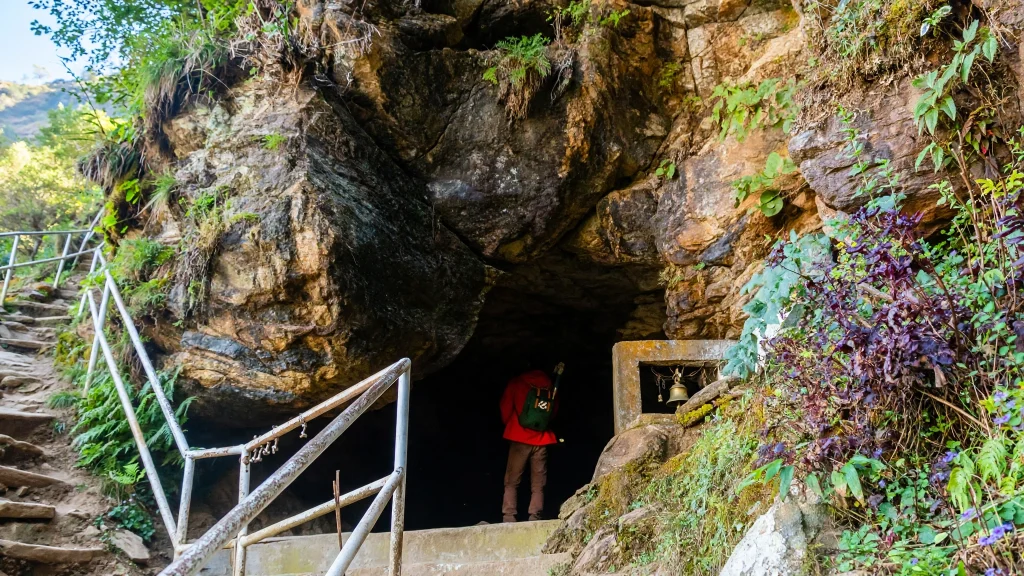
- Lower Main Entrance: This is the primary access point used by visitors. It measures about 8 meters wide and 2.2 meters high.
- Upper Entrance: Positioned roughly 70 meters higher up the hillside. It creates a natural balcony looking down into the main chamber below.
Because the interior is so expansive, local authorities estimate it can hold 2,500 people simultaneously. Furthermore, the open space provides incredible acoustic resonances. A light whisper at one end can echo across the massive dark hall.
History and Cultural Legends
Every prominent natural site in Nepal carries rich spiritual heritage. Siddha Gufa: The Largest Cave in Nepal is certainly no exception to this rule.
The word Siddha refers to a holy sage who has attained spiritual perfection. Meanwhile, Gufa simply translates to cave in the Nepali language. Local tradition holds that a famous saint named Siddha Baba meditated inside these silent chambers. He spent years in deep contemplation far away from human distraction. Eventually, he achieved ultimate divine enlightenment right here on these grounds.
As a result, Hindu pilgrims view the cavern as a sacred space. Local villagers built a modest shrine near the entrance to honor Siddha Baba. Visitors frequently offer prayers and leave flowers before entering the dark passage.
Modern Re-discovery
Although holy men knew about the cave for centuries, wider public awareness came much later. In 1988, local villagers grazing cattle re-discovered the main entryway. News of their discovery spread quickly throughout Tanahun.
Shortly after, European speleologists surveyed and mapped the extensive interior galleries in the early 1990s. Today, it remains a proud natural landmark for the entire region.
The Caving Experience: What It Feels Like Inside
Stepping into the cavern shifts your senses immediately. Natural daylight fades away within a few short meters. Soon, total darkness envelops you completely.
A refreshing cool breeze greets you at the main threshold. Outside temperatures might feel hot and humid. However, the air inside stays cool and comfortable year-round. Temperatures generally hover between 17°C and 21°C throughout the seasons.
The floor beneath your boots consists of hardened mud, breakdown rocks, and smooth calcite deposits. Water droplets continuously fall from high above, creating a rhythmic dripping sound. Furthermore, hundreds of native bats chirp and whistle from high ceiling crevices. Their soft calls echo against the dark stone walls constantly.
How to Reach Siddha Gufa: Hiking Routes
Reaching Siddha Gufa: The Largest Cave in Nepal requires a fun, energetic hike. Travelers can select between two distinct trail options depending on their schedule.
Route 1: The Bimalnagar Trail (Uphill Staircase)
This route serves as the most direct path from the main highway. You start your walk right at Bimalnagar village.
- Distance: Around 2 kilometers.
- Duration: 45 minutes to 1 hour.
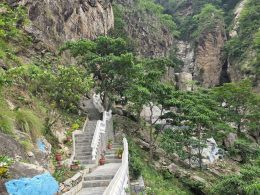
- Trail Style: Steep stone staircase climbing through lush forest.
- Key Feature: More than 1,100 stone steps built directly into the hillside.
The climb offers a fantastic cardiovascular workout. Fortunately, beautiful orange orchards line the lower sections of the path. Furthermore, shady pine trees shield you from harsh afternoon sunlight. You can rest at several stone benches along the way to catch your breath.
Route 2: The Bandipur Trail (Downhill Walk)
If you are already staying in the historic hilltop town of Bandipur, choose this route. It provides a scenic, relaxed descent down the mountain ridge.
- Distance: Approximately 3.5 kilometers.
- Duration: 1.5 hours downhill.
- Trail Style: Dirt path turning into stone steps over the cliff edge.
The path winds past quiet rural homesteads and terraced farm fields. You enjoy sweeping views of the Marsyangdi River valley throughout the walk. However, the stone trail can become slick after rain. Therefore, watch your step carefully on steep sections.
Underground Ecosystem: Wildlife and Bats
You might assume that a pitch-black environment lacks living creatures. On the contrary, Siddha Gufa: The Largest Cave in Nepal hosts a thriving underground ecosystem.
Native Bat Colonies
Bats represent the true owners of this subterranean realm. Hundreds of insect-eating bats roost high up on the ceiling cracks during the day. Multiple species call this dark space home, including horseshoe bats.
At dusk, thousands of bats fly out from the upper entrance simultaneously. They hunt mosquitoes and crop pests across nearby farms all night long. Thus, these bats play a vital ecological role in the local agricultural ecosystem.
Cave Invertebrates and Micro-organisms
In addition to bats, specialized cave mice live near the entrance areas. Further inside, tiny cave-dwelling crickets and spiders navigate the damp walls effortlessly. Microscopic fungi also thrive on organic matter brought in by trickling water droplets.
Best Season to Visit
Timing your journey properly guarantees a safe and comfortable outing. Nepal experiences four distinct seasonal periods every year.
Autumn (September to November)
Autumn stands out as the absolute best time for exploring Siddha Gufa: The Largest Cave in Nepal. Clear skies return once monsoon rains cease. Trail conditions are firm, dry, and easy to walk on. Furthermore, mountain visibility from the hiking paths is crystal clear.
Spring (March to May)
Spring offers another fantastic window for caving adventures. Wild flowers bloom vibrant red across the hillsides. Day temperatures feel warm without becoming overly hot. Additionally, the interior pathways remain mostly dry and stable.
Winter (December to February)
Winter brings cool, crisp weather to Tanahun District. Fortunately, the inside of the cavern feels surprisingly warm compared to the cold outside air. You just need a light jacket for the morning hike up from Bimalnagar.
Monsoon (June to August)
Heavy summer rains bring significant moisture to the region. Moisture seeps rapidly through the limestone ceiling. Consequently, natural mud pools form along the internal walking routes. The outdoor stone steps also become extremely slippery. While visiting remains possible, you must exercise extreme caution.
Essential Gear and Packing List
Preparation makes a huge difference when venturing underground. Bring these essential items to maximize your comfort and safety:
- Sturdy Hiking Boots: Select footwear with deep rubber lugs. Smooth sneakers slip easily on wet mud and calcite.
- Reliable Headlamp or Flashlight: Darkness inside is absolute. Carry a powerful torch along with extra batteries.
- Light Rain Jacket: Water constantly drips from the stone roof. A waterproof layer keeps you completely dry.
- Small Backpack: Keeps your hands completely free while scrambling over uneven rocks.
- Drinking Water: Stay well-hydrated during the steep uphill staircase climb.
- Hand Sanitizer or Wipes: Useful for cleaning mud off your hands after touching damp handholds.
Permit Fees and Guide Requirements
Local tourism committees manage access to Siddha Gufa: The Largest Cave in Nepal. Their work keeps the trails clean and safe for all visitors.
- Foreign Visitor Entrance Ticket: Approximately NPR 100 to 200.
- Compulsory Local Guide Fee: Approximately NPR 400.
- Torch Hire Fee: Available for a nominal charge at the counter.
Why Local Guides Are Compulsory
Local guides wait at the main entrance desk to greet arriving hikers. Hiring a guide is mandatory for entering the cave.
This rule exists for several important reasons:
- Safety Navigation: Unlit side branches exist inside the massive hall. A guide prevents visitors from losing their way in total darkness.
- Lighting Assistance: Guides carry high-powered spotlights to illuminate massive ceiling features.
- Local Storytelling: Guides point out unique stalactite shapes that resemble animals and religious deities.
- Community Benefit: Entry fees directly support local village families and trail maintenance crews.
Nearby Adventure Activities and Attractions
You can easily combine your visit to the cave with other thrilling local pursuits. The surrounding area offers several fantastic outdoor options.
1. Rock Climbing at Bimalnagar Cliff
Right beside the entrance path lies one of Nepal’s best natural rock climbing walls. The Bimalnagar limestone cliff features over 15 bolted sport routes. Climbers come here to tackle challenging multi-pitch lines up to 55 meters high.
2. Exploring Historic Bandipur Village
Bandipur is a beautifully preserved Newari hilltop settlement. It features traditional wooden architecture, slate-paved streets, and zero motor vehicles in the bazaar center. It serves as the ideal place to stay overnight before or after your caving tour.
3. Whitewater Rafting on the Marsyangdi River
The Marsyangdi River flows right past Bimalnagar village. Famous for its raging whitewaters, it attracts rafters and kayakers from all over the world. You can book an exciting half-day rafting trip through local river agencies.
Important Safety Guidelines and Rules
Exploring underground environments requires caution and personal responsibility. Please follow these essential safety rules during your visit:
- Watch Your Footing: Moisture makes stone paths slippery. Always verify step stability before placing your full body weight down.
- Mind Your Head: Low-hanging rock outcrops protrude near side passages. Watch overhead obstacles carefully as you walk.
- Stay With Your Group: Never wander off away from your assigned guide.
- Do Not Touch Formations: Touching stalactites transfers skin oil onto the rock. This oil permanently stops calcite crystal growth.
- Protect Natural Tranquility: Avoid making sudden loud noises that startle roosting bat colonies overhead.
Conclusion
In summary, exploring Siddha Gufa: The Largest Cave in Nepal is an unforgettable adventure. It provides a rare glimpse into the hidden geological beauty of the Himalayas. From its massive 50-meter-high ceilings to its ancient stalactites, every corner holds natural wonder. Furthermore, combining your trip with the rich history of Bandipur creates a perfect travel itinerary.
Whether you love nature, history, or physical adventure, this underground wonder delivers. Put on your hiking boots, grab a reliable headlamp, and explore Nepal’s ultimate underground kingdom today!
Frequently Asked Questions (FAQ)
Is visiting Siddha Gufa suitable for elderly travelers or young kids?
Yes, but with proper supervision. The main cave floor is wide and flat. However, the uphill climb from Bimalnagar demands moderate cardiovascular physical fitness.
How long does a typical tour inside the cave take?
An average guided tour inside the main chamber takes about 45 minutes to 1 hour. This duration provides plenty of time to take photos and view major mineral structures.
Do I need to book my entry ticket far in advance?
No prior advance booking is required. You can purchase entry tickets and hire local guides directly at the entrance counter.
Is there electrical lighting installed inside the cavern?
No, there is no permanent electric lighting inside. This preserves the natural dark habitat for native bat colonies. Visitors must use hand-held torches and headlamps.
Can claustrophobic people visit Siddha Gufa safely?
Most claustrophobic visitors find the cave quite comfortable. The main hall features an immense 50-meter-high ceiling. It feels like standing inside a massive, open indoor stadium.
What should I wear when visiting the cave?
Wear breathable, lightweight activewear for the hike up. Bring a light rain jacket or sweater for the cool, damp conditions inside.