



Beyond the crowded trekking trails and postcard mountains of Nepal lies a hidden kingdom where time seems suspended in the wind. In the walled city of Lo Manthang, surrounded by barren cliffs and ancient monasteries, drums echo through narrow alleys while monks in vivid masks dance beneath the Himalayan sky. This is the Tiji Festival in Nepal; one of the country’s most mysterious and spiritually powerful celebrations.
For three unforgettable days, the remote region of Upper Mustang transforms into a living stage of Tibetan Buddhist tradition. Travelers gather not merely to witness a festival, but to experience a culture that has survived centuries of isolation, devotion, and change.
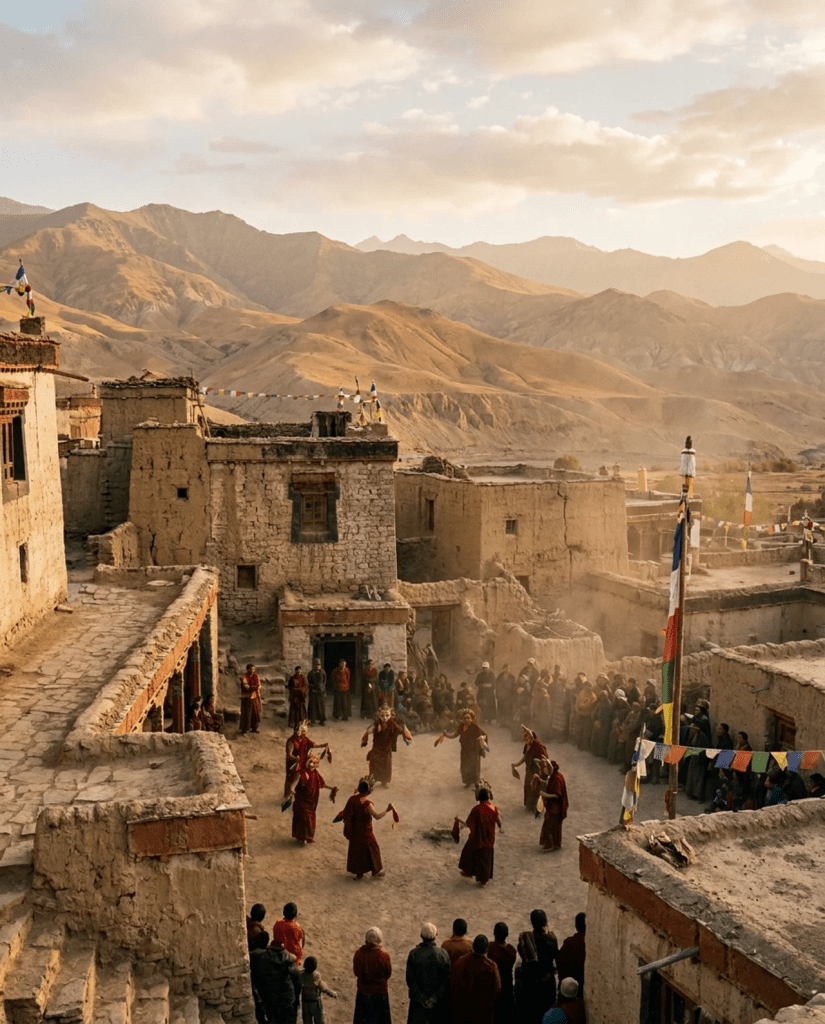
Unlike mainstream celebrations filled with noise and spectacle, Tiji feels sacred. Every movement, every chant, and every masked dance carries meaning passed down through generations. It is not simply a performance; it is a prayer for peace, protection, and the triumph of good over darkness.


Among the many hidden festivals in Nepal, few leave a deeper emotional imprint than Tiji.
What is Tiji Festival?
The Tiji Festival in Nepal is an annual three-day Buddhist ceremony celebrated in the ancient kingdom of Mustang. The word “Tiji” comes from the Tibetan phrase “Tenchi,” meaning “Prayer for World Peace.”
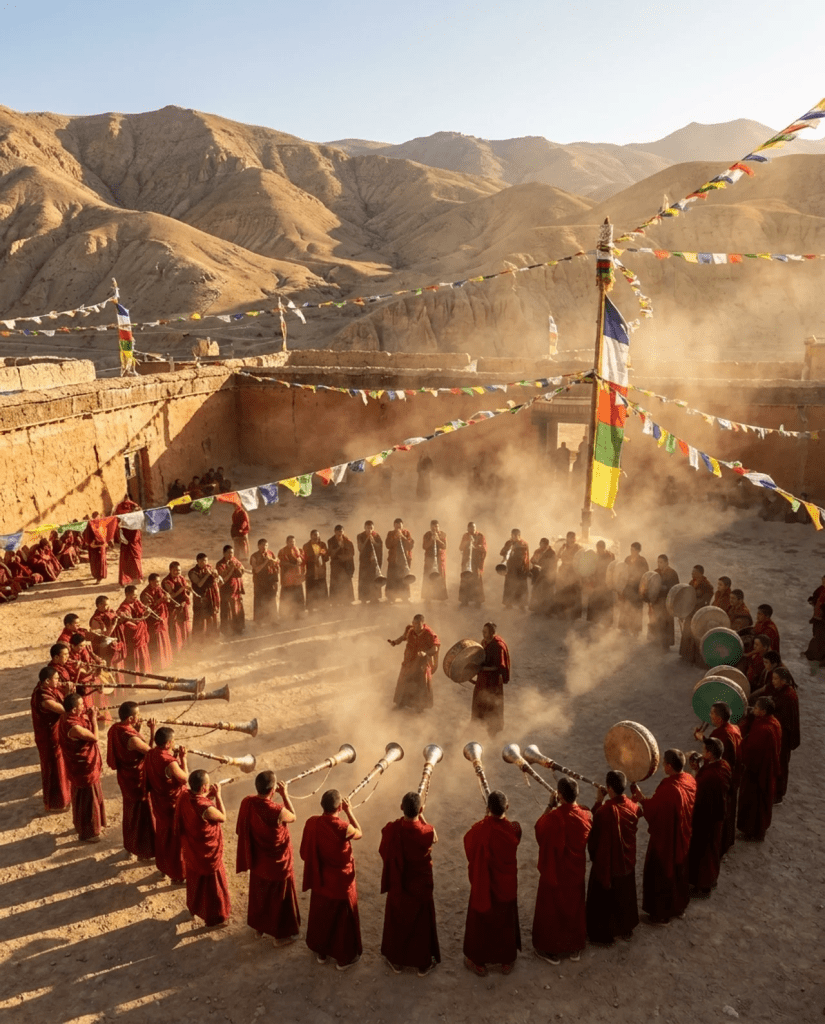
At its heart, the festival tells the story of Dorje Jono, a deity who battles destructive forces threatening the land and its people. Through sacred rituals and symbolic dances, monks reenact this ancient tale to drive away negativity and restore harmony.
Tiji is deeply tied to the spiritual identity of the people of Mustang. For locals, it is not entertainment or tourism. It is a sacred renewal of faith, community, and hope.
What makes the festival extraordinary is its authenticity. Despite growing global attention, the celebration has retained its original rituals, rhythms, and spiritual essence. Visitors are not watching a reconstructed tradition; they are witnessing a living culture.
History and Significance
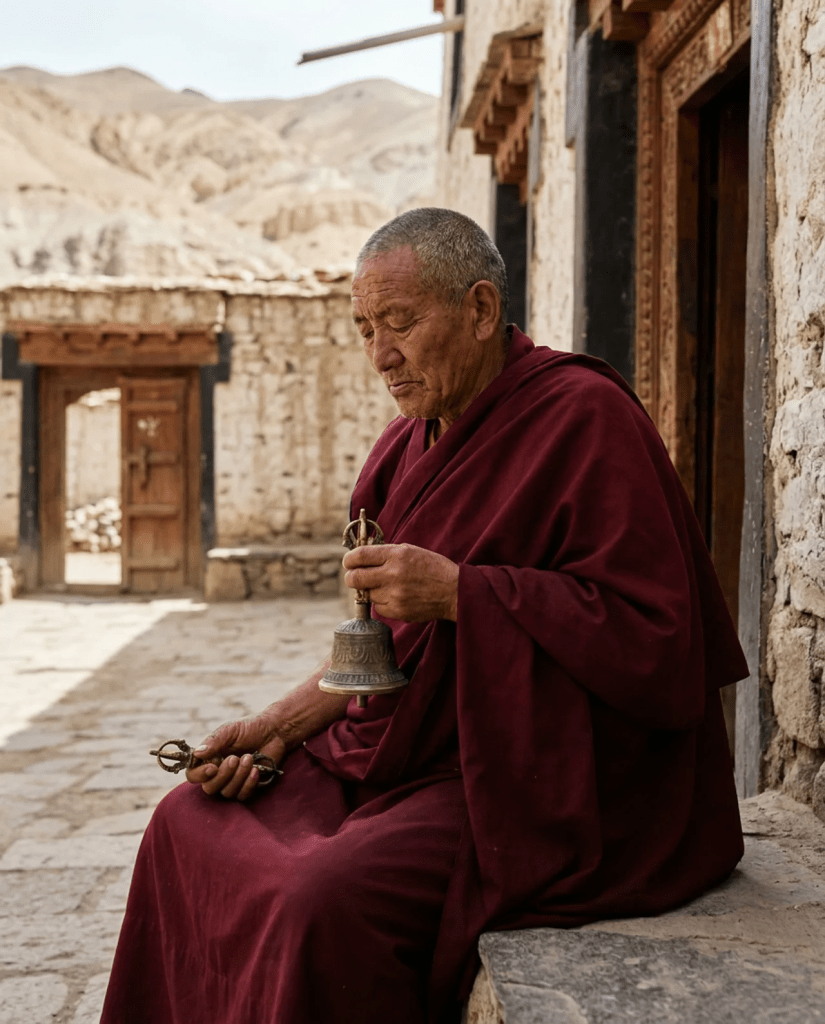
The roots of the Tiji Festival stretch back hundreds of years into the Tibetan Buddhist traditions of the Himalayas. The former Kingdom of Mustang, once an important trade route between Tibet and Nepal, preserved many ancient customs that disappeared elsewhere over time.
Historically, the people of Mustang believed the land suffered from drought, conflict, and spiritual imbalance caused by harmful forces. According to legend, Dorje Jono defeated a demon terrorizing the region and brought rain and prosperity back to the valley.
The annual festival became a symbolic reenactment of that victory.
Today, the festival remains one of the most significant Nepal Buddhist festivals, especially for the communities of Upper Mustang. Families travel from distant villages to attend prayers, receive blessings, and reconnect with cultural roots.
Beyond religion, Tiji also represents resilience. The isolated geography of Mustang helped protect its traditions during periods of modernization and political change. Walking through Lo Manthang during the festival feels like stepping into another century, one where monasteries still shape daily life and ancient stories remain alive in public memory.
Where is Tiji Celebrated?
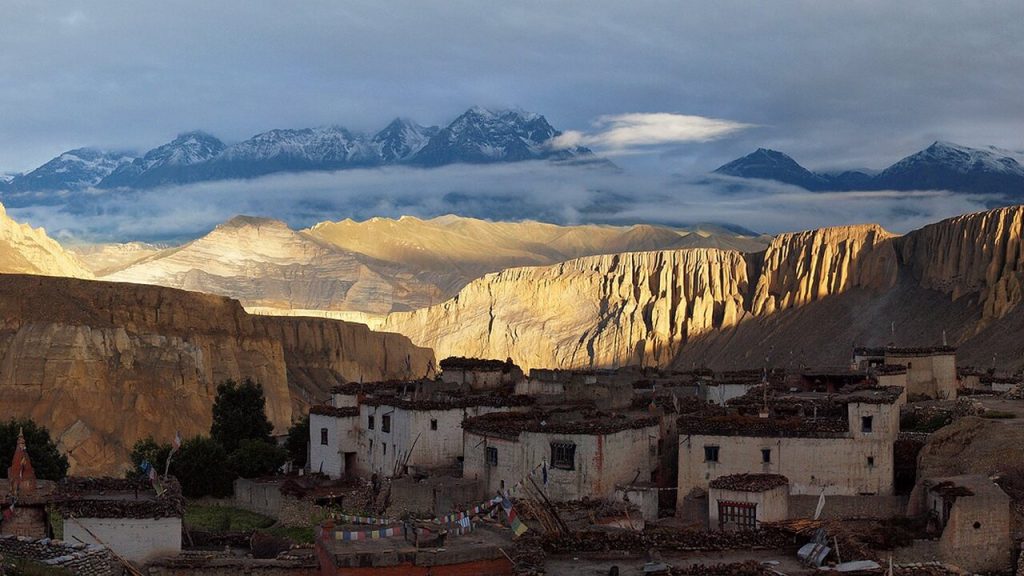
The Tiji Festival is celebrated in Lo Manthang, the ancient capital of the former Kingdom of Mustang.
Located in the rain-shadow region north of the Annapurna and Dhaulagiri ranges, Upper Mustang is unlike the lush green landscapes many associate with Nepal. The terrain here is dramatic and almost surreal; vast desert valleys, wind-carved cliffs, cave monasteries, and red-walled villages standing beneath snow-covered peaks.
Lo Manthang itself is a cultural treasure. Encircled by centuries-old mud-brick walls, the city contains royal palaces, monasteries, prayer wheels, and narrow pathways where Tibetan Buddhist traditions remain deeply woven into everyday life.
Reaching the festival is part of the adventure.
Travelers typically begin from Kathmandu, fly to Pokhara, and continue toward Jomsom before trekking or driving deeper into Upper Mustang.
Because of its restricted status, the region has remained culturally preserved and less commercialized than many other destinations in Nepal.
Rituals and Masked Dances (Chhaam)
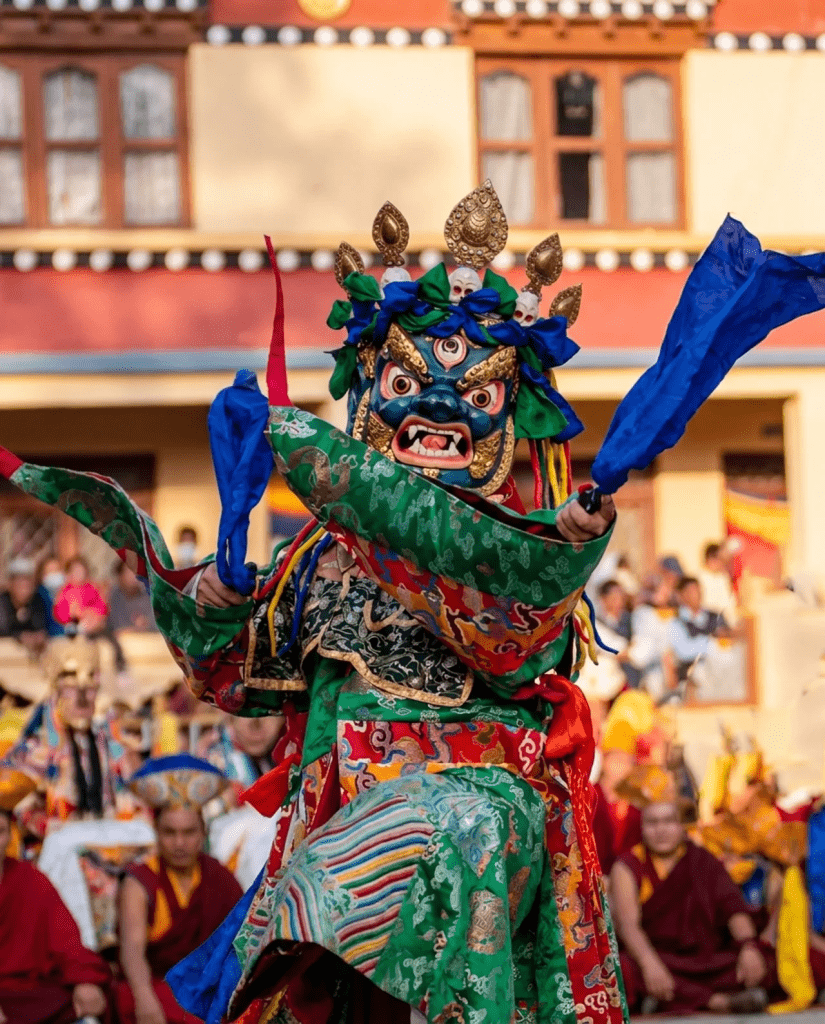
The soul of the festival lies in its sacred masked dances known as Chhaam.
Inside monastery courtyards, monks dressed in elaborate silk robes and striking masks perform dramatic ritual dances accompanied by horns, cymbals, chants, and drums. The atmosphere is hypnotic; spiritual yet theatrical, ancient yet intensely alive.
Each movement symbolizes a cosmic struggle between wisdom and ignorance, compassion and destruction.
Some masks represent protective deities, while others embody demons, animals, or spiritual beings from Buddhist mythology. The dances unfold slowly and deliberately, often telling stories through gestures rather than words.
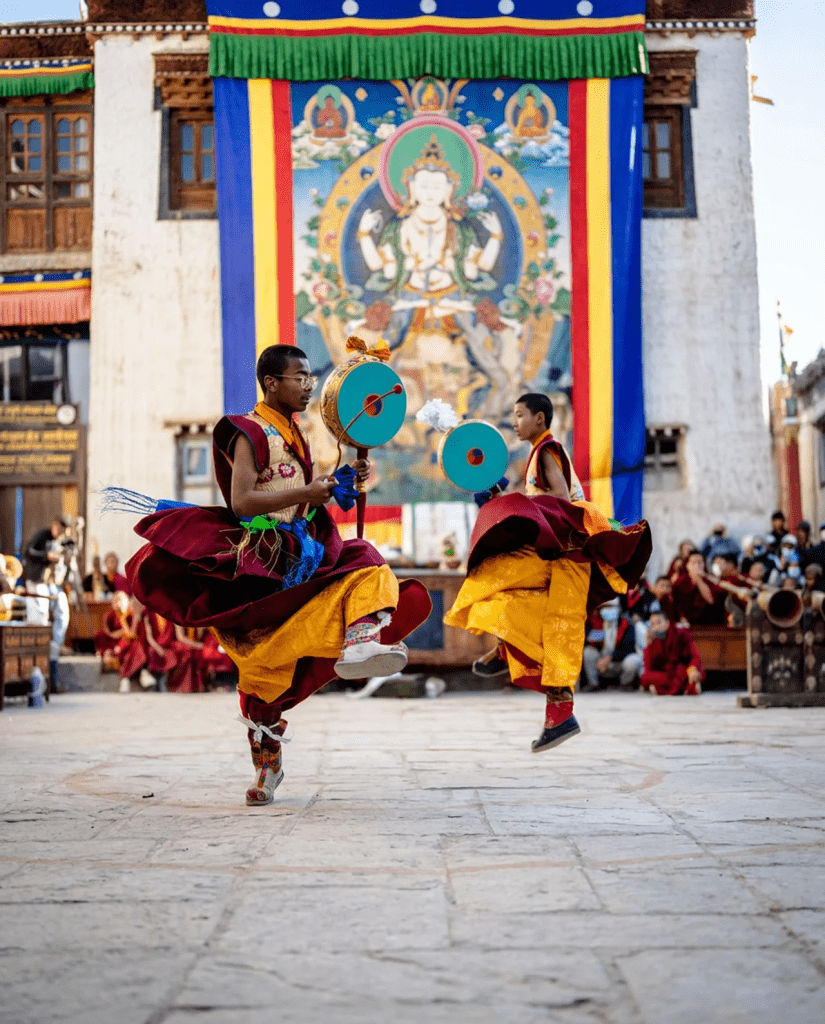
Watching the Chhaam dances is mesmerizing because they do not feel rehearsed for tourists. They feel ceremonial. Sacred.
As incense drifts through the air and prayer flags flutter above the monastery rooftops, spectators become part of something larger than performance; a collective spiritual experience shared between monks, locals, and travelers.
Photography is allowed in many areas, but respectful observation is essential. The festival remains a deeply religious event for the local community.
Spiritual Meaning and Buddhist Beliefs
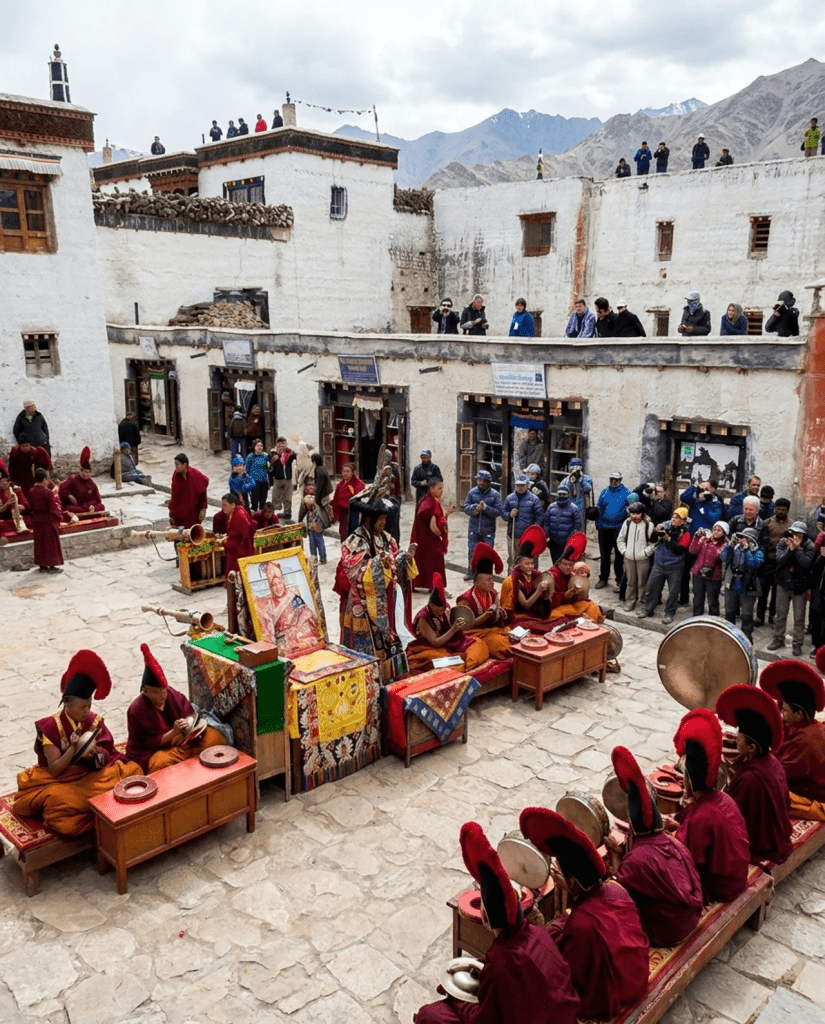
The spiritual essence of the Tiji Festival in Nepal revolves around purification and renewal.
In Tibetan Buddhism, suffering and imbalance are often understood as forces that cloud wisdom and harmony. Through rituals, prayer, and symbolic storytelling, Tiji seeks to cleanse these negative energies from both the individual and the community.
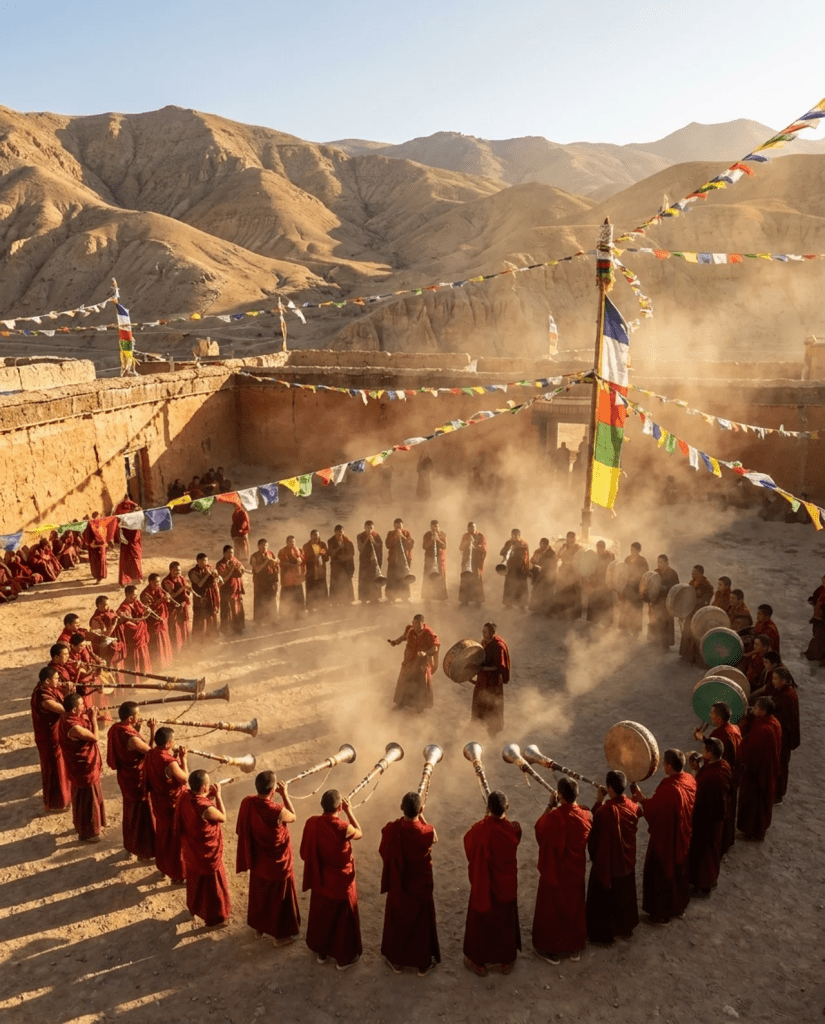
The dances represent the destruction of ego, greed, hatred, and illusion. The final victory of Dorje Jono symbolizes hope overcoming fear.
For many locals, attending the festival is believed to bring blessings, protection, and spiritual merit for the coming year.
The festival also reflects the broader philosophy of Himalayan Buddhism; the idea that humans, nature, and spirituality exist in delicate balance. In Mustang’s harsh landscape, where survival historically depended on seasonal harmony and community cooperation, these beliefs became deeply rooted in cultural life.
This spiritual depth is what separates Tiji from ordinary celebrations. It is not simply observed; it is felt.
How to Witness Tiji Festival (Permits & Travel Guide)
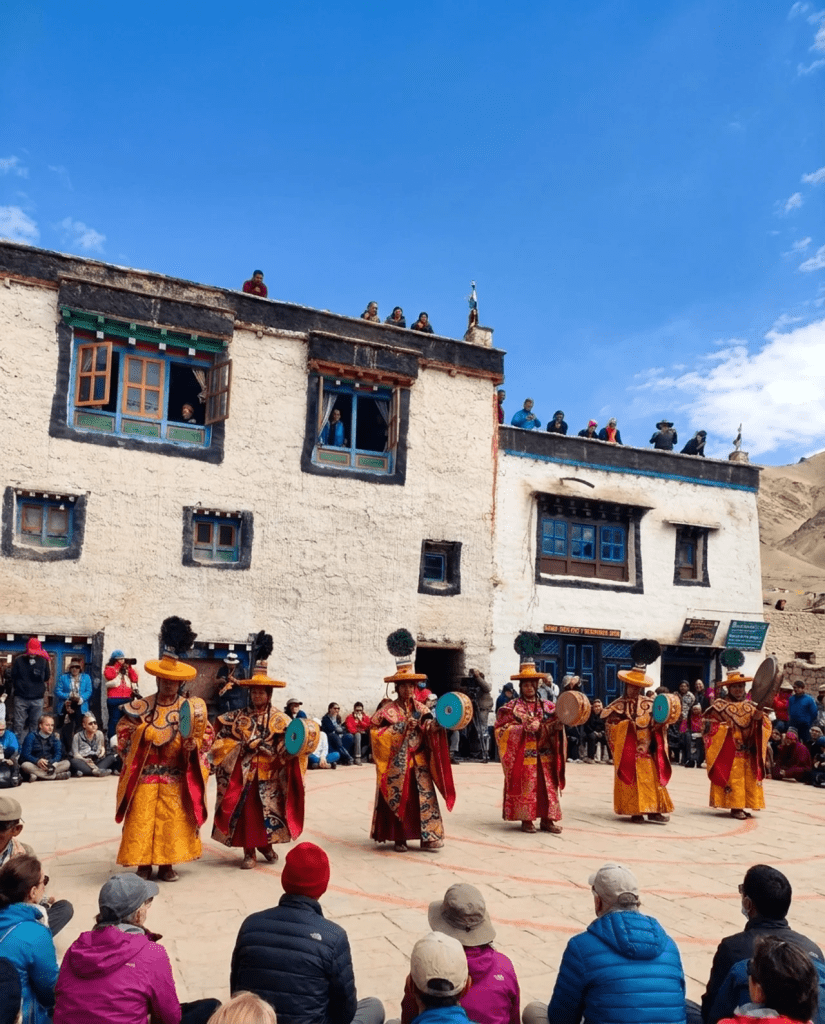
Experiencing the Tiji Festival requires planning, but the journey is part of what makes it unforgettable.
Best Time to Visit
The festival usually takes place in May, although dates vary according to the Tibetan lunar calendar. Spring offers clear skies, comfortable trekking conditions, and dramatic Himalayan views.
Permits Required
Upper Mustang is a restricted region of Nepal, so travelers need:
- Restricted Area Permit (RAP)
- Annapurna Conservation Area Permit (ACAP)
Visitors must travel through a registered trekking agency with a licensed guide.
How to Reach Upper Mustang
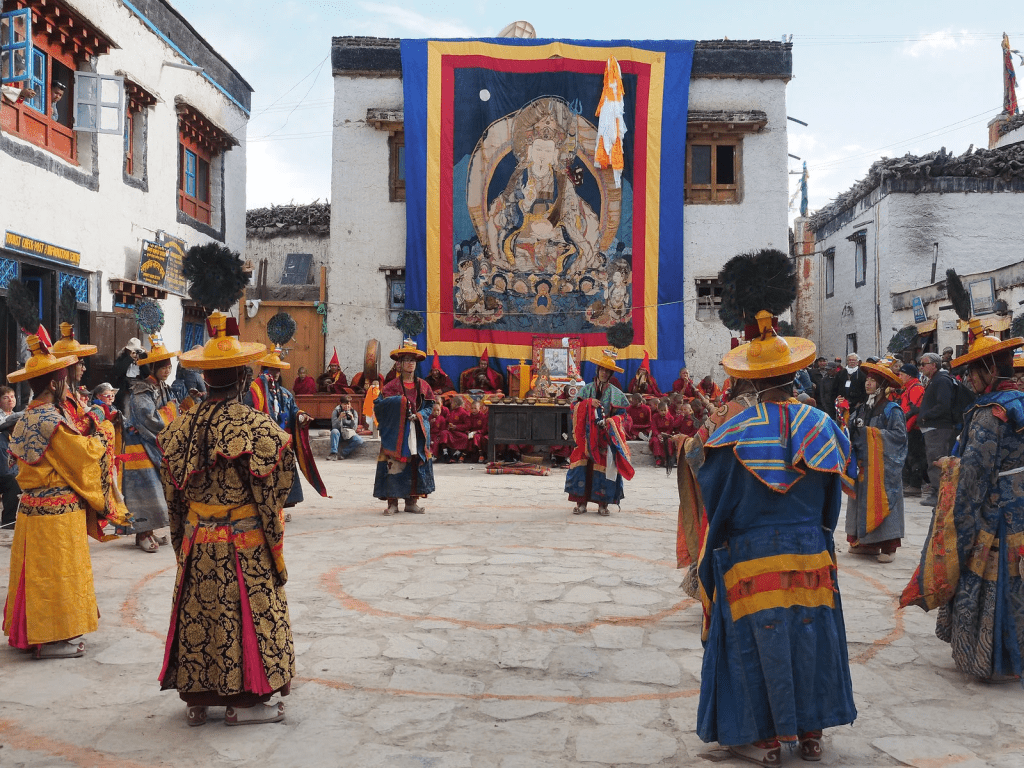
Most journeys follow this route:
- Fly or drive from Kathmandu to Pokhara
- Travel to Jomsom
- Continue by jeep or trek toward Lo Manthang
Overland jeep tours have become increasingly popular, though trekking remains the most immersive way to experience Mustang culture Nepal is famous for.
Accommodation
Lo Manthang offers teahouses and lodges during the festival season, but rooms fill quickly. Booking in advance is highly recommended.
Travel Tips
- Dress modestly during ceremonies
- Respect local customs and monastery rules
- Carry cash, as ATM access is limited
- Acclimatize properly due to altitude
- Ask before taking close-up portraits of monks or locals
Why Tiji Festival is Unique in Nepal
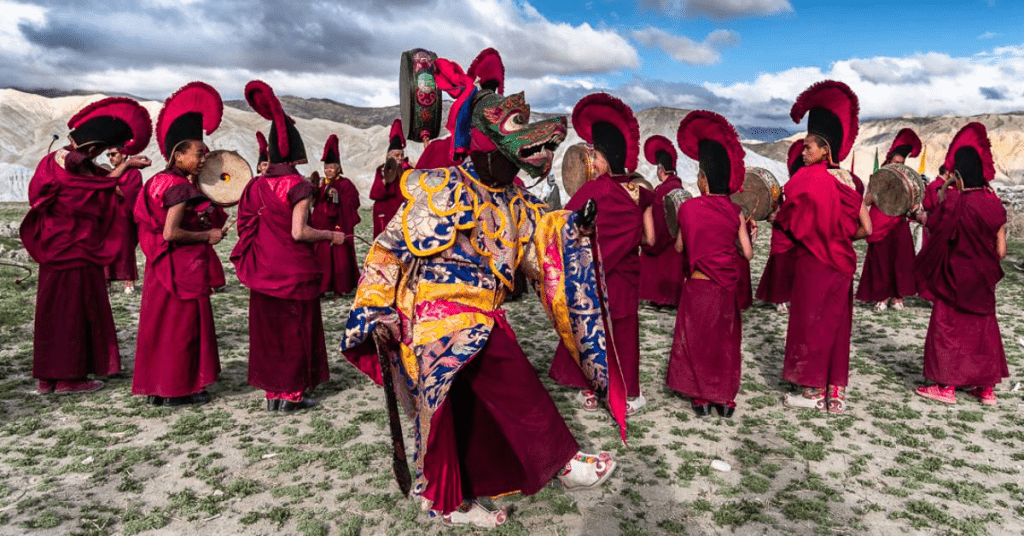
Nepal hosts countless festivals, yet Tiji stands apart in remarkable ways.
First, its location alone makes it extraordinary. Hidden behind Himalayan barriers, Upper Mustang feels culturally closer to Tibet than to modern urban Nepal. The isolation preserved traditions that elsewhere evolved or disappeared.
Second, Tiji is deeply immersive. There is no separation between performers and community. The entire city participates emotionally, spiritually, and socially.
Third, the visual experience is unforgettable. Few festivals combine such dramatic landscapes with sacred performance traditions. Ancient monasteries, desert mountains, masked monks, and chanting rituals create an atmosphere unlike anywhere else in the Himalayas.
For travelers seeking meaningful cultural experiences rather than surface-level tourism, Tiji offers rare authenticity.
It is one of those journeys that quietly changes the way people understand Nepal.
Conclusion
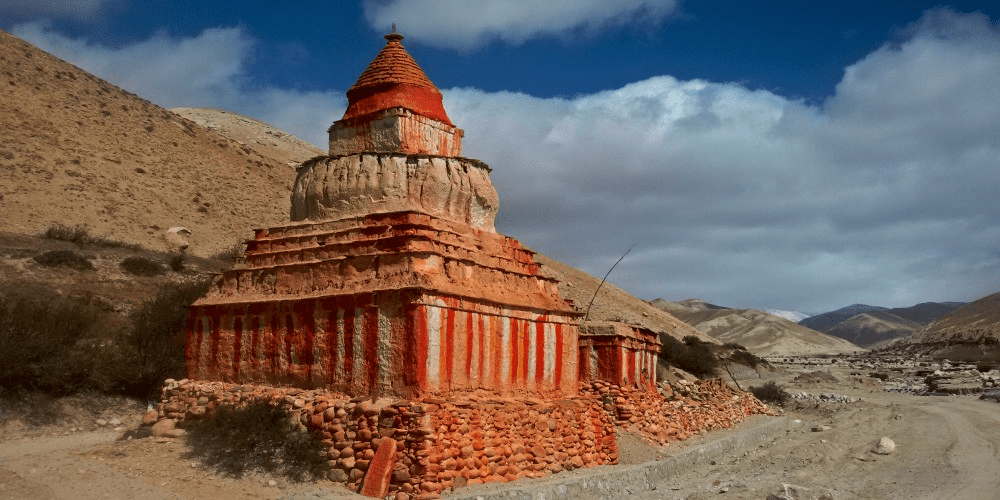
In a world where traditions are increasingly commercialized and rushed, the Tiji Festival in Nepal remains profoundly human.
It is a celebration born from faith, hardship, storytelling, and survival in one of the Himalayas’ most isolated regions. Standing inside the walls of Lo Manthang while monks perform ancient Chhaam dances beneath fluttering prayer flags feels less like attending a festival and more like entering a sacred memory preserved by the mountains themselves.
Long after the drums fade and travelers descend from Upper Mustang, something about Tiji lingers; a reminder that culture is not only seen, but deeply felt.
For those willing to travel beyond the familiar, Tiji is not just a festival. It is an encounter with the spiritual soul of the Himalayas.
FAQs About Tiji Festival in Nepal
When is the Tiji Festival celebrated?
The festival is usually held in May, based on the Tibetan lunar calendar. Dates vary slightly each year.
Where does the Tiji Festival take place?
It is celebrated in Lo Manthang, the historic walled city of Upper Mustang.
Do I need permits to visit Upper Mustang?
Yes. Travelers need a Restricted Area Permit and an Annapurna Conservation Area Permit.
What makes Tiji Festival special?
Its sacred masked dances, preserved Tibetan Buddhist traditions, and remote Himalayan setting make it one of the most unique hidden festivals in Nepal.
Can foreigners attend the festival?
Yes. International travelers can attend through organized tours or trekking agencies authorized for Upper Mustang travel.
Explore More of Nepal
From sacred Himalayan festivals to hidden mountain kingdoms, Nepal is filled with stories waiting to be experienced. Discover more cultural journeys, remote destinations, and authentic travel experiences across the Himalayas with Nepal-focused travel content and local insights.


