


Walk through a hillside village during wedding season, and you might hear it before you see it. A trumpet’s long wail, a rolling drumbeat, and clashing cymbals announce a procession from far away. This is Panche Baja, an asset of Nepal that has accompanied weddings, festivals, and sacred rites for centuries. Yet today, this cultural treasure faces a genuine risk of disappearing. This article explores what Panche Baja is, why it matters, and why its future remains uncertain.
What Is Panche Baja?
Panche Baja refers to a set of five traditional Nepali musical instruments, played together as an ensemble during auspicious occasions. The name itself explains the concept clearly. In Nepali, “panch” means five, while “baja” means musical instruments. Together, they describe exactly what this tradition delivers: five instruments, one unified sound.
Most commonly, Panche Baja accompanies weddings, particularly the janti procession, where the groom’s family and friends travel toward the bride’s house, dancing and singing along the way. Local tradition holds that starting any auspicious occasion with Panche Baja brings good luck. Beyond weddings, the ensemble also appears at Bratabandha, the sacred thread ceremony, Anna Prashan, the rice-feeding ceremony, and Nwaran, the baby-naming ceremony.


The Five Instruments That Make Up the Ensemble
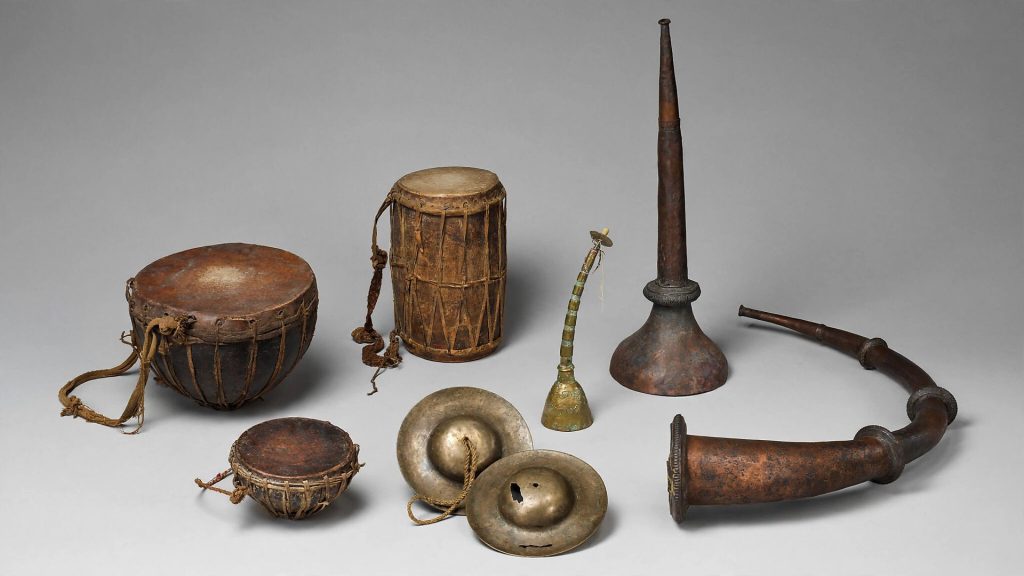
Each instrument within Panche Baja plays a distinct role, and together they create the ensemble’s unmistakable sound. Sahanai, a folk oboe, carries the primary melody, while Narsingha, a long, C-shaped trumpet, adds dramatic, sweeping tones that can be heard from a considerable distance.
Damaha, a large kettledrum, provides deep bass percussion, anchoring the ensemble’s rhythm. Tyamko, a smaller kettledrum, adds a higher-pitched percussive layer. Finally, Jhyali, a pair of brass or bronze cymbals, punctuates the rhythm with sharp, ringing accents. Some versions of the ensemble also include Dholaki, a two-headed hand-drum, either alongside or in place of Tyamko.
Interestingly, some cultural interpretations connect these five instruments to the five universal elements described in Vedic tradition: earth, water, fire, air, and sky. According to this belief, the tyamko represents earth, since its beat echoes footsteps, while other instruments correspond to the remaining elements. Consequently, many communities believe the music itself helps keep these elements in balance.
Where Did Panche Baja Come From?
Tracing the exact origins of Panche Baja proves difficult, since no definitive historical record confirms when it first arrived in Nepal. However, researcher Carol Tingey, author of Heartbeat of Nepal: The Pancai Baja, suggests the tradition likely arrived with Rajput refugees migrating from India during the fourteenth century.
According to this theory, the instrument set resembled musical ensembles used within the Sultanate courts of Muslim rulers in India at the time. Over generations, Nepali musicians adapted the tradition, adding instruments like Sahanai and Damaha, and gradually shaping it into the distinctly Nepali form recognized today.
The Damai Community: Guardians of the Tradition
Panche Baja belongs inseparably to the Damai community, a hereditary musician caste historically responsible for performing it. In fact, many scholars believe the community’s name itself derives from “Damaha,” the large kettledrum central to the ensemble.
Historically, the Damai occupied a marginalized position within Nepal’s caste system, alongside the Gaine community, who also performed similar folk music traditions. Music, however, wasn’t the Damai community’s only traditional occupation. Tailoring served as a common supplementary profession alongside their musical role.
For generations, families hired Damai musicians specifically for weddings and ceremonies, passing musical knowledge down within the community itself. This inherited expertise gave Panche Baja its distinct, deeply rooted character, refined and preserved across countless generations of practice.
Panche Baja Versus Naumati Baja
Panche Baja often gets mentioned alongside a related, larger ensemble called Naumati Baja. While Panche Baja means “five instruments,” Naumati Baja translates to “nine instruments,” and represents a more elaborate version of the same musical tradition.
Naumati Baja typically includes everything found in Panche Baja, plus additional instruments like Karnal, a wide-mouthed straight trumpet, along with extra Sahanai and Damaha players. Because it involves more musicians and instruments, Naumati Baja often accompanies larger, more elaborate ceremonies, while Panche Baja remains the more common, accessible version used across everyday celebrations.
Why Panche Baja Matters as a Cultural Asset
Beyond its musical value, Panche Baja carries deep symbolic and social significance within Nepali culture. It represents oral history, caste heritage, and community identity passed down through sound rather than written record. Each performance connects present-day celebrations to centuries of tradition.
Additionally, Panche Baja reflects Nepal’s broader cultural diversity. Alongside other traditional ensembles, like the Newar community’s Dhime Baja or the Tamang community’s Damphu-Tunguna, Panche Baja represents one thread within Nepal’s rich, multi-ethnic musical fabric. Recognizing and preserving these traditions, therefore, means preserving a genuinely irreplaceable piece of the country’s cultural identity.
The Growing Threat of Extinction
Unfortunately, Panche Baja’s future looks increasingly uncertain. Modernization has introduced serious competition, particularly in the form of Western-style brass bands, locally known as Band Baja. These groups, dressed in uniforms with coats, hats, and boots, have grown steadily more popular, even in rural areas that once relied exclusively on Panche Baja.
Troublingly, even musicians within the Damai community itself have started shifting toward Band Baja, drawn by its modern appeal and wider popularity. Meanwhile, younger generations increasingly show less interest in learning the traditional instruments, favoring contemporary music instead.
Economic factors compound the problem further. Traditional instrument sets remain expensive to purchase and maintain, and many musician families simply can’t afford new equipment. Combined with the community’s historically low social status and limited government support, these pressures have pushed Panche Baja toward genuine decline over the past several decades.
Efforts to Preserve This Cultural Heritage
Fortunately, preservation efforts have begun addressing this decline. Various municipalities across Nepal have started distributing full instrument sets to local Baja groups specifically to prevent the tradition from disappearing. In one notable example, a rural municipality allocated a significant portion of its annual budget toward purchasing new Panche Baja sets for local musician groups.
Similarly, dedicated preservation projects have emerged in districts like Gorkha, aiming to support dozens of active Damai musician groups by providing complete instrument sets and traditional attire. These efforts specifically target rural villages, where the tradition remains most vulnerable to disappearing entirely.
Additionally, the Nepali government has increasingly promoted Panche Baja as a symbol of cultural heritage, encouraging performances at national and international events. Meanwhile, growing tourist interest has introduced the tradition to wider audiences, with cultural tours increasingly featuring live Panche Baja performances.
How Modern Culture Is Reshaping Panche Baja
Interestingly, globalization hasn’t only threatened Panche Baja. It has also created new opportunities for the tradition to evolve. Some musicians have begun fusing Panche Baja instrumentation with contemporary musical styles, creating hybrid performances that appeal more directly to younger audiences.
Social media has played a role here too. As performances get filmed and shared online, Panche Baja has reached audiences far beyond the villages where it traditionally thrived. This increased visibility, while not solving every underlying challenge, has at least helped introduce the tradition to a broader, more diverse audience.
Where to Experience Panche Baja Today
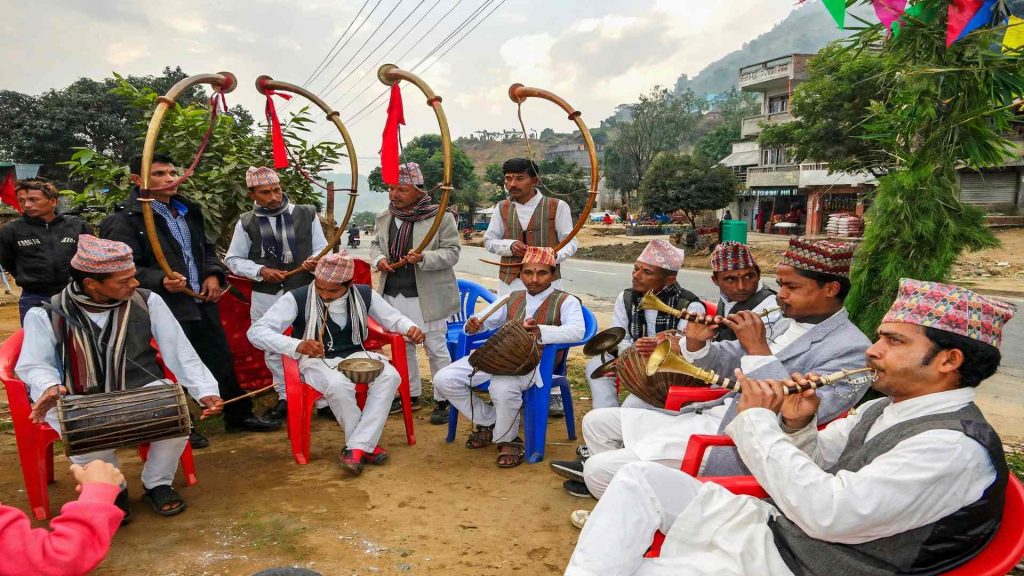
If you’re interested in experiencing this tradition firsthand, rural hill regions offer the most authentic exposure. Traditional weddings across Nepal’s mid-hills still commonly feature Panche Baja processions, particularly during peak wedding seasons.
Additionally, cultural festivals and heritage tours increasingly showcase Panche Baja performances specifically for visitors. Because these performances often occur alongside other traditional Nepali music, like Newar Dhime drumming or Gandharva sarangi playing, they offer a broader introduction to the country’s diverse musical heritage in a single setting.
Final Thoughts on Panche Baja as an Asset of Nepal
Ultimately, Panche Baja represents far more than background music for weddings and ceremonies. It embodies generations of Damai craftsmanship, cultural identity, and oral tradition passed down through sound. As an asset of Nepal, it deserves recognition alongside the country’s more widely celebrated cultural treasures.
Still, its future remains genuinely uncertain, caught between modernization and preservation efforts working to keep it alive. Supporting local musician communities, attending traditional performances, and simply spreading awareness all help ensure this distinctive sound continues echoing through Nepal’s hills for generations to come.
Frequently Asked Questions
What instruments make up Panche Baja?
Panche Baja includes five instruments: Sahanai, a folk oboe, Narsingha, a long trumpet, Damaha, a large kettledrum, Tyamko, a smaller kettledrum, and Jhyali, a pair of cymbals, sometimes alongside Dholaki drums.
Who traditionally plays Panche Baja in Nepal?
The Damai community, a hereditary musician caste, traditionally performs Panche Baja, alongside the Gaine community, who share similar folk musical traditions in Nepal.
What is the difference between Panche Baja and Naumati Baja?
Panche Baja uses five instruments, while Naumati Baja is a larger, nine-instrument version of the same tradition, typically featuring additional trumpets and extra musicians.
Why is Panche Baja disappearing in Nepal?
Modernization, competition from Western-style brass bands, high instrument costs, and declining youth interest have all contributed to Panche Baja’s decline in recent decades.
Where did Panche Baja originate?
Panche Baja’s exact origins remain unclear, though researchers believe it likely arrived in Nepal with Rajput refugees from India during the fourteenth century.
When is Panche Baja typically performed?
Panche Baja is most commonly performed during Nepali wedding processions, along with other auspicious ceremonies like Bratabandha, Anna Prashan, and Nwaran.