



Nepal gets filed away as a backdrop: mountains, monasteries, a stopover on someone else’s adventure. Look a little closer and a different country comes into focus, one being rebuilt by people who were barely out of their teens when they started. These inspiring young Nepalis are not waiting for permission. They are summiting peaks no one their age has touched, building companies that pay farmers fairly, and dragging conversations about mental health and menstruation into the open. Here are ten of them, and why their stories matter beyond the headlines.
Why These Inspiring Young Nepalis Deserve Your Attention
Here’s what most “feel-good” roundups won’t tell you: a lot of them recycle the same three names and call it a day. We dug into recent records, Forbes lists, and social enterprises that are actually moving numbers, not just collecting press. Some of these people you may have seen on CNN. Others are quietly changing one village or one industry at a time. Both kinds count.
What ties them together is timing. A generation that grew up after the decade-long civil war ended in 2006, came of age during the 2015 earthquake, and watched COVID gut the economy has decided that the old script does not apply. They left for Silicon Valley and Bangalore, and then a surprising number came back. Read on.


The Record-Breakers and Athletes
1. Nima Rinji Sherpa: The Teenager Who Conquered All 14 Giants
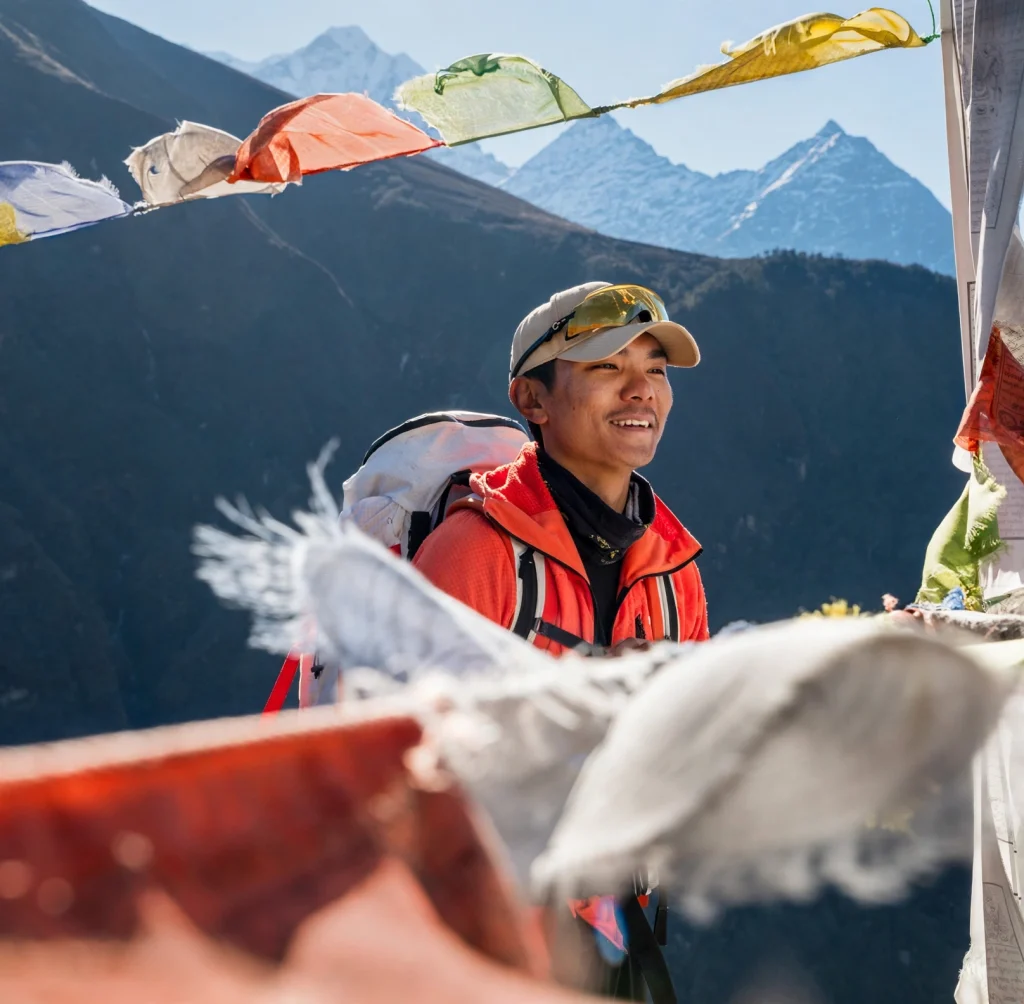
On October 9, 2024, an 18-year-old stood on the summit of Shishapangma in Tibet and rewrote the record books. Nima Rinji Sherpa became the youngest person ever to climb all 14 of the world’s 8,000-meter peaks, finishing the set in roughly 740 days. He was 18 years, 5 months, and 21 days old. The previous record holder, Mingma David Sherpa, was 30.
Numbers aside, what makes Nima compelling is his motive. He started his “SherpaPower” mission to flip a tired narrative: Sherpas are usually cast as the hired help who carry the loads while foreigners get the glory. He wants them seen as athletes and leaders in their own right. You can read more about that lineage in our Nepal mountaineering history guide.
2. Pratima Sherpa: From a Maintenance Shed to the LPGA Pathway

Pratima Sherpa was born in a tool shed behind the third hole of the Royal Nepal Golf Club in Kathmandu, where her parents worked as groundskeepers. She taught herself golf with borrowed clubs. By 2019 she had become the first Nepali to compete on the Symetra Tour, the LPGA’s developmental circuit, and her story reached an unlikely fan: Tiger Woods invited her to a private clinic in Florida.
An ESPN documentary, “A Mountain to Climb,” brought her to the Tribeca Film Festival. Golf in Nepal is a sport for the wealthy few. A girl from a shed becoming its most famous face is exactly the kind of disruption the country needs more of.
The Social Entrepreneurs
3. Shreeya Giri: Putting Mental Health on the Map

While stuck alone in London during the 2020 lockdown, Shreeya Giri spiraled into depression and anxiety, and realized how badly the support system failed people like her. In April 2021, at 25, she founded Happy Minds, a digital mental health platform built specifically for Nepali communities at home and abroad.
What sets it apart is the detail. Counseling runs seven days a week across time zones, sessions are offered in local languages including Newa Bhasa, therapy rooms are wheelchair-accessible, and the platform employs queer-affirmative counselors. More than 2,500 people have used it so far. In May 2024, Forbes named her to its 30 Under 30 Asia list in the Social Impact category. In a country where talking about depression still carries stigma, that visibility moves the needle.
4. Nishchal Banskota: Brewing a Fairer Tea Trade

Nishchal Banskota was born in a tea garden, trained in the United States to become a CPA, then walked away from the accounting track to become a “chiyawala,” a tea man. His family had grown tea in eastern Nepal for 40 years. He saw how little of the final price reached the farmers and decided to fix it.
Nepal Tea Collective, the social enterprise he built, ships certified organic Nepali tea to over 40 countries and puts a QR code on each sachet so drinkers can trace it back to the actual farmer who grew it. The model has lifted partner farmer income by more than 48 percent. In 2023 the company restructured as a public benefit corporation and brought on 180 community investors. Honest tea, traceable to a face. That is rarer than it sounds.
5. Shristi Shrestha: Eco-Friendly Pads, Made at Home
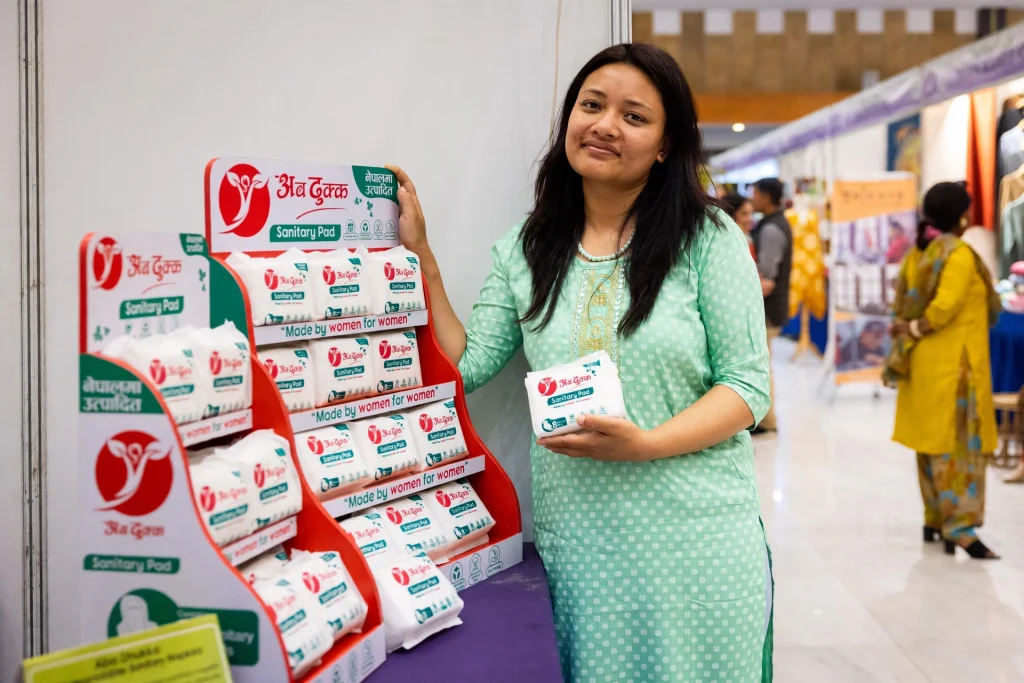
Around 80 percent of sanitary products sold in Nepal are imported, and almost none are eco-friendly or affordable. Shristi Shrestha looked at that gap and started a business to fill it, producing sustainable sanitary pads locally while creating jobs for women. She was one of eight women selected for seed funding and training under a green enterprise program run by the Federation of Woman Entrepreneurs’ Associations of Nepal with support from ESCAP.
It is unglamorous work. It is also the kind of practical problem-solving that improves daily life for half the population.
6. Shubhangi and Jesselina Rana: Normalizing Menstruation with Pad2Go

Sisters Shubhangi and Jesselina Rana built Pad2Go to do something deceptively simple: install pad-dispensing machines in public spaces so that menstrual products are treated as necessities, not luxuries. Their advocacy landed them on the Forbes 30 Under 30 Asia list back in 2020. Chhaupadi, the practice of banishing menstruating women to sheds, was only criminalized in Nepal in 2017, so this fight is far from abstract.
The Innovators and Builders
7. Manjila Pandey: Saving Languages with Technology

Nepal has well over 100 living languages, and many indigenous ones are slipping toward extinction. Manjila Pandey, a research coordinator at IOE Pulchowk Campus, was selected for the Seeds for the Future 2025 program for her work on a platform that uses Visual Positioning Systems and 3D storytelling. Her vision lets users experience heritage sites and festivals like Indra Jatra digitally while functioning as a living dictionary for oral histories in indigenous tongues. According to UNESCO, young Nepali technologists like her are increasingly central to language preservation.
8. Nikita Acharya: E-Commerce Before It Was Obvious

Nikita Acharya co-founded Urban Girl, one of Nepal’s earliest e-commerce platforms, at a time when online shopping in the country was barely a concept and digital payments were a hassle. She made the Forbes 30 Under 30 Asia list in 2020. Building a logistics and payments operation in a market with patchy addresses and low card penetration is brutally hard. She did it anyway, and helped prove the model worked.
9. Rohit Tiwari: Feeding the Gig Economy

Rohit Tiwari co-founded Foodmario, a platform that connected home cooks and small kitchens with hungry customers long before food delivery felt normal in Kathmandu. He earned a spot on the Forbes 30 Under 30 Asia list in 2020. Ventures like his, alongside ride-hailing and delivery players such as Pathao and Tootle, created flexible income for thousands of young people. If you want a taste of what those cooks are serving, our Nepali street food guide is a good place to start.
10. The Returnee Generation
Not every story has a single name attached. One of the most important shifts in Nepal right now is the quiet return of young innovators from tech hubs abroad, bringing capital, mentorship, and ideas back to startups in edtech, fintech, and AI. Ventures like VEDA in education technology and a growing cluster of more than 20 software startups are the result. A decade ago the talent flowed one way, out. That current is starting to reverse, and it may be the most consequential trend of all.

What Their Stories Teach Us
Pull back from the individual achievements and a pattern shows up. None of these people waited for ideal conditions. Pratima had no course to practice on. Shreeya had no template for digital mental health in Nepali. Nishchal had every reason to keep his comfortable accounting job. They moved anyway, and they built for their own communities first rather than chasing approval from elsewhere.
That last part is the quiet revolution. For decades, success for an ambitious young Nepali meant leaving. Now a meaningful number are proving you can stay, or come back, and still change things on a global scale. If you are planning a trip and want to understand the country these people are shaping, start with our Kathmandu travel guide.
Frequently Asked Questions
Who is the youngest person to climb all 14 of the world’s 8,000-meter peaks?
Nima Rinji Sherpa of Nepal holds that record. He completed the final summit, Shishapangma, on October 9, 2024, at the age of 18 years, 5 months, and 21 days, recognized by Guinness World Records.
Which young Nepalis have made the Forbes 30 Under 30 Asia list?
Several have. Shreeya Giri of Happy Minds made the 2024 list in Social Impact. Earlier honorees include Nikita Acharya of Urban Girl, Rohit Tiwari of Foodmario, and the Rana sisters of Pad2Go in 2020, along with a 2022 cohort of founders across tech and design.
What is Happy Minds and who founded it?
Happy Minds is a digital mental health platform founded by Shreeya Giri in April 2021. It offers online and in-person counseling in multiple Nepali languages and has served more than 2,500 people, with a focus on accessibility and inclusion.
Is Nepal Tea Collective a real social enterprise?
Yes. Founded by Nishchal Banskota, it exports certified organic Nepali tea to more than 40 countries, uses QR codes for full traceability, and has raised partner farmer income by over 48 percent. In 2023 it became a public benefit corporation.
Why is mental health advocacy significant for young people in Nepal?
Mental health still carries heavy stigma in Nepal, and professional support has historically been scarce and concentrated in cities. Founders like Shreeya Giri are making counseling reachable online, in local languages, and across time zones for the global Nepali diaspora.
How are young Nepalis tackling menstrual health taboos?
Entrepreneurs like Shristi Shrestha and the Rana sisters behind Pad2Go are producing affordable local products and installing public dispensers. Their work pushes back against deep-rooted taboos, including chhaupadi, which Nepal only criminalized in 2017.
Are young Nepalis returning home after studying or working abroad?
Increasingly, yes. A growing number of innovators are coming back from tech hubs like Silicon Valley and Bangalore, bringing venture capital, mentorship, and experience to startups in fintech, edtech, and AI, helping reverse the long-standing brain drain.
Where can I learn more about Nepal’s culture and people?
NepalVue covers Nepali culture, food, festivals, and travel in depth. Our guides on Kathmandu, street food, and the country’s mountaineering history are good starting points for understanding the place these changemakers come from.


