



Between 2010 and 2016, 224.6 metric tons of dried kutki rhizome entered legal trade in Nepal, an average of 37.4 tons a year, according to government figures cited in a 2020 policy brief published in Botanica Orientalis. Almost all of it left the country. Behind that number are thousands of households in Nepal’s high meadows who dig roots at 3,500 meters and above for a few weeks each autumn. Medicinal plants of the high meadows sit at an awkward intersection: real household income, real pharmacological demand, and plant populations that take years to recover from a single season’s digging. This article explains what kutki and padamchal are, how harvesting affects them, what Nepal’s rules actually require, and where the evidence remains incomplete.
Two plants, two very different pressures
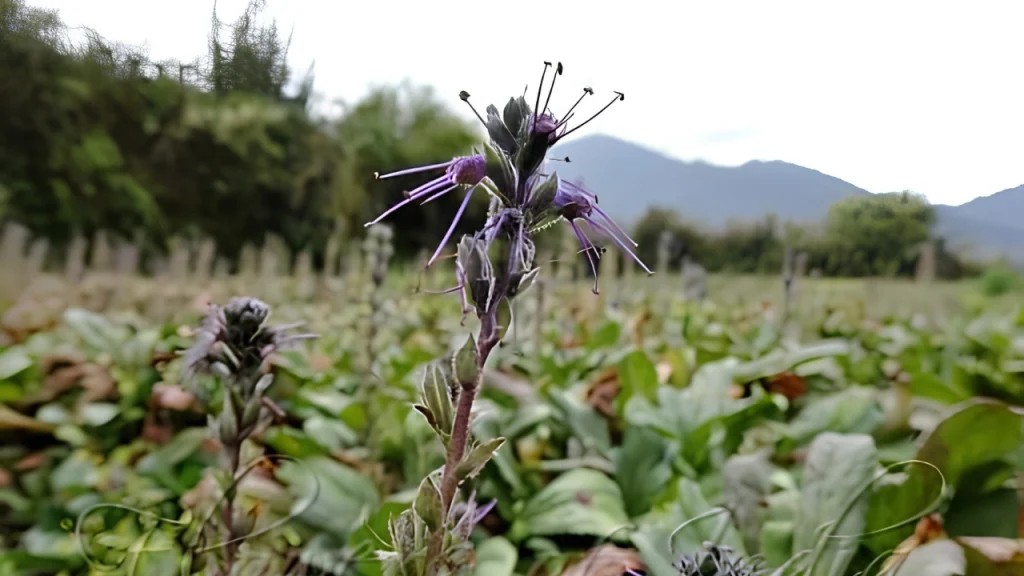
Kutki is Neopicrorhiza scrophulariiflora, a small alpine herb of the figwort family. It grows in moist, rocky meadows and on shaded slopes roughly between 3,500 and 4,800 meters across the Himalaya. Harvesters take the rhizome, the horizontal underground stem, which carries the bitter iridoid compounds the plant is valued for.
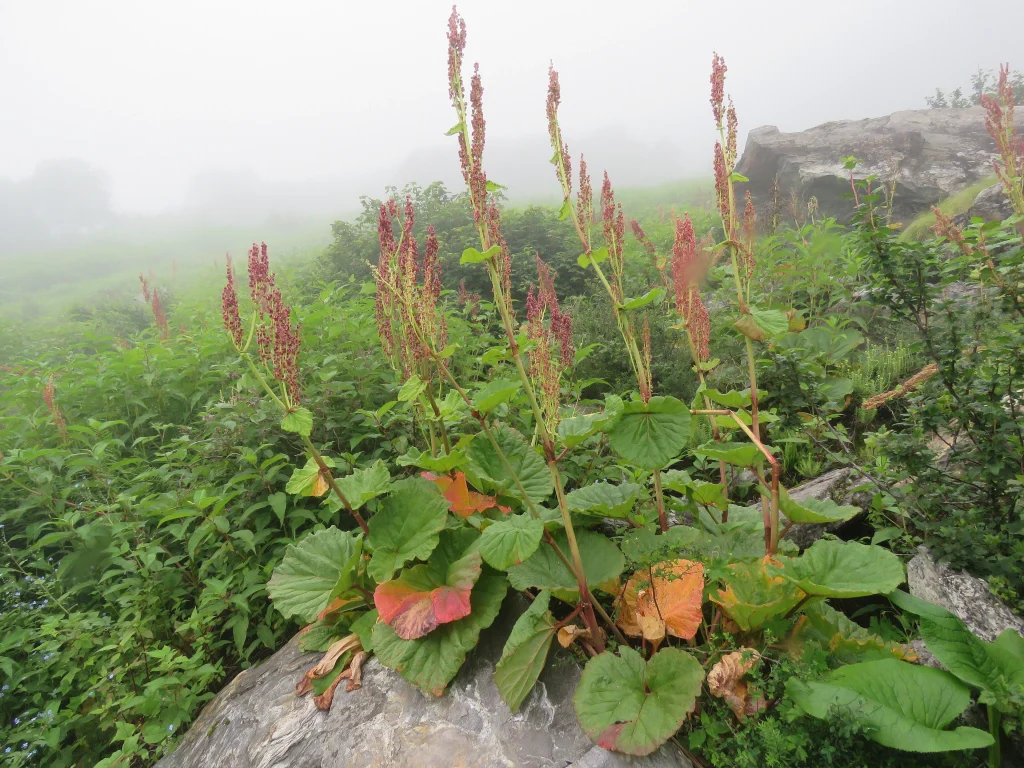
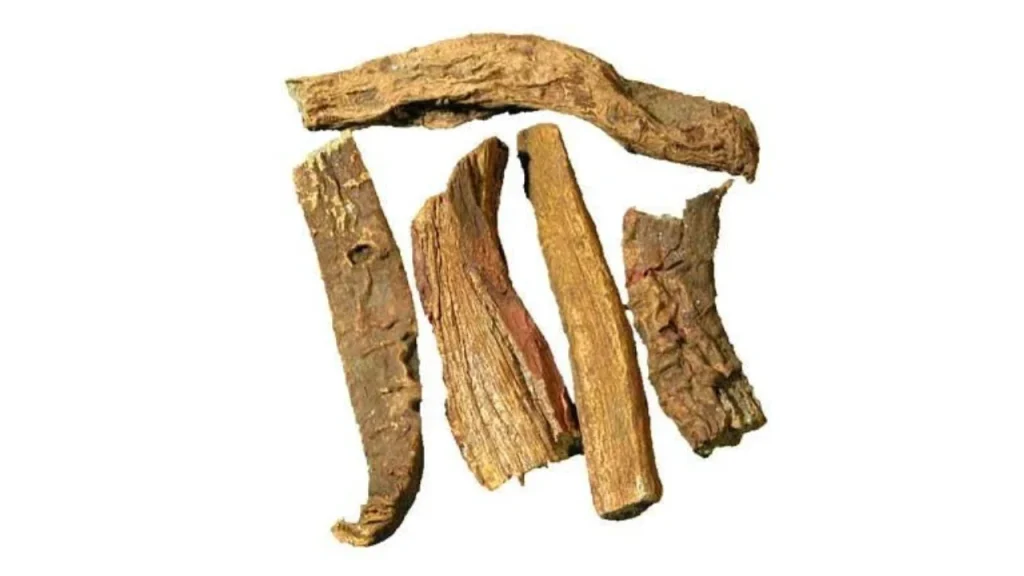
Padamchal is Himalayan rhubarb, Rheum australe. A tall plant with broad leaves and reddish stalks, it occupies similar alpine and subalpine ground, often on steep, disturbed slopes. Roots and rhizomes are the traded part, and in many Nepali households the stalks are also eaten or used as a souring agent.


Both are dug up rather than cropped. That single fact drives everything else about their conservation, because unlike a leaf or a fruit harvest, taking the rhizome removes the individual from the population.
What they are used for
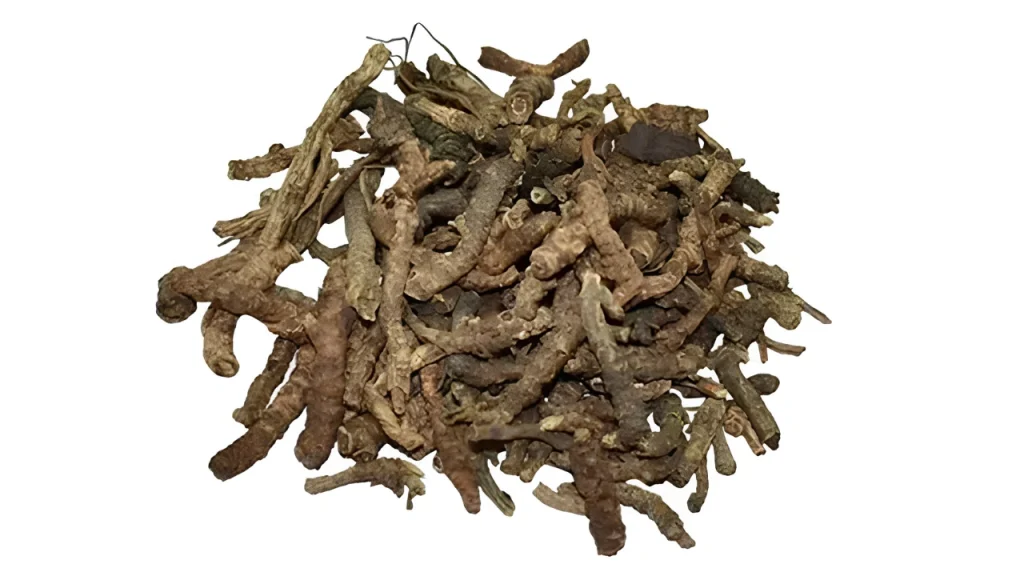
Kutki’s commercial pull comes almost entirely from the Ayurvedic sector. In the Botanica Orientalis policy brief, researchers surveying 38 retail shops and 23 herbal industries identified 45 types of Ayurvedic medicine containing kutki. Disorders of the digestive, hepatobiliary, and respiratory systems dominated its use. Most purchases followed a doctor’s prescription, though some were over the counter.
Industrial demand inside Nepal is modest. For 2015/16, surveyed industries reported demand of 6,076 kg of dry rhizome, worth about NPR 8.57 million, at an average price of roughly NPR 1,411 per kilogram. Compare that to the roughly 28 tons exported to India in the same year under CITES certification and the picture is clear: Nepal is a supplier, not a consumer.
Padamchal has a smaller, more fragmented trade. Anthraquinone compounds in the root underpin its traditional use as a purgative and wound treatment, and it is studied for other activities. Published Nepali trade volumes are far less systematic than for kutki, and anyone quoting a precise national figure for padamchal should be asked where it came from.
What harvesting does to the population
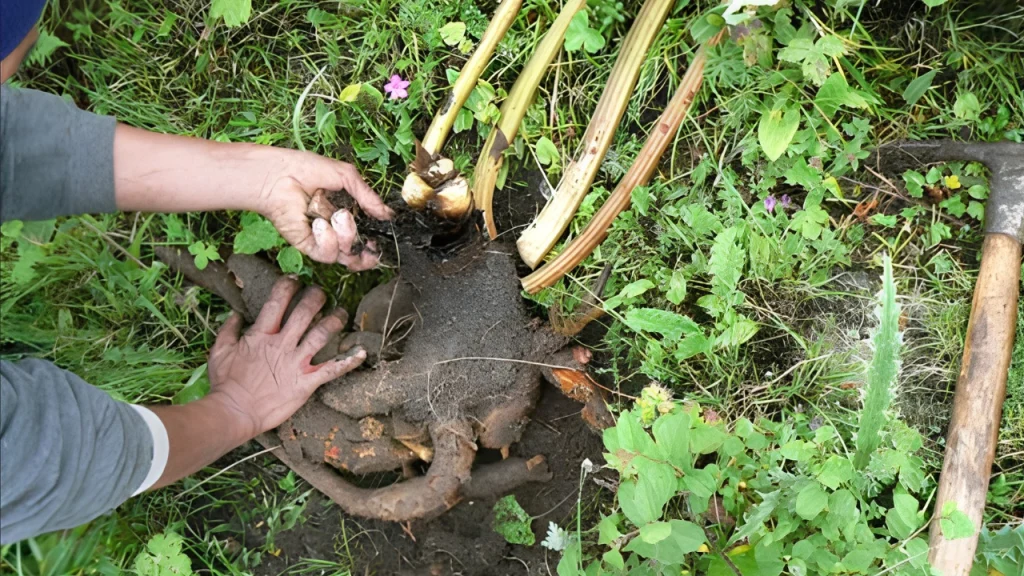
Digging a rhizome is not like picking berries. Here is the mechanism that matters.
Kutki spreads clonally. A single plant extends its rhizome sideways, producing new shoots along its length, and it also reproduces by seed. When harvesters remove the whole rhizome, both pathways are cut at once. Research summarized in the CITES national quota work for Nepal’s alpine medicinals notes that plants of this type take roughly three years to reach harvestable maturity. Recovery therefore depends entirely on what is left behind.
Leave fragments in the ground and the patch regrows from them. Strip it clean and the patch depends on seed arriving from elsewhere, which in fragmented alpine habitat can take a long time or never happen at all.
Harvest timing compounds the problem. If collectors arrive before seed set, the population loses that year’s seed production as well as its adults. Nepal’s technical guidance for alpine rhizome collection identifies October as the best-timed collection month, after flowering and seeding, with permitted windows typically described across September to November depending on the document and the district.
The elevation effect
Harvest impact is not uniform across the landscape. Ecological work in the Nepalese Himalaya has found that the effect of harvesting on kutki density and biomass varies along environmental gradients, so a harvest intensity that is sustainable on a productive, moist slope at one elevation can be damaging on a colder, slower-growing site higher up. Growth rates fall as you climb, and recovery slows with them.
Grazing interacts with this. Alpine meadows in Nepal are working pasture for yak, chauri, sheep, and goats, and trampling and grazing pressure change how well a dug-over patch regenerates. Conservation framing that treats these meadows as wilderness misses the point. They are managed landscapes with long-established use rights.
What Nepal’s rules require
Nepal regulates alpine medicinal plant collection through a combination of forest law, protected area rules, CITES obligations, and district-level management plans. Requirements for the best-documented alpine rhizome species, Jatamansi (Nardostachys jatamansi), give the clearest picture of how the system is meant to work.
| Control | What it requires | Source |
|---|---|---|
| Annual allowable harvest | Up to 55% of growing stock, and below annual increment | Nepal national quota submission to CITES, 2018/19 |
| Retention in the ground | At least 20% of rhizomes left in situ | Same document |
| Rotation | Harvest area split into at least three blocks, one block per year | Same document |
| Environmental assessment | IEE up to 50,000 kg per district per year; EIA above that | Same document |
| Permits | Collection permit, district forest management plan, and release order required | Same document |
| Raw export | Banned in 1995; a 2001 amendment allows export of material processed inside Nepal | Same document |
Nepal’s declared national quota for Jatamansi was 935.3 metric tons of dry rhizome or derivatives for 2019, agreed at a national stakeholder meeting on 28 November 2018, split between the Department of Forests and Soil Conservation and the Department of National Parks and Wildlife Conservation. Quota was built from systematic field inventory at 0.01 percent sampling intensity across 26 districts, combined with a ten-year trade analysis.
One honest caveat: the same official document states both a 20 percent retention recommendation and a practice in which two-thirds of rhizomes are harvested and one-third left. Those two figures do not agree. Internal inconsistencies like that are a reasonable indicator of how far the written standard sits from field reality.
Where the money goes
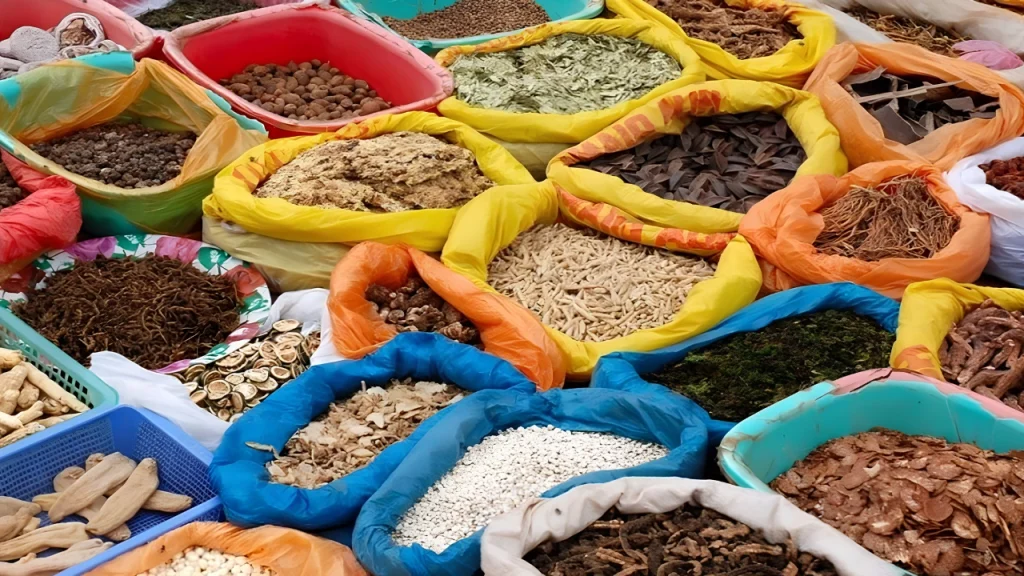
Value chains for Himalayan medicinals are long, and harvesters sit at the bottom of them. For kutki, the documented chain runs from harvesters to local traders, sometimes through sub-local traders, then to central wholesalers in the Tarai or Kathmandu, and from there to regional wholesalers in India. Inside Nepal, central wholesalers also supply manufacturers, then wholesalers and retailers, mostly Ayurvedic pharmacies.
Each step takes a margin. Harvesters in Humla, Dolpa, Darchula, Rasuwa, Taplejung, and other alpine districts are price-takers at the far end of a chain whose terms are set in Delhi and Kathmandu. Community forest user groups and cooperative processing have been promoted as a way to shift that balance, with mixed and locally specific results.
Readers who want to see how a comparable high-altitude harvest economy works should read our reporting on the economics of yarsagumba, where the same structure appears with far higher prices and far sharper conflict.
What would actually make harvesting sustainable
Three things come up repeatedly in the literature and in Nepali practice, and none of them is a quick fix.
- Rotational block harvest that is actually enforced. Rules on paper do not rest a meadow. Community-level monitoring, with the user group deciding which block is open each year, is the only mechanism that has worked at scale.
- Harvest after seed set, not before. Market pressure pushes collection earlier. Later harvest costs collectors nothing in yield and leaves the next generation intact.
- Processing inside Nepal. Export of raw material has been restricted since 1995 precisely because value added abroad gives Nepali harvesters no reason to restrain supply. More domestic processing shifts margin upstream and makes a smaller, higher-quality harvest economically rational.
Cultivation is sometimes proposed as the answer. For alpine species with slow growth and specific habitat requirements, cultivated supply has been difficult to establish at commercial volume, and wild harvest continues to dominate. Treat claims of successful large-scale kutki cultivation with care until you see production figures.
If you are traveling in these areas
Do not buy loose alpine roots from informal sellers, and do not dig anything yourself. Permit systems exist for a reason, and casual collection by visitors undermines the local governance that community groups have spent decades building. Traditions and resource rights vary by community and region, and in several Himalayan communities particular meadows carry use rights that are not visible to an outsider walking through.
Related reading on the site: our piece on the Raute and forest rights under Nepal’s settlement policy looks at how forest access is legislated, heritage apples in Marpha covers a high-mountain crop economy, and red pandas and bamboo in Kanchenjunga deals with the same conservation-area landscapes where much kutki is collected.
Frequently asked questions
What is kutki used for?
Kutki rhizome is used in Ayurvedic medicine, mainly for digestive, hepatobiliary, and respiratory complaints. A 2020 survey of Nepali herbal industries identified 45 types of Ayurvedic medicine containing it.
Is kutki endangered?
Kutki is treated as a conservation concern in Nepal and is traded under CITES documentation, but conservation assessments vary by source and by population. Localized depletion near accessible meadows is better documented than any single national status figure, so be cautious with blanket claims in either direction.
Can tourists legally collect medicinal plants in Nepal?
No. Collection requires permits, a district forest management plan, and a release order, and inside protected areas additional rules apply. Visitors should not dig plants.
What is padamchal?
Padamchal is Himalayan rhubarb, Rheum australe, an alpine and subalpine plant whose root and rhizome are used medicinally. Stalks are also eaten in many Nepali households.
How much of a patch should be left after harvest?
Nepal’s national guidance for comparable alpine rhizome species recommends leaving at least 20 percent of rhizomes in the ground and rotating harvest across at least three blocks, one per year. Field practice reported in the same document is less conservative than the recommendation.
How much does kutki sell for?
Nepali herbal industries reported paying an average of about NPR 1,411 per kilogram of dry rhizome in 2015/16. Prices paid to harvesters in the hills are substantially lower, and current prices differ from that figure. Check a recent price list before relying on any number.
Why is raw export of some medicinal plants banned?
Nepal banned raw export of Jatamansi in 1995, and a 2001 amendment permitted export of material processed inside the country. Policy intent is to keep processing value in Nepal and to reduce incentives for unrestrained raw extraction.
Does harvesting affect all meadows equally?
No. Research in the Nepalese Himalaya shows harvest effects on density and biomass vary along environmental gradients, so slower, colder, higher sites recover more slowly than productive lower ones. A single national harvest rule will always over-permit somewhere.
Before you go
High meadow medicinal plants are not a curiosity. They are a working part of household economies across Nepal’s mountain districts and a genuine conservation problem at the same time, and the honest answer is that the rules are better than the enforcement and the data is thinner than the trade volumes suggest. Explore more of our reporting on Nepal’s mountain ecology and rural economies, save this guide, and share it with anyone studying Himalayan plant trade.


