



In the Nepali fiscal year 2081/82, the Sagarmatha Pollution Control Committee collected more than 270,000 kilograms of waste from trails and settlements in the Khumbu, plus roughly 103 tonnes more hauled down from mountaineering expeditions. That material does not disappear. Almost none of it can be buried at 3,440 meters, and almost none of it can be burned without poisoning the air people breathe. This article explains how the waste system built around Namche Bazaar actually works: who runs it, what it costs, where the recyclables go, and which parts of the problem remain genuinely unsolved.
Why Namche Became the Hinge of the System
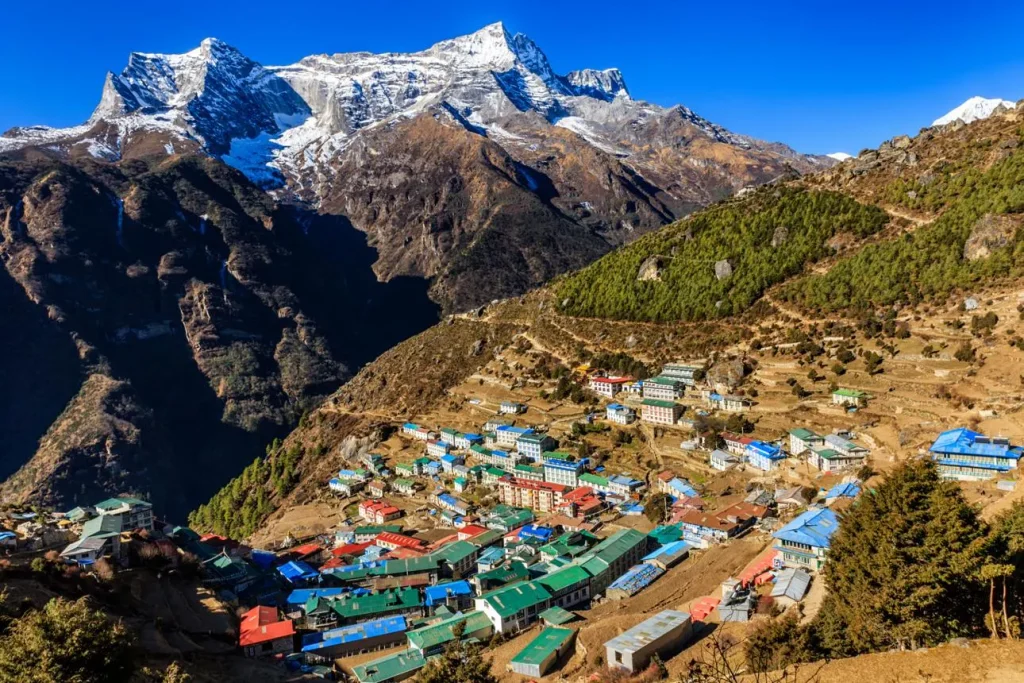
Namche Bazaar sits at 3,440 meters in Khumbu Pasang Lhamu Rural Municipality, Solukhumbu district. It is the first large settlement above Lukla and the acclimatization stop almost every trekker uses. Everything heading up the valley passes through it. So does everything coming down.
That geography is why trash to treasure in Namche Bazaar is not a slogan here but an engineering constraint. There is no road. Waste leaves the Khumbu the same way it arrived: on a back, on a yak, or in the hold of a small aircraft from Lukla. Every kilogram moved is a kilogram someone carried.


The Sagarmatha Pollution Control Committee, usually shortened to SPCC, was founded in 1991 with support from what is now the Ministry of Culture, Tourism and Civil Aviation and from WWF Nepal. It is a non-governmental body registered in Solukhumbu, staffed largely by people from the Khumbu, and headquartered in Namche. Its 2025 annual report lists 23 permanent staff and more than 45 seasonal workers.
The Nepali Times reported that the Khumbu receives somewhere between 60,000 and 100,000 visitors and porters a year. That range moves with the season and the source. What matters is the order of magnitude: a settlement of a few hundred permanent households absorbs the waste footprint of a mid-sized town every spring and autumn.
What the System Actually Looks Like
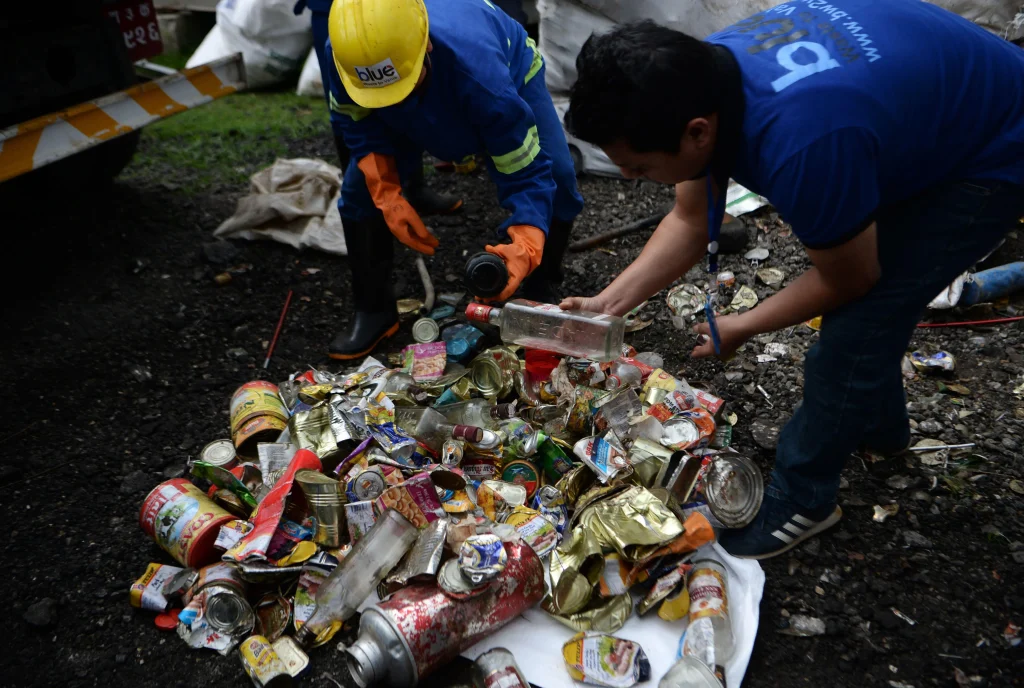
SPCC and the rural municipality adopted a Sustainable Waste Management Plan for the Khumbu in 2023. Work on it began earlier, with a 2019 National Geographic grant, and researchers Alton C. Byers, Milan Shrestha and Netra Chhetri contributed to the plan finalized in 2020.
The design has three stages.
- Environmental Stations. Waste is sorted at source, in the villages and along the trails. SPCC’s 2025 report counts three new stations built that year. Sagarmatha Next, a non-profit based in Namche, described nine stations operating with 18 more planned.
- Material Recovery Facility. Sorted recyclables are compacted and pre-processed. Namche has the region’s facility. A second is planned for Lukla.
- Transport to Kathmandu. Pre-processed material flies out of Lukla and is handed to recyclers in the capital.
Along the trails, SPCC maintains 125 garbage bins, ten of them added in 2025. It services 121 lodges, cafés and shops in Namche and roughly 92 to 98 in Lukla, depending on which table in the annual report you read. The discrepancy is small, but it is there, and it is worth noting that even the best regional figures in the Khumbu carry some slack.
Carry Me Back: Crowdsourcing the Descent
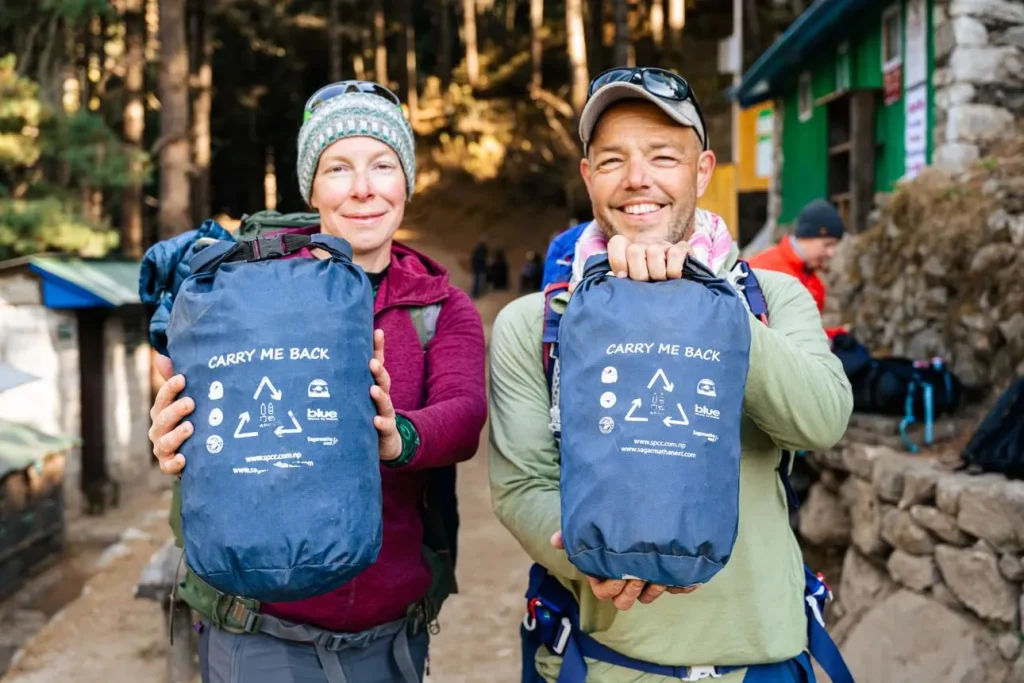
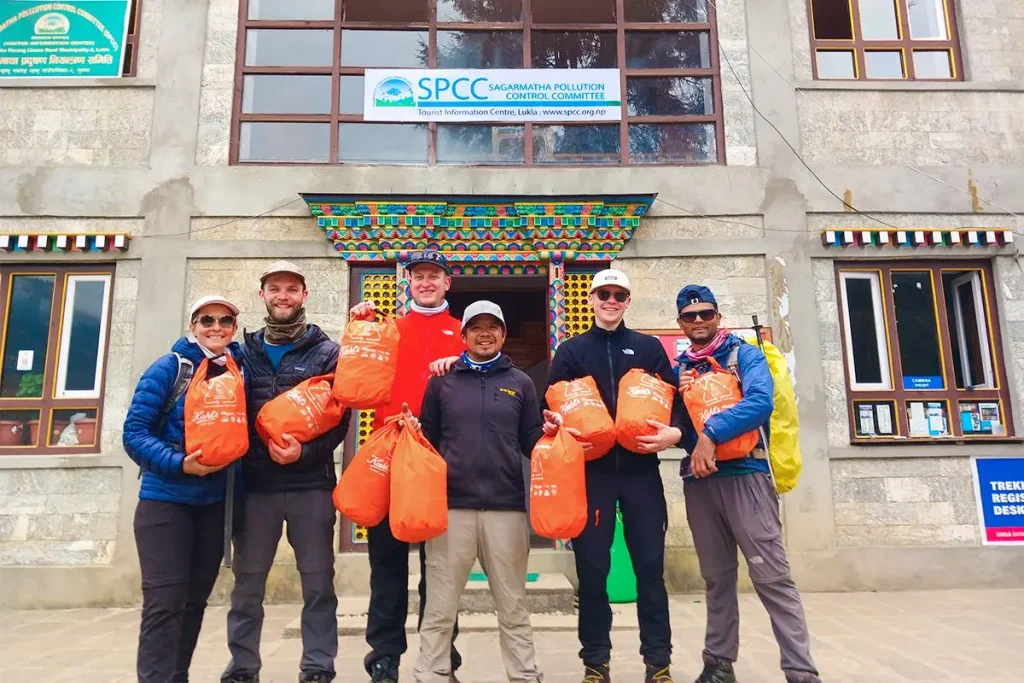
The most elegant piece of the system is also the simplest. Carry Me Back asks trekkers to take a one-kilogram bag of pre-processed waste from a collection point and carry it down to Lukla. No special equipment. No cost. One kilogram, already sorted and sealed.
Over roughly four years, more than 35,000 participants have carried over 45 tonnes down the valley, according to Sagarmatha Next. SPCC’s own accounting records 14,128 kilograms of community Carry Me Back recyclables in fiscal 2081/82, up from 9,107 kilograms the year before. Volunteer numbers rose from 7,060 to 10,224 in the same period.
Here is the part most trekking blogs skip. One kilogram per trekker is not a rounding error in a system where the alternative is paying for a dedicated porter or a cargo flight. It is a direct substitution of volunteer labor for a hard cash cost. The program works because the marginal burden on each person is almost nothing and the aggregate is measured in tonnes.
If you are planning the route, the practical mechanics of the walk in are covered in our Everest Base Camp trek guide, and the logistics of the flight that starts it in our Lukla airport guide.
Expedition Waste Is a Different Problem
Trekking waste and mountaineering waste behave differently. Trekkers generate volume: wrappers, bottles, cans, packaging. Expeditions generate weight, hazard and altitude.
Nepal’s regulatory answer is financial. Each climbing expedition pays a refundable garbage deposit of US$4,000 to the Department of Tourism through its agency. The money is returned only after SPCC verifies compliance and issues a garbage clearance certificate. Since 2015, climbers have been required to bring down 8 kilograms of waste from above base camp. From the 2026 season, at least 2 kilograms of that must come from Camp 2 or higher, which closes an obvious loophole: collecting easy litter near base camp and calling it done.
From 2024, the rural municipality has required climbers on Everest and Ama Dablam to use SPCC-issued human waste bags. On Ama Dablam, climbers must also return 3 kilograms of waste alongside their bags.
Separately, SPCC charges Khumbu Icefall route fees of US$600 per member for spring expeditions, with a combined US$25,000 for autumn and winter. Those fees fund the Icefall Doctors, a team of eight who fix the route through the moving glacier each season. They are not garbage fees, and the two are often confused in reporting.
By the Numbers
| Measure | FY 2080/81 (2023/24) | FY 2081/82 (2024/25) |
|---|---|---|
| Trails and settlements waste | Over 225,000 kg | Over 270,000 kg |
| Expedition waste | Over 100,000 kg | About 103,448 kg |
| Carry Me Back recyclables | 9,107 kg | 14,128 kg |
| Carry Me Back volunteers | 7,060 | 10,224 |
| Total expenditure | NPR 65,670,012 | NPR 88,439,155 |
One caution about that table. SPCC’s own report highlights expedition waste in 2081/82 as “more than 110,000 kg” while its detailed tables sum to roughly 103,448 kg. We have used the table figure and flagged the gap rather than quietly picking the larger number.
The expenditure line deserves attention too. Costs rose about 35% in a single year while collected tonnage rose roughly 20%. Mountain waste management gets more expensive per kilogram as it gets more thorough, because the easy material near the trail is collected first.
What the System Cannot Yet Do
Three problems resist the current approach.
Waste frozen above 6,000 meters
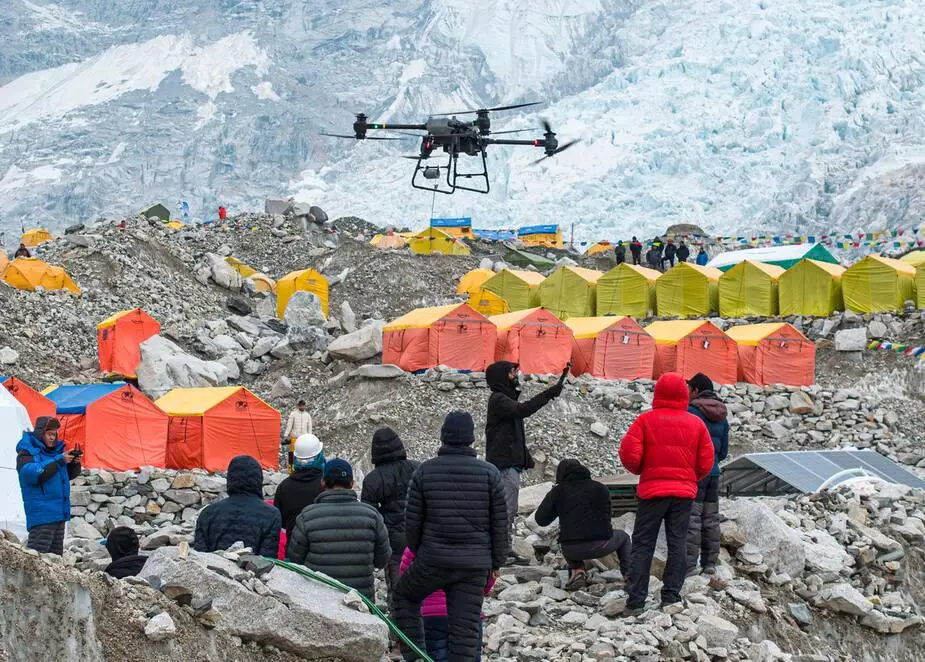
Decades of discarded oxygen cylinders, tent fabric, rope and human waste sit locked in ice on the upper mountain. Retrieval at that altitude is dangerous, slow and expensive. Cargo drones have been tested on Everest to lift waste from Camp 1, and a drone cleanup on Ama Dablam removed 403 kilograms. Neither has reached the highest camps. The technology is promising and currently partial. Anyone describing drones as a solved answer is ahead of the evidence.
Legacy dumps
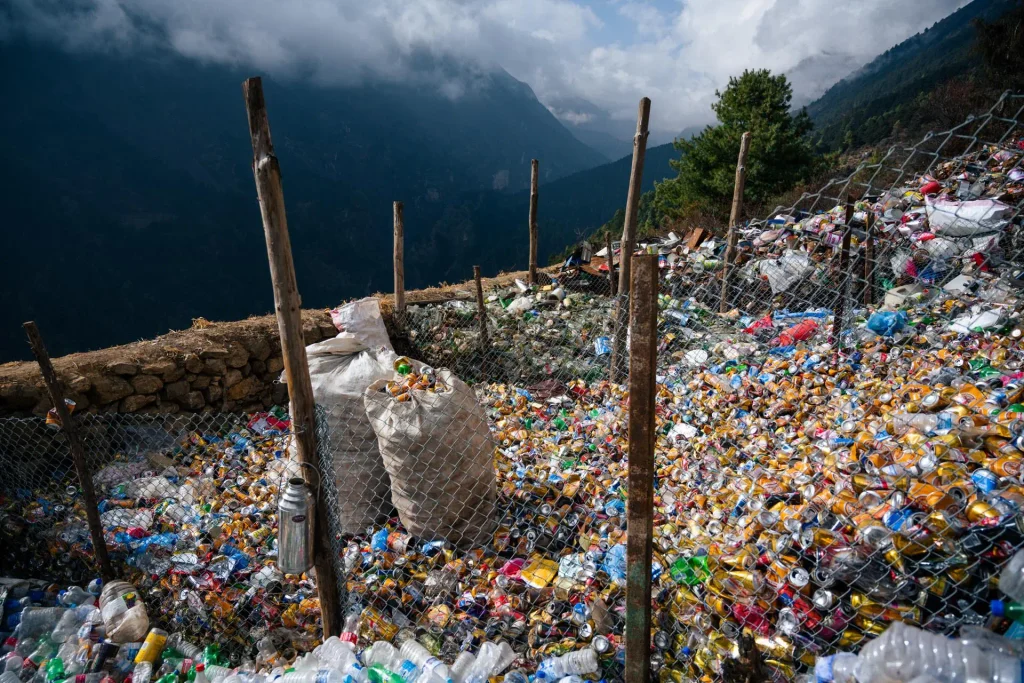
Sagarmatha Next and SPCC surveyed more than 70 old landfill sites inside the national park. These are pits dug before the current system existed, containing mixed waste that was never sorted. Excavating them properly is a separate project from managing today’s flow.
The last-mile economics
Only about 7,000 kilograms of waste reached Kathmandu in 2025, of which roughly 5,000 kilograms of Carry Me Back material went to Blue Waste, a Kathmandu recycler. Compare that with the 270-plus tonnes collected in the region. The gap is the bottleneck: collecting waste in the Khumbu has become much easier than moving it out, and material that cannot fly out has to be stored, compacted or managed locally.
What This Means If You Are Walking the Trail
The useful actions are unglamorous and specific.
- Carry a filter or purification tablets instead of buying bottled water. Every bottle bought above Lukla is a bottle someone must carry down.
- Take a Carry Me Back bag at Namche or a station on your descent. It costs you nothing and one kilogram is genuinely negligible on a downhill day.
- Sort your own waste before handing it over. Mixed waste is far more expensive to process than separated waste.
- Carry out batteries and gas canisters rather than leaving them at a lodge. Both are hazardous and neither can be processed locally.
- Ask your operator whether they pay into local waste systems. Several do not.
Our zero-waste trekking guide goes deeper on packing choices, and the wider context of Namche itself is covered in Namche Bazaar: gateway to Everest. For a broader view of Nepal’s environmental commitments, see our coverage of World Environment Day 2026 in Nepal.
Who Carries the Cost
It is worth being clear about something the brochures blur. The Khumbu’s waste problem is produced overwhelmingly by visitors and managed overwhelmingly by Sherpa institutions and Khumbu residents. SPCC is a local body. Its staff are local. The rural municipality that passed the waste plan is a local government. Sagarmatha Next was co-founded by Tommy Gustafsson and operates from Namche with local management, including operations manager Laxman Lama Blon.
This is not a case of outside expertise arriving to fix a mountain community. It is a case of a mountain community building administrative capacity around an externally imposed waste stream, and asking visitors to carry one kilogram of their own footprint back down.
Frequently Asked Questions
Is there a landfill in the Khumbu?
Not in the modern engineered sense. Older pits exist, and Sagarmatha Next and SPCC have surveyed more than 70 of them inside the national park. Current practice sorts waste at Environmental Stations and moves recyclables out of the region rather than burying them.
How much waste does an Everest expedition have to bring down?
Since 2015, each climber must return 8 kilograms of waste from above base camp. From the 2026 season, at least 2 kilograms of that must come from Camp 2 or above. Climbers on Everest and Ama Dablam must also use SPCC-issued human waste bags, a requirement introduced by Khumbu Pasang Lhamu Rural Municipality in 2024.
What is the garbage deposit and who pays it?
Each climbing expedition pays a refundable deposit of US$4,000 to the Department of Tourism through its trekking agency. SPCC verifies compliance and issues a clearance certificate, which the expedition needs to reclaim the deposit.
Can I join Carry Me Back as an ordinary trekker?
Yes. Collection points let you pick up a one-kilogram bag of pre-sorted waste and drop it at Lukla. More than 35,000 people have done it over roughly four years, carrying over 45 tonnes in total.
Is burning waste common in the Khumbu?
Open burning has historically happened at lodges and in villages, and it remains a concern because high-altitude air quality is poor at dispersing smoke in enclosed valleys. The current waste plan is explicitly designed to divert material to sorting and recycling instead. SPCC’s reporting does not publish a measured figure for how much is still burned, so we are not giving one.
Do drones actually remove rubbish from Everest?
Partly. Cargo drones have been tested to carry waste down from Camp 1, and a drone operation on Ama Dablam removed 403 kilograms. They cannot yet operate reliably at the highest camps. Treat drone cleanup as a working pilot, not an established solution.
Where does Khumbu waste end up?
Recyclables are pre-processed in Namche and flown from Lukla to Kathmandu. In 2025, about 7,000 kilograms reached the capital, with roughly 5,000 kilograms of Carry Me Back material going to the recycler Blue Waste.
Does paying the national park fee cover waste management?
No. National park entry fees go to the park authority. SPCC’s waste work is financed separately, through Icefall route fees, service charges to lodges and shops, donor projects and municipal support. Its total expenditure in fiscal 2081/82 was about NPR 88.4 million.
Keep Exploring
The waste system around Namche is one of the clearer examples of a Nepali mountain community building institutions faster than the pressure arriving on it. If you found this useful, save it for your pre-trek reading and share it with whoever is planning the trip with you. NepalVue publishes field-grounded reporting on Nepal’s environment, culture and mountains, and there is more of it waiting.


