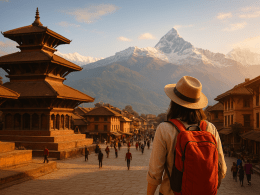



Upper Mustang Overland: A Complete 7-Day Monsoon Driving and Itinerary Guide
At 6:40am in Pokhara, while the rest of Nepal is bracing for another gray, dripping monsoon day, a 4WD jeep pulls out of the lakeside and points its nose north toward the mountains. Six hours later, the rain stops as if someone flipped a switch. That switch is the Himalaya itself, and crossing it is the whole point of an Upper Mustang overland trip. You are driving out of the monsoon and into a high desert that barely knows the rains exist.
Here is what most guides won’t tell you about doing this in July or August: the destination is the easy part. The road to it is where the real planning happens.


Why an Upper Mustang Overland Trip Makes Sense in Monsoon
Mustang sits in the rain shadow of two giants. Annapurna rises to 8,091 meters and Dhaulagiri to 8,167 meters, and together they form a wall along the southern edge of the valley. When monsoon air rolls up from the Bay of Bengal every June, it slams into that wall, dumps its water on the southern slopes, and arrives in Mustang wrung dry. The region gets less than 300mm of rain a year, even in the wettest months.
So while the Everest trail turns to mud and leeches and the lower Annapurna route disappears into cloud, Lo Manthang stays clear and dry. Days in July run a mild 16°C to 24°C, sometimes pushing 28°C in the sun, and nights drop to a cool 5°C to 11°C. The air is famously clean in these months, because the rain falling south of the range washes out the dust and haze that blurs the views in spring.
Crowds? Barely any. April and October pack the restricted area with trekkers and jeeps. June through August bring a tiny fraction of that. You get the monasteries, the cave cities, and the walled capital almost to yourself. If you want context on why the wider region is worth the effort, our Mustang Nepal travel guide covers the history and culture in more depth.
The Honest Truth About the Road
Now for the part the glossy brochures skip. Upper Mustang is dry. The road to reach it is not.
To get from Pokhara to Jomsom, the gateway to Mustang, you drive roughly 150 to 155 km through the Kali Gandaki gorge. On a good day a jeep does it in 5 to 6 hours. In monsoon, “a good day” is not guaranteed. The stretch from Beni through Tatopani, Ghasa, and Lete cuts through the deepest gorge on earth, and those walls shed rocks and landslides when the rain is heavy. Drivers know the danger zones. A blocked road can cost you half a day or strand you overnight.
That is why a real overland trip needs slack built into it. Do not book a same-day flight out of Pokhara for the evening you are scheduled to return. Leave a buffer day. A 4WD jeep is not optional on this route, and neither is a driver who knows the gorge. Our monsoon travel safety guide goes deeper on reading road conditions and landslide risk if you want the full picture before you commit.
Permits and Paperwork: What Changed in Late 2025
Big news if you researched this trip a year ago and saved old numbers. In November 2025, Nepal’s government overhauled the Upper Mustang permit. The old system charged a flat $500 for the first 10 days, whether you stayed two days or ten. That is gone.
The new rule is simpler and, for shorter trips, much cheaper: $50 per person per day, with no mandatory minimum. A four-day visit now costs $200 in restricted-area fees instead of the old $500 floor. A seven-day visit runs about $350. As of early 2026, these figures were confirmed across multiple Nepali trekking operators, though it is always worth checking with your agency, since government fees can shift.
You will need a second permit too. The Annapurna Conservation Area Permit, or ACAP, costs around NPR 3,000 for foreign nationals, which is roughly $25. SAARC nationals pay about NPR 1,000. You pass through the conservation area to reach Mustang, so both permits apply.
Two non-negotiables remain. You cannot enter Upper Mustang as an independent traveler. A licensed guide and a registered trekking agency are mandatory, and that rule has not changed with the new fee structure. For the full breakdown of every permit you might touch on a Nepal trip, see our Nepal trekking permits guide.
- Upper Mustang RAP: $50 per person per day (no minimum, as of late 2025)
- ACAP: approximately NPR 3,000 (~$25) for foreigners, NPR 1,000 for SAARC nationals
- Mandatory: licensed guide plus a government-registered agency
The 7-Day Upper Mustang Overland Itinerary
Seven days is the sweet spot. It gives you a full day in Lo Manthang and time for the side valleys, without the punishing pace of a five-day dash. Here is how a sensible monsoon-aware route lays out.
Day 1: Pokhara to Jomsom (150 km, 6 to 8 hours)
Start early. The morning hours are your friend in monsoon, since rain and landslide risk tend to build through the afternoon. You will roll through Beni, Tatopani, and the green lower gorge before the landscape begins to dry out near Marpha, the apple village. Overnight in Jomsom at 2,720 meters.
Day 2: Jomsom to Kagbeni to Chele (around 35 km)
Kagbeni is the official checkpoint where your restricted-area permit gets stamped. Beyond it, the scenery flips into raw, banded cliffs and ochre canyons. You cross the Kali Gandaki and climb toward Chele, your first taste of the upper kingdom. Night at roughly 3,050 meters.
Day 3: Chele to Ghami via Samar and Syangboche
A slower driving day through some of the most dramatic terrain of the whole route. Samar and Syangboche cling to the hillsides, and the road winds past sky caves carved into the cliffs centuries ago. Ghami, where you overnight, is one of the larger settlements before Lo Manthang.
Day 4: Ghami to Lo Manthang (4 to 5 hours)
Today you reach the walled capital. Lo Manthang sits at 3,730 meters, around 12,235 feet, and its mud-brick walls have guarded the city for six centuries. Arrive with daylight to spare and just walk the perimeter. Few first sights in Nepal land the way this one does.
Day 5: Full Day Exploring Lo Manthang
Give the capital a whole day. Inside the walls sit the Jampa, Thubchen, and Chodey monasteries, their interiors thick with old murals. A worthwhile half-day excursion runs out to Chhoser and the multi-story Jhong cave complex, a honeycomb of rooms dug into a cliff. If your trip lands in August, ask your guide about the Yartung horse-racing festival, the biggest cultural event of the Mustang monsoon.
Day 6: Lo Manthang back to Jomsom
Retrace the route south, with a stop in Kagbeni or Marpha for the night. Long driving day, but the views never repeat themselves going the other direction. Marpha’s whitewashed lanes and apple brandy make a fine last evening in the high country.
Day 7: Jomsom to Pokhara
Back down through the gorge to Pokhara. Build your buffer here. If a slide closed the road on the way up, this is the day you might need a backup, whether that means waiting it out or catching a short Jomsom-to-Pokhara flight when the weather allows. Decompress by the lake, which you can plan with our Pokhara travel guide.
What It Costs and What to Pack
A private Upper Mustang jeep tour generally runs between $925 and $1,350 per person, depending on group size, with smaller groups paying more per head. That figure usually folds in the jeep, driver, guide, permits, and basic teahouse lodging. Confirm exactly what is included before you pay, because “all-inclusive” means different things to different operators.
Packing for monsoon Mustang is a contradiction. You want sun protection for the bright dry days and warm layers for the cold nights, plus one set of proper rain gear for the gorge section, where you genuinely might get soaked even if Mustang stays dry. Bring:
- Strong sunscreen, sunglasses, and a wide-brim hat for the high-altitude glare
- A warm jacket and thermal layers for nights near 5°C
- A waterproof shell and pack cover for the lower gorge
- Cash in Nepali rupees, since ATMs are scarce past Jomsom
- A basic altitude awareness plan, as Lo Manthang sits above 3,700 meters
For wider seasonal context on when Nepal rewards visitors, our month-by-month guide to visiting Nepal is a useful companion read.
Is the Overland Trip Right for You?
An overland jeep journey suits travelers who are short on time, not keen on multi-week trekking, or simply curious to see the landscape unfold from a window. Older travelers and families manage it comfortably. What it asks in return is patience with rough roads and a flexible mindset about the monsoon access route.
If you want the classic walking experience instead, the trek covers similar ground over two weeks. Many people now do a hybrid: drive in, walk the side valleys, drive out. For official regulations and the latest restricted-area notices, the Nepal Tourism Board is the authoritative source, and the conservation area itself is managed by the National Trust for Nature Conservation.
Frequently Asked Questions
How much does the Upper Mustang permit cost in 2026?
Since the late 2025 reform, the restricted-area permit costs $50 per person per day with no mandatory minimum, replacing the old $500 flat fee for 10 days. A seven-day overland trip therefore runs about $350 in restricted-area fees, plus the separate ACAP permit of roughly NPR 3,000.
Can I visit Upper Mustang without a guide?
No. Upper Mustang is a restricted area, so a licensed guide and a government-registered trekking agency are both mandatory. Independent travel is not permitted, and that rule stayed in place even after the fee change.
Is the overland road safe during monsoon?
Mustang itself stays dry, but the access road through the Kali Gandaki gorge between Pokhara and Jomsom is prone to landslides and rockfall in heavy rain. A 4WD jeep and an experienced driver are essential, and you should build at least one buffer day into your plan in case a slide closes the road.
How long does the drive from Pokhara to Jomsom take?
The 150 to 155 km drive normally takes 5 to 8 hours by jeep, depending on road conditions. During monsoon, delays from landslides or temporary closures can extend that considerably, so an early morning start gives you the best window.
What is the weather like in Upper Mustang in July and August?
Expect mild, dry, sunny days between 16°C and 24°C, occasionally reaching 28°C, with cold nights around 5°C to 11°C. Because the rain falls south of the Himalaya, the air is clean and the mountain views are often clearer than in spring.
How many days do I need for an Upper Mustang overland trip?
Seven days is ideal. It allows a relaxed driving pace, a full day in Lo Manthang to see the monasteries and cave complexes, and a buffer day to absorb any monsoon road delays. Shorter five-day versions exist but feel rushed.
Is Upper Mustang suitable for older travelers or families?
Yes, more so than a trek. Because you cover the distance by jeep rather than on foot, the overland trip is accessible to older travelers, families with teenagers, and anyone not wanting a strenuous multi-week hike. Altitude awareness still matters, as Lo Manthang sits above 3,700 meters.
What festival happens in Upper Mustang during monsoon?
The Yartung Festival, held over several days in August around Lo Manthang and Jhong village, is the most important cultural event of the monsoon period. It centers on traditional horse racing and is a rare chance to see local life at its most festive.