



Last updated: November 9, 2026. Fees, distances, and opening times vary by source. Confirm at the gate before you go.
Few hikes give you so much for so little effort. The Jamacho Gumba hike starts just minutes from Kathmandu’s streets. It climbs through quiet forest to a Buddhist monastery with a view tower. From the top, you can see Swayambhunath below and, on clear days, the Himalaya to the north. This guide covers the route, timing, fees, packing, and tips for a smooth day.
Quick Facts
- Location: Nagarjun Forest, part of Shivapuri Nagarjun National Park, northwest of Kathmandu
- Trailhead: Fulbari Gate (also spelled Phulbari or Phoolbari), near Balaju and Machhapokhari
- Summit: Jamacho Gumba (Jamacho Monastery) at about 2,128 to 2,130 meters
- Distance: About 5 to 6 km uphill from the gate, or roughly 10 to 12 km round trip
- Time: About 2 to 3 hours up and 1.5 to 2 hours down
- Difficulty: Easy to moderate
- Best seasons: Spring and autumn
- Entry: A national park ticket is required
What Is Jamacho Gumba?
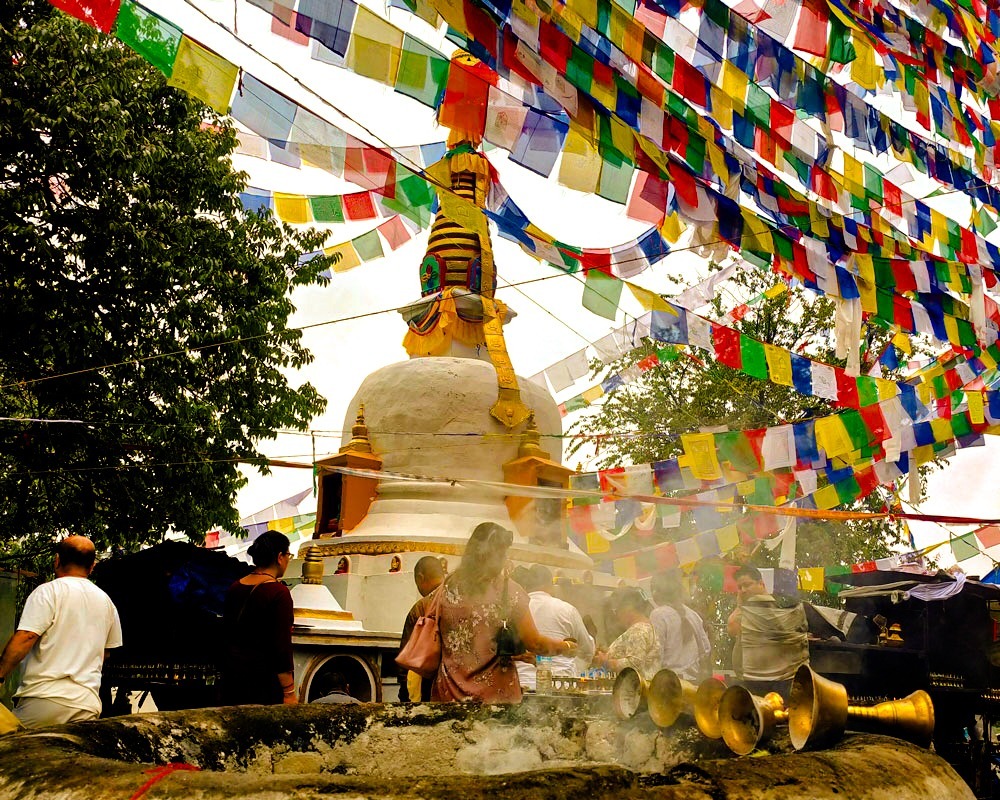
Jamacho Gumba, also called Jamacho Monastery or Nagarjun Monastery, is a Buddhist shrine on top of Jamacho Hill. It sits inside the Nagarjun forest area of Shivapuri Nagarjun National Park. One operator describes it as a sacred Hindu-Buddhist pilgrimage site.


The setting is calm and spiritual. Prayer flags flutter near the summit. A view tower rises beside the monastery, and visitors can climb it for a 360-degree panorama.
What You Will See
- Kathmandu Valley: The city spreads out to the south.
- Swayambhunath: The famous stupa is visible below, according to several guides.
- Himalayan ranges: On clear days, views extend to the Langtang range and Ganesh Himal. Some guides also mention Manaslu and other peaks.
- Forest and birdlife: The trail passes through lush forest. One guide mentions Raniban, known as the Queen’s Forest, with a Nagarjuna cave and a military checkpoint along the way.
How to Get to the Trailhead
The hike begins at Fulbari Gate, the main entrance to the Nagarjun forest section. It is near the Balaju Bypass and Machhapokhari. Guides say it is about 6 to 7 kilometers from central Kathmandu.
- By taxi or ride-hailing: The easiest option from Thamel. Allow about half an hour.
- By local transport: One guide describes the route as Kathmandu to Machhapokhari to Fulbari Gate. Ask locally about microbuses.
- By tour: Many operators offer a private vehicle and a guided day hike.
Entry Fees and Hours
You need a Shivapuri Nagarjun National Park ticket at the gate. Fees differ widely between sources, so treat these as a guide.
- Foreign visitors: Reported between NPR 565 and NPR 1,000.
- SAARC nationals: One source lists NPR 600.
- Nepali citizens: Reported between NPR 60 and NPR 100.
- Hours: One guide says the monastery is accessible during daylight, typically between 6:30 AM and 4:00 PM.
Bring cash. Confirm the current fee and hours at the gate.
The Route: Step by Step
1. Buy Your Ticket at the Gate
Start early. Many guides suggest leaving the gate around 7 to 9 AM.
2. Climb Through the Forest
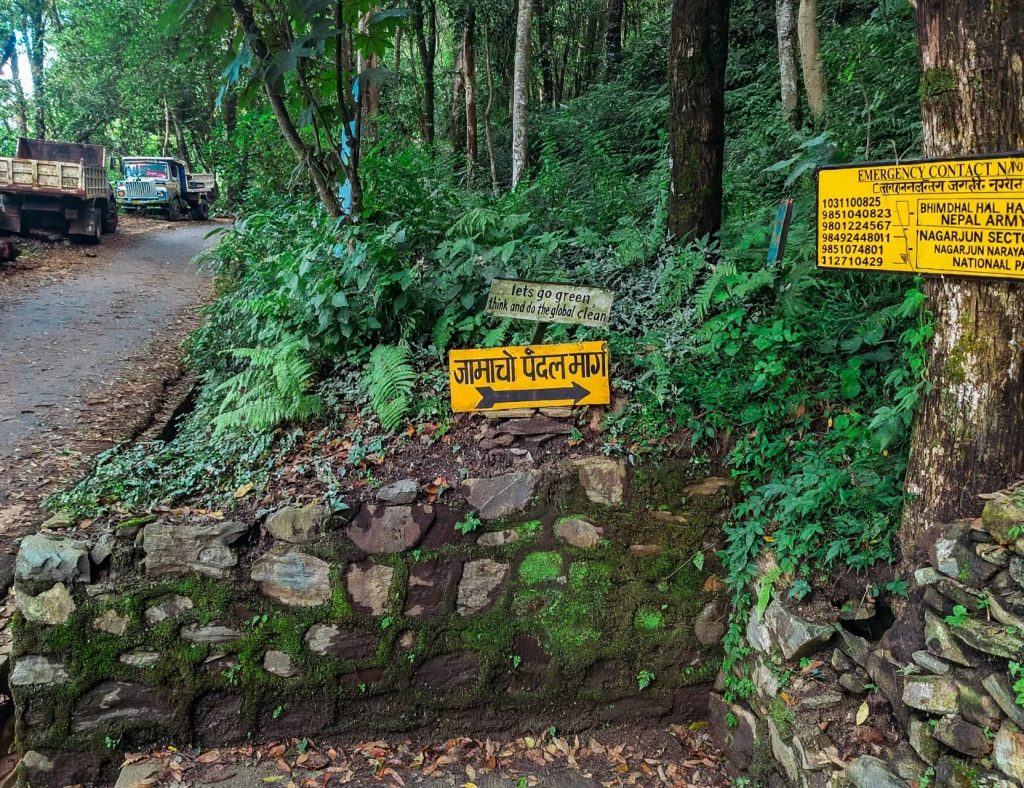
The trail leaves the road and enters the forest. It is mostly stone steps and packed dirt. Some sections have cemented steps. The grade is steady, with some steep parts.
3. Follow the Marked Trail
The trail is well marked. One guide describes five distinct sections from the gate to the monastery. Use offline maps if you are unsure.
4. Reach the Prayer Flags
After roughly two to three hours of climbing, you will see prayer flags signaling the monastery is near. The last stretch is steep.
5. Explore the Summit
Walk around the monastery, climb the view tower, and enjoy your lunch. Take time to look at Swayambhunath and the valley.
6. Descend
The way down usually takes about 1.5 to 2 hours. Take care on stone steps, which can be slippery when wet.
A Note on the Road
A motorable road also leads to Jamacho Gumba. But the hiking trail is the better way to enjoy the forest.
Distance and Time: Why Sources Differ
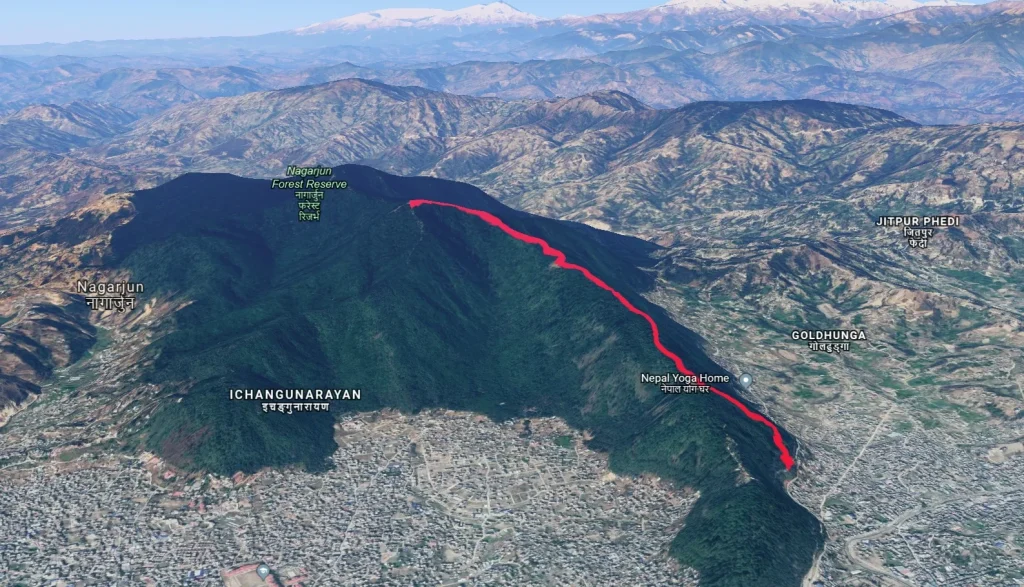
You may see different numbers online. Some say the hike is 5 km round trip. Others say 9 km, 10 to 12 km, or 5 km one way. Most guides and operators describe about 5 to 6 km uphill from the gate. That makes a round trip of roughly 10 to 12 km.
Allow 5 to 6 hours for the full outing, including time at the top. Faster hikers may do it in about 4 hours.
Best Time to Hike
- Autumn (September to November): Clear skies and good mountain views.
- Spring (March to May): Rhododendron blooms and fresh greenery.
- Early morning: Cooler, quieter, and best for views.
- Monsoon and winter: Possible, but expect slippery paths in the rain and cold mornings in winter.
Mornings are best because clouds often build later in the day. Check the weather the night before.
What to Pack
- Water: Carry at least 1 liter. There are no water sources on the trail, according to one guide. Bring more if it is warm.
- Snacks or lunch: A packed lunch tastes better at the summit.
- Cash: For the entry fee and small purchases.
- Sturdy shoes: Good grip for stone steps.
- Layers and a rain jacket: Weather can change.
- Sun protection: Hat, sunscreen, and sunglasses.
- Camera or phone: The views are worth it.
- A small trash bag: Carry out what you carry in.
Safety and Etiquette
- Start early so you finish in daylight.
- Stay on the trail.
- Watch your footing on stone steps.
- Respect the monastery. Dress modestly, and keep quiet near prayer areas.
- Ask before photographing monks or worshippers.
- Leave no trace. Take your trash with you.
- Check the weather. After rain, the trail can be muddy and slippery.
This is a protected national park. Follow park rules and signs.
Sample Day Plan
- 7:00 AM: Leave Thamel by taxi.
- 7:30 AM: Buy your ticket at Fulbari Gate and start walking.
- 10:00 to 10:30 AM: Reach the monastery.
- 10:30 AM to noon: Explore, climb the tower, and have lunch.
- Noon: Start the descent.
- 2:00 PM: Back at the gate. Catch a taxi to town.
Hike Alternatives in the Same Area
If you want a longer day, consider other trails in Shivapuri Nagarjun National Park. One guide notes that Jamacho has less elevation gain than Bishnudwar, at about 2,100 meters, and covers a fraction of the distance to Shivapuri Peak, at 2,732 meters. For a different kind of sunrise outing, see our Dhulikhel vs Nagarkot guide.
Is Jamacho Gumba Good for Beginners?
Yes. Guides describe the trail as easy to moderate and suitable for most fitness levels, including beginners. The main challenge is the steady climb and a steep final stretch. It also makes a good warm-up for longer treks. If you are planning a bigger trip, read our beginner trekking guide.
Tips for This Week
Tihar is underway, and holiday days may bring more visitors. Go early, and expect some businesses to be closed. After the recent storm, the forest may still be damp in places, so wear shoes with good grip.
Final Thoughts
The Jamacho Gumba hike is one of the best short escapes from Kathmandu. It offers forest shade, a peaceful monastery, and a view tower with a sweeping panorama. Start early, bring water and cash, and take your time at the top. Whether you are a first-time hiker or a local looking for a quiet morning, Jamacho delivers.
Frequently Asked Questions
How long is the Jamacho Gumba hike?
Most guides put it at about 5 to 6 km uphill from Fulbari Gate, or roughly 10 to 12 km round trip. Allow 2 to 3 hours up and 1.5 to 2 hours down.
How difficult is it?
Easy to moderate. The trail is mostly stone steps and packed dirt, with a steep final stretch. Guides say it suits beginners.
Where does the hike start?
At Fulbari Gate, near Balaju and Machhapokhari, about 6 to 7 km from central Kathmandu.
How high is Jamacho Gumba?
About 2,128 to 2,130 meters above sea level.
What is the entry fee?
A national park ticket is required. Reports for foreigners range from NPR 565 to NPR 1,000, and fees differ for SAARC nationals and Nepali citizens. Confirm at the gate.
What can I see from the top?
Kathmandu Valley, Swayambhunath below, and on clear days the Langtang range, Ganesh Himal, and other peaks.
Is there water on the trail?
One guide says there are no water sources. Carry at least 1 liter.
When is the best time to go?
Autumn for clear views and spring for blooms. Go in the morning for the best conditions.
Can I drive to the monastery?
A motorable road exists, but the hiking trail is the recommended way to experience the forest.
Do I need a guide?
Not necessarily. The trail is well marked, though some people book a guided day hike for transport and convenience.


