



Nepal’s landmarks tell stories that go far beyond architecture, religion, and history. Behind every towering statue, restored temple, historic pond, and modern monument lies another story: who paid to build it? Some projects receive billions of rupees from government budgets. Others depend on religious donations, community fundraising, international Buddhist organizations, and individual contributions. Some combine all these funding sources. From the reconstructed Dharahara in Kathmandu to the enormous Shiva statue at Pumdikot in Pokhara, Nepal has invested heavily in structures that attract visitors and represent its cultural identity. But how much do these monuments actually cost? Who finances their construction? And what do these investments mean for Nepal’s tourism industry?
The answers reveal two different approaches to developing Nepal’s landmarks: building new attractions and preserving existing heritage.
Why Nepal Invests in Monuments
Monuments are more than structures designed to attract attention. They can become important destinations for religious tourism, cultural exploration, sightseeing, and local economic activity.


Nepal has a particularly strong foundation for heritage tourism. Its landscape includes centuries-old temples, Buddhist stupas, royal courtyards, pilgrimage destinations, and contemporary landmarks.
The Kathmandu Valley alone contains seven monument zones recognized under UNESCO’s World Heritage listing. These include Kathmandu, Patan, and Bhaktapur Durbar Squares, Swayambhunath, Boudhanath, Pashupatinath, and Changunarayan.
Lumbini, the birthplace of Gautama Buddha, adds another major international pilgrimage destination.
These places attract visitors interested in religion, architecture, history, photography, and local culture.
However, developing tourism destinations requires more than constructing an impressive monument. Visitors also need accessible roads, parking, sanitation, safety, information, accommodation, and other supporting facilities.
This explains why modern monument projects often include considerably more than their central structures.
1. Dharahara: A Landmark Rebuilt with Billions

Few modern landmarks represent Nepal’s reconstruction journey better than Dharahara.
Located in Sundhara, Kathmandu, the original tower was built in 1832 by Bhimsen Thapa at the commission of Queen Lalit Tripura Sundari. It became one of the capital’s most recognizable historical structures.
The original tower was approximately 61.88 metres tall and became an important part of Kathmandu’s urban identity.
The devastating earthquake of April 25, 2015, destroyed Dharahara, leaving only its base.
Its reconstruction eventually became one of Nepal’s most expensive monument projects.
How much did Dharahara cost?
The reconstruction contract was initially worth approximately NPR 3.48 billion. Later reports placed the cost above NPR 4.71 billion, including VAT.
Importantly, this amount refers to the modern reconstruction, not the original nineteenth-century tower.
The original construction cost is not reliably documented. Historical records identify its builder and period but do not provide a verified construction budget.
The reconstruction involved several funding arrangements.
The government initiated the project through the National Reconstruction Authority. The public campaign called “I Will Build Dharahara” collected NPR 140.29 million from citizens, government employees, and different organizations.
Nepal Telecom initially pledged NPR 1 billion towards reconstruction. However, its proposed commercial reconstruction arrangement was rejected, and the National Reconstruction Authority eventually proceeded with the project.
This distinction matters: public donations were important, but they represented a supplementary contribution rather than the principal financing.
What does the new Dharahara offer tourists?
The reconstructed Dharahara is considerably more than a replica of the original tower.
The wider development includes modern visitor facilities such as elevators, a museum, exhibition spaces, gardens, fountains, parking, and commercial areas.
These additions transform Dharahara into a broader urban visitor destination.
For tourists, it offers an opportunity to understand Kathmandu’s historical identity while experiencing a modern landmark.
It also creates an opportunity to connect nearby destinations, including Kathmandu Durbar Square, Basantapur, Ason, and other traditional neighbourhoods.
However, preserving the historical character of the original tower remains an important consideration. A modern attraction should not replace the historical story that made the location meaningful.
2. Rani Pokhari: Restoring Kathmandu’s Historical Identity
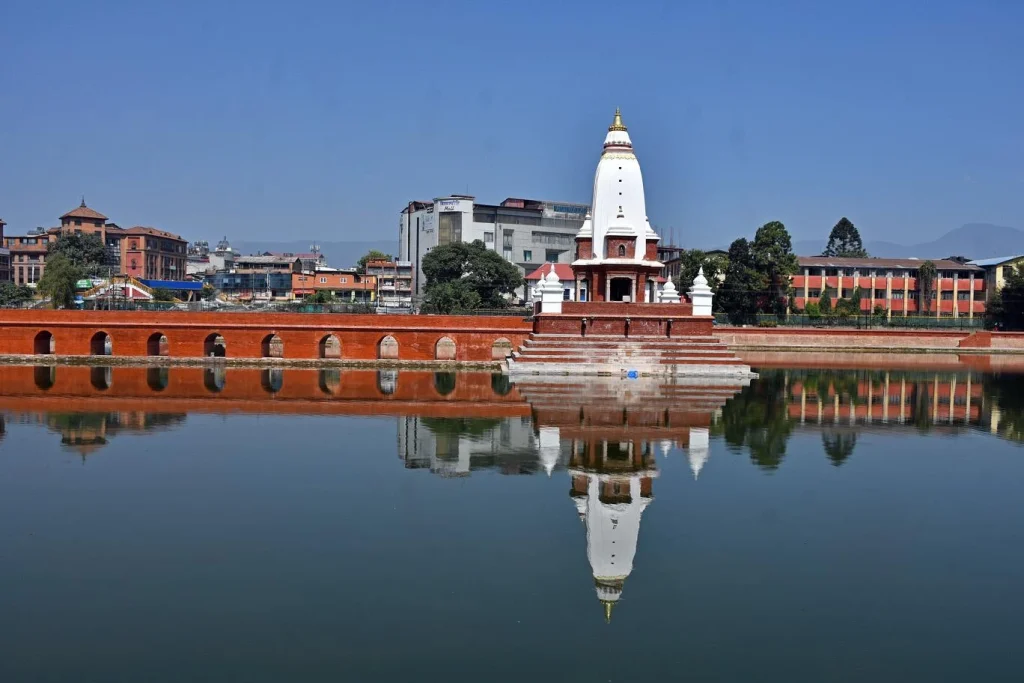
Situated in central Kathmandu, Rani Pokhari is one of the city’s most recognizable historical landmarks.
King Pratap Malla built the pond in 1670. According to popular historical accounts, he commissioned it following the death of his son, intending to console his grieving queen.
The pond and its central Balgopaleshwor Temple hold religious and cultural significance, particularly during Bhai Tika.
The 2015 earthquake damaged the site, creating the need for extensive restoration.
How much did Rani Pokhari cost?
The restoration cost more than NPR 240 million.
The National Reconstruction Authority oversaw the project, which was carried out by CM Tulshi JV. The restored pond and temple were inaugurated in October 2020.
There are differing accounts of the exact funding arrangement. Mainstream reporting identifies the reconstruction authority and government-led implementation, while an academic account highlights community contributions and technical assistance.
Therefore, the precise public-versus-donation funding split should not be presented as conclusively established.
Why does it matter for tourism?
Rani Pokhari is an important example of how historical restoration contributes to urban tourism.
Visitors can experience a historical landmark without travelling outside Kathmandu’s central areas.
Its location also makes it suitable for walking routes connecting Ratna Park, Durbar Square, Sundhara, and other historical neighbourhoods.
For international visitors, the pond offers a glimpse into Kathmandu’s Malla-era history and living religious traditions.
Its value is not measured only by the money spent restoring it. It also lies in preserving a public space that connects generations of Kathmandu residents.
3. Pumdikot: The Community-Funded Shiva Statue in Pokhara
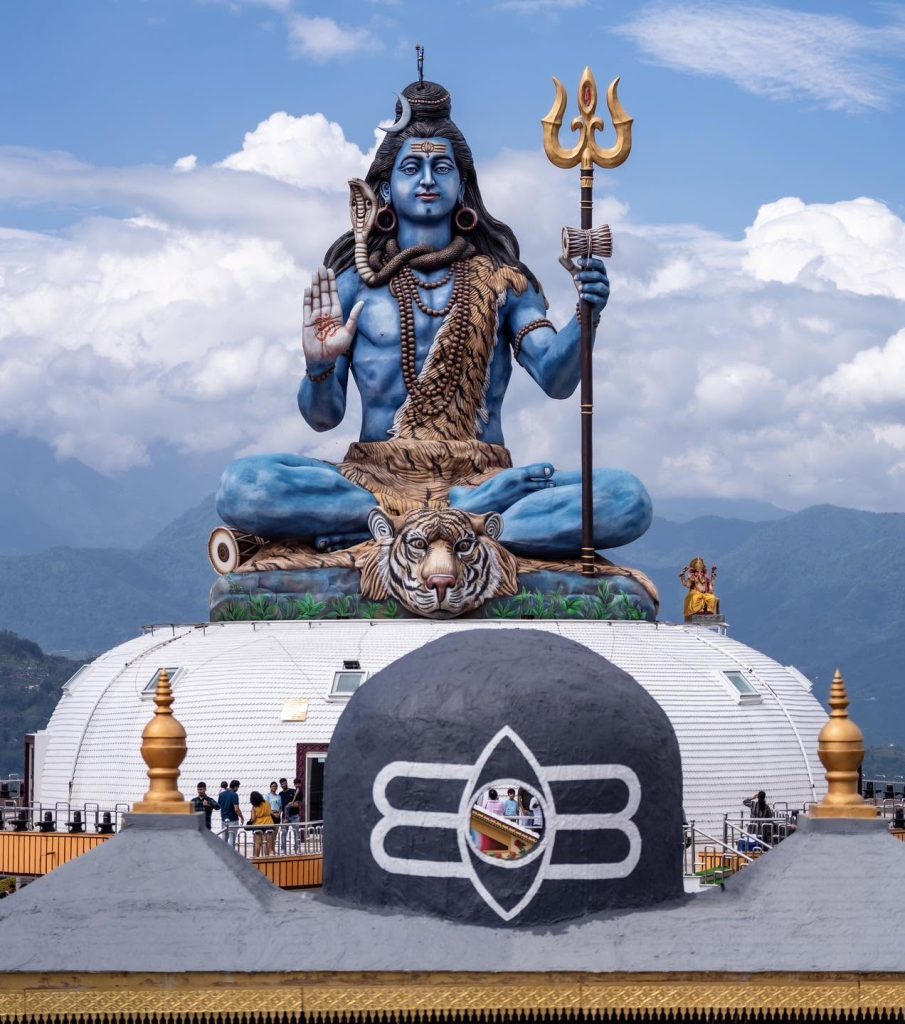
Pokhara has long attracted visitors through its lakes, mountain views, adventure activities, and natural landscapes.
However, the city has increasingly developed new attractions beyond its traditional tourism hotspots.
One prominent example is Pumdikot, located approximately 13 kilometres from Pokhara’s main city area.
The destination is home to a 51-foot-tall Shiva statue overlooking the Pokhara Valley.
Visitors can also enjoy panoramic views of Phewa Lake and surrounding mountain ranges, including Annapurna, Dhaulagiri, and Machhapuchhre.
How much did Pumdikot cost?
The Pumdikot Development Committee prepared a master plan estimated at NPR 400 million.
By 2024, more than NPR 260 million had reportedly been invested in the statue and supporting infrastructure.
Unlike Dharahara, Pumdikot follows a donation-led development model involving religious fundraising, private contributions, and government grants.
Its funding story began with a Maha Shiva Purana event in 2017.
The event raised approximately NPR 60 million and secured 20 ropanis of donated land.
Another Mahayagya organized in 2022 raised approximately NPR 30 million.
Reported government contributions included:
- NPR 40 million from the federal government.
- NPR 15 million from Gandaki Province.
- NPR 15 million from Pokhara Metropolitan City.
- NPR 15 million from organizations.
- Additional contributions from individual donors, including a reported NPR 10 million contribution from one donor.
These figures illustrate how religious communities, private donors, and government institutions can collectively finance tourism infrastructure.
What is included in the Pumdikot master plan?
The project extends beyond the main Shiva statue.
Its development includes religious structures, landscaped areas, visitor facilities, and other supporting infrastructure.
The broader plan has included an administrative building, parking, a replica of Sumeru Mountain, additional religious structures, and proposed transport facilities such as an electric chair car and monorail.
Not every proposed facility should be considered completed or operational.
The distinction between existing infrastructure and future plans is important when presenting Pumdikot to travellers.
How does Pumdikot contribute to Pokhara tourism?
Pumdikot provides another reason for visitors to explore the southern and surrounding areas of Pokhara.
It combines religious tourism with sightseeing and photography.
Its elevated location provides a different perspective of the city, its lakes, and the Himalayan landscape.
It also demonstrates how a relatively less prominent location can develop into a recognized tourist attraction through community participation and strategic investment.
For local residents, tourism development can create opportunities in transportation, hospitality, food services, retail, and other visitor-related businesses.
4. Mayadevi Temple: Government Investment in Buddha’s Birthplace
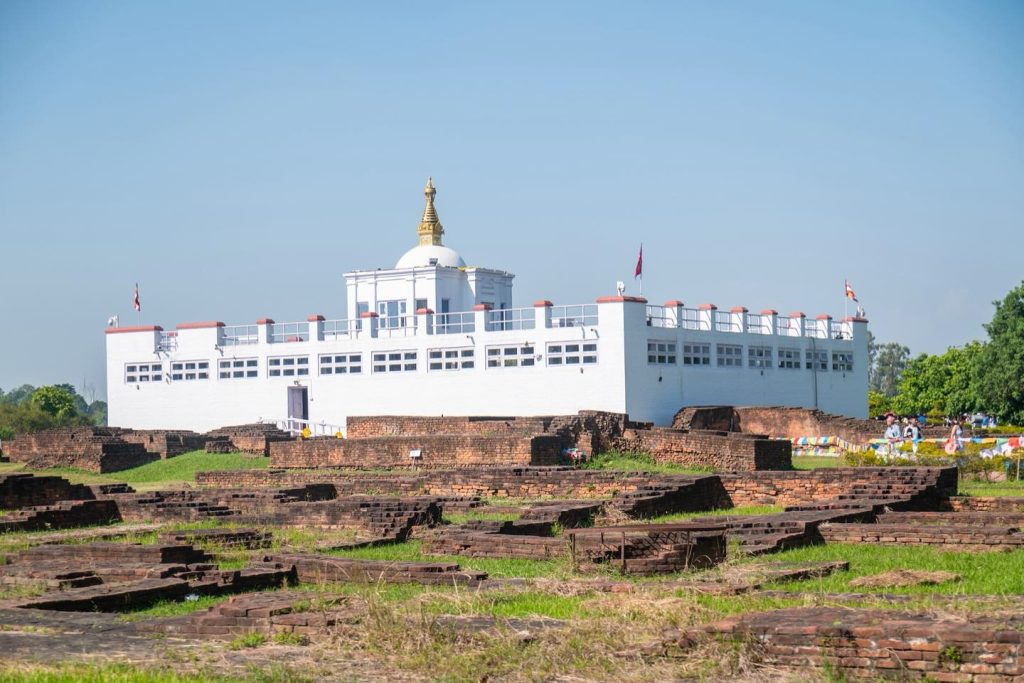
Lumbini is among the most important Buddhist pilgrimage destinations in the world.
Recognized as a UNESCO World Heritage Site in 1997, it attracts Buddhist pilgrims, researchers, historians, and international travellers.
At the heart of Lumbini’s Sacred Garden stands Mayadevi Temple, which marks the traditional birthplace of Siddhartha Gautama.
The site includes important archaeological remains, the Ashoka Pillar, and other religious and historical features.
Who funded Mayadevi Temple?
The Government of Nepal funded the reconstruction of Mayadevi Temple with an allocation of approximately USD 810,000.
This figure refers specifically to the temple construction, not the entire development of Lumbini.
The wider Sacred Garden development received support from several international organizations and Buddhist institutions.
These included UNDP, the Asian Development Bank, the Thai Phuong Thai Foundation, and Japanese Buddhist organizations.
This combination of national and international support demonstrates how an internationally significant pilgrimage destination can attract funding beyond government budgets.
Why is this important for tourism?
Lumbini’s importance extends far beyond domestic tourism.
It connects Nepal with Buddhist communities across Asia and other parts of the world.
Visitors travel to experience its monasteries, archaeological remains, meditation spaces, museums, and sacred gardens.
Investment in conservation and visitor infrastructure helps protect the destination while improving the experience of international pilgrims.
For Nepal, Lumbini represents an important opportunity to strengthen Buddhist pilgrimage tourism and attract longer-stay international visitors.
5. World Peace Pagoda: A Japanese-Funded Landmark
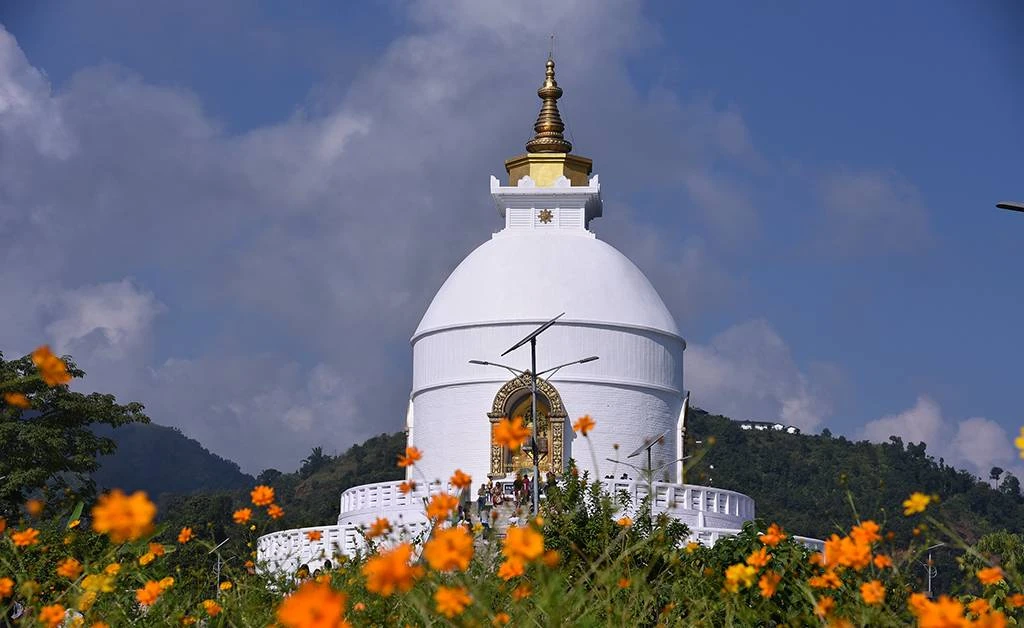
The World Peace Pagoda in Lumbini represents another example of international religious cooperation.
The approximately USD 1 million project was funded by the Japanese Buddhist organization Nipponzan Myohoji.
The organization follows a Buddhist tradition associated with promoting peace through prayer, spiritual practice, and the construction of peace pagodas.
Its members and local supporters have also contributed to maintaining the monument.
The pagoda adds another important attraction to Lumbini’s spiritual landscape.
It demonstrates how international religious networks can contribute to Nepal’s cultural infrastructure without depending entirely on government financing.
For visitors, the monument provides another space for reflection, religious exploration, and understanding the international Buddhist community’s connection with Lumbini.
6. Boudhanath Stupa: A Powerful Example of Community Funding

Boudhanath Stupa is one of Kathmandu’s most important religious and tourism landmarks.
Recognized as part of the Kathmandu Valley UNESCO World Heritage property, it attracts Buddhist pilgrims and international visitors throughout the year.
Its enormous white dome, prayer flags, monasteries, prayer wheels, and surrounding traditional neighbourhood create a distinctive cultural experience.
The 2015 earthquake damaged the stupa, creating an urgent need for restoration.
However, its reconstruction became one of Nepal’s strongest examples of community-led heritage preservation.
How much did Boudhanath restoration cost?
The restoration cost approximately NPR 230 million, equivalent to around USD 2.1 million at the time.
Unlike Dharahara, the project did not depend on a major government construction budget.
Funding came from local communities, Nepali Buddhists, international Buddhist organizations, individual donors, and contributions of labour.
Donations included cash, gold, building materials, and voluntary work.
Reports from the restoration period also highlighted the contribution of approximately three kilograms of gold and the substantial expense of restoring the stupa’s gilded upper structure.
The Department of Archaeology provided technical assistance, while the community and Buddhist organizations took responsibility for financing and supporting the reconstruction.
The restoration demonstrated how religious institutions and local communities can mobilize international support to protect important heritage.
Why is Boudhanath important for Nepal’s tourism economy?
Boudhanath is not simply a monument that visitors photograph and leave behind.
Its surrounding neighbourhood offers monasteries, traditional shops, restaurants, cafés, religious activities, and opportunities to experience Tibetan Buddhist culture.
Visitors can walk around the stupa, observe prayer rituals, explore monasteries, and experience the atmosphere of one of Kathmandu’s most important Buddhist communities.
Its tourism value therefore extends into the surrounding local economy.
The restoration also demonstrates that community ownership can play an important role in maintaining a destination’s long-term cultural and tourism appeal.
7. The Buddha Statue at Tribhuvan International Airport
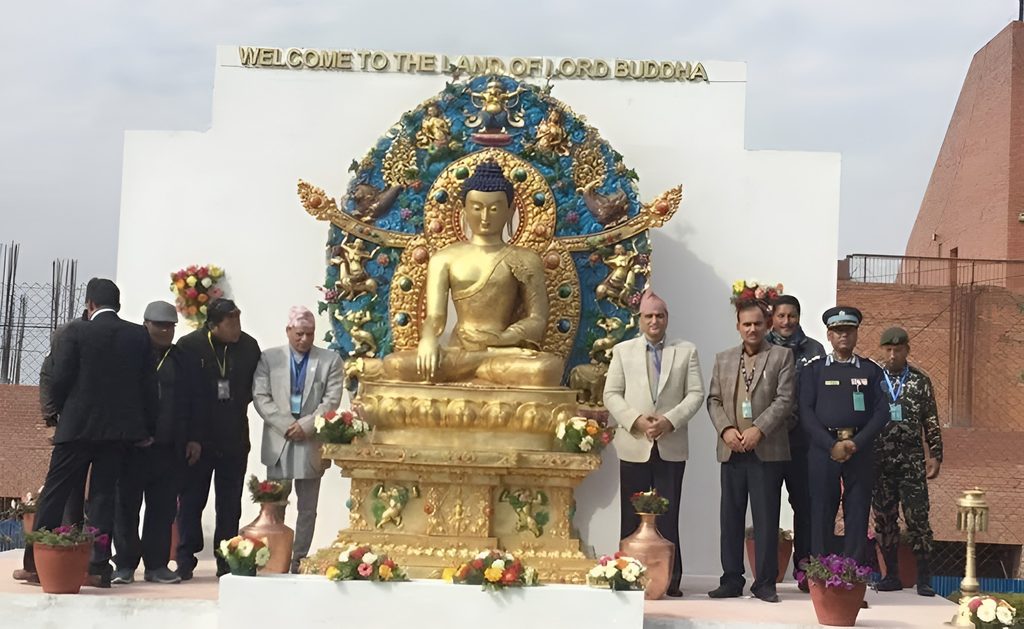
Nepal’s international airport is often the first physical experience visitors have of the country.
As part of the Visit Nepal Year 2020 and airport improvement campaign, the government invested in a Buddha statue at Tribhuvan International Airport.
The reported expenditure was NPR 7 million, while the contract value was approximately NPR 7.8075 million.
Although relatively small compared with major monument projects, the statue carries symbolic importance.
It introduces Nepal’s Buddhist identity to arriving and departing passengers.
For a country internationally associated with the birthplace of Buddha, such installations can contribute to its tourism image.
However, airport landmarks should complement broader improvements in passenger facilities, cleanliness, accessibility, information services, and overall visitor experience.
How Much Do Nepal’s Monuments Actually Cost?
The projects above demonstrate that monument budgets vary significantly depending on their size, purpose, construction method, and supporting infrastructure.
A small restoration project may cost millions of rupees, while a major urban landmark can require several billion.
The following comparison highlights the differences.
| Monument or project | Reported cost |
|---|---|
| Dharahara reconstruction | NPR 3.48 billion initial contract; later reports above NPR 4.71 billion including VAT |
| Rani Pokhari restoration | More than NPR 240 million |
| Pumdikot master plan | NPR 400 million estimated |
| Pumdikot investment by 2024 | More than NPR 260 million |
| Boudhanath restoration | Approximately NPR 230 million |
| Mayadevi Temple reconstruction | USD 810,000 |
| World Peace Pagoda, Lumbini | Approximately USD 1 million |
| TIA Buddha statue | NPR 7.8075 million contract value |
| Manimandap Pati, Patan | Approximately NPR 12 million German Embassy assistance |
| Pashupati area monument restoration | Approximately NPR 1.5 billion reported estimate |
These figures are not directly interchangeable.
Some represent construction contracts, others represent total project estimates, actual investments, or individual funding contributions.
They also refer to different periods and project scopes.
For example, Pumdikot’s NPR 400 million master plan covers a wider development programme, whereas the Mayadevi Temple figure represents a specific temple project.
Understanding these distinctions is essential when comparing monument investments.
Why Do Modern Monuments Cost More Than Heritage Restoration?
A modern monument and a historical restoration project require very different approaches.
Modern projects often involve new engineering, large structures, land development, and visitor facilities.
Dharahara is a clear example.
Its reconstruction budget covered a modern tower and wider facilities, including elevators, exhibition spaces, a museum, gardens, parking, and commercial infrastructure.
Pumdikot also illustrates this approach. Its master plan includes the central religious attraction alongside roads, parking, landscaping, and proposed transport infrastructure.
Historic restoration follows a different model.
The objective is not simply to construct something new. It is to preserve the original identity, materials, craftsmanship, and architectural character of an existing monument.
Traditional brickwork, timber carving, stonework, documentation, specialist artisans, and conservation supervision can make restoration technically demanding.
For example, the restoration of Manimandap Pati in Patan received approximately NPR 12 million in German Embassy assistance, alongside approximately NPR 1 million from the Netherlands.
Meanwhile, restoration and renovation work across the wider Pashupati monument area was estimated at approximately NPR 1.5 billion.
The difference largely reflects project scope.
One involves a specific traditional structure, while the other covers numerous monuments and shrines across a larger religious area.
Nepal’s post-earthquake heritage reconstruction programme also demonstrates the scale of this responsibility.
The Post-Disaster Needs Assessment estimated NPR 20.56 billion for rebuilding damaged heritage monuments.
By May 2024, the Department of Archaeology reported that 770 of the 920 earthquake-damaged heritage sites had been reconstructed. Another 70 were under reconstruction, while work on 80 had yet to begin.
The government had spent approximately NPR 6 billion, with another NPR 3 billion required to complete the remaining reconstruction programme.
This shows that heritage preservation remains a long-term national responsibility.
Who Pays for Nepal’s Monuments?
Nepal’s monument development follows two broad funding models: public reconstruction and donation-led development.
1. Government-funded projects
The government plays an important role in large civic infrastructure and post-disaster reconstruction.
Dharahara and Rani Pokhari demonstrate the role of public institutions in rebuilding nationally significant landmarks.
The National Reconstruction Authority coordinated major earthquake reconstruction projects, while government departments and local authorities have responsibilities in heritage management.
2. Religious donations and community fundraising
Pumdikot and Boudhanath demonstrate how religious communities can finance major projects.
Religious events, Mahayagyas, donations, memorial contributions, and support from international religious organizations can generate substantial funds.
These projects often combine community contributions with government grants for roads, parking, drainage, and other supporting facilities.
3. International donors
International organizations, foreign governments, and religious institutions have also supported Nepal’s heritage preservation.
Lumbini’s development and the restoration of historic structures in Patan demonstrate this international involvement.
For example, Manimandap Pati received financial assistance from Germany and the Netherlands, while Boudhanath benefited from international Buddhist donors.
Such partnerships can bring both financial resources and specialist conservation knowledge.
4. State-owned enterprises and private donors
State-owned enterprises have also announced financial commitments to monument reconstruction.
Nepal Telecom’s initial pledge towards Dharahara is one example.
Individual entrepreneurs and private donors have supported projects such as Pumdikot through substantial financial and material contributions.
These different funding channels demonstrate that monument development in Nepal is not controlled by a single financing model.
Do These Monuments Actually Benefit Tourism?
The real value of a monument cannot be measured by its construction budget alone.
A project may attract thousands of visitors, but its long-term contribution depends on how effectively it connects with the surrounding destination.
Pumdikot, for example, adds another sightseeing destination to Pokhara’s existing tourism circuit.
Boudhanath supports a wider visitor economy through monasteries, restaurants, accommodation, traditional shops, and religious experiences.
Lumbini attracts international Buddhist pilgrims, creating opportunities for accommodation, transport, guiding, and hospitality services.
Dharahara offers a modern visitor attraction in central Kathmandu while connecting with the city’s historical neighbourhoods.
These examples demonstrate several ways monuments can contribute to tourism.
Extending visitor stays: Additional attractions encourage visitors to explore more locations instead of concentrating on a few popular destinations.
Supporting local businesses: Increased visitor movement creates demand for restaurants, transport, accommodation, shops, and local services.
Promoting lesser-known areas: New attractions can bring attention to destinations outside established tourism centres.
Strengthening destination identity: Iconic landmarks help cities and regions create recognizable tourism identities.
Encouraging cultural exploration: Restored monuments provide opportunities to understand Nepal’s history, religious traditions, architecture, and communities.
However, construction alone does not guarantee tourism success.
Destinations need proper maintenance, visitor management, transparent ticketing, reliable transport, safety measures, and meaningful interpretation.
Without these elements, expensive monuments risk becoming attractions that visitors photograph once without contributing significantly to the local economy.
The Bigger Challenge: Building Attractions While Preserving Heritage
Nepal faces an important challenge as it develops its tourism infrastructure.
It needs new attractions to diversify tourism experiences. At the same time, it must protect the cultural and historical assets that make the country distinctive.
Modern construction should not come at the expense of traditional architecture, religious practices, or local community interests.
Dharahara’s reconstruction, for instance, raised questions about how closely a modern structure should reflect its historical predecessor.
Boudhanath demonstrated a different approach, where community participation and conservation were central to restoring the original monument.
Both approaches offer lessons for future projects.
Nepal should evaluate monument development not only by construction costs but also by cultural authenticity, environmental impact, accessibility, community benefits, and long-term maintenance requirements.
Tourism infrastructure should serve the destination rather than simply make the destination look impressive.
What This Means for Nepal’s Tourism Future
Nepal’s monuments reveal an interesting relationship between culture, investment, and tourism.
Dharahara shows how public reconstruction can transform a damaged national landmark into a modern visitor attraction.
Rani Pokhari demonstrates the importance of preserving historical urban spaces.
Pumdikot illustrates how community fundraising and government support can create new destinations.
Boudhanath proves that religious communities and international donors can mobilize resources to protect important heritage.
Lumbini demonstrates the importance of international cooperation in developing a globally significant pilgrimage destination.
These projects have different budgets, funding arrangements, and tourism purposes. Yet they share one important objective: keeping Nepal’s cultural and architectural identity visible to future generations.
The next challenge is ensuring that these investments deliver lasting value.
A successful monument is not simply one that attracts attention during its inauguration. It is one that remains meaningful, accessible, well-maintained, and economically beneficial to its surrounding community.
For a country where tourism depends heavily on cultural identity, religious heritage, and unique visitor experiences, that distinction matters.
Nepal’s monuments are not just structures built with millions and billions of rupees. They are investments in the stories, places, and experiences that make Nepal worth exploring.
Frequently asked questions (FAQs)
1. Who funds the construction of monuments in Nepal?
Monuments in Nepal receive funding from different sources, including government budgets, public donations, religious organizations, private donors, international institutions, and local communities. Projects such as Dharahara rely heavily on public reconstruction funding, while Pumdikot and Boudhanath demonstrate community-led and donation-based financing.
2. How much did it cost to rebuild Dharahara?
Dharahara’s initial reconstruction contract was approximately NPR 3.48 billion. Later reports placed the cost above NPR 4.71 billion, including VAT. The original tower, built in 1832, has no reliably documented construction cost.
3. How much did the Pumdikot Shiva Statue project cost?
Pumdikot’s master plan was estimated at NPR 400 million. More than NPR 260 million had reportedly been invested by 2024 through religious fundraising, private donations, and government contributions.
4. Who funded the restoration of Boudhanath Stupa?
Boudhanath’s restoration cost approximately NPR 230 million. Local communities, Nepali and international Buddhist organizations, individual donors, and supporters contributed money, materials, and labour.
5. How much did Rani Pokhari restoration cost?
The restoration of Rani Pokhari in Kathmandu cost more than NPR 240 million. The National Reconstruction Authority oversaw the project, which was completed following the 2015 earthquake.
6. Who funded the reconstruction of Mayadevi Temple in Lumbini?
The Government of Nepal funded Mayadevi Temple’s reconstruction with approximately USD 810,000. The wider Lumbini Sacred Garden also received support from international organizations and Buddhist institutions.
7. How much did the World Peace Pagoda in Lumbini cost?
The World Peace Pagoda in Lumbini cost approximately USD 1 million. The Japanese Buddhist organization Nipponzan Myohoji funded the project, with members and local supporters also contributing to its maintenance.
8. What is the difference between modern monument construction and heritage restoration?
Modern monument construction often involves new structures, engineering, visitor facilities, parking, and landscaping. Heritage restoration focuses on preserving historical architecture, traditional materials, craftsmanship, and cultural authenticity. Both can require substantial investment, but their objectives differ.
9. How do monuments contribute to Nepal’s tourism industry?
Monuments attract domestic and international visitors interested in history, religion, architecture, and culture. They also support local businesses, create employment opportunities, encourage longer stays, and help destinations develop stronger tourism identities.
10. Why is heritage preservation important for Nepal’s tourism?
Nepal’s historical temples, stupas, palaces, and religious landmarks are important reasons travellers visit the country. Preserving these places protects cultural identity, maintains authentic visitor experiences, and supports long-term heritage and pilgrimage tourism.


