


Most Nepal itineraries treat Lumbini as a quick stop: a few hours, a selfie at the temple, done by noon. That approach misses the point entirely. This is one of the most significant archaeological and spiritual sites in all of Asia, a UNESCO World Heritage Site visited by millions of Buddhist pilgrims every year, and a place where 2,500 years of history sit right there at eye level. Use this Lumbini Nepal guide to plan a visit that actually does justice to what you are looking at. Give it at least two full days. You will be glad you did.
Why Lumbini Matters
The Lord Buddha was born here in 623 BC. Not “somewhere in this region.” Here. At this exact spot. That is what sets Lumbini apart from every other Buddhist pilgrimage destination: the physical evidence is still standing. The Ashoka Pillar, erected in 249 BC by the Indian emperor Ashoka during his pilgrimage to the birthplace, bears an ancient Brahmi inscription that identifies the location unambiguously. It says, in translation: “Here the Buddha, Sage of the Shakyas, was born.”
UNESCO inscribed Lumbini as a World Heritage Site in 1997, recognizing it as “one of the holiest places of one of the world’s great religions.” For Buddhists, it carries the same weight Bethlehem carries for Christians. Even without any religious connection, the archaeology alone is extraordinary.


The Sacred Garden: Start Here
The Sacred Garden is the core of Lumbini. It is compact enough to walk in an hour, but most visitors spend three or four once they slow down and look carefully at what is in front of them.
The Maya Devi Temple
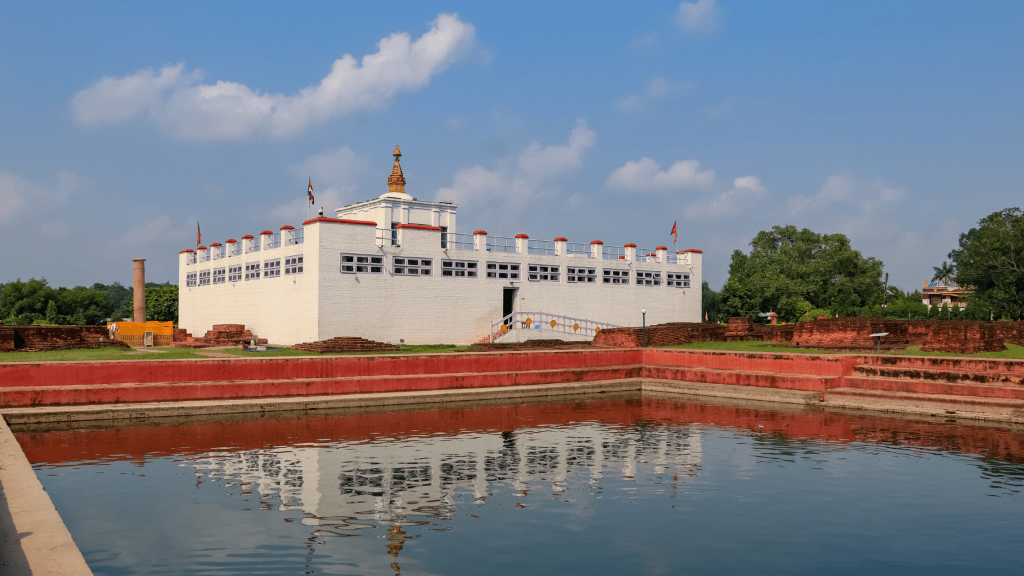
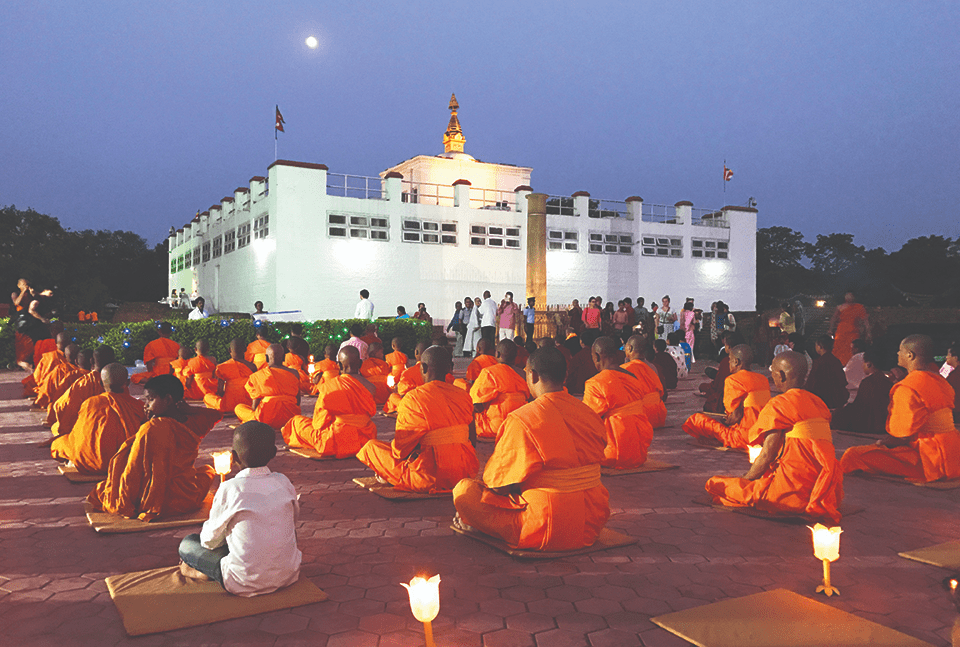
This is the centerpiece of the entire site. Built directly over the spot where Queen Mayadevi gave birth to the Buddha while holding onto a Sal tree branch, the current temple structure preserves excavated ruins beneath a protective shelter. Inside you will find the Marker Stone, a sandstone slab that pinpoints the exact birth spot, surrounded by exposed archaeological layers dating to the 3rd century BC. Shoes come off before you enter. Photography is not permitted inside the inner sanctum. Keep it quiet: people are genuinely praying here, from every corner of the world.
The Ashoka Pillar
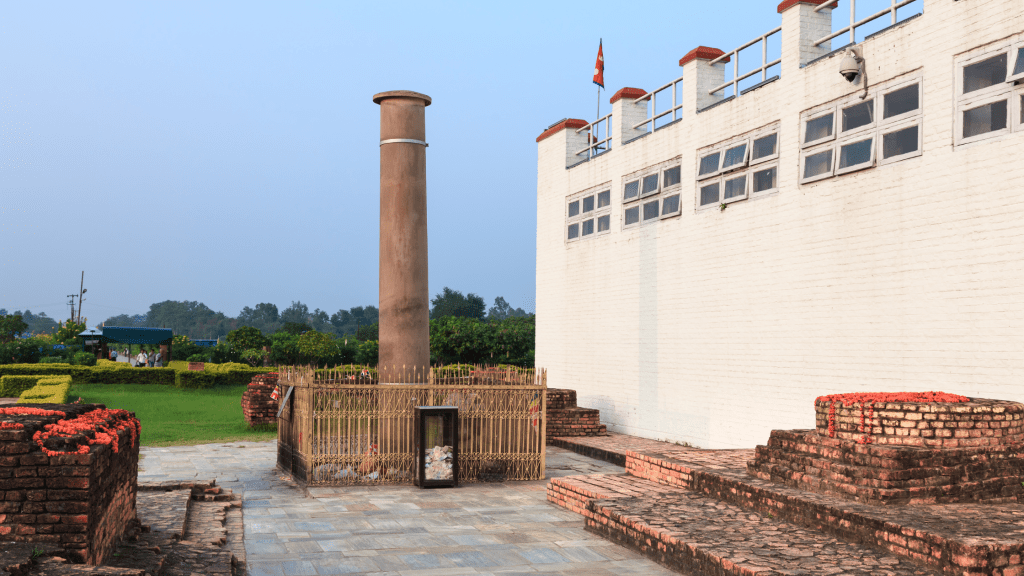
Just outside the temple stands the Ashoka Pillar, 6.4 meters tall, cracked from a lightning strike centuries ago but still upright. Emperor Ashoka commissioned it during his own pilgrimage to Lumbini in 249 BC, and archaeologists rediscovered it in 1896. You can walk right up to it. Touch it if you like. There are few places in Asia where you can put your hand on something that old and that historically documented.
The Pushkarini Sacred Pond
Queen Mayadevi bathed here before giving birth, and the newborn Buddha was ceremonially bathed here as well. The pond has been restored and is surrounded by walking paths. Early mornings, with mist on the water and monks circling in silence, it is one of those moments that travel photos never quite capture.
The Monastic Zones: A World in Miniature
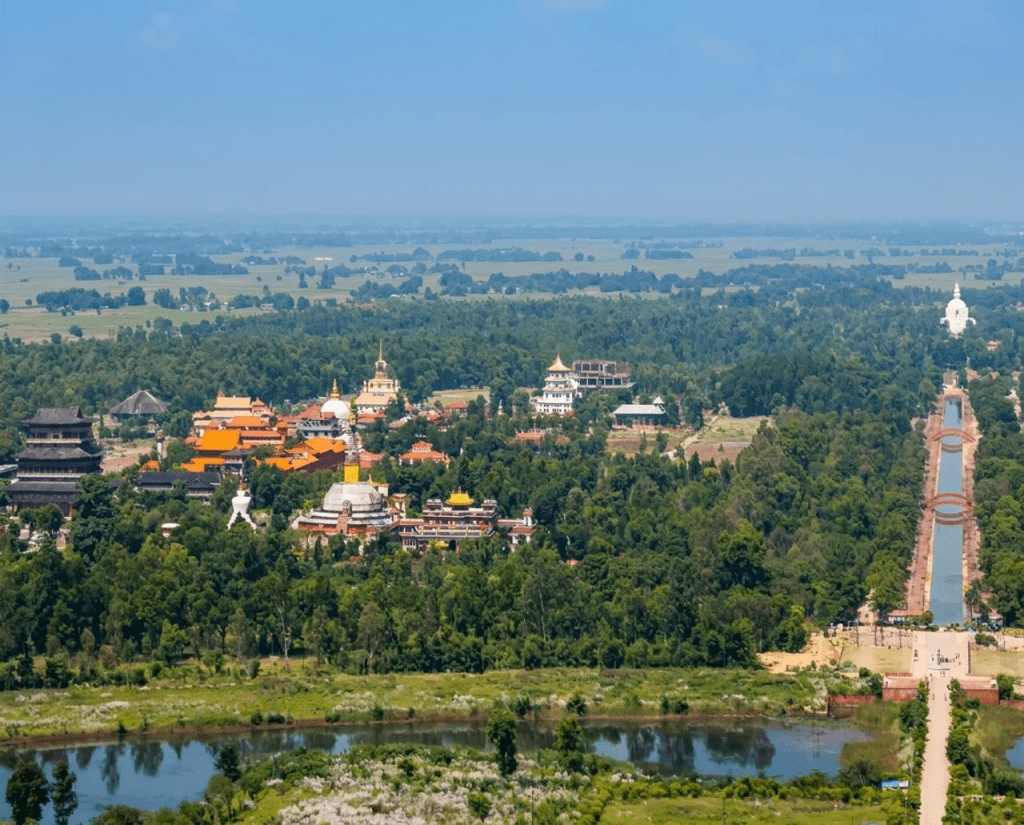
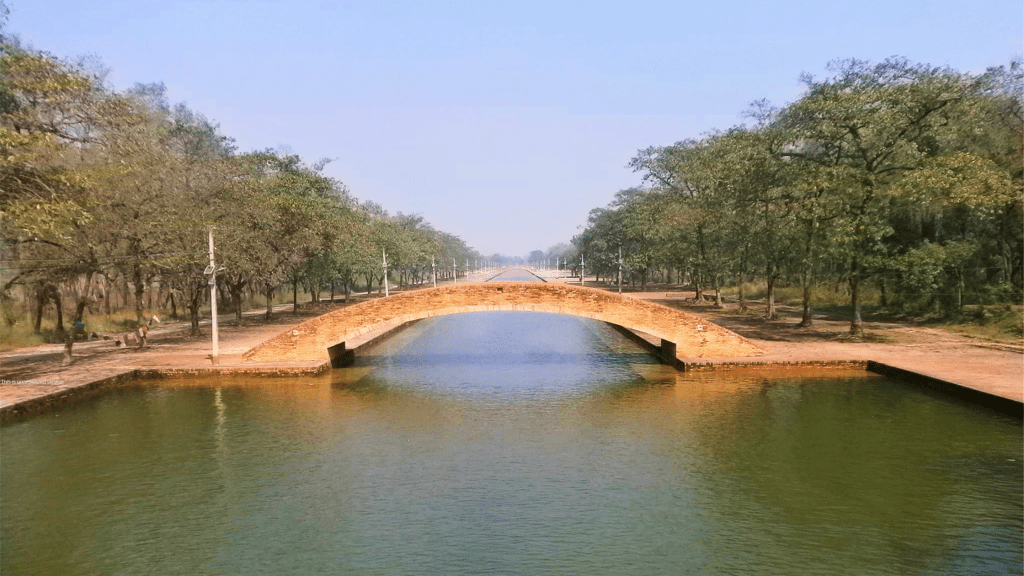
Extending north from the Sacred Garden are two monastic zones: the East (Theravada) and the West (Mahayana and Vajrayana). The layout was master-planned by Japanese architect Kenzo Tange, with a central canal and wide promenade connecting the monasteries. Each monastery was built by a Buddhist community from a different country. Walking through them is genuinely unlike anything else in Nepal.
Monasteries Worth Visiting
- Myanmar Golden Temple (East Zone): Pagoda-style architecture with intricate carvings on every surface. One of the most visually striking buildings in the entire complex.
- Royal Thai Monastery (East Zone): Classic Thai temple design, complete with gold-leafed detailing and a serene interior courtyard.
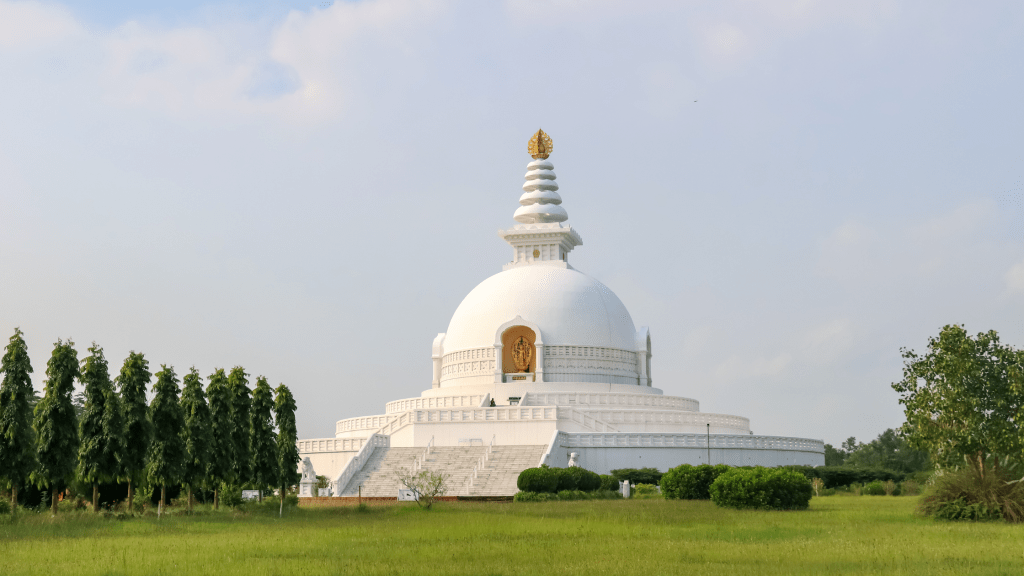
- World Peace Pagoda (East Zone): A gleaming white stupa built by Japanese Buddhists. The elevated position offers one of the better panoramic views across the monastic zone.
- Chinese Buddhist Meditation Center (West Zone): A large ornate complex with well-maintained gardens. Popular with Chinese pilgrims and often buzzing with activity in the mornings.
- Vietnamese Temple (West Zone): A colorful pagoda with incense almost always burning. The courtyard statuary is worth a close look.
Not all monasteries are open at all times. Early mornings (before 8 AM) and late afternoons (after 4 PM) are the most atmospheric, with monks going about their routines. Some welcome guests for meditation; ask at the entrance.
Day Trips Beyond the Sacred Garden
Tilaurakot
About 27 km west of Lumbini, Tilaurakot is widely believed to be ancient Kapilavastu, where Prince Siddhartha lived until age 29 before renouncing his royal life. Excavations have exposed city walls, palace foundations, and artifacts that make the history tangible. Not visually dramatic, but the context makes it worthwhile.
Devadaha
About 25 km east of Lumbini, Devadaha is traditionally identified as Queen Mayadevi’s birthplace. Barely visited, which makes it peaceful. Worth including if you are doing the full pilgrimage circuit.
Lumbini Crane Sanctuary
The wetlands around Lumbini support a population of Sarus cranes, the world’s tallest flying birds and a species under active conservation pressure. Early risers with binoculars will find it a rewarding detour from the main site.
Getting to Lumbini
Flying into Gautam Buddha International Airport in Bhairahawa (also called Siddharthanagar) is the fastest option: just 22 km from the Sacred Garden, with international connections from several Asian cities, though many visitors still route through Kathmandu.
From Kathmandu, tourist buses cover the approximately 330 km journey in 10 to 11 hours depending on road conditions. Tickets run between $12 and $20 USD (roughly NPR 1,500 to 2,500) for tourist-class coaches. Buses depart from Gongabu Bus Park, typically at 7:00 AM or 7:00 PM. From Pokhara, count on 7 to 8 hours. From Chitwan, the journey takes about 4 to 5 hours.
Private jeeps are available if you want to cut travel time, but costs are significantly higher. For a full breakdown of how to build Lumbini into a longer Nepal trip, see our 7-day Nepal itinerary.
How Long to Spend in Lumbini
Here is where most travel guides get it wrong: one day is not enough. The Sacred Garden alone deserves a slow half-day, and the monastic zones take another four to five hours to walk properly. Add a day trip to Tilaurakot and you are already at two days minimum.
Three days is the sweet spot. It lets you revisit the Sacred Garden at different hours, walk the monastic zones without rushing, and get out to the surrounding sites. Staying close to the garden rather than commuting from Bhairahawa improves everything.
Best Time to Visit Lumbini
Lumbini sits in the Terai lowlands, Nepal’s hottest and flattest region. Summers (June to August) are harsh: temperatures regularly exceed 38°C and the humidity is punishing. Monsoon rains from July through September bring flooding risk and muddy paths.
October to March is the sweet window. Temperatures range from around 15°C to 28°C, the air is dry and clear, and morning walks through the garden are genuinely pleasant. December and January bring cool mornings but comfortable afternoons.
Buddha Jayanti, the festival celebrating the birth, enlightenment, and death of the Buddha (all said to fall on the same lunar date), usually lands in April or May. The site fills with pilgrims from across the Buddhist world and the atmosphere is unlike any other time of year. If you can handle the crowds, it is worth timing a visit around it. Our Nepal festivals calendar has the specific dates for each year. For a broader look at seasonal travel, see our best time to visit Nepal guide.
Entrance Fees and Practical Tips
The entrance fee for foreign nationals is NPR 1,000. Visitors from SAARC countries (including Pakistan, Bangladesh, Bhutan, and Sri Lanka) as well as Myanmar pay a reduced rate of NPR 700, while Indian nationals pay NPR 80. Nepali nationals are charged a nominal fee of NPR 20, with a student discount rate of NPR 10. Tickets can be purchased in cash or via QR code at the gate, or booked in advance online via the official Lumbini Development Trust ticketing portal at tickets.lumbinidevtrust.gov.np.
A few practical notes that most guides skip:
- Dress modestly at all times inside the Sacred Garden and monastery zones. Shoulders and knees should be covered. This is strictly enforced at the Maya Devi Temple entrance.
- Remove shoes before entering any temple or monastery. Carry a small bag to store them.
- Electric vehicles and bicycles are the best way to get around the monastic zones. Bicycle rentals near the main entrance cost around NPR 200 to 300 per day, as of early 2025.
- ATMs are limited near the site. Bring enough cash from Bhairahawa or Kathmandu before you arrive.
- The Sacred Garden gets crowded on full moon days and public holidays. Arriving before 7 AM gives you the best chance of having the area near the Maya Devi Temple to yourself.
Where to Stay in Lumbini
Budget guesthouses and pilgrim lodges near the main entrance gates run from NPR 1,000 to 2,500 per night ($7 to $18 USD), while mid-range hotels with air conditioning range from NPR 3,000 to 6,000. Several international monasteries within the Monastic Zone also offer simple rooms for travelers; while not free, they provide basic lodging and vegetarian meals for a fixed daily contribution of NPR 800 to 1,500 per person. If you prefer a larger urban base with upscale amenities, Bhairahawa sits 28 km away and features a wider selection of premium hotels. For cost planning across Nepal, our budget travel Nepal guide has the full breakdown.
Frequently Asked Questions
Is Lumbini in Nepal or India?
Lumbini is in Nepal, in the southwestern Terai region near the Indian border. It gets confused with Indian Buddhist sites because it sits on the same pilgrimage circuit as Bodh Gaya, Sarnath, and Kushinagar. But the actual birthplace is definitively in Nepal, confirmed by the Ashoka Pillar inscription from 249 BC.
How much does it cost to enter Lumbini?
Foreign nationals pay NPR 700 (approximately $5 USD) as of 2025. Indian nationals pay NPR 16, SAARC country nationals pay NPR 200, and Nepali citizens enter free. Video cameras incur an additional NPR 750 fee for foreign visitors. Tickets are available at the gate or through the Lumbini Development Trust’s online ticketing portal.
How do I get from Kathmandu to Lumbini?
Tourist buses from Gongabu Bus Park in Kathmandu run the approximately 330 km route in 10 to 11 hours. Tickets cost between $12 and $20 USD. Buses depart at 7:00 AM and 7:00 PM. Flying to Gautam Buddha International Airport in Bhairahawa is significantly faster; the airport is 22 km from the Sacred Garden and connects to Kathmandu and several international cities.
How many days should I spend in Lumbini?
Two days minimum, three for a complete visit. One day covers the Sacred Garden but leaves no time for the monastic zones or Tilaurakot. Three days gives a relaxed pace with room for a day trip and early-morning visits to the garden.
Do I need a guide to visit Lumbini?
Not required, but strongly worth considering. The ruins inside the Sacred Garden need context to be meaningful, and a knowledgeable guide will explain the archaeological layers and the Marker Stone in ways a self-guided visit cannot replicate. Guide fees run around NPR 1,500 to 3,000 for a half-day, as of early 2025.
What is the best time to visit Lumbini?
October through March is the best window, with dry weather and temperatures between 15°C and 28°C. Avoid May through September if possible, particularly the June to August peak heat. Buddha Jayanti in April or May is the most vibrant time to visit but draws the largest crowds.
Is Lumbini safe for solo travelers?
Yes. Lumbini is one of the safest places in Nepal for independent travel, including solo women. The site is peaceful, well-monitored, and draws a predominantly pilgrimage-focused crowd rather than party tourism. Standard precautions apply everywhere, but Lumbini itself has very few safety concerns.
Can I visit Lumbini as a day trip from Pokhara?
Not really. The drive from Pokhara takes 7 to 8 hours each way, leaving almost no time at the site. If you are pressed for time, fly to Bhairahawa and spend a full day in Lumbini, then fly back. An overnight stay is far better than any attempt at a round-trip day trip.