



You step onto a Kathmandu rooftop in late March, coffee in hand, and look north for the Langtang skyline. Nothing. Not cloud, not fog, just a flat brown-grey wall that swallows the horizon at about 20 km. Air tastes faintly of smoke. Eyes sting by mid-morning. What you are standing under has a name in atmospheric science, and it did not start in Kathmandu. This article explains where that haze comes from, how it climbs into the high Himalaya, what it does to snow and ice once it arrives, and which parts of the science are solid versus still argued over.
What is actually in the air
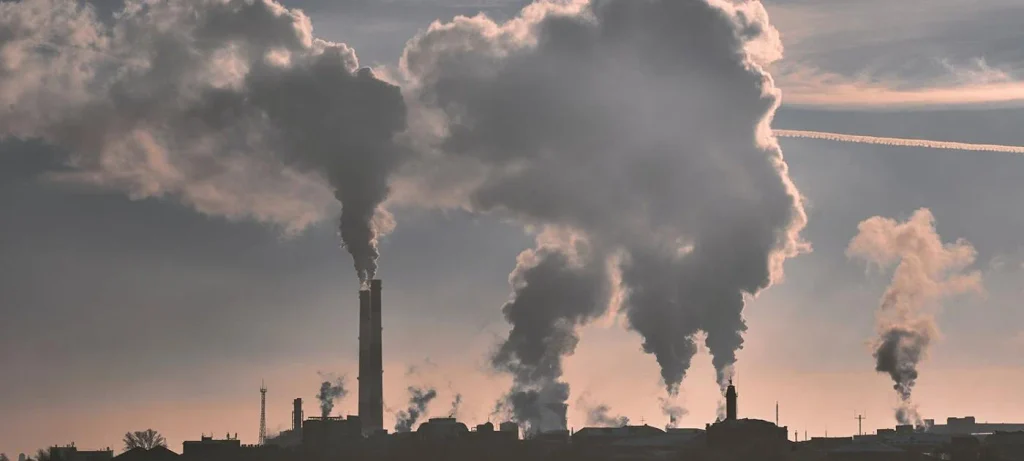
The haze is aerosol: tiny solid and liquid particles suspended in air. Several components matter here, and they behave differently.
- Black carbon is soot, produced by incomplete combustion of fuels and biomass. It absorbs sunlight strongly, warming the air around it and darkening any surface it lands on.
- Brown carbon is a class of light-absorbing organic particles, largely from biomass burning. Absorption weakens as it ages in sunlight.
- Sulfate and nitrate particles mostly scatter light rather than absorb it, cooling the surface below while reducing visibility.
- Mineral dust adds to the load, especially in the pre-monsoon when plains and riverbeds are dry.
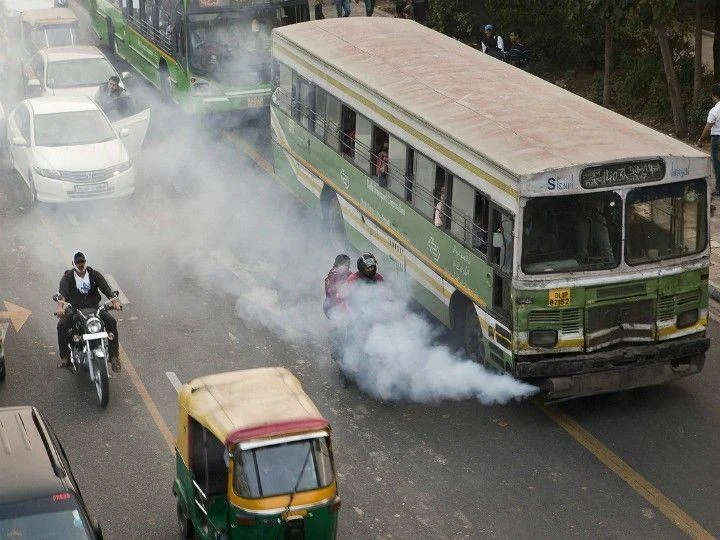
Aerosol transport from the Indo-Gangetic Plain is the movement of this mixture from the vast lowland belt stretching across northern India, southern Nepal and Bangladesh into the mountain ranges to the north. Sources there are ordinary and enormous in aggregate: cooking and heating with solid fuel, brick kilns, crop residue burning, vehicles, diesel generators, industry and open waste burning.


ICIMOD reports that residential energy use alone accounts for about 60% of South Asia’s black carbon emissions. Using 2013 inventory data, it estimates that residential solid fuel burning and brick kilns together account for 45% to 66% of anthropogenic black carbon deposition across the Hindu Kush Himalaya.
How pollution climbs a mountain range
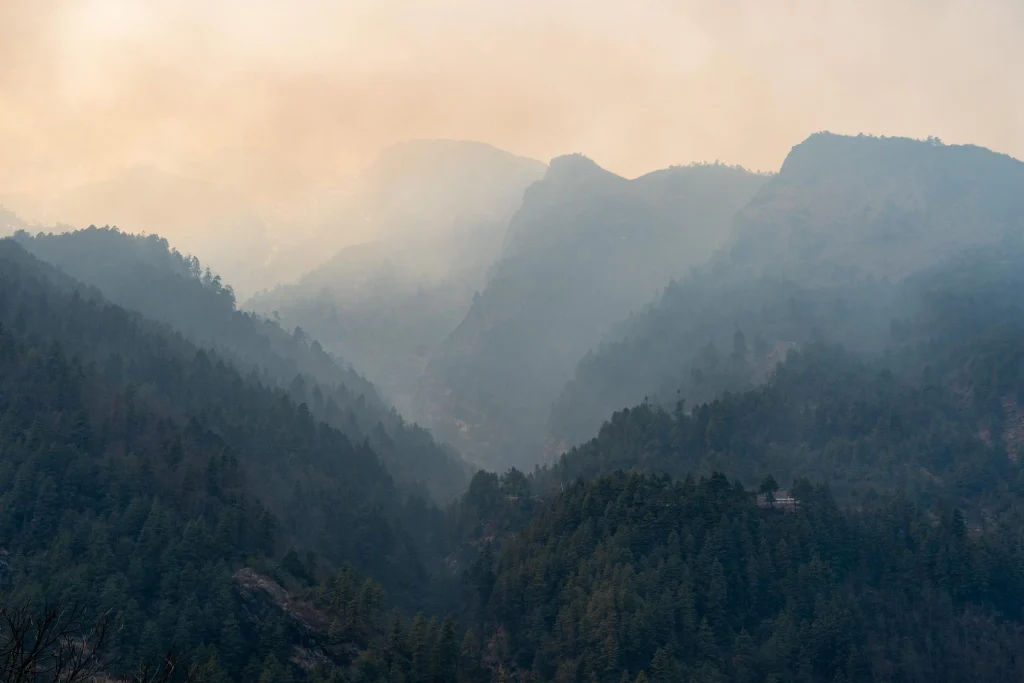
A reasonable assumption is that the Himalaya acts as a wall, keeping plains air out. Measurements show otherwise.
Nepal hosts one of the best-placed observatories for testing this. Nepal Climate Observatory at Pyramid (NCO-P) sits at 5,079 m near Lobuche, in the Khumbu. Paolo Bonasoni and colleagues published the first two years of continuous measurements there in Atmospheric Chemistry and Physics in 2010, and the results reframed the question.
Their data show a clear daily rhythm. Winds at the site are dominated by flows from the valley bottom during the day and from the upper mountain at night. During daylight, slopes heat, air rises along the valley, and polluted air from lower elevations is drawn upward. Bonasoni’s team described the southern side of the high Himalayan valleys as a “direct channel” delivering brown cloud pollutants to 5,000 m.
Put simply, the valleys are not barriers. They are chimneys running in reverse.
The seasonal signal is unmistakable
Black carbon at NCO-P varies by season more than by almost anything else.
| Condition | Black carbon (ng m⁻³) | PM1 (µg m⁻³) | Ozone (ppbv) |
|---|---|---|---|
| Pre-monsoon seasonal mean | 316.9 | 3.9 | 60.9 |
| Pre-monsoon, brown cloud influence | 1,974.1 | 23.5 | 69.2 |
| Monsoon seasonal mean | 49.6 | Lowest of year | Lowest of year |
Two findings stand out. Pre-monsoon black carbon runs more than six times monsoon levels. And on days the researchers classified as influenced by brown cloud conditions, meaning aerosol optical depth above 0.4 over the plains, black carbon and fine particulate at 5,079 m ran roughly five times the seasonal average. Such conditions affected about 20% of pre-monsoon afternoons.
Why spring and not winter? Three reasons combine. Agricultural residue burning and forest fires peak before the monsoon. Dry conditions mean nothing washes particles out of the air. Stronger daytime heating drives more vigorous up-valley transport. Monsoon rain then scrubs the atmosphere, which is why the cleanest Himalayan air of the year falls in July and August.
What happens on the way up
Aerosols change chemically and optically during transport, and that affects their impact.
Work led by Krishnakant Budhavant and published in Atmospheric Chemistry and Physics in 2024 tracked particles from the Indo-Gangetic outflow across the northern Indian Ocean. Over that distance, the organic carbon to black carbon ratio fell from about 6.5 to roughly 2.2, as rain preferentially removed organic material. Black carbon’s mass absorption cross section rose by about 80%, because scavenging removed larger particles and left a finer, more absorbing population with a longer atmospheric lifetime. Brown carbon absorption fell by roughly a factor of three through photochemical bleaching.
That study measured southward transport, not the northward path into Nepal. Applying its conclusions to Himalayan valleys is a reasonable inference and not a measurement, and should be treated as such. What it establishes is that aged aerosol is not simply diluted aerosol. Composition shifts, and so does radiative effect.
Effects on snow, ice and the atmosphere
Three distinct effects are in play, and conflating them causes most of the confusion in public discussion.
Atmospheric heating
Black carbon absorbs sunlight in the air column, warming the layer it sits in while shading the surface below. Over the Indo-Gangetic Plain, Budhavant and colleagues found anthropogenic aerosols strongly warm the atmosphere, with the highest atmospheric forcing near the outflow.
Snow darkening
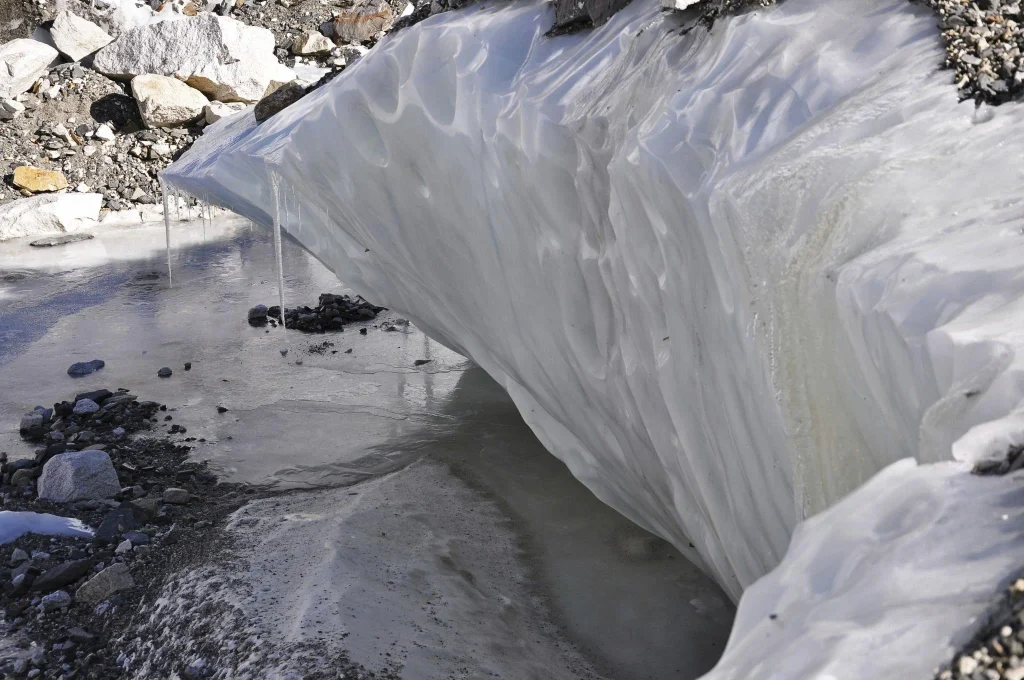
Soot deposited on snow lowers albedo, the fraction of sunlight a surface reflects. Darker snow absorbs more energy and melts earlier. Teppei Yasunari and colleagues, using NCO-P data in a 2010 study, estimated that pre-monsoon black carbon deposition could reduce snow albedo over Himalayan glaciers by roughly 2% to 5%.
Monsoon disruption
Absorbing aerosols alter the vertical temperature structure of the atmosphere, which can change where and when monsoon rain falls. ICIMOD identifies black carbon as a driver of disruption in both Asian and West African monsoon precipitation, with knock-on effects for flooding and agriculture.
How much melt black carbon actually causes is where the science gets contested. ICIMOD cites a study of a central Himalayan glacier that attributed 39% of total mass loss during the pre-monsoon period to black carbon. That is a large share, and it is specific to one glacier in one season. Estimates across the Hindu Kush Himalaya vary widely because deposition rates, dust loading, snow grain size and local meteorology all differ, and because separating the soot signal from straightforward greenhouse warming is methodologically hard. Reporting a single number as the Himalayan figure would misrepresent the state of the evidence. Readers interested in what is happening to the ice itself can read our piece on glacial retreat around Nepal’s 8,000 m peaks.
The view from the ground in Nepal
Nepal experiences this as public health before it experiences it as cryosphere science.
In March 2026, haze and polluted air settled over most of Koshi, Bagmati, Gandaki and Karnali provinces for close to a week. IQAir recorded PM2.5 in Kathmandu at 241 micrograms per cubic meter on 9 March and ranked the city the third most polluted in the world that day. For scale, the US air quality index treats the 201 to 300 band as very unhealthy. Hospitals in the Valley reported a sharp rise in respiratory cases, and the Ministry of Health and Population advised people to stay indoors.
Officials gave a meteorological explanation. Rojan Lamichhane, a meteorologist with the Department of Hydrology and Meteorology’s Meteorological Forecasting Division, pointed to the lack of rain to wash pollution out and the absence of any system generating strong winds. Madan Sigdel of Tribhuvan University’s Central Department of Hydrology and Meteorology described the haze as a usual pre-monsoon phenomenon. Kathmandu’s bowl-shaped basin traps what settles in it.
Both framings are correct and incomplete on their own. Weather determines whether pollution disperses. Emissions determine how much there is to disperse. Nepal’s own contribution is real, and so is what arrives from across the southern border, which makes this a regional problem no single government solves alone.
What would actually reduce it

Black carbon has one useful property: it leaves the atmosphere within days to weeks. Cutting emissions produces benefits quickly, unlike carbon dioxide. ICIMOD argues that existing technologies could reduce black carbon by about 80% by 2030 against 2010 levels, compared with roughly 3% under business as usual.
Measures most often cited include cleaner cookstoves and fuel switching in households, zigzag and cleaner kiln technology for brick production, diesel emission standards and particulate filters, and alternatives to crop residue burning. Nepal has pursued kiln upgrades and vehicle standards with partial results. None of it addresses what blows in from outside.
Frequently asked questions
Why can I not see the mountains from Kathmandu in spring?
Because pre-monsoon is the haziest season. Agricultural burning and forest fires peak, no rain removes particles, and stable conditions trap them. Post-monsoon, roughly October and November, offers the clearest views of the year.
Does pollution really reach Everest Base Camp?
Yes. Continuous measurements at 5,079 m in the Khumbu record black carbon rising sharply during pre-monsoon, with about 20% of pre-monsoon afternoons strongly influenced by polluted air drawn up from lower elevations.
Is the haze the same as fog?
No. Fog is suspended water droplets and usually burns off as the day warms. Haze is aerosol particles, it persists through the day, and it typically has a brown or grey cast rather than white.
How much Himalayan glacier melt is caused by soot?
Estimates vary and the question is genuinely unsettled. One study of a central Himalayan glacier attributed 39% of pre-monsoon mass loss to black carbon. Other sites and seasons give different results, and separating soot effects from general warming remains difficult.
Where does the pollution come from?
Mostly from the Indo-Gangetic Plain, with residential solid fuel use the largest single category at around 60% of South Asian black carbon emissions. Brick kilns, crop residue burning, transport and industry contribute the rest, alongside Nepal’s own domestic sources.
When is Nepal’s air cleanest?
During and immediately after the monsoon. Rain scavenges particles continuously, and high-altitude measurements show the year’s lowest black carbon levels in July and August.
Should travelers with respiratory conditions avoid spring?
Anyone with asthma or chronic respiratory illness should expect poor air quality in Kathmandu and the Terai during March and April, and plan accordingly. Conditions improve markedly at altitude away from valley floors and after the monsoon breaks.
Does reducing black carbon help quickly?
Yes, relative to other climate pollutants. Black carbon remains airborne for days to weeks, so emission cuts translate into reduced deposition and atmospheric heating within a single season.
Understanding Nepal’s air means following it from the plains to the icefields. If this explainer helped, save it, share it with anyone planning a spring trip, and keep reading NepalVue for more on the country’s changing environment, including our monsoon season guide and our look at how altitude affects the body.


