



Kathmandu Valley is more than hills and old brick streets. It is a living shrine to Lord Shiva. Walk through any corner of the valley, and you will find a Mahadev temple nearby. Each one carries its own legend. Each one draws its own devotees.
The Shiva temples in Kathmandu Valley range from world-famous pilgrimage sites to hidden forest shrines. Some pull in a million visitors during festivals. Others stay quiet all year round. Together, they map out the spiritual heartbeat of Nepal.
This guide covers the 10 most revered Shiva temples in Kathmandu Valley. You will find their history, their legends, and practical tips for visiting. Whether you come during the holy month of Shrawan or on an ordinary Tuesday, these temples welcome you.


Why Shiva Worship Runs Deep in Kathmandu Valley
Nepal holds Shrawan (July–August) as a sacred month. During this time, devotees fast on Mondays. They visit Shiva temples in Kathmandu Valley to pray for marital happiness and forgiveness of sins. Crowds swell every Monday. But devotion here never really fades. Many temples see steady crowds every single day, not only on the holy Monday.
If you are planning a spiritual trip to Nepal, understanding these temples will deepen the experience. Let’s explore them one by one.
1. Pashupatinath Temple: The Spiritual Heart of Nepal
No list of Shiva temples in Kathmandu Valley can start anywhere else. Pashupatinath is the spiritual epicenter of the country. It sits on the banks of the sacred Bagmati River in Gaushala.
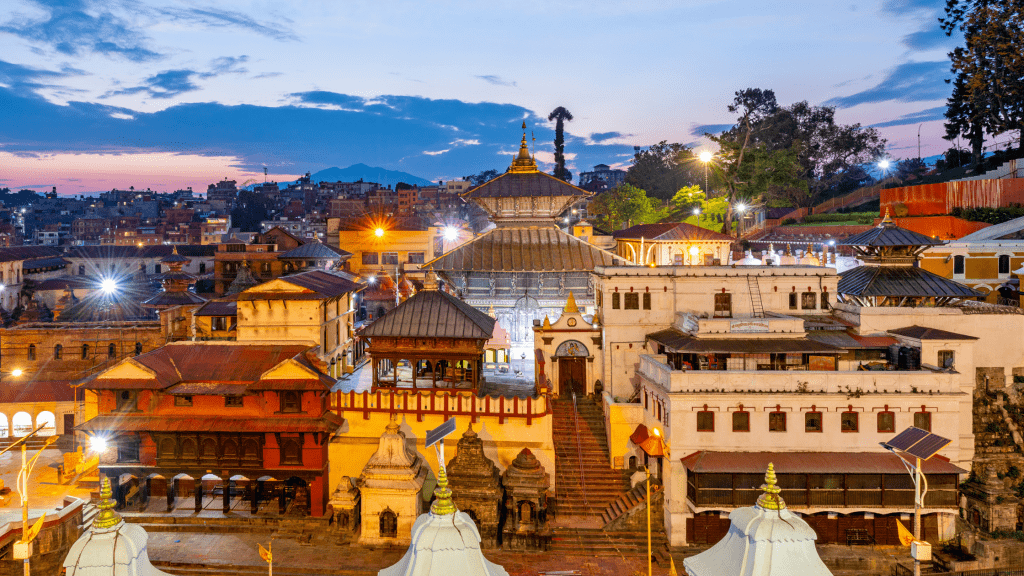
This UNESCO World Heritage Site has been recognized since 1979. Lord Shiva is worshipped here as Pashupati, the Lord of Animals. The site’s roots stretch back well over a thousand years, with early construction linked to Licchavi-era rulers. Over the centuries, kings repaired and rebuilt the shrine several times. The current pagoda-style structure, with its gilded roof and silver-plated doors, took shape around 1692 CE after earlier damage from termites and earthquakes.
The temple’s main lingam is unique. It has four faces, known as the Chaturmukhi form. Each face represents a different aspect of Shiva. During Maha Shivaratri and Shrawan, over a million devotees arrive here. Even on quiet evenings, the Bagmati Aarti ceremony draws crowds who come just to feel its energy.
How to reach: About 6 km east of Thamel. Reachable by taxi, local bus, or a walk from the airport area.
2. Gokarneshwar Mahadev Temple: A Temple for Ancestors
If Pashupatinath serves the living, Gokarneshwar serves the departed. This temple sits on the Bagmati River in Gokarna, northeast of Kathmandu. It functions as Nepal’s version of Kashi for Pitri Tarpan, the ritual of ancestral offerings.
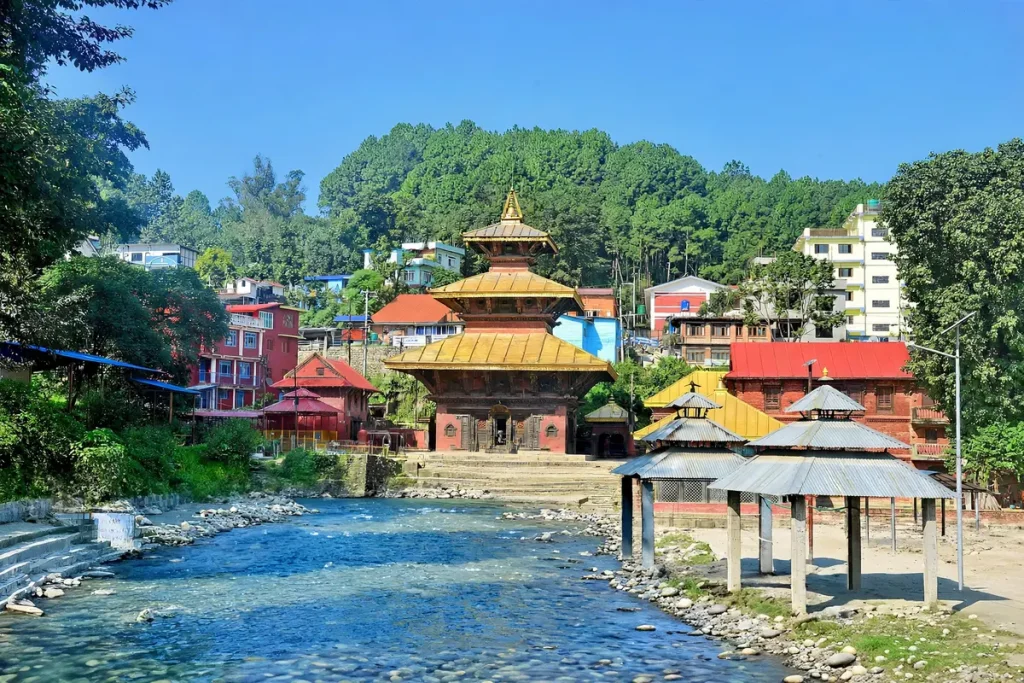
Every year on Gokarna Aunsi, also called Kushe Aunsi or Father’s Day, people travel from across Nepal to perform Shraddha for their late fathers. According to legend, Lord Shiva hid here in deer form after the Kurukshetra war. When the gods found him and grabbed his horns, the horns broke apart. The spot where a piece landed became Gokarneshwar. The temple you see today was rebuilt in 1582 by King Hari Dutta.
Surrounded by dense forest, this temple offers something Pashupatinath cannot: quiet. It is one of the more peaceful Shiva temples in Kathmandu Valley, ideal for slow reflection by the river.
3. Doleshwar Mahadev Temple: The Head of Kedarnath
This temple holds one of the most remarkable claims among all Shiva temples in Kathmandu Valley. Doleshwar Mahadev sits in Sipadol village, in Bhaktapur district’s southeastern edge.
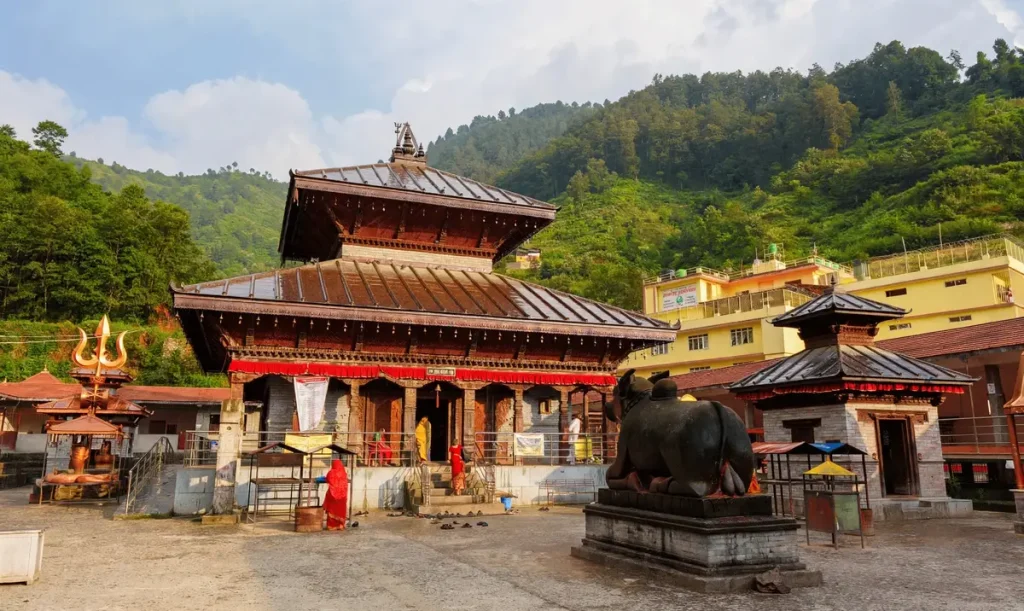
According to legend, after the Mahabharata war, the Pandava brothers searched for Shiva to seek forgiveness. Shiva transformed into a bull to avoid them. When they caught hold of him, the bull’s body split apart. Different parts appeared at different Himalayan sites. The hump surfaced at Kedarnath in India. The head, according to this tradition, appeared at Doleshwar.
On August 22, 2009, the head priest of Kedarnath, Shree 1008 Jagat Guru Bheemashankarling Shivacharya, officially declared Doleshwar as the head portion of Kedarnath. He performed a special Rudra Abhishek ritual to mark the occasion. For devotees who cannot make the difficult trek to Kedarnath in Uttarakhand, a visit to Doleshwar is considered a worthy alternative. Shrawan crowds here run large.
How to reach: About 20 km from Kathmandu. Take a bus to Bhaktapur, then continue by local transport to Sipadol.
4. Santaneshwar Mahadev Temple: Blessings for Children
Perched on Kailash Parbat hill in Jharuwarasi, within Godawari Municipality of Lalitpur district, Santaneshwar Mahadev holds special meaning for couples hoping to have children. The word “Santaan” means child in Nepali. Devotees believe sincere prayer here can bring that blessing.
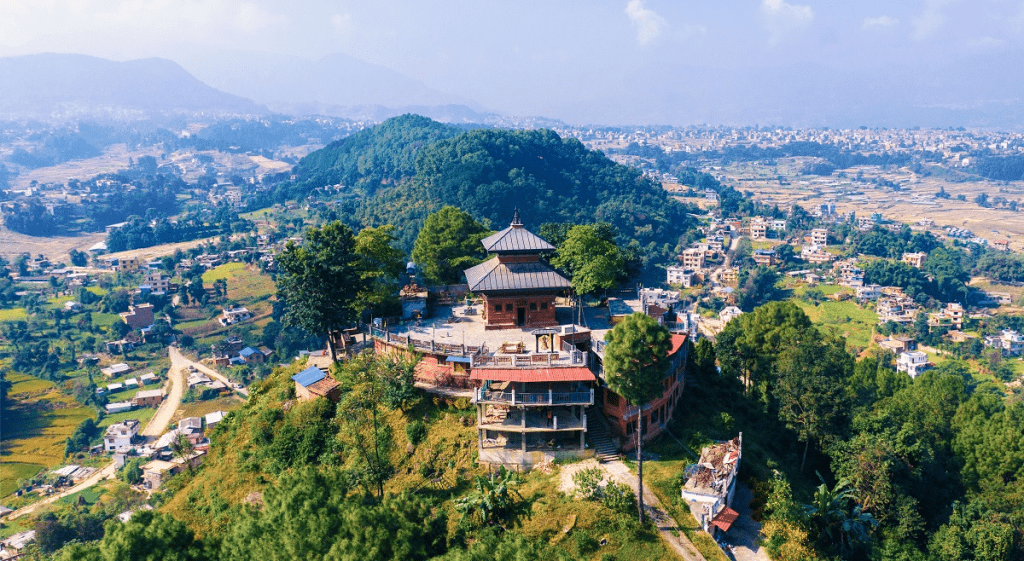
This is a relatively modern temple, but its setting is striking. Reaching it requires a hike of about three hours from Godawari. Many treat the climb itself as part of the pilgrimage. Once at the top, a full 360-degree view of Kathmandu Valley and the Himalayan range opens up.
Best time to visit: Shrawan Mondays draw the biggest crowds, though Saturdays work well for hiking and darshan together. Carry water, and start early.
5. Kailashnath Mahadev: Home to a Record-Breaking Statue
Located in Sanga, near the border of Bhaktapur and Kavrepalanchok districts, Kailashnath Mahadev is known for one thing above all: its statue. Standing roughly 143 to 144 feet tall, it ranks among the tallest Shiva statues in the world.
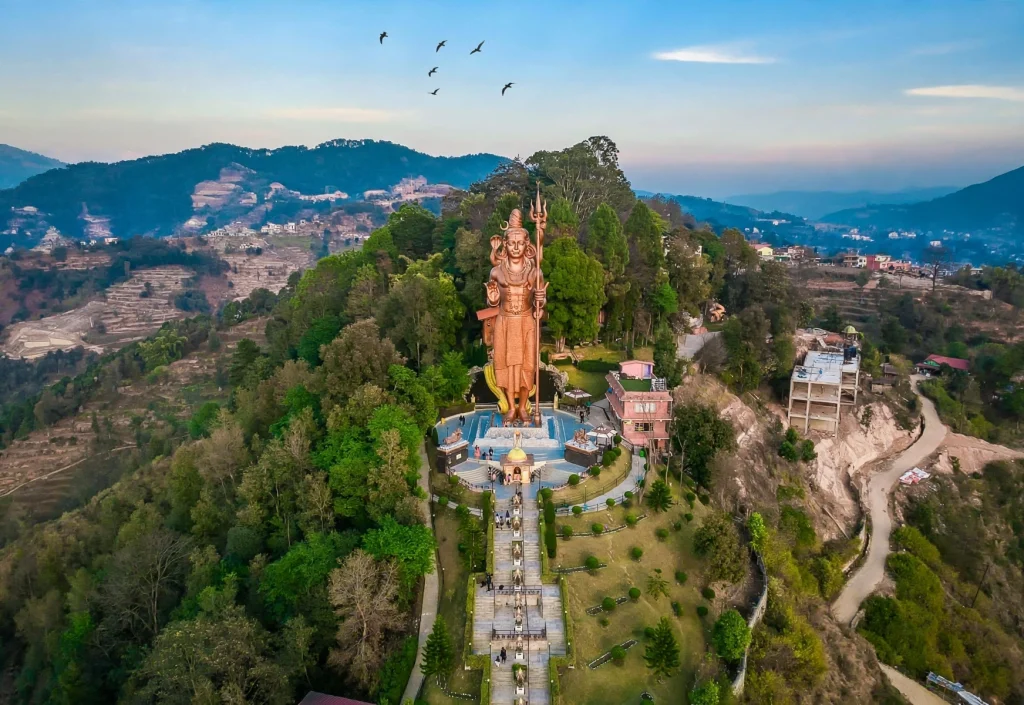
Businessman Kamal Jain and his team built it from copper, zinc, concrete, and steel, with construction spanning about seven years before its completion around 2010–2011.
Unlike the valley’s ancient stone temples, this is a modern landmark. Visitors can climb up inside the statue. The surrounding grounds include a children’s park and resort-style facilities, which makes it a comfortable stop for families. From the hilltop, the view stretches across the valley toward the distant Himalayan skyline.
If you’re searching for “the tallest Shiva statue in Nepal,” this is the destination people mean.
6. Ashapuri Mahadev Temple: Where Wishes Are Heard
Ashapuri Mahadev ranks among the most important religious sites in Bhaktapur district. The name explains its purpose: “Asha” means hope, and “Puri” means fulfiller. Devotees come here believing that genuine wishes get answered.
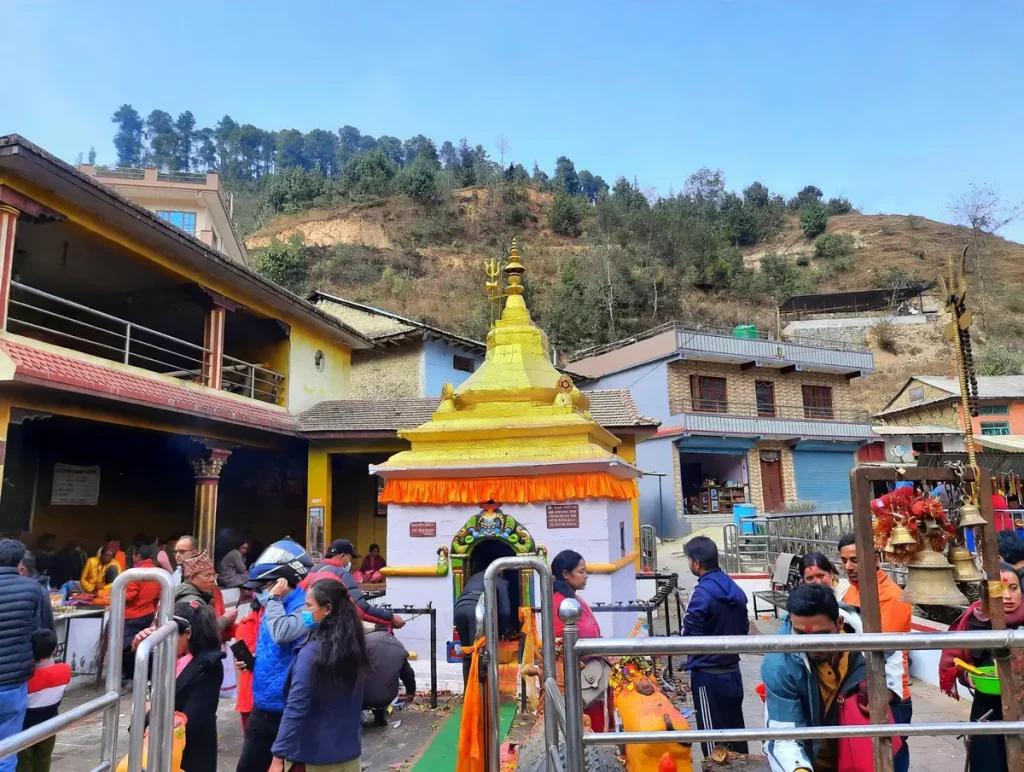
The temple sits at the confluence of the Naichal and Kakrebari rivers, forming a sacred Sangam. Thick forest surrounds the site, keeping it far from city noise. That distance makes it a favorite spot for quiet meditation. During Shrawan, local devotees trek here carrying holy water to pour over the lingam. Because it stays off the main tourist path, it feels more raw and personal than busier temples.
7. Tripureshwar Mahadev Temple: Ancient Power in the City Center
Not every one of the great Shiva temples in Kathmandu Valley sits on a remote hilltop. Tripureshwar Mahadev stands right in the city, on a lane leading toward Kalmohan Ghat on the Bagmati River. It ranks among the oldest and largest Shiva temple complexes within Kathmandu proper.
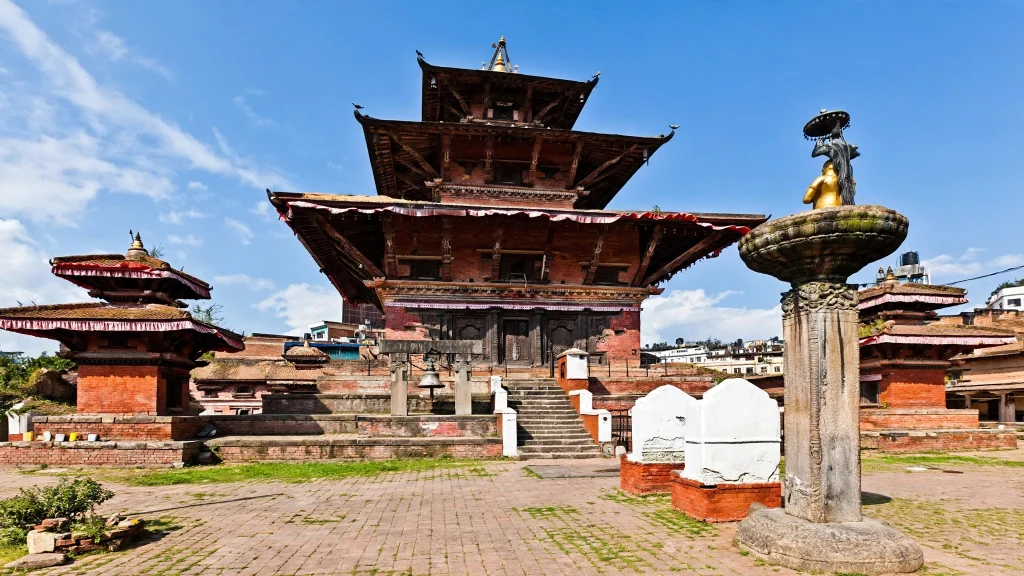
Lalita Tripura Sundari Devi, wife of Prime Minister Bhimsen Thapa, built the temple in 1818. She commissioned it to free her husband’s soul. Its grand Newari architecture once made it one of the tallest temples in the city, before earthquakes in 1934 and 2015 caused damage. A large lingam still sits at its heart.
While most visitors head straight to Pashupatinath, Tripureshwar offers a more local, unfiltered look at daily Kathmandu ritual life.
8. Kumbheshwar Mahadev Temple: Patan’s Five-Story Marvel
Kumbheshwar stands as the only five-story temple in Lalitpur, and it ranks among the oldest structures in the valley, dating to around 1392. You will find it just north of Patan Durbar Square.
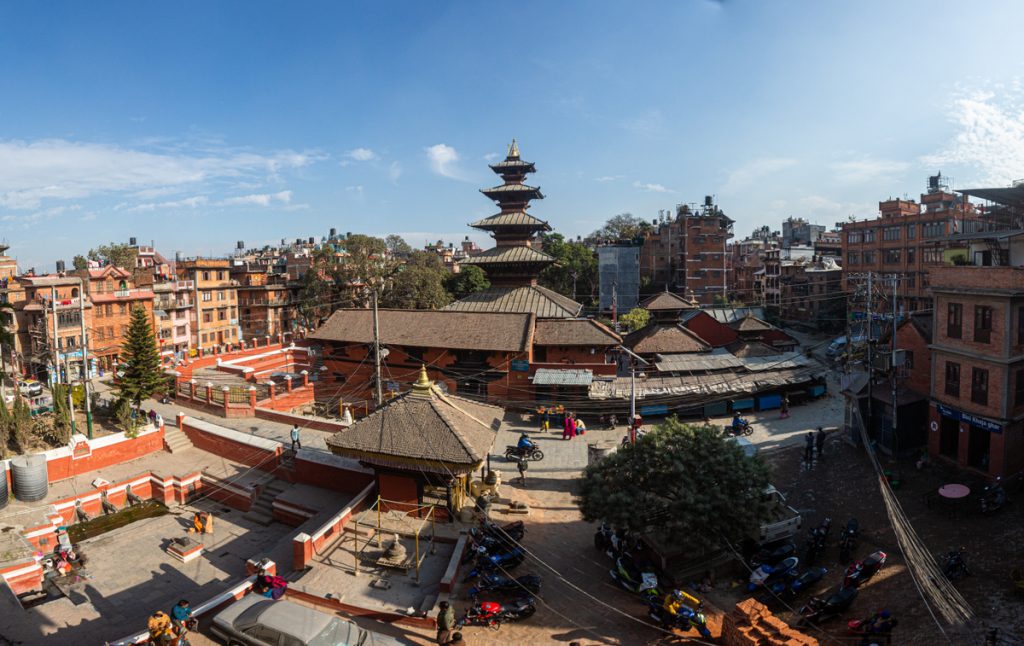
Local belief holds that the temple’s pond, Kumbheshwar Pokhari, connects directly to Gosainkunda Lake in Rasuwa district. During the festival of Janai Purnima, when devotees take a holy dip at Gosainkunda, the water level and character of this pond are said to shift too. Bathing here during the festival is considered just as meritorious as the trek to Gosainkunda itself.
Architecturally, the two-tiered five-story pagoda design stands apart from anything else in the valley. The wood carvings alone are worth the visit for anyone interested in traditional Newari craftsmanship.
9. Bhaleshwar Mahadev Temple: Shiva Atop Chandragiri Hills
Bhaleshwar Mahadev sits high on Chandragiri hill in Kathmandu district. It carries double significance, functioning as both a Shakti Peetha and a Shiva temple.
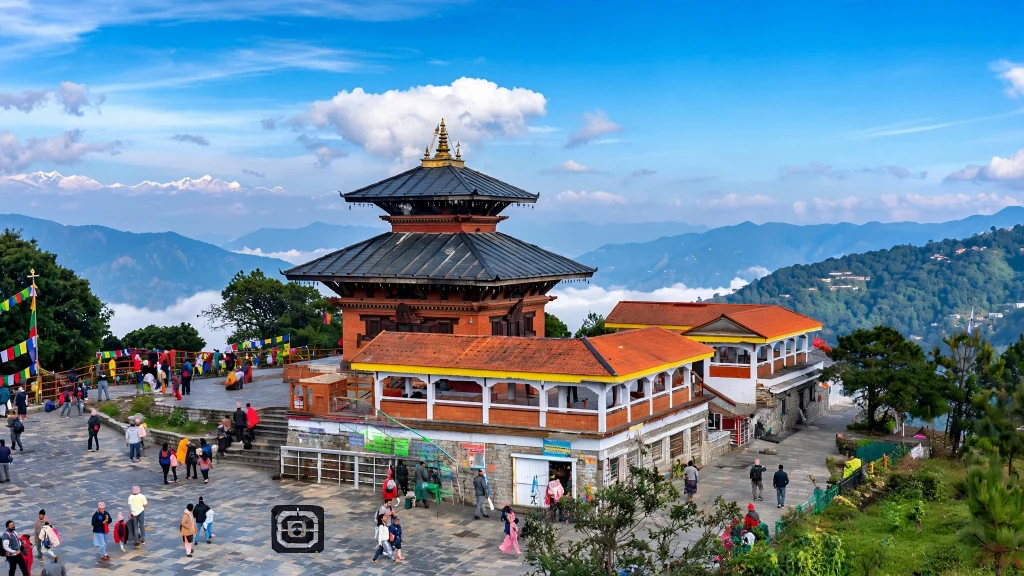
According to the Puranas, when Sati Devi immolated herself, a grieving Shiva carried her body across the universe. Wherever pieces of her body fell, a Shakti Peetha formed. Tradition holds that her forehead, called “Bhaal” in Nepali, landed on Chandragiri. That is how the temple got its name.
Today, a scenic 2.5 km cable car ride from Thankot carries visitors up to the site. At an elevation of about 2,551 meters, the summit offers panoramic views stretching from Annapurna to Everest on a clear day. Few Shiva temples in Kathmandu Valley combine adventure and spirituality this well.
10. Koteshwar Mahadev Temple: Guardian of Pashupatinath
Koteshwar Mahadev sits in the middle of one of Kathmandu’s busiest intersections, yet the small temple island offers surprising calm. The word “Kot” means fort, and tradition holds that Koteshwar acted as the protective outpost for Pashupatinath.
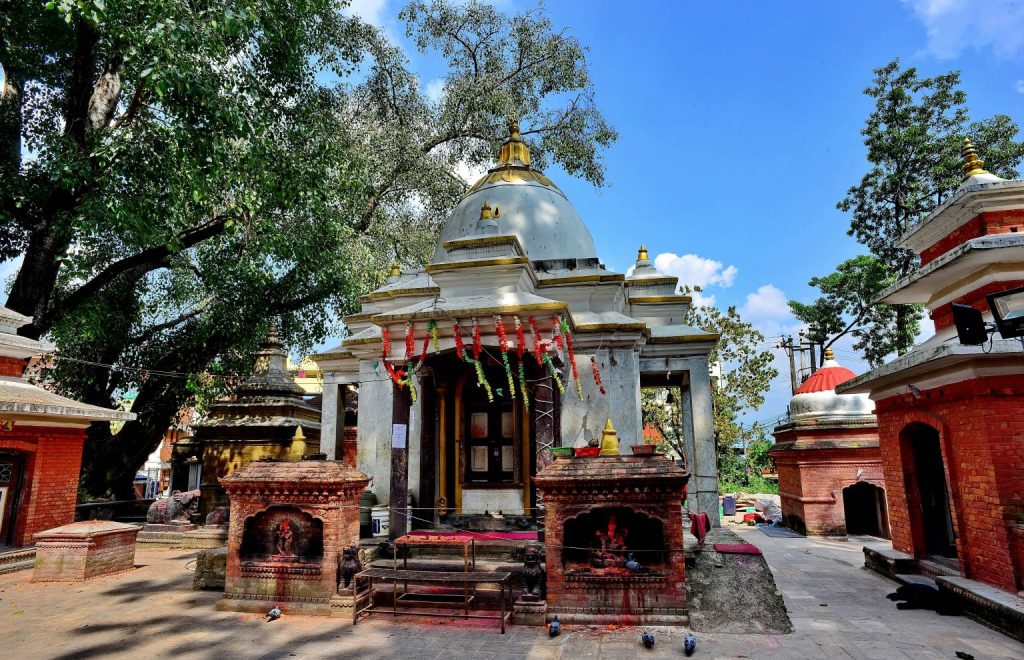
Legend says Lord Shiva stayed at this spot while the sacred lingam at Pashupatinath was being established. Because of this, many devotees consider a visit to Pashupatinath incomplete without also stopping at Koteshwar. Non-stop bhajans, kirtans, and Rudrabhishek rituals take place here, especially during Shrawan. Its location near the Manohara and Bagmati rivers makes it an easy add-on to any temple circuit.
Tips for Visiting Shiva Temples in Kathmandu Valley During Shrawan
A little planning goes a long way during the busy season. Keep these tips in mind:
- Time it right. Visit between 4 AM and 6 AM to avoid the heaviest Monday crowds. Weekdays outside Monday are calmer too.
- Dress modestly. Light-colored clothing works best. Red, yellow, and white are considered auspicious for Shiva puja.
- Bring the right offerings. Belpatra (bael leaves), Dhatura flowers, raw milk, water, and honey are traditional gifts for Shiva.
- Plan a circuit. Start at Pashupatinath early in the morning. From there, move on to Gokarneshwar, Koteshwar, and Kumbheshwar in a single day.
Final Thoughts on the Shiva Temples of Kathmandu Valley
From the globally famous Pashupatinath to the wish-granting Ashapuri and the child-blessing Santaneshwar, the Shiva temples in Kathmandu Valley reflect different forms of the same divine presence. Each carries its own myth. Each offers its own kind of blessing.
You don’t need to wait for Shrawan or a Monday to visit. These 10 Mahadev temples welcome devotion any day of the year. So plan your own Shiva trail through the valley, and go beyond the usual tourist stops.
FAQs About Shiva Temples in Kathmandu Valley
Q1. Which is the most famous Shiva temple in Kathmandu Valley?
Pashupatinath Temple is the most famous and sacred Shiva temple in Nepal, recognized as a UNESCO World Heritage Site.
Q2. Which Shiva temple in the valley is known as the head of Kedarnath?
Doleshwar Mahadev Temple in Sipadol, Bhaktapur, is worshipped as the head portion of the Kedarnath Jyotirlinga, a status confirmed by Kedarnath’s head priest in 2009.
Q3. Where is the world’s tallest Shiva statue located near Kathmandu?
The Kailashnath Mahadev statue, standing around 143 to 144 feet tall, is located in Sanga, on the border of Bhaktapur and Kavrepalanchok districts.
Q4. Which Shiva temple in Kathmandu Valley is known for blessing couples with children?
Santaneshwar Mahadev Temple in Godawari, Lalitpur, is known for this blessing. Its name comes from “Santaan,” meaning child.
Q5. What is the best time to visit Shiva temples in Kathmandu Valley?
Early mornings during Shrawan (July–August) draw the biggest crowds, especially on Mondays. For a quieter visit, go on weekdays outside Shrawan or arrive before 6 AM.
Q6. Can non-Hindus visit Shiva temples in Kathmandu Valley?
Most temples, including Kailashnath Mahadev, Kumbheshwar, and Bhaleshwar, welcome visitors of all backgrounds. Pashupatinath’s inner sanctum is restricted to Hindus, though the surrounding complex is open to all.


