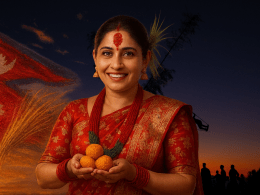



Once a year, Kathmandu’s streets fill with cars, motorbikes, and buses draped in marigold garlands and streaked with red tika. This is Gadi Puja, the vehicle worship ritual that takes over Nepal during Bishwakarma Puja. While the tradition unfolds in workshops and driveways across the entire country, one location consistently draws the largest crowds by far. In this guide, we will explore Gadi Puja in Nepal, why vehicles get this kind of devotion, and exactly where the celebration reaches its peak.
Understanding this tradition means understanding a broader festival dedicated to craftsmanship itself. So, let’s start with Bishwakarma Puja, then head straight to the spot where the vehicle worship truly comes alive.
What Is Bishwakarma Puja?
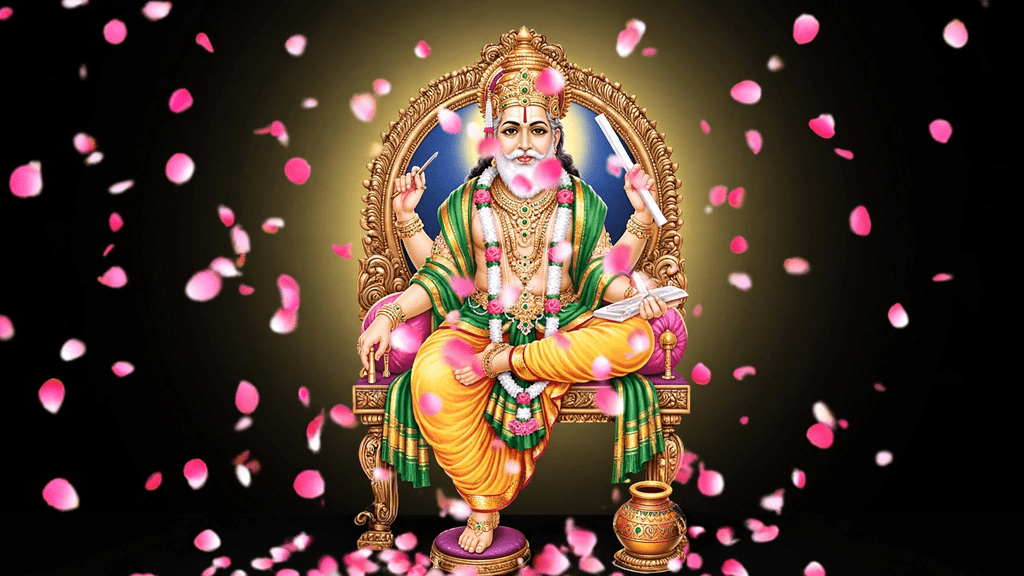
Bishwakarma Puja honors Lord Bishwakarma, the divine architect and craftsman of Hindu mythology, credited with designing the flying chariots of the gods and constructing legendary structures like Indraprastha and the golden palace of Lanka. According to tradition, he is the son of Lord Brahma, and he’s regarded as the ultimate patron of engineers, architects, mechanics, weavers, and skilled workers of every kind.


The festival falls on Kanya Sankranti, the first day of the month of Ashwin according to Nepal’s solar calendar, generally landing in mid-September. Since it follows the solar rather than lunar calendar, the date stays relatively fixed each year, unlike many other Nepali festivals.
Why Vehicles Get Worshipped on This Day
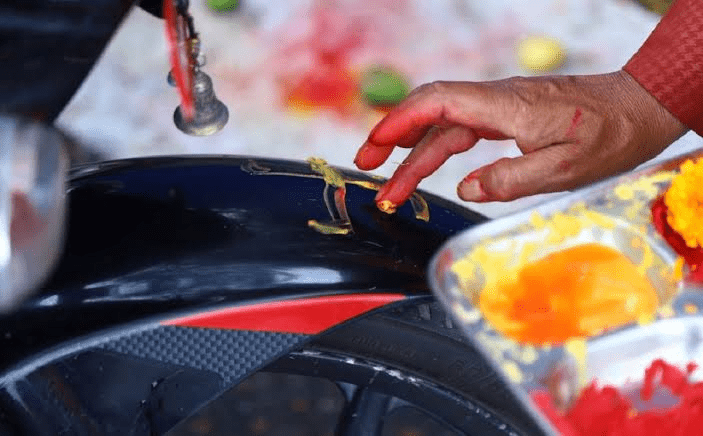
Gadi Puja, meaning vehicle worship, forms one of the most visible parts of the broader Bishwakarma Puja celebration. Since Bishwakarma is believed to have created the divine chariots of the gods, vehicles naturally fall under his protection in the eyes of devotees.
The belief behind the ritual is straightforward: worshipping a vehicle on this day is thought to protect it from accidents and mechanical failure throughout the year ahead. Owners decorate their cars, motorbikes, buses, and trucks with flowers and festoons, apply red and white cloth or tika to the body of the vehicle, and offer prayers seeking safe travel and durability.
This isn’t limited to personal vehicles either. Factories, workshops, and machine shops across the country perform similar rituals for their tools and industrial equipment, treating Bishwakarma Puja as a kind of annual blessing for anything mechanical.
The Most Prominent Spot: Bhadrakali Temple, Kathmandu
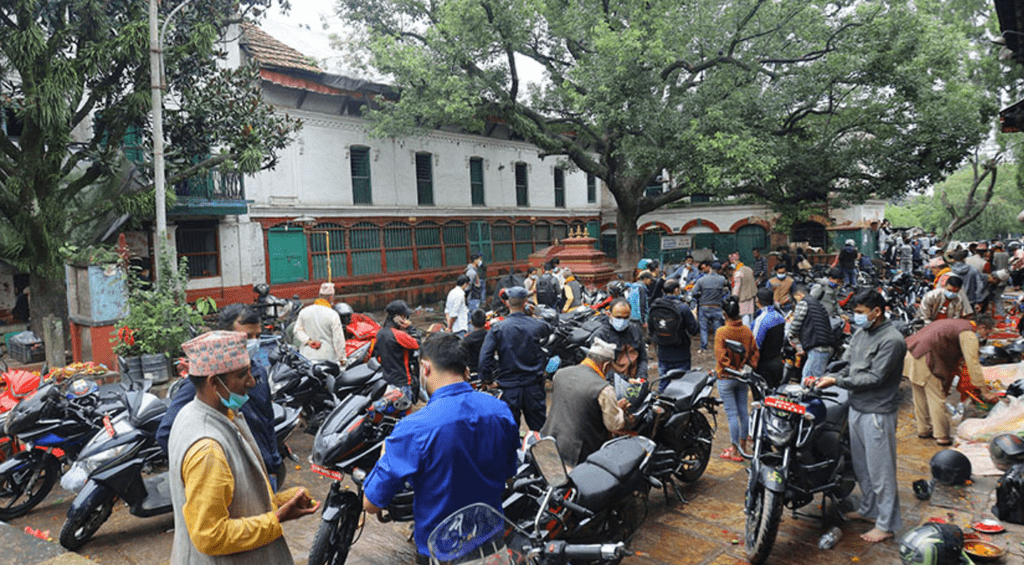
While Gadi Puja happens in driveways and workshops nationwide, one single location consistently stands out as the epicenter of the celebration: Bhadrakali Temple in Kathmandu.
Where the Temple Sits
Bhadrakali Temple sits at the eastern edge of Tundikhel, near Shahid Gate in the heart of Kathmandu, overlooking Singha Durbar, the seat of Nepal’s prime ministerial office. Its central location makes it remarkably easy for vehicle owners across the city to stop by on their way to work or errands.
A Historic Shaktipeeth
Built in 1817, Bhadrakali Temple ranks among the most renowned Shaktipeeths in Nepal, dedicated to Bhadrakali, a fierce yet auspicious form of the goddess Kali. According to local tradition, the temple was constructed after the goddess revealed herself to a priest, instructing him to dig into a nearby hill, where a black stone statue of her was later discovered. The temple remains under the protection of the Nepal Army to this day.
Why This Temple Became the Center of Gadi Puja
Year after year, news coverage from major Nepali outlets confirms the same pattern: devotees throng Bhadrakali Temple in massive numbers specifically to worship their vehicles during Bishwakarma Puja. Both new and old vehicles are brought to the temple grounds, where owners decorate them with festoons and offer red and white cloth as part of the ritual.
While the exact origin of this specific association isn’t tied to a single documented legend, the temple’s central location, its status as a major Shaktipeeth, and decades of accumulated tradition have combined to make it the default gathering point for vehicle owners across the capital.
What Actually Happens at Bhadrakali on Bishwakarma Puja
If you visit Bhadrakali Temple on the day itself, expect a genuinely lively, crowded scene.
Decorating the Vehicles
Vehicle owners arrive with garlands, flowers, and strips of red and white cloth, wrapping and draping their cars, motorbikes, and commercial vehicles in front of the temple. Many vehicles end up covered almost entirely in decoration by the time the ritual concludes.
Offering Tika and Prayers
Following the decoration, owners apply tika, typically a mixture of red vermillion and rice, directly onto the vehicle’s body, most commonly the hood, dashboard, or front grille. Prayers are then offered, asking for protection from accidents and continued reliability throughout the coming year.
A Mix of Vehicle Types
Photographs and reporting from the temple consistently show a genuine cross-section of Kathmandu’s vehicle fleet, from private cars and motorbikes to buses and commercial trucks, all lined up for their turn at blessing. This diversity reflects just how broadly the tradition is observed, cutting across personal and professional vehicle ownership alike.
Bhadrakali in Pokhara: A Secondary Center
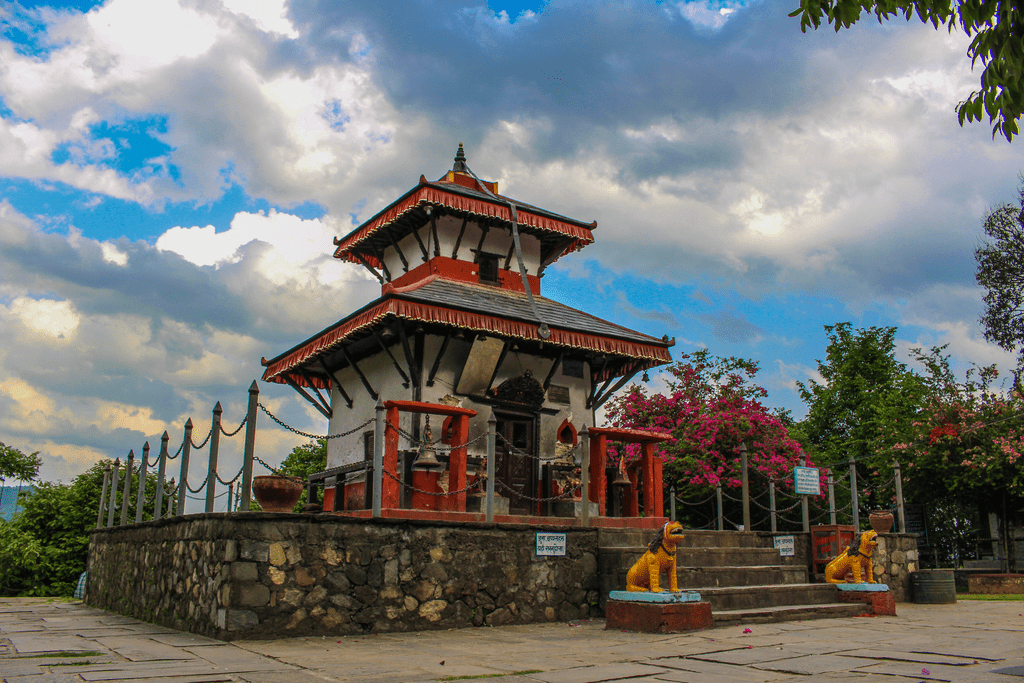
Kathmandu isn’t the only city with a prominent Bhadrakali Temple tied to vehicle blessings. A separate Bhadrakali Temple sits atop a small hill in Kundahar, on the eastern edge of Pokhara, also founded in 1817. This temple has similarly become known as a popular destination for blessing new vehicles, alongside its role in wedding ceremonies and general worship of the goddess Kali.
While it doesn’t draw crowds on the same scale as its Kathmandu counterpart during Bishwakarma Puja specifically, it remains a well-known secondary site for vehicle-related blessings throughout the year.
An Alternative Vehicle Worship Day: Maha Navami
Interestingly, not every household strictly follows Bishwakarma Puja’s Kanya Sankranti date for vehicle worship. In Nepal, some families instead perform this ritual on Maha Navami, the ninth day of Dashain, also known as Kalaratri, which typically falls a few weeks later.
On this alternative day, weapons, tools, machines, and vehicles are traditionally worshipped as part of Dashain’s broader rituals, historically accompanied by animal sacrifice in some households, though this practice has become far less common in modern vehicle worship specifically. This dual-tradition means you may occasionally see vehicle blessings happening twice within the same festival season, depending on family custom.
Beyond the Temple: Workshops and Industrial Areas
While Bhadrakali Temple captures the most visible, concentrated version of Gadi Puja, the broader spirit of Bishwakarma Puja plays out just as actively across Nepal’s workshops, factories, and industrial zones.
Temporary Idols and Immersion Rituals
In many factories and workshops, temporary clay or sand idols of Lord Bishwakarma are installed for the day, then ceremonially immersed in a nearby river once the celebration concludes. This mirrors immersion traditions seen in other Hindu festivals across South Asia.
Blessing Tools and Machinery
Mechanics, welders, smiths, and industrial workers spend the day cleaning and decorating their tools and machinery, seeking smooth operation and freedom from breakdowns in the year ahead. Shops selling ritual materials for this purpose, seen in areas like Manamaiju on the outskirts of Kathmandu, do brisk business in the days leading up to the festival.
A Nationwide, Not Just Capital-Wide, Tradition
Reports from Pokhara and other regions confirm that Bishwakarma Puja and its associated vehicle worship are observed with real enthusiasm well beyond Kathmandu Valley, reflecting just how deeply this tradition runs across Nepal’s broader working population.
Tips for Observing Gadi Puja as a Visitor
If your trip happens to align with Bishwakarma Puja, watching Gadi Puja unfold can be a genuinely memorable cultural experience.
Visit Bhadrakali Temple Early
Given how crowded the temple grounds become, arriving in the morning offers the best chance to see vehicles being decorated before the area gets too congested with both worshippers and traffic.
Expect Traffic Disruptions Nearby
Since vehicle owners queue up near the temple to have their cars and motorbikes blessed, expect heavier than usual congestion around Tundikhel and Shahid Gate throughout the day.
Ask Before Photographing
While the festival is visually striking, always ask permission before photographing individuals up close, particularly if they’re in the middle of performing a personal ritual for their vehicle.
Respect the Temple’s Religious Significance
Beyond the vehicle worship spectacle, remember that Bhadrakali remains an active, important Shaktipeeth. Dress modestly and behave respectfully if you choose to enter the temple grounds themselves, rather than simply observing from the surrounding streets.
Why This Tradition Endures
Gadi Puja reflects something practical as much as spiritual. In a country where vehicles represent significant personal investment and livelihood, from a single motorbike to a commercial bus fleet, seeking protection and reliability through ritual carries genuine emotional and economic weight. The concentration of this tradition at Bhadrakali Temple each year isn’t accidental. It reflects decades of accumulated habit, centered around a historically significant temple sitting right in the heart of the capital.
Final Thoughts
Gadi Puja in Nepal turns an ordinary religious festival into one of the country’s most visually distinctive annual traditions, and nowhere captures that spectacle quite like Bhadrakali Temple in Kathmandu. From garlanded motorbikes to tika-streaked buses, the scene at Bhadrakali each Bishwakarma Puja reflects a tradition where faith, craftsmanship, and everyday practicality all meet in one crowded temple courtyard. Whether you’re a vehicle owner seeking blessings or simply a curious traveler, witnessing Gadi Puja at Bhadrakali offers a genuinely unique window into how deeply ritual is woven into Nepal’s daily life.
Frequently Asked Questions
Where is the most prominent spot for Gadi Puja in Nepal?
Bhadrakali Temple in Kathmandu, located near Tundikhel and Shahid Gate, draws the largest crowds for vehicle worship during Bishwakarma Puja.
What is Bishwakarma Puja?
Bishwakarma Puja honors Lord Bishwakarma, the divine architect of Hindu mythology, and is celebrated by craftsmen, engineers, and vehicle owners across Nepal.
When is Bishwakarma Puja celebrated?
It falls on Kanya Sankranti, the first day of Ashwin according to Nepal’s solar calendar, typically in mid-September.
Why do people worship vehicles during Bishwakarma Puja?
Since Bishwakarma is believed to have created the divine chariots of the gods, vehicles are worshipped for protection from accidents and mechanical failure.
Is there another day when vehicles are worshipped in Nepal?
Yes, some families alternatively perform vehicle worship on Maha Navami during Dashain, rather than on Bishwakarma Puja itself.
Can tourists visit Bhadrakali Temple during Bishwakarma Puja?
Yes, tourists can visit and observe the celebration, though it’s respectful to dress modestly and ask permission before photographing worshippers closely.