



Just a short drive from Kathmandu’s chaos sits a hilltop town that time seems to have quietly bypassed. Kirtipur, with its brick-paved lanes and carved wooden windows, offers one of the most authentic Newari experiences left in the Kathmandu Valley. Yet despite sitting only eight kilometers from the capital, it remains largely overlooked by the typical tourist trail. In this deep-dive guide, we will explore Kirtipur’s dramatic history, its most important temples, its food, and everything you need to plan a genuinely rewarding visit.
Understanding Kirtipur means understanding a town shaped as much by resistance and tragedy as by faith and craftsmanship. So, let’s walk through what makes this hill town such a compelling stop in the valley.
What Does Kirtipur Mean, and Where Is It?
Kirtipur’s name comes from two Newari words, “Kirti,” meaning glory, and “Pur,” meaning city. Together, they form “City of Glory,” a name that feels fitting given the town’s turbulent and often heroic past.


Geographically, Kirtipur sits on a ridge roughly eight kilometers southwest of Kathmandu, overlooking the wider valley below. This elevated position wasn’t accidental. The ridge functioned as a natural fortress for centuries, a detail that would later prove decisive in the town’s history.
A Brief History of Kirtipur
Kirtipur’s origins trace back to the 12th century, when it was established as a satellite settlement of the neighboring kingdom of Patan, also known as Lalitpur. Over the following centuries, it grew into a fortified Newar township, its brick houses and temple squares built defensively along the ridge’s natural contours.
For generations, Kirtipur functioned as an independent, thriving Newar community, closely tied culturally and politically to the wider Kathmandu Valley kingdoms. That relative stability, however, would eventually collide with one of the most consequential military campaigns in Nepali history.
The Battle of Kirtipur: A Turning Point for Nepal
No understanding of Kirtipur is complete without its defining historical event. The Battle of Kirtipur wasn’t a single confrontation, but a grueling, drawn-out struggle spanning a decade, and it ultimately changed the course of Nepali history.
The First Siege: 1757
Gorkhali king Prithvi Narayan Shah, driven by his ambition to unify the Kathmandu Valley under Gorkha rule, launched his first assault on Kirtipur in 1757. The attempt failed decisively. Gorkhali commander Kalu Pande was killed during the fighting, reportedly beheaded by Kathmandu’s own King Jaya Prakash Malla, who then hung Pande’s weapons at the town’s Bagh Bhairav Temple as a trophy of victory.
The Second Siege: 1764
Seven years later, Shah tried again, sending his forces under the command of his own brother, Surpratap Shah. This attack, too, ended in failure for the Gorkhalis. During the fighting, Surpratap was struck in the eye by an arrow launched from the town’s defensive walls, losing his sight in that eye and forcing another retreat.
The Third Siege and the Fall of Kirtipur: 1767
By 1767, Shah’s forces returned a third time, now vastly larger and more determined. Kirtipur, a walled town of roughly 800 houses at the time, held out under prolonged siege. Ultimately, the town fell not through direct battlefield defeat, but through betrayal. A noble named Danuvanta secretly allowed the Gorkhali army through the gates, and the exhausted townspeople surrendered, trusting Shah’s promised amnesty.
A Brutal Aftermath
That promise did not hold. Just two days after the surrender, still enraged over his earlier losses and his brother’s injury, Shah ordered the noses and lips of the town’s inhabitants cut off, a punishment intended both as revenge and as a warning against future rebellion. This brutal episode remains one of the most painful chapters in the broader story of Nepal’s unification, and it still shapes how Kirtipur’s history is remembered today.
The Heroine of Kirtipur
Amid this devastating history, one figure stands out for her defiance. Kirti Laxmi, a local Newar woman, disguised herself as a man and fought against the invading Gorkhali forces under the name Bhairav Singh, reportedly continuing to resist even after the town had fallen. Her courage remains a point of local pride, woven into how Kirtipur tells its own story today.
The Broader Consequence
Kirtipur’s fall in 1767 set off a chain reaction. Kathmandu fell the following year in 1768, and Bhaktapur followed in 1769, completing Prithvi Narayan Shah’s conquest of the Kathmandu Valley and effectively ending centuries of independent Newar rule, replacing it with the newly formed Shah dynasty.
Exploring Kirtipur’s Historic Sites
With that history in mind, walking through Kirtipur today feels remarkably different. Its temples and squares carry visible reminders of this past, alongside centuries of continuous religious devotion.
Bagh Bhairab Temple
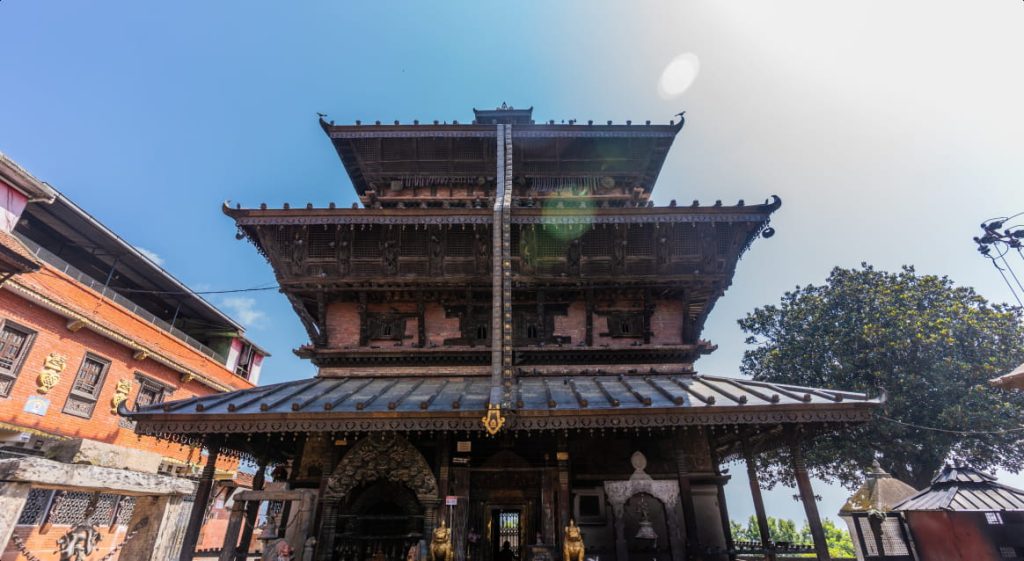
The town’s most significant landmark, Bagh Bhairab Temple, is dedicated to the tiger form of Bhairav, Lord Shiva’s fierce incarnation. Locally called Aju Deu, meaning “Grandfather God,” this three-story temple dates back centuries, with some accounts tracing its origins to the Licchavi period.
According to local legend, the temple’s origin involves a group of young girls who fashioned a clay tiger while tending sheep in the forest. When their sheep vanished and blood appeared on the statue, villagers believed Bhairab had possessed the clay figure to hunt the missing animals.
The temple’s silver mask was donated by a local resident, Chaturman Dware, during the Rana-era rule of Chandra Shumsher. Perhaps most striking, the temple’s upper tier still displays swords and weapons seized during the Battle of Kirtipur, a direct physical link to the town’s fraught history. Two stone elephants, fitted with spiked metal saddles to prevent climbing, guard the temple’s entrance. Local tradition holds that circling the temple 108 times brings success and good health.
Chilancho Stupa
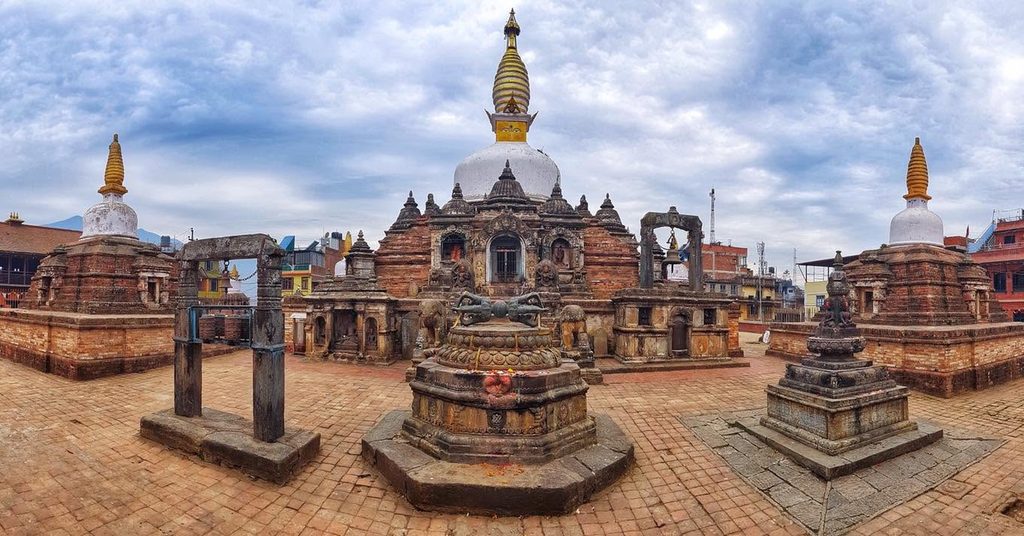
Perched on Kirtipur’s eastern hill, the Chilancho Stupa stands roughly ten meters tall, sharing construction similarities with the far more famous Swayambhunath Stupa. Four smaller stupas mark each corner of its base, and a ceremonial vajra, or thunderbolt symbol, stands before the main structure.
While local tradition sometimes links the stupa’s origins to the Mauryan Emperor Ashoka, inscription evidence points to construction during the 15th century. Regardless of its exact age, the site remains an active place of daily worship, hosting festivals like Buddha Purnima and drawing devotees seeking its peaceful, elevated atmosphere.
Uma Maheshwar Temple
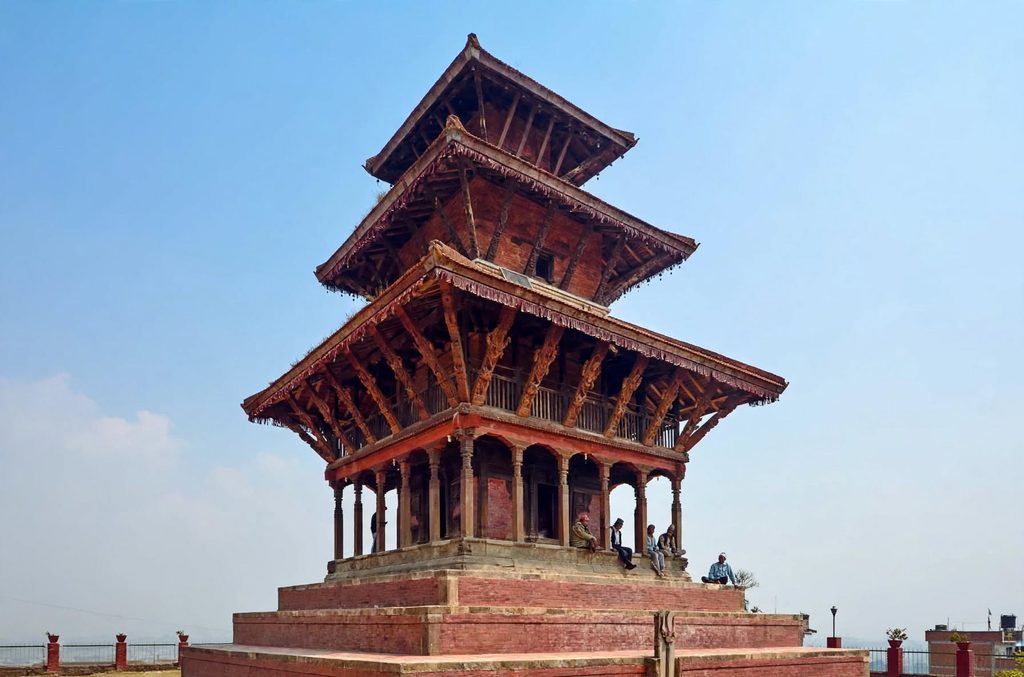
For the best panoramic views in Kirtipur, head to Uma Maheshwar Temple, a three-story shrine built around 1655 and dedicated to Shiva and Parvati. Locally known as Kwa: Cho Dega, the temple sits atop Kirtipur hill near the old Malla-period palace grounds.
Reaching it involves a walk up stone steps that wind past rice terraces and traditional houses, a journey many consider just as rewarding as the sweeping valley views waiting at the top. Sunrise and late afternoon offer particularly striking light for this viewpoint.
Lohan Dega
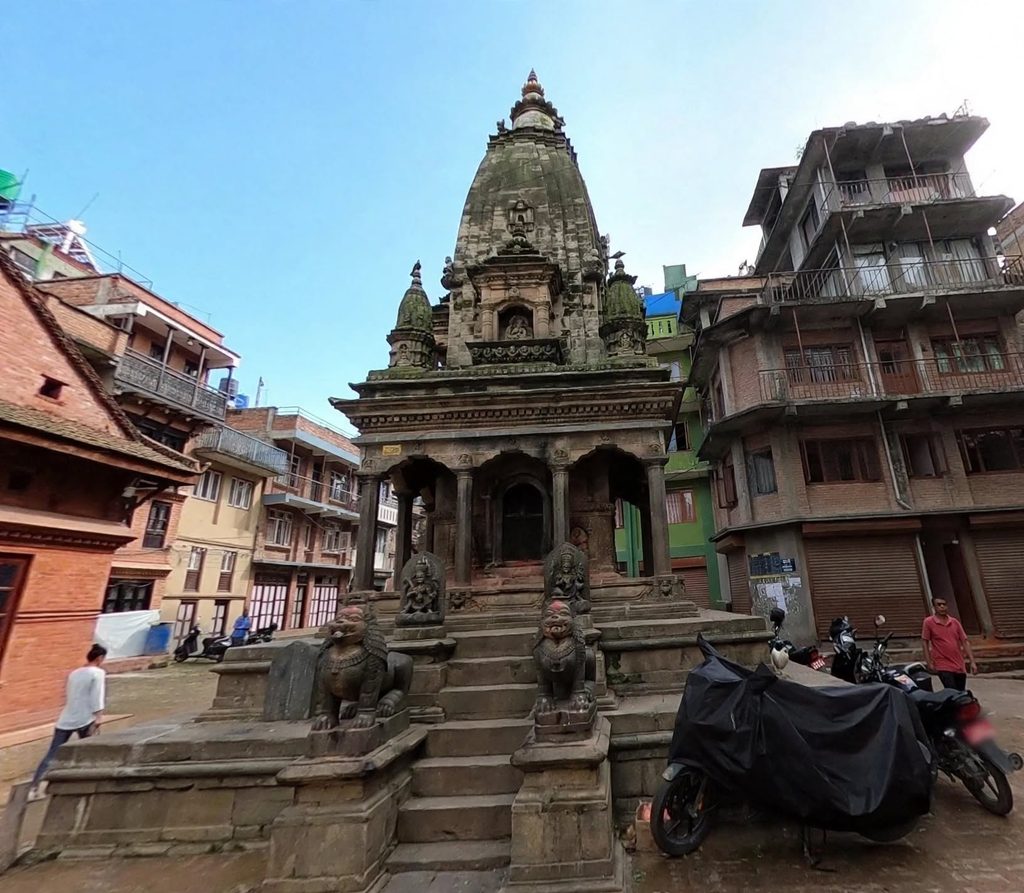
Tucked into the town’s historic core, Lohan Dega, also known as Lodegal, is a stone temple built in Shikhara architectural style, honoring the Buddhist Triratna, the Three Jewels of Buddha, Dharma, and Sangha. Constructed in 1664 during Malla rule, its name literally translates to “stone temple,” reflecting its distinctive building material within a valley more commonly associated with brick and wood construction.
The Old Royal Palace and Durbar Area
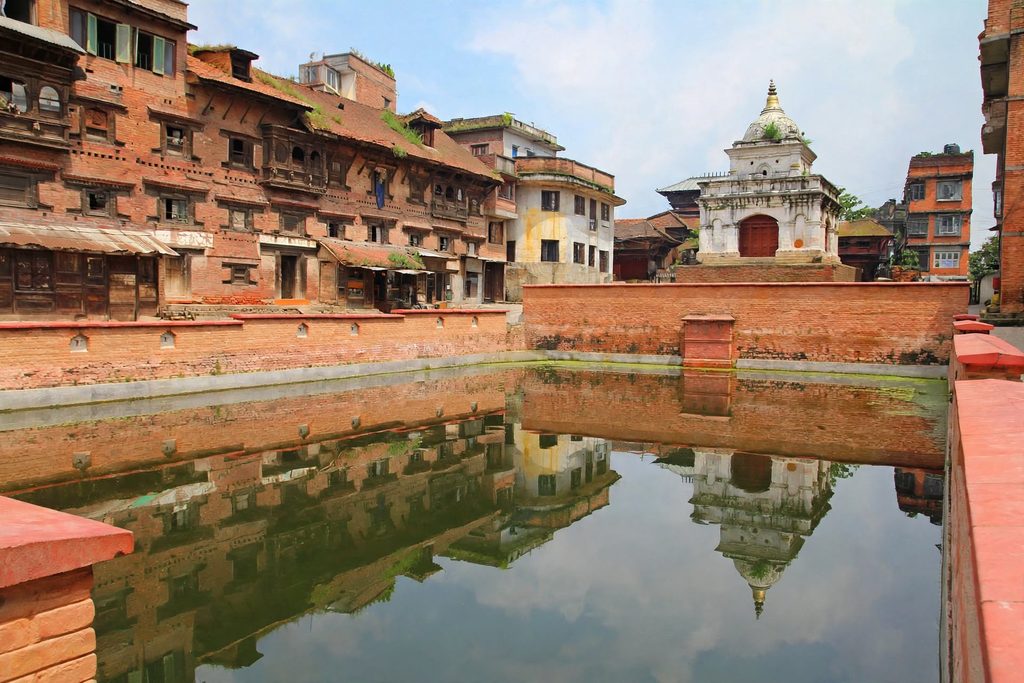
Near a historic pond that once served as Kirtipur’s primary water source, visitors can find the well-preserved remains of the town’s former royal palace. Today, these buildings function as ordinary local residences, their traditional Newari windows framing daily life much as they have for generations. This quiet corner of Kirtipur offers some of the town’s most atmospheric, least crowded photography opportunities.
Panga Neighborhood
In the afternoon, many visitors continue on to Panga, one of Kirtipur’s other historic neighborhoods, known for its own concentration of traditional architecture and local daily life, offering a slightly different flavor from the main temple squares.
Tasting Authentic Newari Cuisine in Kirtipur
Beyond its temples, Kirtipur has earned a reputation as one of the best places in the entire Kathmandu Valley to experience genuinely traditional Newari food.
Newa Lahana
This community-run restaurant has become something of a culinary landmark in Kirtipur. Guests sit on traditional straw mats, known as sukul, and eat from leaf plates called lapu, recreating a dining experience largely unchanged by modern influence.
What to Order
Samay Baji, the ceremonial Newari platter featuring beaten rice, smoked buffalo meat known as choila, black soybeans, and ginger, remains a must-try dish here. For something sweet, Yomari, a steamed rice-flour dumpling filled with molasses or sesame, offers a distinctly Kirtipur-style dessert experience.
Practical Tips for Visiting Kirtipur
A little planning helps you make the most of a day in this historic hill town.
Getting There
Taxis and ride-sharing services offer the most convenient route from central Kathmandu, with the ride generally taking well under an hour. Budget travelers can instead catch a public bus from the bus park near Ratna Park, a noticeably cheaper option that still gets you there reliably.
When to Visit
Late afternoon light suits Kirtipur’s brick architecture beautifully, while early morning offers quieter streets and clearer valley views from Uma Maheshwar Temple. Spring months bring increased local visitor traffic around Bagh Bhairab Temple, making it an especially lively time to experience local devotional life.
Give Yourself Enough Time
Between the temple sites, the old palace area, Panga’s quieter lanes, and a proper Newari meal, a half to full day is genuinely worth setting aside for Kirtipur, rather than treating it as a rushed hour-long stop.
Nearby Tribhuvan University
At the foot of Kirtipur hill sits Tribhuvan University, Nepal’s oldest and largest university. Its proximity gives the town a slightly different energy than other heritage sites in the valley, blending centuries-old temples with everyday student life.
Why Kirtipur Deserves More Attention
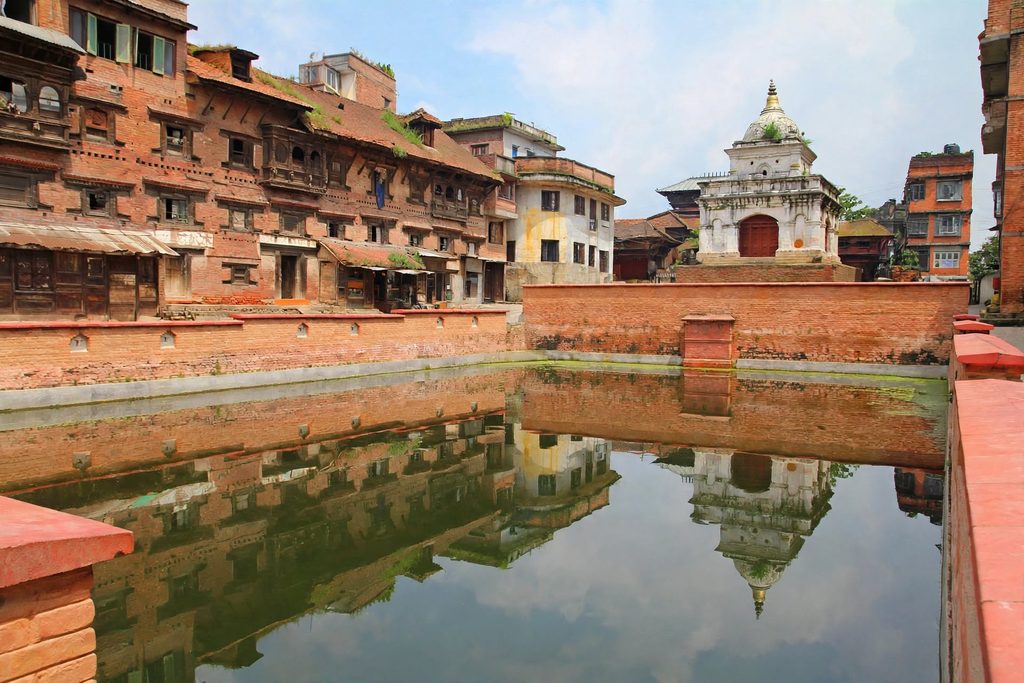
Kirtipur offers something increasingly rare in the Kathmandu Valley: a genuinely lived-in historic town, largely free of the souvenir shops and heavy foot traffic found in Durbar Squares elsewhere. Its narrow lanes, weathered temple squares, and difficult history combine to create a place that feels less like a tourist attraction and more like a living community that happens to carry centuries of history within it.
For travelers who have already seen Kathmandu, Patan, and Bhaktapur’s more famous heritage sites, Kirtipur offers a quieter, more reflective alternative, one where the past feels less curated and considerably more raw.
Final Thoughts
Kirtipur’s brick lanes and hilltop temples tell a story far more complicated than its peaceful present-day atmosphere might suggest. From three brutal sieges during Nepal’s unification to the quiet devotion still practiced daily at Bagh Bhairab and Chilancho Stupa, this small hill town holds an outsized place in Nepali history. Whether you come for the panoramic views from Uma Maheshwar, a plate of Samay Baji at Newa Lahana, or simply the chance to wander streets untouched by mass tourism, Kirtipur rewards anyone willing to look beyond Kathmandu’s more famous heritage sites.
Frequently Asked Questions
Why is Kirtipur historically significant?
Kirtipur was the site of a decade-long, three-part siege by Prithvi Narayan Shah, whose eventual victory in 1767 led directly to the unification of the Kathmandu Valley under Gorkha rule.
What are the main attractions in Kirtipur?
Key attractions include Bagh Bhairab Temple, Chilancho Stupa, Uma Maheshwar Temple, Lohan Dega, and the old royal palace area.
How do I get to Kirtipur from Kathmandu?
Kirtipur is reachable by taxi, ride-sharing service, or public bus from the bus park near Ratna Park, with the journey typically taking under an hour.
What food should I try in Kirtipur?
Try Samay Baji, a traditional Newari platter, and Yomari, a steamed rice dumpling filled with molasses, both served at restaurants like Newa Lahana.
Is Kirtipur worth visiting if I’ve already seen Kathmandu Durbar Square?
Yes, Kirtipur offers a quieter, less touristy alternative with its own distinct history, architecture, and authentic Newari atmosphere.
What does the name Kirtipur mean?
Kirtipur means “City of Glory,” combining the Newari words “Kirti,” meaning glory, and “Pur,” meaning city.


