



Few experiences in Nepal feel as timeless as watching clay spin into shape by hand. Pottery workshops in Bhaktapur offer exactly that, tucked inside narrow alleys just steps from the city’s famous Durbar Square. However, not every workshop delivers the same authentic experience. So, this guide will help you understand the craft, find genuine master artisans, and make the most of your visit.
Bhaktapur has earned its nickname, the “City of Devotees,” through centuries of art, architecture, and craftsmanship. Yet its pottery tradition remains one of its most underrated treasures. Let’s explore where this craft comes from, how it works, and how to tell a true master artisan from a passing demonstration.
The Heart of the Craft: Pottery Square
Most pottery workshops in Bhaktapur center around one legendary spot, known locally as Pottery Square. This area also goes by the names Talako Tole, Kumal Tole, or Bolachha Tole, depending on who you ask. Regardless of the name, it remains the beating heart of Bhaktapur’s ceramic tradition.


Getting there is simple. From Bhaktapur Durbar Square, you can walk down the side street near Kedernath Temple, opposite the Golden Gate, and reach Pottery Square in about five minutes. Along the way, you will pass shops selling handmade crafts, which can easily extend your walk if you enjoy browsing.
This square is not a staged tourist attraction. Instead, it functions as a fully active workspace where artisans practice their craft every single day. Open courtyards filled with sun-drying clay pots create a striking, unmistakable scene as soon as you arrive.
A Tradition That Spans Centuries
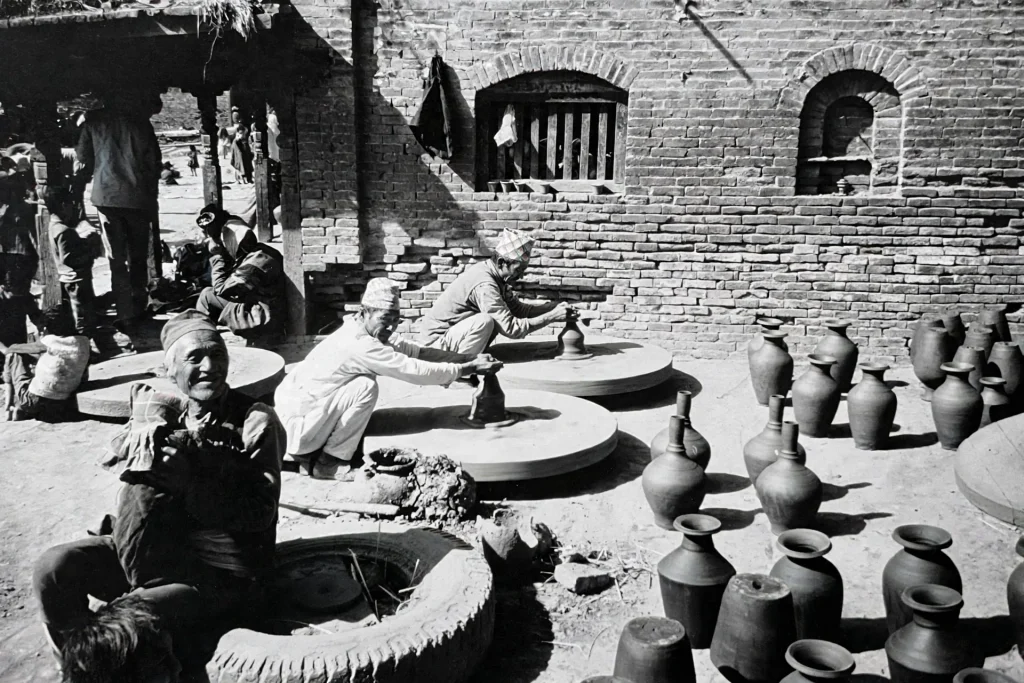
Pottery-making in Bhaktapur is believed to date back over 1,000 years, tied closely to the city’s identity as an ancient trading hub. Bhaktapur once served as one of the three main kingdoms in the Kathmandu Valley, and its cultural importance encouraged crafts like pottery to flourish.
This craft is deeply rooted in the Newar community, specifically within the Prajapati caste. For generations, Prajapati families have passed pottery skills from parent to child, turning the trade into both a livelihood and a cultural inheritance. Even the community’s name reflects this legacy, since Prajapati traditionally refers to those associated with pottery work.
Unfortunately, this heritage faces real pressure today. Mass-produced plastic and metal goods have reduced demand for handmade clay items, and younger generations increasingly pursue other careers. According to Pottery Square’s own records, only about 60 of the original 226 households remain actively engaged in the craft. This decline makes finding truly skilled artisans even more important for visitors who want an authentic experience.
How Traditional Bhaktapur Pottery Is Made
Understanding the process helps you appreciate what you are watching, and it also helps you spot genuine craftsmanship. Each step requires patience, skill, and years of practice.
Sourcing and Preparing the Clay
Artisans source their clay locally, often digging it from riverbeds and fields around the Kathmandu Valley. Workers then mix this clay with water and knead it thoroughly until it becomes smooth and workable. This preparation stage determines how easily the clay will behave on the wheel later.
Shaping on the Wheel
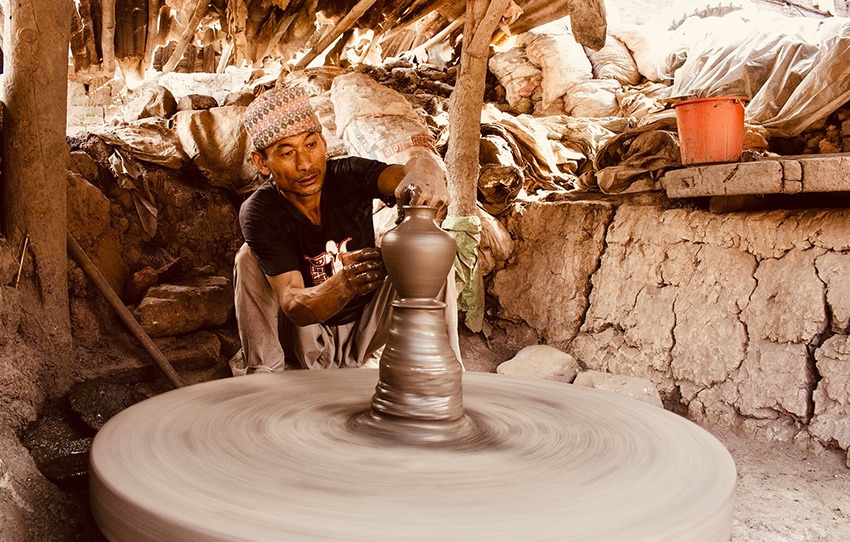
Next comes the most visually striking part of the process. Many master artisans still prefer heavy, manual wheels made of wood or weighted rubber, spun using a long bamboo stick. Once the wheel gains momentum, the potter has only a few minutes to shape the clay before it slows down again, which makes speed and precision essential.
Sun-Drying the Pieces
After shaping, pieces are placed outside to dry naturally under the sun. This step hardens the clay and helps set its shape, reducing the risk of cracking during firing. Rows of drying pots, bowls, and lamps are one of the most photographed sights in the square.
Firing the Clay
Finally, the dried pieces undergo firing, using either wood-fired kilns or traditional open-air methods. In the open-air technique, pots are stacked in layers with straw, then covered in ash, with fire applied from below. This process can take three to four days to complete.
Terracotta Versus Black Pottery
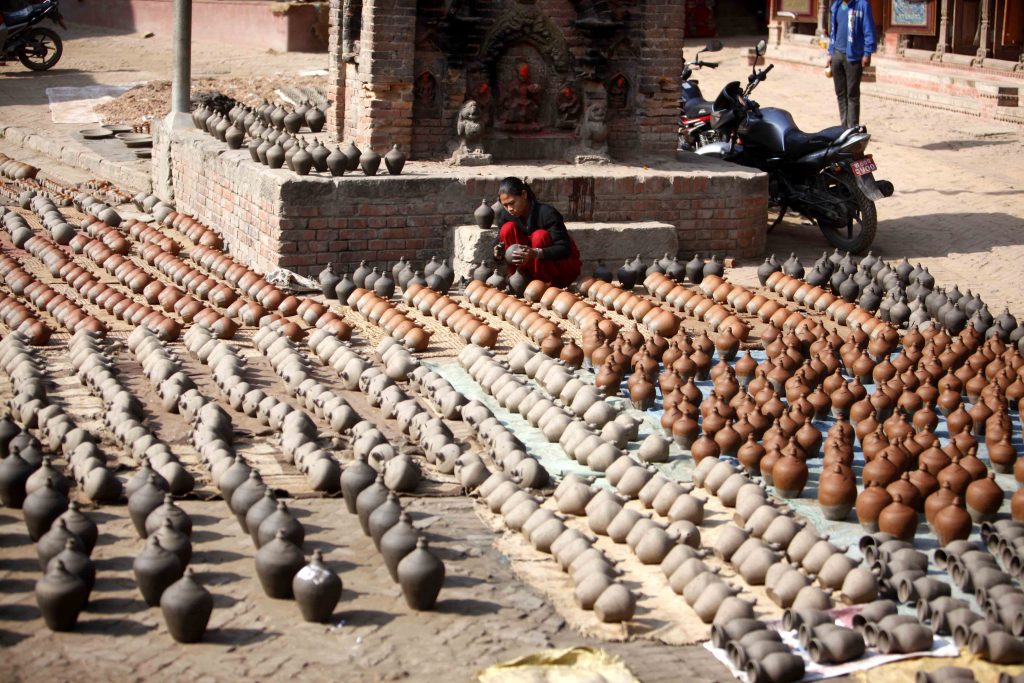
As you explore workshops, you will likely encounter two distinct styles of Bhaktapur pottery.
Terracotta Pottery
Terracotta remains the most common style found throughout Bhaktapur. This earthenware is fired at low temperatures, producing a warm, reddish-brown finish with a distinctly rustic character. Artisans use it for everything from cooking pots to decorative vases and festival lamps.
Black Pottery
Alternatively, some workshops specialize in striking black pottery, achieved through a unique smoke-firing technique. This method, closely associated with nearby Thimi, uses a mixture of clay and rice husks to produce the glossy black finish. If you spot this style, you are witnessing a more specialized branch of the craft.
How to Find Authentic Master Artisans
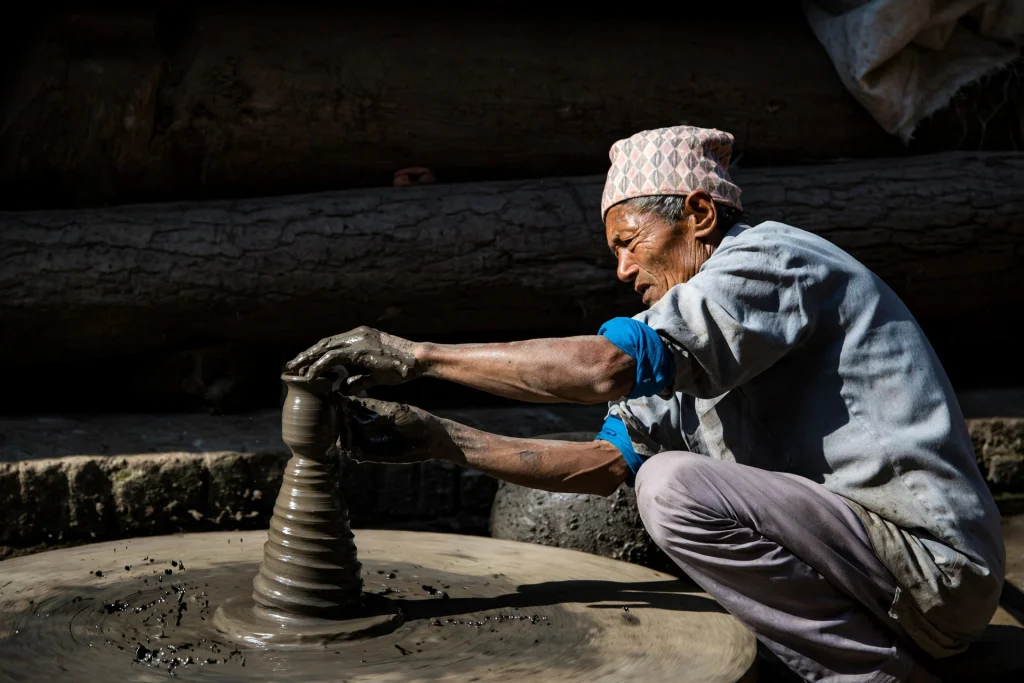
Now for the most important part. With so many stalls and workshops crowded into Pottery Square, how do you know you are watching a genuine master artisan at work?
Look for Working Wheels, Not Just Displays
Authentic artisans actively use their wheels throughout the day, rather than simply displaying finished pieces for sale. If you see someone seated at a wheel with clay under their fingernails and drying racks nearby, you have likely found the real thing.
Watch for Manual, Traditional Wheels
Genuine master artisans in Bhaktapur often still favor heavy, hand-spun wooden or rubber wheels over electric alternatives. This traditional method requires visible skill and timing, which is much harder to fake than a quick photo opportunity.
Ask About Their Family History
Many true artisans belong to Prajapati families who have practiced pottery for generations. Politely asking how long their family has worked with clay often reveals whether you are speaking with a lifelong craftsperson or someone newer to the trade.
Notice the Surrounding Courtyard
Authentic workshops usually sit within courtyards filled with sun-drying pots, tools, and raw clay covering the ground. If a shop looks suspiciously clean or stocked only with factory-like souvenirs, it may rely more on resale than actual craftsmanship.
Visit During Active Hours
Try visiting during the morning or early afternoon, when artisans are most likely to be actively shaping and drying clay. Late afternoon visits may only catch the tail end of the day’s work, making it harder to witness true skill in action.
Prioritize Small, Family-Run Workshops
While the main square attracts the most foot traffic, smaller workshops tucked into Bhaktapur’s southern quarters often reveal even more authentic scenes. These hidden courtyards, filled with drying clay, tend to draw fewer crowds and offer a more genuine glimpse into daily pottery life.
What to Expect From a Hands-On Workshop
If you want more than just observation, many small studios around Pottery Square offer short pottery-making sessions for visitors. These sessions let you try the wheel yourself, under the direct guidance of an experienced artisan.
Pricing typically depends on the length and style of the lesson. A private one-hour lesson generally costs between NPR 1,200 and NPR 2,800, though rates can vary between workshops. Keep in mind that you usually cannot take your creation home immediately, since clay needs time to dry and fire properly. Many workshops offer to fire your piece and deliver it to your hotel a few days later.
Exploring Beyond the Wheel
Pottery Square offers more than just clay and kilns. Several small temples and shrines sit within the area, including the Jeth Ganesh Temple, a Vishnu shrine, and the Gorakhnath temple. Taking a few minutes to explore these sites adds cultural depth to your visit.
Entry to Pottery Square is included in Bhaktapur’s heritage entry ticket, which covers access to the city’s protected historic zone. Since the square sits so close to Durbar Square, it pairs naturally with a broader walking tour of Bhaktapur’s temples and courtyards.
Supporting the Tradition Responsibly
Tourism plays a real role in keeping this centuries-old craft alive. Purchasing pottery directly from the artisans who made it channels income straight back into their households, rather than through resellers. Similarly, joining a hands-on workshop, even briefly, helps sustain demand for a tradition that continues to lose skilled practitioners each year.
Community efforts, including the annual Pottery Square Street Festival, also support this preservation work. These events combine cultural celebration with hands-on demonstrations, allowing both children and adults to learn directly from master potters. Attending during one of these festivals offers an especially rich way to witness authentic craftsmanship firsthand.
Final Thoughts
Pottery workshops in Bhaktapur offer far more than a quick photo stop. They open a window into a thousand-year-old tradition that continues, quietly and stubbornly, in the hands of the Prajapati community. By learning what genuine craftsmanship looks like, you can move past the surface-level tourist scene and connect with the real artisans keeping this heritage alive. So, next time you wander into Pottery Square, slow down, watch closely, and let the true master artisans show you what centuries of practice really looks like.
Frequently Asked Questions
Where is Pottery Square located in Bhaktapur?
Pottery Square, also called Talako Tole or Kumal Tole, sits about a five-minute walk from Bhaktapur Durbar Square, near Kedernath Temple.
How can I tell if a pottery workshop is authentic?
Look for active wheels, traditional tools, sun-drying clay, and artisans from long-standing Prajapati families rather than staged souvenir displays.
What is the difference between terracotta and black pottery in Bhaktapur?
Terracotta pottery has a reddish-brown finish from standard firing, while black pottery gets its glossy dark color from a special smoke-firing technique.
Can tourists try pottery-making themselves in Bhaktapur?
Yes, many small workshops around Pottery Square offer short hands-on sessions where visitors can shape clay under a master artisan’s guidance.
How old is the pottery tradition in Bhaktapur?
Pottery-making in Bhaktapur is believed to date back over 1,000 years, closely tied to the city’s history as an ancient trading center.
Is entry to Pottery Square included in the Bhaktapur ticket?
Yes, Pottery Square is part of Bhaktapur’s protected heritage area, so entry is included in the standard heritage entry ticket.