


Every visitor to Kathmandu eventually faces the same question. Should you chase sunrise in Dhulikhel, or head to Nagarkot instead? Both hill stations sit just east of the capital, and both promise unforgettable mountain views. However, the Dhulikhel vs Nagarkot debate comes down to more than scenery alone. It also hinges on culture, atmosphere, and how you want your sunrise experience to feel.
In this guide, we will compare both destinations side by side. From altitude and access to temples, hikes, and crowd levels, we will help you decide which spot truly delivers the better cultural sunrise.
Getting to Know Both Hill Stations
Before comparing sunrise views, it helps to understand what each town actually offers beyond the horizon.


Nagarkot: The Classic Viewpoint
Nagarkot sits on the eastern rim of the Kathmandu Valley, within Bhaktapur District. It rests at an elevation of roughly 2,175 meters, about 32 kilometers from Kathmandu. Locals often call it Mandapgiri, and it remains Nepal’s most popular hill station for sunrise chasing.
Nagarkot’s fame comes almost entirely from its panorama. On clear mornings, viewers can spot Mount Everest alongside other giants like Lhotse, Cho Oyu, Makalu, and Manaslu. Some sources even describe Nagarkot as offering one of the finest sunrise views in the world.
Dhulikhel: The Cultural Hill Town
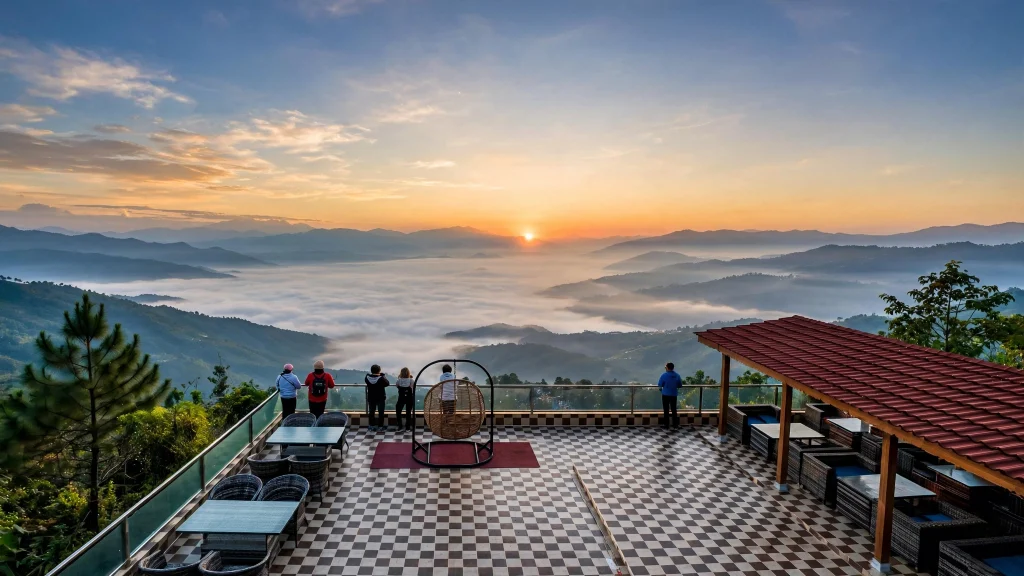
Dhulikhel sits at a slightly lower elevation, around 1,550 meters, roughly 30 kilometers east of Kathmandu along the Araniko Highway. Unlike Nagarkot, Dhulikhel began as a genuine trading town, not a viewpoint built for tourism.
This history shows in every corner of the settlement. Dhulikhel is an ancient Newari market town, filled with traditional architecture, old courtyards, and centuries-old temples. Because of this heritage, many travelers consider it the more culturally rich of the two destinations.
Comparing the Sunrise Experience
Now, let’s get to the heart of the matter. When it comes to the actual sunrise, both towns deliver, but in noticeably different ways.
Nagarkot’s Dramatic Mountain Panorama
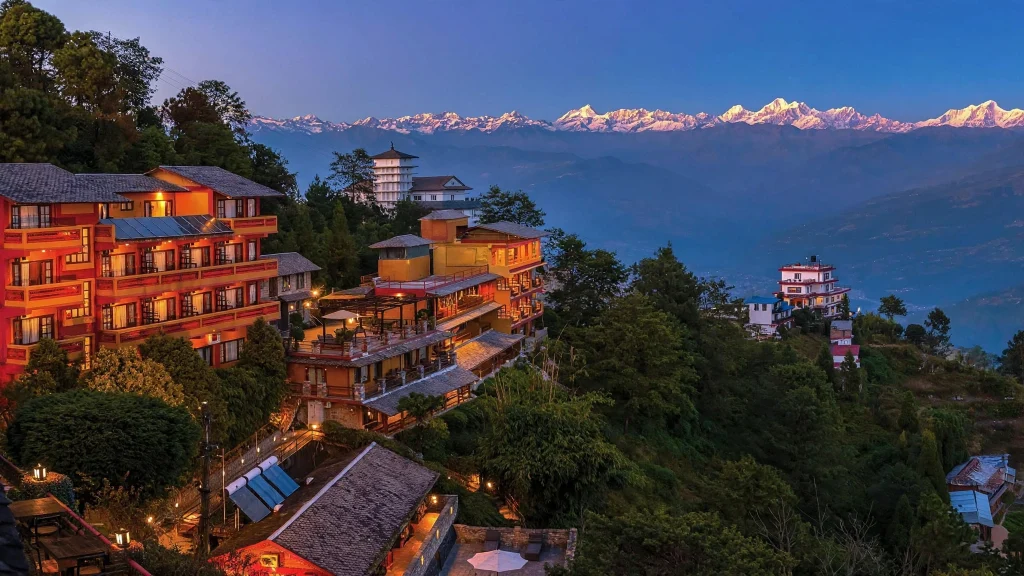
Nagarkot’s sunrise has earned its reputation for a reason. On clear mornings, the sun rises directly behind the Himalayan range, gradually lighting up snow-capped peaks while valleys below stay wrapped in mist. Many travelers describe the experience as almost cinematic, especially from a ridge-top viewpoint or hotel balcony.
Nagarkot also offers dedicated infrastructure for this exact purpose. Towers and lookout points make it easy for visitors to catch the sunrise without much walking, which appeals to travelers short on time or energy.
Dhulikhel’s Subtle, Layered Sunrise
Dhulikhel takes a quieter approach. Sunrises here unfold gradually across wide landscapes, with mountains forming a distant backdrop behind terraced fields, rooftops, and ancient temples. Rather than a single dramatic burst of light, the view slowly reveals itself across the whole valley.
This gradual reveal is part of what makes Dhulikhel’s sunrise feel more cultural than purely scenic. You are not just watching mountains catch fire with morning light. You are watching an entire living town wake up alongside them.
The Verdict on Pure Sunrise Drama
If raw visual spectacle is your priority, Nagarkot generally wins. Its higher elevation and unobstructed sightlines create wider, more dramatic mountain panoramas. However, if you want a sunrise woven into daily village life and heritage architecture, Dhulikhel offers something Nagarkot simply cannot replicate.
Culture and Heritage: Where Dhulikhel Pulls Ahead
This is where the Dhulikhel vs Nagarkot comparison shifts in favor of the older town.
An Old Town With Real History
Dhulikhel has a proper town with its own long history and traditional architecture. Unlike Nagarkot, it feels genuinely connected to daily Nepali life, rather than existing primarily for visitors. Wandering its narrow lanes reveals old temples, courtyards, and locals going about ordinary routines.
The Kali Temple Hike
One of Dhulikhel’s standout cultural experiences is the short hike to Kali Temple, located at the top of a hill about ten minutes from town. Visitors climb up in the early morning to catch the sunrise from this sacred spot, combining mountain views with genuine spiritual atmosphere.
Nagarkot’s More Recent Origins
By contrast, Nagarkot’s history as a tourist destination is much shorter. It grew primarily around viewpoints and guesthouses built specifically for sunrise seekers. While it does have some historical footnotes, it lacks the layered old-town character that defines Dhulikhel.
The Cultural Verdict
For travelers who value heritage, temples, and a genuine sense of place, Dhulikhel clearly offers the deeper cultural experience. This is precisely why so many guides frame Dhulikhel as the more well-rounded, culturally rewarding stop between the two.
Hiking and Day Trips
Beyond sunrise viewing, both towns offer trails worth considering, though their hiking experiences differ significantly.
Nagarkot’s Easy Ridge Walks
Nagarkot’s morning hike and forest walk remain a simple affair. These short walks suit travelers who want light activity paired with big views, without needing much preparation or stamina.
Dhulikhel’s Namobuddha Trail
Dhulikhel offers something more substantial. From town, trails lead toward the sacred Namobuddha Monastery, sitting at around 1,750 meters. The path winds through forests and farmland, passing prayer flags and quiet monastery grounds along the way.
Day hikes from Dhulikhel are considered a clear winner compared to Nagarkot’s more touristy sunrise walks. For travelers who want their morning walk to double as a cultural and spiritual experience, Dhulikhel again takes the lead.
A Popular Combined Route
Many visitors actually combine both towns into a single loop. The Nagarkot to Dhulikhel ridge walk takes roughly five to six hours, passing through forests and villages along the way. This route lets you experience Nagarkot’s panoramic drama and Dhulikhel’s cultural depth in one continuous journey.
Crowds, Access, and Atmosphere
Practical considerations also shape which destination might suit you better.
Nagarkot’s Popularity Comes at a Cost
Because Nagarkot is so well known, it tends to draw larger crowds, especially around major viewpoints during peak sunrise hours. Numerous guesthouses line roughly two kilometers of ridge, reflecting just how tourism-focused the town has become.
Dhulikhel’s Quieter Pace
Dhulikhel, by comparison, offers noticeably less congestion and noise. Its combination of old-town charm and fewer tourists creates a calmer, more contemplative atmosphere, particularly appealing to travelers seeking a slower pace.
Similar Access From Kathmandu
Both towns sit roughly 30 to 32 kilometers from Kathmandu, with drive times of about 45 minutes to an hour. Because access is so similar, the choice truly comes down to what kind of experience you want, rather than convenience.
Which One Should You Choose?
Ultimately, there is no universally “better” option in the Dhulikhel vs Nagarkot debate. Instead, the right choice depends on what you value most in a sunrise experience.
Choose Nagarkot if you want the widest, most dramatic Himalayan panorama, easy access to viewpoints, and a sunrise that feels larger than life. Choose Dhulikhel if you want your sunrise wrapped in temples, old architecture, and a genuine slice of Newari daily life.
If you have the time, consider visiting both. Many travelers combine Nagarkot’s panoramic drama with Dhulikhel’s cultural richness through the connecting ridge trail, capturing the best of both hill stations in a single trip.
Final Thoughts
So, which offers the better cultural sunrise, Dhulikhel or Nagarkot? If cultural immersion is truly your priority, Dhulikhel edges ahead, thanks to its ancient Newari architecture, sacred temples, and lived-in atmosphere. Nagarkot, meanwhile, remains unmatched for sheer mountain drama and accessibility. Whichever you choose, both destinations prove why travelers keep returning to the hills east of Kathmandu for sunrise after unforgettable sunrise.
Frequently Asked Questions
Which is better for sunrise views, Dhulikhel or Nagarkot?
Nagarkot generally offers a more dramatic, wide-open Himalayan panorama, while Dhulikhel provides a gentler sunrise layered with cultural scenery.
Which hill station has more cultural attractions, Dhulikhel or Nagarkot?
Dhulikhel has more cultural attractions, including its ancient Newari old town, the Kali Temple, and the nearby Namobuddha Monastery.
How far are Dhulikhel and Nagarkot from Kathmandu?
Nagarkot is about 32 kilometers away, while Dhulikhel sits roughly 30 kilometers from Kathmandu, both around a 45 to 60 minute drive.
Can I visit both Dhulikhel and Nagarkot in one trip?
Yes, many travelers combine both through a ridge walking trail that connects the two towns, typically taking five to six hours.
Is Nagarkot more crowded than Dhulikhel?
Yes, Nagarkot tends to attract larger crowds due to its popularity, while Dhulikhel offers a quieter, less touristy atmosphere.
Which destination is better for hiking, Dhulikhel or Nagarkot?
Dhulikhel offers more rewarding hikes, particularly the trail to Namobuddha Monastery, compared to Nagarkot’s shorter, simpler walks.