


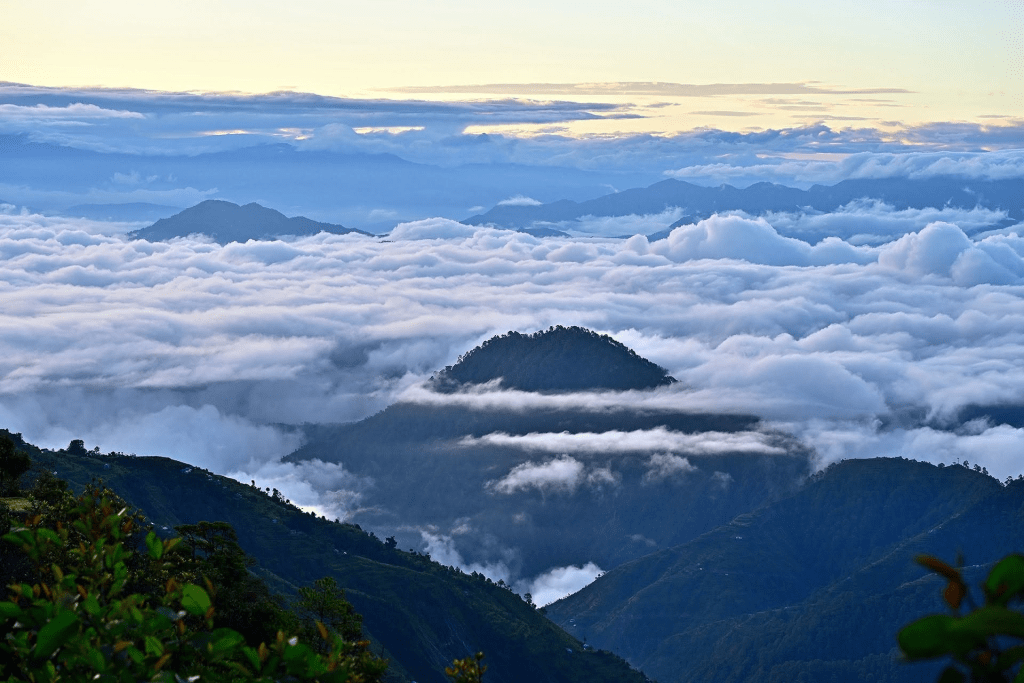
Everyone tells you to skip the rim in summer. The mountains are gone, they say, swallowed by cloud, so why bother climbing to a viewpoint that shows you nothing. That advice misses the whole point. The Kathmandu Valley hill stations are at their strangest and most beautiful precisely when the Himalayas vanish, because what fills the gap is a slow ocean of cloud that pools in the valleys below your feet and turns every ridge into an island.
Locals have a word for this season’s quiet magic. Foreign guides rarely mention it. Here is what most travel blogs will not tell you: the best months for clear peaks and the best months for atmosphere are not the same months, and if you only ever visit the rim in October you are seeing half the story.
Why the Kathmandu Valley hill stations matter
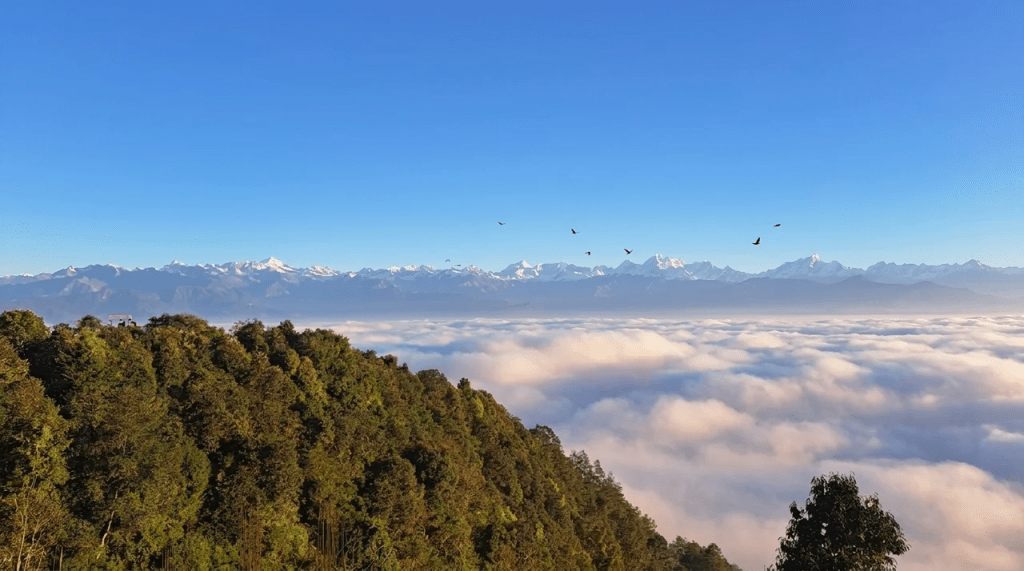
The valley sits in a bowl. Ring it on a map and you get a natural rim of forested hills rising 600 to 1,000 meters above the city floor, each one close enough for a morning escape yet high enough to feel like another country. From these perches you look north toward the giants: Langtang, Ganesh Himal, Manaslu, Dorje Lakpa, and on the clearest winter mornings, a thin white line that is Everest itself.


Distance is the selling point. None of these places is more than a couple of hours from Thamel, which means you can leave after a late breakfast and be watching the light change over the hills by mid-afternoon. That proximity has built a whole ecosystem of resorts, from organic farm lodges to full spa hotels, all aimed at the same thing: giving you a window seat to the mountains without a single day of trekking.
Nagarkot: the classic sunrise perch
Nagarkot is the name everyone knows, and for once the hype is earned. Sitting roughly 32 km east of Kathmandu at around 2,195 meters, it offers one of the widest Himalayan panoramas you can reach by car, with views stretching across a large slice of the eastern and central ranges on a clear day. The old View Tower is still the gathering point for the sunrise crowd, who arrive bleary-eyed in the dark and wait for that first gold light on the snow.
Resorts here run the full range. Budget guesthouses start cheap, while the upper-tier mountain hotels like Hotel Mystic Mountain and The Fort Resort sit in the rough range of $80 to $200 a night depending on season and room, with garden terraces, spa rooms, and mountain-facing dining. Book the east-facing room. The truth is that half the people who pay for a “mountain view” room end up looking at a parking lot, so confirm the orientation when you reserve.
A monsoon visit changes the deal entirely. Through June, July, and August the peaks hide for days at a time, so do not come for Everest. Come for the cloud theater instead, and treat any clear half-hour as a bonus. For a fuller breakdown of what each month actually looks like, our month-by-month seasonal guide to Nepal is worth a read before you lock in dates.
Dhulikhel and Namobuddha: the eastern double
Drive a little further east and the crowds thin out. Dhulikhel, an old Newar trading town about 30 km from the capital, gives you a wraparound view from Langtang Lirung in the west to Numbur in the east, plus cobbled streets and temple squares that Nagarkot simply does not have. Among the resorts, the Dusit Thani Himalayan Resort anchors the luxury end, sitting roughly an hour from the airport with infinity-pool-and-spa ambitions.
Pair Dhulikhel with Namobuddha and you get the best day-and-night combination on the rim. Namobuddha Resort sits about 45 km from Kathmandu, around 90 minutes by road, perched near 1,800 meters on a hill ringed by its own organic farm and forest. On a genuinely clear day the spread runs from Manaslu all the way to Everest. The food leans heavily on what they grow, the rooms are simple in the good way, and the Buddhist stupa nearby gives the whole place a hush you do not find closer to the city.
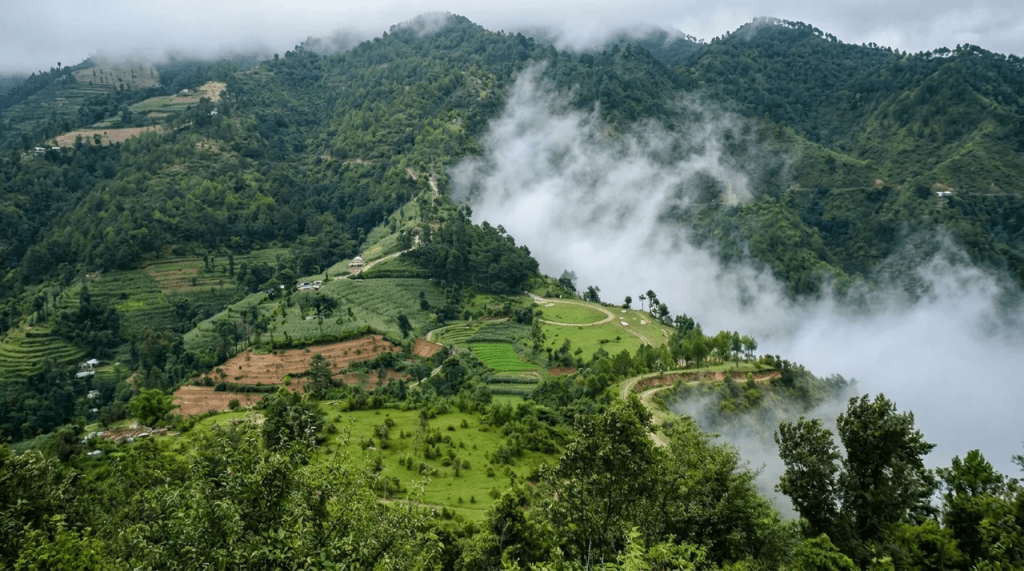
What makes this pair special in the rainy months is the walk between them. A gentle ridge trail of a few hours connects Dhulikhel to Namobuddha through terraced fields and small villages, and in the monsoon those fields glow an almost violent green. You trade snow peaks for rice paddies and mist. It is a fair trade.
Chandragiri: cable car to the southwest ridge
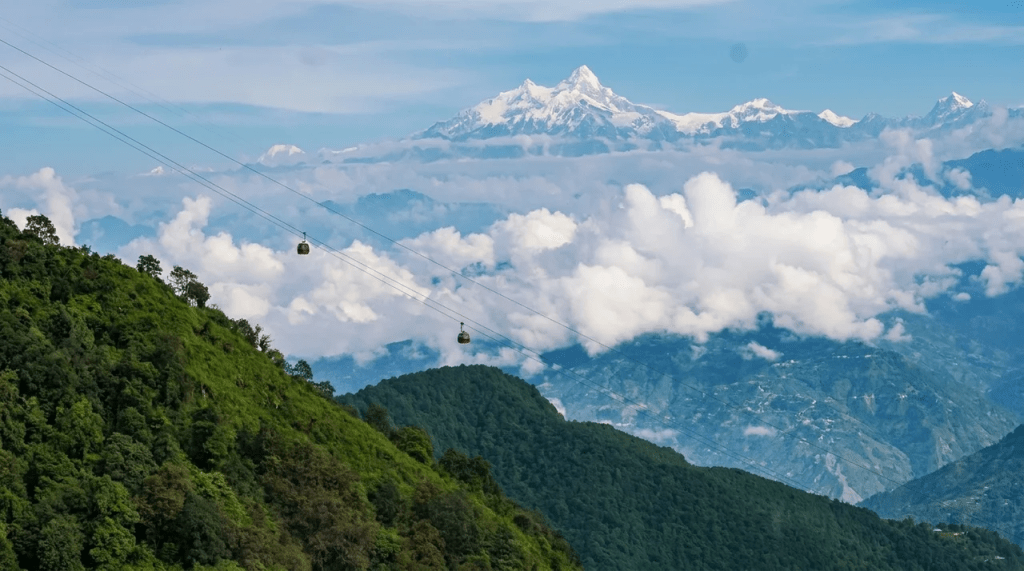
On the opposite side of the valley sits the easiest summit of them all. Chandragiri Hill rises to 2,551 meters on the southwest rim, about 7 km from Thankot, and since 2016 a cable car has carried visitors up in a single 10 to 12 minute ride covering roughly 2.5 km of slope. No sweat, no switchbacks, just a glass cabin and a view that opens as you climb.
As of early 2025, a round-trip cable car ticket ran about NPR 799 for Nepali citizens, NPR 1,280 for SAARC nationals, and around USD 22 for other foreign visitors, with one-way fares roughly half that. The cars typically run from 8:00 a.m. to 6:00 p.m. Sunday through Thursday, with later hours on Friday and Saturday, though it is smart to confirm current timings and prices before you go since they shift with the seasons.
At the top you get a temple, a few restaurants, and a hill resort if you want to stay the night above the cloud line. For a monsoon traveler, Chandragiri is the low-effort, high-reward option: when the lower valley is drowning in afternoon rain, the ridge is often poking out into clear sky above it.
Kakani and Chisapani: the quiet northern rim
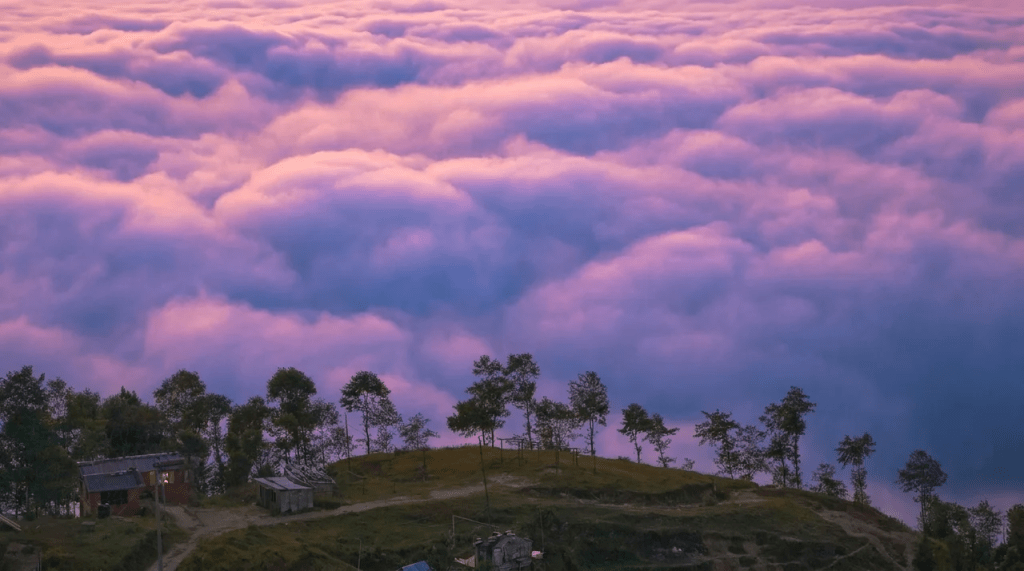
North of the city, two lesser-known names reward the traveler willing to skip the obvious. Kakani sits about 29 km northwest in Nuwakot district, a 1 hour 15 minute drive away at around 1,982 meters, with a long east-to-west sweep that takes in Annapurna, Himalchuli, Manaslu, Ganesh Himal, Langtang, and Gaurishankar. A small hill resort and an old colonial-era trout-fishing heritage give it a sleepy, time-forgotten feel.
Chisapani is the trekker’s pick. Roughly 22 km to the north at about 2,165 meters, it perches on the edge of Shivapuri National Park and is most often reached on foot, with a classic 4 to 5 hour hike up from Sundarijal at 1,460 meters passing waterfalls, dense forest, and Tamang villages. Accommodation is basic, mostly trekking lodges rather than resorts, so set expectations accordingly.
Both make sense as part of a wider monsoon plan. If you are mapping out how to move around the country in the wet season without losing whole days to rain, our complete monsoon season guide covers the timing and the trade-offs in detail.
How to do the rim in the monsoon
Timing is everything once the rains arrive. Mornings tend to be clearer, with cloud building through the afternoon into evening storms, so plan your viewpoint sessions for sunrise and your lazy reading time for the wet afternoons. A good resort terrace with a roof is worth more in July than a fancy room.
Pack for damp. Roads to the rim are mostly paved but can get slick and occasionally blocked after heavy rain, leeches turn up on the forest trails, and humidity sits high even at altitude. Bring a light rain shell, quick-dry layers, and shoes with grip. Leave the heavy down jacket at home unless you are headed up in deep winter instead.
If you are basing yourself in the city between trips, our Kathmandu travel guide pairs neatly with these escapes, since most rim destinations work best as one or two night add-ons rather than your whole trip.
FAQ: Kathmandu Valley hill stations
Which hill station is best for first-time visitors?
Nagarkot is the safe first choice. It has the widest range of accommodation, the most reliable road access, and the most famous sunrise. If you want fewer crowds and more local character, Dhulikhel is the better pick at a similar distance.
Are the mountains visible during the monsoon?
Not reliably. From June through September clouds cover the high peaks for most of the time, with occasional clear windows usually at dawn. Visit in October through December if guaranteed snow views are your main goal.
How far are these hill stations from Kathmandu?
Most sit within 22 to 45 km of the city. Nagarkot is about 32 km, Dhulikhel around 30 km, Namobuddha roughly 45 km, Kakani 29 km, and Chisapani about 22 km. Driving times run from one to two hours depending on traffic and weather.
Do I need to trek to reach any of them?
No, with one exception. Nagarkot, Dhulikhel, Namobuddha, Kakani, and Chandragiri are all reachable by road, and Chandragiri even has a cable car. Chisapani is usually reached on a 4 to 5 hour hike from Sundarijal, so plan for that if it is on your list.
How much does the Chandragiri cable car cost?
As of early 2025, a round trip was roughly NPR 799 for Nepali citizens, NPR 1,280 for SAARC nationals, and about USD 22 for other foreign visitors. Prices change with the season, so confirm before traveling.
What should I budget for a resort stay?
Budget guesthouses can be very cheap, while mid to upper-range mountain resorts in places like Nagarkot commonly fall in the rough range of $80 to $200 a night. Luxury properties such as Dusit Thani in Dhulikhel sit above that band.
Is one night enough?
For most travelers, one night does the job: arrive for sunset, catch sunrise, and head back. If you want to walk the Dhulikhel to Namobuddha ridge or simply slow down, two nights feels far more relaxed.
Where can I check official mountain viewpoint information?
The Nepal Tourism Board maintains current destination pages, including a dedicated Nagarkot sunrise and sunset overview that is worth a look while planning.