



According to history, a man named Bise Nagarchi, who came from humble beginnings, taught King Prithvinarayan Shah of Gorkha, who had ambitions for state expansion, a strategy for raising funds for the war.
Bise Nagarchi, our ancestor, had taught Prithvi Narayan Shah, how to amass the funds needed to build a country. He had started the process of increasing the state coffers (dhukuti) by donating a single rupee.
Who is Bise Nagarchi?
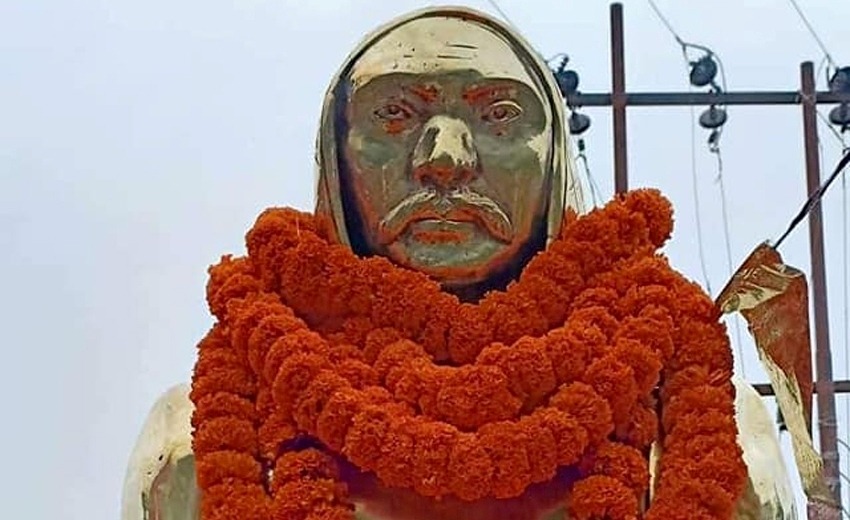
Although Bise Nagarchi’s name appears in a few places, it is almost non-existent in Nepal’s mainstream history. Bise Nagarchi is a historical figure, a Gorkha tailor who sewed Prithbi Narayan Shah’s clothes and served as a close adviser as the warrior king began his conquest of Nepal 250 years ago. His birthname was Bisheshwar Nauwag. Nagarchis were people who played the Nagara in the Gorkha palace. As a result, he became known as Bise Nagarchi.


Bise Nagarchi could be seen sewing and playing the Nagara (kettledrum) at the Bise Nagarchi Gorkha Durbar. There were very few people with strong arms who could fight at that time in Nepal due to its small population. During the expansion campaign, the state required young men for the army and other government jobs. As a result, Bise Nagarchi, being a strong man, also served as a soldier in the war. He played an important role in the history of Gorkhali military expansion.
Why The Late King Prithivi Narayan Shah Sought His Help?
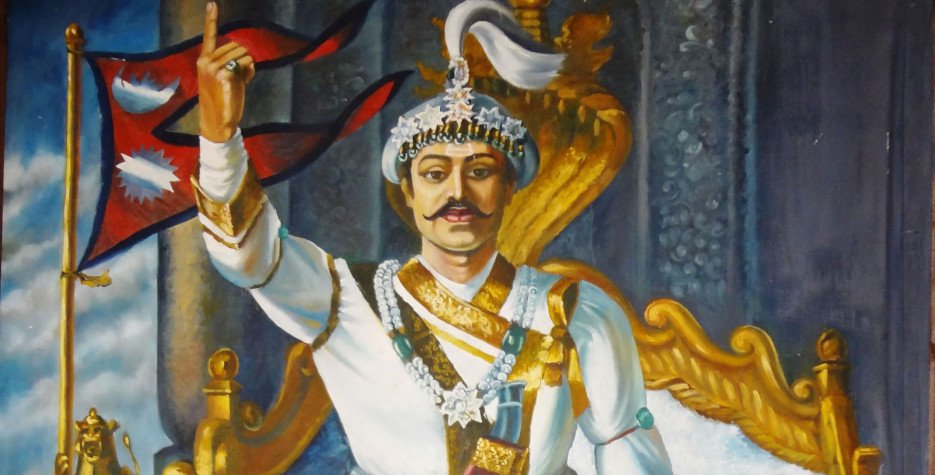
The Gorkha Durbar was aware of Bise’s reputation for tearing more than a dozen bhotos in battle than the 21-year-old King Prithvinarayan. No matter how much fame he gained, taking advice from Nagarchi, who had to wear the badge of ‘untouchable’ at that time, was one of the most notable and unprecedented moment for Prithivi Narayan Shah in his unification campaign.
After King Prithivi Narayan attempted and failed to capture Kantipur in Nuwakot, a drought was created in the national treasury. Then he decided to go to Kashi to collect arms and ammunition. But the country was in a financial crisis and there was no money in the state treasury at the time.
Prithvinarayan’s reign had spread from the Chepe River to the border of Nuwakot, and from Marsyangdi to Sama, Gorkha. Despite this, Gorkha’s annual tax ranged from Rs 6,000 to Rs 8,000. That sum was insufficient for Prithvinarayan to travel to Kashi and purchase weapons.
In the time of Narabhupal Shah, Prithvinarayan expected the famous Bise Nagarchi to assist by providing specific war tactics from his battle-hardened mind. Only after receiving a different but very practical piece of advice from Bise was Prithvinarayan’s unification campaign able to transform from a delusional dream into a reality.
What was Bise’s strategic advice?
According to Bise Nagarchi, integration, expansion, or war, whatever the case may be, requires first and foremost the collective participation of the people. It requires the support of all the people in the state coffers, rather than the state alone. Bise was the first to donate a rupee in response to his own suggestion, stating that the movement must begin with someone. That was the start of every household’s collective effort to donate to the national treasury.
Nepal has now benefited a lot from cooperatives, thanks to the initiation from Bise Nagarchi.
Historians believe that Bise Nagarchi’s special suggestion contributed to Prithvinarayan’s success. In his one-act play ‘Bise Nagarchi,’ playwright Tiwari stated that Nepal’s expansion would be impossible without the people’s collective financial contribution.
“When every household in Gorkha, like me, pays its due according to the cluster, Prithvinarayan’s courage and faith will increase. And then only will the expansion of Nepal become possible” said Bise Nagarchi.
Bise Nagarchi in Battle
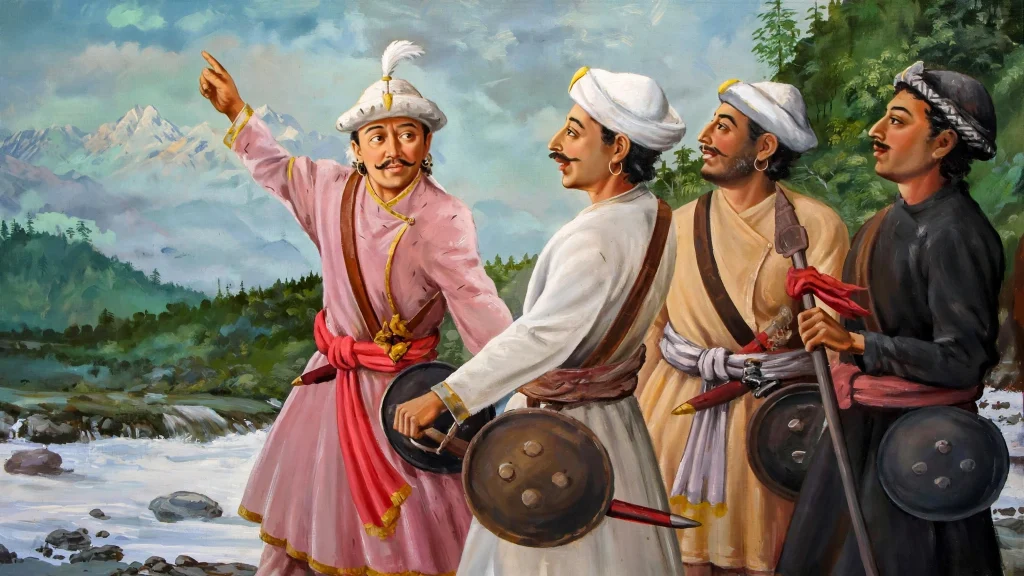
Apart from the Damais, other Dalits served as the backbone of the Gurkha state’s expansion at the time. Prithvinarayan Shah hired Kami Kaligarh, including Sipalu Dharne Kami. They were hired to make bows, swords, spears, shields, bhujeli (a large khukuri used by Nisibhuji’s Bhujeli Magars), khunda, and khukuri. This is mentioned in Somdhwaj Bisht’s ‘Royal Military History.’
Captain Kinlock led the East India Company’s army against Prithvinarayan Shah’s army. Dalits such as Bise Nagarchi, Dharne Kami, Kalu Sarki, Maniram Gaine, and Banadar Damai served as charioteers in Prithvinarayan’s army.
Bise, Banadar, and Manirams used to accompany the Gorkhali army as instrumentalists. They played the Mangal Dhun before the battle, adding heroism to the warriors during the battle, and the victory or mourning tune afterward.
When necessary, Kalu and Dharne would join the battle to clean, repair, and operate. When battles broke out, they would take up arms and fight.
Bise Nagarchi was also a fighter on many Gorkhali fronts. According to author Bisht, he fought alongside Prithvinarayan from the Tindhareri front in the Nuwakot battle.
Dharne Kami, Kalu Sarki, Maniram Gaine, and Banadar Damai accompanied him. Bise and Banadar played Nagara after the victory, while Maniram sang victory songs. Bise had previously taken part in Naldum Bhidant, Sihranchowk, and Ajirkot Bhidant.
Apart from that, Bise is likely to have taken part in the battle up to Syangja. Bise Nagarchi Chowk in Syangja’s Bahakot is named after him. Bise is said to have begun freely advising the king in his old age.
He was the one who gave the last advice to Prithvinarayan to appoint Kalu Pandey as Kazi. The date of Bise’s death could not be ascertained. But there are unconfirmed memories of his death in 1828 at the age of 82. A statue of Bise Nagarchi has been placed on Gitardanda in Gorkha.
Bise Nagarchi in Literature
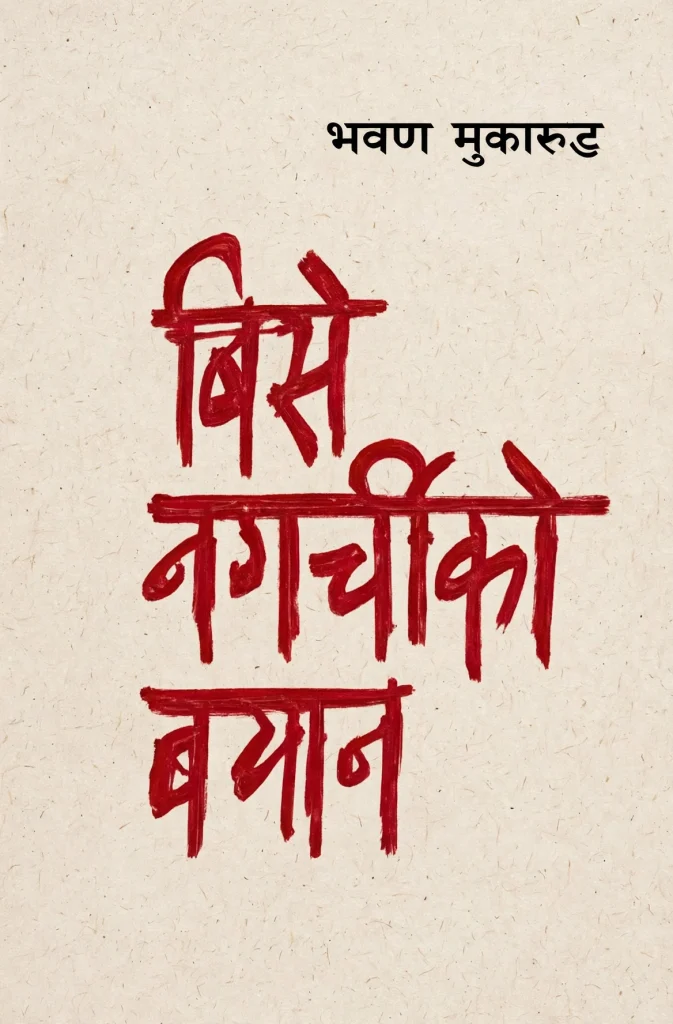
Poetry is the spiritual home of truth and beauty. Poetry illuminates society and guides politics. Poetry’s religion is to bring justice to characters who have been wronged by distorted history. The poem ‘Bise Nagarchi ko Bayan‘ was written by Shrawan Mukarung after contemplating the dim image of Bise Nagarchi in Nepalese history. The poet has created Bise Nagarchi’s traditional identity in this poem.
Bise was given leadership in the history written on behalf of the rulers by the poet, despite the fact that he was only seen as a minor character in reality.
By connecting the personality of Bise Nagarchi with the contemporary context, during the people’s movement against autocratic monarchy, he was filled with eternal consciousness.
Not only that, but Bise Nagarchi was designated as a carrier of resistance consciousness in order to raise voice against oppression. Bise, who obeyed the emperor’s orders two and a half centuries ago, is no longer alive. By claiming his identity and representation, he has now become the voice of people who can stand up to hegemony.
The poetic expression in the poem ‘Bise Nagarchiko Bayan’ has become natural and touching, as if the main character has expressed himself in his own words.
Bise Nagarchi is portrayed as a rebellious character in the poem. The poem is structured in a symbolic structure and rhetorical style.
This poem was first recited in the program ‘Swatantra Radio Bachao Abhiyan’. Similarly, it was first published in the weekly magazine ‘Nepal’. It has since been published and broadcast in numerous newspapers, radio stations, and television networks. Many programs included speeches. This poem, which captured the essence of the rebellion, continued to inspire the agitators.
P.B. Sally, a famous English poet, once said, “Our sweetest songs are those that tell of saddest thought”. The poem ‘Bise Nagarchiko Bayan’ eventually became as important to the marginalized community as the liberation song.
Ending Remarks
To make historical figures memorable, the state maintains statues of them, creates memorial establishments, incorporates them into the curriculum, establishes awards and honors, produces films, and stamps postage stamps. However, even after a decade of monarchy, panchayat, democracy, and republic, not a single postage stamp has been issued in honor of the historical figure Bise Nagarchi.
Later, Prithvinarayan Shah moved the capital from Gorkha to Kathmandu. The post of Nagarchi seems to have been maintained during the reign of his grandson Ran Bahadur Shah after the regular worship of the Daegu Taleju temple at Hanumandhoka in Kathmandu. It is mentioned in the red seal of 1846 BS that Bise Nagarchi’s son Dublaha Damai worked as a Nagarchi after his death.
There is still a post of Nagarchi in Gorkha Kalika Durbar. But the workers say that even the work of playing regular Nagara is stopped as they are not paid regularly.
You can visit our Art & Culture Archives to learn more about similar stories from Nepal and all around the world.


