



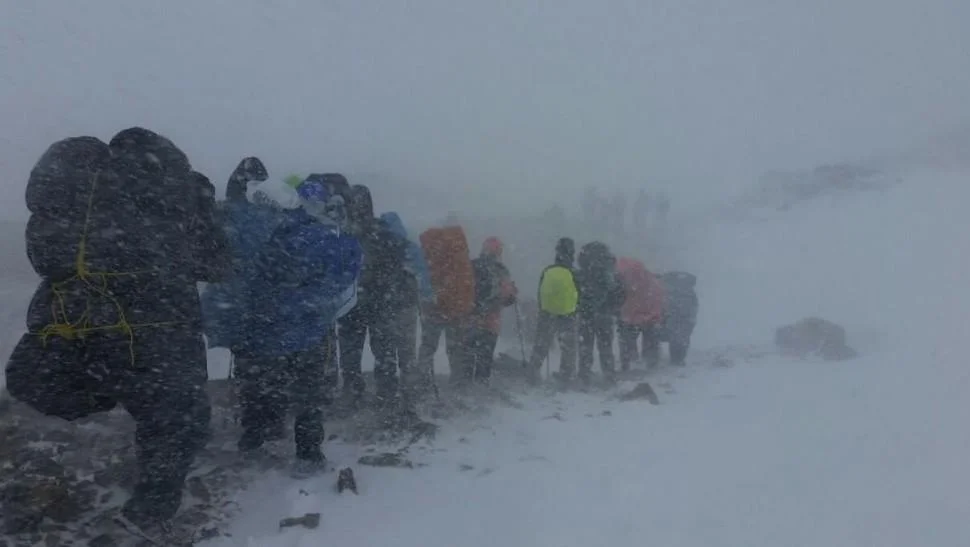
At around midday on 14 October 2014, trekkers crossing Thorong La on the Annapurna Circuit walked into a blizzard that nobody on the trail had been warned about. Nearly 1.8 meters of snow fell in roughly 12 hours, according to accounts compiled after the disaster, and at least 43 people died in the storm and the avalanches that followed. What happened on that pass was not bad luck alone. It was snowpack physics, playing out exactly as snow scientists would predict when a large load lands fast on a weak foundation. Avalanche mechanics in the Annapurna range follow rules that are now reasonably well understood, even though Nepal still has no public avalanche forecasting service. This article explains those rules, what makes Nepali snowpacks unusual, and where the evidence is genuinely thin.
What an avalanche actually is
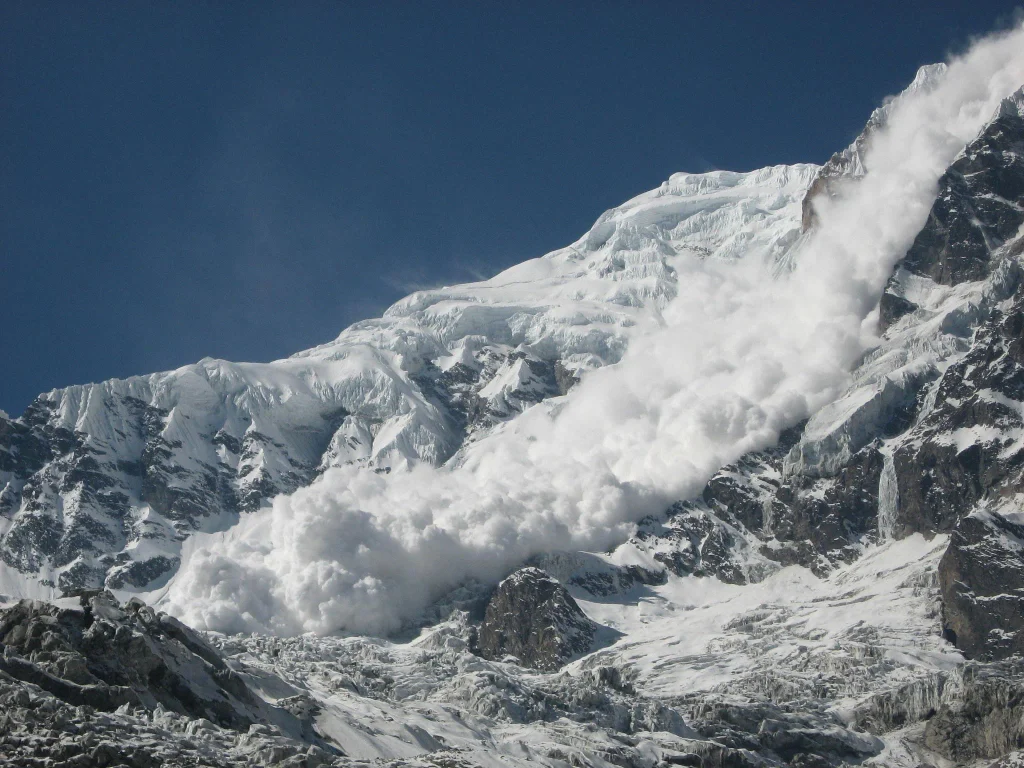
Most dangerous avalanches are slab avalanches. A slab is a cohesive plate of wind-packed or settled snow sitting on top of a weaker layer. When that weak layer fails, the slab loses its support and slides as a unit, often tearing out along a clean fracture line several hundred meters wide.
In a 2023 review of snow and ice avalanches across High Mountain Asia published in Natural Hazards and Earth System Sciences, slab releases dominate the record: 81 percent of catalogued events are described simply as slabs. Loose-snow avalanches, which start at a point and fan outward, are common but usually smaller.


Three things have to line up. You need a slab, you need a weak layer beneath it, and you need a slope steep enough to slide. Most slab avalanches release on terrain between about 30 and 45 degrees, which is also, inconveniently, the angle range that feels best to walk and ski on.
The weak layer is the whole story
Snow is not a uniform material. Each storm deposits a distinct layer, and each of those layers then changes over weeks as temperature, pressure, and vapor move through the pack. Some of those changes make snow stronger. Others build crystals that cannot hold weight.
Two weak-layer types matter most in the Himalaya:
- Depth hoar. When the ground is warm and the snow surface is very cold, water vapor moves upward through the pack and recrystallizes into large, faceted, cup-shaped grains near the base. Depth hoar has almost no cohesion. Researchers reviewing High Mountain Asia avalanche records specifically note depth-hoar failures on deep snowpacks in the region.
- Surface hoar. On clear, calm, humid nights, frost grows on the snow surface as feathery crystals. Bury it under the next storm and you have a buried layer of frost that behaves like ball bearings.
A 2020 modeling study in The Cryosphere examined how slab avalanches initiate from weak-layer failure. Its core finding is that failure is not a single break. A small collapse in the weak layer can propagate sideways through the pack, and whether that propagation runs or stops depends on how stiff the slab above is and how much the weak layer collapses when it fails. Stiff slabs over collapsible weak layers propagate fractures furthest. That is why a trekker’s footstep at the bottom of a slope can trigger a fracture that releases snow far above.
Why the Annapurna snowpack behaves the way it does
Nepal’s central Himalaya sits at the intersection of two very different weather systems, and the snowpack inherits the awkwardness of both.
From roughly June to September, the South Asian summer monsoon delivers most of the region’s precipitation. High on the Annapurna peaks that arrives as snow. Monsoon snow tends to be warm, wet, and heavy, and it settles into a dense base. Then the monsoon withdraws and the sky clears. Cold, dry, high-pressure conditions take over, nights become bitterly cold, and the temperature gradient through the pack steepens sharply. Those are textbook conditions for depth hoar formation at the base of the snowpack.
Winter storms arriving from the west then stack new snow on top of that compromised base. Add the extreme wind exposure of passes like Thorong La, at roughly 5,400 meters, and you get thick, stiff wind slabs deposited on lee slopes in a matter of hours.
Post-monsoon cyclone remnants are the wild card. Bay of Bengal systems that have exhausted themselves over India can still carry enormous moisture into Nepal in October and November, well outside the normal winter storm season. Remnants of Cyclone Hudhud drove the October 2014 Thorong La disaster. In November 2025, snowstorms linked to Cyclone Montha hit the Nepal Himalaya again, and an avalanche at Yalung Ri base camp in Dolakha District on 3 November killed climbers and guides. Reported death tolls for that event varied between sources, which is itself a useful warning about how avalanche data in Nepal gets recorded.
October is the dangerous month precisely because it feels safe
Here is the part most trekking itineraries do not explain. October is peak trekking season because it is usually dry and clear after the monsoon. Danger in that month is not from a long cold winter snowpack. It comes from a single enormous loading event landing on terrain that has no snow at all one day and a meter and a half the next, with thousands of people already distributed across high passes and no way to get word to them.
| Season | Dominant snow process | Typical avalanche problem |
|---|---|---|
| Monsoon (Jun to Sep) | Heavy, warm, high-rate snowfall at altitude | Storm slabs and wet slides during and just after snowfall |
| Post-monsoon (Oct to Nov) | Rapid loading from cyclone remnants onto thin or absent base | Large storm slabs; highest recorded trekker fatalities |
| Winter (Dec to Feb) | Cold, clear spells build depth hoar and surface hoar; wind loading | Persistent slab problems that can last for weeks |
| Spring (Mar to May) | Warming, melt-freeze cycles, solar input | Wet slab and loose wet avalanches, usually in the afternoon |
Seasonal patterns vary year to year, and the table above describes tendencies rather than a schedule.
Ice avalanches are a different problem
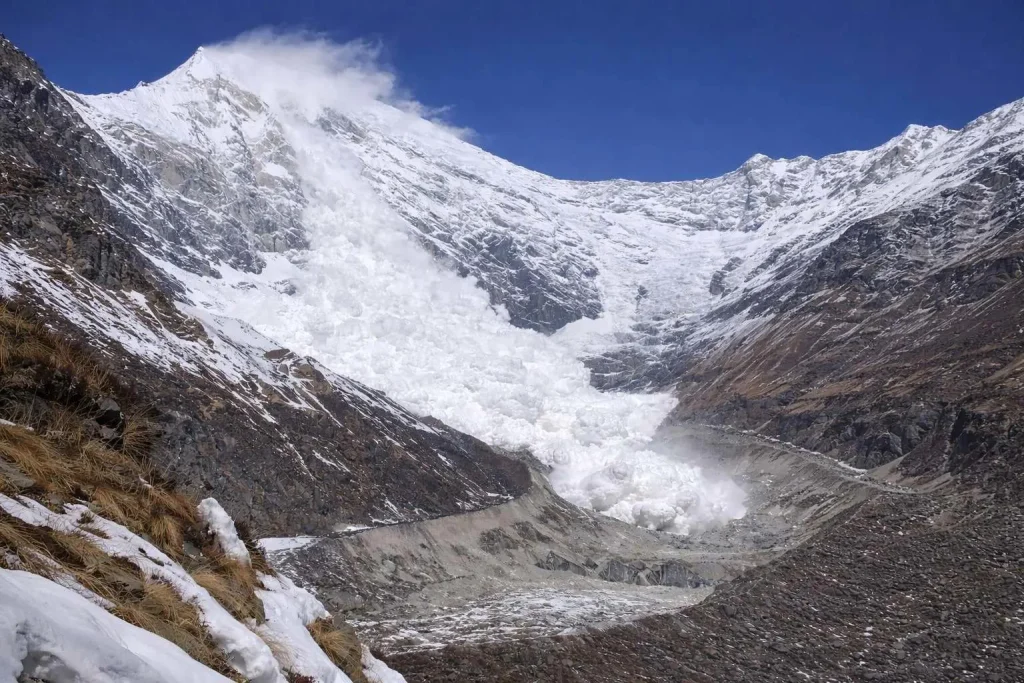
Not everything that falls off an Annapurna face is snow. Hanging glaciers and seracs perched on steep walls fail periodically under their own weight, and those failures do not need a storm or a trigger. Ice avalanches account for well under one percent of catalogued events in High Mountain Asia, but they are disproportionately lethal on high peaks because they are effectively unforecastable and they run enormous distances.
Glacier detachments, where a substantial section of a glacier releases at once, make up around 2.5 percent of records in the same review. Warming ice is a plausible contributor to changes in these events, and researchers are actively studying whether the frequency is shifting in the central Himalaya. Anyone standing below a serac band is exposed to a hazard that no snowpack test can evaluate. Speed is the only real defense.
Earthquakes change the equation entirely
Nepal sits on an active plate boundary, and seismic shaking is a legitimate avalanche trigger. Avalanches set off by the 2015 Gorkha earthquake caused more than 350 deaths across the country, according to the NHESS review. Langtang village was destroyed by a combined ice, snow, and rock avalanche in that sequence. No amount of snowpack assessment prepares for that trigger, and it is one reason seismic risk and avalanche risk in Nepal cannot be treated as separate subjects. If you want the geological background, our article on glacial retreat on Nepal’s 8,000-meter peaks covers how the high ice is changing.
What the data does and does not support
Avalanche science in Nepal is held back by a shortage of observations, and it is worth being honest about that.
Researchers compiling the High Mountain Asia record found that only 21 percent of the 681 events they catalogued reported any impact at all, and that peer-reviewed literature captured roughly 6 percent of avalanches and 23 percent of fatalities. Most of what is known comes from news reports and expedition accounts rather than systematic monitoring. Nepal recorded 508 avalanche fatalities in events with recorded impacts in that dataset, behind Afghanistan and India.
Among deaths recorded while climbing peaks above 4,500 meters across the region, roughly 34 percent were locally hired staff. Porters, cooks, and guides carry a share of the risk that is seldom reflected in how expeditions are marketed.
On climate change, the review is deliberately cautious. There is no clear, consistent signal yet linking warming to Himalayan avalanche frequency. One western Himalaya study attributes an increase to warming and more wet-snow releases. A Tian Shan record showed avalanches occurring around a week earlier over five decades, but the size and frequency trends were not statistically significant. Treat anyone who tells you avalanches in Nepal are definitively increasing as going beyond the published evidence.
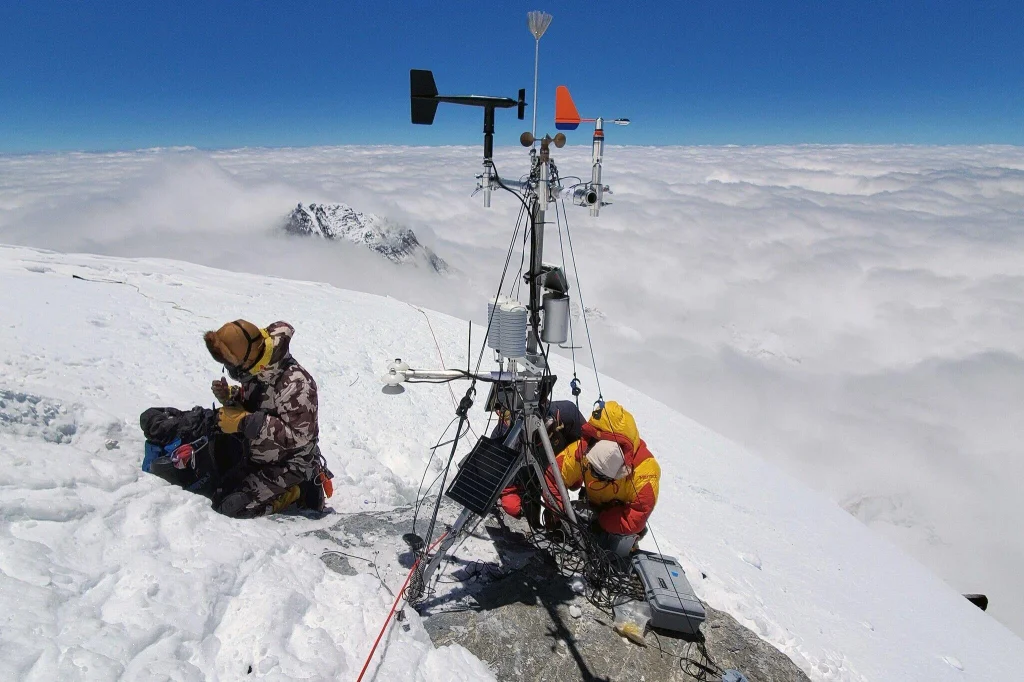
Operational forecasting is the largest gap. Public avalanche forecasting in the Himalaya exists only in the Indian western Himalaya. Khumbu and the Annapurna region have no comprehensive forecasting service, no network of automated snow stations feeding a daily bulletin, and no danger scale communicated to trekkers at trailheads.
What this means on the ground
Without a forecast, decision-making falls to individuals, and that is a weak position. A few things still follow directly from the mechanics described above.
- Loading rate matters more than total depth. Around 30 centimeters of new snow in 12 hours is far more dangerous than the same amount over three days.
- Danger peaks during and immediately after a storm, then declines over hours to days for storm slabs. Persistent weak layers such as depth hoar can stay reactive for weeks.
- Wind moves snow further than snowfall does. Lee slopes and cross-loaded gullies accumulate slabs even on clear days.
- Terrain choice is the real control. Slopes under 30 degrees rarely slide, but runout zones beneath steep terrain are not safe just because you are standing somewhere flat.
- Turning back is cheap. Thorong La will still be there next season.
Practical preparation matters too. Our guide to high-altitude snowfall and trekking safety covers conditions and gear, and what trekking insurance actually covers for helicopter rescue is worth reading before you need it rather than after. If you are weighing how altitude itself affects judgment in a crisis, see our piece on what hypoxia does to the brain, and trekkers planning a slower, higher-margin itinerary may find trekking Nepal after 50 useful on pacing.
Frequently asked questions
What is a weak layer in a snowpack?
A weak layer is a band of poorly bonded snow crystals buried under stronger, more cohesive snow. Common types include depth hoar near the ground and buried surface hoar. When a weak layer fails, the slab above it slides.
Does Nepal have avalanche forecasting?
No comprehensive public forecasting service covers the Nepal Himalaya. Researchers note that operational avalanche forecasting in the Himalaya exists only in the Indian western Himalaya. Nepal’s Department of Hydrology and Meteorology issues weather forecasts and warnings, but these are not avalanche danger ratings.
When is avalanche risk highest on the Annapurna Circuit?
Risk spikes during and immediately after heavy snowfall, whenever that falls. October and November post-monsoon storms are historically the deadliest for trekkers, because large loads can arrive suddenly while the trails are crowded.
How steep does a slope need to be to avalanche?
Most slab avalanches release on slopes between roughly 30 and 45 degrees. Lower-angle terrain rarely releases, though it can be hit by debris running out from steeper slopes above.
Was the 2014 Thorong La disaster an avalanche or a blizzard?
Both. Extreme snowfall linked to the remnants of Cyclone Hudhud caused avalanches, and it also caused deaths from exposure, hypothermia, and disorientation among trekkers caught above the snowline. At least 43 people died, and 407 people were rescued by 19 October 2014.
Are avalanches in Nepal getting more frequent because of climate change?
Evidence is not settled. A 2023 review across High Mountain Asia found no clear, consistent climate signal in avalanche frequency, while noting individual studies in the western Himalaya and Tian Shan that report increases or earlier timing. Observational records are too short and too incomplete in Nepal to say with confidence.
What is the difference between a snow avalanche and an ice avalanche?
Snow avalanches involve seasonal snow failing on a weak layer. Ice avalanches involve glacier ice or seracs breaking off a steep face. Ice avalanches are rarer but largely unpredictable, since they do not depend on recent weather.
Can a trekker trigger an avalanche from the bottom of a slope?
Yes. Modeling work on weak-layer failure shows that a local collapse can propagate laterally and upslope through the snowpack, so a person standing below a loaded slope can release snow above them.
Before you go
Snow in the Annapurna range obeys physics that is well described in the literature, even where Nepal’s own observation network remains thin. Understanding why a slab fails will not make a pass safe, but it will tell you which days to wait out and which slopes to leave alone. Explore more of our reporting on Nepal’s mountain science, save this guide for your next planning session, and share it with anyone heading for a high pass this season.


